

The DOI matches its Crossref record; 5 of the 5 references it cites were found in a registry or an index.
Association of Treatment With Medications for Opioid Use Disorder With Mortality After Hospitalization for Injection Drug Use–Associated Infective Endocarditis
Overview
The claims and statistics of this paper haven’t been checked yet.
Run the check — free, no account needed. It reads the open-access text and checks the sources it cites.
Integrity signals
Registry
Cites
Statistics
Figures
Verification
Claims the paper makes
The claims and statistics of this paper haven’t been checked yet.
Run the check — free, no account needed. It reads the open-access text and checks the sources it cites.
Claims other papers make about this one
Each is checked against this paper’s own text: does it say what the citing paper says it does?
In the citing paper
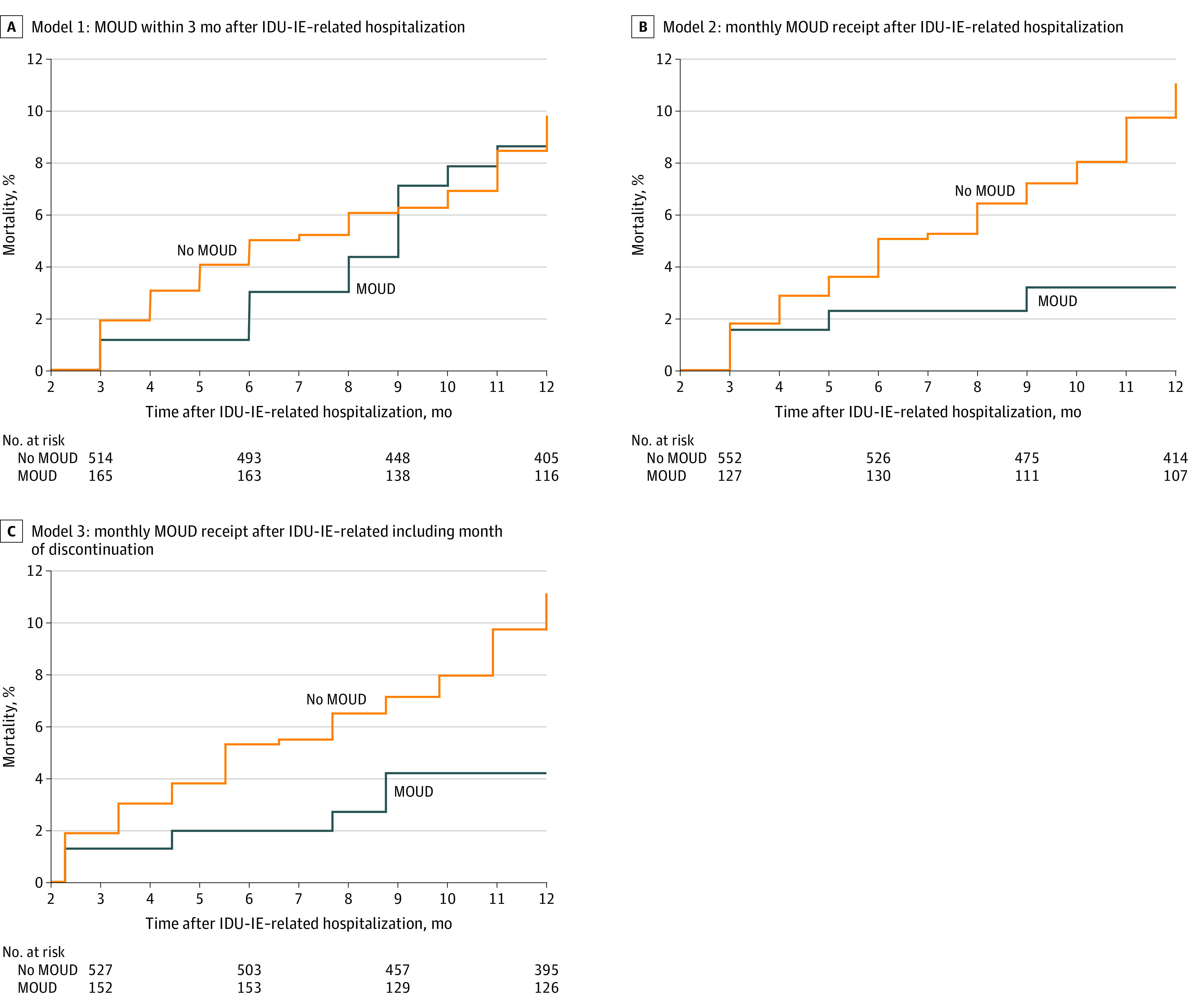
“One study identified a reduced risk of death after hospitalizations with injecting-related endocarditis, but did not assess rehospitalizations [40].”
In the citing paper
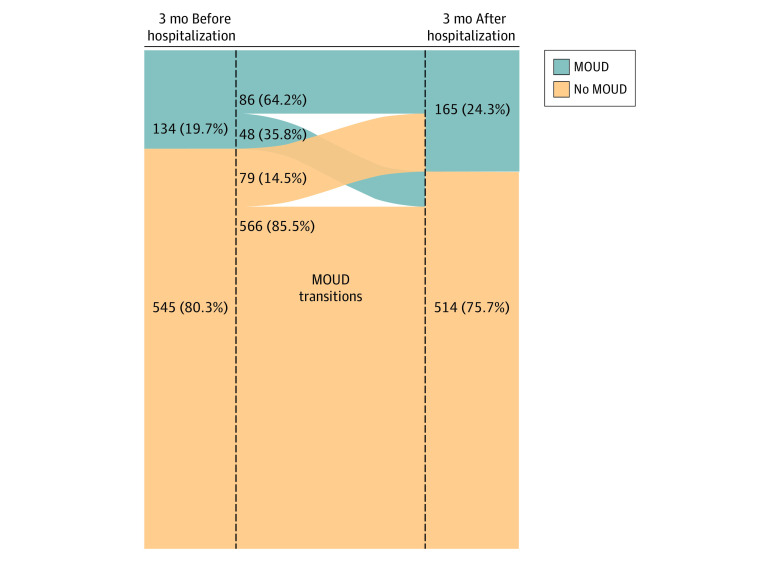
“Reflecting suboptimal access, use of OAT (or of naltrexone, an opioid antagonist medication used for opioid use disorder treatment in the US) was reported as 24% within 3 months following hospital discharge in the first study [40]”
In the citing paper
“Three administrative linkage cohort studies (all from US insurance claims data) have assessed associations between use of OAT and outcomes after hospitalization with injecting-related bacterial or fungal infections [39–41].”
Self-check
Percentages, sums and reported differences re-computed from the paper’s own numbers.
The self-check needs the paper’s full text.
Citations
Cites
von Elm, E., Altman, D. G., Egger, M., Pocock, S. J., Gøtzsche, P. C., Vandenbroucke, J. P., & Initiative, F. T. S. (2007) · PLoS Medicine · doi:10.1371/journal.pmed.0040296 · Cited by 23,020
Comorbidity measures for use with administrative data.
Elixhauser, A., Steiner, C., Harris, D. R., & Coffey, R. M. (1998) · Medical Care · doi:10.1097/00005650-199801000-00004 · Cited by 9,921
Baddour, L. M., Wilson, W. R., Bayer, A. S., Fowler, V. G., Tleyjeh, I. M., Rybak, M. J., Barsic, B., Lockhart, P. B., Gewitz, M. H., Levison, M. E., et al. (2015) · Circulation · doi:10.1161/cir.0000000000000296 · Cited by 3,232
Larochelle, M. R., Bernson, D., Land, T., Stopka, T. J., Wang, N., Xuan, Z., Bagley, S. M., Liebschutz, J. M., & Walley, A. Y. (2018) · Annals of Internal Medicine · doi:10.7326/m17-3107 · Cited by 1,076
Self-citationBarocas, J. A., White, L. F., Wang, J., Walley, A. Y., LaRochelle, M. R., Bernson, D., Land, T., Morgan, J. R., Samet, J. H., & Linas, B. P. (2018) · American Journal of Public Health · doi:10.2105/ajph.2018.304673 · Cited by 164
Self-citation
Research works printed but not linked: 21
- Deo, 2018, Admissions for infective endocarditis in intravenous drug users., J Am Coll Cardiol, 71, 1596, 10.1016/j.jacc.2018.02.011 · DOI
- Leahey, 2019, High morbidity and mortality among patients with sentinel admission for injection drug use-related infective endocarditis., Open Forum Infect Dis, 6, 10.1093/ofid/ofz089 · DOI
- Rodger, 2018, Clinical characteristics and factors associated with mortality in first-episode infective endocarditis among persons who inject drugs., JAMA Netw Open, 1, 10.1001/jamanetworkopen.2018.5220 · DOI
- Kimmel, 2019, Effect of publicly reported aortic valve surgery outcomes on valve surgery in injection drug– and non–injection drug-associated endocarditis., Clin Infect Dis
- Springer, 2018, Integrating treatment at the intersection of opioid use disorder and infectious disease epidemics in medical settings: a call for action after a National Academies of Sciences, Engineering, and Medicine Workshop., Ann Intern Med, 169, 335, 10.7326/M18-1203 · DOI
- Suzuki, 2016, Medication-assisted treatment for hospitalized patients with intravenous-drug-use related infective endocarditis., Am J Addict, 25, 191, 10.1111/ajad.v25.3 · DOI
- Barocas, 2020, Outcomes associated with medications for opioid use disorder among persons hospitalized for infective endocarditis., Clin Infect Dis
- Lee, 2018, Comparative effectiveness of extended-release naltrexone versus buprenorphine-naloxone for opioid relapse prevention (X:BOT): a multicentre, open-label, randomised controlled trial., Lancet, 391, 309, 10.1016/S0140-6736(17)32812-X · DOI · Paper page
- Krupitsky, 2011, Injectable extended-release naltrexone for opioid dependence: a double-blind, placebo-controlled, multicentre randomised trial., Lancet, 377, 1506, 10.1016/S0140-6736(11)60358-9 · DOI · Paper page
- Suzuki, 2019, Long-term Outcomes of Injection Drug-related Infective Endocarditis Among People Who Inject Drugs., J Addict Med, 1
- Thakarar, 2019, Mortality, morbidity, and cardiac surgery in Injection Drug Use (IDU)-associated versus non-IDU infective endocarditis: The need to expand substance use disorder treatment and harm reduction services., PLoS One, 14, 10.1371/journal.pone.0225460 · DOI
- Schiff, 2018, Fatal and nonfatal overdose among pregnant and postpartum women in Massachusetts., Obstet Gynecol, 132, 466, 10.1097/AOG.0000000000002734 · DOI · Paper page
- Bagley, 2017, Addressing stigma in medication treatment of adolescents with opioid use disorder., J Addict Med, 11, 415, 10.1097/ADM.0000000000000348 · DOI
- Chatterjee, 2019, Non-fatal opioid-related overdoses among adolescents in Massachusetts 2012-2014., Drug Alcohol Depend, 194, 28, 10.1016/j.drugalcdep.2018.09.020 · DOI
- Ball, 2017, Validation of an algorithm to identify infective endocarditis in people who inject drugs., Med Care, 1
- Kimmel, 2020, Rejection of patients with opioid use disorder referred for post-acute Medical care before and after an anti-discrimination settlement in Massachusetts., J Addict Med, 10.1097/ADM.0000000000000693 · DOI
- Rosenthal, 2016, Suboptimal addiction interventions for patients hospitalized with injection drug use-associated infective endocarditis., Am J Med, 129, 481, 10.1016/j.amjmed.2015.09.024 · DOI · Paper page
- Trowbridge, 2017, Addiction consultation services—linking hospitalized patients to outpatient addiction treatment., J Subst Abuse Treat, 79, 1, 10.1016/j.jsat.2017.05.007 · DOI
- Wakeman, 2017, Inpatient addiction consultation for hospitalized patients increases post-discharge abstinence and reduces addiction severity., J Gen Intern Med, 32, 909, 10.1007/s11606-017-4077-z · DOI
- Substance Abuse and Mental Health Services Administration, 2018, Medications for Opioid Use Disorder. Treatment Improvement Protocol (TIP) Series 63
- Mattick, 2003, Cochrane Database of Systematic Reviews.
Cited by
Sorted by citations
Brothers, T. D., Lewer, D., Jones, N., Colledge-Frisby, S., Farrell, M., Hickman, M., Webster, D., Hayward, A., & Degenhardt, L. (2022) · PLOS Medicine · doi:10.1371/journal.pmed.1004049 · Cited by 25
Metadata
- Authors
- Kimmel, S. D., Walley, A. Y., Li, Y., Linas, B. P., Lodi, S., Bernson, D., Weiss, R. D., Samet, J. H., & Larochelle, M. R.
- Affiliations
- Section of General Internal Medicine, Department of Medicine, Boston Medical Center, Boston, Massachusetts
- Section of Infectious Diseases, Department of Medicine, Boston Medical Center, Boston, Massachusetts
- Department of Biostatistics, Boston University School of Public Health, Boston, Massachusetts
- Massachusetts Department of Public Health, Boston, Massachusetts
- Substance Use Disorders Division, McLean Hospital, Belmont, Massachusetts
- Venue
- JAMA Network Open
- Publisher
- American Medical Association (AMA)
- Published
- 2020-10-14
- Volume
- 3
- Issue
- 10
- Pages
- e2016228
- ISSN
- 2574-3805
- PMC
- PMC7557514
- Cited by
- 97
- References
- 5
- Language
- en
About these checks
Registry, retraction, Cites and statistics results are computed, not judged, with one exception: a printed reference that no index lists is read once by a model before it counts as a citation error. Claims are extracted by a model and kept only when their quote appears verbatim in the text; each cited source is then checked, with a model’s help, for whether it says what the claim relies on. Those verdicts can be wrong — read the claim’s quote and the cited source before relying on one.
Statistics and arithmetic are recomputed, not judged.
Confidence bands are shown only for fields calibrated on our annotated test set. None is calibrated yet, so no band is shown.
What counts as a claim ›How we measure confidence ›How we check this ›
Are you an author, or do you see a problem with this page? Request a review
