

The DOI matches its Crossref record; 37 of the 37 references it cites were found in a registry or an index.
Seeking Abortion Care Across State Lines After the Dobbs Decision
Open accessAbstract
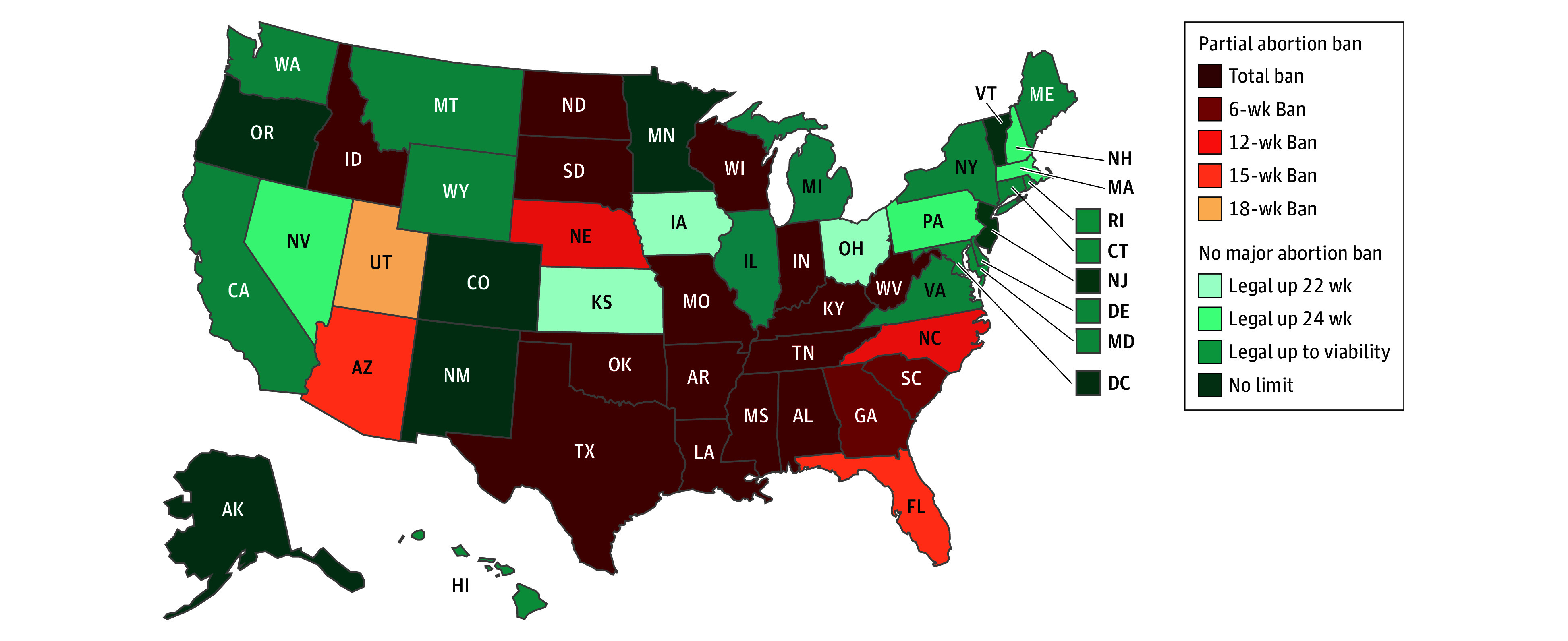
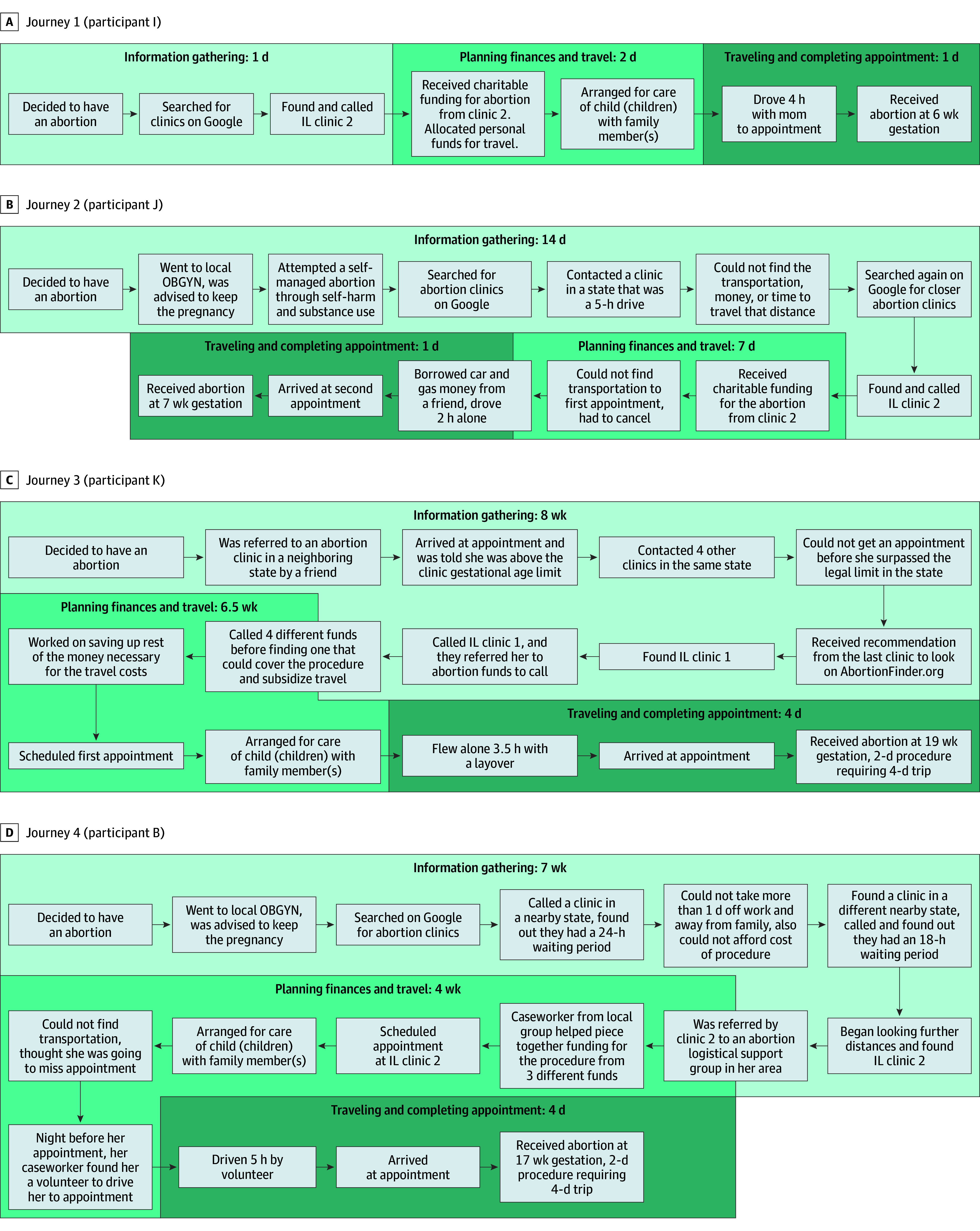
Importance: State-level abortion restrictions in the US enforced after the June 2022 Dobbs v Jackson Women’s Health Organization Supreme Court decision have worsened geographic, racial, and socioeconomic inequities in abortion access, warranting investigation of experiences for individuals who travel out of state to seek abortion care. Objectives: To highlight the obstacles abortion seekers must overcome to obtain care, to identify common barriers and facilitators of interstate abortion travel, and to offer recommendations for abortion organizations, policymakers, and advocates to expand access for individuals living in states with abortion bans. Design, Setting, and Participants: This qualitative study analyzed data obtained from out-of-state participants collected as part of a larger cross-sectional, mixed-methods study. All English- and Spanish-speaking patients from out of state who were at least 16 years of age and medically cleared for research attending 2 abortion clinics in Illinois between September and November 2023 were eligible. Main Outcomes and Measures: Participants completed a self-administered survey and a semistructured interview. Directed content analysis was used to identify emergent and crosscutting themes. Results: In total, 33 individuals (all self-identified as female or a woman) completed the survey and interview. Most participants were between 20 and 24 years of age (n = 12 [36%]) or 30 years or older (n = 12 [36%]), and from southern US states with a total abortion ban (n = 25 [76%]). From the time participants decided to terminate their pregnancy to the day of the abortion appointment, they experienced a median of 14.0 days of delay, with a mean (SD) of 29.6 (36.5) days of delay. Patient journeys of seeking abortion were categorized into 3 phases: information gathering, planning finances and travel, and traveling and completing the appointment. Participants reflected on how restrictive policies in their home states deepened abortion stigma and stifled access to accurate information. Most participants encountered their longest delays in the information-gathering phase, as they had to find legitimate clinics, often without any referrals, and navigate the complex web of laws between states. When patients had personal financial security, strong social support, or were in geographic proximity to a state in which abortion was legal, their journeys were facilitated. Conclusions and Relevance: In this cross-sectional qualitative study of participants traveling across state lines for abortion, the policy landscape and abortion stigma of the home state, information and resource availability, and interpersonal support shaped their journeys in the post- Dobbs landscape. To improve cross-state abortion access for individuals in states with abortion restrictions or bans, policy change should be coupled with increased visibility of accurate information, charitable funding, and abortion stigma reduction. Abortion support organizations and the public should continue to enable access through social support services, such as volunteer drivers and abortion doulas.
Overview
The claims and statistics of this paper haven’t been checked yet.
Run the check — free, no account needed. It reads the open-access text and checks the sources it cites.
Integrity signals
Registry
Cites
Statistics
Figures
Verification
Claims the paper makes
The claims and statistics of this paper haven’t been checked yet.
Run the check — free, no account needed. It reads the open-access text and checks the sources it cites.
Self-check
Percentages, sums and reported differences re-computed from the paper’s own numbers.
The self-check needs the paper’s full text.
Citations
Cites
Harris, P. A., Taylor, R., Thielke, R., Payne, J., Gonzalez, N., & Conde, J. G. (2009) · Journal of Biomedical Informatics · doi:10.1016/j.jbi.2008.08.010 · Cited by 51,384
Three Approaches to Qualitative Content Analysis
Hsieh, H.-F., & Shannon, S. E. (2005) · Qualitative Health Research · doi:10.1177/1049732305276687 · Cited by 44,601
Tong, A., Sainsbury, P., & Craig, J. (2007) · International Journal for Quality in Health Care · doi:10.1093/intqhc/mzm042 · Cited by 42,509
Fereday, J., & Muir-Cochrane, E. (2006) · International Journal of Qualitative Methods · doi:10.1177/160940690600500107 · Cited by 11,829
Conceptualising abortion stigma
Kumar, A. V., Hessini, L., & Mitchell, E. M. H. (2009) · Culture Health & Sexuality · doi:10.1080/13691050902842741 · Cited by 761
Prather, C. M., Fuller, T. R., Jeffries, W. L., Marshall, K. J., Howell, A. V., Belyue-Umole, A., & King, W. (2018) · Health Equity · doi:10.1089/heq.2017.0045 · Cited by 465
Racial and Ethnic Disparities in Reproductive Health Services and Outcomes, 2020
Sutton, M. Y., Anachebe, N. F., Lee, R., & Skanes-DeVold, H. (2021) · Obstetrics and Gynecology · doi:10.1097/aog.0000000000004224 · Cited by 278
Jerman, J., Frohwirth, L. F., Kavanaugh, M. L., & Blades, N. M. (2017) · Perspectives on Sexual and Reproductive Health · doi:10.1363/psrh.12024 · Cited by 247
Risk Factors Associated With Presenting for Abortion in the Second Trimester
Drey, E. A., Foster, D. G., Jackson, R., Lee, S. H., Cardenas, L. H., & Darney, P. D. (2006) · Obstetrics and Gynecology · doi:10.1097/01.aog.0000189095.32382.d0 · Cited by 226
US Obstetrician-Gynecologists' Perceived Impacts of Post– Dobbs v Jackson State Abortion Bans
Sabbath, E. L., McKetchnie, S. M., Arora, K. S., & Buchbinder, M. H. (2024) · JAMA Network Open · doi:10.1001/jamanetworkopen.2023.52109 · Cited by 128
Research works printed but not linked: 7
- Ross, 2017, Reproductive Justice: An Introduction
- Foster, 2021, The Turnaway Study: Ten Years, a Thousand Women, and the Consequences of Having—or Being Denied—an Abortion
- Schoen, 2005, Choice and Coercion: Birth Control, Sterilization, and Abortion in Public Health and Welfare
- Solinger, 2005, Pregnancy and Power: A Short History of Reproductive Politics in America
- Cohen, 2021, Obstacle Course: The Everyday Struggle to Get an Abortion in the America
- Robinson, 2023, A Culturally Centered and Intersectional Approach to Reproductive Justice
- Brigance, 2022, Nowhere to Go: Maternity Care Deserts Across the U.S
Cited by
Sorted by citations
Later Abortion Care Availability, Quoted Self-Pay Prices, and State Medicaid Acceptance
Weitz, T. A., & Schwartz, M. W. (2026) · JAMA Network Open · doi:10.1001/jamanetworkopen.2026.16370
Guo, A. A., Gyuras, H. J., Sinclair, J. A., Pensak, M. J., Bessett, D., & McGowan, M. L. (2026) · Social Science & Medicine · doi:10.1016/j.socscimed.2026.119529
The State of American Federalism 2025–2026: Federalism’s Dual Role in Democratic Backsliding
Dichio, M. A., & Bromley‐Trujillo, R. (2026) · Publius The Journal of Federalism · doi:10.1093/publius/pjag029
Fiastro, A. E., Der, A. D., Mena‐Meléndez, L., Brown, E. M., Fredman, S., Norman, W. V., Godfrey, E. M., & Munro, S. B. (2026) · SSM - Qualitative Research in Health · doi:10.1016/j.ssmqr.2026.100868
Metadata
- Authors
- Cornell, A., Keefe-Oates, B., Thornton, O., Fortin, J., Gallegos, A., & Janiak, E.
- Affiliations
- Brigham and Women's Hospital (US)
- The Roux Institute at Northeastern University, Portland, Maine
- Planned Parenthood (US)
- Alamo Women’s Clinic of Illinois, Carbondale
- Corresponding author
- Cornell, Alia
- Venue
- JAMA Network Open
- Publisher
- American Medical Association (AMA)
- Published
- 2026-03-09
- Volume
- 9
- Issue
- 3
- Pages
- e261068
- ISSN
- 2574-3805 (ISSN-L)
- PMC
- PMC12973109
- OpenAlex
- W7134256266
- Cited by
- 4
- References
- 37
- Citations by year
- 2026: 4
- FWCI
- 25.72
- Type
- journal article
- Language
- en
- Open access
- gold
- doi.org
- Licence
- cc-by
- Locations
- JAMA Network Open (publishedVersion, cc-by)
- PubMed (publishedVersion)
- PubMed Central (publishedVersion, cc-by)
- Funders
- Harvard University
- Topics
- Health Sciences › Medicine › Public Health, Environmental and Occupational Health › Reproductive Health and Contraception
- Social Sciences › Political Science and International Relations › International Human Rights and Reproductive Law
- Health Sciences › Medicine › Public Health, Environmental and Occupational Health › Ethics and bioethics in healthcare
- Keywords
- abortion access, Dobbs v. Jackson Women's Health Organization, abortion restrictions, abortion stigma, travel delay, social support, financial barriers, abortion bans, abortion clinics, patient journey, racial and socioeconomic disparities
- MeSH terms
- Abortion Applicants, Abortion, Induced, Abortion, Legal, Adolescent, Adult, Cross-Sectional Studies, Female, Health Services Accessibility, Humans, Illinois, Patient Acceptance of Health Care, Pregnancy, United States, Supreme Court Decisions, Qualitative Research, Young Adult
About these checks
Registry, retraction, Cites and statistics results are computed, not judged, with one exception: a printed reference that no index lists is read once by a model before it counts as a citation error. Claims are extracted by a model and kept only when their quote appears verbatim in the text; each cited source is then checked, with a model’s help, for whether it says what the claim relies on. Those verdicts can be wrong — read the claim’s quote and the cited source before relying on one.
Statistics and arithmetic are recomputed, not judged.
Confidence bands are shown only for fields calibrated on our annotated test set. None is calibrated yet, so no band is shown.
What counts as a claim ›How we measure confidence ›How we check this ›
Are you an author, or do you see a problem with this page? Request a review
How to cite
Cite CoChat for the checks on this page, and the paper for its own findings.
- This page
- CoChat. (2026). Citation check: Seeking Abortion Care Across State Lines After the Dobbs Decision. https://app.cochat.ai/papers/10.1001/jamanetworkopen.2026.1068
- The paper
- Cornell, A., Keefe-Oates, B., Thornton, O., Fortin, J., Gallegos, A., & Janiak, E. (2026). Seeking Abortion Care Across State Lines After the Dobbs Decision. JAMA Network Open. https://doi.org/10.1001/jamanetworkopen.2026.1068
