

The DOI matches its Crossref record; 25 of the 25 references it cites were found in a registry or an index.
Cost-effectiveness and Benefit-to-Harm Ratio of Risk-Stratified Screening for Breast Cancer: A Life-Table Model
Open accessAbstract
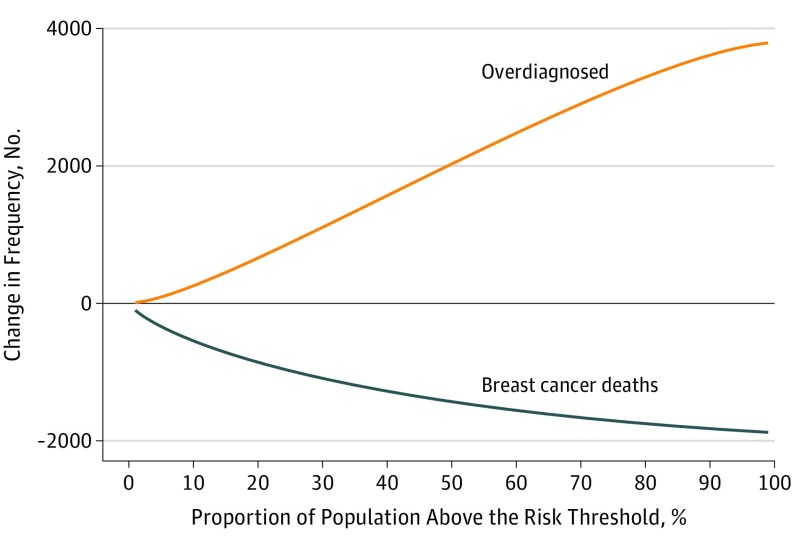
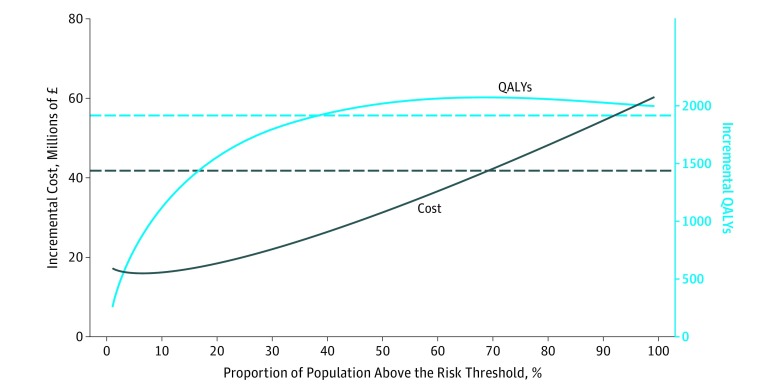
Importance: The age-based or "one-size-fits-all" breast screening approach does not take into account the individual variation in risk. Mammography screening reduces death from breast cancer at the cost of overdiagnosis. Identifying risk-stratified screening strategies with a more favorable ratio of overdiagnoses to breast cancer deaths prevented would improve the quality of life of women and save resources. Objective: To assess the benefit-to-harm ratio and the cost-effectiveness of risk-stratified breast screening programs compared with a standard age-based screening program and no screening. Design, Setting, and Population: A life-table model was created of a hypothetical cohort of 364 500 women in the United Kingdom, aged 50 years, with follow-up to age 85 years, using (1) findings of the Independent UK Panel on Breast Cancer Screening and (2) risk distribution based on polygenic risk profile. The analysis was undertaken from the National Health Service perspective. Interventions: The modeled interventions were (1) no screening, (2) age-based screening (mammography screening every 3 years from age 50 to 69 years), and (3) risk-stratified screening (a proportion of women aged 50 years with a risk score greater than a threshold risk were offered screening every 3 years until age 69 years) considering each percentile of the risk distribution. All analyses took place between July 2016 and September 2017. Main Outcomes and Measures: Overdiagnoses, breast cancer deaths averted, quality-adjusted life-years (QALYs) gained, costs in British pounds, and net monetary benefit (NMB). Probabilistic sensitivity analyses were used to assess uncertainty around parameter estimates. Future costs and benefits were discounted at 3.5% per year. Results: The risk-stratified analysis of this life-table model included a hypothetical cohort of 364 500 women followed up from age 50 to 85 years. As the risk threshold was lowered, the incremental cost of the program increased linearly, compared with no screening, with no additional QALYs gained below 35th percentile risk threshold. Of the 3 screening scenarios, the risk-stratified scenario with risk threshold at the 70th percentile had the highest NMB, at a willingness to pay of £20 000 (US $26 800) per QALY gained, with a 72% probability of being cost-effective. Compared with age-based screening, risk-stratified screening at the 32nd percentile vs 70th percentile risk threshold would cost £20 066 (US $26 888) vs £537 985 (US $720 900) less, would have 26.7% vs 71.4% fewer overdiagnoses, and would avert 2.9% vs 9.6% fewer breast cancer deaths, respectively. Conclusions and Relevance: Not offering breast cancer screening to women at lower risk could improve the cost-effectiveness of the screening program, reduce overdiagnosis, and maintain the benefits of screening.
Overview
The claims and statistics of this paper haven’t been checked yet.
Run the check — free, no account needed. It reads the open-access text and checks the sources it cites.
Integrity signals
Registry
Cites
Statistics
Figures
Verification
Claims the paper makes
The claims and statistics of this paper haven’t been checked yet.
Run the check — free, no account needed. It reads the open-access text and checks the sources it cites.
Self-check
Percentages, sums and reported differences re-computed from the paper’s own numbers.
The self-check needs the paper’s full text.
Citations
Cites
The benefits and harms of breast cancer screening: an independent review
Marmot, M. G. (2012) · The Lancet · doi:10.1016/s0140-6736(12)61611-0 · Cited by 1,495
Association analysis identifies 65 new breast cancer risk loci
Michailidou, K., Lindström, S., Dennis, J., Beesley, J., Hui, S., Kar, S., Lemaçon, A., Soucy, P., Glubb, D. M., Rostamianfar, A., et al. (2017) · Nature · doi:10.1038/nature24284 · Cited by 1,380
Higgins (2002) · doi:10.1002/(issn)1097-0258 · Cited by 1,248
Polygenic susceptibility to breast cancer and implications for prevention
Pharoah, P. D. P., Antoniou, A. C., Bobrow, M., Zimmern, R. L., Easton, D. F., & Ponder, B. A. J. (2002) · Nature Genetics · doi:10.1038/ng853 · Cited by 898
Self-citationMaas, P., Barrdahl, M., Joshi, A. D., Auer, P. L., Gaudet, M. M., Milne, R. L., Schumacher, F. R., Anderson, W. F., Check, D., Chattopadhyay, S., et al. (2016) · JAMA Oncology · doi:10.1001/jamaoncol.2016.1025 · Cited by 373
Schousboe, J. T., Kerlikowske, K. M., Loh, A., & Cummings, S. R. (2011) · Annals of Internal Medicine · doi:10.7326/0003-4819-155-1-201107050-00003 · Cited by 317
Duffy, S. W., Chen, H., Tabár, L. K., & Day, N. E. (1995) · Statistics in Medicine · doi:10.1002/sim.4780141404 · Cited by 208
Polygenic susceptibility to prostate and breast cancer: implications for personalised screening
Pashayan, N., Duffy, S. W., Chowdhury, S., Dent, T., Burton, H., Neal, D. E., Easton, D. F., Eeles, R. A., & Pharoah, P. D. P. (2011) · British Journal of Cancer · doi:10.1038/bjc.2011.118 · Cited by 160
Self-citationEvans, D. G., Astley, S., Stavrinos, P., Harkness, E. F., Donnelly, L. S., Dawe, S., Jacob, I., Harvie, M., Cuzick, J. M., Brentnall, A. R., et al. (2016) · Programme Grants for Applied Research · doi:10.3310/pgfar04110 · Cited by 153
Cost-Effectiveness and Harm-Benefit Analyses of Risk-Based Screening Strategies for Breast Cancer
Vilaprinyó, E., Forné, C., Carles-Lavila, M., Sala, M., Pla, R., Castells, X., Domingo, L., Rué, M., & the Interval Cancer (INCA) Study Group (2014) · PLoS ONE · doi:10.1371/journal.pone.0086858 · Cited by 142
Trentham‐Dietz, A., Kerlikowske, K. M., Stout, N. K., Miglioretti, D. L., Schechter, C. B., Ergün, M. A., van den Broek, J. J., Alagöz, O., Sprague, B. L., van Ravesteyn, N. T., et al. (2016) · Annals of Internal Medicine · doi:10.7326/m16-0476 · Cited by 132
Darabi, H., Czene, K., Zhao, W., Liu, J., Hall, P. N., & Humphreys, K. (2012) · Breast Cancer Research · doi:10.1186/bcr3110 · Cited by 123
García‐Closas, M., Gunsoy, N. B., & Chatterjee, N. (2014) · JNCI Journal of the National Cancer Institute · doi:10.1093/jnci/dju305 · Cited by 120
Rudolph, A., Song, M., Brook, M. N., Milne, R. L., Mavaddat, N., Michailidou, K., Bolla, M. K., Wang, Q., Dennis, J., Hurson, A. N., et al. (2017) · International Journal of Epidemiology · doi:10.1093/ije/dyx242 · Cited by 109
Self-citationImplications of polygenic risk-stratified screening for prostate cancer on overdiagnosis
Pashayan, N., Duffy, S. W., Neal, D. E., Hamdy, F. C., Donovan, J., Martin, R. M., Harrington, P. A., Benlloch, S., Olama, A. A. A., Shah, M., et al. (2015) · Genetics in Medicine · doi:10.1038/gim.2014.192 · Cited by 93
Self-citationIncorporating genomics into breast and prostate cancer screening: assessing the implications
Chowdhury, S., Dent, T., Pashayan, N., Hall, A., Lyratzopoulos, G., Hallowell, N., Hall, P. N., Pharoah, P. D. P., & Burton, H. (2013) · Genetics in Medicine · doi:10.1038/gim.2012.167 · Cited by 91
Self-citationCost effectiveness of the NHS breast screening programme: life table model
Pharoah, P. D. P., Sewell, B., Fitzsimmons, D. F., Bennett, H., & Pashayan, N. (2013) · BMJ · doi:10.1136/bmj.f2618 · Cited by 86
Self-citationGray, E., Donten, A., Karssemeijer, N., van Gils, C. H., Evans, D. G., Astley, S., & Payne, K. (2017) · Value in Health · doi:10.1016/j.jval.2017.04.012 · Cited by 69
European Guide on Quality Improvement in Comprehensive Cancer Control
Albreht, T., Amati, C., Angelastro, A., Asioli, M., Amunni, G., Molina‐Barceló, A., Berling, C., Caraceni, A. T., Colamesta, V., Comiskey, K., et al. (2017) · Data Archiving and Networked Services (DANS) · Cited by 69
Meisel, S. F., Pashayan, N., Rahman, B., Side, L. E., Fraser, L. S. M., Gessler, S., Lanceley, A., & Wardle, J. (2015) · The Breast · doi:10.1016/j.breast.2015.02.001 · Cited by 65
Self-citationKoitsalu, M., Sprangers, M. A. G., Eklund, M., Czene, K., Hall, P. N., Grönberg, H., & Brandberg, Y. (2015) · Acta Oncologica · doi:10.3109/0284186x.2015.1043024 · Cited by 59
Stratified Cancer Screening: The Practicalities of Implementation
Dent, T., Jbilou, J., Rafi, I., Segnan, N., Törnberg, S., Chowdhury, S., Hall, A., Lyratzopoulos, G., Eeles, R. A., Eccles, D., et al. (2013) · Public Health Genomics · doi:10.1159/000345941 · Cited by 48
Self-citationScreening Men at Increased Risk for Prostate Cancer Diagnosis: Model Estimates of Benefits and Harms
Gulati, R., Cheng, H. H., Lange, P. H., Nelson, P. S., & Etzioni, R. (2016) · Cancer Epidemiology Biomarkers & Prevention · doi:10.1158/1055-9965.epi-16-0434 · Cited by 48
A Reality Check for Overdiagnosis Estimates Associated With Breast Cancer Screening
Etzioni, R., Xia, J., Hubbard, R. A., Weiss, N. S., & Gulati, R. (2014) · JNCI Journal of the National Cancer Institute · doi:10.1093/jnci/dju315 · Cited by 47
Pashayan, N., Pharoah, P. D. P., Schleutker, J., Talala, K. M., Tammela, T. L. J., Määttänen, L., Harrington, P. A., Tyrer, J. P., Eeles, R. A., Duffy, S. W., et al. (2015) · British Journal of Cancer · doi:10.1038/bjc.2015.289 · Cited by 46
Self-citation
Research works printed but not linked: 1
- Dent, 2014, Stratified Screening for Cancer: Recommendations and Analysis From the COGS Project
Cited by
Sorted by citations
Sung, H., Ferlay, J., Siegel, R. L., Laversanne, M., Soerjomataram, I., Jemal, A., & Bray, F. (2021) · CA: A Cancer Journal for Clinicians · doi:10.3322/caac.21660 · Cited by 108,699
Lee, A., Mavaddat, N., Hurson, A. N., Cunningham, A. P., Carver, T. J., Hartley, S., de Villiers, C. B., Izquierdo, Á., Simard, J., Schmidt, M. K., et al. (2019) · Genetics in Medicine · doi:10.1038/s41436-018-0406-9 · Cited by 725
Self-citationTowards clinical utility of polygenic risk scores
Lambert, S. A., Abraham, G., & Inouye, M. (2019) · Human Molecular Genetics · doi:10.1093/hmg/ddz187 · Cited by 586
[Retracted] Global Increase in Breast Cancer Incidence: Risk Factors and Preventive Measures
Kashyap, D., Pal, D., Sharma, R., Garg, V. K., Goel, N., Koundal, D., Zaguia, A., Koundal, S., & Belay, A. (2022) · BioMed Research International · doi:10.1155/2022/9605439 · Cited by 604
RetractedThe future of early cancer detection
Fitzgerald, R. C., Antoniou, A. C., Fruk, L., & Rosenfeld, N. (2022) · Nature Medicine · doi:10.1038/s41591-022-01746-x · Cited by 486
Metadata
- Authors
- Pashayan, N., Morris, S., Gilbert, F. J., & Pharoah, P. D. P.
- Affiliations
- University College London (GB)
- Department of Applied Health Research, University College London, London, England
- University of Cambridge (GB)
- Corresponding author
- Pashayan, Nora
- Venue
- JAMA Oncology
- Publisher
- American Medical Association (AMA)
- Published
- 2018-11-01
- Volume
- 4
- Issue
- 11
- Pages
- 1504
- ISSN
- 2374-2437 (ISSN-L)
- PMC
- PMC6230256
- OpenAlex
- W2829068939
- Cited by
- 284
- References
- 25
- Citations by year
- 2026: 15 · 2025: 32 · 2024: 35 · 2023: 31 · 2022: 48 · 2021: 49 · 2020: 31 · 2019: 35 · 2018: 8
- FWCI
- 11.53
- Type
- journal article
- Language
- en
- Open access
- hybrid
- doi.org
- Licence
- cc-by
- Locations
- JAMA Oncology (publishedVersion, cc-by)
- Europe PMC (PubMed Central) (publishedVersion, cc-by)
- PubMed Central (publishedVersion, cc-by)
- PubMed (publishedVersion)
- Funders
- Cancer Research UK (10119, 16561, C490/A16561, 26884, A16561)
- National Institute for Health and Care Research (NF-SI-0515-10067)
- Engineering and Physical Sciences Research Council (EP/P006485/1)
- Topics
- Health Sciences › Medicine › Oncology › Global Cancer Incidence and Screening
- Health Sciences › Medicine › Radiology, Nuclear Medicine and Imaging › Digital Radiography and Breast Imaging
- Social Sciences › Economics, Econometrics and Finance › Economics and Econometrics › Health Systems, Economic Evaluations, Quality of Life
- Keywords
- breast cancer screening, risk-stratified screening, mammography, overdiagnosis, cost-effectiveness, polygenic risk score, risk thresholds, breast cancer mortality, quality-adjusted life years, net monetary benefit, life table model, women aged 50-69, National Health Service, willingness-to-pay threshold
- MeSH terms
- Aged, Breast Neoplasms, Cost-Benefit Analysis, Female, Humans, Middle Aged, Risk Assessment, Early Detection of Cancer
About these checks
Registry, retraction, Cites and statistics results are computed, not judged, with one exception: a printed reference that no index lists is read once by a model before it counts as a citation error. Claims are extracted by a model and kept only when their quote appears verbatim in the text; each cited source is then checked, with a model’s help, for whether it says what the claim relies on. Those verdicts can be wrong — read the claim’s quote and the cited source before relying on one.
Statistics and arithmetic are recomputed, not judged.
Confidence bands are shown only for fields calibrated on our annotated test set. None is calibrated yet, so no band is shown.
What counts as a claim ›How we measure confidence ›How we check this ›
Are you an author, or do you see a problem with this page? Request a review
