

The DOI matches its Crossref record; 100 of the 101 references it cites were found in a registry or an index, and 1 are not checked yet.
Computational Fluid Dynamics of Reacting Flows at Surfaces: Methodologies and Applications
Open accessAbstract
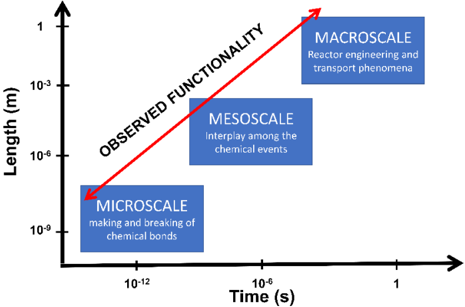
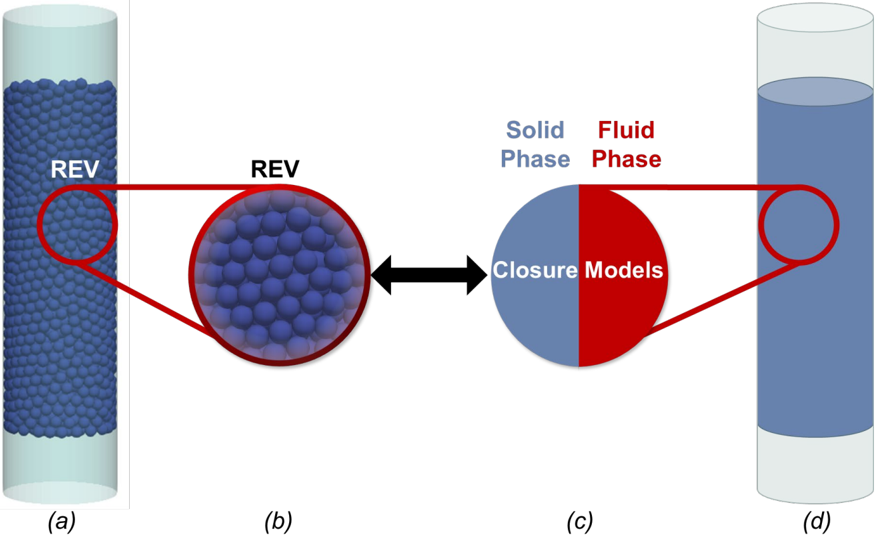
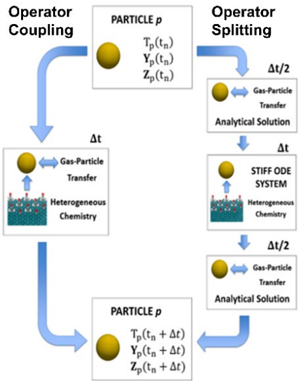
This review presents the numerical algorithms and speed‐up strategies developed to couple continuum macroscopic simulations and detailed microkinetic models in the context of multiscale approaches to chemical reactions engineering. CFD simulations and hierarchical approaches are discussed both for fixed and fluidized systems. The foundations of the methodologies are reviewed together with specific examples to show the applicability of the methods. These concepts play a pivotal role to enable the first‐principles multiscale approach to systems of technological relevance.
Overview
The claims and statistics of this paper haven’t been checked yet.
Free: it reads the open-access text and checks the first 5 claims that cite a source we can check. Create a free account to check every claim.
Integrity signals
Registry
Cites
Statistics
Figures



Verification
Claims the paper makes
The claims and statistics of this paper haven’t been checked yet.
Free: it reads the open-access text and checks the first 5 claims that cite a source we can check. Create a free account to check every claim.
Self-check
Percentages, sums and reported differences re-computed from the paper’s own numbers.
The self-check needs the paper’s full text.
Citations
Cites
On the Construction and Comparison of Difference Schemes
Strang, G. (1968) · SIAM Journal on Numerical Analysis · doi:10.1137/0705041 · Cited by 3,571
Chemical reactor analysis and design
Brooks, B. W. (1991) · The Chemical Engineering Journal · doi:10.1016/0300-9467(91)85016-o · Cited by 2,156
Lagrangian numerical simulation of plug flow of cohesionless particles in a horizontal pipe
Tsuji, Y., Tanaka, T., & Ishida, T. (1992) · Powder Technology · doi:10.1016/0032-5910(92)88030-l · Cited by 2,147
Multiphase flow and fluidization: Continuum and kinetic theory descriptions
Sinclair, J. L. (1995) · Powder Technology · doi:10.1016/0032-5910(95)90055-1 · Cited by 1,895
Computationally efficient implementation of combustion chemistry using in situ adaptive tabulation
Pope, S. B. (1997) · Combustion Theory and Modelling · doi:10.1080/713665229 · Cited by 1,124
Flow through Porous Media-the Ergun Equation Revisited
Macdonald, I. F., El-Sayed, M. S., Mow, K., & Dullien, F. A. L. (1979) · Industrial & Engineering Chemistry Fundamentals · doi:10.1021/i160071a001 · Cited by 1,078
(1978) · Cited by 1,056
Fluid Flow through Randomly Packed Columns and Fluidized Beds
Ergun, S., & Orning, A. A. (1949) · Industrial & Engineering Chemistry · doi:10.1021/ie50474a011 · Cited by 1,032
Hoomans, B. P. B., Kuipers, J. A. M., Briels, W. J., & van Swaaij, W. P. M. (1996) · Chemical Engineering Science · doi:10.1016/0009-2509(95)00271-5 · Cited by 1,019
Review of discrete particle modeling of fluidized beds
Deen, N. G., Van Sint Annaland, M., Van der Hoef, M. A., & Kuipers, J. A. M. (2007) · Chemical Engineering Science · doi:10.1016/j.ces.2006.08.014 · Cited by 995
Research works printed but not linked: 3
- D.Rong M.Horio 2nd Int. Conf. on CFD in the Minerals and Process Industries Melbourne December1999.
- Bird R. B., 2007, Transport Phenomena
- A.Della Torre G.Montenegro A.Onorati T.Cerri E.Tronconi I.Nova SAE Tech. Pap.2020 2020‐01‐0356. DOI:https://doi.org/10.4271/2020‐01‐0356 · doi:10.4271/2020-01-0356
Cited by
Vaferi, K., Vajdi, M., Shadian, A., Ahadnejad, H., Moghanlou, F. S., Nami, H., & Jafarzadeh, H. (2023) · Entropy · doi:10.3390/e25070967 · Cited by 73
“This solver configuration allows for the decoupling and independent solution of different variables, which can help improve computational efficiency and convergence [43].”
BackgroundBracconi, M. (2022) · Chemical Engineering and Processing - Process Intensification · doi:10.1016/j.cep.2022.109148 · Cited by 42
Self-citationDöppel, F. A., & Votsmeier, M. (2022) · Chemical Engineering Science · doi:10.1016/j.ces.2022.117964 · Cited by 38
“A promising approach to this scale bridging problem is to learn the results of the chemical rate equations by an interpolation- or machine learning technique (Micale et al., 2022).”
BackgroundKaydouh, M.-N., Hassan, N. E., Chalhoub, E. R., Bukharin, N., & Hassan, M. E. (2024) · Fuel · doi:10.1016/j.fuel.2024.131290 · Cited by 31
Computation of thermal energy in a rectangular cavity with a heated top wall
Haider, J. A., & Muhammad, N. (2022) · International Journal of Modern Physics B · doi:10.1142/s0217979222502125 · Cited by 31
Metadata
- Authors
- Micale, D., Ferroni, C., Uglietti, R., Bracconi, M., & Maestri, M.
- Affiliations
- Politecnico di Milano (IT)
- Corresponding author
- Maestri, Matteo
- Venue
- Chemie Ingenieur Technik
- Publisher
- Wiley
- Published
- 2022-02-26
- Volume
- 94
- Issue
- 5
- Pages
- 634-651
- ISSN
- 0009-286X (ISSN-L)
- 1522-2640
- OpenAlex
- W4214568937
- Cited by
- 41
- References
- 99
- Citations by year
- 2026: 9 · 2025: 8 · 2024: 5 · 2023: 10 · 2022: 9
- FWCI
- 4.29
- Type
- journal article
- Language
- en
- Open access
- hybrid
- doi.org
- Licence
- Locations
- Chemie Ingenieur Technik (publishedVersion, cc-by)
- Virtual Community of Pathological Anatomy (University of Castilla La Mancha) (submittedVersion, other-oa)
- Zenodo (CERN European Organization for Nuclear Research) (submittedVersion, cc-by)
- Funders
- Horizon 2020 Framework Programme (677423/SHAPE)
- Topics
- Physical Sciences › Engineering › Computational Mechanics › Heat and Mass Transfer in Porous Media
- Physical Sciences › Engineering › Computational Mechanics › Granular flow and fluidized beds
- Physical Sciences › Mathematics › Applied Mathematics › Advanced Mathematical Modeling in Engineering
- Keywords
- reacting flow, surface reactions, microkinetic model, multiscale modeling, hierarchical models, fixed-bed reactor, reaction engineering
About these checks
Registry, retraction, Cites and statistics results are computed, not judged, with one exception: a printed reference that no index lists is read once by a model before it counts as a citation error. Claims are extracted by a model and kept only when their quote appears verbatim in the text; each cited source is then checked, with a model’s help, for whether it says what the claim relies on. Those verdicts can be wrong — read the claim’s quote and the cited source before relying on one.
Statistics and arithmetic are recomputed, not judged.
Confidence bands are shown only for fields calibrated on our annotated test set. None is calibrated yet, so no band is shown.
What counts as a claim ›How we measure confidence ›How we check this ›
Are you an author, or do you see a problem with this page? Request a review
How to cite
Cite CoChat for the checks on this page, and the paper for its own findings.
- This page
- CoChat. (2026). Citation check: Computational Fluid Dynamics of Reacting Flows at Surfaces: Methodologies and Applications. https://app.cochat.ai/papers/10.1002/cite.202100196
- The paper
- Micale, D., Ferroni, C., Uglietti, R., Bracconi, M., & Maestri, M. (2022). Computational Fluid Dynamics of Reacting Flows at Surfaces: Methodologies and Applications. Chemie Ingenieur Technik. https://doi.org/10.1002/cite.202100196
Data sources
Bibliographic data: Semantic Scholar, OpenAlex, Crossref.
Contains information from the Semantic Scholar Academic Graph Datasets, made available under the ODC Attribution License (ODC-BY 1.0).
Semantic Scholar’s data is described in: Kinney, R., et al. (2023). The Semantic Scholar Open Data Platform. arXiv:2301.10140.
