

The DOI matches its Crossref record.
Large reptiles and cold temperatures: Do extreme cold spells set distributional limits for tropical reptiles in Florida?
Abstract
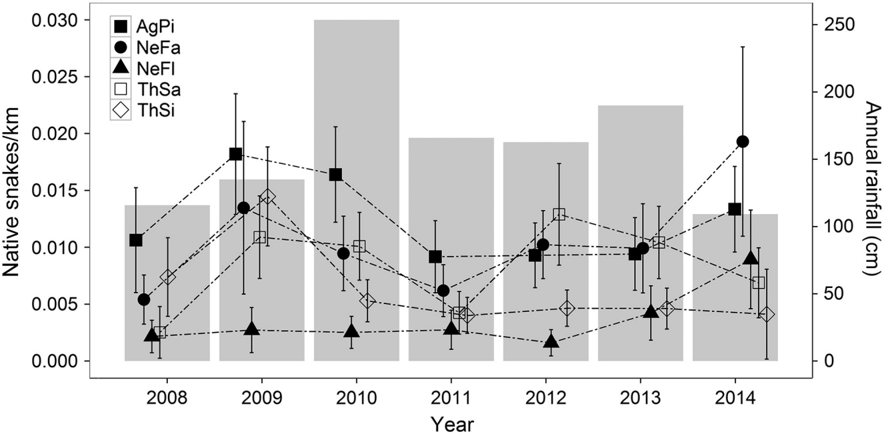
Distributional limits of many tropical species in Florida are ultimately determined by tolerance to low temperature. An unprecedented cold spell during 2–11 January 2010, in South Florida provided an opportunity to compare the responses of tropical American crocodiles with warm‐temperate American alligators and to compare the responses of nonnative Burmese pythons with native warm‐temperate snakes exposed to prolonged cold temperatures. After the January 2010 cold spell, a record number of American crocodiles (n = 151) and Burmese pythons (n = 36) were found dead. In contrast, no American alligators and no native snakes were found dead. American alligators and American crocodiles behaved differently during the cold spell. American alligators stopped basking and retreated to warmer water. American crocodiles apparently continued to bask during extreme cold temperatures resulting in lethal body temperatures. The mortality of Burmese pythons compared to the absence of mortality for native snakes suggests that the current population of Burmese pythons in the Everglades is less tolerant of cold temperatures than native snakes. Burmese pythons introduced from other parts of their native range may be more tolerant of cold temperatures. We documented the direct effects of cold temperatures on crocodiles and pythons; however, evidence of long‐term effects of cold temperature on their populations within their established ranges remains lacking. Mortality of crocodiles and pythons outside of their current established range may be more important in setting distributional limits.
Overview
The claims and statistics of this paper haven’t been checked yet.
Run the check — free, no account needed. It reads the open-access text and checks the sources it cites.
Integrity signals
Registry
Cites
Statistics
Figures
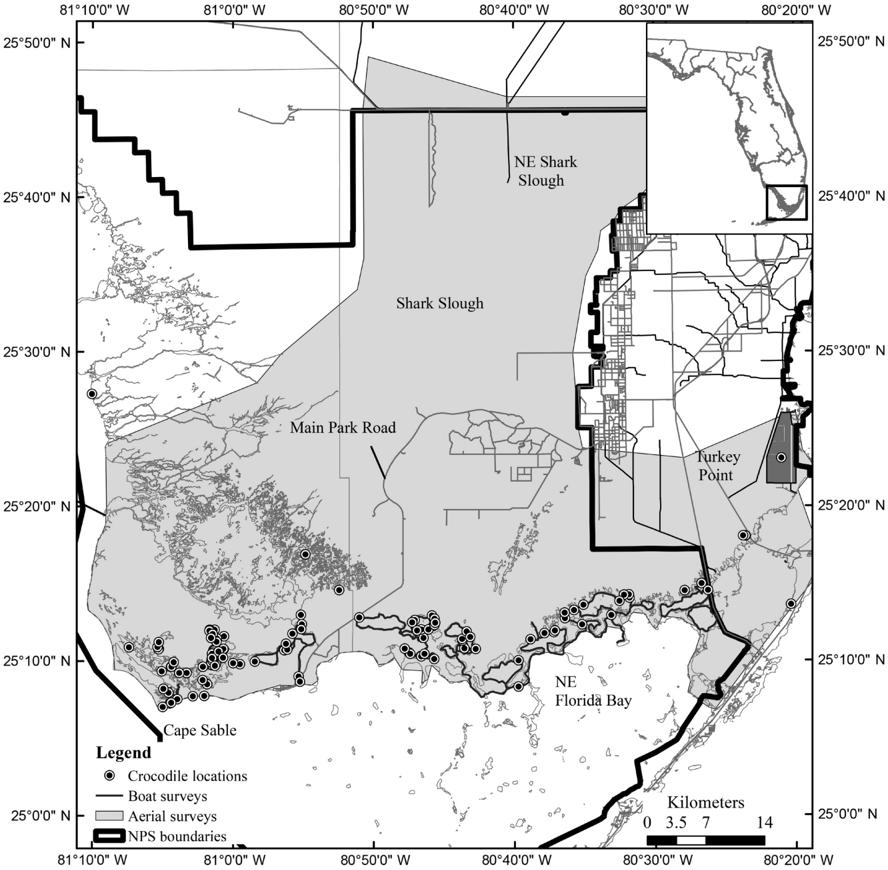
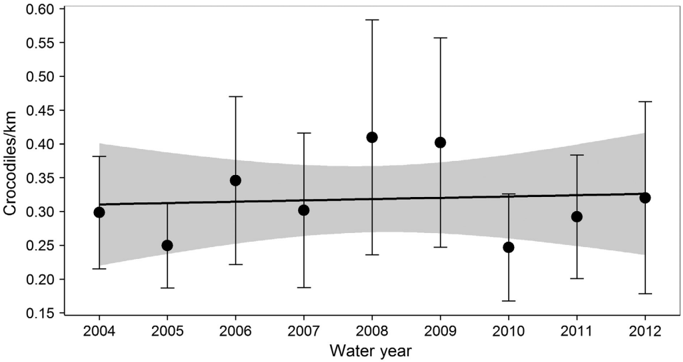
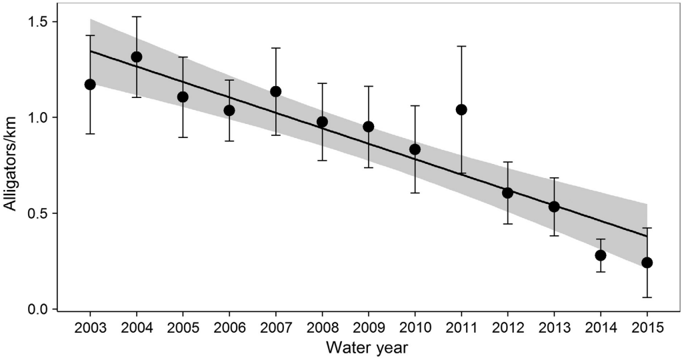
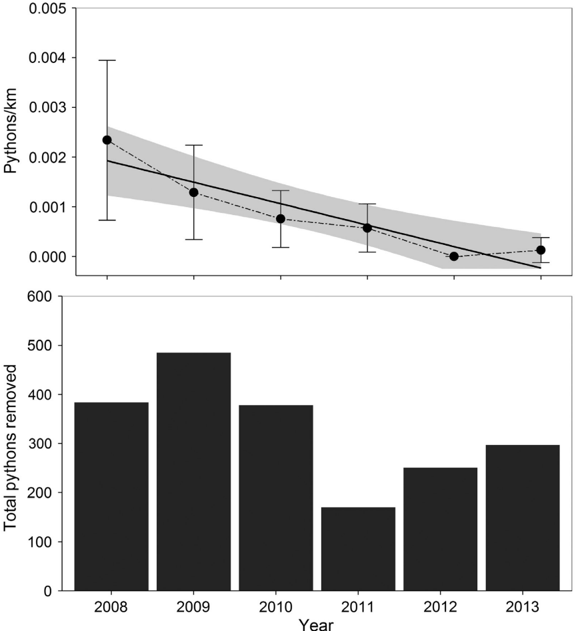
Verification
Claims the paper makes
The claims and statistics of this paper haven’t been checked yet.
Run the check — free, no account needed. It reads the open-access text and checks the sources it cites.
Claims other papers make about this one
Each is checked against this paper’s own text: does it say what the citing paper says it does?
In the citing paper
“We know, for example, that habitat, body size, and geographic ranges in living members of crown group Archosauria are extremely sensitive to thermal excursions (63–65).”
From Asteroid impact, not volcanism, caused the end-Cretaceous dinosaur extinction (2020) · cites this paper as [63]
In the citing paper
“An ecological determinant behind the high selectivity of the process may be found in variables like body size, diet, physiology, habitat, and geographic range (5, 57, 63).”
From Asteroid impact, not volcanism, caused the end-Cretaceous dinosaur extinction (2020) · cites this paper as [63]
Self-check
Percentages, sums and reported differences re-computed from the paper’s own numbers.
The self-check needs the paper’s full text.
Citations
Cites
No references could be resolved yet.
Research works printed but not linked: 23
- 10.1007/s10530-010-9761-4 · DOI
- 10.1111/gcb.12574 · DOI
- 10.2307/1446456 · DOI
- Brien M. L., 2008, American crocodile, Crocodylus acutus, mortalities in southern Florida, Florida Field Naturalist, 36, 55
- 10.2307/2425371 · DOI
- 10.1086/660021 · DOI
- 10.1073/pnas.0709472105 · DOI · Paper page
- 10.2307/1563593 · DOI
- 10.1127/0941-2948/2006/0130 · DOI · Paper page
- 10.11646/zootaxa.3028.1.1 · DOI
- Lang J. W., 1987, Wildlife management: crocodiles and alligators, 301
- 10.1890/12-2235.1 · DOI
- Mazzotti F. J., 1989, Factors affecting the nesting success of the American Crocodile, Crocodylus acutus, in Florida Bay, Bulletin of Marine Science, 44, 220
- 10.1016/j.ecolind.2008.06.008 · DOI
- 10.1670/0022-1511(2007)41[122:ACCAIF]2.0.CO;2 · DOI
- 10.1007/s10530-010-9797-5 · DOI
- Meshaka W. E., 2011, A runaway train in the making: the exotic amphibians, reptiles, turtles, and crocodilians of Florida. Monograph 1, Herpetological Conservation and Biology, 6, 1
- 10.1111/j.1461-0248.2005.00792.x · DOI
- 10.1371/journal.pone.0002931 · DOI
- 10.1007/s10530-008-9228-z · DOI
- 10.2307/1928991 · DOI
- 10.1093/icb/19.1.239 · DOI
- 10.1007/s13157-015-0677-8 · DOI
Cited by
Asteroid impact, not volcanism, caused the end-Cretaceous dinosaur extinction
Chiarenza, A. A., Farnsworth, A., Mannion, P. D., Lunt, D. J., Valdes, P. J., Morgan, J. V., & Allison, P. A. (2020) · Proceedings of the National Academy of Sciences · doi:10.1073/pnas.2006087117 · Cited by 228
Metadata
- Authors
- Mazzotti, F. J., Cherkiss, M. S., Parry, M., Beauchamp, J., Rochford, M., Smith, B., Hart, K., & Brandt, L. A.
- Affiliations
- Department of Wildlife Ecology and Conservation Fort Lauderdale Research and Education Center University of Florida 3205 College Avenue Davie Florida 33314 USA
- Southeast Ecological Science Center U.S. Geological Survey 3245 College Avenue Davie Florida 33314 USA
- South Florida Natural Resource Center National Park Service 40001 State Road 9336 Homestead Florida 33034 USA
- U.S. Fish and Wildlife Service 3205 College Avenue Davie Florida 33314 USA
- Venue
- Ecosphere
- Publisher
- Wiley
- Published
- 2016-08
- Volume
- 7
- Issue
- 8
- ISSN
- 2150-8925
- Cited by
- 33
- References
- 0
- Language
- en
- Funders
- U.S. Geological Survey
- University of Florida
About these checks
Registry, retraction, Cites and statistics results are computed, not judged, with one exception: a printed reference that no index lists is read once by a model before it counts as a citation error. Claims are extracted by a model and kept only when their quote appears verbatim in the text; each cited source is then checked, with a model’s help, for whether it says what the claim relies on. Those verdicts can be wrong — read the claim’s quote and the cited source before relying on one.
Statistics and arithmetic are recomputed, not judged.
Confidence bands are shown only for fields calibrated on our annotated test set. None is calibrated yet, so no band is shown.
What counts as a claim ›How we measure confidence ›How we check this ›
Are you an author, or do you see a problem with this page? Request a review
