

Clomiphene citrate: A potential alternative for testosterone therapy in hypogonadal males
Open accessThe DOI matches its Crossref record; 35 of the 36 references it cites were found in a registry or an index; none of the 27 sources its claims cite is checked for support yet.
Abstract
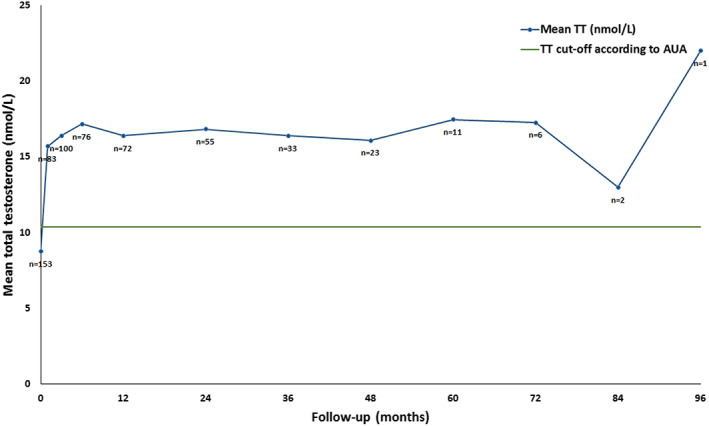
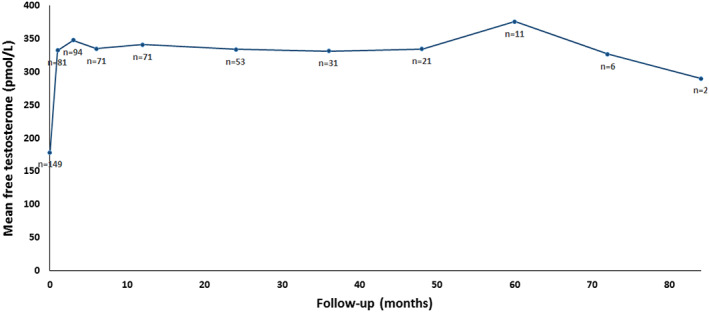
Background: Hypogonadism is a worldwide problem among men causing sexual, physical and mental problems. Testosterone therapy is the first‐choice treatment for male hypogonadism, with several side effects, that is, subfertility. Clomiphene citrate (CC) is an alternative off‐label therapy for a certain group of hypogonadal males, especially for those with an active or future child wish. There is scarce literature in usage of CC for men with hypogonadism. The aim of this retrospective study was to evaluate the effectiveness and safety of CC for hypogonadal males. Methods: In this single‐centre study, men treated with CC for hypogonadism were evaluated retrospectively. Primary outcome was hormonal evaluation including total testosterone (TT), free testosterone (FT), luteinizing hormone (LH) and follicle stimulating hormone (FSH). Secondary outcomes were hypogonadal symptoms, metabolic and lipid parameters, haemoglobin (Hb), haematocrit (Ht), prostate specific antigen (PSA), side effects, the effect of a trial without medication and potential predictors for biochemical and clinical response. Results: In total, 153 hypogonadal men were treated with CC. Mean TT, FT, LH and FSH increased during treatment. TT increased from 9 to 16 nmol/L, with a biochemical increase in 89% of the patients. In patients who continued CC treatment, an increased level of TT persisted after 8 years of treatment. With CC treatment, 74% of the patients experienced hypogonadal symptom improvement. LH at the lower normal range before CC treatment was predictive for better TT response. During CC therapy, few side effects were reported and no clinical important changes in PSA, Hb and Ht were found. Conclusion: Clomiphene citrate is an effective therapy on short and long term, improving both clinical symptoms and biochemical markers of male hypogonadism with few side effects and good safety aspects.
Overview
CoChat Summary
TL;DR
In a single-centre retrospective cohort of 153 hypogonadal men, clomiphene citrate increased total testosterone from 9 to 16 nmol/L, with a biochemical increase in 89% and symptom improvement in 74%. It appeared effective short and long term with few reported side effects and no clinically important changes in PSA, Hb, or Ht.
Key findings
- Median total testosterone increased from 9 to 16 nmol/L at first on-treatment measurement, with a biochemical increase in 136/153 patients (89%). FT, LH, FSH, and SHBG increased and albumin decreased at first measurement and annually thereafter up to 8 years (p ≤ .05); in patients who continued treatment, increased TT persisted after 8 years.
- Symptom improvement occurred in 74% of assessed patients (151 assessed), with median time to improvement of 3 months (range 1–24). Improvement was seen in 81% of biochemical responders versus 27% of non-responders. Non-responders were 15/153 (10%) and stopped treatment between 1 and 6 months; mean pre-treatment LH was 13.7 IU/L in non-responders versus 4.7 IU/L in responders. Lower-normal LH and FSH before treatment correlated with greater TT increase (r = −.37 and −.40), and low-normal LH correlated with symptom improvement (r = −.21).
- Side effects were reported in 16/153 patients (10%): hot flushes (n = 5), agitation (n = 4), visual changes (n = 2), nipple tenderness (n = 2), mood change (n = 1), weight gain (n = 1), blurred vision (n = 1), headache (n = 1), dizziness (n = 1). No changes were found in Ht, Hb, thrombocytes, liver enzymes, or PSA; two patients had marginal Ht elevation (0.50 and 0.51 L/L). One patient with a history of lower extremity thrombosis developed a lung embolus in the fourth year of follow-up. Total cholesterol, LDL-, HDL-, and non-HDL cholesterol decreased during treatment (p < .05), while BMI and triglycerides did not change.
- In 52/153 patients (34%) who had a trial without medication, TT decreased in 48/52 (94%), with mean TT falling from 19.1 to 10.8 nmol/L (p = .000) and mean FT from 373.2 to 203.3 pmol/L (p = .000); 20/52 (38%) reported worsening symptoms, and 18/52 (35%) restarted CC. A reversed TT response occurred in 2 patients (<1%), both hypergonadotropic with prior orchiectomy for seminoma.
Methods
- Retrospective, single-centre study at UMC Utrecht, January 2012–January 2021; 173 men were screened and 153 included. Inclusion: men aged >18 years with low TT (<12.1 nmol/L) or relatively low TT (<15 nmol/L) plus low FT (<243 pmol/L) or young adult males with a history of orchiectomy and clear hypogonadal symptoms; no upper cut-off for FSH or LH. Exclusions: hypogonadotropic hypogonadism, no TT/FT assessment before or during treatment, CC combined with TTh, hCG, or aromatase inhibitors, or use of these therapies within 12 months of CC initiation.
- CC starting dosage was 25 mg every other day, or 25 mg/day if bodyweight was above 100 kg; dosage was raised to 50 mg daily when there was little biochemical response. Primary outcome was hormonal assessment (TT, FT, LH, FSH, estradiol, SHBG, albumin, prolactin) at baseline and at 1, 3, 6, and 12 months during therapy and annually thereafter. Secondary outcomes included hypogonadal symptoms, metabolic and lipid parameters, Hb, Ht, PSA, side effects, trial without medication, and potential predictors of biochemical and clinical response.
- Data were recorded in Microsoft Excel and analysed with SPSS version 25.0. Paired sample t-tests or Wilcoxon signed-rank tests were used for before/during treatment comparisons; Pearson or Spearman tests were used for correlation; p ≤ .05 was considered statistically significant.
Limitations
- Stated by the paper: retrospective design with manually obtained data and no strict inclusion criteria or predefined baseline/outcome measurements; no validated Dutch hypogonadism questionnaire, so symptoms and improvement were self-reported/subjective; not placebo-controlled, so it is difficult to conclude that clinical improvement results from CC; side effects were not reported in 130 patients and were not systematically classified, possibly underestimating prevalence; starting dosage was based on weight and expert opinion from 2012; included patients had different origins of hypogonadism, causing heterogeneity and limiting subgroup conclusions.
- Evident from the text: single-centre design with no control or comparator group; substantial attrition and loss to follow-up (21 patients lost in the first year and 50 stopped treatment in the first year; at study endpoint, 43 were still in follow-up, 26 were lost, 71 stopped CC, and 14 switched to TTh); estradiol was measured in only a small subset (n = 13 before treatment and n = 17 at first measurement), limiting hormonal conclusions; and it is unclear whether all lipid values were based on fasting blood tests.
Model-written summary. Check it against the paper before relying on it.
Integrity signals
Registry
Cites
Statistics
Figures
Verification
Claims the paper makes
0 Valid · 0 Not valid · 19 Not checked · 75 Own results and interpretations
A result the paper reports from its own data — it cites no other source for it, so there is none to check. The quote shows it is in the paper.
In the paper
“Most patients with side effects continued CC after the TWM, suggesting that CC's benefits outweighed side effects.”
§ Clomiphene citrate: A potential alternative for testosterone therapy in hypogonadal males > DISCUSSION
hedgedstates an association- Asserted: passes — The authors put it forward as true.
- Checkable: passes — It can be checked against evidence.
- Load-bearing: passes — The paper’s conclusions depend on it.
- Based: passes — The paper gives a reason why it holds.
A result the paper reports from its own data — it cites no other source for it, so there is none to check. The quote shows it is in the paper.
In the paper
“In this hypergonadotropic hypogonadism group 6/16 were biochemical responders (38%), of which the patient with Klinefelter.”
§ Clomiphene citrate: A potential alternative for testosterone therapy in hypogonadal males > RESULTS > Hormonal evaluation
plainn = 16- Asserted: passes — The authors put it forward as true.
- Checkable: passes — It can be checked against evidence.
- Load-bearing: passes — The paper’s conclusions depend on it.
- Based: passes — The paper gives a reason why it holds.
A result the paper reports from its own data — it cites no other source for it, so there is none to check. The quote shows it is in the paper.
In the paper
“At first measurement during treatment, median TT increased from 9 to 16 nmol/L”
- Also stated in: § Results · plain
“TT increased from 9 to 16 nmol/L, with a biochemical increase in 89% of the patients.”
§ Clomiphene citrate: A potential alternative for testosterone therapy in hypogonadal males > RESULTS > Hormonal evaluation
plainstates a causen = 153- Asserted: passes — The authors put it forward as true.
- Checkable: passes — It can be checked against evidence.
- Load-bearing: passes — The paper’s conclusions depend on it.
- Based: passes — The paper gives a reason why it holds.
- Also stated in: § Results · plain
None of the sources cited for this claim have been checked yet.
In the paper
“A reversed effect of CC on testosterone levels was found in two young hypergonadotropic patients (<1%).”
§ Clomiphene citrate: A potential alternative for testosterone therapy in hypogonadal males > DISCUSSION
plainstates a causen = 2- Asserted: passes — The authors put it forward as true.
- Checkable: passes — It can be checked against evidence.
- Load-bearing: unclear — It is unclear whether the paper’s conclusions depend on it.
- Based: passes — The paper gives a reason why it holds.
A result the paper reports from its own data — it cites no other source for it, so there is none to check. The quote shows it is in the paper.
In the paper
“In the study, mean LH before treatment was 4.7 IU/L in the responder group and 13.7 IU/L in the non‐responder group.”
§ Clomiphene citrate: A potential alternative for testosterone therapy in hypogonadal males > DISCUSSION
plain- Asserted: passes — The authors put it forward as true.
- Checkable: passes — It can be checked against evidence.
- Load-bearing: unclear — It is unclear whether the paper’s conclusions depend on it.
- Based: passes — The paper gives a reason why it holds.
49 more claims
Create a free account to see all 94 claims and to verify the 26 references still open.
- It may state two separate claims as one. 34
- Probably not a substantial claim. 10
- The quote only partly states this claim. 1
Claims other papers make about this one
Each is checked against this paper’s own text: does it say what the citing paper says it does?
In the citing paper
“Numerous studies have shown the efficacy of clomiphene in ameliorating the symptoms associated with hypogonadism (13,14).”
From Safety and efficacy of enclomiphene and clomiphene for hypogonadal men (2024) · cites this paper as [13]
Self-check
Percentages, sums and reported differences re-computed from the paper’s own numbers.
Each contradiction between two passages listed here was confirmed by an independent check.
Rated minor: it would not touch a result — a value no result rests on, a p-value that stays on the same side of the significance level, or a conflict that is clerical, resolved elsewhere in the paper, or outside its own findings.
In the paper
“| Testicular tumour, n (%) | 38 (23) | (n = 153) |”
§ Clomiphene citrate: A potential alternative for testosterone therapy in hypogonadal males > RESULTS > Study population
Reported 23 · recomputed 24.836601
Rated minor: it would not touch a result — a value no result rests on, a p-value that stays on the same side of the significance level, or a conflict that is clerical, resolved elsewhere in the paper, or outside its own findings.
In the paper
“Only 14/35 (32%) of the physician‐initiated TWM patients continued CC therapy after TWM.”
§ Clomiphene citrate: A potential alternative for testosterone therapy in hypogonadal males > RESULTS > Trial without medication
Reported 32 · recomputed 40
Rated minor: it would not touch a result — a value no result rests on, a p-value that stays on the same side of the significance level, or a conflict that is clerical, resolved elsewhere in the paper, or outside its own findings.
In the paper
“Eight/35 patients (25%) who did not restart CC after TWM had TT levels before initiating CC treatment of >12 nmol/L.”
§ Clomiphene citrate: A potential alternative for testosterone therapy in hypogonadal males > RESULTS > Trial without medication
Reported 25 · recomputed 22.857143
Rated minor: it would not touch a result — a value no result rests on, a p-value that stays on the same side of the significance level, or a conflict that is clerical, resolved elsewhere in the paper, or outside its own findings.
In the paper
“During TWM, TT decreased significant in 48 of these 52 patients (94%),”
§ Clomiphene citrate: A potential alternative for testosterone therapy in hypogonadal males > RESULTS > Trial without medication
Reported 94 · recomputed 92.307692
Rated minor: it would not touch a result — a value no result rests on, a p-value that stays on the same side of the significance level, or a conflict that is clerical, resolved elsewhere in the paper, or outside its own findings.
In the paper
§ Clomiphene citrate: A potential alternative for testosterone therapy in hypogonadal males > RESULTS > Safety aspects and side effects
“Two patients had marginally elevated Ht during treatment (0.51 L/L), without availability of baseline Ht levels.”
§ Clomiphene citrate: A potential alternative for testosterone therapy in hypogonadal males > RESULTS > Safety aspects and side effects
“In the other patient with Ht 0.50, CC therapy was continued and Ht values were monitored.”
1 more finding
Create a free account to see every finding of this check.
Citations
Cites
Identification of late-onset hypogonadism in middle-aged and elderly men
Wu, F. C. W., Tajar, A., Beynon, J. M., Pye, S. R., Silman, A. J., Finn, J. D., O'Neill, T. W., Bartfai, G., Casanueva, F. F., Forti, G., et al. (2010) · New England Journal of Medicine · doi:10.1056/nejmoa0911101 · Cited by 1,544 · cited 1×
“Decreased libido 86 (57) 43 (50) Erectile dysfunction 84 (56) 44 (52) Fatigue 79 (52) 57 (72) Depressive thoughts 11 (7) n.”
Prevalence of Symptomatic Androgen Deficiency in Men
Araujo, A. B., Esche, G. R., Kupelian, V., O’Donnell, A. B., Travison, T. G., Williams, R. E., Clark, R. V., & McKinlay, J. B. (2007) · The Journal of Clinical Endocrinology & Metabolism · doi:10.1210/jc.2007-1245 · Cited by 720 · cited 2×
“0) Medical history (n = 153) Klinefelter, n (%) 1 (1) Orchiectomy, n (%) 41 (27) Orchidopexy, n (%) 5 (3) Vasectomy, n (%) 17 (11) Vasovasostomy, n (%) 3 (2) Diabetes mellitus, n (%) 15 (10)”
BackgroundAssociation of Specific Symptoms and Metabolic Risks with Serum Testosterone in Older Men
Zitzmann, M., Faber, S., & Nieschlag, E. (2006) · The Journal of Clinical Endocrinology & Metabolism · doi:10.1210/jc.2006-0401 · Cited by 552
Hematocrit and the risk of cardiovascular disease—The Framingham Study: A 34-year follow-up
Gagnon, D. R., Zhang, T.-J., Brand, F. N., & Kannel, W. B. (1994) · American Heart Journal · doi:10.1016/0002-8703(94)90679-3 · Cited by 376
(2010) · doi:10.1007/978-3-540-78355-8 · Cited by 318
Onset of effects of testosterone treatment and time span until maximum effects are achieved
Saad, F., Aversa, A., Isidori, A. M., Zafalon, L., Zitzmann, M., & Gooren, L. (2011) · European Journal of Endocrinology · doi:10.1530/eje-11-0221 · Cited by 232 · cited 2×
“Myocardial or brain infarction, n (%) 16 (10)”
BackgroundKhera, M., Adaikan, G., Buvat, J., Carrier, S., El-Meliegy, A., Hatzimouratidis, K., McCullough, A., Morgentaler, A., Torres, L. O., & Salonia, A. (2016) · The Journal of Sexual Medicine · doi:10.1016/j.jsxm.2016.10.009 · Cited by 177
Zarotsky, V., Huang, M. ‐., Carman, W., Morgentaler, A., Singhal, P. K., Coffin, D., & Jones, T. H. (2014) · Andrology · doi:10.1111/andr.274 · Cited by 176
Correlates of low testosterone and symptomatic androgen deficiency in a population-based sample
Hall, S. A., Esche, G. R., Araujo, A. B., Travison, T. G., Clark, R. V., Williams, R. E., & McKinlay, J. B. (2008) · The Journal of Clinical Endocrinology & Metabolism · doi:10.1210/jc.2008-0021 · Cited by 167
Clomiphene citrate is safe and effective for long‐term management of hypogonadism
Moskovic, D. J., Katz, D. J., Akhavan, A., Park, K., & Mulhall, J. P. (2012) · BJU International · doi:10.1111/j.1464-410x.2012.10968.x · Cited by 136
Research works printed but not linked: 1
- An J, Cheetham TC, Van Den Eeden S. Testosterone replacement therapy patterns for aging males in a managed care setting. Clin Med Res. 2013; 11: 141. · doi:10.3121/cmr.2013.1176.ps3-36
Cited by
Kaltsas, A., Dimitriadis, F., Zachariou, A., Koukos, S., Chrisofos, M., & Sofikitis, N. (2026) · Cells · doi:10.3390/cells15020158 · Cited by 12
“It acts by blocking estrogenic feedback at the pituitary gland, increasing LH and follicle-stimulating hormone secretion, and thereby enhancing Leydig cell activity and testosterone synthesis while preserving or potentially improving sperm parameters [91].”
Henriksen, H. C. B., Jørgensen, A. P., Bjørnebekk, A., Neupane, S. P., & Havnes, I. A. (2024) · Performance Enhancement & Health · doi:10.1016/j.peh.2024.100283 · Cited by 12
Safety and efficacy of enclomiphene and clomiphene for hypogonadal men
Saffati, G., Kassab, J., Orozco Rendon, D., Hinojosa-Gonzalez, D. E., Kronstedt, S., Lipshultz, L. I., & Khera, M. (2024) · Translational Andrology and Urology · doi:10.21037/tau-24-238 · Cited by 9
Metadata
- Authors
- Huijben, M., Lock, M. T. W. T., de Kemp, V. F., Beck, J. J. H., De Kort, L. M. O., & van Breda, H. M. K.
- Affiliations
- University Medical Center Utrecht (NL)
- St. Antonius Ziekenhuis (NL)
- Department of Urology University Medical Centre Utrecht Utrecht The Netherlands
- Corresponding author
- Huijben, M.
- Venue
- Endocrinology, Diabetes & Metabolism
- Publisher
- Wiley
- Published
- 2023-03-30
- Volume
- 6
- Issue
- 3
- Pages
- e416-e416
- ISSN
- 2398-9238 (ISSN-L)
- PMC
- PMC10164424
- OpenAlex
- W4362458581
- Semantic Scholar
- 6e4bdbffa764ad757a31a82658d07f863eb26f98
- Cited by
- 23
- References
- 36
- Citations by year
- 2026: 5 · 2025: 8 · 2024: 5 · 2023: 4
- FWCI
- 3.21
- Type
- journal article
- Language
- en
- Open access
- gold
- doi.org
- Licence
- Locations
- Endocrinology Diabetes & Metabolism (publishedVersion, cc-by)
- PubMed Central (publishedVersion, cc-by)
- PubMed (publishedVersion)
- DOAJ (DOAJ: Directory of Open Access Journals) (submittedVersion)
- Topics
- Health Sciences › Medicine › Endocrinology, Diabetes and Metabolism › Hormonal and reproductive studies
- Health Sciences › Medicine › Reproductive Medicine › Hypothalamic control of reproductive hormones
- Health Sciences › Medicine › Endocrinology, Diabetes and Metabolism › Adrenal Hormones and Disorders
- Keywords
- clomiphene citrate, male hypogonadism, testosterone replacement therapy, off-label therapy, luteinizing hormone, free testosterone, predictors of treatment response, adverse effects, prostate-specific antigen, hematological parameters
- MeSH terms
- Child, Clomiphene, Follicle Stimulating Hormone, Humans, Hypogonadism, Luteinizing Hormone, Male, Retrospective Studies, Testosterone, Prostate-Specific Antigen
About these checks
Registry, retraction, Cites and statistics results are computed, not judged, with one exception: a printed reference that no index lists is read once by a model before it counts as a citation error. Claims are extracted by a model and kept only when their quote appears verbatim in the text; each cited source is then checked, with a model’s help, for whether it says what the claim relies on. Those verdicts can be wrong — read the claim’s quote and the cited source before relying on one.
A language model drew the claims from the paper on 2026-11-25, under version 3 of the claim definition (model deepseek-v4.1-flash, prompt extract-v3).
A second model labelled each claim on 2026-11-25 (model jev-1.13-20260917, definition revision gold-guideline-v0.2).
Statistics and arithmetic are recomputed, not judged.
Confidence bands are shown only for fields calibrated on our annotated test set. None is calibrated yet, so no band is shown.
What counts as a claim ›How we measure confidence ›How we check this ›
Are you an author, or do you see a problem with this page? Request a review
How to cite
Cite CoChat for the checks on this page, and the paper for its own findings.
- This page
- CoChat. (2026). Citation check: Clomiphene citrate: A potential alternative for testosterone therapy in hypogonadal males. https://app.cochat.ai/papers/10.1002/edm2.416
- The paper
- Huijben, M., Lock, M. T. W. T., de Kemp, V. F., Beck, J. J. H., De Kort, L. M. O., & van Breda, H. M. K. (2023). Clomiphene citrate: A potential alternative for testosterone therapy in hypogonadal males. Endocrinology, Diabetes & Metabolism. https://doi.org/10.1002/edm2.416
Data sources
Bibliographic data: Semantic Scholar, OpenAlex, Crossref.
Contains information from the Semantic Scholar Academic Graph Datasets, made available under the ODC Attribution License (ODC-BY 1.0).
Semantic Scholar’s data is described in: Kinney, R., et al. (2023). The Semantic Scholar Open Data Platform. arXiv:2301.10140.
