

Socioeconomic Inequality and Educational Outcomes
Open accessThe DOI matches its Crossref record; 35 of the 35 references it cites were found in a registry or an index; 3 of the 59 sources its claims cite were checked for support.
Abstract
Open access book on socioeconomic status and educational outcomes across systems.
Overview
CoChat Summary
TL;DR
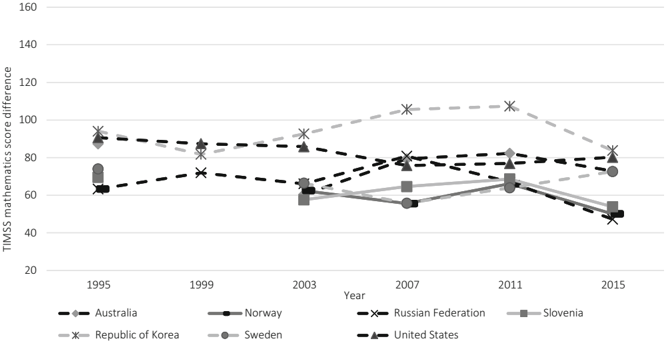
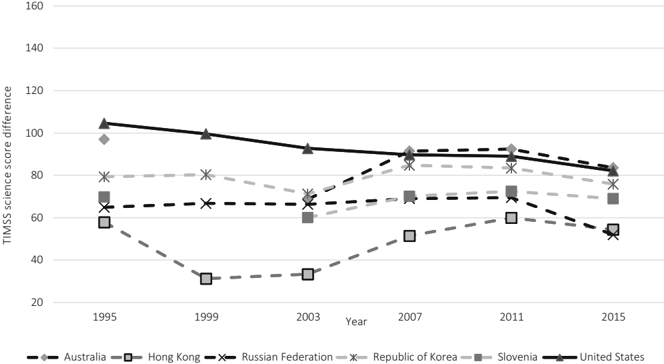
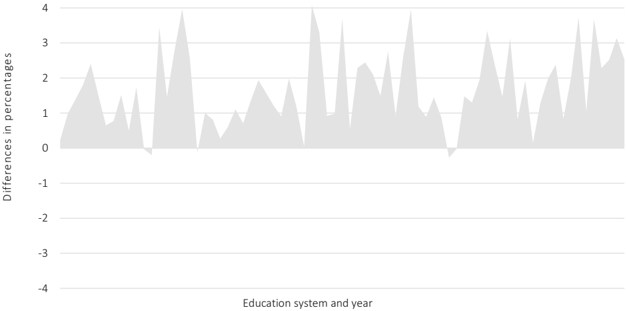
This book uses 20 years of TIMSS grade-eight data (1995–2015) to examine whether socioeconomic achievement gaps changed across 13 education systems, using a modified home educational resources index called SES*. It finds that gaps significantly widened in Hungary, Iran, Lithuania, and Singapore, while they significantly narrowed in Norway, Slovenia, and the United States.
Key findings
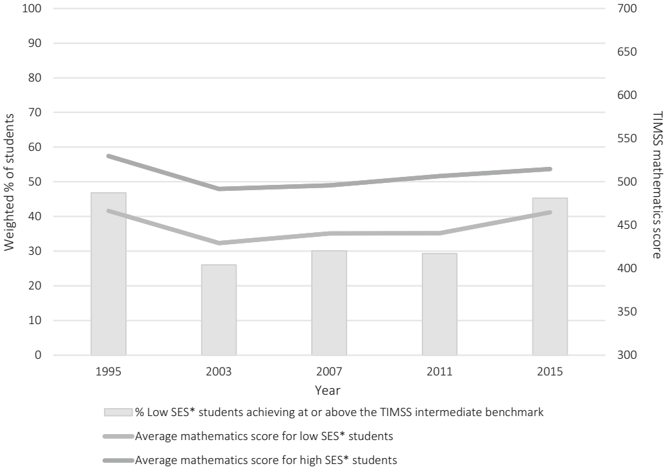
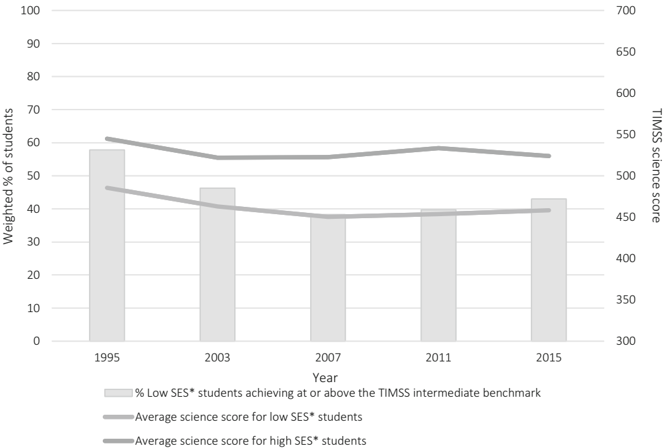
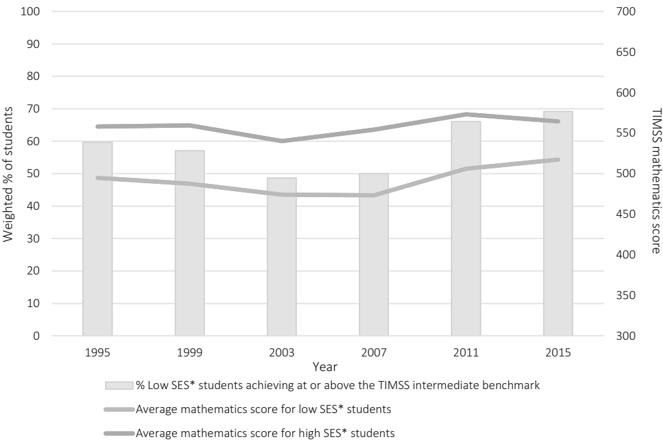
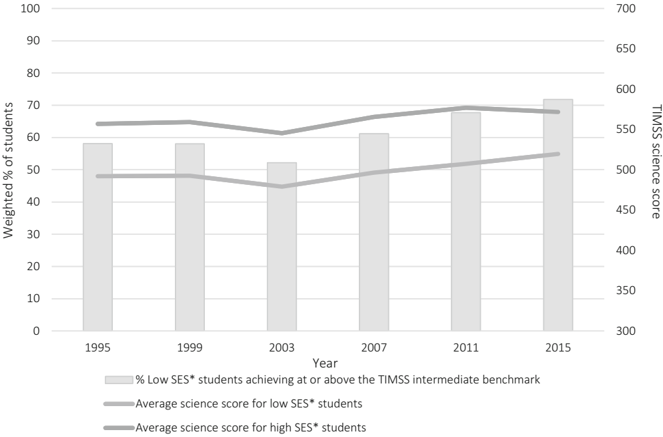
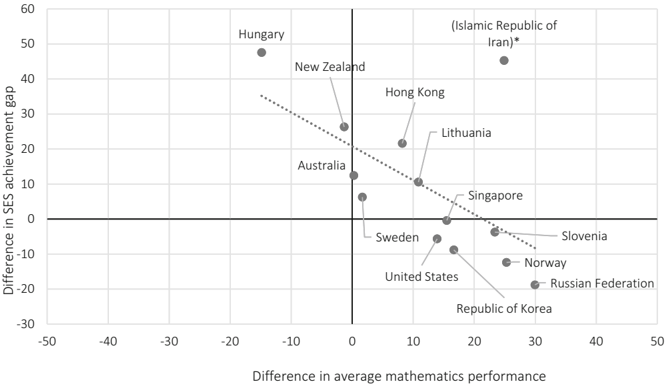
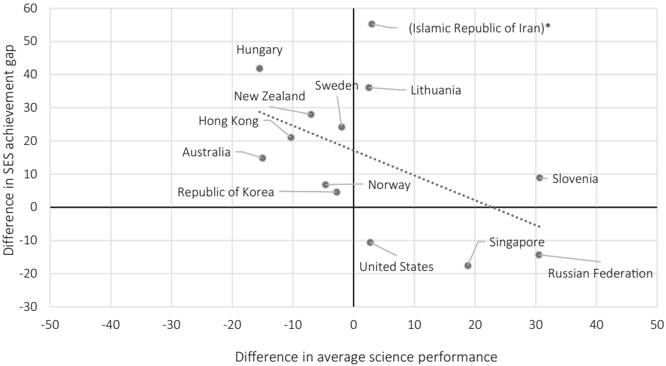
- Among 13 education systems, Hungary, Iran, Lithuania, and Singapore showed significantly widening SES* achievement gaps in either mathematics or science between 1995 and 2015; Norway, Slovenia, and the United States showed significantly narrowing gaps.
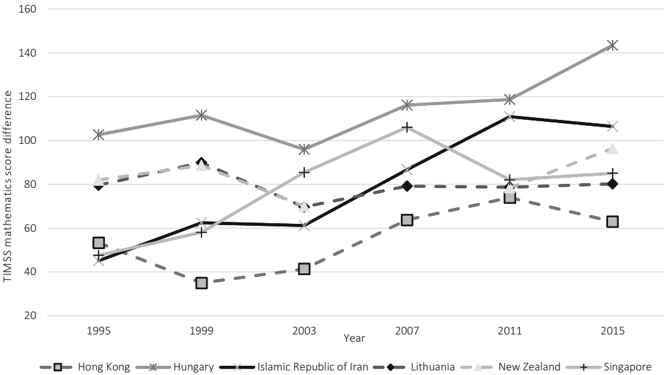
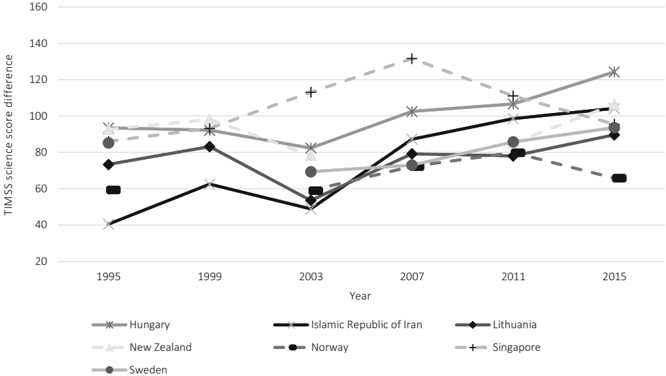
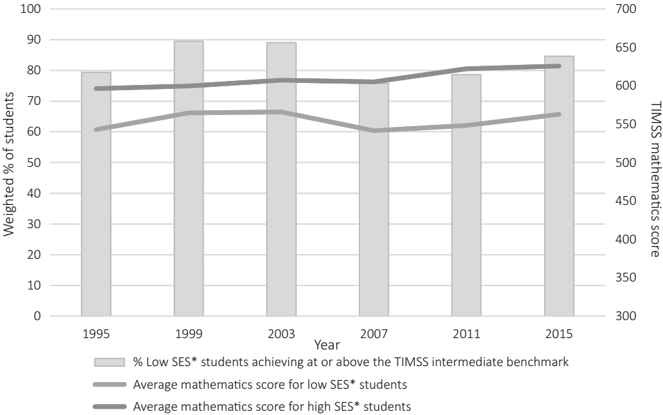
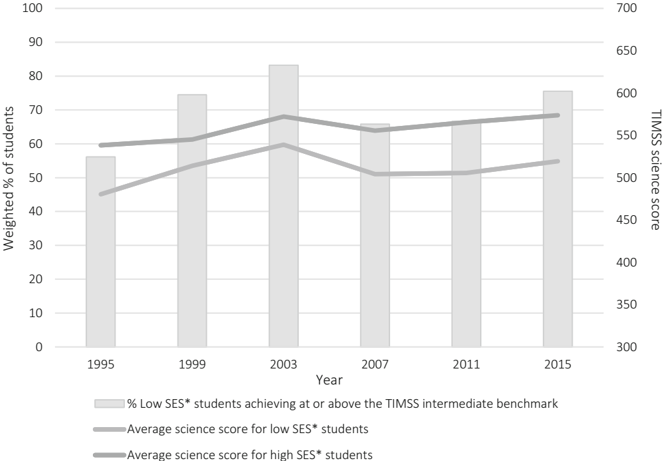
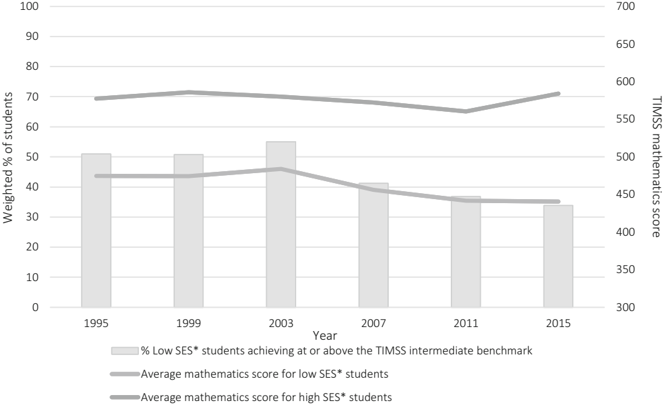
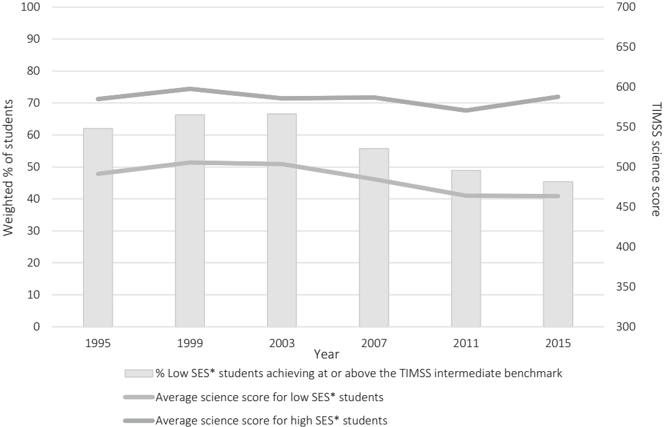
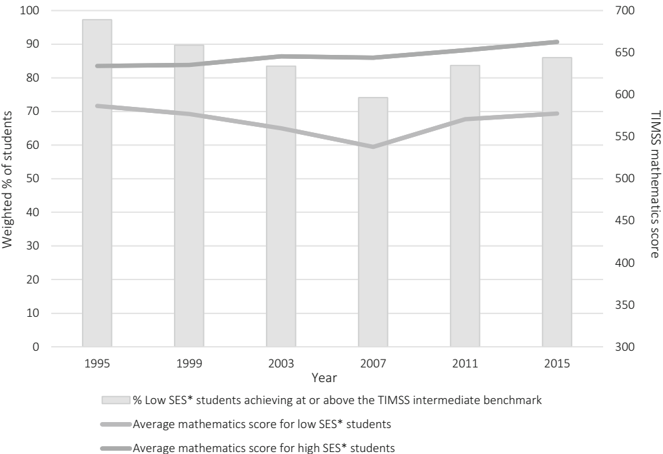
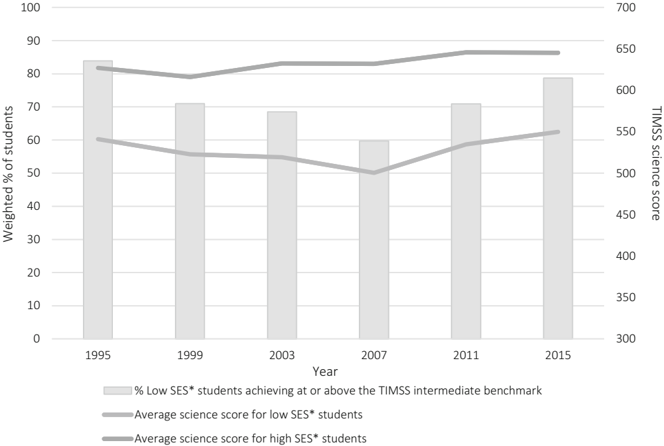
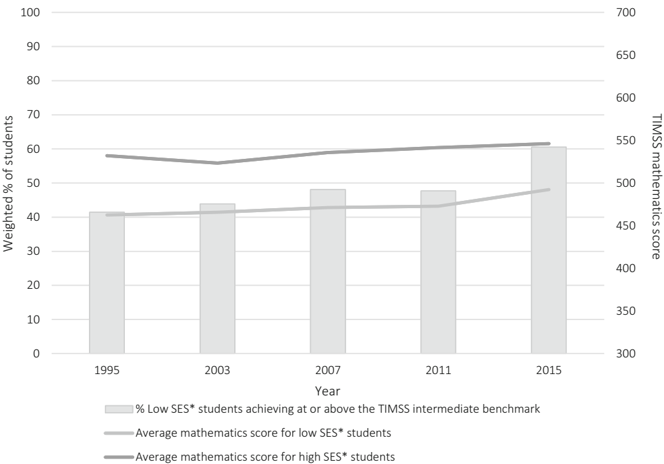
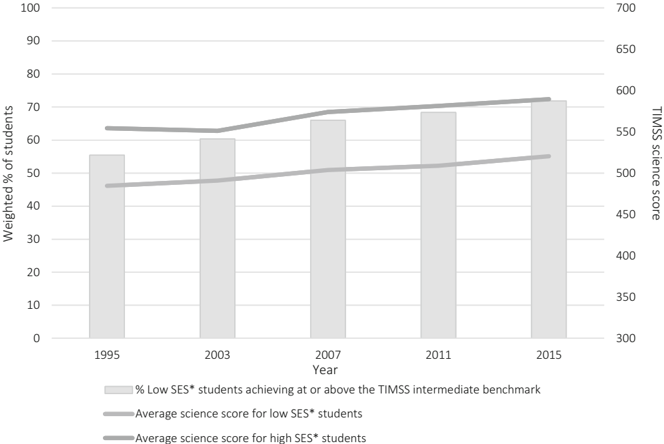
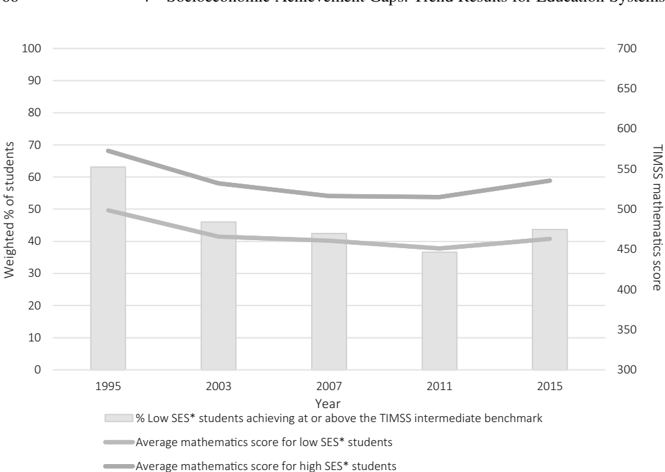
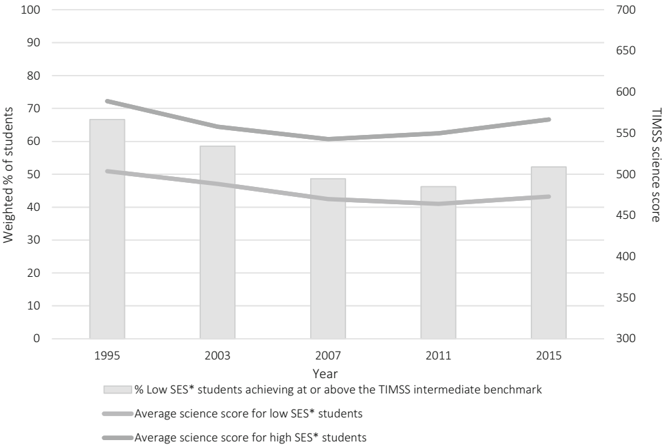
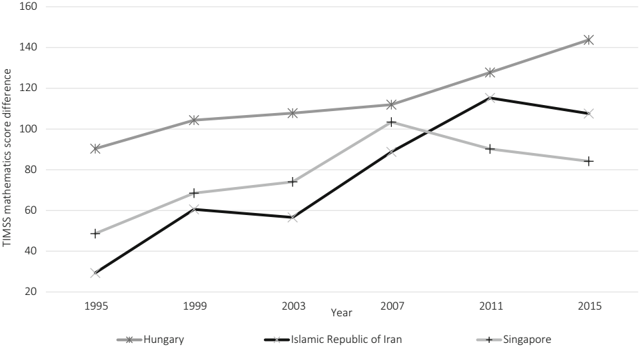
- Example magnitudes: Hungary’s mathematics gap rose from 103 points in 1995 to 143 points in 2015; Iran’s science gap rose from 41 to 104 points; Norway’s mathematics gap fell from 63 to 50 points; the United States’ science gap fell from 105 to 82 points.
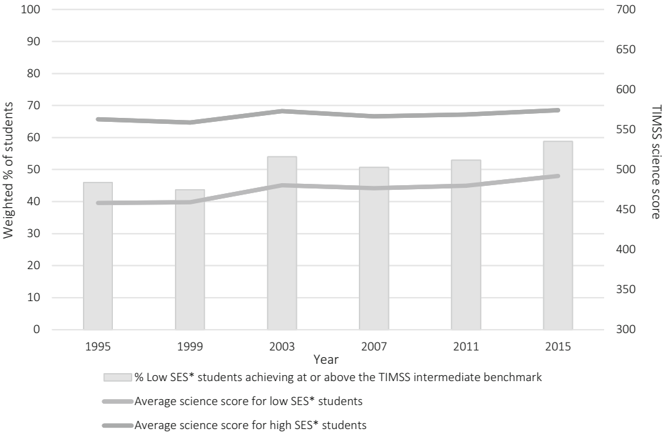
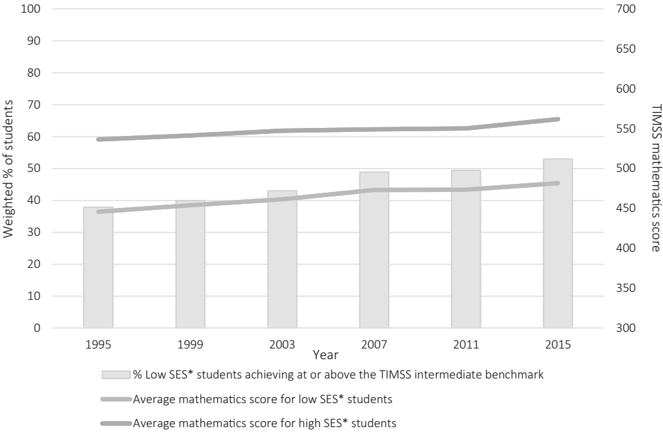
- Only Slovenia (mathematics) and the United States (science) showed the three-fold pattern of significantly reducing the SES* gap, improving disadvantaged students’ performance, and increasing the national average.
- The SES* index correlated with the TIMSS HER scale at r = 0.87 in 2011 and r = 0.84 in 2015; it explained 23.7% of mathematics variance in 2011 versus 23.6% for HER, and 17.8% in 2015 versus 19.1% for HER.
Methods
- Used TIMSS grade-eight public-use mathematics and science data from 1995 to 2015, limited to 13 education systems that participated in 1995, 2015, and at least one intermediate cycle.
- Constructed SES* (0–10 points) from number of books at home, home possessions (computer/tablet and study desk), and highest parental education; missing values were multiply imputed five times, and high/low SES* groups were defined by education-system- and year-specific quartiles.
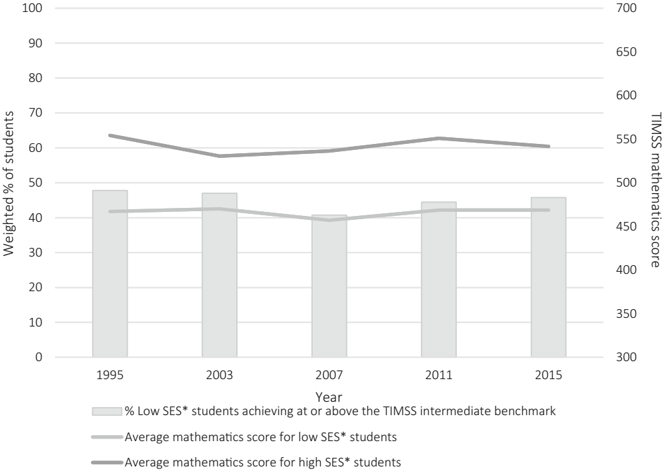
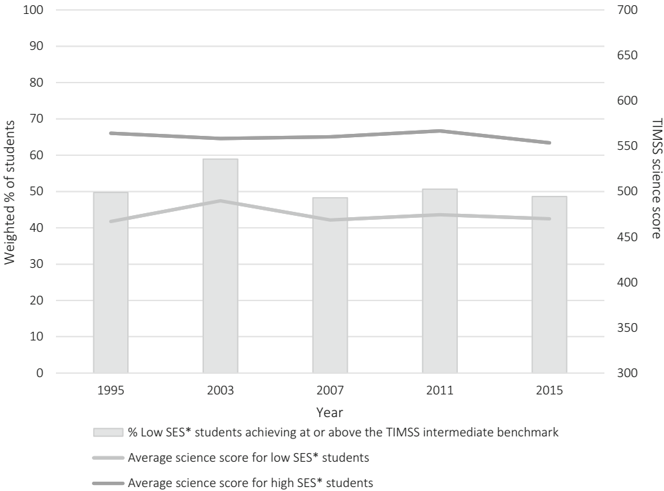
- Analyzed achievement gaps using TIMSS plausible values and imputed SES* values in Stata 14, tested gap changes for 1995 vs. 2003, 2003 vs. 2015, and 1995 vs. 2015, and tracked the percentage of low-SES* students at or above the TIMSS intermediate benchmark (475 points); macro indicators came from World Bank, UNESCO, CIA, OECD, World Inequality Database, and local agencies.
Limitations
- The authors state that they did not empirically test whether macro-level factors caused the observed inequality trends; connections to country-level indicators are descriptive.
- The authors state that measurement invariance of SES* items across years is a concern, since items such as computer ownership may have different meanings over time, and that high/low SES* differs by society.
- The text also makes evident that SES* is not the full SES construct (it excludes family income and parental occupation) and that the analysis is limited to 13 education systems with comparable TIMSS data.
Model-written summary. Check it against the paper before relying on it.
Integrity signals
Registry
Cites
Statistics
Figures

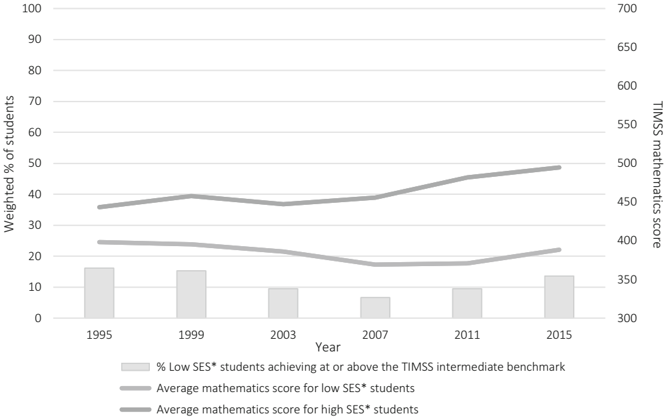
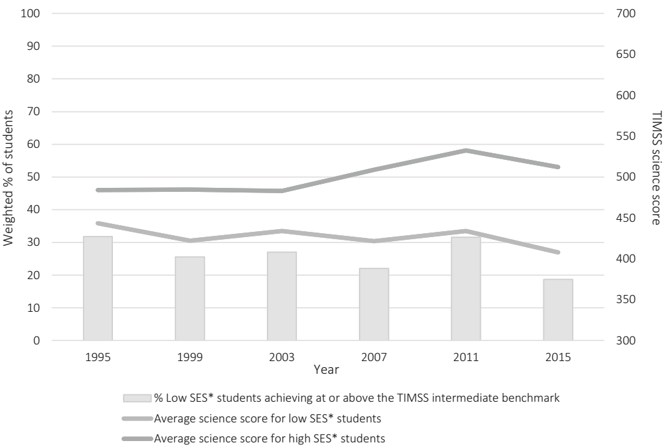
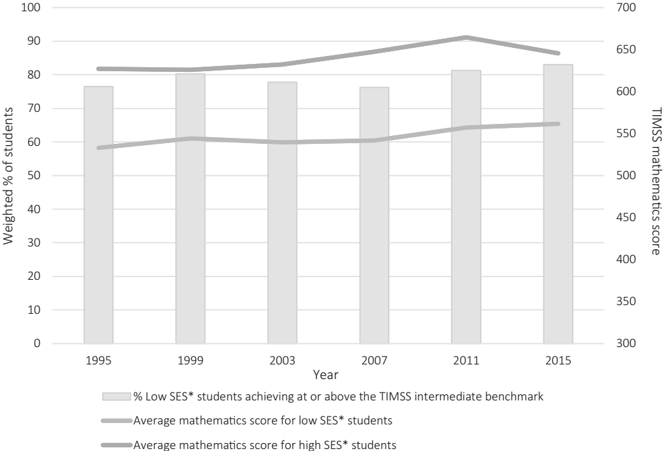
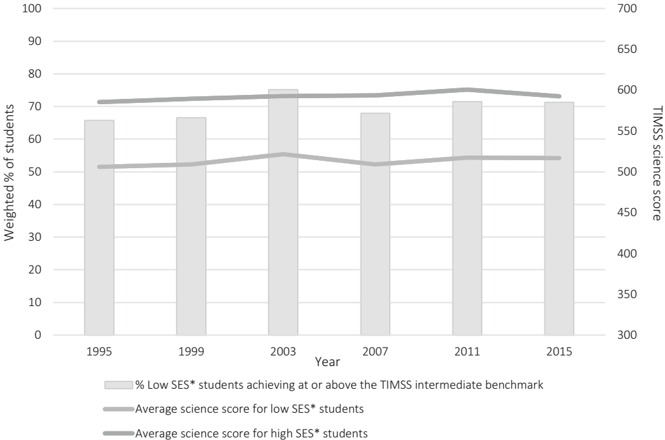
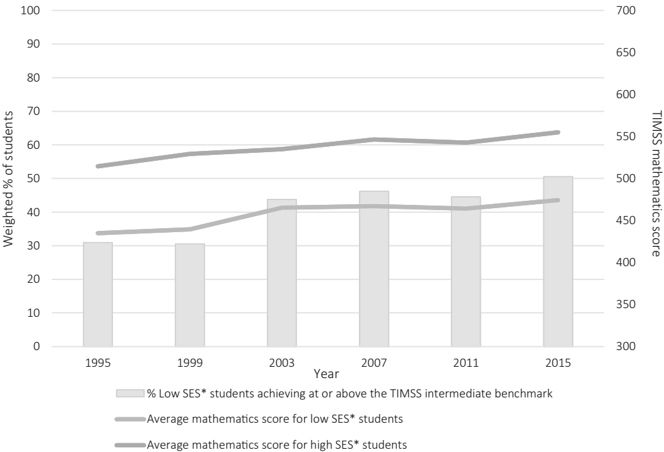
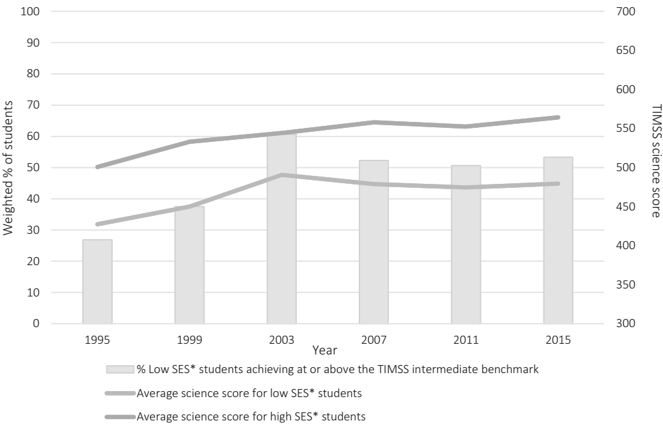
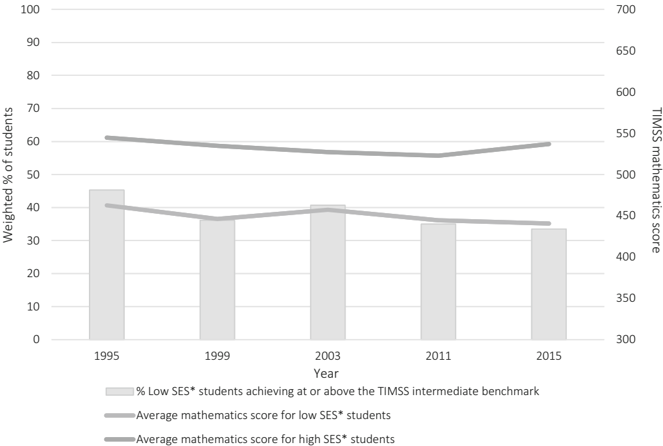
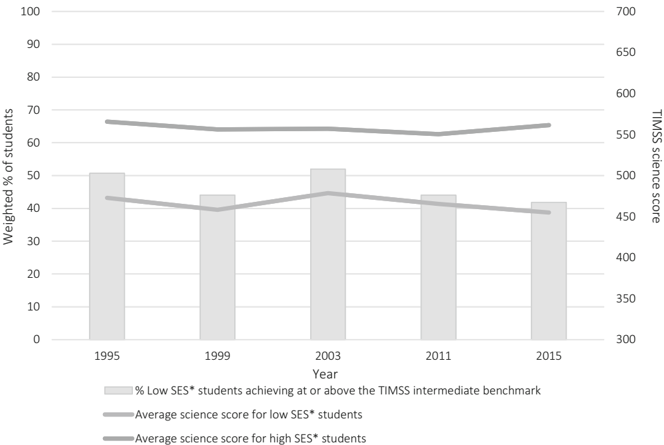
Verification
Claims the paper makes
3 Valid · 5 Not valid · 54 Not checked · 249 Own results and interpretations
Every source the paper cites for this claim was checked and supports it.
In the paper
“Previous research has shown that students at lower levels of SES perform better in education systems with lower levels of inequality than their counterparts in countries with more signi fi cant SES differences (Ornstein 2010).”
What the sources say
- Supportedcites Ornstein 2010 matched to “Achievement Gaps in Education” (2010) source
In “Excuses and More Excuses,” the paper says that lower-class people perform worse on cognitive tests in countries with greater inequality than in countries with fewer socioeconomic differences. It also links more even income distribution with higher educational achievement. This supports the citing sentence’s comparative paraphrase. (LLM, conf=0.90)
plainstates an association- Asserted: passes — The authors put it forward as true.
- Checkable: passes — It can be checked against evidence.
- Load-bearing: unclear — It is unclear whether the paper’s conclusions depend on it.
- Based: passes — The paper gives a reason why it holds.
- Supported
A result the paper states — it cites no source for it, so there is none to check. The quote shows it is in the paper.
In the paper
“These measures explain a sizeable amount of variation in the TIMSS achievement scores”
- Also stated in: § Chapter 1 Socioeconomic Inequality and Educational Outcomes: An Introduction · plain
“it is an effective measure, explaining a sizeable amount of variation in TIMSS achievement scores.”
plainstates an association- Asserted: passes — The authors put it forward as true.
- Checkable: passes — It can be checked against evidence.
- Load-bearing: passes — The paper’s conclusions depend on it.
- Based: passes — The paper gives a reason why it holds.
- Also stated in: § Chapter 1 Socioeconomic Inequality and Educational Outcomes: An Introduction · plain
A result the paper reports from its own data — it cites no other source for it, so there is none to check. The quote shows it is in the paper.
In the paper
“Second, the components of the HER index changed because the available home possession items that students are asked about in the student questionnaire have changed over time (Table 3.2).”
plainstates a cause- Asserted: passes — The authors put it forward as true.
- Checkable: passes — It can be checked against evidence.
- Load-bearing: unclear — It is unclear whether the paper’s conclusions depend on it.
- Based: passes — The paper gives a reason why it holds.
A result the paper states — it cites no source for it, so there is none to check. The quote shows it is in the paper.
In the paper
“especially when the students with missing values tended to come from lower ability levels”
plainstates an association- Asserted: passes — The authors put it forward as true.
- Checkable: passes — It can be checked against evidence.
- Load-bearing: passes — The paper’s conclusions depend on it.
- Based: passes — The paper gives a reason why it holds.
A result the paper states — it cites no source for it, so there is none to check. The quote shows it is in the paper.
In the paper
“The main components of the SES* index have different degrees of missingness.”
plain- Asserted: passes — The authors put it forward as true.
- Checkable: passes — It can be checked against evidence.
- Load-bearing: passes — The paper’s conclusions depend on it.
- Based: passes — The paper gives a reason why it holds.
140 more claims
Create a free account to see all 311 claims and every source verdict.
- Probably not a substantial claim. 62
- It may state two separate claims as one. 117
Self-check
Percentages, sums and reported differences re-computed from the paper’s own numbers.
Each contradiction between two passages listed here was confirmed by an independent check.
Rated minor: it would not touch a result — a value no result rests on, a p-value that stays on the same side of the significance level, or a conflict that is clerical, resolved elsewhere in the paper, or outside its own findings.
In the paper
§ 3.2.4 Defining High- and Low-SES* Groups
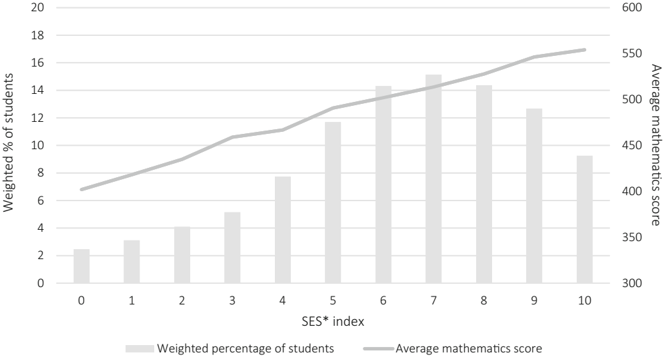
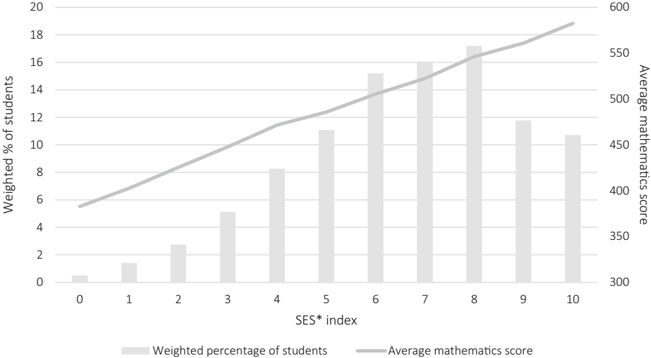
“if 27% of students are at index point fi ve”
§ 3.2.4 Defining High- and Low-SES* Groups
“| 5 | 13 | 27 |”
Rated minor: it would not touch a result — a value no result rests on, a p-value that stays on the same side of the significance level, or a conflict that is clerical, resolved elsewhere in the paper, or outside its own findings.
In the paper
§ 4.1.1 Increasing SES* Achievement Gap
“had increased to 143 points by 2015.”
§ 4.2.3 Hungary
“a 41-point increase in the gap in mathematics (from 103 in 1995 to 144 in 2015)”
Rated minor: it would not touch a result — a value no result rests on, a p-value that stays on the same side of the significance level, or a conflict that is clerical, resolved elsewhere in the paper, or outside its own findings.
In the paper
§ 3.2.4 Defining High- and Low-SES* Groups
“if 27% of students are at index point fi ve, then the sample contains 2 % more students than needed for the bottom quartile”
§ 3.2.4 Defining High- and Low-SES* Groups
“| 5 | 13 | 27 |”
Citations
Cites
The publisher hasn’t deposited this paper’s reference list.
Research works printed but not linked: 9
- Bourdieu, P. (1986). The forms of capital. In J. Richardson (Ed.), Handbook of theory and research for the sociology of education . New York: Greenwood.
- Coleman, J. S. (1990). Foundations of social theory . Cambridge, MA: Harvard University.
- Kalayc ı o ğ lu, D. B. (2015). The in fl uence of socioeconomic status, self-ef fi cacy, and anxiety on mathematics achievement in England, Greece, Hong Kong, the Netherlands, Turkey, and the USA. Educational Sciences: Theory and Practice, 15 (5), 1391 -1401.
- Keeves, J. P., & Saha, L. J. (1992). Home background factors and educational outcomes. In J. P. Keeves (Ed.), The IEA Study of Science III: changes in science education and achievement: 1970 -1984 (pp. 165 -186). Oxford: Pergamon.
- Kliucharev, G. A., & Kofanova, E. N. (2005). On the dynamics of the educational behavior of welloff and low-income Russians. Russian Education and Society, 47 (11), 22 -36.
- Lareau, A. (2011). Unequal childhoods: Class, race, and family life (2nd ed.). Berkeley, CA: University of California Press.
- NCES (Ed.). (2012). Improving the measurement of socioeconomic status for the National Assessment of Educational Progress: A theoretical foundation. Recommendations to the National Center for Education Statistics . Washington, DC: NCES. Retrieved from https:// fi les.eric.ed.gov/fulltext/ED542101.pdf
- Rogo š i ć , S., & Baranovi ć , B. (2016). Social capital and educational achievements: Coleman versus Bourdieu. Center for Educational Policy Studies Journal, 6 (2), 81 -100.
- Taussig, F. W. (1920). Principles of Economics . Newcastle: Cambridge Scholars Publishing.
Cited by
Items 101–139 of 139
Osses, A., Schwantner, U., Adams, R. J., & Wernert, N. (2022) · ACEReSearch Repository (Australian Council for Educational Research) · doi:10.37517/978-1-74286-697-0-02 · Cited by 1
The harms of inequity are rarely overestimated: Comment on Marks and O'Connell (2021)
Debouwere, S. (2024) · Review of Education · doi:10.1002/rev3.3445 · Cited by 1
İlkokul Dördüncü Sınıf Öğrencilerinin Eleştirel Okuma ve Eleştirel Yazma İlişkisinin İncelenmesi
Okur, T., & Ateş, S. (2025) · Ana Dili Eğitimi Dergisi · doi:10.16916/aded.1658104 · Cited by 2
简, 云. (2022) · Advances in Social Sciences · doi:10.12677/ass.2022.111013 · Cited by 1
Unlocking Equity: Navigating Resource Allocation Challenges in K-12 U.S. Public SchoolsPreprint
Mestler, L. (2024) · SSRN Electronic Journal · doi:10.2139/ssrn.4743620 · Cited by 1
Klieme, E. (2022) · Springer international handbooks of education · doi:10.1007/978-3-030-38298-8_20-1
Educational Access and the Power of Education
Power, C. (2022) · Springer eBooks · doi:10.1007/978-981-16-2327-1_12-1
Role of ILSAs for Meta-Analyses in EducationPreprint
Scherer, R., Siddiq, F., & Nilsen, T. (2022) · MetArXiv (OSF Preprints) · doi:10.31222/osf.io/hcjqm
Indonesia, A. (2022) · ACEReSearch Repository (Australian Council for Educational Research) · doi:10.37517/978-1-74286-697-0 · Cited by 1
-, S. S. P. (2023) · International Journal For Multidisciplinary Research · doi:10.36948/ijfmr.2023.v05i06.8782
Educational Access and the Power of Education
Power, C. (2023) · Springer eBooks · doi:10.1007/978-981-19-6887-7_12
Nierówności społeczne – przegląd zagranicznych artykułów i badań z lat 2018–2023
Buczak, A. (2024) · Nierówności społeczne a wzrost gospodarczy · doi:10.15584/nsawg.2024.1.2
Taking Socioeconomic Segregation Seriously
Burroughs, N. A. (2024) · IEA research for education · doi:10.1007/978-3-031-64594-5_6
Measuring Socioeconomic Segregation
Burroughs, N. A. (2024) · IEA research for education · doi:10.1007/978-3-031-64594-5_4
Conceptualizing Socioeconomic Segregation
Burroughs, N. A. (2024) · IEA research for education · doi:10.1007/978-3-031-64594-5_2
Egeberg, H. (2024) · Cambridge University Press eBooks · doi:10.1017/9781009289771.002
Vulović, N. R., Maričić, S., & Randjelovic, B. M. (2024) · Zbornik Instituta za pedagoska istrazivanja · doi:10.2298/zipi2402259v
Caceres, D. V. (2024) · Scholars Archive - University at Albany (University at Albany, State University of New York) · doi:10.54014/p376-enx5
Wodarz, M. N., Komarova, N. L., & Ma, T. (2025) · PLoS ONE · doi:10.1371/journal.pone.0329296
Gui, P., & Alam, G. M. (2025) · Power and Education · doi:10.1177/17577438251380653
Treasures in Trends: Analyses of TIMSS and PIRLS Trends Using Contextual Data
Hooper, M., Bai, Y., & Broer, M. (2020) · Emerald Group Publishing Limited eBooks · doi:10.1108/978-1-64113-939-720251002 · Cited by 3
Self-citationWho Benefits from Barefooting? The Key Role of Baseline Wellbeing in Psychophysical Restoration
Lorenzo, A. D., Berteotti, S., Giannotta, F., & Rabaglietti, E. (2025) · International Journal of Environmental Research and Public Health · doi:10.3390/ijerph22121779
Fang, S., Teng, Y., Nan, K., & Leung, C. (2025) · Family Relations · doi:10.1111/fare.70100
Chen, Y., King, R. B., & Elliot, A. J. (2026) · Journal of Pacific Rim Psychology · doi:10.1177/18344909251412611
Xavier, C. C., & Rodrigues, C. K. D. S. (2026) · doi:10.17352/raeeo.000007
Religious Education as a Component of Cultural Education. Potentials for Public Education
Lindner, K. (2026) · Springer eBooks · doi:10.1007/978-3-032-02890-7_23 · Cited by 1
Xuan, R. P. (2025) · Springer international handbooks of education · doi:10.1007/978-3-031-56275-4_174-1 · Cited by 1
ManyNumbers 3: A Multi‐Lab Study of Demographic Correlates of Early Number Knowledge
Yu, Y., Abreu‐Mendoza, R. A., Boni, I., Cordes, S., Feigenson, L., Gunderson, E. A., Hyde, D. C., Izard, V., Kibbe, M. M., Libertus, M. E., et al. (2026) · Developmental Science · doi:10.1111/desc.70184
Akgöz, E. E., Şahin, F., Erdoğan, O., & Yüzer, A. (2026) · KIRŞEHİR EĞİTİM FAKÜLTESİ DERGİSİ · doi:10.29299/kefad.1563308
Socioeconomic status and enrolment in science and maths: a machine-Learning approach
Crotty, D., & Murphy, C. (2026) · Education Economics · doi:10.1080/09645292.2026.2688823
Supporting access and equity to mathematics in low-SES contexts: a systematic literature review
Bray, A., Bagger, A., & Berry, E. (2026) · Mathematics Education Research Journal · doi:10.1007/s13394-026-00587-y
“This highlights that the success of interventions aimed at reducing disadvantage is inherently dependent on broader systemic, social, and policy contexts (Broer et al., 2019).”
InfluentialNguyen, Q. H., Nguyen, T. K. N., Bui, V. A., Khuc, K. L., Pham, K. L., & Vu, Q. A. (2026) · Lecture notes in networks and systems · doi:10.1007/978-3-032-28591-1_35
Montero‐Sieburth, M., & Arató, F. (2026) · Journal for Multicultural Education · doi:10.1108/jme-11-2025-0296
Xuan, R. P. (2026) · Springer international handbooks of education · doi:10.1007/978-3-031-56275-4_174-3
Vibes over salary? How post-materialistic values shape teenagers’ STEM aspirations
Arnold, L., & Uunk, W. J. G. (2026) · International Journal of Sociology · doi:10.1080/00207659.2026.2726777
Educational partnerships in times of uncertainty: Navigating transformation and building resilience
Otrel-Cass, K., & Laing, K. (2026) · European Educational Research Journal · doi:10.1177/14749041261492511
Erol, R. (2026) · Frontiers in Psychology · doi:10.3389/fpsyg.2026.1938974
Xuan, R. P. (2026) · Springer international handbooks of education · doi:10.1007/978-3-032-21359-4_174
Metadata
- Authors
- Broer, M., Bai, Y., & Fonseca, F.
- Affiliations
- American Institutes for Research (US)
- ORCID
- Bai, Yifan
- Venue
- IEA Research for Education
- Publisher
- Springer International Publishing
- Published
- 2019
- ISSN
- 2366-1631 (ISSN-L)
- 2366-164X
- OpenAlex
- W4253489792
- Semantic Scholar
- c6e79bb303826ff9e8e35a8f0c5411858e753cec
- Cited by
- 145
- References
- 0
- Citations by year
- 2026: 18 · 2025: 16 · 2024: 32 · 2023: 22 · 2022: 25 · 2021: 17 · 2020: 15
- FWCI
- 24.62
- Type
- book
- Language
- en
- Open access
- hybrid
- doi.org
- Licence
- cc-by-nc
- creativecommons.org/licenses/by-nc/4.0 (tdm)
- creativecommons.org/licenses/by-nc/4.0 (vor, 135 d)
- Locations
- IEA research for education (publishedVersion, cc-by-nc)
- Directory of Open access Books (OAPEN Foundation) (submittedVersion, cc-by)
- OAPEN (The OAPEN Foundation) (submittedVersion, cc-by-nc)
- Directory of Open access Books (OAPEN Foundation) (submittedVersion, cc-by-nc-nd)
- Funders
- Strong
- Topics
- Social Sciences › Education › School Choice and Performance
- Social Sciences › Sociology and Political Science › Intergenerational and Educational Inequality Studies
- Social Sciences › Sociology and Political Science › Cultural Capital and Social Class
- Keywords
- educational inequality, socioeconomic status, academic performance, disadvantaged students, educational outcomes, international comparison of education systems
About these checks
Registry, retraction, Cites and statistics results are computed, not judged, with one exception: a printed reference that no index lists is read once by a model before it counts as a citation error. Claims are extracted by a model and kept only when their quote appears verbatim in the text; each cited source is then checked, with a model’s help, for whether it says what the claim relies on. Those verdicts can be wrong — read the claim’s quote and the cited source before relying on one.
A language model drew the claims from the paper on 2026-09-28, under version 3 of the claim definition (prompt extract-v3).
A second model labelled each claim on 2026-09-28 (model jev-1.13-20260917, definition revision gold-guideline-v0.2).
Cited sources are checked with a language model’s help (gpt-6-sol).
Statistics and arithmetic are recomputed, not judged.
Confidence bands are shown only for fields calibrated on our annotated test set. None is calibrated yet, so no band is shown.
What counts as a claim ›How we measure confidence ›How we check this ›
Are you an author, or do you see a problem with this page? Request a review
Data sources
Bibliographic data: Semantic Scholar, OpenAlex, Crossref.
Contains information from the Semantic Scholar Academic Graph Datasets, made available under the ODC Attribution License (ODC-BY 1.0).
Semantic Scholar’s data is described in: Kinney, R., et al. (2023). The Semantic Scholar Open Data Platform. arXiv:2301.10140.
