

The DOI matches its Crossref record; 17 of the 18 references it cites were found in a registry or an index; none of the 6 sources its claims cite is checked for support yet.
Detecting Quishing Attacks with Machine Learning Techniques Through QR Code Analysis
Open accessAbstract
The rise of QR code-based phishing ("Quishing") poses a growing cybersecurity threat, as attackers increasingly exploit QR codes to bypass traditional phishing defenses. Existing detection methods predominantly focus on URL analysis, which requires the extraction of the QR code payload, and may inadvertently expose users to malicious content. Moreover, QR codes can encode various types of data beyond URLs, such as Wi-Fi credentials and payment information, making URL-based detection insufficient for broader security concerns. To address these gaps, we propose the first framework for quishing detection that directly analyzes QR code structure and pixel patterns without extracting the embedded content. We generated a dataset of phishing and benign QR codes and we used it to train and evaluate multiple machine learning models, including Logistic Regression, Decision Trees, Random Forest, Na\"ive Bayes, LightGBM, and XGBoost. Our best-performing model (XGBoost) achieves an AUC of 0.9106, demonstrating the feasibility of QR-centric detection. Through feature importance analysis, we identify key visual patterns correlated with phishing labels and refine our feature set by removing non-informative pixels, improving performance to an AUC of 0.9133 with a reduced feature space. Our findings reveal that the structural features of QR code correlate strongly with phishing risk. This work establishes a foundation for quishing mitigation and highlights the potential of direct QR analysis as a critical layer in modern phishing defenses.
Overview
CoChat Summary
## TL;DR
The paper proposes a first machine-learning framework for quishing detection that classifies QR codes directly from their structure and pixel patterns, without extracting the embedded payload. On a dataset of 10,000 URL-derived QR codes, tree-based models performed best, with XGBoost reaching AUC 0.9106 and feature selection improving LightGBM to AUC 0.9133.
## Key findings
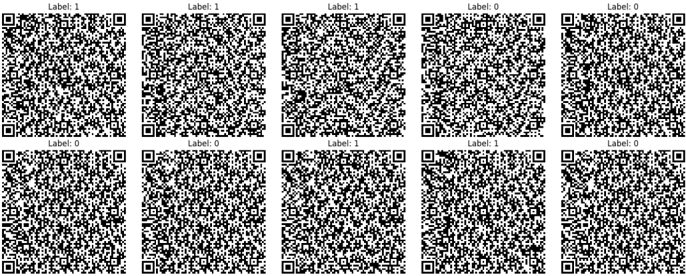
- The dataset was built from the PhishStorm dataset by selecting 10,000 URLs split evenly into 5,000 legitimate and 5,000 phishing samples, then converting them into QR codes.
- On the test set, the best baseline performance came from tree-based ensembles: LightGBM AUC 0.9106, XGBoost AUC 0.9083, and Random Forest AUC 0.8908.
- The same models also had the strongest thresholded scores: LightGBM accuracy 0.8293, F1 0.8214; XGBoost accuracy 0.8258, F1 0.8184.
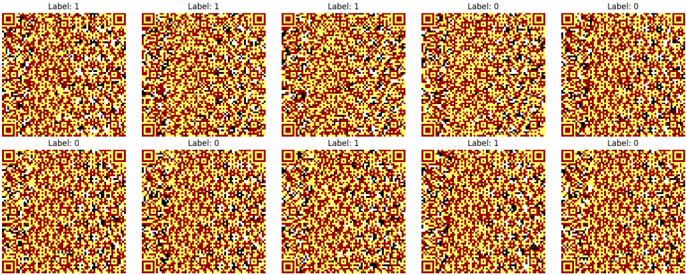
- Feature selection using the most important pixels improved or maintained performance; the best result was LightGBM AUC 0.9133 when features were selected based on Random Forest importance. Naïve Bayes improved from AUC 0.6531 to as high as 0.8010 with feature selection.
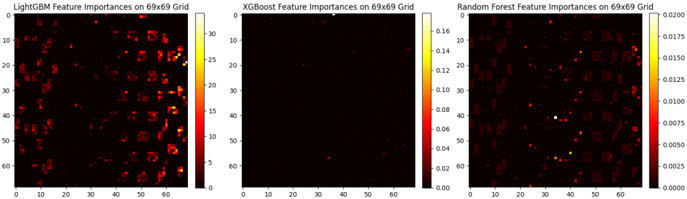
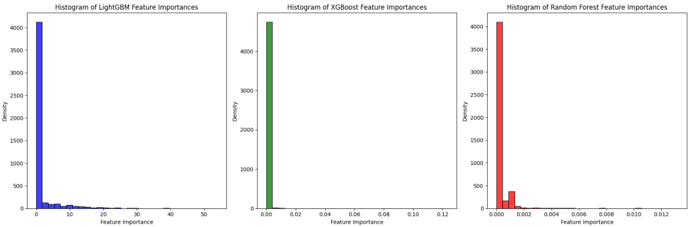
- Feature-importance maps showed that a large portion of the QR image was effectively unused, with most pixels having importance around zero and only a small subset contributing meaningfully.
## Methods
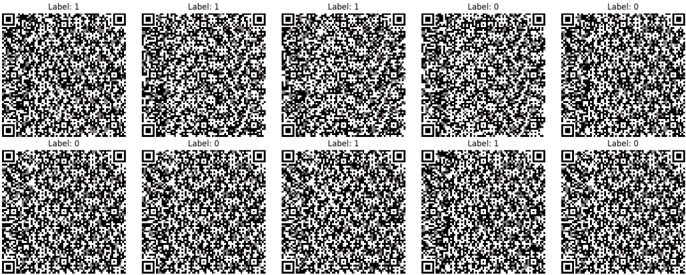
- The study used a controlled QR-code dataset generated from phishing/benign URLs, with QR codes rendered at fixed version 13, low error correction, box size 1, and border 0, producing a 69×69 pixel structure; the split was 80% training / 20% testing with 10-fold cross-validation on the training set for tuning.
- Models evaluated were Logistic Regression, Decision Tree, Random Forest, Naïve Bayes, LightGBM, and XGBoost, operating on flattened QR-code pixels as features.
- Main analysis: compare test-set classification metrics, inspect feature importance for the top three models, then retrain models using only selected pixels and compare AUC before and after feature selection.
## Limitations
- The paper states that the dataset is limited to URL-derived QR codes and explicitly says the method was not empirically validated on non-URL payloads; extending to other payload types is left for future work.
- The text makes evident that the QR codes were generated under controlled and uniform parameters (fixed version, error correction, rendering), so the results may not generalize to varied real-world QR appearances; the paper itself notes that broader visual variability remains future work.
- The paper states that it does not use deep learning and suggests CNNs/ViTs as future work; this means the reported results are a baseline rather than a full exploration of image-model approaches.
Model-written summary. Check it against the paper before relying on it.
Integrity signals
Registry
Cites
Statistics
Figures
Verification
Claims the paper makes
0 Valid · 0 Not valid · 4 Not checked · 28 Own results and interpretations
A result the paper states — it cites no source for it, so there is none to check. The quote shows it is in the paper.
In the paper
“LightGBM achieves its highest AUC (0.9133) when feature selection is based on Random Forest”
plainstates an association- Asserted: passes — The authors put it forward as true.
- Checkable: passes — It can be checked against evidence.
- Load-bearing: unclear — It is unclear whether the paper’s conclusions depend on it.
- Based: passes — The paper gives a reason why it holds.
A result the paper reports from its own data — it cites no other source for it, so there is none to check. The quote shows it is in the paper.
In the paper
“Our best-performing model (XGBoost) achieves an AUC of 0.9106”
- Also stated in: § 1 Introduction · plain
“with our best-performing model (XGBoost) achieving an AUC of 0.9106.”
plain- Asserted: passes — The authors put it forward as true.
- Checkable: passes — It can be checked against evidence.
- Load-bearing: passes — The paper’s conclusions depend on it.
- Based: passes — The paper gives a reason why it holds.
- Also stated in: § 1 Introduction · plain
A result the paper reports from its own data — it cites no other source for it, so there is none to check. The quote shows it is in the paper.
In the paper
“LGBM Classifier | 0.8293 | 0.8394 | 0.8041 | 0.8214 | 0.9106”
plain- Asserted: passes — The authors put it forward as true.
- Checkable: passes — It can be checked against evidence.
- Load-bearing: passes — The paper’s conclusions depend on it.
- Based: passes — The paper gives a reason why it holds.
A result the paper reports from its own data — it cites no other source for it, so there is none to check. The quote shows it is in the paper.
In the paper
“while only a small fraction contributes meaningfully to the decision-making process.”
plain- Asserted: passes — The authors put it forward as true.
- Checkable: passes — It can be checked against evidence.
- Load-bearing: passes — The paper’s conclusions depend on it.
- Based: passes — The paper gives a reason why it holds.
A result the paper reports from its own data — it cites no other source for it, so there is none to check. The quote shows it is in the paper.
In the paper
“improving performance to an AUC of 0.9133 with a reduced feature space.”
- Also stated in: § 4.3 Experiment 3: Feature Selection · plain
“The highest performance is achieved with LightGBM, reaching an AUC of 0.9133”
plainstates a cause- Asserted: passes — The authors put it forward as true.
- Checkable: passes — It can be checked against evidence.
- Load-bearing: passes — The paper’s conclusions depend on it.
- Based: passes — The paper gives a reason why it holds.
- Also stated in: § 4.3 Experiment 3: Feature Selection · plain
17 more claims
Create a free account to see all 32 claims and to verify the 2 references still open.
- It may state two separate claims as one. 7
- The quote only partly states this claim. 1
- Probably not a substantial claim. 4
Self-check
Percentages, sums and reported differences re-computed from the paper’s own numbers.
Each contradiction between two passages listed here was confirmed by an independent check.
Rated major: it would touch a result — a value a result rests on, reported and recomputed p-values on opposite sides of the significance level, two passages that conflict with no sign which is right, or a cited work retracted before this paper was published.
In the paper
§ Detecting Quishing Attacks with Machine Learning Techniques Through QR Code Analysis ⋆
“Our best-performing model (XGBoost) achieves an AUC of 0.9106, demonstrating the feasibility of QR-centric detection.”
§ 4.1 Experiment 1: Training and testing the models
“| XGBoost Classifier | 0.8258 | 0.8332 | 0.8041 | 0.8184 | 0.9083 | | LGBM Classifier | 0.8293 | 0.8394 | 0.8041 | 0.8214 | 0.9106 |”
Citations
Cites
PhishStorm: Detecting Phishing With Streaming Analytics
Marchal, S., Francois, J., State, R., & Engel, T. (2014) · IEEE Transactions on Network and Service Management · doi:10.1109/tnsm.2014.2377295 · Cited by 271 · cited 1×
“The dataset we created is derived from the PhishStorm dataset [6] by selecting 10,000 samples, equally categorized into 5,000 legitimate and 5,000 phishing URLs.”
Prompt Engineering or Fine-Tuning? A Case Study on Phishing Detection with Large Language Models
Trad, F. S., & Chehab, A. (2024) · Machine Learning and Knowledge Extraction · doi:10.3390/make6010018 · Cited by 172 · cited 1×
“Very recently, large language models (LLMs) have been explored for this task and are achieving state-of-the-art performance [12,13,11].”
Self-citationHannousse, A., & Yahiouche, S. (2021) · Engineering Applications of Artificial Intelligence · doi:10.1016/j.engappai.2021.104347 · Cited by 157 · cited 1×
“Multiple studies have used machine learning algorithms to analyze URL features, demonstrating significant success in identifying phishing attempts [7,1,4].”
Phishing URL detection using machine learning methods
Ahammad, S. H., Kale, S. D., Upadhye, G. D., Pande, S. D., Babu, E. V., Dhumane, A. V., & Bahadur, M. D. K. J. (2022) · Advances in Engineering Software · doi:10.1016/j.advengsoft.2022.103288 · Cited by 146 · cited 1×
“Multiple studies have used machine learning algorithms to analyze URL features, demonstrating significant success in identifying phishing attempts [7,1,4].”
Look before you leap: Detecting phishing web pages by exploiting raw URL and HTML characteristics
Opara, C., Chen, Y., & Wei, B. (2024) · Expert Systems with Applications · doi:10.1016/j.eswa.2023.121183 · Cited by 129 · cited 1×
“Multiple studies have used machine learning algorithms to analyze URL features, demonstrating significant success in identifying phishing attempts [7,1,4].”
Texception: A Character/Word-Level Deep Learning Model for Phishing URL Detection
Tajaddodianfar, F., Stokes, J. W., & Gururajan, A. (2020) · IEEE International Conference on Acoustics Speech and Signal Processing · doi:10.1109/icassp40776.2020.9053670 · Cited by 114 · cited 1×
“Further advances have included the implementation of deep learning models, to analyze the textual features of URLs for improved phishing detection accuracy [2,15,10].”
QRishing: The Susceptibility of Smartphone Users to QR Code Phishing Attacks
Vidas, T., Owusu, E., Wang, S., Zeng, C., Cranor, L. F., & Christin, N. (2013) · Lecture Notes in Computer Science · doi:10.1007/978-3-642-41320-9_4 · Cited by 103 · cited 1×
“In quishing attacks, cyber criminals exploit QR codes to deceive users into scanning them, often leading to credential theft, malware downloads, or financial fraud [14].”
QsecR: Secure QR Code Scanner According to a Novel Malicious URL Detection Framework
Rafsanjani, A. S., Kamaruddin, N. B., Rusli, H. M., & Dabbagh, M. (2023) · IEEE Access · doi:10.1109/access.2023.3291811 · Cited by 55 · cited 1×
“Similarly, Rafsanjani et al. introduced QsecR, an Android application that extracts the URL from the QRCode and analyzes it by extracting some static URL features [8].”
A Large-Scale Pretrained Deep Model for Phishing URL Detection
Wang, Y., Zhu, W., Xu, H., Qin, Z., Ren, K., & Ma, W. (2023) · IEEE International Conference on Acoustics Speech and Signal Processing · doi:10.1109/icassp49357.2023.10095719 · Cited by 47 · cited 1×
“Further advances have included the implementation of deep learning models, to analyze the textual features of URLs for improved phishing detection accuracy [2,15,10].”
Phishing Attacks Detection using Machine Learning and Deep Learning Models
Aljabri, M., & Mirza, S. (2022) · doi:10.1109/cdma54072.2022.00034 · Cited by 45 · cited 1×
“Further advances have included the implementation of deep learning models, to analyze the textual features of URLs for improved phishing detection accuracy [2,15,10].”
Cited by
Enhanced Quishing Attack Detection using CNN
Kumar, R., Sehgal, S., & Sharma, R. (2026) · 2026 6th International Conference on Intelligent Technologies (CONIT) · doi:10.1109/conit69683.2026.11621588
“The former approach [1] has converted the 2D QR matrix into a 1D array to be fed into a standard classifier such as XGBoost.”
InfluentialBenhami, A., & Rahmani, A. (2026) · International Conference on Pattern Analysis and Intelligent Systems (PAIS) · doi:10.1109/pais69842.2026.11605248
“An original pixel-level approach was proposed by Trad et al. [12] to overcome the inability to detect non-URL vectors such as malicious Wi-Fi shares or cryptocurrency transactions.”
Kavuri, K., Challagundla, M. S., Koutharapu, H., & Gopinath, M. (2026) · IEEE Global Symposium on Emerging and Communication Technologies (GSEACT) · doi:10.1109/gseact68539.2026.11620543
Filio-Aguilar, P. D., Mil‐Martínez, R., & López-García, L. (2026) · Journal of Cybersecurity and Privacy · doi:10.3390/jcp6040134 · Cited by 2
“The complete extraction matrix for all 27 studies is provided in Supplementary File S1 [8,9,12,13,17,18,20,21,32–50].”
Saitbekov, A., Shayakhmetov, M., Kaskabayeva, D., Saginayev, K., & Tazhibayeva, P. (2026) · International Conference on Cybersecurity, Digital Forensics, and AI Applications (ICCSDFAI) · doi:10.1109/iccsdfai70505.2026.11647940
“Trad and Chehab [8] avoided payload extraction altogether, showing that pixel-level features of the QR matrix are themselves correlated with phishing risk.”
Metadata
- Authors
- Trad, F., & Chehab, A.
- Affiliations
- Lebanese American University (LB)
- American University of Beirut (LB)
- Corresponding author
- Trad, Fouad
- Venue
- IFIP Advances in Information and Communication Technology
- Publisher
- Springer Nature Switzerland
- Published
- 2026-07-16
- Pages
- 194-206
- ISSN
- 1868-422X (ISSN-L)
- 1868-4238
- OpenAlex
- W4415248111
- Semantic Scholar
- 2e8bb492cc1f279ff9bbceba2839d62ac4a7a793
- Cited by
- 8
- References
- 16
- Citations by year
- 2026: 8
- FWCI
- 85.45
- Type
- conference paper
- Language
- en
- Open access
- green
- arxiv.org
- Licence
- cc-by
- www.springernature.com/gp/researchers/text-and-data-mining (tdm)
- www.springernature.com/gp/researchers/text-and-data-mining (vor)
- Locations
- IFIP advances in information and communication technology (publishedVersion)
- arXiv (Cornell University) (submittedVersion, cc-by)
- arXiv (Cornell University) (cc-by)
- Topics
- Physical Sciences › Computer Science › Information Systems › Spam and Phishing Detection
- Physical Sciences › Computer Science › Information Systems › User Authentication and Security Systems
- Physical Sciences › Computer Science › Information Systems › QR Code Applications and Technologies
- Keywords
- phishing detection, feature importance, XGBoost, QR code security
About these checks
Registry, retraction, Cites and statistics results are computed, not judged, with one exception: a printed reference that no index lists is read once by a model before it counts as a citation error. Claims are extracted by a model and kept only when their quote appears verbatim in the text; each cited source is then checked, with a model’s help, for whether it says what the claim relies on. Those verdicts can be wrong — read the claim’s quote and the cited source before relying on one.
A language model drew the claims from the paper on 2026-10-10, under version 3 of the claim definition (model deepseek-v4.1-flash, prompt extract-v3).
A second model labelled each claim on 2026-10-10 (model jev-1.13-20260917, definition revision gold-guideline-v0.2).
Statistics and arithmetic are recomputed, not judged.
Confidence bands are shown only for fields calibrated on our annotated test set. None is calibrated yet, so no band is shown.
What counts as a claim ›How we measure confidence ›How we check this ›
Are you an author, or do you see a problem with this page? Request a review
How to cite
Cite CoChat for the checks on this page, and the paper for its own findings.
- This page
- CoChat. (2026). Citation check: Detecting Quishing Attacks with Machine Learning Techniques Through QR Code Analysis. https://app.cochat.ai/papers/10.1007/978-3-032-30805-4_14
- The paper
- Trad, F., & Chehab, A. (2027). Detecting Quishing Attacks with Machine Learning Techniques Through QR Code Analysis. IFIP Advances in Information and Communication Technology. https://doi.org/10.1007/978-3-032-30805-4_14
Data sources
Bibliographic data: Semantic Scholar, OpenAlex, Crossref.
Contains information from the Semantic Scholar Academic Graph Datasets, made available under the ODC Attribution License (ODC-BY 1.0).
Semantic Scholar’s data is described in: Kinney, R., et al. (2023). The Semantic Scholar Open Data Platform. arXiv:2301.10140.
