

The DOI matches its Crossref record; 15 of the 18 references it cites were found in a registry or an index.
Artificial Intelligence for Dynamic Spectrum Management
Open accessAbstract
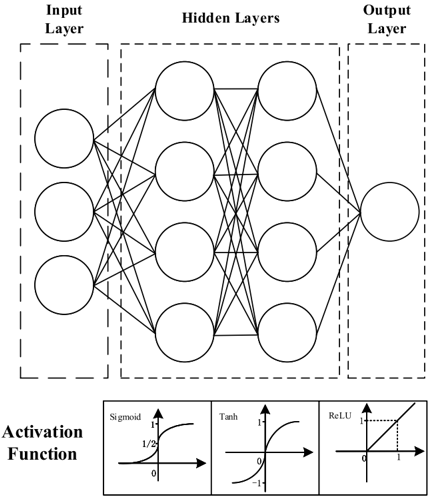
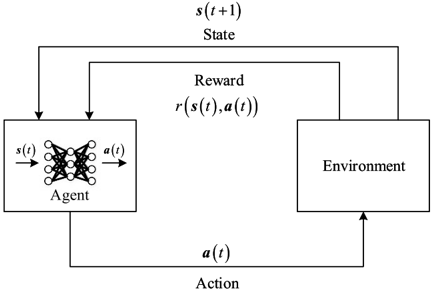
In the past decade, a significant advancement has been made in artificial intelligence (AI) research from both theoretical and application perspectives. Researchers have also applied AI techniques, particularly machine learning (ML) algorithms, to DSM, the results of which have shown superior performance as compared to traditional ones. In this chapter, we first provide a brief review on ML techniques. Then we introduce recent applications of ML algorithms to enablers of DSM, which include spectrum sensing, signal classification and dynamic spectrum access.
Overview
The claims and statistics of this paper haven’t been checked yet.
Free: it reads the open-access text and checks the first 5 claims that cite a source we can check. Create a free account to check every claim.
Integrity signals
Registry
Cites
Statistics
Figures
Verification
Claims the paper makes
The claims and statistics of this paper haven’t been checked yet.
Free: it reads the open-access text and checks the first 5 claims that cite a source we can check. Create a free account to check every claim.
Self-check
Percentages, sums and reported differences re-computed from the paper’s own numbers.
The self-check needs the paper’s full text.
Citations
Cites
ImageNet classification with deep convolutional neural networks
Krizhevsky, A., Sutskever, I., & Hinton, G. E. (2017) · Communications of the ACM · doi:10.1145/3065386 · Cited by 112,155 · cited 1×
“A typical CNN is composed ofmultiple convolutional layers, pooling layers and fully-connected layers [10].”
BackgroundLeCun, Y., Bengio, Y., & Hinton, G. (2015) · Nature · doi:10.1038/nature14539 · Cited by 84,126
Human-level control through deep reinforcement learning
Mnih, V., Kavukcuoglu, K., Silver, D., Rusu, A. A., Veness, J., Bellemare, M. G., Graves, A., Riedmiller, M., Fidjeland, A. K., Ostrovski, G., et al. (2015) · Nature · doi:10.1038/nature14236 · Cited by 30,357 · cited 1×
“Deep Q-network : Different from the tabular method in traditional RL, a neural network called deep Q-network (DQN) is adopted to approximate the relationship between state space and action space [12].”
MethodArtificial intelligence: a modern approach
(1995) · Choice Reviews Online · doi:10.5860/choice.33-1577 · Cited by 21,974
Pattern Recognition and Machine Learning
(2006) · doi:10.1007/978-0-387-45528-0 · Cited by 9,824
Speech recognition with deep recurrent neural networks
Graves, A., Mohamed, A.-R., & Hinton, G. (2013) · 2013 IEEE International Conference on Acoustics, Speech and Signal Processing · doi:10.1109/icassp.2013.6638947 · Cited by 8,893
Introduction to Reinforcement Learning
Sutton, R. S., & Barto, A. G. (1998) · The MIT Press eBooks · Cited by 6,855
Deep Reinforcement Learning with Double Q-Learning
Van Hasselt, H., Guez, A., & Silver, D. (2016) · Proceedings of the AAAI Conference on Artificial Intelligence · doi:10.1609/aaai.v30i1.10295 · Cited by 3,318 · cited 1×
“To improve the performance of DQN, double deep Q-network (DDQN) can be adopted to provide more accurate estimation of the Q-function [13].”
MethodApplications of Deep Reinforcement Learning in Communications and Networking: A Survey
Luong, N. C., Hoang, D. T., Gong, S., Niyato, D., Wang, P., Liang, Y.-C., & Kim, D. I. (2019) · IEEE Communications Surveys & Tutorials · doi:10.1109/comst.2019.2916583 · Cited by 2,060
Self-citationMachine Learning Paradigms for Next-Generation Wireless Networks
Jiang, C., Zhang, H., Ren, Y., Han, Z., Chen, K.-C., & Hanzo, L. (2017) · IEEE Wireless Communications · doi:10.1109/mwc.2016.1500356wc · Cited by 1,095 · cited 1×
“While it is believed that machine learning techniques are effective methods for developing and optimizing the next generation networks [5], there also exist some challenges in applying AI techniques in DSM.”
Deep Multi-User Reinforcement Learning for Distributed Dynamic Spectrum Access
Naparstek, O., & Cohen, K. (2019) · IEEE Transactions on Wireless Communications · doi:10.1109/twc.2018.2879433 · Cited by 477 · cited 2×
“In [18], a DRL-based DSA framework is proposed to manage dynamic spectrum access in multichannel wireless networks, in which each user acts as an agent to make channel access decisions intelligently and independently to maximize its long-term transmission rate.”
BackgroundMethodMachine Learning Techniques for Cooperative Spectrum Sensing in Cognitive Radio Networks
Thilina, K. M., Choi, K. W., Saquib, N., & Hossain, E. (2013) · IEEE Journal on Selected Areas in Communications · doi:10.1109/jsac.2013.131120 · Cited by 432 · cited 1×
“To solve the above issues, machine learning techniques have been adopted to develop cooperative spectrum sensing (CSS) framework [14].”
MethodDeep Reinforcement Learning for User Association and Resource Allocation in Heterogeneous Networks
Zhao, N., Liang, Y., Niyato, D. T., Pei, Y., & Jiang, Y. (2018) · Globecom · doi:10.1109/glocom.2018.8647611 · Cited by 74 · cited 1×
“In [19], a distributed DRL-based DSA framework is proposed for user association and resource allocation in the downlink HetNets.”
MethodSelf-citationRobust Modulation Classification under Uncertain Noise Condition Using Recurrent Neural Network
Hu, S., Pei, Y., Liang, P. P., & Liang, Y. (2018) · Globecom · doi:10.1109/glocom.2018.8647582 · Cited by 56 · cited 2×
“In [16], a low-complexity blind data-driven modulation classifier based on DNN is proposed, which operates under uncertain noise condition modeled by a mixture of white Gaussian noise, white non-Gaussian noise and time-correlated non-Gaussian noise.”
BackgroundMethodSelf-citationModulation-Constrained Clustering Approach to Blind Modulation Classification for MIMO Systems
Tian, J., Pei, Y., Huang, Y., & Liang, Y. (2018) · IEEE Transactions on Cognitive Communications and Networking · doi:10.1109/tccn.2018.2879370 · Cited by 50 · cited 3×
“In [15], a clustering-based LB classifier is proposed for modulation classification in multiple-input and multiple-output (MIMO) communication systems.”
MethodInfluentialSelf-citation
Research works printed but not linked: 1
- T.M. Mitchell, Machine Learning (McGraw-Hill, New York, 1997)
Cited by
Applications and Challenges of Artificial Intelligence in Space Missions
Oche, P. A., Ewa, G. A., & Ibekwe, N. (2024) · IEEE Access · doi:10.1109/access.2021.3132500 · Cited by 68
“Cognitive communication architectures will undoubtedly play a critical role in future space missions, providing seamless internetworking services for communication and navigation from within Earth‘s orbit out [175], [25, 180].”
BackgroundA Survey on Technological Trends to Enhance Spectrum-Efficiency in 6G Communications
Iyer, S., Patil, A., Bhairanatti, S., Halagatti, S., & Pandya, R. J. (2022) · Transactions of Indian National Academy of Engineering · doi:10.1007/s41403-022-00372-w · Cited by 42
Swarm Intelligence Algorithms for Solving Optimization Problems in Telecommunication Systems
Adonin, L., & Vladyko, A. G. (2025) · Proceedings of Telecommunication Universities · doi:10.31854/1813-324x-2025-11-3-7-24 · Cited by 3
The Role of Edge Computing in Enhancing 5G Networks
Vidya, Bharath, H. D., Naik, B. B., Bharath, M., Basavaraj, B., & Deepak, D. (2025) · International Conference on Intelligent Communication Technologies and Virtual Mobile Networks (ICICV) · doi:10.1109/icicv64824.2025.11085622
Bandoudi, A. E., & Boulouird, M. (2026) · Telecommunication Systems · doi:10.1007/s11235-026-01463-7
“To address this limitation, dynamic spectrum management (DSM) enables SUs to access the spectrum allocated to PUs whenever it is temporarily unoccupied, while still ensuring the protection of PU transmissions [6].”
Metadata
- Authors
- Liang, Y.-C.
- Affiliations
- University of Electronic Science and Technology of China (CN)
- Corresponding author
- Liang, Ying-Chang
- ORCID
- Liang, Ying-Chang
- Venue
- Signals and Communication Technology
- Publisher
- Springer Singapore
- Published
- 2019-11-16
- Pages
- 147-166
- ISSN
- 1860-4862 (ISSN-L)
- 1860-4870
- OpenAlex
- W2988319314
- Cited by
- 5
- References
- 18
- Citations by year
- 2026: 1 · 2025: 2 · 2022: 1 · 2021: 1
- FWCI
- 1.34
- Type
- book chapter
- Language
- en
- Open access
- hybrid
- doi.org
- Licence
- cc-by
- creativecommons.org/licenses/by/4.0 (tdm)
- Locations
- Signals and communication technology (publishedVersion, cc-by)
- Topics
- Physical Sciences › Computer Science › Computer Networks and Communications › Cognitive Radio Networks and Spectrum Sensing
- Physical Sciences › Computer Science › Artificial Intelligence › Wireless Signal Modulation Classification
- Physical Sciences › Computer Science › Computer Networks and Communications › Wireless Networks and Protocols
- Keywords
- dynamic spectrum management, machine learning, spectrum sensing, signal classification, dynamic spectrum access, artificial intelligence, cognitive radio
About these checks
Registry, retraction, Cites and statistics results are computed, not judged, with one exception: a printed reference that no index lists is read once by a model before it counts as a citation error. Claims are extracted by a model and kept only when their quote appears verbatim in the text; each cited source is then checked, with a model’s help, for whether it says what the claim relies on. Those verdicts can be wrong — read the claim’s quote and the cited source before relying on one.
Statistics and arithmetic are recomputed, not judged.
Confidence bands are shown only for fields calibrated on our annotated test set. None is calibrated yet, so no band is shown.
What counts as a claim ›How we measure confidence ›How we check this ›
Are you an author, or do you see a problem with this page? Request a review
Data sources
Bibliographic data: Semantic Scholar, OpenAlex, Crossref.
Contains information from the Semantic Scholar Academic Graph Datasets, made available under the ODC Attribution License (ODC-BY 1.0).
Semantic Scholar’s data is described in: Kinney, R., et al. (2023). The Semantic Scholar Open Data Platform. arXiv:2301.10140.
