

Insulin degludec is not associated with a delayed or diminished response to hypoglycaemia compared with insulin glargine in type 1 diabetes: a double-blind randomised crossover study
Open accessThe DOI matches its Crossref record; 39 of the 39 references it cites were found in a registry or an index.
Abstract
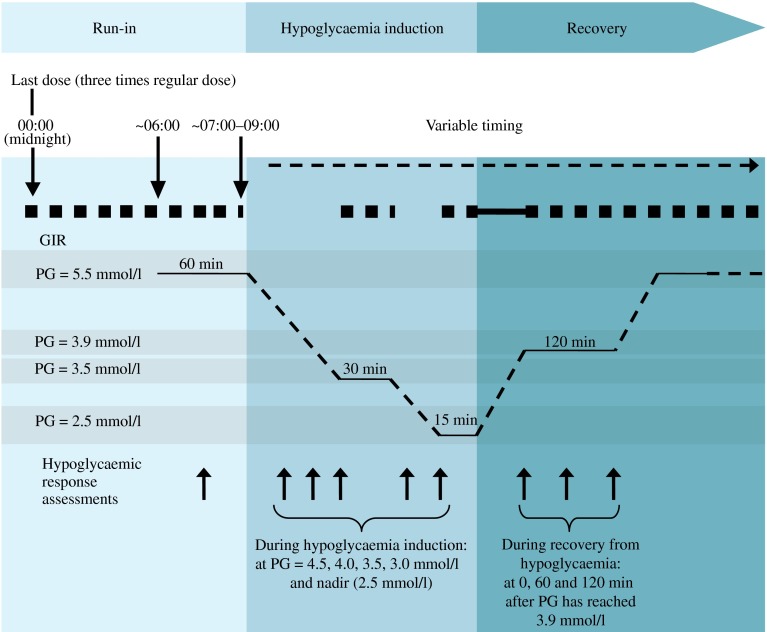
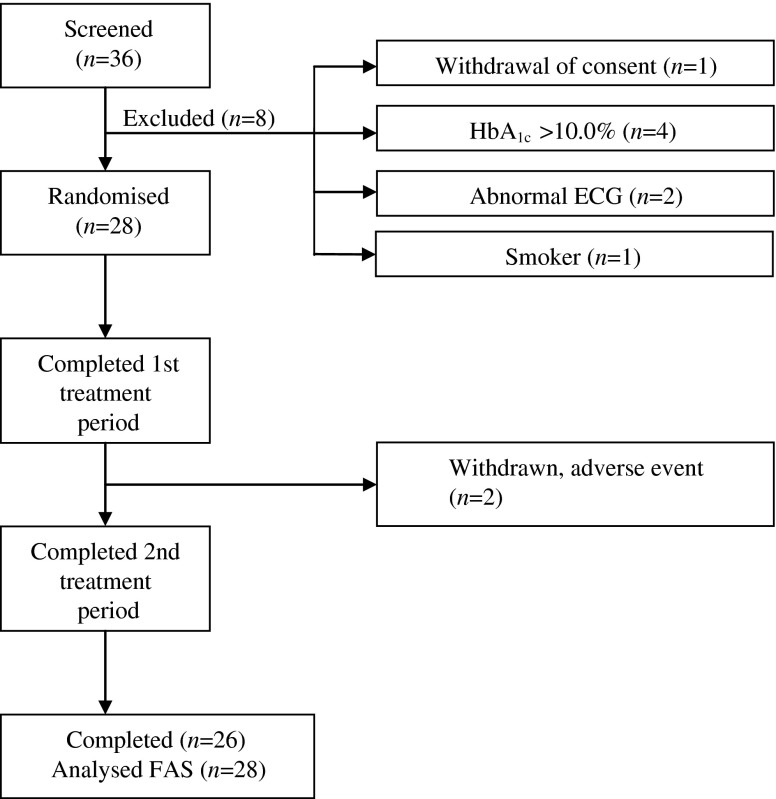
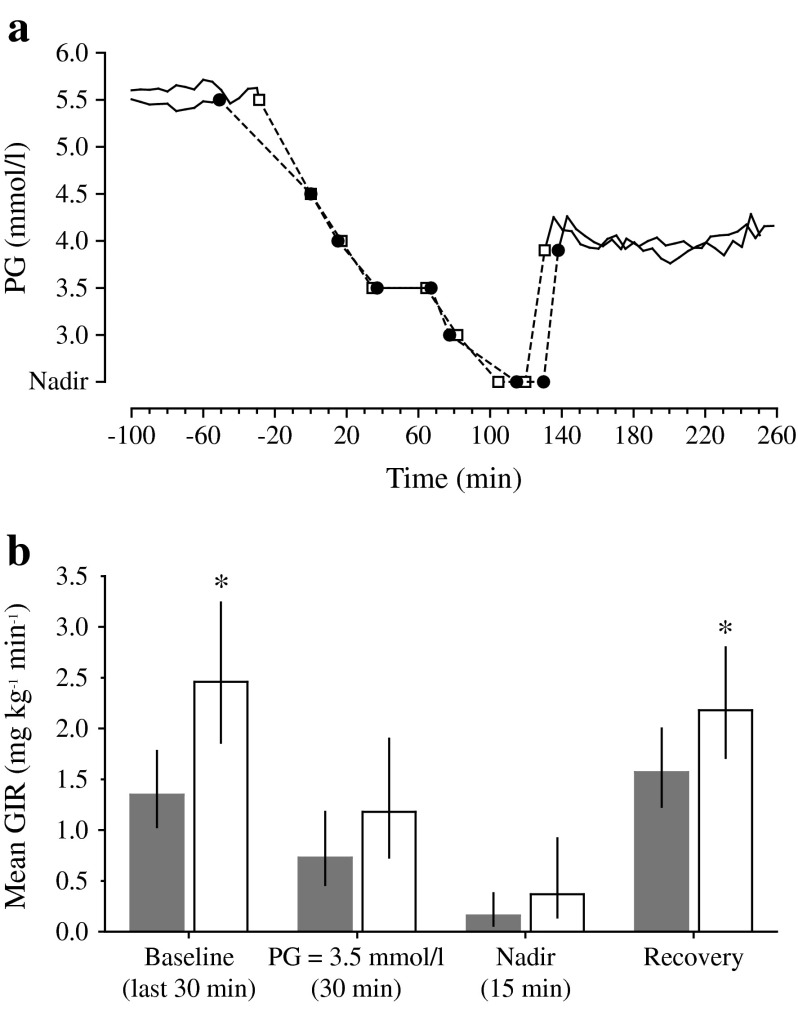
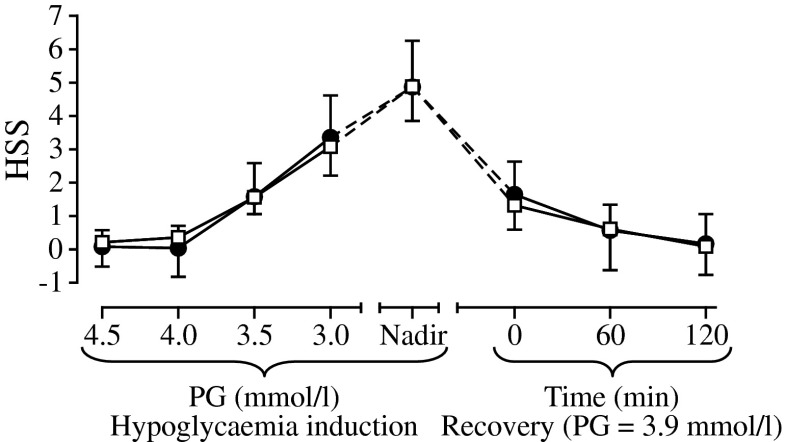
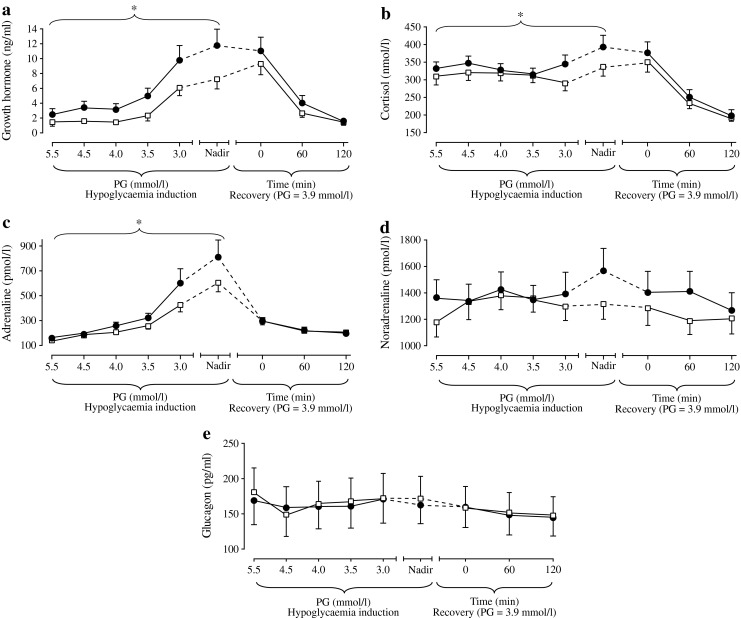
AIMS/HYPOTHESIS: Insulin degludec (Des(B30)LysB29(γ-Glu Nε-hexadecandioyl) human insulin; IDeg) is a new basal insulin with an ultra-long flat action profile. The acute physiological responses to hypoglycaemia with IDeg and insulin glargine (A21Gly,B31Arg,B32Arg human insulin; IGlar) were compared. METHODS: Twenty-eight adult type 1 diabetic patients with normal hypoglycaemia awareness (age = 41 ± 12 years, HbA1c = 7.8 ± 0.6% [62.8 ± 7 mmol/mol]) were randomised to once-daily IDeg or IGlar for 5 days in a two-period crossover design. Participants and research staff were blinded to group assignment. Patients were assigned the lowest available randomisation number from a set of blinded randomisation codes provided by the trial sponsor. Hypoglycaemia was induced by administering three times the usual daily insulin dose at midnight on day 5. Plasma glucose (PG) was stabilised by glucose clamp (5.5 mmol/l) for 7-9 h post dosing. Next morning, PG was allowed to decrease stepwise from 5.5 to 3.5 mmol/l (maintained for 30 min) to 2.5 mmol/l (for 15 min). PG was then increased to 3.9 mmol/l (for 120 min), before being returned to baseline. Hypoglycaemic symptom score (HSS), hypoglycaemic awareness, cognitive function, counter-regulatory hormones and vital signs were assessed during each glucose plateau. The primary analysis was to compare IDeg vs IGlar with respect to HSS at nadir PG concentration (2.5 mmol/l). RESULTS: The full analysis set for treatment comparisons comprised data from all 28 exposed patients. Rates of PG decline and PG at nadir were similar for IDeg and IGlar. No treatment differences in HSS (estimated difference: 0.17 [95% CI -1.71, 2.05]; p > 0.05), cognitive function or awareness were observed at any time. Growth hormone and cortisol responses during hypoglycaemia were greater with IDeg than IGlar (AUC treatment ratio [IDeg/IGlar]: 2.44 [1.30, 4.60], p < 0.01; and 1.23 [1.01, 1.50]; p < 0.05), and adrenaline (epinephrine) responses trended higher (1.40 [0.96, 2.04], p = 0.07). The rates of recovery from hypoglycaemia were similar. CONCLUSIONS/INTERPRETATION: IDeg and IGlar elicit comparable symptomatic and cognitive responses to induced hypoglycaemia. IDeg may elicit a moderately greater endocrine response, but times to PG recovery were similar for the two insulins. TRIAL REGISTRATION: ClinicalTrials.gov NCT01002768. FUNDING: Novo Nordisk.
Overview
The claims and statistics of this paper haven’t been checked yet.
Free: it reads the open-access text and checks the first 5 claims that cite a source we can check. Create a free account to check every claim.
Integrity signals
Registry
Cites
Statistics
Figures
Verification
Claims the paper makes
The claims and statistics of this paper haven’t been checked yet.
Free: it reads the open-access text and checks the first 5 claims that cite a source we can check. Create a free account to check every claim.
Claims other papers make about this one
Each is checked against this paper’s own text: does it say what the citing paper says it does?
The source backs part of the claim, not all of it — or backs it for a different population, condition or comparison.
In the citing paper
“The study therefore showed that the longer duration of action of IDeg than of IGlar does not affect the nature of, or time to recovery from, a hypoglycaemic episode [58].”
From A Review of the Pharmacological Properties of Insulin Degludec and Their Clinical Relevance (2014) · cites this paper as [58]
Experimental — accuracy not yet measuredThe cited source says what the claim attributes to it.
In the citing paper
“a double-blind, randomised, crossover trial was conducted in subjects with T1DM to investigate the impact of IDeg on the counter-regulatory hormone response to hypoglycaemia during the development of and recovery from hypoglycaemia, compared with subjects receiving IGlar [58].”
From A Review of the Pharmacological Properties of Insulin Degludec and Their Clinical Relevance (2014) · cites this paper as [58]
The cited source says what the claim attributes to it.
In the citing paper
“During recovery from hypoglycaemia, mean HSS returned to baseline at a similar rate for IDeg and IGlar.”
From A Review of the Pharmacological Properties of Insulin Degludec and Their Clinical Relevance (2014) · cites this paper as [58]
Self-check
Percentages, sums and reported differences re-computed from the paper’s own numbers.
The self-check needs the paper’s full text.
Citations
Cites
(2001) · Journal of Obstetrics and Gynaecology Research · doi:10.1111/j.1447-0756.2001.tb01222.x · Cited by 3,461
Ethical principles for medical research involving human subjects
(2003) · Manual for Research Ethics Committees · doi:10.1017/cbo9780511550089.027 · Cited by 2,585
Abraham, J. (2010) · Handbook of Transnational Economic Governance Regimes · doi:10.1163/ej.9789004163300.i-1081.897 · Cited by 2,582
Declaration of Helsinki. Ethical Principles for Medical Research Involving Human Subjects
(2014) · Jahrbuch für Wissenschaft und Ethik · doi:10.1515/jwiet-2014-0117 · Cited by 2,473
Gandevia, B., & Tovell, A. (1964) · PubMed · Cited by 2,069
WAIS-R manual : Wechsler adult intelligence scale-revised
Wechsler, D. (1981) · Medical Entomology and Zoology · Cited by 1,559
Clinical neuropsychology: Current status and applications
(1975) · Behavior Therapy · doi:10.1016/s0005-7894(75)80088-8 · Cited by 1,552
Administration and interpretation of the Trail Making Test
Bowie, C. R., & Harvey, P. D. (2006) · Nature Protocols · doi:10.1038/nprot.2006.390 · Cited by 1,418 · cited 1×
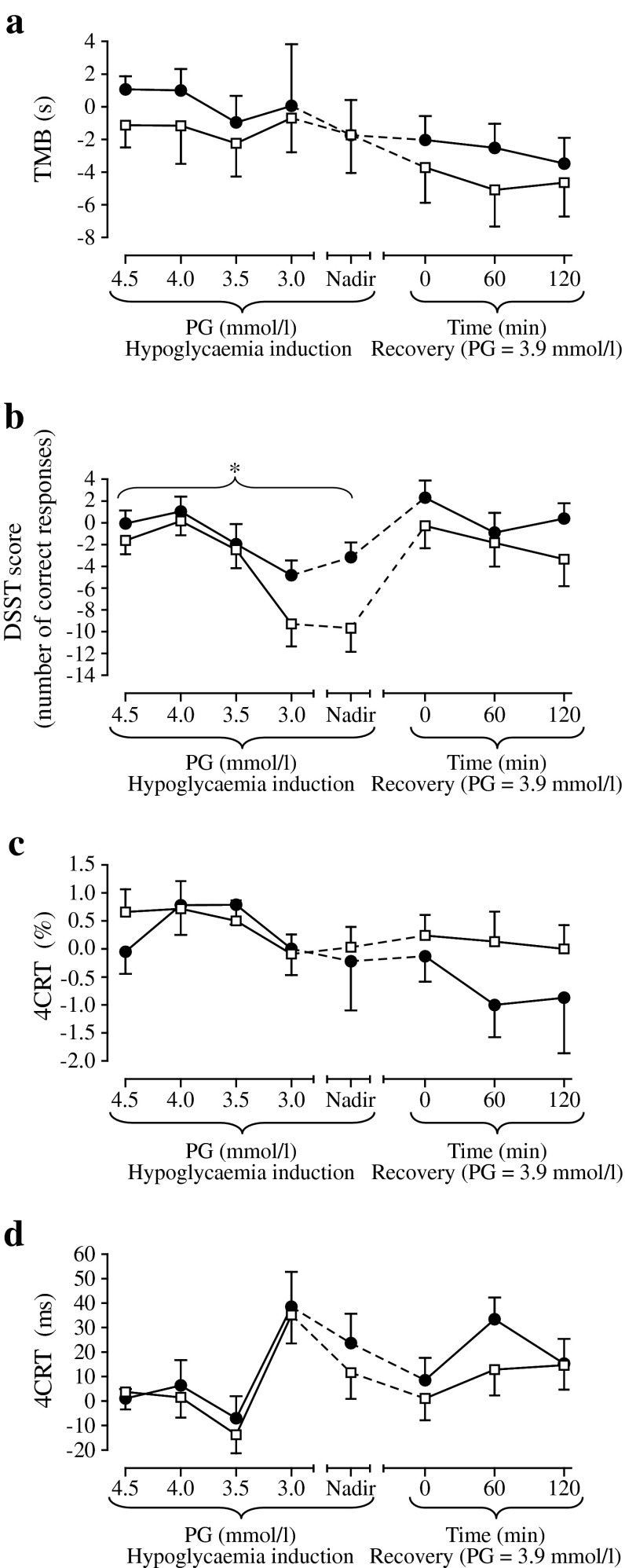
“1) was evaluated by using three cognitive function tests recognised as being sensitive to hypoglycaemia [14]: trail making B [15, 16]; digit symbol substitution test [17]; and the four-choice reaction time [18].”
MethodRisk of hypoglycaemia in types 1 and 2 diabetes: Effects of treatment modalities and their duration
UK Hypoglycaemia Study Group (2007) · Diabetologia · doi:10.1007/s00125-007-0599-y · Cited by 825
Gold, A. E., Macleod, K. M., & Frier, B. M. (1994) · Diabetes Care · doi:10.2337/diacare.17.7.697 · Cited by 810 · cited 1×
“Severe episodes of hypoglycaemia are less frequent in patients with diabetes who still have hypoglycaemia awareness [2], but these patients are still at significant risk of hypoglycaemia due to lack of adequate glucagon secretion and a reduced response of other counter-regulatory hormones [1].”
Background
Cited by
A Review of the Pharmacological Properties of Insulin Degludec and Their Clinical Relevance
Haahr, H., & Heise, T. (2014) · Clinical Pharmacokinetics · doi:10.1007/s40262-014-0165-y · Cited by 226
“The study therefore showed that the longer duration of action of IDeg than of IGlar does not affect the nature of, or time to recovery from, a hypoglycaemic episode [58].”
BackgroundResultSelf-citationClinical use of insulin degludec
Vora, J., Cariou, B., Evans, M., Gross, J. L., Harris, S., Landstedt-Hallin, L., Mithal, A., Rodriguez, M. R., & Meneghini, L. (2015) · Diabetes Research and Clinical Practice · doi:10.1016/j.diabres.2015.04.002 · Cited by 73
“[54] Koehler G, Heller S, Korsatko S, Roepstorff C, Rasmussen S, Haahr H, et al.”
BackgroundResultMoser, O., Mader, J., Tschakert, G., Mueller, A., Groeschl, W., Pieber, T., Koehler, G., Messerschmidt, J., & Hofmann, P. (2016) · Nutrients · doi:10.3390/nu8080489 · Cited by 60
Self-citationPieber, T. R., Deller, S., Korsatko, S., Jensen, L., Christiansen, E., Madsen, J., & Heller, S. R. (2015) · Diabetes, Obesity and Metabolism · doi:10.1111/dom.12473 · Cited by 43
“At the end of each 4-week treatment period, a stepwise hypoglycaemic clamp was performed (Figure 1B) [25].”
MethodSelf-citationDegludec: the new ultra-long insulin analogue
Tambascia, M. A., & Eliaschewitz, F. G. (2015) · Diabetology & Metabolic Syndrome · doi:10.1186/s13098-015-0037-0 · Cited by 41
“Still regarding IDeg and hypoglycemia, a double-blind randomized crossover study using stepwise hypoglycemic clamp has demonstrated that symptomatic and cognitive responses to induced hypoglycemia, as well as the time required for glycemia recovery are similar between IDeg and IGlar, reassuring the safety profile of I…”
BackgroundNilsson, M. S. D., Jensen, N. J., Gejl, M., Bergmann, M., Storgaard, H., Zander, M., Miskowiak, K. W., & Rungby, J. (2019) · Diabetologia · doi:10.1007/s00125-019-4964-4 · Cited by 38
Tricco, A. C., Ashoor, H. M., Antony, J., Bouck, Z., Rodrigues, M., Pham, B., Khan, P. A., Nincic, V., Darvesh, N., Yazdi, F., et al. (2021) · Journal of General Internal Medicine · doi:10.1007/s11606-021-06642-7 · Cited by 38
Korsatko, S., Jensen, L., Brunner, M., Sach‐Friedl, S., Tarp, M. D., Holst, A. G., Heller, S. R., & Pieber, T. R. (2018) · Diabetes, Obesity and Metabolism · doi:10.1111/dom.13422 · Cited by 29
“Approximately 48 hours after the last (13th) treatment dose, coinciding with the expected maximum concentration of semaglutide,(13) a stepwise hypoglycaemic clamp was performed during a 4-day inhouse visit (Figure 1B).(17,22) Participants were admitted to the clinical research centre where, on day 1, they received the…”
MethodSelf-citationPieber, T. R., Arfelt, K. N., Cailleteau, R., Hart, M., Kar, S., Mursic, I., Švehlíková, E., Urschitz, M., & Haahr, H. L. (2023) · Diabetologia · doi:10.1007/s00125-023-05921-8 · Cited by 33
“It was previously shown that once-daily basal insulin degludec and insulin glargine U100 provided significant symptomatic, endocrine and cognitive responses to induced hypoglycaemia [8].”
BackgroundResultSelf-citationMaiorino, M. I., Petrizzo, M., Capuano, A., Giugliano, D., & Esposito, K. (2014) · Expert Opinion on Biological Therapy · doi:10.1517/14712598.2014.895812 · Cited by 22
“Similar effects on hypoglycemic symptom and cognitive function scores during hypoglycemia induction, plasma glucose nadir and recovery from hypoglycemia were observed with both insulins [32].”
Moser, O., Tschakert, G., Mueller, A., Groeschl, W., Hofmann, P., Pieber, T. R., Lawrence, J. B., & Koehler, G. (2017) · Asian Journal of Sports Medicine · doi:10.5812/asjsm.42160 · Cited by 22
“IDeg (®Tresiba/Novo Nordisk, Bagsvaerd, Denmark) was subcutaneously injected once daily in the evening, starting with a dose of 70% of total daily longacting insulin (16).”
BackgroundMethodSelf-citationInsulin degludec/insulin aspart combination for the treatment of type 1 and type 2 diabetes
Miccoli, R., Dardano, A., Bianchi, C., & Prato, S. D. (2014) · Vascular Health and Risk Management · doi:10.2147/vhrm.s40097 · Cited by 19
EINHORN, D. F., Handelsman, Y., Bode, B. W., Endahl, L. A., Mersebach, H., & King, A. B. (2015) · Endocrine Practice · doi:10.4158/ep14523.or · Cited by 18
Woo, V. C., Berard, L., & Roscoe, R. S. (2020) · Diabetes Therapy · doi:10.1007/s13300-020-00915-w · Cited by 17
Recent Advances in Insulin Therapy for Diabetes
Ahmad, A. (2014) · International Journal of Diabetes and Clinical Research · doi:10.23937/2377-3634/1410006 · Cited by 11
“Phase 3 clinical trials on T1DM and T2DM patients indicated that IDeg was similar in efficacy to IGlar in reaching a target HbA1C of 7%, whilst reducing the risk of nocturnal hypoglycaemia [30].”
BackgroundInfluentialAn Overview of Prospective Drugs for Type 1 and Type 2 Diabetes
Wu, P., Liu, Z., Jiang, X., & Fang, H. (2019) · Current Drug Targets · doi:10.2174/1389450120666191031104653 · Cited by 9
A primer on concentrated insulins: what an internist should know
Barnosky, A., Shah, L., Meah, F. A., Emanuele, N., Emanuele, M. A., & Mazhari, A. (2016) · Postgraduate Medicine · doi:10.1080/00325481.2016.1159909 · Cited by 8
The potential effect of ultra-long insulin degludec on glycemic variability
Rodacki, M., Carvalho, R. M., & Zajdenverg, L. (2017) · Diabetes Research and Clinical Practice · doi:10.1016/j.diabres.2017.06.003 · Cited by 9
Kaku, K., & Eid, M. A. (2015) · Journal of Diabetes Investigation · doi:10.1111/jdi.12348 · Cited by 6
Harris, C. J., Forst, T. M., Heise, T., Plum‐Mörschel, L., Watkins, E., Zhang, Q., Fan, L., Garhyan, P., & Pørksen, N. K. (2017) · Diabetes Technology & Therapeutics · doi:10.1089/dia.2016.0414 · Cited by 4
“reported on insulin overdoses in patients with T1D under continued fasting and hypoglycemic clamp conditions.(29) In contrast, our design incorporated standardized meals, more closely replicating everyday life for patients with T2D.”
MethodSafety of Degludec versus Glargine in Type 2 Diabetes.
Marso, S. P., & Buse, J. B. (2017) · PubMed · doi:10.1056/nejmc1712575 · Cited by 3
Recent advances with insulin degludec for the treatment of Type 2 diabetes
Stokes, V. J., & Gough, S. C. L. (2014) · Expert Review of Endocrinology & Metabolism · doi:10.1586/17446651.2014.917045
When and how to Use Prandial Insulin with Ultralong-Acting Basal Insulin in T2Dm
Umpierrez, G. E. (2016) · Endocrine Practice · doi:10.1016/s1530-891x(20)42964-7
When and how to Use Ultralong-Acting Basal Insulin in T2Dm
Garber, A. J. (2016) · Endocrine Practice · doi:10.1016/s1530-891x(20)42963-5
When and how to Use A Glp-1 ra With Long- or Ultralong-Acting Basal Insulin in T2Dm
Bode, B. W. (2016) · Endocrine Practice · doi:10.1016/s1530-891x(20)42965-9
Garber, A. J. (2016) · Endocrine Practice · doi:10.4158/1934-2403-22.s5.1
Manuscripts Reviewed for the 2014 Yearbook
(2015) · Diabetes Technology & Therapeutics · doi:10.1089/dia.2015.1515
MESA 1: NUEVOS MEDICAMENTOS EN DIABETES MELLITUS TIPO 1
Litwak, L., Martín, C. G., Garrido, N., Koleff, C. K., Canda, M. E., Burgos, M. A., Bertollo, N., Scaliti, M. G., Blanco, M. A., Calvo, M. L., et al. (2015) · Revista de la Sociedad Argentina de Diabetes · doi:10.47196/diab.v49i3.633
“…agonistas del receptor de GLP-1 inducen una reducción significativa de los niveles de HbA1c y una pérdida de peso relevante en los pacientes con DM2 14,15 , mejoran la función beta celular 16 y en algunos modelos animales han demostrado tener efectos protectores y proliferativos beta-celulares 17 .”
BackgroundInsulin Icodec in India: A Narrative Review of the First Once-Weekly Basal Insulin
Garg, R. (2026) · Global Journal of Guntur Medical College · doi:10.25259/gjgmc_19_2026
Metadata
- Authors
- Koehler, G., Heller, S., Korsatko, S., Roepstorff, C., Rasmussen, S., Haahr, H., & Pieber, T. R.
- Affiliations
- University of Graz (AT)
- University of Sheffield (GB)
- Novo Nordisk (Denmark) (DK)
- Corresponding author
- Pieber, Thomas R.
- Venue
- Diabetologia
- Published
- 2013-09-22
- Volume
- 57
- Issue
- 1
- Pages
- 40-49
- ISSN
- 0012-186X (ISSN-L)
- 1432-0428
- PMC
- PMC3855490
- OpenAlex
- W2097913137
- Semantic Scholar
- 9e7cd98f4d2b2fa54fb3538e2659baee80234184
- Cited by
- 29
- References
- 38
- Citations by year
- 2026: 1 · 2023: 1 · 2021: 1 · 2020: 1 · 2019: 2 · 2018: 1 · 2017: 4 · 2016: 6 · 2015: 7 · 2014: 5
- FWCI
- 4.73
- Type
- journal article
- Language
- en
- Open access
- hybrid
- doi.org
- Locations
- Diabetologia (publishedVersion, cc-by)
- Europe PMC (PubMed Central) (publishedVersion, cc-by-nc)
- PubMed Central (publishedVersion, cc-by-nc)
- PubMed (publishedVersion)
- White Rose Research Online (University of Leeds, The University of Sheffield, University of York) (acceptedVersion)
- Funders
- Bristol-Myers Squibb
- Eli Lilly and Company
- AstraZeneca
- Sanofi
- MannKind Corporation
- National Institute for Health and Care Research (NF-SI-0611-10248)
- Novo Nordisk
- Karl-Franzens-Universität Graz
- Medizinische Universität Graz
- Servier
- Topics
- Health Sciences › Medicine › Endocrinology, Diabetes and Metabolism › Diabetes Management and Research
- Health Sciences › Medicine › Endocrinology, Diabetes and Metabolism › Diabetes Treatment and Management
- Health Sciences › Medicine › Public Health, Environmental and Occupational Health › Patient Safety and Medication Errors
- Keywords
- insulin degludec, insulin glargine, type 1 diabetes, hypoglycemia, growth hormone, cortisol, cognitive function, basal insulin, glucose clamp, insulin pharmacokinetics, insulin pharmacodynamics
- MeSH terms
- Insulin Glargine, Adult, Blood Glucose, Diabetes Mellitus, Type 1, Double-Blind Method, Female, Humans, Hypoglycemia, Male, Middle Aged, Cross-Over Studies, Insulin, Long-Acting
About these checks
Registry, retraction, Cites and statistics results are computed, not judged, with one exception: a printed reference that no index lists is read once by a model before it counts as a citation error. Claims are extracted by a model and kept only when their quote appears verbatim in the text; each cited source is then checked, with a model’s help, for whether it says what the claim relies on. Those verdicts can be wrong — read the claim’s quote and the cited source before relying on one.
Statistics and arithmetic are recomputed, not judged.
Confidence bands are shown only for fields calibrated on our annotated test set. None is calibrated yet, so no band is shown.
What counts as a claim ›How we measure confidence ›How we check this ›
Are you an author, or do you see a problem with this page? Request a review
Data sources
Bibliographic data: Semantic Scholar, OpenAlex, Crossref.
Contains information from the Semantic Scholar Academic Graph Datasets, made available under the ODC Attribution License (ODC-BY 1.0).
Semantic Scholar’s data is described in: Kinney, R., et al. (2023). The Semantic Scholar Open Data Platform. arXiv:2301.10140.
