

Effects of Different Types of Exercise on Bone Mineral Density in Postmenopausal Women: A Systematic Review and Meta-analysis
Open accessThe DOI matches its Crossref record; 105 of the 105 references it cites were found in a registry or an index.
Abstract
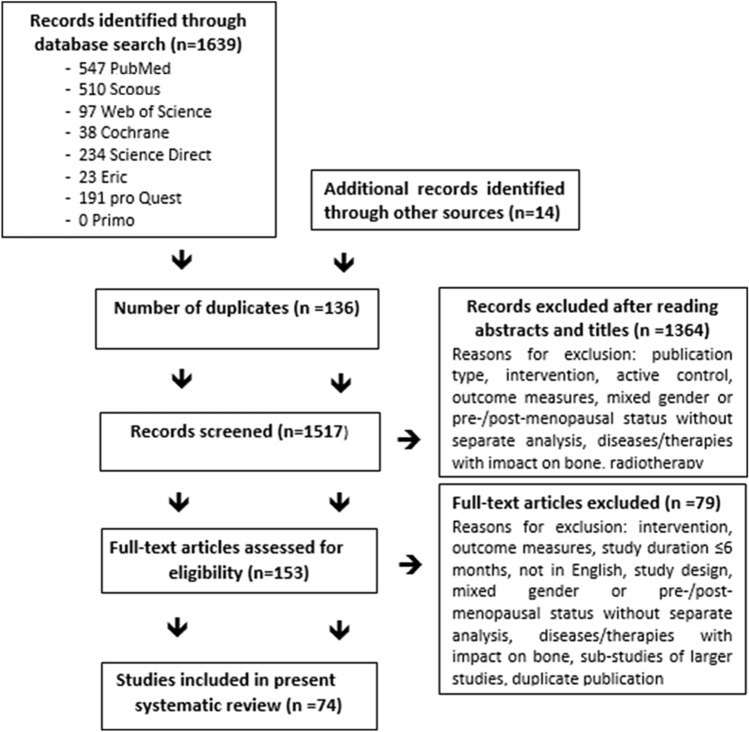
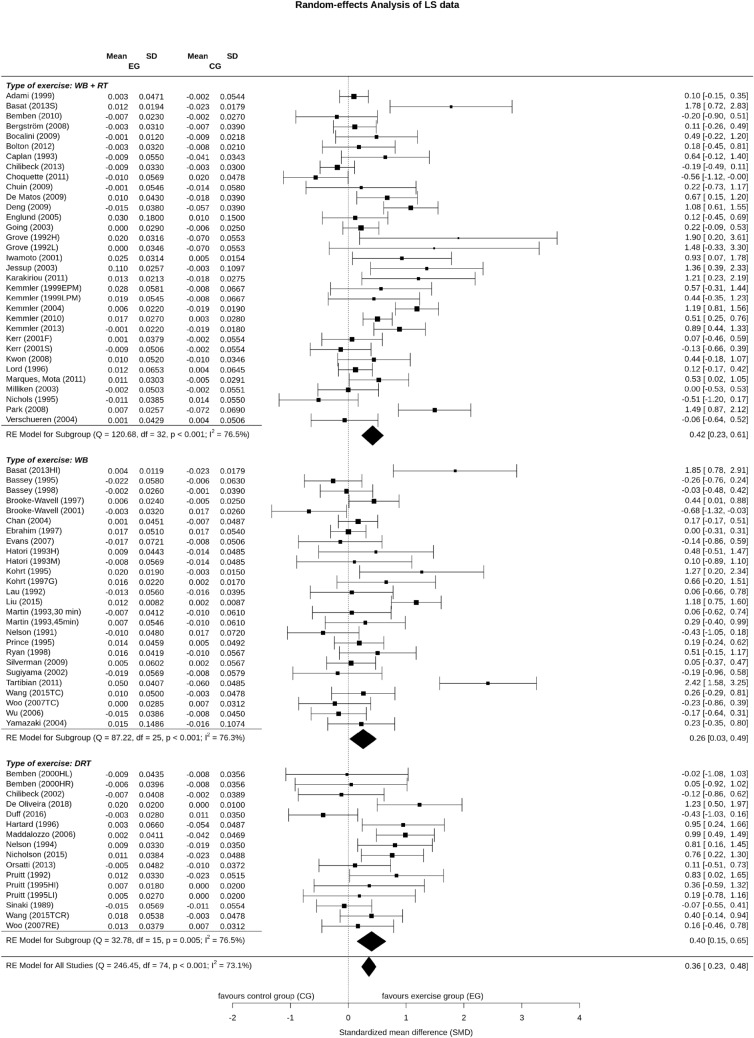
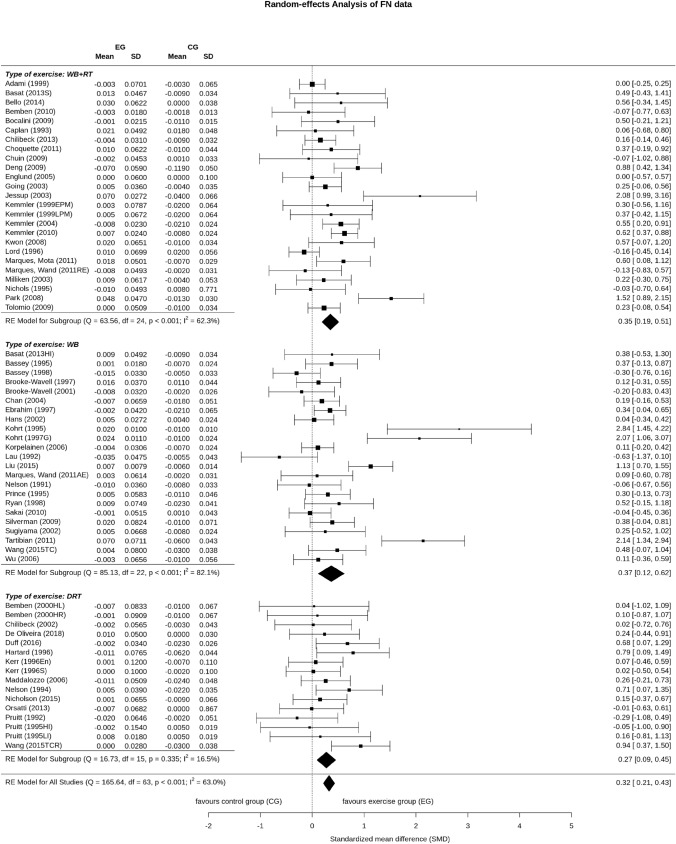
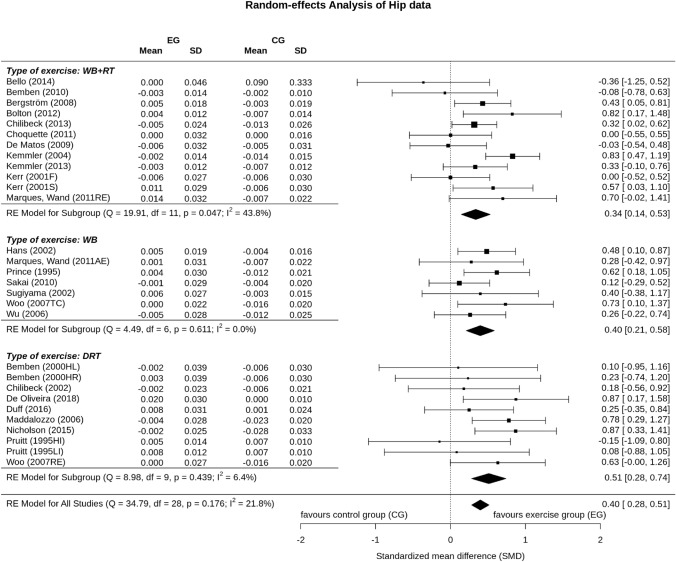
In this sub-analysis of a comprehensive meta-analysis, we aimed to determine the effect of different types of exercise on (areal) bone mineral density (BMD) in postmenopausal women. A systematic review of the literature according to the PRISMA statement included (a) controlled trials, (b) with at least one exercise and one control group, (c) intervention ≥ 6 months, (d) BMD assessments at lumbar spine (LS), femoral neck (FN) or total hip (TH), (e) in postmenopausal women. Eight electronic databases were scanned without language restrictions up to March 2019. The present subgroup analysis was conducted as a mixed-effect meta-analysis with “type of exercise” as the moderator. The 84 eligible exercise groups were classified into (a) weight bearing (WB,n = 30) exercise, (b) (dynamic) resistance exercise (DRT,n = 18), (c) mixed WB&DRT interventions (n = 36). Outcome measures were standardized mean differences (SMD) for BMD-changes at LS, FN and TH. All types of exercise significantly affect BMD at LS, FN and TH. SMD for LS average 0.40 (95% CI 0.15–0.65) for DRT, SMD 0.26 (0.03–0.49) for WB and SMD 0.42 (0.23–0.61) for WB&DRT. SMD for FN were 0.27 (0.09–0.45) for DRT, 0.37 (0.12–0.62) for WB and 0.35 (0.19–0.51) for WB&DRT. Lastly, SMD for TH changes were 0.51 (0.28–0.74) for DRT, 0.40 (0.21–0.58) for WB and 0.34 (0.14–0.53) for WB&DRT. In summary, we provided further evidence for the favorable effect of exercise on BMD largely independent of the type of exercise. However, in order to generate dedicated exercise recommendations or exercise guideline, meta-analyses might be a too rough tool.
Overview
The claims and statistics of this paper haven’t been checked yet.
Free: it reads the open-access text and checks the first 5 claims that cite a source we can check. Create a free account to check every claim.
Integrity signals
Registry
Cites
Statistics
Figures
Verification
Claims the paper makes
The claims and statistics of this paper haven’t been checked yet.
Free: it reads the open-access text and checks the first 5 claims that cite a source we can check. Create a free account to check every claim.
Claims other papers make about this one
Each is checked against this paper’s own text: does it say what the citing paper says it does?
The source backs part of the claim, not all of it — or backs it for a different population, condition or comparison.
In the citing paper
“any type of exercise provides an additional benefit in these patients to maintain bone mineral density [122,123].”
From Lifestyle Medicine for Obesity in the Era of Highly Effective Anti-Obesity Treatment (2025) · cites this paper as [123]
Experimental — accuracy not yet measuredThe check wasn’t confident either way, so it gives no verdict — never disputed.
In the citing paper
“Patients with a history of bariatric surgery may also be at increased risk of osteoporosis.”
From Lifestyle Medicine for Obesity in the Era of Highly Effective Anti-Obesity Treatment (2025) · cites this paper as [123]
Experimental — accuracy not yet measured
Self-check
Percentages, sums and reported differences re-computed from the paper’s own numbers.
The self-check needs the paper’s full text.
Citations
Cites
R: A Language and Environment for Statistical Computing
R Core Team (2025) · doi:10.32614/r.manuals · Cited by 352,181
Preferred Reporting Items for Systematic Reviews and Meta-Analyses: the PRISMA statement
Moher, D., Liberati, A., Tetzlaff, J., Altman, D. G., & for the PRISMA Group (2009) · BMJ · doi:10.1136/bmj.b2535 · Cited by 83,823
Preferred reporting items for systematic reviews and meta-analyses: the PRISMA Statement.
(2009) · PubMed Central · Cited by 44,859
Preferred reporting items for systematic reviews and meta-analyses: The PRISMA statement
Moher, D., Liberati, A., Tetzlaff, J., Altman, D. G., & the PRISMA Group* (2009) · Annals of Internal Medicine · doi:10.7326/0003-4819-151-4-200908180-00135 · Cited by 37,554
Cochrane Handbook for Systematic Reviews of Interventions: Cochrane Book Series
(2008) · doi:10.1002/9780470712184 · Cited by 25,048
Conducting Meta-Analyses in R with the metafor Package
Viechtbauer, W. (2010) · Journal of Statistical Software · doi:10.18637/jss.v036.i03 · Cited by 20,464
Exercise and Physical Activity for Older Adults
Chodzko-Zajko, W. J., Proctor, D. N., Fiatarone Singh, M. A., Minson, C. T., Nigg, C. R., Salem, G. J., & Skinner, J. S. (2009) · Medicine & Science in Sports & Exercise · doi:10.1249/mss.0b013e3181a0c95c · Cited by 5,153
A Nonparametric “Trim and Fill” Method of Accounting for Publication Bias in Meta-Analysis
Duval, S., & Tweedie, R. (2000) · Journal of the American Statistical Association · doi:10.1080/01621459.2000.10473905 · Cited by 2,955
Physical Activity and Bone Health
Kohrt, W. M., Bloomfield, S. A., Little, K. D., Nelson, M. E., & Yingling, V. R. (2004) · Medicine & Science in Sports & Exercise · doi:10.1249/01.mss.0000142662.21767.58 · Cited by 1,043
Nelson, M. E. (1994) · JAMA · doi:10.1001/jama.1994.03520240037038 · Cited by 968 · cited 1×
“…68.9 ± 11.5 C: 72.9 ± 15.5 45 min: 159 ± 5 30 min: 162 ± 7 C: 162 ± 4 n.g n.g n.g Milliken, 2003 E: 26 C: 30 E: 57 ± 5 C: 57 ± 5 E: 6 ± 3 C: 6 ± 3 E: 68.4 ± 10.6 C: 68.4 ± 10.6 E: 162 ± 6 C: 162 ± 6 n.g n.g Nelson, 1994 E: 21 C: 19 E: 61 ± 4 C: 57 ± 6 E: 12 ± 5 C: 10 ± 5 E: 64.7 ± 7.7 C: 62.2 ±…”
Influential
Research works printed but not linked: 2
- Kemmler W Einfluß unterschiedlicher Lebensabschnitte auf die belastungsabhängige Reaktion ossärer Risikofaktoren einer Osteoporose Dtsch Z Sportmed 1999 50 114 119
- Kemmler W Meta-analysis and exercise related sports medicine [Meta-Analysen im trainingswissenschaftlichen und sportmedizinischen Spannungsfeld] Dt Ztschr Sportmedizin 2013 64 96 98
Cited by
UK clinical guideline for the prevention and treatment of osteoporosis
Gregson, C. L., Armstrong, D. J., Bowden, J., Cooper, C., Edwards, J., Gittoes, N. J. L., Harvey, N., Kanis, J., Leyland, S., Low, R., et al. (2022) · Archives of Osteoporosis · doi:10.1007/s11657-022-01061-5 · Cited by 593
“Combination exercise programmes, which include weightbearing and resistance strengthening exercise, are effective at reducing bone loss in the femoral neck and lumbar spine in post-menopausal women [158, 159]; (evidence level Ia).”
BackgroundBrooke-Wavell, K., Skelton, D. A., Barker, K. L., Clark, E. M., De Biase, S., Arnold, S., Paskins, Z., Robinson, K. R., Lewis, R. M., Tobias, J. H., et al. (2022) · British Journal of Sports Medicine · doi:10.1136/bjsports-2021-104634 · Cited by 174
Disuse Osteoporosis: Clinical and Mechanistic Insights
Rolvien, T., & Amling, M. (2022) · Calcified Tissue International · doi:10.1007/s00223-021-00836-1 · Cited by 162
O’Bryan, S. J., Giuliano, C., Woessner, M. N., Vogrin, S., Smith, C., Duque, G., & Levinger, I. (2022) · Sports Medicine · doi:10.1007/s40279-022-01675-2 · Cited by 156
The 2024 UK clinical guideline for the prevention and treatment of osteoporosis
Gregson, C. L., Armstrong, D., Avgerinou, C., Bowden, J., Cooper, C. C., Douglas, L., Edwards, J., Gittoes, N. J. L., Harvey, N. C., Kanis, J. A., et al. (2025) · Archives of Osteoporosis · doi:10.1007/s11657-025-01588-3 · Cited by 158
“Routine intermittent administration of large doses of vitamin D, e.g. ≥ 60,000 IU, is not advised, based on reports of an associated increased risk of fracture and falls [165, 166]; (Evidence level Ia).”
Hejazi, K., Askari, R., & Hofmeister, M. (2022) · Archives of Osteoporosis · doi:10.1007/s11657-022-01140-7 · Cited by 58
Jales, R. D., de Oliveira, R. G., de Oliveira, L. C., Santos-Filho, S. D., de Sá-Caputo, D. D. C., & Bernardo-Filho, M. (2022) · Osteoporosis International · doi:10.1007/s00198-022-06556-y · Cited by 57
Zitzmann, A.-L., Shojaa, M., Kast, S., Kohl, M., von Stengel, S., Borucki, D., Gosch, M., Jakob, F. J., Kerschan‐Schindl, K., Kladny, B., et al. (2021) · Bone · doi:10.1016/j.bone.2021.116230 · Cited by 47
Self-citationNg, C.-A., Gandham, A., Mesinovic, J., Owen, P. J., Ebeling, P. R., & Scott, D. (2023) · Journal of Bone and Mineral Research · doi:10.1002/jbmr.4899 · Cited by 36
“In 14-19) It is likely that bone strength improvements conferred by impact exercise occur independently of increases in aBMD via redistribution of bone mineral from the trabecular to cortical compartment or periosteal expansion of the bone, (20,21) but effects of impact exercise on vBMD and bone…”
BackgroundMuraca, M., & Cappariello, A. (2020) · International Journal of Molecular Sciences · doi:10.3390/ijms21228682 · Cited by 38
The Role of Oxidative Stress in Multiple Exercise-Regulated Bone Homeostasis
Gao, H., Zhao, Y., Zhao, L., Wang, Z., Yan, K., Gao, B., & Zhang, L. (2023) · Aging and Disease · doi:10.14336/ad.2023.0223 · Cited by 37
“application methods, have different effects on bones[11].”
Role of irisin in effects of chronic exercise on muscle and bone in ovariectomized mice
Kawao, N., Iemura, S., Kawaguchi, M., Mizukami, Y., Takafuji, Y., & Kaji, H. (2021) · Journal of Bone and Mineral Metabolism · doi:10.1007/s00774-020-01201-2 · Cited by 35
“Previous studies showed that exercise training increased bone mineral density (BMD) in postmenopausal women [3, 4].”
BackgroundExercise Effects on Bone Mineral Density in Men
Mages, M., Shojaa, M., Kohl, M., von Stengel, S., Becker, C., Gosch, M., Jakob, F., Kerschan-Schindl, K., Kladny, B., Klöckner, N., et al. (2021) · Nutrients · doi:10.3390/nu13124244 · Cited by 28
Self-citationDimai, H. P., Muschitz, C., Amrein, K., Bauer, R., Cejka, D., Gasser, R. W., Gruber, R., Haschka, J., Hasenoehrl, T., Kainberger, F. M., et al. (2024) · Wiener klinische Wochenschrift · doi:10.1007/s00508-024-02441-2 · Cited by 32
Lifestyle Medicine for Obesity in the Era of Highly Effective Anti-Obesity Treatment
Sannidhi, D., Abeles, R., Andrew, W., Bonnet, J. P., Vitale, K., Niranjan, V., Gulati, M., Pauly, K., Moran, R., Alexander, L., et al. (2025) · Nutrients · doi:10.3390/nu17142382 · Cited by 29
Resistance training effects on healthy postmenopausal women: a systematic review with meta-analysis
González-Gálvez, N., Moreno-Torres, J. M., & Vaquero‐Cristóbal, R. (2024) · Climacteric · doi:10.1080/13697137.2024.2310521 · Cited by 39
“…such as osteopenia or osteoporosis, the inclusion of studies that do not include resistance work or the inclusion of unsupervised exercise [21]. loaiza-Betancur et al. analyzed the effects of resistance training on the very specific issue of c-reactive protein, mixing two different…”
BackgroundSclerostin as a biomarker of physical exercise in osteoporosis: A narrative review
Oniszczuk, A., Kaczmarek, A., Kaczmarek, M., Ciałowicz, M., Arslan, E., Silva, A. F., Clemente, F. M., & Murawska‐Ciałowicz, E. (2022) · Frontiers in Endocrinology · doi:10.3389/fendo.2022.954895 · Cited by 32
Kast, S., Shojaa, M., Kohl, M., von Stengel, S., Gosch, M., Jakob, F. J., Kerschan‐Schindl, K., Kladny, B., Klöckner, N., Lange, U., et al. (2022) · Osteoporosis International · doi:10.1007/s00198-022-06329-7 · Cited by 26
“, the proportion of reps to relative intensity (%1RM, Table 2) is far from repetition maximum or work to failure [48].”
BackgroundSelf-citationVita, F., Gangemi, S., Pioggia, G., Trimarchi, F., & Mauro, D. D. (2022) · Medicina · doi:10.3390/medicina58060767 · Cited by 23
“Different types of exercise could stimulate bone formation, and the literature has already shown that these effects could have a beneficial rebound on BMD in postmenopausal women [97].”
BackgroundZhao, F., Su, W., Sun, Y., Wang, J., Lu, B., & Yun, H. (2025) · Journal of Orthopaedic Surgery and Research · doi:10.1186/s13018-025-05890-1 · Cited by 37
Mechanobiology in cellular, molecular, and tissue adaptation
Qin, Y., & Zhao, J. (2023) · Mechanobiology in Medicine · doi:10.1016/j.mbm.2023.100022 · Cited by 30
“Weight-bearing activities and mechanical loading stimulate bone formation and density [32,50] embryonic.”
Daly, R. M., Via, J. D., Fyfe, J. J., Nikander, R., & Kukuljan, S. (2021) · Bone · doi:10.1016/j.bone.2021.115944 · Cited by 23
Liu, X., Jiang, C., Fan, R., Liu, T., Li, Y., Zhong, D., Zhou, L., Liu, T., Li, J., & Jin, R. (2022) · Frontiers in Aging Neuroscience · doi:10.3389/fnagi.2022.935326 · Cited by 27
“Thus, in the previous SRs exploring the effect of exercise on BMD (Zhao et al., 2014, 2015; Kemmler et al., 2020; Mohammad Rahimi et al., 2020), they preferred to include trials in which exercise lasted for at least 6 months.”
BackgroundPlatt, O., Bateman, J., & Bakour, S. H. (2025) · Frontiers in Reproductive Health · doi:10.3389/frph.2025.1542746 · Cited by 26
“Further studies (35, 44) have also shown that combined exercise programs signi fi cantly improved BMD in the LS, FN, and TH. Kemmler et al. (36) found no signi fi cant differences between RT and combined RT on the LS, FN and TH in 2,793 exercising participants; possibly due to participants being 8 years postmenopause, w…”
Cui, W., Li, D., Jiang, Y., & Gao, Y. (2023) · Frontiers in Physiology · doi:10.3389/fphys.2023.1181327 · Cited by 21
“A meta-analyses has investigated the effects of different exercise interventions on BMD in postmenopausal women or individuals with bone loss, and the results show that exercise can improve BMD (Kemmler et al., 2020).”
BackgroundHsu, H., Chiu, C., Chen, W., Yang, Y., & Wang, R. (2024) · PM&R · doi:10.1002/pmrj.13206 · Cited by 25
Li, X., Chen, W., Chen, Q., Li, F., Chen, C., Li, P., Li, F., Guo, S., Chen, P., Yuan, W., et al. (2023) · Frontiers in Medicine · doi:10.3389/fmed.2023.1135063 · Cited by 19
Yang, J., Guo, X., Cui, Z., Guo, H., & Dong, J. (2024) · Frontiers in Endocrinology · doi:10.3389/fendo.2024.1431676 · Cited by 21
Clemente, F. M., Ramírez‐Campillo, R., Sarmento, H., Castillo, D., González, J. R., Rosemann, T. J., & Knechtle, B. (2021) · Healthcare · doi:10.3390/healthcare9040457 · Cited by 17
“Although some meta-analyses suggest that exercise’s beneficial effects on BMD are independent of the type of exercise in postmenopausal women [14], it seems that specific exercises (e.”
BackgroundAnupama, D. S., Noronha, J. A., Acharya, K. K., Prabhu, M. M., Ravishankar, N., & Nayak, B. S. (2023) · Sultan Qaboos University medical journal · doi:10.18295/squmj.1.2023.010 · Cited by 39
Wu, Q., Zhong, P., Ning, P., Tan, L., Huang, X., Peng, T., Yin, L., Luo, F., Qu, M., & Zhou, J. M. (2022) · BMC Musculoskeletal Disorders · doi:10.1186/s12891-022-06055-5 · Cited by 15
“A systematic review and metaanalysis concluded that all types of exercise significantly affect bone mineral density (BMD), they also provided further evidence for the favorable effect of exercise on BMD largely independent of the type of exercise [10].”
BackgroundKong, J., Tian, C., & Zhu, L. (2023) · Journal of Orthopaedic Surgery and Research · doi:10.1186/s13018-023-04324-0 · Cited by 16
Yazdanpanah, Z., Beigrezaei, S., Mohseni‐Takalloo, S., Soltani, S., Rajaie, S. H., Zohrabi, T., Kaviani, M., Forbes, S. C., Baker, J. S., & Salehi‐Abargouei, A. (2021) · Osteoporosis International · doi:10.1007/s00198-021-06187-9 · Cited by 14
“Exercise is recognized as having favorable effects on bone mineral composition [31, 32]; however, findings are contradictory regarding whether exercise incorporated into a hypocaloric diet can be more beneficial against bone loss.”
BackgroundFausto, D. Y., Martins, J. B. B., Machado, A. C., Saraiva, P. S. D. S., Pelegrini, A., & Guimarães, A. C. D. A. (2023) · Climacteric · doi:10.1080/13697137.2023.2249819 · Cited by 16
“The literature points out that PE is an effective non-pharmacological treatment strategy for protecting musculoskeletal health and preventing fractures [7–9], regardless of the practiced modality [10].”
BackgroundBlay, R., Flores, L. E., Kupzyk, K. A., Waltman, N. L., Lappe, J. M., Mack, L. R., & Bilek, L. D. (2024) · Osteoporosis International · doi:10.1007/s00198-023-07008-x · Cited by 14
“While the LIFTMOR trials demonstrated an increase in lower extremity bone density with exercise in postmenopausal women [17], numerous other studies have not [18– 20].”
Zhang, Y., & Chen, H. (2024) · Journal of Orthopaedic Surgery and Research · doi:10.1186/s13018-024-04962-y · Cited by 16
“Their results revealed that different exercise modalities could improve osteoporosis in patients [11].”
BackgroundCheng, J., ju, S., & Zhang, Z. (2023) · BMC Musculoskeletal Disorders · doi:10.1186/s12891-023-06253-9 · Cited by 14
Physical Exercise and Dietary Supplementation in Middle-Aged and Older Women: A Systematic Review
Sánchez-García, J. C., López-Hernández, D., Piqueras-Sola, B., Cortés‐Martín, J., Reinoso‐Cobo, A., Menor-Rodríguez, M. J., & Rodríguez-Blanque, R. (2023) · Journal of Clinical Medicine · doi:10.3390/jcm12237271 · Cited by 14
Zhang, W., Li, X., He, Q., & Wang, X. (2025) · Frontiers in Endocrinology · doi:10.3389/fendo.2025.1597046 · Cited by 18
Bragonzoni, L., Barone, G., Benvenuti, F., Ripamonti, C., Lisi, L., Benedetti, M. G., Marini, S., Dallolio, L., Latessa, P. M., Zinno, R., et al. (2023) · Clinical Interventions in Aging · doi:10.2147/cia.s389967 · Cited by 9
Self-citationLyu, F. F., Ramoo, V., Chui, P. L., & Ng, C. G. (2023) · Clinical Nursing Research · doi:10.1177/10547738231198561 · Cited by 11
“Previous studies have shown that exercise or physical training can improve bone mass (Kemmler et al., 2020), bone composition (Goolsby & Boniquit, 2017), and bone calcium content (Al Dahamsheh et al., 2019) with less adverse reactions.”
BackgroundShen, X., Chen, Y., Zhang, J., Yang, M., Huang, L. H., Luo, J., & Xu, L. (2024) · Frontiers in Endocrinology · doi:10.3389/fendo.2024.1388717 · Cited by 14
“Physical exercise is widely recognized for its bene fi cial effects on bone health, enhancing bone formation, and improving BMD through both direct mechanical forces and indirect neurohormonal mechanisms (47, 48).”
BackgroundLi, L., Wang, Y., & Fan, T.-G. (2024) · Journal of Orthopaedic Surgery and Research · doi:10.1186/s13018-024-05288-5 · Cited by 6
Liu, E., Liu, R. Y., Moraros, J., McCloskey, E. V., Harvey, N. C., Lorentzon, M., Johansson, H., & Kanis, J. А. (2025) · Osteoporosis International · doi:10.1007/s00198-025-07508-y · Cited by 7
Alessandro de, S. I. R. E., Lippi, L., Marotta, N., Folli, A., Calafiore, D., Moalli, S., Turco, A., Ammendolia, A., Fusco, N., & Invernizzi, M. (2023) · International Journal of Molecular Sciences · doi:10.3390/ijms24020921 · Cited by 10
“To date, several studies supported the role of rehabilitation and physical exercise in improving bone health and quality of life in post-menopausal osteoporotic women [22,23].”
BackgroundHejazi, K., Rahimi, G. R. M., & Hofmeister, M. (2025) · Archives of Osteoporosis · doi:10.1007/s11657-025-01594-5 · Cited by 9
Ma, M., Wentao, S., & Liu, D. (2025) · Frontiers in Physiology · doi:10.3389/fphys.2025.1633913 · Cited by 7
Time to reframe osteoporosis: a position statement to characterize the osteoporosis care gap
Paskins, Z., Bullock, L., Hawarden, A., Blackman, F., Armstrong, D. K. B., Bentley, I., Clark, E., Daly, R., David, D., Farr, V., et al. (2026) · JBMR Plus · doi:10.1093/jbmrpl/ziag006 · Cited by 10
“…of osteoporosis “treatment,” with the highest level of evidence in support of fr acture risk reduction, other interventions, such as exercise, 26,27 smoking cessation, 28,29 alcohol withdraw al, 30 and falls reduction, 31 have been demonstrated to either reduce fracture incidence, or, to…”
Tao, Y., Long, L., Gu, J., Wang, P., Li, X., Li, X., Fan, P., & Wang, Y. (2024) · European Spine Journal · doi:10.1007/s00586-024-08424-1 · Cited by 8
Exercise in the Prevention of Age-Related Fragility Fractures (Narrative Review)
Kerschan‐Schindl, K., & Hasenoehrl, T. (2025) · Gerontology · doi:10.1159/000543377 · Cited by 8
Olek, R. A., Samborowska, E., Wiśniewski, P., Wojtkiewicz, P., Wochna, K., & Zieliński, J. (2023) · Nutrition & Metabolism · doi:10.1186/s12986-023-00752-1 · Cited by 9
“The results of the meta-analyses show that resistance training programs increase BMD when applied for ≥ 6 months [46], combined with high-impact or weight-bearing exercises [43], or in patients with osteoporosis and osteopenia [47].”
BackgroundResultLi, H., Gou, Y., Tian, F., Lian, Q., Hu, Y., & Zhang, L. (2022) · Experimental Gerontology · doi:10.1016/j.exger.2022.111794 · Cited by 6
Weber, A. C., Migliavaca, C. B., Tavares, A. L., Carvalho, G. D. S., Pasin, J. K., Valter, L. K., Kaminski, M. E., Alt, V. R., Spielmann, F. V. J., & Wender, M. C. O. (2025) · Menopause The Journal of The North American Menopause Society · doi:10.1097/gme.0000000000002552 · Cited by 8
Belova, K. Y., Lesnyak, O. M., Evstigneeva, L. P., Gladkova, E. N., Dudinskaya, Е. N., & Геннадиевна, Г. Х. (2023) · Osteoporosis and Bone Diseases · doi:10.14341/osteo12960 · Cited by 7
Cancer survivorship and bone health
Wong, P. K. K., & Chen, W. (2024) · The Lancet Healthy Longevity · doi:10.1016/s2666-7568(24)00022-9 · Cited by 5
Zhou, X., Wang, D.-X., Zhang, C., Yang, Y.-J., Zhao, R.-B., Liu, S., & Ni, G. (2024) · World Journal of Orthopedics · doi:10.5312/wjo.v15.i4.363 · Cited by 5
Luo, Y., Zheng, S., Jiang, S., Yang, G., Pavel, V., Ji, H., Zhou, S., Bao, Y., Xiao, W., & Li, Y. (2024) · Osteoporosis International · doi:10.1007/s00198-024-07150-0 · Cited by 8
“Therefore, there are many recommended methods to maintain bone health, such as exercise, ensuring sleep duration, and even shock wave therapy has been proven to be effective in improving local bone density [20, 21].”
Yin, S., Liu, Y., Zhong, Y., & Zhu, F. (2024) · BMC Women s Health · doi:10.1186/s12905-024-03290-x · Cited by 8
“Compared to pharmacological interventions, exercise therapy significantly improves BMD and prevents fractures and osteoporosis in postmenopausal women, with fewer adverse events observed [11, 12].”
BackgroundBone Health for Gynaecologists
Yordanov, A. D., Vasileva‐Slaveva, M., Tsoneva, E., Kostov, S. G., & Yanachkova, V. E. (2025) · Medicina · doi:10.3390/medicina61030530 · Cited by 13
“Bloch-Ibenfeldt has reported that 1 year of heavy resistance training improves short-term bone formation in healthy elders, though this is not confirmed at long-term follow ups [79]; however, other meta-analyses do not corroborate this conclusion [80,81].”
Chai, S. J., Yu, T., Wang, G. R., Sun, F. L., Xue, H., Zhang, Z., & Ran, B. (2025) · Frontiers in Endocrinology · doi:10.3389/fendo.2025.1579101 · Cited by 5
Curzio, L. D., Paolucci, T., Miccinilli, S., Bravi, M., Santacaterina, F., Giorgi, L., Sterzi, S., Zollo, L., Bernetti, A., & Bressi, F. (2025) · Medicina · doi:10.3390/medicina61091587 · Cited by 15
Kawaguchi, M., Kawao, N., Muratani, M., Takafuji, Y., Ishida, M., Kinoshita, Y., Takada, Y., Mizukami, Y., Ohira, T., & Kaji, H. (2022) · Journal of Cellular Physiology · doi:10.1002/jcp.30706 · Cited by 5
“Clinical evidence suggests that exercise effectively increases bone mineral density (BMD) in postmenopausal osteoporosis (Kemmler et al., 2020).”
BackgroundKopiczko, A., Czapla, M., Kubielas, G., & Uchmanowicz, B. (2024) · Frontiers in Physiology · doi:10.3389/fphys.2024.1403102 · Cited by 8
Investigating the Role of Exercise in Improving Bone Health Among Elderly Women with Osteopenia
Kotsili, K., Michou, V., Κουτλιάνος, Ν., Dalkiranis, A., Kouidi, E. J., & Deligiannis, A. P. (2025) · Journal of Functional Morphology and Kinesiology · doi:10.3390/jfmk10040451 · Cited by 4
Jethwa, J. T. (2023) · Indian Journal of Orthopaedics · doi:10.1007/s43465-023-01035-w · Cited by 5
“When post-menopausal women engage in 3 h of weight-bearing and resistance training each week, there is reduced bone loss in the lumbar spine and femoral neck [112].”
Eslamipour, F., Gheitasi, M., Hovanloo, F., & Yaghoubitajani, Z. (2023) · Medical Journal of the Islamic Republic of Iran · doi:10.47176/mjiri.37.126 · Cited by 20
“Warm-up and cool-down exercises were considered before and after each session, respectively (22, 29).”
BackgroundGasperini, B., Cherubini, A., Montanari, R., Lamanna, P., Martínez, V., Prospero, E., & Espinosa, E. (2021) · Aging Clinical and Experimental Research · doi:10.1007/s40520-021-01860-9 · Cited by 4
“Despite physical activity is beneficial for bone independently of the type of exercise [29], a multicomponent program should be encouraged due to its association with better muscle strength, balance and mobility and less fear of falling for several months [30].”
BackgroundHaxhi, J., Mattia, L., Vitale, M., Pisarro, M., Conti, F., & Pugliese, G. (2022) · International Journal of Bone Fragility · doi:10.57582/ijbf.220201.020 · Cited by 4
Shimizu, S., Matsunaga, T., Sakano, Y., Makinoya, M., Shishido, Y., Miyatani, K., Kono, Y., Murakami, Y., Hanaki, T., Kihara, K., et al. (2023) · In Vivo · doi:10.21873/invivo.13375 · Cited by 5
“Considering that a balanced diet and exercise are important for bone health and function (27, 28), interventions by preoperative nutritional support and rehabilitation may be effective for prevention of osteopenia.”
BackgroundHolubiac, I. Ș., & Leuciuc, F. V. (2023) · Balneo and PRM Research Journal · doi:10.12680/balneo.2023.598 · Cited by 5
“…differences between the intensities used (<65% of 1RM, 65 – 80% of 1RM or ≥80% of 1RM), while the meta-analysis conducted by Kemmler et. from 2020 [50] states that dynamic resistance exercise and weight bearing exercise are effective for increasing bone mineral density at the level of the femoral…”
BackgroundMethodInfluentialGombarčíková, T., Svobodová, L., Svobodová, A., & Gimunová, M. (2025) · Frontiers in Sports and Active Living · doi:10.3389/fspor.2025.1655404 · Cited by 6
Fan, A., Zhang, J., & Ye, Q. (2025) · Frontiers in Endocrinology · doi:10.3389/fendo.2025.1706068 · Cited by 4
Miao, T., Li, X., Zhang, W., Liu, J., Xiao, Y., & Wang, X. (2026) · Frontiers in Physiology · doi:10.3389/fphys.2025.1672997 · Cited by 6
Borzooeian, G., Kottaras, S., Kouvelioti, R., Bell, M., Ward, W. E., Tsiani, E., & Klentrou, P. (2023) · Endocrines · doi:10.3390/endocrines4020025 · Cited by 5
“Therefore, the transient rise in PTH, combined with a simultaneous rise in sclerostin, may also be indicative of an immediate catabolic response to exercise that is needed to further stimulate an overall increase in bone turnover, which can eventually lead to an increase in BMD [46,63].”
BackgroundDeveloping Accurate Repetition Prediction Equations for Trained Older Adults with Osteopenia
Beia, R., Wassermann, A., Raps, S., Mayhew, J. L., Uder, M., & KEMMLER, W. K. (2024) · Sports · doi:10.3390/sports12090233 · Cited by 3
Self-citationChen, L., Ji, B., & Xia, C. (2025) · Frontiers in Endocrinology · doi:10.3389/fendo.2025.1558560 · Cited by 5
Trainingstherapie und Basistherapie bei Osteoporose
Maus, U. M. (2023) · Die Orthopädie · doi:10.1007/s00132-023-04432-z · Cited by 4
A Pilot 6-Week Lifestyle Intervention in Women Aged 50+ in Ireland
Cooper, D., Kavanagh, R., Bolton, J., & Keaver, L. (2022) · Physical Activity and Health · doi:10.5334/paah.195 · Cited by 3
Chen, X., Guo, Y., Zhou, F., Wang, X., Wang, S., Zhang, C., Li, M., & Wu, Y. (2024) · Journal of Clinical Densitometry · doi:10.1016/j.jocd.2024.101526 · Cited by 3
Nithisup, P., Manimmanakorn, A., Hamlin, M. J., Maneesai, P., Manimmanakorn, N., Khaengkhan, C., La-bantao, K., & Tantanasest, J. (2024) · Physical Activity and Nutrition · doi:10.20463/pan.2024.0028 · Cited by 5
“Incorporating resistance training into the exercise rou - tines of older adults can lead to increased muscle mass and improved bone density 29,30 ; however, noticeable improve - ments in bone mass typically require at least six months to one year of consistent effort 31,32 .”
Bai, Y. (2025) · Endocrine Research · doi:10.1080/07435800.2025.2484198 · Cited by 2
Martins, J. B. B., da Rocha, A. R. A., Fausto, D. Y., da Silva, E. V. F., da Silva, G., Pinheiro, G. P., & Guimarães, A. C. D. A. (2025) · European Journal of Obstetrics & Gynecology and Reproductive Biology · doi:10.1016/j.ejogrb.2025.113936 · Cited by 2
Zhou, Z., Wei, X., Zhang, X., Ainsworth, B. E., Lü, J., & Liu, Y. (2026) · Journal of sport and health science/Journal of Sport and Health Science · doi:10.1016/j.jshs.2026.101127 · Cited by 5
“15,20,21,106 The advantage of SMD is that it standardizes the results by dividing the MD by the pooled SD, making the metric unitless and facilitating comparisons of outcomes across different scales; however, unitless SMD can obscure clinical relevance in identifying actual changes in BMD following…”
InfluentialMusculoskeletal Health in Menopause
Geier, K. A., & Benham, A. J. (2021) · Springer eBooks · doi:10.1007/978-3-030-85484-3_13 · Cited by 3
Willert, S., von Stengel, S., Kohl, M., Jakob, F. J., Kerschan‐Schindl, K., Lange, U., Peters, S., Thomasius, F. E., & KEMMLER, W. K. (2023) · Osteologie/Osteology · doi:10.1055/a-2080-2362 · Cited by 2
Self-citationMcNulty, K. L., Murphy, M. B., Flynn, E., Lane, A., Muldoon, A., Kealy, R., Harrison, M., Windle, J., & Heavey, P. (2025) · Journal of Aging and Physical Activity · doi:10.1123/japa.2024-0226 · Cited by 8
Activité physique chez l’adulte en consultation de l’ostéoporose
Paccou, J., & Ribeiro, C. (2021) · Revue du Rhumatisme Monographies · doi:10.1016/j.monrhu.2021.01.011 · Cited by 3
Li, Y., Wang, X., Zhang, R., Zhu, S., Wang, L., Huang, J., Gan, X., Xie, S., Wu, T., & He, C. (2021) · medRxiv · doi:10.1101/2021.07.12.21260370 · Cited by 3
Pregnancy, the Postpartum Period, and Menopause
Loescher, J. J., Kellogg, E. J., & Nicholson, C. A. (2023) · Operative Techniques in Sports Medicine · doi:10.1016/j.otsm.2023.151027 · Cited by 1
Konola, V.-M., Parkkari, J. P., Multanen, J., Nikander, R., Rantalainen, T., Vesanto, J., Pekkala, S., Kalaja, M. K., Ihalainen, J. K., Waller, B., et al. (2025) · Trials · doi:10.1186/s13063-025-08928-1 · Cited by 4
Treinamento de força no climatério feminino: Evidências e benefícios segundo a literatura científica
Peres, J. D. S., de Farias, A. B. M., & de Fontes, P. A. D. S. (2025) · Research Society and Development · doi:10.33448/rsd-v14i9.49595 · Cited by 3
Siyahtaş, A., Sayın, E. Ü., & Kurnaz, D. (2025) · Archives of Gerontology and Geriatrics · doi:10.1016/j.archger.2025.106054 · Cited by 2
KEMMLER, W. K., Schoene, D., Kohl, M., Thomasius, F. E., Jakob, F. J., Kerschan‐Schindl, K., Lange, U., Becker, C., Peters, S., & von Stengel, S. (2025) · Die Orthopädie · doi:10.1007/s00132-025-04731-7 · Cited by 2
Self-citationFujii, N., Imura, T., Mitsutake, T., Hirohama, K., Okimoto, N., Tsukamoto, M., & Tanaka, R. (2025) · Bone · doi:10.1016/j.bone.2025.117740 · Cited by 2
Park, D., Koh, H.-S., Kim, S. K., Park, J., Han, K., & Choi, Y. (2025) · Osteoporosis International · doi:10.1007/s00198-025-07766-w · Cited by 1
“Regular weight-bearing and resistance exercises stimulate mechanical loading, promoting osteo-blast activity and enhancing bone remodeling and skeletal integrity [17, 18].”
Gao, Y., Wang, H., Shi, L., Cao, M., Liu, X., Zhang, Y., Chen, X., Rong, Y., Han, B., Lu, P., et al. (2025) · Mediators of Inflammation · doi:10.1155/mi/5715332 · Cited by 3
“Conversely, Kemmler et al. [54] suggested that the skeletal bene fi ts of exercise in postmenopausal women might be independent of the speci fi c exercise type.”
KEMMLER, W. K., Schoene, D., Kohl, M., Thomasius, F. E., Jakob, F., Kerschan‐Schindl, K., Lange, U., Peters, S., & von Stengel, S. (2026) · BMC Endocrine Disorders · doi:10.1186/s12902-026-02194-1 · Cited by 1
“Strong recommendation, Grade A [3, 19, 41], 100% consensus Recommendation 7 Walking as an intervention to improve bone strength may be considered for people with a severely reduced stimulation threshold 1 .”
Self-citationKurç, D., & Berg, A. N. T. V. D. (2026) · BMC Women s Health · doi:10.1186/s12905-026-04457-4 · Cited by 2
Wang, Y., Wang, X., Yu, G., Zhang, L., Xue, C., Gong, W., Luo, J., Lu, C., & Wang, L. (2026) · Frontiers in Endocrinology · doi:10.3389/fendo.2026.1886136 · Cited by 2
Souza, J. M., de Almeida, M. T., Vale, R. G. D. S., Bello, M. D. N. D., & Borba-Pinheiro, C. J. (2021) · Biológicas & Saúde · doi:10.25242/8868114020212468 · Cited by 3
Metadata
- Authors
- Kemmler, W., Shojaa, M., Kohl, M., & von Stengel, S.
- Affiliations
- Friedrich-Alexander-Universität Erlangen-Nürnberg (DE)
- Furtwangen University (DE)
- Corresponding author
- Kemmler, Wolfgang
- Venue
- Calcified Tissue International
- Published
- 2020-08-12
- Volume
- 107
- Issue
- 5
- Pages
- 409-439
- ISSN
- 0171-967X (ISSN-L)
- 1432-0827
- PMC
- PMC7546993
- OpenAlex
- W3048831533
- Cited by
- 161
- References
- 105
- Citations by year
- 2026: 27 · 2025: 32 · 2024: 42 · 2023: 29 · 2022: 17 · 2021: 12 · 2020: 1
- FWCI
- 2.95
- Type
- journal article
- Language
- en
- Open access
- hybrid
- doi.org
- Licence
- cc-by
- creativecommons.org/licenses/by/4.0 (tdm)
- creativecommons.org/licenses/by/4.0 (vor)
- Locations
- Calcified Tissue International (publishedVersion, cc-by)
- PubMed Central (publishedVersion, cc-by)
- PubMed (publishedVersion)
- Repository of Futwangen University of Applied Sciences (Furtwangen University) (submittedVersion, cc-by)
- OPUS FAU (Kooperativer Bibliotheksverbund Berlin-Brandenburg (KOBV), on behalf of the Universitätsbibliothek Erlangen-Nürnberg) (submittedVersion, cc-by)
- Funders
- European Commission
- Erasmus+
- Topics
- Health Sciences › Medicine › Orthopedics and Sports Medicine › Bone health and osteoporosis research
- Health Sciences › Medicine › Public Health, Environmental and Occupational Health › Physical Activity and Health
- Health Sciences › Medicine › Endocrinology, Diabetes and Metabolism › Menopause: Health Impacts and Treatments
- Keywords
- physical activity, bone mineral density, postmenopausal women, weight-bearing exercise, resistance training, osteoporosis prevention, lumbar spine, femoral neck, total hip, exercise type
- MeSH terms
- Female, Femur Neck, Humans, Lumbar Vertebrae, Exercise, Bone Density, Osteoporosis, Postmenopausal, Weight-Bearing, Postmenopause, Resistance Training
About these checks
Registry, retraction, Cites and statistics results are computed, not judged, with one exception: a printed reference that no index lists is read once by a model before it counts as a citation error. Claims are extracted by a model and kept only when their quote appears verbatim in the text; each cited source is then checked, with a model’s help, for whether it says what the claim relies on. Those verdicts can be wrong — read the claim’s quote and the cited source before relying on one.
Statistics and arithmetic are recomputed, not judged.
Confidence bands are shown only for fields calibrated on our annotated test set. None is calibrated yet, so no band is shown.
What counts as a claim ›How we measure confidence ›How we check this ›
Are you an author, or do you see a problem with this page? Request a review
Data sources
Bibliographic data: Semantic Scholar, OpenAlex, Crossref.
Contains information from the Semantic Scholar Academic Graph Datasets, made available under the ODC Attribution License (ODC-BY 1.0).
Semantic Scholar’s data is described in: Kinney, R., et al. (2023). The Semantic Scholar Open Data Platform. arXiv:2301.10140.
