

On the role of body size, brain size, and eye size in visual acuity
Open accessThe DOI matches its Crossref record; 54 of the 54 references it cites were found in a registry or an index.
Abstract
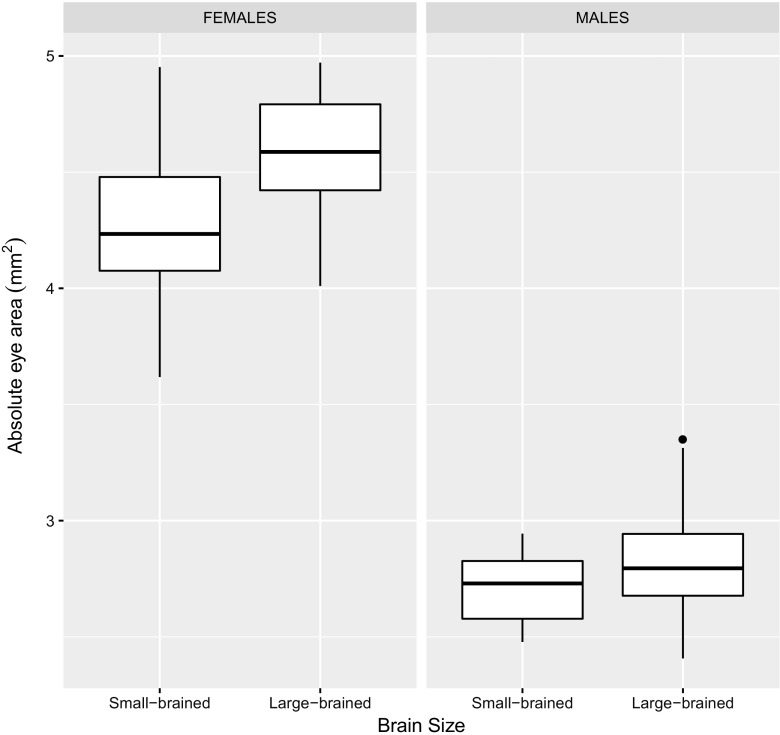
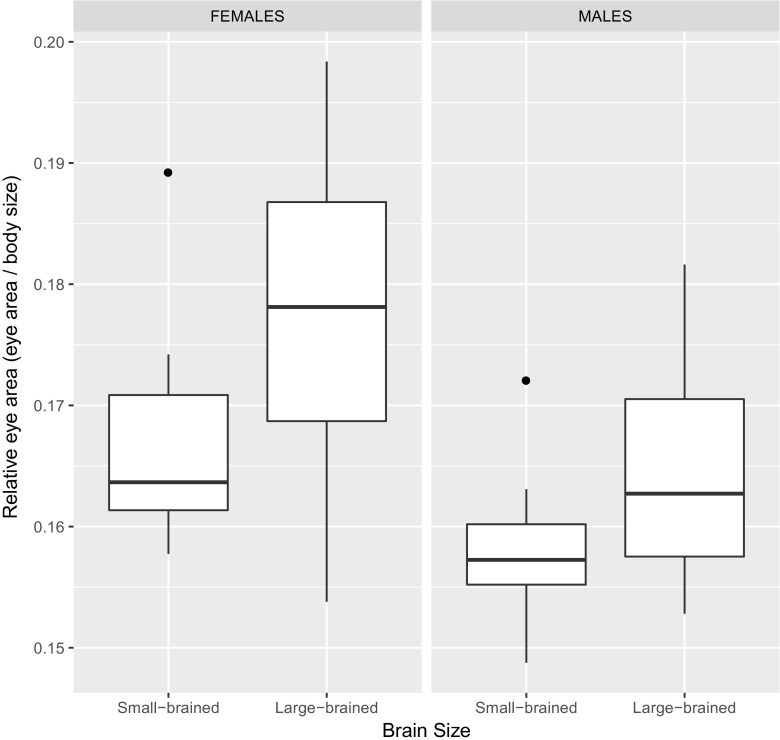
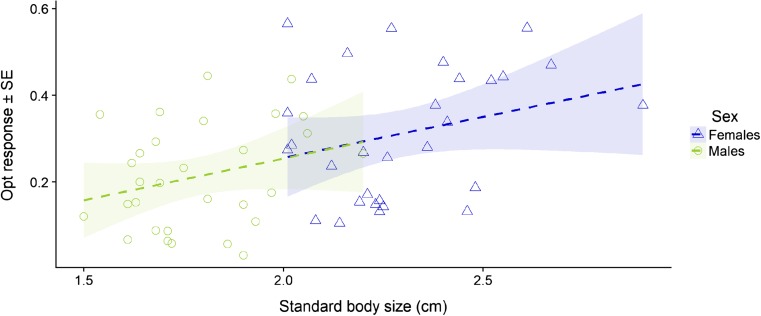
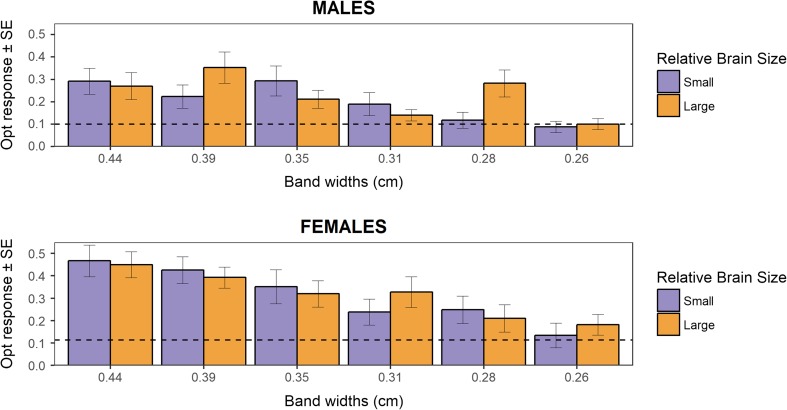
) artificially selected for large and small relative brain size with pronounced behavioral differences in learning experiments and mate choice tests. We performed a study of the visual system by quantifying eye size and optomotor response of large-brained and small-brained guppies. This represents the first experimental test of the link between brain size evolution and visual acuity. We found that female guppies have larger eyes than male guppies, both in absolute terms and in relation to their body size. Likewise, individuals selected for larger brains had slightly larger eyes but not better visual acuity than small-brained guppies. However, body size was positively associated with visual acuity. We discuss our findings in relation to previous macroevolutionary studies on the evolution of brain morphology, eye morphology, visual acuity, and ecological variables, while stressing the importance of accounting for sensory abilities in behavioral studies. SIGNIFICANCE STATEMENT: Pre-existing perceptual biases can be keys for the development of specific behavioral patterns. Hence, potential differences in sensory systems need to be taken into account in the study of animal behavior. We highlight this necessity concentrating on the visual domain and using experimental data on brain size-selected guppies in which we assessed eye size and visual acuity. Behavioral differences between large-brained and small-brained guppies in learning and mate choice predominantly relied on tests using visual cues. Analyses of visual capabilities in this system are therefore necessary. Furthermore, this system offers the unprecedented opportunity to experimentally test the relationship between brain size, eye morphology, and visual capabilities. Our results show similar visual acuities between large-brained and small-brained guppies. However, the differences observed in eye area between the sexes, together with the observed positive relationship between body size and visual acuity, highlight the need to incorporate perceptive differences in the study of animal behavior.
Overview
The claims and statistics of this paper haven’t been checked yet.
Free: it reads the open-access text and checks the first 5 claims that cite a source we can check. Create a free account to check every claim.
Integrity signals
Registry
Cites
Statistics
Figures
Verification
Claims the paper makes
The claims and statistics of this paper haven’t been checked yet.
Free: it reads the open-access text and checks the first 5 claims that cite a source we can check. Create a free account to check every claim.
Claims other papers make about this one
Each is checked against this paper’s own text: does it say what the citing paper says it does?
The cited source says what the claim attributes to it.
In the citing paper
“Natural studies extensively document correlations between brain size and eye size across various species, yet they are limited to observational analysis and can only hypothesize underlying causes without definitive testing (53, 64–67).”
From What if eye...? Computationally recreating vision evolution (2025) · cites this paper as [66]
Experimental — accuracy not yet measured
Self-check
Percentages, sums and reported differences re-computed from the paper’s own numbers.
The self-check needs the paper’s full text.
Citations
Cites
R: A Language and Environment for Statistical Computing
R Core Team (2025) · doi:10.32614/r.manuals · Cited by 352,181
Controlling the False Discovery Rate: A Practical and Powerful Approach to Multiple Testing
Benjamini, Y., & Hochberg, Y. (1995) · Journal of the Royal Statistical Society Series B: Statistical Methodology · doi:10.1111/j.2517-6161.1995.tb02031.x · Cited by 109,482 · cited 1×
“Due to the multiple testing procedure, we applied false discovery rate correction to the 0.05 significance level to reject the null hypothesis of no differences in optomotor response (Benjamini and Hochberg 1995).”
InfluentialNIH Image to ImageJ: 25 years of image analysis
Schneider, C. A., Rasband, W. S., & Eliceiri, K. W. (2012) · Nature Methods · doi:10.1038/nmeth.2089 · Cited by 64,638 · cited 1×
“Pictures were analyzed in ImageJ (Schneider et al. 2012) to collect information on eye area and standard body area.”
Effect size, confidence interval and statistical significance: a practical guide for biologists
Nakagawa, S., & Cuthill, I. C. (2007) · Biological Reviews · doi:10.1111/j.1469-185x.2007.00027.x · Cited by 3,835 · cited 2×
“…a good indicator of no difference between groups, we performed a power analyses by (i) calculating the observed effect size (Cohen’s d) of our LMM (Nakagawa and Cuthill 2007) and (ii) using Monte Carlo simulations of the LMM (n = 1000) to calculate the statistical power of our LMM under…”
Friard, O., & Gamba, M. (2016) · Methods in Ecology and Evolution · doi:10.1111/2041-210x.12584 · Cited by 3,437 · cited 1×
“Behavior of fish was recorded using a Sony Cam HDR-DR11E and later scored by a single observer (MG-O) using BORIS v. 2.72 (Friard and Gamba 2016).”
MethodInfluentialSIMR : an R package for power analysis of generalized linear mixed models by simulation
Green, P., & MacLeod, C. J. (2016) · Methods in Ecology and Evolution · doi:10.1111/2041-210x.12504 · Cited by 2,467
Energy limitation as a selective pressure on the evolution of sensory systems
Niven, J. E., & Laughlin, S. B. (2008) · Journal of Experimental Biology · doi:10.1242/jeb.017574 · Cited by 1,056 · cited 1×
“As brain tissue is among the most energetically costly tissues in the vertebrate body (reviewed in Niven 2016), large eyes should be costly to evolve and energetic demands may therefore constrain the evolution of visual acuity (Niven and Laughlin 2008).”
Sex, Color, and Mate Choice in Guppies
Houde, A. (1998) · Princeton University Press eBooks · doi:10.1515/9780691207261 · Cited by 951
Land, M. F., & Nilsson, D.-E. (2012) · doi:10.1093/acprof:oso/9780199581139.001.0001 · Cited by 739
Hughes, A. (1977) · Handbook of Sensory Physiology · doi:10.1007/978-3-642-66468-7_11 · Cited by 588 · cited 1×
“Since eye morphological features are commonly used as proxies of visual acuity (Hughes 1977; Veilleux and Kirk 2014), we used linear mixed-effects models (LMMs) to test for potential differences in the morphological variables between the sexes and between the relative brain size selection lines.”
Cited by
Brain size affects performance in a reversal-learning test
Buechel, S. D., Boussard, A., Kotrschal, A., van der Bijl, W., & Kolm, N. (2018) · Proceedings of the Royal Society B: Biological Sciences · doi:10.1098/rspb.2017.2031 · Cited by 135
Self-citationArtificial selection on brain size leads to matching changes in overall number of neurons
Marhounová, L., Kotrschal, A., Kverková, K., Kolm, N., & Němec, P. (2019) · Evolution · doi:10.1111/evo.13805 · Cited by 83
Self-citationLarge-brained frogs mature later and live longer
Yu, X., Zhong, M. J., Li, D., Jin, L., Liao, W. B., & Kotrschal, A. (2018) · Evolution · doi:10.1111/evo.13478 · Cited by 64
Self-citationEarly neurogenomic response associated with variation in guppy female mate preference
Bloch, N. I., Corral‐López, A., Buechel, S. D., Kotrschal, A., Kolm, N., & Mank, J. E. (2018) · Nature Ecology & Evolution · doi:10.1038/s41559-018-0682-4 · Cited by 49
Self-citationArganda, S., Hoadley, A. P., Razdan, E. S., Muratore, I. B., & Traniello, J. F. A. (2020) · Journal of Comparative Physiology A · doi:10.1007/s00359-020-01423-9 · Cited by 42
“Morphology, behavior, and nervous system structure appear to be integrated (Corral-López et al. 2017; Gordon et al. 2017; Iglesias et al. 2018).”
BackgroundNieman, C. L., Oppliger, A., McElwain, C. C., & Gray, S. M. (2018) · Conservation Physiology · doi:10.1093/conphys/coy044 · Cited by 41
“Fish length has been recently demonstrated to correlate with eye size, and visual morphology is known to relate to visual abilities (Caves et al., 2017; Corral-López et al., 2017).”
BackgroundInvestigating the role of body size, ecology, and behavior in anuran eye size evolution
Huang, C. H., Zhong, M. J., Liao, W. B., & Kotrschal, A. (2019) · Evolutionary Ecology · doi:10.1007/s10682-019-09993-0 · Cited by 27
“(Darriba et al. 2012) to determine for each gene the best nucleotide substitution model.”
BackgroundSelf-citationCerezer, F. O., Dambros, C., Coelho, M. T. P., Cassemiro, F. A. S., Barreto, E., Albert, J. S., Wüest, R. O., & Graham, C. H. (2023) · Nature Communications · doi:10.1038/s41467-023-41812-7 · Cited by 30
Fish Brains: Anatomy, Functionality, and Evolutionary Relationships
Kotrschal, A., & Kotrschal, K. M. (2020) · Animal welfare · doi:10.1007/978-3-030-41675-1_6 · Cited by 35
Self-citationBrain size evolution in anurans: a review
Lan, C., & Liao, W. B. (2019) · Animal Biology · doi:10.1163/15707563-00001074 · Cited by 26
Coordinated evolution of brain size, structure, and eye size in Trinidadian killifish
Howell, K. J., Beston, S. M., Stearns, S., & Walsh, M. (2020) · Ecology and Evolution · doi:10.1002/ece3.7051 · Cited by 22
“Artificial selection on brain size in guppies (Poecilia reticulata) showed that fish selected for larger brains also evolved larger eyes, but did not exhibit increased visual acuity (Corral-López et al., 2017).”
BackgroundCorral‐López, A., Kotrschal, A., & Kolm, N. (2018) · Journal of Experimental Biology · doi:10.1242/jeb.175240 · Cited by 18
“Cognitive differences between large-brained and small-brained females (Kotrschal et al., 2013; Buechel et al., 2018) impact the judgment of attractiveness of male guppies (Corral-López et al., 2017a).”
BackgroundMethodResultSelf-citationÖzer, I., & Carle, T. (2020) · PLoS ONE · doi:10.1371/journal.pone.0228939 · Cited by 23
“Additionally, other species also show such correlation between brain size and the size of the visual system such as in guppies [41], birds [42] and primates [18].”
BackgroundEnvironmental forcing alters fisheries selection
Thambithurai, D., & Kuparinen, A. K. (2023) · Trends in Ecology & Evolution · doi:10.1016/j.tree.2023.08.015 · Cited by 20
Corral‐López, A., Romenskyy, M., Kotrschal, A., Buechel, S. D., & Kolm, N. (2019) · Journal of Evolutionary Biology · doi:10.1111/jeb.13556 · Cited by 16
Self-citationEvolution of Avian Eye Size Is Associated with Habitat Openness, Food Type and Brain Size
Liu, Y., Jiang, Y., Xu, J., & Liao, W. (2023) · Animals · doi:10.3390/ani13101675 · Cited by 14
Habitat degradation and predators have independent trait-mediated effects on prey
McCormick, M. I., Fakan, E. P., & Palacios, M. M. (2019) · Scientific Reports · doi:10.1038/s41598-019-51798-2 · Cited by 14
Brain size does not impact shoaling dynamics in unfamiliar groups of guppies (Poecilia reticulata)
Kotrschal, A., Szorkovszky, A., Romenskyy, M., Perna, A., Buechel, S. D., Zeng, H.-L., Kristiaan Pelckmans, A., Sumpter, D. J. T., & Kolm, N. (2017) · Behavioural Processes · doi:10.1016/j.beproc.2017.12.006 · Cited by 12
Self-citationEmerging frontiers in visual ecology
Caves, E. M., Cheney, K. L., Dacke, M., Dixit, T., Fialko, K., Franklin, A. M., Jessop, A.-L., Hart, N. S., de Ibarra, N. H., Morehouse, N. I., et al. (2025) · Journal of Experimental Biology · doi:10.1242/jeb.250537 · Cited by 11
Caves, E. M., de Busserolles, F., & Kelley, L. A. (2021) · Journal of Experimental Biology · doi:10.1242/jeb.243420 · Cited by 11
“For example, one recent study of guppies Poecilia reticulata found higher optomotor acuity in females than males, although this dimorphism was attributable to females having overall larger body sizes (Corral-López et al., 2017).”
Wainwright, J. B., Schofield, C., Conway, M., Phillips, D., Martin‐Silverstone, E., Brodrick, E., Cicconardi, F., How, M. J., Roberts, N. W., & Montgomery, S. H. (2023) · Journal of Experimental Biology · doi:10.1242/jeb.246423 · Cited by 11
Corral‐López, A., Kotrschal, A., Szorkovszky, A., Garate-Olaizola, M., Herbert‐Read, J. E., van der Bijl, W., Romenskyy, M., Zeng, H.-L., Buechel, S. D., Fontrodona‐Eslava, A., et al. (2023) · Nature Communications · doi:10.1038/s41467-023-41635-6 · Cited by 13
“28.”
BackgroundMethodInfluentialSelf-citationNieman, C. L., & Gray, S. M. (2019) · Ecology Of Freshwater Fish · doi:10.1111/eff.12517 · Cited by 8
A Review of Effects of Environment on Brain Size in Insects
Carle, T. (2021) · Insects · doi:10.3390/insects12050461 · Cited by 8
“Such correlation has been observed not only in invertebrates [91,98,106], but also in vertebrates [46,104,107].”
BackgroundSize of Snake Eyes Correlates With Habitat Types and Diel Activity Patterns
Huang, M. C.-W., Liao, C., Chou, C., Lin, J.-C., & Huang, W. (2022) · Frontiers in Ecology and Evolution · doi:10.3389/fevo.2021.821965 · Cited by 10
Revisiting the social brain hypothesis: contest duration depends on loser’s brain sizePreprint
van der Bijl, W., Buechel, S. D., Kotrschal, A., & Kolm, N. (2018) · bioRxiv (Cold Spring Harbor Laboratory) · doi:10.1101/300335 · Cited by 6
“These differences were not due to differences 247 in color perception [30] or visual acuity [36], making it unlikely that behavioral differences stem from 248 alterations to low-level perceptual systems.”
BackgroundSelf-citationChalan, I., Solsona, L., Coll-Lladó, C., Webb, P. B., Sakhrani, D., Devlin, R. H., & de la serrana, D. G. (2022) · Journal of Experimental Biology · doi:10.1242/jeb.244099 · Cited by 5
“For instance, studies in guppies (Corral-López et al., 2017; Näslund, 2014) and killifish (Howell et al., 2021) have correlated eye size with brain size, and some authors have suggested measuring the eye size as a method to estimate gross brain size (Näslund, 2014).”
MethodPoor numerical performance of guppies tested in a Skinner box
Gatto, E., Testolin, A., Bisazza, A., Zorzi, M., & Lucon‐Xiccato, T. (2020) · Scientific Reports · doi:10.1038/s41598-020-73851-1 · Cited by 7
A Sexual Dimorphism in the Spatial Vision of North American Band-Winged Grasshoppers
Duncan, A. B., Salazar, B., García, S. R., & Brandley, N. C. (2021) · Integrative Organismal Biology · doi:10.1093/iob/obab008 · Cited by 6
Chacko, J. J., & Mini Sekharan, N. (2022) · Fisheries & Aquatic Life · doi:10.2478/aopf-2022-0013 · Cited by 6
“Guppies with larger eye sizes were reported to have larger brains (Corral-López et al. 2017).”
BackgroundTran, S. M., Howell, K. J., & Walsh, M. R. (2024) · Journal of Evolutionary Biology · doi:10.1093/jeb/voae063 · Cited by 4
What if eye...? Computationally recreating vision evolution
Tiwary, K., Young, A., Tasneem, Z., Klinghoffer, T., Dave, A., Poggio, T., Nilsson, D.-E., Cheung, B., & Raskar, R. (2025) · Science Advances · doi:10.1126/sciadv.ady2888 · Cited by 10
Li, W., Fu, S., & Zeng, L.-Q. (2025) · Behavioral Ecology and Sociobiology · doi:10.1007/s00265-025-03612-5 · Cited by 4
“These constraints may elucidate why brain-behavior correlations are prevalent in primate studies (Reader et al. 2011) yet remain inconsistent in teleost fish (Corral-López et al. 2017; Street et al. 2017 ).”
Multiple Pathways of Visual Adaptations for Water Column Usage in an Antarctic Adaptive Radiation
Yoder, E. B., Parker, E., Frédérich, B., Tew, A. D., JONES, C. D., & Dornburg, A. (2025) · Ecology and Evolution · doi:10.1002/ece3.70867 · Cited by 5
“Across vertebrates, eye size has repeatedly been shown to be linked with aspects of brain architecture, especially those associated with vision (Burton 2008; Corral-López et al. 2017; Howell et al. 2021).”
Howell, K. J., Beston, S. M., & Walsh, M. R. (2022) · Biological Journal of the Linnean Society · doi:10.1093/biolinnean/blac033 · Cited by 4
Mate Choice, Sex Roles and Sexual Cognition: Neuronal Prerequisites Supporting Cognitive Mate Choice
Fuss, T. (2021) · Frontiers in Ecology and Evolution · doi:10.3389/fevo.2021.749499 · Cited by 4
Guillet, A., Stergiou, A., & Carle, T. (2019) · Brain Behavior and Evolution · doi:10.1159/000504121 · Cited by 5
“Higher investment in the part of the brain area dedicated to vision also leads to increased brain size due to there being a direct correlation between the size of the visual system and that of the brain [Barton, 1998; Garamszegi et al., 2002; Näslund, 2014; Corral-López et al., 2017].”
BackgroundBeyond the mosaic model of brain evolution: Rearing environment defines local and global plasticity
Dumitru, M. L., & Opdal, A. M. F. (2024) · Annals of the New York Academy of Sciences · doi:10.1111/nyas.15267 · Cited by 3
“To wit, the size of each region, with the exception of the olfactory bulb, is a good predictor of total brain size, 27–29 thus supporting the concerted model, which predicts unaltered brain functions irrespective of changes in size.”
Bano, F., Ansari, J. A., & Serajuddin, M. (2025) · Landscape and Ecological Engineering · doi:10.1007/s11355-025-00652-x · Cited by 1
“Several researchers cover reports on the relationship linking size of eye and visual acuity in teleostean fishes (Wanzenböck et al. 1996; Corral-López et al. 2017).”
Ghasemi, F., & Gholami, S. (2020) · The Egyptian Journal of Histology · doi:10.21608/ejh.2020.51569.1391 · Cited by 3
Moody, E. K., Sterup, K. L., & Lozano-Vilano, M. D. L. (2021) · Western North American Naturalist · doi:10.3398/064.081.0306 · Cited by 1
“We analyzed sexes separately because poeciliids are sexually dimorphic, with male and female poeciliids often facing strikingly different selection pressures within the same environment (Culumber and Tobler 2017).”
BackgroundEditorial to the topical collection “From sensory perception to behavior”
Bakker, T. C. M., Bleckmann, H., Mogdans, J., & Schluessel, V. (2018) · Behavioral Ecology and Sociobiology · doi:10.1007/s00265-018-2599-y
Yes, correct context is indeed the key: An answer to Haave‐Audet et al. 2019
Herczeg, G., Urszán, T. J., Orf, S., Nagy, G., Kotrschal, A., & Kolm, N. (2019) · Journal of Evolutionary Biology · doi:10.1111/jeb.13548
Self-citationCharest, F., Johanson, Z., & Cloutier, R. (2022) · Journal of Vertebrate Paleontology · doi:10.1080/02724634.2022.2116335
“…in visual acuity that depends on other structures and factors such as the lens, cornea, density of photoreceptors, or size of the regions of the brain that are processing the visual information (Miller et al., 1993; Shand, 1997; Caves et al., 2017; Corral-López et al., 2017; Lisney et al., 2018).”
BackgroundBoussard, A., Garate-Olaizola, M., Fong, S., & Kolm, N. (2024) · Brain Behavior and Evolution · doi:10.1159/000540491 · Cited by 2
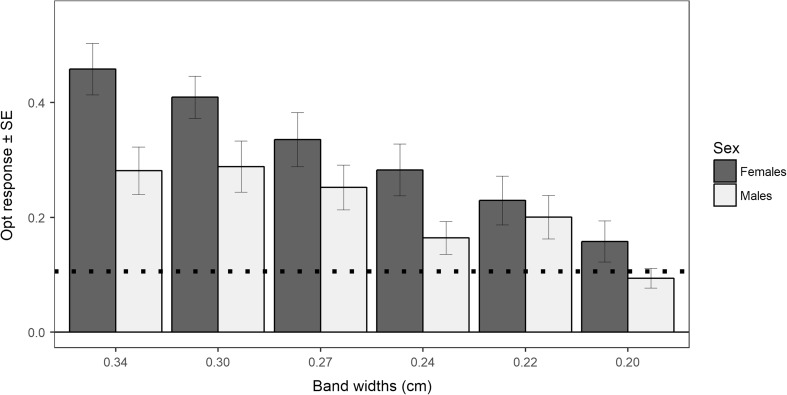
“The stimuli had six different widths, and these were 0.20 cm (3.1 – 4.4 cpd representing the lower limit of guppy visual acuity [39, 45, 46]), 0.22 cm (2.8 – 4.0 cpd), 0.24 cm (2.6 – 3.6 cpd), 0.27 cm (2.3 – 3.3 cpd), 0.30 cm (2.0 – 2.9 cpd), and 0.34 cm (1.8 – 2.6 cpd).”
InfluentialSelf-citationMohammed, R. H., Qasim, S. Y., & Hamid, E. K. (2025) · Commagene Journal of Biology · doi:10.31594/commagene.1661571
EEG・ECG・NIRSを用いた注意レベルの分類のための瞳孔測定によるラベリング手法
ゼニファ, フ. (2020) · Institutional Repositories DataBase (IRDB) · doi:10.15017/4060012
Metadata
- Authors
- Corral-López, A., Garate-Olaizola, M., Buechel, S. D., Kolm, N., & Kotrschal, A.
- Affiliations
- Stockholm University (SE)
- ORCID
- Venue
- Behavioral Ecology and Sociobiology
- Published
- 2017-11-29
- Volume
- 71
- Issue
- 12
- Pages
- 179-179
- ISSN
- 0340-5443 (ISSN-L)
- 1432-0762
- PMC
- PMC5705735
- OpenAlex
- W2769930768
- Cited by
- 48
- References
- 54
- Citations by year
- 2025: 6 · 2024: 3 · 2023: 6 · 2022: 6 · 2021: 5 · 2020: 6 · 2019: 8 · 2018: 7 · 2017: 1
- FWCI
- 5.23
- Type
- journal article
- Language
- en
- Open access
- hybrid
- doi.org
- Locations
- Behavioral Ecology and Sociobiology (publishedVersion, cc-by)
- PubMed Central (publishedVersion, cc-by)
- PubMed (publishedVersion)
- Funders
- Vetenskapsrådet
- Knut och Alice Wallenbergs Stiftelse
- Topics
- Life Sciences › Agricultural and Biological Sciences › Ecology, Evolution, Behavior and Systematics › Animal Behavior and Reproduction
- Life Sciences › Neuroscience › Cognitive Neuroscience › Visual perception and processing mechanisms
- Life Sciences › Agricultural and Biological Sciences › Ecology, Evolution, Behavior and Systematics › Primate Behavior and Ecology
- Keywords
- visual acuity, brain size, eye size, body size, Poecilia reticulata, optomotor response, selective breeding, perceptual bias, mate choice, learning behavior
About these checks
Registry, retraction, Cites and statistics results are computed, not judged, with one exception: a printed reference that no index lists is read once by a model before it counts as a citation error. Claims are extracted by a model and kept only when their quote appears verbatim in the text; each cited source is then checked, with a model’s help, for whether it says what the claim relies on. Those verdicts can be wrong — read the claim’s quote and the cited source before relying on one.
Statistics and arithmetic are recomputed, not judged.
Confidence bands are shown only for fields calibrated on our annotated test set. None is calibrated yet, so no band is shown.
What counts as a claim ›How we measure confidence ›How we check this ›
Are you an author, or do you see a problem with this page? Request a review
Data sources
Bibliographic data: Semantic Scholar, OpenAlex, Crossref.
Contains information from the Semantic Scholar Academic Graph Datasets, made available under the ODC Attribution License (ODC-BY 1.0).
Semantic Scholar’s data is described in: Kinney, R., et al. (2023). The Semantic Scholar Open Data Platform. arXiv:2301.10140.
