

The utility of polysomnography for the diagnosis of NREM parasomnias: an observational study over 4 years of clinical practice
Open accessThe DOI matches its Crossref record; 41 of the 41 references it cites were found in a registry or an index.
Abstract
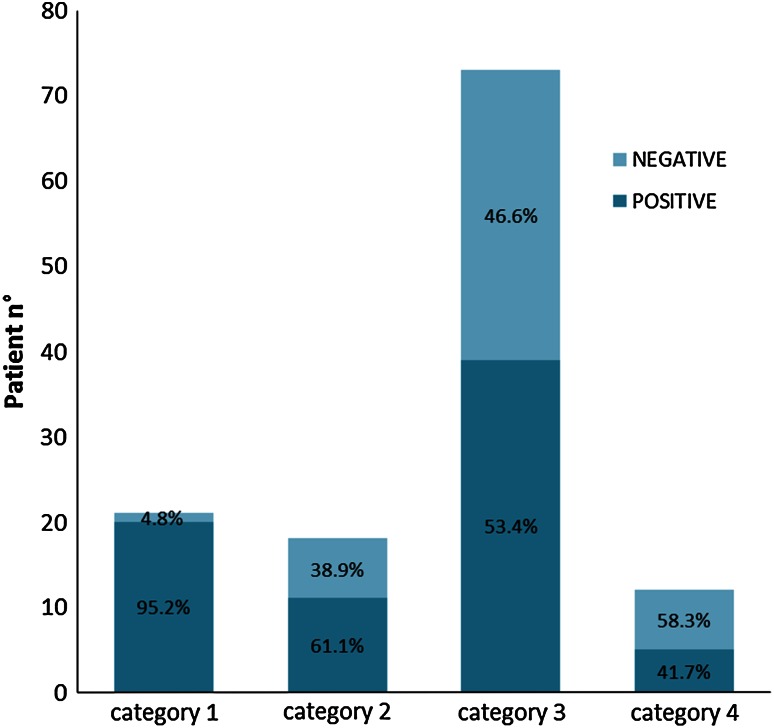
Polysomnography (PSG) is considered the gold standard for diagnosis of non-rapid eye movement (NREM) parasomnias, however its diagnostic yield has been rarely reported. We aimed to assess the diagnostic value of polysomnography in different categories of patients with suspected NREM parasomnia and define variables that can affect the outcome. 124 adults referred for polysomnography for suspected NREM parasomnia were retrospectively identified and divided into clinical categories based on their history. Each polysomnography was analysed for features of NREM parasomnia or different sleep disorders and for presence of potential precipitants. The impact on the outcome of number of recording nights and concomitant consumption of benzodiazepines and antidepressants was assessed. Overall, PSG confirmed NREM parasomnias in 60.5 % patients and showed a different sleep disorder in another 16 %. Precipitants were found in 21 % of the 124 patients. However, PSG showed limited value when the NREM parasomnia was clinically uncomplicated, since it rarely revealed a different diagnosis or unsuspected precipitants (5 % respectively), but became essential for people with unusual features in the history where different or overlapping diagnoses (18 %) or unsuspected precipitants (24 %) were commonly identified. Taking benzodiazepines or antidepressants during the PSG reduced the diagnostic yield. PSG has a high diagnostic yield in patients with suspected NREM parasomnia, and can reveal a different diagnosis or precipitants in over 40 % of people with complicated or atypical presentation or those with a history of epilepsy. We suggest that PSG should be performed for one night in the first instance, with leg electrodes and respiratory measurements and after benzodiazepine and antidepressant withdrawal.
Overview
The claims and statistics of this paper haven’t been checked yet.
Free: it reads the open-access text and checks the first 5 claims that cite a source we can check. Create a free account to check every claim.
Integrity signals
Registry
Cites
Statistics
Figures
Verification
Claims the paper makes
The claims and statistics of this paper haven’t been checked yet.
Free: it reads the open-access text and checks the first 5 claims that cite a source we can check. Create a free account to check every claim.
Claims other papers make about this one
Each is checked against this paper’s own text: does it say what the citing paper says it does?
The source backs part of the claim, not all of it — or backs it for a different population, condition or comparison.
In the citing paper
“This percentage largely depends on the frequency/severity of parasomnia episodes, the life period when the recording is performed, the patient’s age, and the sensibility of the scorer to minor/brief nocturnal episodes [44,45,46,47]”
From Diagnosis and Management of NREM Sleep Parasomnias in Children and Adults (2023) · cites this paper as [46]
Experimental — accuracy not yet measuredThe source backs part of the claim, not all of it — or backs it for a different population, condition or comparison.
In the citing paper
“The probability of catching a typical episode during VPSG is approximately 30–60% [44,45,46,47].”
From Diagnosis and Management of NREM Sleep Parasomnias in Children and Adults (2023) · cites this paper as [46]
Experimental — accuracy not yet measured
Self-check
Percentages, sums and reported differences re-computed from the paper’s own numbers.
The self-check needs the paper’s full text.
Citations
Cites
The ten-twenty electrode system of the international federation
Jasper, H. H. (1958) · Electroencephalography and Clinical Neurophysiology · Cited by 6,567
(2007) · Cited by 6,530
The International Classification of Sleep Disorders: Diagnostic and Coding Manual
Daroff, R. B. (1991) · Neurology · doi:10.1212/wnl.41.1.160 · Cited by 5,014
International Classification of Sleep Disorders
Thorpy, M. (2017) · Sleep Disorders Medicine · doi:10.1007/978-1-4939-6578-6_27 · Cited by 2,505
The International Classification of Sleep Disorders: Diagnostic and Coding Manual
(1991) · Annals of Internal Medicine · doi:10.7326/0003-4819-115-5-413_1 · Cited by 2,413
Klem, G. H., Lüders, H. O., Jasper, H. H., & Elger, C. E. (1999) · PubMed · Cited by 2,361
Kushida, C. A., Littner, M. R., Morgenthaler, T., Alessi, C. A., Bailey, D., Coleman, J., Friedman, L., Hirshkowitz, M., Kapen, S., Kramer, M., et al. (2005) · Sleep · doi:10.1093/sleep/28.4.499 · Cited by 2,054
The AASM Manual for the Scoring of Sleep and Associated Events : Rules
Iber, C. (2007) · Medical Entomology and Zoology · Cited by 929
Broughton, R. J. (1968) · Science · doi:10.1126/science.159.3819.1070 · Cited by 637
Development of Parasomnias From Childhood to Early Adolescence
Laberge, L., Tremblay, R. E., Vitaro, F., Montplaisir, J., & PhD, C. (2000) · Pediatrics · doi:10.1542/peds.106.1.67 · Cited by 427 · cited 1×
“NREM parasomnia typically occurs in childhood although an onset or persistence into adult life is not uncommon [1, 2, 4–7].”
Background
Cited by
NREM sleep parasomnias as disorders of sleep-state dissociation
Castelnovo, A., Lopez, R., Proserpio, P., Nobili, L., & Dauvilliers, Y. (2018) · Nature Reviews Neurology · doi:10.1038/s41582-018-0030-y · Cited by 202
NREM parasomnias: A treatment approach based upon a retrospective case series of 512 patients
Drakatos, P., Marples, L., Muza, R., Higgins, S., Gildeh, N., Macavei, R., Dongol, E. M., Nesbitt, A., Rosenzweig, I., Lyons, E., et al. (2019) · Sleep Medicine · doi:10.1016/j.sleep.2018.03.021 · Cited by 72
“(4) Precipitating factors include noise, touch from a bed partner, sleep disordered b athing (SDB) and periodic limb movements in sleep (PLMS).(4, 9)”
BackgroundBaldini, T., Loddo, G., Sessagesimi, E., Mignani, F., Cirignotta, F., Mondini, S., Licchetta, L., Bisulli, F., Tinuper, P., & Provini, F. (2019) · Frontiers in Neurology · doi:10.3389/fneur.2019.00526 · Cited by 57
Adult NREM Parasomnias: An Update
Hrozanova, M., Morrison, I., & Riha, R. L. (2018) · Clocks & Sleep · doi:10.3390/clockssleep1010009 · Cited by 54
Loddo, G., Sessagesimi, E., Mignani, F., Cirignotta, F., Mondini, S., Licchetta, L., Bisulli, F., Tinuper, P., & Provini, F. (2018) · Sleep Medicine · doi:10.1016/j.sleep.2017.08.019 · Cited by 50
Video polysomnographic findings in non‐rapid eye movement parasomnia
Drakatos, P., Marples, L., Muza, R., Higgins, S., Nesbitt, A., Dongol, E. M., Macavei, R., Gnoni, V., Perez Carbonell, L., Duncan, I., et al. (2019) · Journal of Sleep Research · doi:10.1111/jsr.12772 · Cited by 34
Diagnosis and Management of NREM Sleep Parasomnias in Children and Adults
Mainieri, G., Loddo, G., Provini, F., Nobili, L., Manconi, M., & Castelnovo, A. (2023) · Diagnostics · doi:10.3390/diagnostics13071261 · Cited by 34
Clinical neurophysiology of NREM parasomnias
(2019) · Handbook of Clinical Neurology · doi:10.1016/b978-0-444-64142-7.00063-1 · Cited by 31
Diagnosis of sleep and circadian rhythm disorder
Anderson, K. N. (2020) · doi:10.1093/med/9780198713005.003.0110 · Cited by 29
Home nocturnal infrared video to record non‐rapid eye movement sleep parasomnias
Lopez, R., Barateau, L., Chenini, S., Rassu, A. L., & Dauvilliers, Y. (2023) · Journal of Sleep Research · doi:10.1111/jsr.13732 · Cited by 26
Challenges in diagnosing NREM parasomnias: Implications for future diagnostic classifications
Lopez, R., & Dauvilliers, Y. A. (2023) · Sleep Medicine Reviews · doi:10.1016/j.smrv.2023.101888 · Cited by 21
Giuliano, L., Mainieri, G., Cicero, C. E., Battaglia, G., Guccione, A., Salomone, S., Drago, F., Nicoletti, A. S. Q., Sofia, V., & Zappia, M. (2020) · Seizure · doi:10.1016/j.seizure.2020.07.026 · Cited by 20
Erickson, J., & Vaughn, B. V. (2019) · Sleep Medicine Clinics · doi:10.1016/j.jsmc.2019.05.002 · Cited by 17
Loddo, G., La Fauci, G., Vignatelli, L., Zenesini, C., Cilea, R., Mignani, F., Cecere, A., Mondini, S., Baldelli, L., Bisulli, F., et al. (2021) · Sleep Medicine · doi:10.1016/j.sleep.2021.01.037 · Cited by 16
Interobserver reliability of ICSD-3 diagnostic criteria for disorders of arousal in adults
Loddo, G., Vignatelli, L., Zenesini, C., Lusa, F., Sambati, L., Baldelli, L., Favoni, V., Pisani, L. R., Pierangeli, G., Cevoli, S., et al. (2019) · Sleep and Breathing · doi:10.1007/s11325-019-01937-w · Cited by 14
Castelnovo, A., Schraemli, M., Schenck, C. H., & Manconi, M. (2024) · Sleep Medicine Reviews · doi:10.1016/j.smrv.2024.101898 · Cited by 13
Kazaglis, L., & Bornemann, M. A. C. (2016) · Current Sleep Medicine Reports · doi:10.1007/s40675-016-0039-y · Cited by 14
Sleepwalking and Sleep Paralysis: Prevalence in Colombian Families With Genetic Generalized Epilepsy
Cornejo-Sanchez, D. M., Carrizosa, J., Hemer, D. N. C., Mila, R. A. S., Gomez‐Castillo, C., Thomas, R. H., Leal, S. M., Ochoa, W. C., & Pineda-Trujillo, N. (2019) · Journal of Child Neurology · doi:10.1177/0883073819842422 · Cited by 11
What respiratory physicians should know about parasomnias
Meurling, J., Leschziner, G. D., & Drakatos, P. (2022) · Breathe · doi:10.1183/20734735.0067-2022 · Cited by 11
Non–Rapid Eye Movement Parasomnias
Avidan, A. Y. (2016) · Elsevier eBooks · doi:10.1016/b978-0-323-24288-2.00102-1 · Cited by 7
Licchetta, L., Mainieri, G., Loddo, G., Baccari, F., Bruschi, G., Taruffi, L., Nobili, L., Tinuper, P., Vignatelli, L., Provini, F., et al. (2025) · Epilepsia · doi:10.1111/epi.18561 · Cited by 5
Nocturnal agitation: From sleep state dissociation to sleep-related dissociative state
Lopez, R., Micoulaud‐Franchi, J., Peter‐Derex, L., & Dauvilliers, Y. A. (2023) · Revue Neurologique · doi:10.1016/j.neurol.2023.07.003 · Cited by 5
NREM Sleep Parasomnias Commencing in Childhood: Trauma and Atopy as Perpetuating Factors
Walsh, C., Mitchell, L., Hrozanova, M., Kotoulas, S., Derry, C. P., Morrison, I., & Riha, R. L. (2022) · Clocks & Sleep · doi:10.3390/clockssleep4040043 · Cited by 6
“5% of patients with NREM parasomnia [23].”
Nonrapid Eye Movement Parasomnias
Augustine, A. V. (2022) · Journal of Clinical Neurophysiology · doi:10.1097/wnp.0000000000000945 · Cited by 4
ATS Core Curriculum 2016: Part I. Adult Sleep Medicine
Balachandran, J. S., Thomson, C. C., Sumter, D. B., Shelgikar, A. V., Lachapelle, P., Pamidi, S., Fall, M., Lal, C., Baba, R. Y., Shah, N. A., et al. (2016) · Annals of the American Thoracic Society · doi:10.1513/annalsats.201512-840cme · Cited by 3
Mainieri, G., Baldelli, L., Mignani, F., Cotichelli, F., Loddo, G., Miele, F., Foschini, E., Montini, A., Laudo, F. D., Pazzaglia, C., et al. (2025) · SLEEP · doi:10.1093/sleep/zsaf264 · Cited by 2
“…increase the likelihood of capturing a usual episode [27], and considering adult studies similar to ours (but performed in the sleep laboratory) [24–26, 32] , the diagnostic efficacy of our sample was comparable to some series ( 76.5 % [ The diagnostic efficacy in the RBD suspicion group was…”
InfluentialElectro-acupuncture on Vascular Parkinsonism with multiple sleep disorders: A Case Report
Yan, M., Fan, J., Li, Y., Liu, X., Yu, Z.-M., & Zhuang, L. (2022) · Frontiers in Neurology · doi:10.3389/fneur.2022.1057095 · Cited by 2
“Polysomnography (PSG) is considered the gold standard for the diagnosis of nonrapid eye movement (NREM) parasomnias (17), particularly valuable for individuals with complex medical histories.”
BackgroundKaleyias, J., Scott, R. Q., & Kothare, S. V. (2016) · Springer eBooks · doi:10.1007/978-3-319-41742-4_6 · Cited by 2
Chapter 5. Laboratory Testing and Neuroimaging Studies in Psychiatry
Jacobson, S. A., & Wilde, E. A. (2019) · American Psychiatric Association Publishing eBooks · doi:10.1176/appi.books.9781615372980.lr05 · Cited by 1
Liendo, A., & Irfan, M. (2022) · Elsevier eBooks · doi:10.1016/b978-0-12-822963-7.00301-7 · Cited by 2
Non-REM Parasomnias and REM Sleep Behaviour Disorder
Eriksson, S., & Walker, M. C. (2018) · Springer eBooks · doi:10.1007/978-3-642-54836-9_14 · Cited by 1
Self-citationEpilepsy, obstructive sleep apnea syndrome, and other sleep disorders
Walker, M. C. (2019) · Elsevier eBooks · doi:10.1016/b978-0-12-814877-8.00011-8
Self-citationLaboratory Testing and Neuroimaging Studies in Psychiatry
Jacobson, S. A., & Wilde, E. A. (2019) · American Psychiatric Association Publishing eBooks · doi:10.1176/appi.books.9781615371501.lr05 · Cited by 1
Grigg-Damberger, M. M., & Lopez, S. (2021) · Springer eBooks · doi:10.1007/978-3-030-65574-7_18
Pathophysiology, associations and consequences of parasomnias
Vaughn, B. V., & Walker, N. A. (2022) · Elsevier eBooks · doi:10.1016/b978-0-12-822963-7.00335-2
Value of polysomnography and other diagnostic tools to diagnose and treat parasomnias
Drakatos, P., & Leschziner, G. D. (2022) · Elsevier eBooks · doi:10.1016/b978-0-12-822963-7.00303-0 · Cited by 1
Ettinger, A. B., Weisbrot, D. M., & Gallimore, C. E. (2019) · Cambridge University Press eBooks · doi:10.1017/9781107706866.019
Lee, K. (2021) · Springer eBooks · doi:10.1007/978-3-030-65302-6_3
Walker, N. A., & Vaughn, B. V. (2022) · Respiratory medicine · doi:10.1007/978-3-030-93739-3_16
Polysomnographic and clinical features of childhood non-REM parasomnias: A sleep center experience
Çıplaklıgil, A., Gök, D. K., Per, H., & İsmailoğulları, S. (2025) · Brain and Development · doi:10.1016/j.braindev.2025.104465
Classification of Parasomnia Episodes Using 3-axial Wrist Accelerometry
Castillo, M. (2021) · Cvut DSpace (Czech Technical University)
Sleep neurology: pearls and pitfalls
Adenan, M. H., Pérez‐Carbonell, L., & Leschziner, G. D. (2026) · Practical Neurology · doi:10.1136/pn-2025-004688
“62 In contrast, polysomnography is essential when the presentation is atypical or potentially represents other disorders—particularly RBD, sleep-related hypermotor epilepsy or functional (dissociative) events.”
Cimatti, D., Mainieri, G., Baldelli, L., & Provini, F. (2026) · European Neurology · doi:10.1159/000551918
“In DoA, the likelihood of capturing a typical episode during monitoring ranges from 30% to 60%, depending on event frequency and severity, patient’s age, timing of the recording, and the scorer’s sensitivity to subtle nocturnal phenomena, which account for most documented cases [60, 74–76].”
Management of Non-REM parasomnias: A systematic review of evidence-based treatment approaches
Haakonsen, M. V. M., Jennum, P., & Urdanibia-Centelles, O. (2026) · Sleep Medicine Reviews · doi:10.1016/j.smrv.2026.102376
Metadata
- Authors
- Fois, C., Wright, M.-A. S., Sechi, G., Walker, M. C., & Eriksson, S. H.
- Affiliations
- National Hospital for Neurology and Neurosurgery (GB)
- University of Sassari (IT)
- Corresponding author
- Eriksson, Sofia H.
- Venue
- Journal of Neurology
- Published
- 2014-11-20
- Volume
- 262
- Issue
- 2
- Pages
- 385-393
- ISSN
- 0012-1037 (ISSN-L)
- 0340-5354
- 1432-1459
- PMC
- PMC4330461
- OpenAlex
- W1987630524
- Cited by
- 42
- References
- 41
- Citations by year
- 2026: 2 · 2025: 3 · 2024: 1 · 2023: 3 · 2022: 9 · 2021: 3 · 2020: 2 · 2019: 9 · 2018: 5 · 2017: 1 · 2016: 4
- FWCI
- 2.32
- Type
- journal article
- Language
- en
- Open access
- hybrid
- doi.org
- Locations
- Journal of Neurology (publishedVersion, cc-by)
- Europe PMC (PubMed Central) (publishedVersion, cc-by)
- PubMed Central (publishedVersion, cc-by)
- PubMed (publishedVersion)
- UCL Discovery (University College London) (submittedVersion)
- Funders
- National Institute for Health and Care Research
- University College London Hospitals NHS Foundation Trust
- Topics
- Social Sciences › Psychology › Experimental and Cognitive Psychology › Sleep and related disorders
- Life Sciences › Neuroscience › Cognitive Neuroscience › Sleep and Wakefulness Research
- Health Sciences › Medicine › Clinical Neurology › Restless Legs Syndrome Research
- Keywords
- NREM parasomnias, polysomnography, diagnostic yield, sleep disorders, precipitants, benzodiazepines, antidepressants, epilepsy, respiratory monitoring, benzodiazepine withdrawal
- MeSH terms
- Adolescent, Adult, Aged, Aged, 80 and over, Female, Humans, Male, Middle Aged, Sleep Stages, Polysomnography, Parasomnias, Young Adult
About these checks
Registry, retraction, Cites and statistics results are computed, not judged, with one exception: a printed reference that no index lists is read once by a model before it counts as a citation error. Claims are extracted by a model and kept only when their quote appears verbatim in the text; each cited source is then checked, with a model’s help, for whether it says what the claim relies on. Those verdicts can be wrong — read the claim’s quote and the cited source before relying on one.
Statistics and arithmetic are recomputed, not judged.
Confidence bands are shown only for fields calibrated on our annotated test set. None is calibrated yet, so no band is shown.
What counts as a claim ›How we measure confidence ›How we check this ›
Are you an author, or do you see a problem with this page? Request a review
Data sources
Bibliographic data: Semantic Scholar, OpenAlex, Crossref.
Contains information from the Semantic Scholar Academic Graph Datasets, made available under the ODC Attribution License (ODC-BY 1.0).
Semantic Scholar’s data is described in: Kinney, R., et al. (2023). The Semantic Scholar Open Data Platform. arXiv:2301.10140.
