

Dissociating restart cost and mixing cost in task switching
Open accessThe DOI matches its Crossref record; 36 of the 36 references it cites were found in a registry or an index.
Abstract
Three experiments investigated the cognitive mechanisms underlying the restart cost and mixing cost in task switching. To this aim, the predictability of task order was varied (unpredictable in Experiment 1 and predictable in Experiments 2 and 3) across experiments, which employed a multiple-trial paradigm. Verbal cues for color and shape matching tasks were presented before a run of four trials. Focusing on task-repetition runs only, we measured restart cost as the difference in performance between trials 1 and 2 and mixing cost as the difference in performance on the non-cued trials under mixed-tasks conditions (Experiments 1 and 2) and single-task conditions (Experiment 3). The restart cost was observed under mixed-tasks conditions with both unpredictable and predictable task orders but not under the single-task condition. In contrast, the mixing cost was observed under the mixed-tasks condition with unpredictable task order only (Experiment 1). This finding implies that the optimal task execution on repetition trials depends on how predictable the identity of the approaching task is. Therefore, we suggest that mixing cost arises from limited preparation on repetition trials when task order is unpredictable, while restart cost arises from processes involved in cue-based task activation that is needed to resolve task interference. Together, these data suggest that restart cost and mixing cost are based on dissociable mechanisms.
Overview
The claims and statistics of this paper haven’t been checked yet.
Free: it reads the open-access text and checks the first 5 claims that cite a source we can check. Create a free account to check every claim.
Integrity signals
Registry
Cites
Statistics
Figures
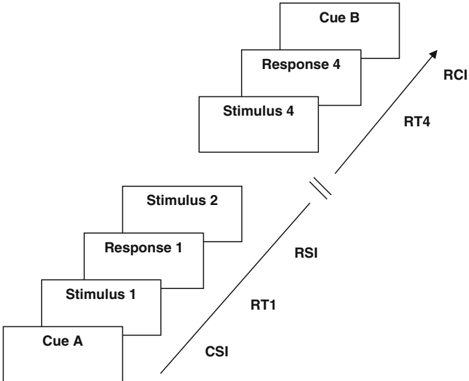
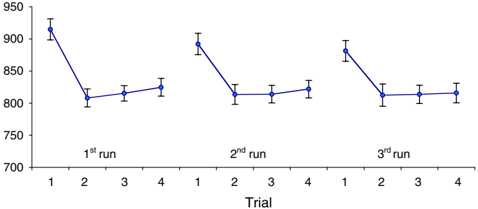
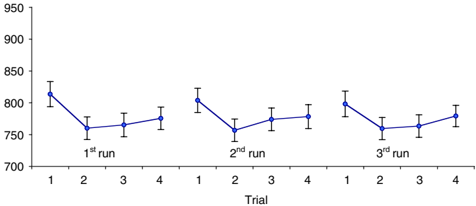
Verification
Claims the paper makes
The claims and statistics of this paper haven’t been checked yet.
Free: it reads the open-access text and checks the first 5 claims that cite a source we can check. Create a free account to check every claim.
Claims other papers make about this one
Each is checked against this paper’s own text: does it say what the citing paper says it does?
The cited source says what the claim attributes to it.
In the citing paper
“The within-run slowing effect indicates that the activation of a task decays as a function of time, even if the task remains relevant for multiple successive trials.”
From Opportune moments for task interruptions: examining the cognitive mechanisms underlying interruption-timing effects (2025) · doi:10.3389/fpsyg.2024.1465323 · cites this paper as Poljac et al., 2009
Self-check
Percentages, sums and reported differences re-computed from the paper’s own numbers.
The self-check needs the paper’s full text.
Citations
Cites
Discrete Multivariate Analysis: Theory and Practice.
Beniger, J. R., Bishop, Y. M. M., Feinberg, S. E., Holland, P. W., Light, R. J., & Mosteller, F. (1975) · Contemporary Sociology · doi:10.2307/2063625 · Cited by 5,108
Costs of a predictible switch between simple cognitive tasks.
Rogers, R. D., & Monsell, S. (1995) · Journal of Experimental Psychology: General · doi:10.1037/0096-3445.124.2.207 · Cited by 3,170 · cited 2×
“Los proposed that this mixing cost arises due to mental load that is higher under the mixed conditions, where two tasks alternate, than under the single-task conditions (see also Rogers & Monsell, 1995).”
BackgroundMonsell, S. (2003) · Trends in Cognitive Sciences · doi:10.1016/s1364-6613(03)00028-7 · Cited by 2,984
Discrete Multivariate Analysis: Theory and Practice.
Plackett, R. L., Bishop, Y. M. M., Fienberg, S. E., & Holland, P. W. (1976) · Journal of the Royal Statistical Society. Series A (General) · doi:10.2307/2344845 · Cited by 1,729 · cited 1×
“In this study, error rates were Wrst transformed using the arcsine transformation ( Bishop, Fienberg, & Holland, 1975 ) to achieve approximate variance equality.”
MethodControl of Cognitive Processes: Attention and Performance XVIII
Monsell, S., & Driver, J. (2000) · UCL Discovery (University College London) · Cited by 1,451
Shifting Intentional Set: Exploring the Dynamic Control of Tasks
(1994) · Attention and Performance XV · doi:10.7551/mitpress/1478.003.0025 · Cited by 1,280 · cited 1×
“Second, both the relevant and the irrelevant stimulus features are visually present, so that the currently irrelevant stimulus feature can interfere with the execution of the required task (e.g., Allport, Styles, & Hsieh, 1994 ).”
BackgroundNeural mechanisms of transient and sustained cognitive control during task switching.
Braver, T. S., Reynolds, J. R., & Donaldson, D. I. (2003) · Neuron · doi:10.1016/s0896-6273(03)00466-5 · Cited by 826
Journal of Experimental Psychology: Human Perception and Performance 2000–2005.
Rosenbaum, D. A. (2025) · Journal of Experimental Psychology: Human Perception and Performance · doi:10.1037/xhp0001227 · Cited by 826
Attention and Performance XV: Conscious and Nonconscious Information Processing
(1994) · The MIT Press eBooks · doi:10.7551/mitpress/1478.001.0001 · Cited by 744
Discrete Multivariate Analysis Theory and Practice
(2007) · Springer eBooks · doi:10.1007/978-0-387-72806-3 · Cited by 675
Cited by
Control and interference in task switching—A review
Kiesel, A., Steinhauser, M., Wendt, M., Falkenstein, M., Jost, K., Philipp, A. M., & Koch, I. (2010) · Psychological Bulletin · doi:10.1037/a0019842 · Cited by 1,485
“Interference varies with certain characteristics of the tasks, and it occurs not just in switches but also in repetitions (mixing costs; see, e.g., Allport et al., 1994; Koch et al., 2005; Los, 1996; Poljac et al., 2009; Rubin & Meiran, 2005; Steinhauser & Hübner, 2005).”
BackgroundSelf-citationKoch, I., Poljac, E., Müller, H., & Kiesel, A. (2018) · Psychological Bulletin · doi:10.1037/bul0000144 · Cited by 606
Self-citationThe role of inhibition in task switching: A review
Koch, I., Gade, M., Schuch, S., & Philipp, A. M. (2010) · Psychonomic Bulletin & Review · doi:10.3758/pbr.17.1.1 · Cited by 493
Self-citationAn integrated model of cognitive control in task switching.
Altmann, E. M., & Gray, W. D. (2008) · Psychological Review · doi:10.1037/0033-295x.115.3.602 · Cited by 298
Where is the bilingual advantage in task-switching?
Hernández, M., Martin, C. D., Barceló, F., & Costa, A. (2013) · Journal of Memory and Language · doi:10.1016/j.jml.2013.06.004 · Cited by 194
“Out of those eight experiments only two of them showed a reduced switch cost for bilinguals relative to monolinguals: Prior and MacWhinney (2010), and Prior and Gollan (2011, English–Spanish group).”
Background
Metadata
- Authors
- Poljac, E., Koch, I., & Bekkering, H.
- Affiliations
- Radboud University Nijmegen (NL)
- RWTH Aachen University (DE)
- Corresponding author
- Poljac, Edita
- Venue
- Psychological Research Psychologische Forschung
- Published
- 2008-04-30
- Volume
- 73
- Issue
- 3
- Pages
- 407-416
- ISSN
- 0033-3026 (ISSN-L)
- 0340-0727
- 1430-2772
- OpenAlex
- W2131773773
- Cited by
- 55
- References
- 35
- Citations by year
- 2025: 2 · 2024: 1 · 2022: 4 · 2021: 3 · 2020: 1 · 2019: 5 · 2018: 6 · 2017: 7 · 2016: 3 · 2015: 1 · 2014: 4 · 2013: 3 · 2012: 2
- FWCI
- 2.24
- Type
- journal article
- Language
- en
- Open access
- hybrid
- doi.org
- Licence
- cc-by-nc
- Locations
- Psychological Research (publishedVersion, cc-by-nc)
- PubMed (publishedVersion)
- RWTH Publications (RWTH Aachen) (submittedVersion)
- Radboud Repository (Radboud University) (submittedVersion)
- Radboud Repository (Radboud University) (submittedVersion, other-oa)
- Topics
- Life Sciences › Neuroscience › Cognitive Neuroscience › Neural and Behavioral Psychology Studies
- Life Sciences › Neuroscience › Cognitive Neuroscience › Neurobiology of Language and Bilingualism
- Social Sciences › Psychology › Experimental and Cognitive Psychology › Cognitive Functions and Memory
- Keywords
- task switching, mixing costs, task repetition, task interference, task preparation
- MeSH terms
- Adolescent, Adult, Attention, Cognition, Cues, Female, Humans, Male, Reaction Time, Task Performance and Analysis
About these checks
Registry, retraction, Cites and statistics results are computed, not judged, with one exception: a printed reference that no index lists is read once by a model before it counts as a citation error. Claims are extracted by a model and kept only when their quote appears verbatim in the text; each cited source is then checked, with a model’s help, for whether it says what the claim relies on. Those verdicts can be wrong — read the claim’s quote and the cited source before relying on one.
Statistics and arithmetic are recomputed, not judged.
Confidence bands are shown only for fields calibrated on our annotated test set. None is calibrated yet, so no band is shown.
What counts as a claim ›How we measure confidence ›How we check this ›
Are you an author, or do you see a problem with this page? Request a review
Data sources
Bibliographic data: Semantic Scholar, OpenAlex, Crossref.
Contains information from the Semantic Scholar Academic Graph Datasets, made available under the ODC Attribution License (ODC-BY 1.0).
Semantic Scholar’s data is described in: Kinney, R., et al. (2023). The Semantic Scholar Open Data Platform. arXiv:2301.10140.
