

Nitric oxide signalling and antidepressant action revisited
Open accessThe DOI matches its Crossref record; 204 of the 205 references it cites were found in a registry or an index.
Abstract
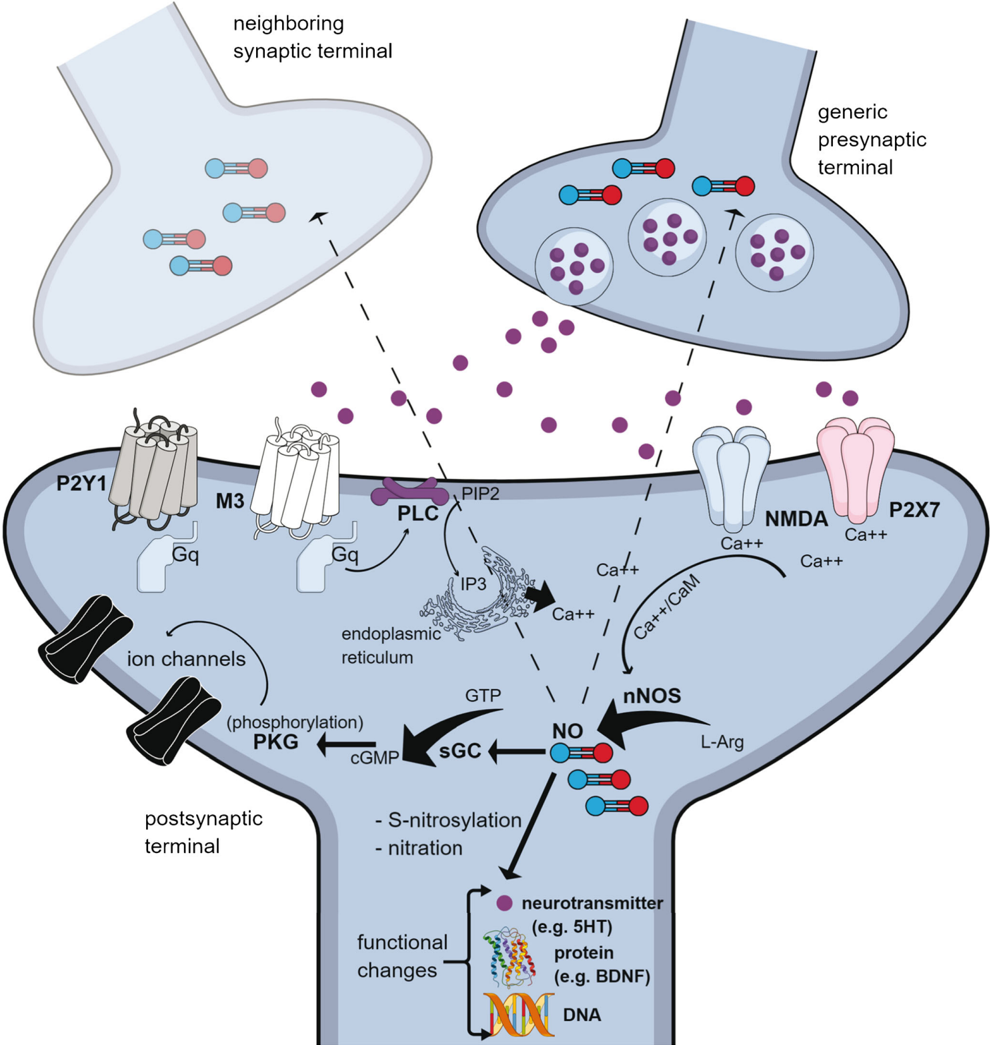
Studies about the pathogenesis of mood disorders have consistently shown that multiple factors, including genetic and environmental, play a crucial role on their development and neurobiology. Multiple pathological theories have been proposed, of which several ultimately affects or is a consequence of dysfunction in brain neuroplasticity and homeostatic mechanisms. However, current clinical available pharmacological intervention, which is predominantly monoamine-based, suffers from a partial and lacking response even after weeks of continuous treatment. These issues raise the need for better understanding of aetiologies and brain abnormalities in depression, as well as developing novel treatment strategies. Nitric oxide (NO) is a gaseous unconventional neurotransmitter, which regulates and governs several important physiological functions in the central nervous system, including processes, which can be associated with the development of mood disorders. This review will present general aspects of the NO system in depression, highlighting potential targets that may be utilized and further explored as novel therapeutic targets in the future pharmacotherapy of depression. In particular, the review will link the importance of neuroplasticity mechanisms governed by NO to a possible molecular basis for the antidepressant effects.
Overview
The claims and statistics of this paper haven’t been checked yet.
Free: it reads the open-access text and checks the first 5 claims that cite a source we can check. Create a free account to check every claim.
Integrity signals
Registry
Cites
Statistics
Figures
Verification
Claims the paper makes
The claims and statistics of this paper haven’t been checked yet.
Free: it reads the open-access text and checks the first 5 claims that cite a source we can check. Create a free account to check every claim.
Claims other papers make about this one
Each is checked against this paper’s own text: does it say what the citing paper says it does?
The cited source doesn’t support the claim as written.
In the citing paper
“According to some research, L-arginine may improve sexual function and have a positive impact on the cellular and molecular processes underlying Major Depressive Disorder [24–26].”
From Effect of l-arginine compared to placebo on sexual function in women with major depressive disorder: a randomized controlled trial (2024) · cites this paper as [25]
Checked by a reasoning model — may be wrong.
Experimental — accuracy not yet measuredThe source backs part of the claim, not all of it — or backs it for a different population, condition or comparison.
In the citing paper
“Oliveira and colleagues found increased nNOS CA1 hippocampal immunoreactivity whereas Bernstein and colleagues found reduced nNOS locus coeruleus immunoreactivity in postmortem samples of depressed patients (123).”
From Chronic stress, neuroinflammation, and depression: an overview of pathophysiological mechanisms and emerging anti-inflammatories (2023) · cites this paper as [123]
Experimental — accuracy not yet measuredThe source backs part of the claim, not all of it — or backs it for a different population, condition or comparison.
In the citing paper
“Altogether, there are substantial evidence that P2X7R modulates 5-HT, NA, glutamate, GABA and NO release, which are mechanisms consistently involved in stress and depression [123,129,130].”
From P2X7 Receptor Signaling in Stress and Depression (2019) · cites this paper as [129]
Experimental — accuracy not yet measuredThe cited source says what the claim attributes to it.
In the citing paper
“This is coherent with evidence that inhibition of NO synthesis induces antidepressant-like effects (for a review, see reference [129]).”
From P2X7 Receptor Signaling in Stress and Depression (2019) · cites this paper as [129]
Self-check
Percentages, sums and reported differences re-computed from the paper’s own numbers.
The self-check needs the paper’s full text.
Citations
Cites
Vos, T., Abajobir, A. A., Abate, K. H., Abbafati, C., Abbas, K. M., Abd-Allah, F., Abdulkader, R. S., Abdulle, A. M., Abebo, T. A., Abera, S. F., et al. (2017) · The Lancet · doi:10.1016/s0140-6736(17)32154-2 · Cited by 13,220
Arzneimittelforschung: Erstanwendung am Menschen in der Phase I
Miletzki, B., & Gleiter, C. H. (2005) · Bundesgesundheitsblatt Gesundheitsforsch.Gesundheitsschutz · doi:10.1007/s00103-005-1024-7 · Cited by 9,355
Influence of life stress on depression: moderation by a polymorphism in the 5-HTT gene
Caspi, A., Sugden, K., Moffitt, T. E., Taylor, A., Craig, I. W., Harrington, H., McClay, J., Mill, J., Martin, J., Braithwaite, A., et al. (2003) · Science · doi:10.1126/science.1083968 · Cited by 8,120
Requirement of hippocampal neurogenesis for the behavioral effects of antidepressants
Santarelli, L., Saxe, M., Gross, C., Surget, A., Battaglia, F., Dulawa, S., Weisstaub, N., Lee, J., Duman, R., Arancio, O., et al. (2003) · Science · doi:10.1126/science.1083328 · Cited by 4,321
The size and burden of mental disorders and other disorders of the brain in Europe 2010
Wittchen, H. U., Jacobi, F., Rehm, J., Gustavsson, A., Svensson, M., Jönsson, B., Olesen, J., Allgulander, C., Alonso, J., Faravelli, C., et al. (2011) · European Neuropsychopharmacology · doi:10.1016/j.euroneuro.2011.07.018 · Cited by 3,754
Cipriani, A., Furukawa, T. A., Salanti, G., Chaimani, A., Atkinson, L. Z., Ogawa, Y., Leucht, S., Ruhe, H. G., Turner, E. H., Higgins, J. P. T., et al. (2018) · The Lancet · doi:10.1016/s0140-6736(17)32802-7 · Cited by 3,541
The Epidemiology of Depression Across Cultures
Kessler, R. C., & Bromet, E. J. (2013) · Annual Review of Public Health · doi:10.1146/annurev-publhealth-031912-114409 · Cited by 2,657
Garthwaite, J., Charles, S. L., & Chess-Williams, R. (1988) · Nature · doi:10.1038/336385a0 · Cited by 2,549
Dynamics of hippocampal neurogenesis in adult humans
Spalding, K. L., Bergmann, O., Alkass, K., Bernard, S., Salehpour, M., Huttner, H. B., Boström, E., Westerlund, I., Vial, C., Buchholz, B. A., et al. (2013) · Cell · doi:10.1016/j.cell.2013.05.002 · Cited by 1,841
Stress, Depression, and Neuroplasticity: A Convergence of Mechanisms
Pittenger, C., & Duman, R. S. (2008) · Neuropsychopharmacology · doi:10.1038/sj.npp.1301574 · Cited by 1,795
Research works printed but not linked: 3
- 59. Gray WP, Cheung A (2014) Chapter four-nitric oxide regulation of adult neurogenesis. In: Litwack G (ed) Vitamins & hormones, vol 96. Academic Press, pp 59-77
- 82. Joca S, Biojone C, Casarotto P, Montezuma K, Cunha F, Guimaraes F (2012) BDNF-TrkB signaling is involved in the antidepressant-like e ff e c t i n d u c e d b y g e n e t i c d e l e t i o n o f i N O S . I n t J Neuropsychopharmacol 15:44-45
- 150. Rivier C, Shen GH (1994b) In the rat, endogenous nitric oxide modulates the response of the hypothalamic-pituitary-adrenal axis to interleu- kin-1β, vasopressin, and oxytocin. J Neurosci 14:1985-1993 · DOI · Paper page
Cited by
Hassamal, S. (2023) · Frontiers in Psychiatry · doi:10.3389/fpsyt.2023.1130989 · Cited by 578
“Oliveira and colleagues found increased nNOS CA1 hippocampal immunoreactivity whereas Bernstein and colleagues found reduced nNOS locus coeruleus immunoreactivity in postmortem samples of depressed patients (123).”
BackgroundMitochondria as a target for neuroprotection: role of methylene blue and photobiomodulation
Yang, L., Youngblood, H. A., Wu, C., & Zhang, Q. (2020) · Translational Neurodegeneration · doi:10.1186/s40035-020-00197-z · Cited by 154
P2X7 Receptor Signaling in Stress and Depression
Ribeiro, D. E., Roncalho, A. L., Glaser, T., Ulrich, H., Wegener, G., & Joca, S. (2019) · International Journal of Molecular Sciences · doi:10.3390/ijms20112778 · Cited by 129
“This is coherent with evidence that inhibition of NO synthesis induces antidepressant-like effects (for a review, see reference [129]).”
BackgroundSelf-citationvan Vuren, E. J., Steyn, S. F., Brink, C. B., Möller, M., Viljoen, F. P., & Harvey, B. H. (2021) · Biomedicine & Pharmacotherapy · doi:10.1016/j.biopha.2020.111200 · Cited by 111
“Importantly, both nNOS- and iNOS-derived NO levels were altered in the limbic brain regions of stressed animals [140].”
Nitrergic Enteric Neurons in Health and Disease—Focus on Animal Models
Bódi, N., Szalai, Z., & Bagyánszki, M. (2019) · International Journal of Molecular Sciences · doi:10.3390/ijms20082003 · Cited by 74
“Although more than 20 years have passed since the biological properties of NO were discovered [73,74], many questions remain unanswered concerning the role of NO in neurons both in the gut and the brain [75].”
BackgroundGrabacka, M., Plonka, P. M., & Pierzchalska, M. (2022) · International Journal of Molecular Sciences · doi:10.3390/ijms232214156 · Cited by 46
Chaperone Sigma1R and Antidepressant Effect
Воронин, М. В., Vakhitova, Y. V., & Середенин, С. Б. (2020) · International Journal of Molecular Sciences · doi:10.3390/ijms21197088 · Cited by 45
Alzheimer’s Disease: A Contextual Link with Nitric Oxide Synthase
Dubey, H., Gulati, K., & Ray, A. (2019) · Current Molecular Medicine · doi:10.2174/1566524019666191129103117 · Cited by 43
Drug repositioning for treatment-resistant depression: Hypotheses from a pharmacogenomic study
Fabbri, C., Kasper, S., Zohar, J., Souery, D., Montgomery, S., Albani, D., Forloni, G., Ferentinos, P. P., Rujescu, D., Mendlewicz, J., et al. (2020) · Progress in Neuro-Psychopharmacology and Biological Psychiatry · doi:10.1016/j.pnpbp.2020.110050 · Cited by 39
Tayab, M. A., Chowdhury, K. A. A., Jabed, M., Tareq, S. M., Kamal, A. T. M. M., Islam, M. N., Uddin, A. M. K., Hossain, M. A., Emran, T. B., & Simal‐Gándara, J. (2021) · Plants · doi:10.3390/plants10020287 · Cited by 37
“Molecular docking is a well-established structural drug design technique that has been ubiquitously used to model interactions between drug molecules and target proteins at an atomic scale, and thereby allows us to outline the properties of the molecule at the active site of the target protein and to interpret the ini…”
BackgroundMesdom, P., Colle, R., Lebigot, É., Trabado, S., Deflesselle, É., Fève, B., Becquemont, L., Corruble, E., & Verstuyft, C. (2019) · Current Neuropharmacology · doi:10.2174/1570159x17666191021141057 · Cited by 31
Liu, W., Li, Q., Ye, B., Cao, H., Shen, F., Xu, Z., Du, W., Guo, F., Liu, J., Li, T., et al. (2020) · Frontiers in Psychiatry · doi:10.3389/fpsyt.2020.00837 · Cited by 24
“NO is synthesized by NOS, which has three isoforms, namely, nNOS, iNOS, and eNOS, and all three NOS isoforms exist in the CNS and affect cell signaling in brain (29).”
BackgroundInfluentialCo-use of psychedelics with other substances: Findings from the global psychedelic survey
Lake, S., & Lucas, P. (2024) · Journal of Psychopharmacology · doi:10.1177/02698811241292956 · Cited by 24
“…system (3,4-Methylenedioxymethamphetamine or 3,4-Methylenedioxyamphetamine (MDMA or MDA), nitrous oxide, and salvia divinorum), and/or that are considered to have psychedelic or hallucinogenic effects by consumers (Joca et al., 2019; Nagele et al., 2018; Nichols et al., 2023; Varias et al., 2020).”
nNOS-induced tyrosine nitration of TRKB impairs BDNF signaling and restrains neuronal plasticity
Biojone, C., Casarotto, P. C., Cannarozzo, C., Fred, S. M., Herrera-Rodríguez, R., Lesnikova, A., Voipio, M., & Ċastrén, E. (2023) · Progress in Neurobiology · doi:10.1016/j.pneurobio.2023.102413 · Cited by 23
The neurobiological mechanisms and therapeutic prospect of extracellular ATP in depression
Wang, K., Huang, S., Fu, D., Yang, X., Ma, L., Zhang, T., Zhao, W., Deng, D., Ding, Y., Zhang, Y., et al. (2024) · CNS Neuroscience & Therapeutics · doi:10.1111/cns.14536 · Cited by 22
In Silico Study Examining New Phenylpropanoids Targets with Antidepressant Activity
Calixto, P. D. S., de Almeida, R. N., Salvadori, M. G. D. S. S., Maia, M. D. S., Barbosa‐Filho, J. M., Scotti, M. T., & Scotti, L. (2020) · Current Drug Targets · doi:10.2174/1389450121666200902171838 · Cited by 21
Changed Substance Use After Psychedelic Experiences Among Individuals in Canada
Boehnke, K. F., Kruger, D. J., & Lucas, P. (2023) · International Journal of Mental Health and Addiction · doi:10.1007/s11469-023-01085-z · Cited by 20
“…hallucinogenic effects that may interact directly or indirectly with the serotonergic system (3,4-methylenedioxymethamphetamine or 3,4-methylenedioxyamphetamine (MDMA or MDA), nitrous oxide, and salvia divinorum) (Joca et al., 2019; Nagele et al., 2018; Nichols et al., 2023; Varias et al., 2020).”
Yu, Y., He, X., Wang, Y., Zhang, J., Tang, C., & Rong, P. (2022) · Neuroscience Letters · doi:10.1016/j.neulet.2022.136562 · Cited by 17
Park, D. I., Novak, B., Yan, Y., Kaya, M. E., & Turck, C. W. (2020) · Journal of Psychiatric Research · doi:10.1016/j.jpsychires.2020.05.033 · Cited by 17
Chapp, A. D., Shan, Z. J., & Chen, Q. (2024) · Antioxidants · doi:10.3390/antiox13020139 · Cited by 16
“Increased NMDAR activation stimulates CamK2, resulting in increased nNOS, which stimulates the production of NO and cyclic guanosine monophosphate (cGMP), which then diffuses out into the synaptic cleft where it can modulate neuronal function [173].”
BackgroundMarballi, K. K., & MacDonald, J. L. (2021) · Neurochemistry International · doi:10.1016/j.neuint.2021.105076 · Cited by 15
da Silva, P. R., Pazos, N. D. N., Gonzaga, T. K. S. D. N., Andrade, J., Monteiro, Á. B., Portela, A. C. R., Pires, H. F. O., Maia, M. D. S., da Fonsêca, D. V., Scotti, M. T., et al. (2022) · Current Topics in Medicinal Chemistry · doi:10.2174/1568026622666220505104726 · Cited by 15
Igben, V.-J. O., Iju, W. J., Itivere, O. A., Oyem, J. C., Akpulu, P., & Ahama, E. E. (2023) · Laboratory Animal Research · doi:10.1186/s42826-023-00162-7 · Cited by 17
“The modulatory functions of NO is utilized to produce antidepressants [36, 70], and a decreased level of NO synthesis in the brain induces an antidepressant effect [36, 71].”
BackgroundAmini-Khoei, H., Dehkordi, H. T., & Bijad, E. (2024) · Brain and Behavior · doi:10.1002/brb3.3604 · Cited by 14
The effect of astaxanthin treatment on the rat model of fetal alcohol spectrum disorders (FASD)
Chen, M.-H., Hong, C.-L., Wang, Y.-T., Wang, T., & Chen, J. (2022) · Brain Research Bulletin · doi:10.1016/j.brainresbull.2022.02.017 · Cited by 14
“, 2010); (2) Synaptic homeostasis mediated by nNOS made the connections between neurons in the hippocampus more stable (Joca et al., 2019), which was consistent with the greater distribution of ChAT+ fibers in the hippocampal CA1 region observed in this study; (3) NO catalyzed by nNOS could be used as a retrograde neu…”
BackgroundMethodDuration of Social Isolation Affects Production of Nitric Oxide in the Rat Brain
Vranková, S., Galandakova, Z., Benko, J., Cebová, M., Riečanský, I., & Pecháňová, O. (2021) · International Journal of Molecular Sciences · doi:10.3390/ijms221910340 · Cited by 13
Therapeutic Potential of the Purinergic System in Major Depressive Disorder Associated with COVID-19
Simões, J. L. B., Galvan, A. C. L., da Silva, E. L. M., Ignácio, Z. M., & Bagatini, M. D. (2022) · Cellular and Molecular Neurobiology · doi:10.1007/s10571-022-01215-6 · Cited by 13
“As well as modulating levels of nitric oxide (NO) synthesis in the prefrontal cortex and hippocampus, which induces antidepressant effects (Joca et al. 2019).”
BackgroundČilić, A. Z., Zemba, M., Cilic, M., Štrbe, S., Ilić, S., Vukojević, J., Zoričić, Z., Filipčić, I., Kokot, A., Smoday, I. M., et al. (2022) · Biomedicines · doi:10.3390/biomedicines10071462 · Cited by 13
Patriota, L. L. D. S., de Lima, B. R. F., Marinho, A. D. O., da Costa, J. A., Coelho, L. C. B. B., Rêgo, M. J. B. D. M., Pitta, M. G. D. R., Paiva, P. M. G., Pereira, M. C., Napoleão, T. H., et al. (2023) · Protein and Peptide Letters · doi:10.2174/0109298665270366231031052629 · Cited by 9
Lengvenytė, A., Sundaresh, A., Strumila, R., Boukouaci, W., Wu, C., Sugunasabesan, S., Guillaume, S., Sénèque, M., Leboyer, M., Olié, É., et al. (2022) · Progress in Neuro-Psychopharmacology and Biological Psychiatry · doi:10.1016/j.pnpbp.2022.110617 · Cited by 8
Perry, S. W., Licinio, J., & Wong, M. (2019) · Heart and Mind · doi:10.4103/hm.hm_13_19 · Cited by 8
Rasheed, M., Wang, H., Wang, C., Sun, J., Chen, Z., & Deng, Y. (2023) · Journal of Neurochemistry · doi:10.1111/jnc.15766 · Cited by 7
“…evidence has shown that deficits in PSD- 95 result in the dysfunctional NOS, NO, and BDNF and are linked with the neurobiology of depression (Dhir & Kulkarni, 2011; Joca et al., 2019; Luiking et al., 2010), but so far, underlying mechanisms involved in depression pathology are still unclear.”
BackgroundWu, S., Chao, T., Hsu, C., Chang, H.-H., & Yang, S. S. (2023) · International Journal of Molecular Sciences · doi:10.3390/ijms241511973 · Cited by 7
“Preclinical research has repeatedly demonstrated that effects resembling those of antidepressants can be achieved by suppressing NO production, such as direct suppression of neuronal nitric oxide synthase (nNOS) and/or inducible nitric oxide synthase (iNOS), where NOS is a family of enzymes catalyzing the production o…”
BackgroundInfluentialArginine metabolomics in mood disorders
Zinellu, A., Tommasi, S., Sedda, S., & Mangoni, A. A. (2024) · Heliyon · doi:10.1016/j.heliyon.2024.e27292 · Cited by 7
“1) [10,11].”
BackgroundMaciel, I. D. S., Sales, A. J., Casarotto, P. C., Ċastrén, E., Biojone, C., & Joca, S. R. L. (2020) · European Journal of Neuroscience · doi:10.1111/ejn.15042 · Cited by 7
Self-citationSerum nitric oxide levels are depleted in depressed patients treated with electroconvulsive therapy
ATAGÜN, M. İ., Canbek, Ö., Balaban, Ö. D., İpekçioğlu, D., Alpugan, B., Yalcin, S., Şenat, A., Karamustafalıoğlu, N., İlnem, M. C., & Erel, Ö. (2021) · Indian Journal of Psychiatry · doi:10.4103/indianjpsychiatry.indianjpsychiatry_1441_20 · Cited by 7
“[38,39] For example, circulating NO levels were higher in depressive state of bipolar disorder and decreased following 30 days of treatment in a previous study.”
InfluentialSales, A. J., Joca, S. R. L., Bel, E. A. D., & Guimarães, F. S. (2023) · Behavioural Brain Research · doi:10.1016/j.bbr.2023.114764 · Cited by 7
Self-citationVascular Homeostasis in Suicidal Behavior: From Molecular Mechanisms to Clinical Implications
Lengvenytė, A., & Courtet, P. (2025) · Biological Psychiatry · doi:10.1016/j.biopsych.2025.06.012 · Cited by 7
Swami, P. M., Tamboli, Y., Choudhari, P. B., Bhatia, M. S., Mohanta, T. K., Al‐Harrasi, A., & Pudukulathan, Z. K. (2020) · Biomedicines · doi:10.3390/biomedicines8050121 · Cited by 6
Investigating acupuncture therapy in depression: mechanisms of synaptic plasticity regulation
Si, Y., Ma, W., Zhang, Q., Zhang, Y., An, J., Zhang, M., Fu, Y., Yu, Y., Zhang, H., Fang, Y., et al. (2025) · Neuroscience · doi:10.1016/j.neuroscience.2025.06.005 · Cited by 6
Bevilacqua, L. M., Charney, A., Pierce, C. R., Richards, S. M., Jha, M. K., Glasgow, A. M., Brallier, J. W., Kirkwood, K. A., Bagiella, E., Charney, D. S., et al. (2021) · Journal of Psychopharmacology · doi:10.1177/0269881120985147 · Cited by 5
“Preclinical studies suggest a role for this gaseous signaling molecule in the development of depressive symptoms but studies in humans show mixed results (Joca et al., 2019 for review).”
ResultTracking neurological diseases: advances in fluorescent probes design and application
Quan, W., Yuan, X., Zhang, Q., & Lin, W. (2025) · Coordination Chemistry Reviews · doi:10.1016/j.ccr.2025.217362 · Cited by 4
Ikenouchi, A., Okamoto, N., Igata, R., Natsuyama, T., & Yoshimura, R. (2022) · Journal of Integrative Neuroscience · doi:10.31083/j.jin2104123 · Cited by 4
“nNOS and eNOS are Cacalmodulin-dependent enzymes that are constitutively expressed mainly in neurons and endothelial cells [18].”
BackgroundBastawy, E. M., Eraslan, I. M., Voglsanger, L. M., Suphioglu, C., Walker, A. J., Dean, O. M., Read, J. L., Ziemann, M., & Smith, C. M. (2024) · International Journal of Molecular Sciences · doi:10.3390/ijms25137391 · Cited by 4
“Recently, some researchers explained the association between the neuroplasticity controlled by NO and its antidepressant effect [86].”
BackgroundLiu, T., Zhou, N., Cao, Y.-G., Xu, R., Liu, Z., Zheng, X., & Feng, W. (2021) · PubMed Central · doi:10.22038/ijbms.2021.51975.11781 · Cited by 4
“As an important neurotransmitter, NO has modulatory effects on the central nervous system (CNS), including neurotransmission, neurogenesis, and synaptic plasticity (27-29).”
BackgroundDepression and antidepressant action—from molecules to networks
Rantamäki, T., & Yalçın, İ. (2019) · Cell and Tissue Research · doi:10.1007/s00441-019-03042-6 · Cited by 4
Jyoti, M. A., Shah, M. S., Uddin, M. N., Hossain, M. K., Han, A., Geng, P., Islam, M. N., & Mamun, A. A. (2024) · Frontiers in Chemistry · doi:10.3389/fchem.2024.1341308 · Cited by 3
“This makes it possible to interpret the initial biochemical mechanisms and outline the properties of the molecule at the target protein ’ s active site (Joca et al., 2019).”
BackgroundKaswan, N. K., Suhaimi, N. S. M., Izham, N. A. M., Mohamad, T. A. S. T., Sulaiman, M. R., & Perimal, E. K. (2020) · Life Sciences Medicine and Biomedicine · doi:10.28916/lsmb.4.9.2020.58 · Cited by 3
Lin, A., Mai, Y., Lai, G., Li, Z., Shen, J., Wong, H. Z. H., Zhang, N., Zhang, J., Li, K., Cheng, Q., et al. (2025) · Molecular Psychiatry · doi:10.1038/s41380-025-03252-1 · Cited by 2
“In the clinical application of taxane-based drugs, personalized therapeutic strategies, consistent long-term monitoring, and early psychological interventions could mitigate or more promptly identify psychiatric adverse effects associated with taxane use.”
Ebrahimi-Ghiri, M., Khakpai, F., Alijanpour, S., Golshani, S. P., Zarrindast, M., & Jafari, M. R. (2025) · Physiology & Behavior · doi:10.1016/j.physbeh.2025.115142 · Cited by 2
Role of NO in Disease: Good, Bad or Ugly
Larsson, A. O., & Eriksson, M. B. (2024) · Biomedicines · doi:10.3390/biomedicines12061343 · Cited by 2
“NO regulates several important functions in the central nervous system, including processes associated with mood disorders [10,11].”
BackgroundTorkaman, P., Meybodi, A. M., Kheradmand, A., Eiliaei, S., & Ardakani, M. T. (2024) · BMC Psychiatry · doi:10.1186/s12888-024-05781-5 · Cited by 1
Zare, D., Omidi, A., & Javan, M. (2024) · Jundishapur Journal of Natural Pharmaceutical Products · doi:10.5812/jjnpp-146086 · Cited by 1
“2024; 19(3): e146086. modulate various monoamine neurotransmitters, such as serotonin, which is mainly involved in depression (10).”
Depression and the NMDA receptor/NO/cGMP pathway
Araújo, J. R. C., & Monteiro‐Moreira, A. C. D. O. (2021) · Elsevier eBooks · doi:10.1016/b978-0-12-817935-2.00017-9 · Cited by 1
Voipio, M. (2020) · Helda - University of Helsinki Institutional Repository
Sahraei, M., Mashhadi, A., & Meftahi, G. H. (2021) · Bulletin of Pharmaceutical Sciences Assiut · doi:10.21608/bfsa.2022.239626
Inhibition of nitric oxide synthase modulates learned helplessness response in female rats
dos Santos, J. R. B. (2023) · Peer Review · doi:10.53660/1537.prw3050
“In vivo and in vitro investigations have demonstrated that in all brain structures, endogenous NO modulates the release of neurotransmitters, such as catecholamine and serotonin (PRAST; PHILIPPU, 2001; GHASEMI, 2019), and affective disorders, such as depression (JOCA et al., 2019).”
BackgroundEmmanuel, I.-O. B., Alabi, B. A., Sotunde, O. F., Olowoparija, S. F., Michael, O. S., Badejo, A., Ologe, M. O., Ajayi, A. M., Oguntoye, I., Hammed, O. S., et al. (2024) · Basic and Clinical Neuroscience Journal · doi:10.32598/bcn.2024.6335.1
“It has been demonstrated that oxidative stress and the proinflammatory cytokine IL-1 increase acetylcholinesterase expression (Joca et al., 2019).”
Li, X., & Wang, J. (2025) · Psychopharmacology · doi:10.1007/s00213-025-06851-6
“Recently, nitric oxide has been considered as an important gaseous unconventional neurotransmitter involved in the pathophysiology of many neurological disorders (Joca et al. 2019 ).”
Deshmukh, S., Dudhabhate, B. B., Sahare, D. K., Kokare, D. M., & Gadhikar, Y. A. (2025) · Behavioural Brain Research · doi:10.1016/j.bbr.2025.116006
da Silva, P. L. D. F. V. (2023) · LA Referencia (Red Federada de Repositorios Institucionales de Publicaciones Científicas)
da SILVA, J. M. (2023) · LA Referencia (Red Federada de Repositorios Institucionales de Publicaciones Científicas)
Taloki, Z. N. (2026) · Iranian Journal of Psychiatry · doi:10.18502/ijps.v21i2.21217
Nabil, M., Abdel-Ghany, R. H., Abo-Dya, N. E., Barakat, W., & Elbatreek, M. H. (2026) · Toxicology and Applied Pharmacology · doi:10.1016/j.taap.2026.117864
RetractedRech, T. D. S. T., Castro, E. T., Paim, M. P., Strelow, D. N., Neto, J. S. S., Blödorn, G. B., Alves, D. A. C., Rosa, S. G., Brüning, C. A., & Bortolatto, C. F. (2026) · Molecular Neurobiology · doi:10.1007/s12035-026-06058-6
“A dysfunctional nitrergic system leads to an imbalance in NO metabolite levels, with increased concentrations being associated with depression and nitrosative stress [11].”
Shirasath, K. R., Sahare, D. K., Waghade, A. M., Dudhabhate, B. B., Bangale, S. S., Chaudhari, A., Nakhate, K. T., Goyal, S. N., Kokare, D. M., & Awathale, S. N. (2026) · Brain Research · doi:10.1016/j.brainres.2026.150575
Vila-Verde, C., Fronza, M. G., Uliana, D. L., Resstel, L. B. M., Guimarães, F. S., & Lisboa, S. F. D. S. (2026) · Neuropharmacology · doi:10.1016/j.neuropharm.2026.111256
Metadata
- Authors
- Joca, S. R. L., Sartim, A. G., Roncalho, A. L., Diniz, C. F. A., & Wegener, G.
- Affiliations
- Universidade de São Paulo (BR)
- Aarhus University (DK)
- Corresponding author
- Wegener, Gregers
- Venue
- Cell and Tissue Research
- Published
- 2019-01-16
- Volume
- 377
- Issue
- 1
- Pages
- 45-58
- ISSN
- 0302-766X (ISSN-L)
- 1432-0878
- OpenAlex
- W2909163875
- Semantic Scholar
- 4051d1c2e0abafa68bc1a34962a89f4fa358f3f8
- Cited by
- 63
- References
- 205
- Citations by year
- 2026: 3 · 2025: 7 · 2024: 10 · 2023: 9 · 2022: 10 · 2021: 8 · 2020: 10 · 2019: 6
- FWCI
- 1.09
- Type
- journal article
- Language
- en
- Open access
- hybrid
- doi.org
- Licence
- cc-by
- creativecommons.org/licenses/by/4.0 (tdm)
- Locations
- Cell and Tissue Research (publishedVersion, cc-by)
- PubMed (publishedVersion)
- Funders
- Aarhus Universitets Forskningsfond (eMOOD)
- Sundhed og Sygdom, Det Frie Forskningsr?d (8020-00310B)
- H2020 Marie Sk?odowska-Curie Actions (ExEDE)
- Instituto Nacional de Ci?ncia e Tecnologia da Criosfera (306648/2014-8, Post doc Fellowship, PhD Fellowship)
- Aarhus Institute of Advanced Studies, Aarhus Universitet (AIAS Cofund Senior Fellowship)
- Funda??o de Amparo ? Pesquisa do Estado de S?o Paulo (Research Fellowship)
- Topics
- Health Sciences › Medicine › Pharmacology (medical) › Treatment of Major Depression
- Life Sciences › Neuroscience › Cellular and Molecular Neuroscience › Neuroscience and Neuropharmacology Research
- Life Sciences › Neuroscience › Cellular and Molecular Neuroscience › Neurotransmitter Receptor Influence on Behavior
- Keywords
- nitric oxide, depression, antidepressant action, mood disorders, neuroplasticity, novel therapeutic targets, no-signaling, antidepressant resistance
- MeSH terms
- Animals, Antidepressive Agents, Brain, Humans, Neuronal Plasticity, Nitric Oxide, Signal Transduction, Neurotransmitter Agents, Brain-Derived Neurotrophic Factor, Mood Disorders, Mice, Rats
About these checks
Registry, retraction, Cites and statistics results are computed, not judged, with one exception: a printed reference that no index lists is read once by a model before it counts as a citation error. Claims are extracted by a model and kept only when their quote appears verbatim in the text; each cited source is then checked, with a model’s help, for whether it says what the claim relies on. Those verdicts can be wrong — read the claim’s quote and the cited source before relying on one.
Statistics and arithmetic are recomputed, not judged.
Confidence bands are shown only for fields calibrated on our annotated test set. None is calibrated yet, so no band is shown.
What counts as a claim ›How we measure confidence ›How we check this ›
Are you an author, or do you see a problem with this page? Request a review
Data sources
Bibliographic data: Semantic Scholar, OpenAlex, Crossref.
Contains information from the Semantic Scholar Academic Graph Datasets, made available under the ODC Attribution License (ODC-BY 1.0).
Semantic Scholar’s data is described in: Kinney, R., et al. (2023). The Semantic Scholar Open Data Platform. arXiv:2301.10140.
