

The DOI matches its Crossref record.
Emplacement of inflated Pāhoehoe flows in the Naude’s Nek Pass, Lesotho remnant, Karoo continental flood basalt province: use of flow-lobe tumuli in understanding flood basalt emplacement
Overview
The claims and statistics of this paper haven’t been checked yet.
Run the check — free, no account needed. It reads the open-access text and checks the sources it cites.
Integrity signals
Registry
Cites
Statistics
Figures
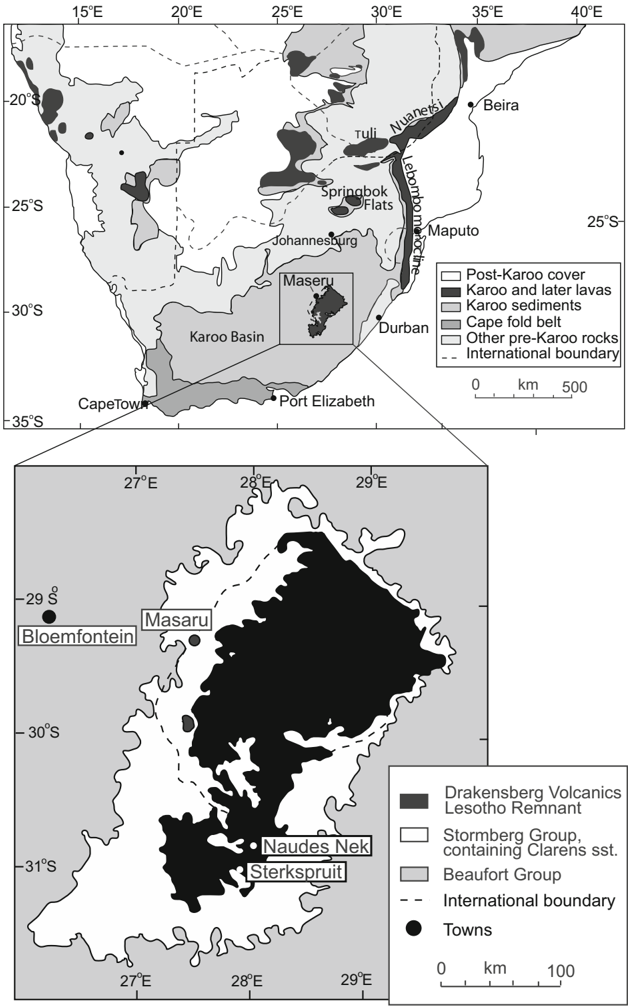
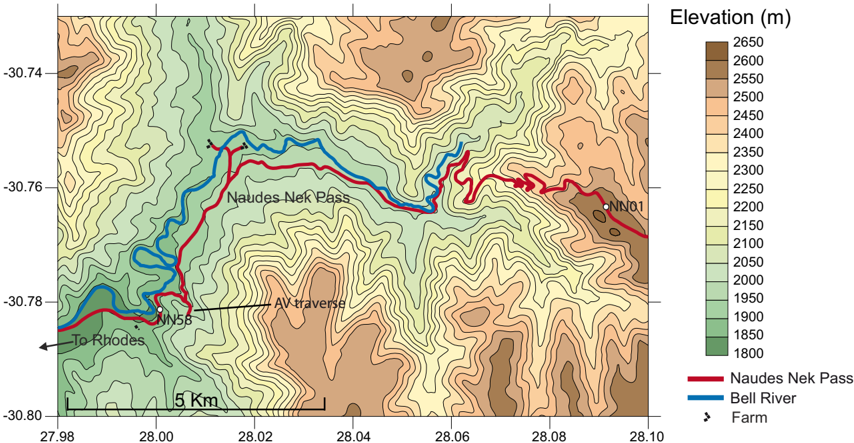

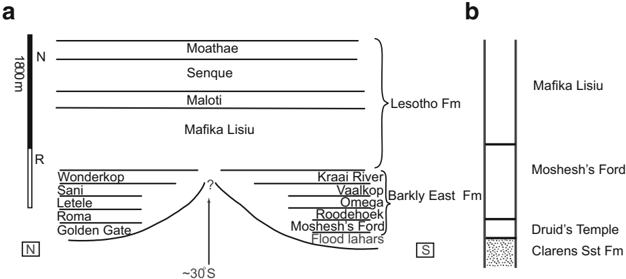
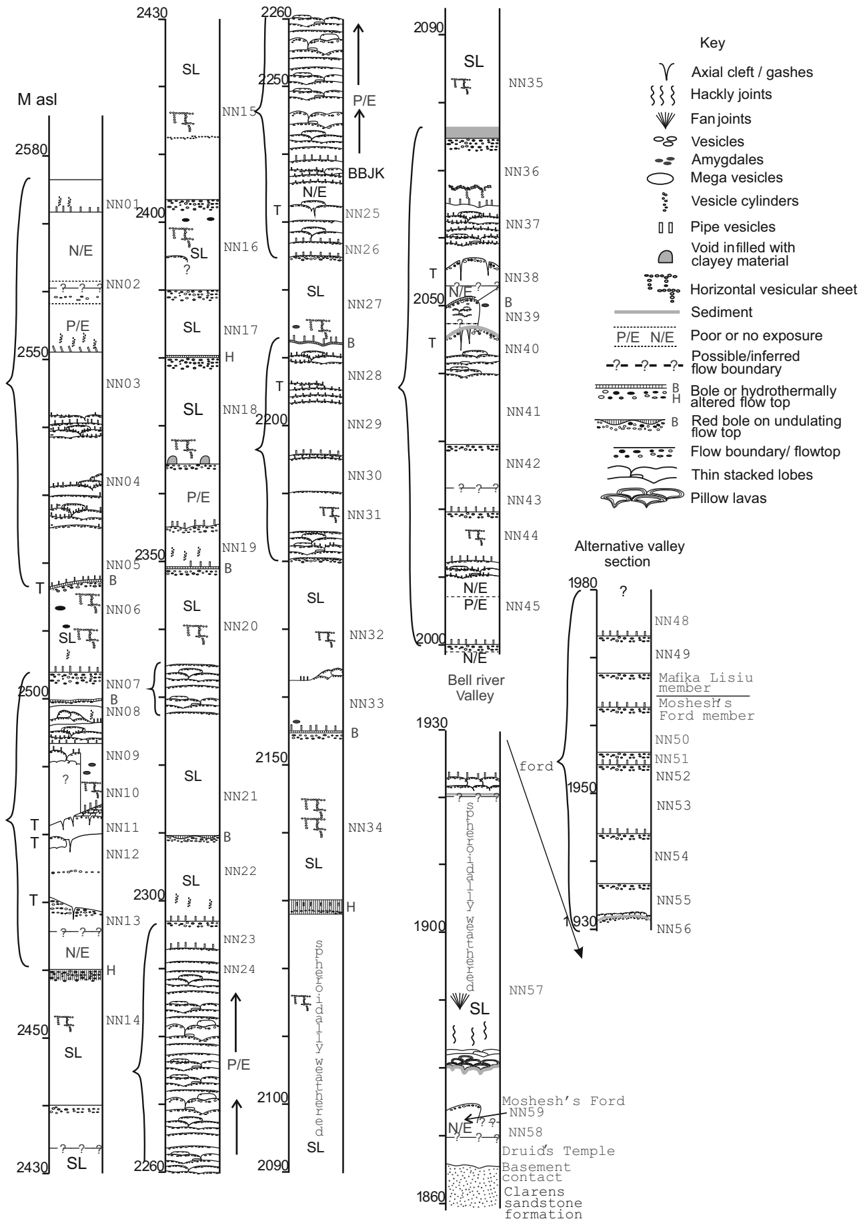
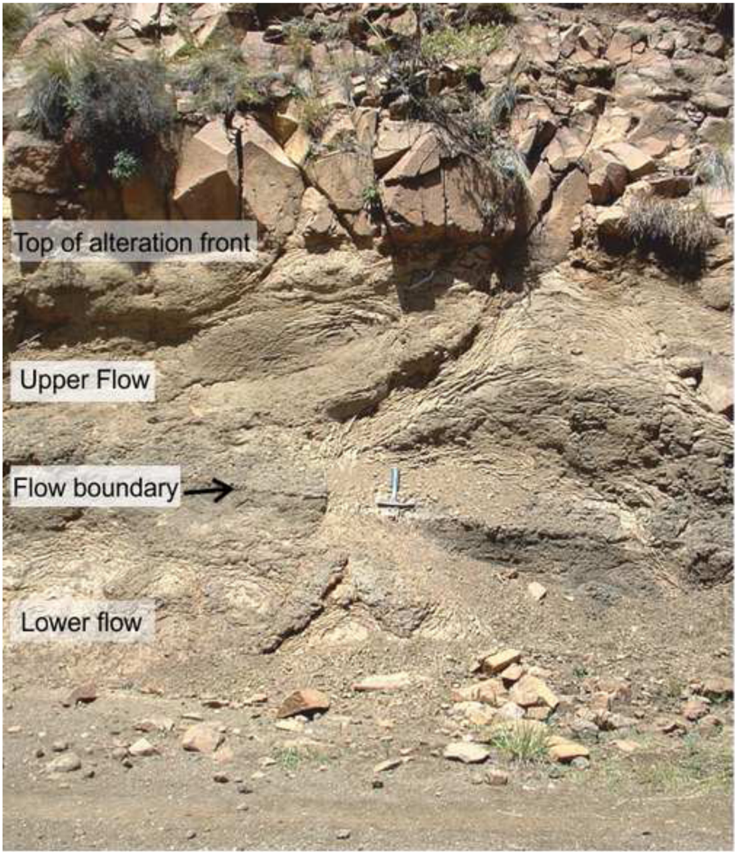
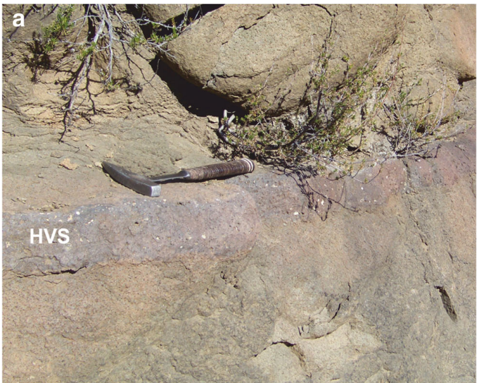
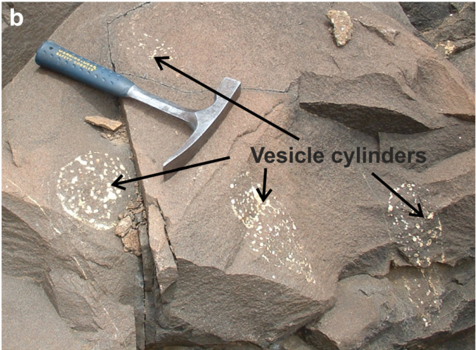
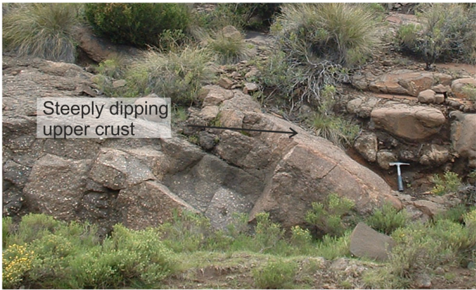
Verification
Claims the paper makes
The claims and statistics of this paper haven’t been checked yet.
Run the check — free, no account needed. It reads the open-access text and checks the sources it cites.
Claims other papers make about this one
Each is checked against this paper’s own text: does it say what the citing paper says it does?
In the citing paper
“Almost 50% of the lavas logged by Jay et al. (2018) are HP, a higher proportion than in any Deccan formation (Figure 7A vs. Figure 4A).”
From Thickness Characteristics of Pāhoehoe Lavas in the Deccan Province, Western Ghats, India, and in Continental Flood Basalt Provinces Elsewhere (2021) · cites this paper as Jay et al., 2018
In the citing paper
“Jay et al. (2018) work suggests the same conclusion as for the Deccan data, that HP-type lavas are not an indicator of proximity to source.”
From Thickness Characteristics of Pāhoehoe Lavas in the Deccan Province, Western Ghats, India, and in Continental Flood Basalt Provinces Elsewhere (2021) · cites this paper as Jay et al. (2018)
In the citing paper
“In fact, the presence of flow-lobe tumuli in the Karoo lavas led Jay et al. (2018) to propose that the Naude Nek site was distal from source vents.”
From Thickness Characteristics of Pāhoehoe Lavas in the Deccan Province, Western Ghats, India, and in Continental Flood Basalt Provinces Elsewhere (2021) · cites this paper as Jay et al. (2018)
Self-check
Percentages, sums and reported differences re-computed from the paper’s own numbers.
The self-check needs the paper’s full text.
Citations
Cites
No references could be resolved yet.
Research works printed but not linked: 61
- Anderson SW, Smrekar SE, Stofan ER (2012) Tumulus development on lava flows: insights from observations of active tumuli and analysis of formation models. Bull Volcanol 74(4):931–946. https://doi.org/10.1007/s00445-012-0576-2 · DOI
- Beane JE, Turner CA, Hooper PR, Subbarao KV, Walsh JN (1986) Stratigraphy, composition and form of the Deccan Basalts, Western Ghats, India. Bull Volcanol 48(1):61–83. https://doi.org/10.1007/BF01073513 · DOI · Paper page
- Bondre NR, Duraiswami RA, Dole G (2004) Morphology and emplacement of flows from the Deccan Volcanic Province, India. Bull Volcanol 66(1):29–45. https://doi.org/10.1007/s00445-003-0294-x · DOI · Paper page
- Bondre NR, Hart WK (2008) Morphological and textural diversity of the Steens Basalt lava flows, Southeastern Oregon, USA: implications for emplacement style and nature of eruptive episodes. Bull Volcanol 70(8):999–1019. https://doi.org/10.1007/s00445-007-0182-x · DOI
- Bryan SE, Peate IU, Peate DW, Self S, Jerram DA, Mawby MR, Marsh JSG, Miller JA (2010) The largest volcanic eruptions on earth. Earth-Science Rev 102(3-4):207–229. https://doi.org/10.1016/j.earscirev.2010.07.001 · DOI
- Burke K, Torsvik TH (2004) Derivation of large igneous provinces of the past 200 million years from long-term heterogeneities in the deep mantle. Earth Planet Sci Lett 227(3-4):531–538. https://doi.org/10.1016/j.epsl.2004.09.015 · DOI
- Camp VE, Ross ME, Duncan RA et al (2013) The Steens Basalt: earliest lavas of the Columbia River Basalt Group. Geol Soc Am Spec Pap 497:87–116. https://doi.org/10.1130/2013.2497(04) · DOI
- Cox KG (1970) Tectonics and vulcanism of the Karroo Period and their bearing on the postulated fragmentation of Gondwanaland. In: Clifford TN, Gass IG (eds) African magmatism and tectonics. Oliver and Boyd, Edinburgh, pp 211–235
- Cox KG, MacDonald R, Hornung G (1967) Geochemical and petrographic provinces in the Karroo basalts of Southern Africa. Am Mineral 52:1451–1474
- Deshmukh SS (1988) Petrographic variations in compound flows of Deccan traps and their significance. In: Subbarao KV (ed) Memoir of the Geological Society of India. Geological Society of India, Bangalore, pp 305–319
- Duncan RA, Hooper PR, Rehacek JJ et al (1997) The timing and duration of the Karoo igneous event, southern Gondwana. J Geophys Res 102(B8):18127–18138. https://doi.org/10.1029/97JB00972 · DOI
- Duraiswami RA, Bondre NR, Dole G et al (2001) Tumuli and associated features from the western Deccan Volcanic Province, India. Bull Volcanol 63(7):435–442. https://doi.org/10.1007/s004450100160 · DOI
- Duraiswami RA, Bondre NR, Dole G (2004) Possible lava tube system in a hummocky lava flow at Daund, western Deccan Volcanic Province, India. J Earth Syst Sci 113(4):819–829. https://doi.org/10.1007/BF02704040 · DOI
- Duraiswami RA, Bondre NR, Dole G, Phadnis V (2002) Morphology and structure of flow-lobe tumuli from Pune and Dhule areas, western Deccan Volcanic Province. J Geol Soc India 60:57–66
- Duraiswami RA, Dole G, Bondre NR (2005) The Songir structure: inflated lava flow or tube? Geol Soc India 65:357–365
- El Hachimi H, Youbi N, Madeira J et al (2011) Morphology, internal architecture and emplacement mechanisms of lava flows from the Central Atlantic Magmatic Province (CAMP) of Argana Basin (Morocco). Geol Soc London, Spec Publ 357(1):167–193. https://doi.org/10.1144/SP357.9 · DOI
- Ernst R, Bleeker W (2010) Large igneous provinces (LIPs), giant dyke swarms, and mantle plumes: significance for breakup events within Canada and adjacent regions from 2.5 Ga to the PresentThis article is one of a selection of papers published in this Special Issue on the the them. Can J Earth Sci 47(5):695–739. https://doi.org/10.1139/E10-025 · DOI
- Goff F (1996) Vesicle cylinders in vapor-differentiated basalt flows. J Volcanol Geotherm Res 71(2-4):167–185. https://doi.org/10.1016/0377-0273(95)00073-9 · DOI
- Greenough JD, Dostal J (1992) Cooling history and differentiation of a thick North Mountain Basalt flow (Nova Scotia, Canada). Bull Volcanol 55(1-2):63–73. https://doi.org/10.1007/BF00301120 · DOI
- Hartley ME, Thordarson T (2009) Melt segregations in a Columbia River Basalt lava flow: a possible mechanism for the formation of highly evolved mafic magmas. Lithos 112(3-4):434–446. https://doi.org/10.1016/j.lithos.2009.04.003 · DOI
- Holzförster F (2007) Lithology and depositional environments of the Lower Jurassic Clarens Formation in the Eastern Cape, South Africa. South African J Geol 110(4):543–560. https://doi.org/10.2113/gssajg.110.4.543 · DOI
- Hon KA, Kauahikaua JP, Denlinger R, Mackay K (1994) Emplacement and inflation of pahoehoe sheet flows: observations and measurements of active lava flows on Kilauea volcano, Hawaii. Geol Soc Am Bull 106(3):351–370. https://doi.org/10.1130/0016-7606(1994)106<0351:EAIOPS>2.3.CO;2 · DOI
- Jay AE, Mac Niocaill C, Widdowson M et al (2009) New palaeomagnetic data from the Mahabaleshwar Plateau, Deccan flood Basalt Province, India: implications for the volcanostratigraphic architecture of continental flood basalt provinces. J Geol Soc Lond 166(1):13–24. https://doi.org/10.1144/0016-76492007-150 · DOI · Paper page
- Jourdan F, Féraud G, Bertrand H, Watkeys MK, Renne PR (2007) Distinct brief major events in the Karoo large igneous province clarified by new 40Ar/39Ar ages on the Lesotho basalts. Lithos 98(1-4):195–209. https://doi.org/10.1016/j.lithos.2007.03.002 · DOI
- Knight KB, Nomade S, Renne PR, Marzoli A, Bertrand H, Youbi N (2004) The Central Atlantic Magmatic Province at the Triassic–Jurassic boundary: paleomagnetic and 40Ar/39Ar evidence from Morocco for brief, episodic volcanism. Earth Planet Sci Lett 228(1-2):143–160. https://doi.org/10.1016/j.epsl.2004.09.022 · DOI
- Lesher CE, Cashman KV, Mayfield JD (1999) Kinetic controls on crystallization of tertiary north Atlantic basalt and implications for the emplacement andcooling history of the lava at stite 989, southeasy Greenland rifted margin1. In: Larsen HC, Duncan RA, Allan JF, Brooks K (eds) Proceedings of the Ocean Drilling Program, Scientific Results, 163rd edn. Ocean drilling program, pp 135–148
- Lock BE, Paverd AL, Broderick TJ (1974) Stratigraphy of the Karoo volcanic rocks of the Barkly East district. Trans Geol Soc South Africa 77:177–129
- Marsh JS, Eales HV (1984) The chemistry and petrogenesis of igneous rocks of the Karoo central area, southern Africa. In: Erlank AJ (ed) Petrogenesis of the volcanic rocks of the Karoo Province, Special Publication 13. The Geological Society of South Africa, Marshalltown, pp 27–68
- Marsh JS, Hooper PR, Rehacek JJ, et al (1997) Stratigraphy and age of Karoo basalts of Lesotho and implications for correlations within the Karoo igneous province. In: Mahoney JJ, Coffin MF (eds) Large igneous provinces: continental, oceanic, and planetary flood volcanism. AGU, pp 247–272 · DOI
- Mattsson HB, Skuldsson H (2005) Eruption reconstruction, formation of flow-lobe tumuli and eruption duration in the 5900 BP Helgafell lava field (Heimaey), south Iceland. J Volcanol Geotherm Res 147(1-2):157–172. https://doi.org/10.1016/j.jvolgeores.2005.04.001 · DOI
- McClintock M, Marsh JS, White JDL (2008a) Compositionally diverse magmas erupted close together in space and time within a Karoo flood basalt crater complex. Bull Volcanol 70(8):923–946. https://doi.org/10.1007/s00445-007-0178-6 · DOI
- McClintock M, White JDL, Houghton BF, Skilling IP (2008b) Physical volcanology of a large crater-complex formed during the initial stages of Karoo flood basalt volcanism, Sterkspruit, Eastern Cape, South Africa. J Volcanol Geotherm Res 172(1-2):93–111. https://doi.org/10.1016/j.jvolgeores.2005.11.012 · DOI
- Moulin M, Fluteau F, Courtillot VE et al (2011) An attempt to constrain the age, duration, and eruptive history of the Karoo flood basalt: Naude’s Nek section (South Africa). J Geophys Res Solid Earth 116(B7):1–27. https://doi.org/10.1029/2011JB008210 · DOI
- Moulin M, Fluteau F, Courtillot VE et al (2017) Eruptive history of the Karoo lava flows and their impact on early Jurassic environmental change. J Geophys Res Solid Earth 122(2):738–772. https://doi.org/10.1002/2016JB013354 · DOI
- Passey SR, Bell BR (2007) Morphologies and emplacement mechanisms of the lava flows of the Faroe Islands Basalt Group, Faroe Islands, NE Atlantic Ocean. Bull Volcanol 70(2):139–156. https://doi.org/10.1007/s00445-007-0125-6 · DOI · Paper page
- Peate DW (1997) The Paraná-Etendeka Province. In: Mahoney JJ, Coffin MF (eds). American Geophysical Union, pp 217–245 · DOI
- Rajendran CP, Rajendran K, John B (1996) The 1993 Killari (Latur), central India, earthquake: an example of fault reactivation in the Precambrian crust. Geology 24(7):651–648. https://doi.org/10.1130/0091-7613(1996)024<0651:TKLCIE>2.3.CO;2 · DOI · Paper page
- Reichow MK, Saunders AD, White RV, al’Mukhamedov AI, Medvedev AY (2005) Geochemistry and petrogenesis of basalts from the West Siberian Basin: an extension of the Permo-Triassic Siberian traps, Russia. Lithos 79(3-4):425–452. https://doi.org/10.1016/j.lithos.2004.09.011 · DOI · Paper page
- Rogan W, Blake S, Smith I (1996) In situ chemical fractionation in thin basaltic lava flows: examples from the Auckland volcanic field, New Zealand, and a general physical model. J Volcanol Geotherm Res 74(1-2):89–99. https://doi.org/10.1016/S0377-0273(96)00059-5 · DOI
- Ross P-SS, Ukstins Peate IU, McClintock MK et al (2005) Mafic volcaniclastic deposits in flood basalt provinces: a review. J Volcanol Geotherm Res 145(3-4):281–314. https://doi.org/10.1016/j.jvolgeores.2005.02.003 · DOI
- Rossetti L, Lima EF, Waichel BL, Hole MJ, Simões MS, Scherer CMS (2017) Lithostratigraphy and volcanology of the Serra Geral Group, Paraná-Etendeka Igneous Province in Southern Brazil: Towards a formal stratigraphical framework. J Volcanol Geotherm Res. https://doi.org/10.1016/j.jvolgeores.2017.05.008 · DOI
- Rossi MJ, Gudmundsson A (1996) The morphology and formation of flow-lobe tumuli on Icelandic shield volcanoes. J Volcanol Geotherm Res 72(3-4):291–308. https://doi.org/10.1016/0377-0273(96)00014-5 · DOI
- Saunders A, Reichow M (2009) The Siberian traps and the end-Permian mass extinction: a critical review. Chinese Sci Bull 54(1):20–37. https://doi.org/10.1007/s11434-008-0543-7 · DOI
- Sayyed MRG (2014) Flood basalt hosted palaeosols: potential palaeoclimatic indicators of global climate change. Geosci Front 5(6):791–799. https://doi.org/10.1016/J.GSF.2013.08.005 · DOI · Paper page
- Self S, Coffin MF, Rampino MR, Wolff JA (2015) Large igneous provinces and flood basalt volcanism. In: The encyclopedia of volcanoes. Elsevier, pp 441–455, DOI: https://doi.org/10.1016/B978-0-12-385938-9.00024-9 · DOI · Paper page
- Self S, Keszthelyi L, Thordarson T (1998) The importance of pāhoehoe. Annu Rev Earth Planet Sci 26(1):81–110. https://doi.org/10.1146/annurev.earth.26.1.81 · DOI
- Self S, Thordarson T, Keszthelyi L (1997) Emplacement of continental flood basalt lava flows. In: Mahoney JJ, Coffin MF (eds) Large igneous provinces: continental, oceanic, and planetary flood volcanism. American Geophysical Union, Washington, D. C., pp 381–410
- Sharma M (1997) Siberian traps. In: Mahoney JJ, Coffin MF (eds). American Geophysical Union, pp 273–295 · DOI
- Sheth HC (2006) The emplacement of pahoehoe lavas on Kilauea and in the Deccan traps. J Earth Syst Sci 115(6):615–629. https://doi.org/10.1007/s12040-006-0007-x · DOI · Paper page
- Smith RMH (1990) A review of stratigraphy and sedimentary environments of the Karoo Basin of South Africa. J Africa Earth Sci 10(1-2):117–137. https://doi.org/10.1016/0899-5362(90)90050-O · DOI
- Svensen H, Jamtveit B, Planke S, Chevallier L (2006) Structure and evolution of hydrothermal vent complexes in the Karoo Basin, South Africa. J Geol Soc Lond 163(4):671–682. https://doi.org/10.1144/1144-764905-037 · DOI
- Svensen HH, Torsvik TH, Callegaro S, et al (2017) Gondwana Large Igneous Provinces: plate reconstructions, volcanic basins and sill volumes. Geol Soc London, Spec Publ 463:SP463.7. doi: https://doi.org/10.1144/SP463.7 · DOI
- Thordarson T, Self S (1998) The Roza member, Columbia River Basalt Group: a gigantic pahoehoe lava flow field formed by endogenous processes? J Geophys Res Solid Earth 103(B11):27411–27445. https://doi.org/10.1029/98JB01355 · DOI · Paper page
- van Zijl JSV, Graham KWT, Hales AL (1962) The palaeomagnetism of the Stormberg Lavas of South Africa I: evidence for a genuine reversal of the Earth’s field in Triassic-Jurassic times. Geophys J Int 7(1):23–39. https://doi.org/10.1111/j.1365-246X.1962.tb02250.x · DOI
- Viereck LG, Taylor PN, Parson LM, Morton AC, Hertogen J, Gibson IL, the ODP Leg 104 Scientific Party (1988) Origin of the Palaeogene Voring Plateau volcanic sequence. Geol Soc London, Spec Publ 39(1):69–83. https://doi.org/10.1144/GSL.SP.1988.039.01.08 · DOI
- Waichel BL, de Lima EF, Lubachesky R, Sommer CA (2006) Pahoehoe flows from the central Paraná continental flood basalts. Bull Volcanol 68(7-8):599–610. https://doi.org/10.1007/s00445-005-0034-5 · DOI
- Walker GPL (1999) Some observations and interpretations on the Deccan traps. In: Subbarao KV (ed) Deccan volcanic province, Memoir 43. Geological Society of India, Bangalore, pp 367–395
- Walker GPL (1971) Compound and simple lava flows and flood basalts. Bull Volcanol 35(3):579–590. https://doi.org/10.1007/BF02596829 · DOI · Paper page
- Walker GPL (1991) Structure, and origin by injection of lava under surface crust, of tumuli, lava rises, lava-rise pits, and lava-inflation clefts in Hawaii. Bull Volcanol 53(7):546–558. https://doi.org/10.1007/BF00298155 · DOI
- Wignall PB (2001) Large igneous provinces and mass extinctions. Earth Sci Rev 53(1-2):1–33. https://doi.org/10.1016/S0012-8252(00)00037-4 · DOI
- Wignall PB, Bond DPG (2008) The end-Triassic and early Jurassic mass extinction records in the British Isles. Proc Geol Assoc 119(1):73–84. https://doi.org/10.1016/S0016-7878(08)80259-3 · DOI
Cited by
Self, S., Mittal, T., & Jay, A. E. (2021) · Frontiers in Earth Science · doi:10.3389/feart.2020.630604 · Cited by 33
Self-citation
Metadata
- Authors
- Jay, A. E., Marsh, J. S., Fluteau, F., & Courtillot, V.
- Venue
- Bulletin of Volcanology
- Published
- 2018-02
- Volume
- 80
- Issue
- 2
- ISSN
- 0258-8900
- 1432-0819
- Cited by
- 20
- References
- 0
- Language
- en
- Funders
- Natural Environment Research Council
- Conseil Régional, Île-de-France
- Centre National de la Recherche Scientifique
- !Khure Africa
- ARCUS
- The Open University
- The Daphne Jackson Trust
About these checks
Registry, retraction, Cites and statistics results are computed, not judged, with one exception: a printed reference that no index lists is read once by a model before it counts as a citation error. Claims are extracted by a model and kept only when their quote appears verbatim in the text; each cited source is then checked, with a model’s help, for whether it says what the claim relies on. Those verdicts can be wrong — read the claim’s quote and the cited source before relying on one.
Statistics and arithmetic are recomputed, not judged.
Confidence bands are shown only for fields calibrated on our annotated test set. None is calibrated yet, so no band is shown.
What counts as a claim ›How we measure confidence ›How we check this ›
Are you an author, or do you see a problem with this page? Request a review
