

Aesculus hippocastanum extract-mediated biosynthesis of silver-decorated zinc oxide nanoparticles and investigation of their photocatalytic, antibacterial, and antioxidant properties
Open accessThe DOI matches its Crossref record; 69 of the 69 references it cites were found in a registry or an index; none of the 49 sources its claims cite is checked for support yet.
Abstract
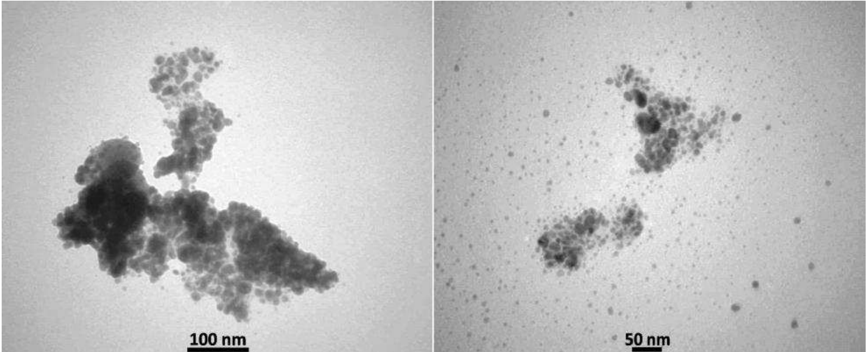
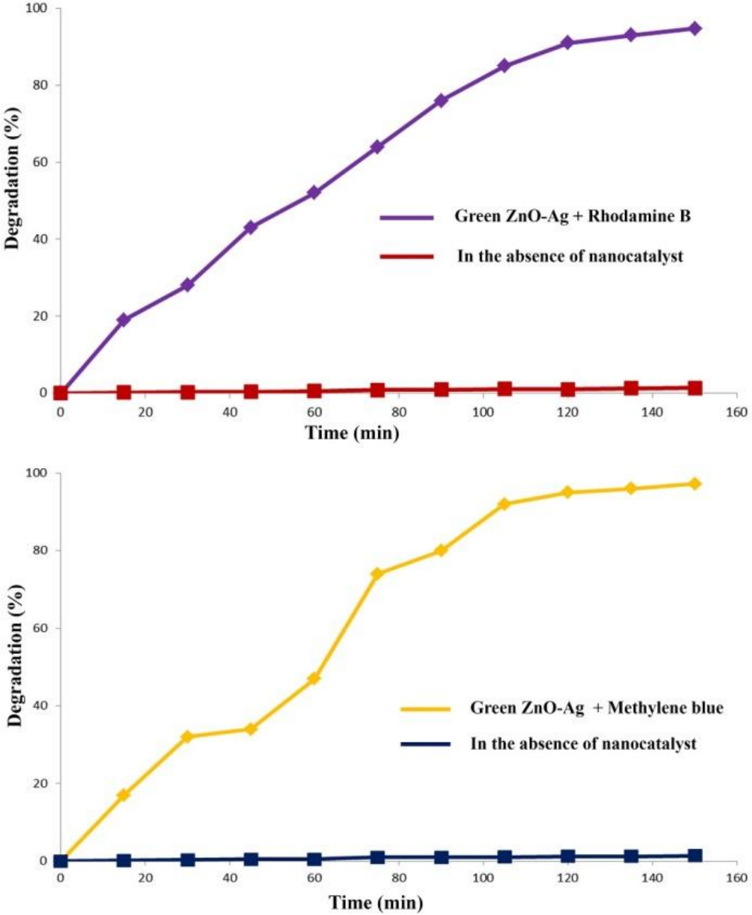
In this research, silver-decorated zinc oxide nanoparticles (ZnO–Ag NPs) were fabricated using Aesculus hippocastanum fruit extract (ZnO–Ag@AHFE NPs), and their catalytic and antimicrobial properties were studied. The nanoparticles were identified using XRD, TEM, and FT-IR analyses, which confirmed their spherical morphology, uniform structure, and particle sizes ranging from 50 to 70 nm. The ZnO–Ag@AHFE NPs illustrated high antibacterial performance compared to the extract and ZnO NPs alone, achieving a minimum inhibitory concentration (MIC) of 125 µg/mL against Escherichia coli and Pseudomonas aeruginosa. Additionally, the ZnO–Ag@AHFE NPs exhibited outstanding photocatalytic efficiency, degrading methylene blue and rhodamine B dyes by 97.6% and 94.3%, respectively, surpassing the performance of other catalysts. Antioxidant assays revealed that the nanoparticles inhibited 85% of DPPH free radicals, underscoring their potential in biological applications. This study presents a green method using A. hippocastanum fruit extract, offering an innovative approach to enhance the antibacterial, catalytic, and antioxidant properties of ZnO–Ag NPs. These findings highlight the transformative potential of green synthesis strategies for the development of multifunctional nanomaterials.
Overview
CoChat Summary
TL;DR
ZnO-Ag nanoparticles were green-synthesized using *Aesculus hippocastanum* fruit extract and characterized as spherical, uniform particles of 50–70 nm. They showed enhanced antibacterial, antioxidant, and photocatalytic activity compared with ZnO NPs and the extract alone.
Key findings
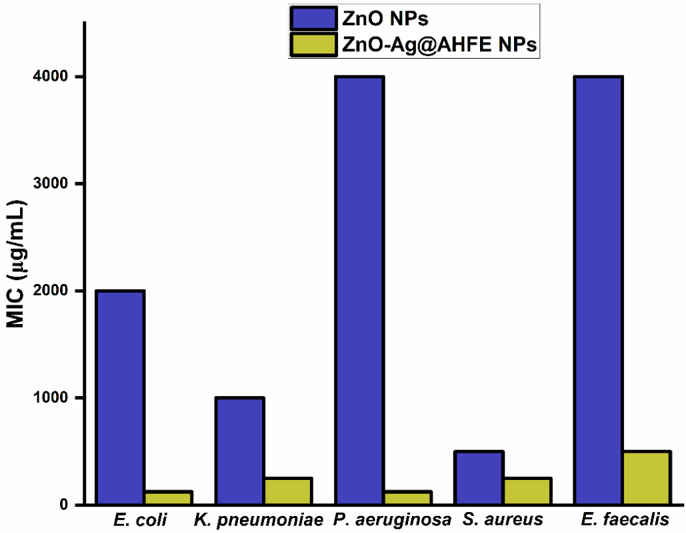
- ZnO-Ag@AHFE NPs had MIC 125 µg/mL against *E. coli* and *P. aeruginosa*, with least effect on *E. faecalis* (MIC 750 µg/mL); ZnO NPs MICs ranged 500–4000 µg/mL, and the extract was >15,000 µg/mL except for *E. faecalis* at 15,000 µg/mL.
- Antioxidant DPPH inhibition: ZnO-Ag@AHFE NPs 85 ± 2.4% at 2 mg/mL; *A. hippocastanum* extract 35 ± 2.1% at 4 mg/mL; ZnO NPs 8 ± 0.6% at 4 mg/mL.
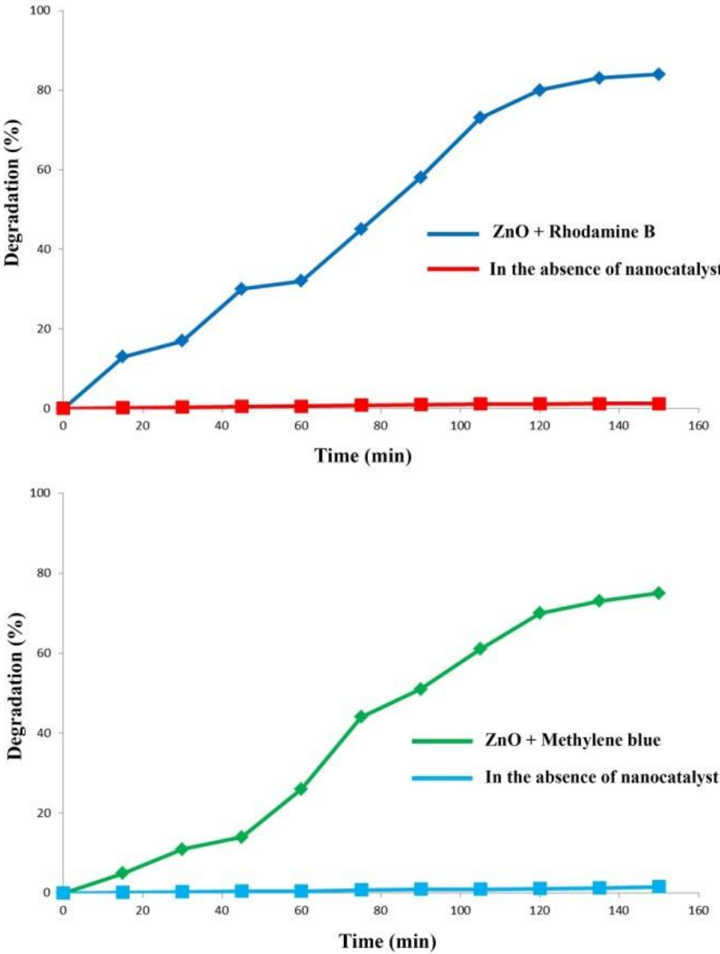
- Photocatalytic degradation: ZnO-Ag@AHFE NPs removed 97.6% methylene blue and 94.3% rhodamine B; ZnO NPs removed 75.2% methylene blue and 84.1% rhodamine B.
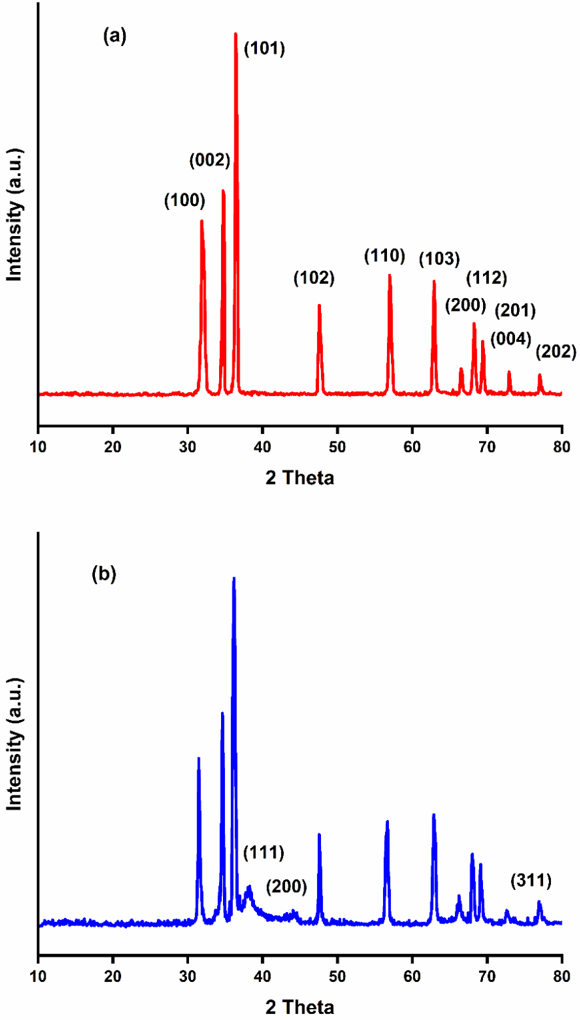
- XRD/TEM/FT-IR confirmed spherical, uniform ZnO-Ag@AHFE NPs with particle sizes ~50–70 nm; crystalline sizes were 44.2 nm for ZnO NPs and 56.3 nm for ZnO-Ag@AHFE NPs.
Methods
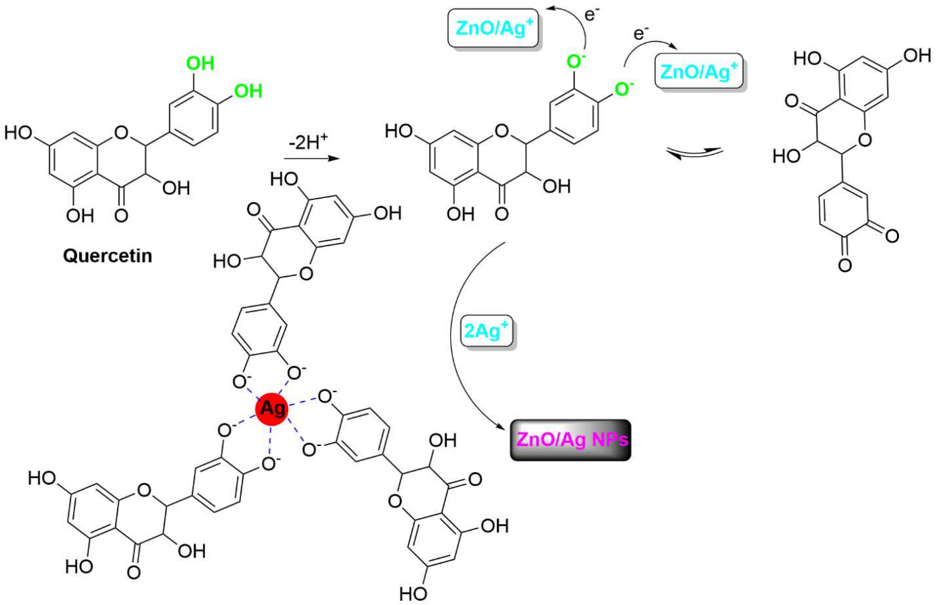
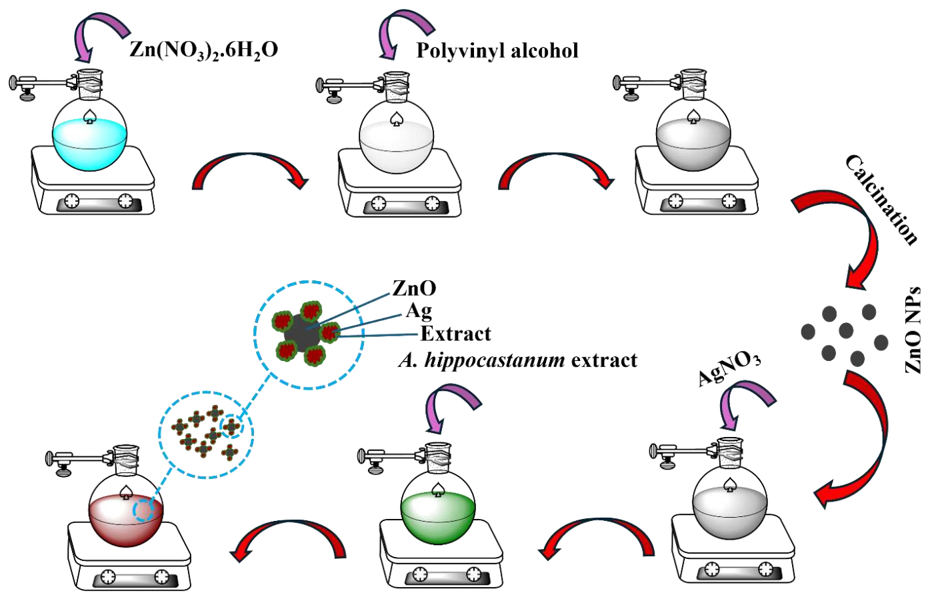
- Green synthesis: ZnO NPs were prepared using zinc nitrate, PVA, and NaOH, then calcined at 450°C for 3 h; ZnO-Ag@AHFE NPs were made by sonicating ZnO, adding AgNO3 (10% mol) and *A. hippocastanum* fruit extract at pH 12, and stirring for 90 min.
- Antibacterial testing measured MIC against five standard strains (*E. coli*, *K. pneumoniae*, *P. aeruginosa*, *S. aureus*, *E. faecalis*) in 96-well Mueller Hinton broth with 10^6 CFU/mL, using tetracycline as reference. Antioxidant activity used the DPPH assay at 517 nm. Photocatalytic tests used 10 mg/L methylene blue or rhodamine B under UV-400 light in a quartz tube, with 30 min dark adsorption and UV/Vis analysis; all experiments were done in triplicate.
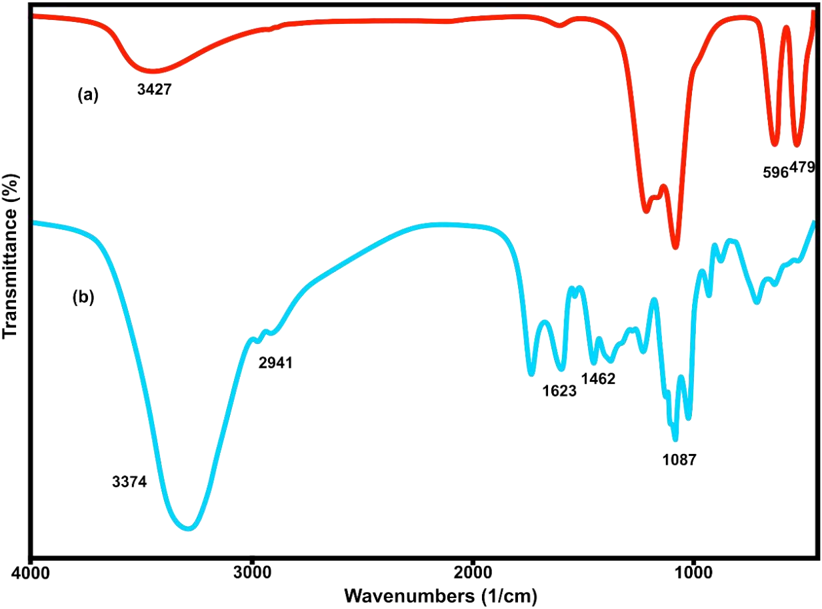
- Characterization used XRD, FT-IR (KBr pellet), and TEM.
Limitations
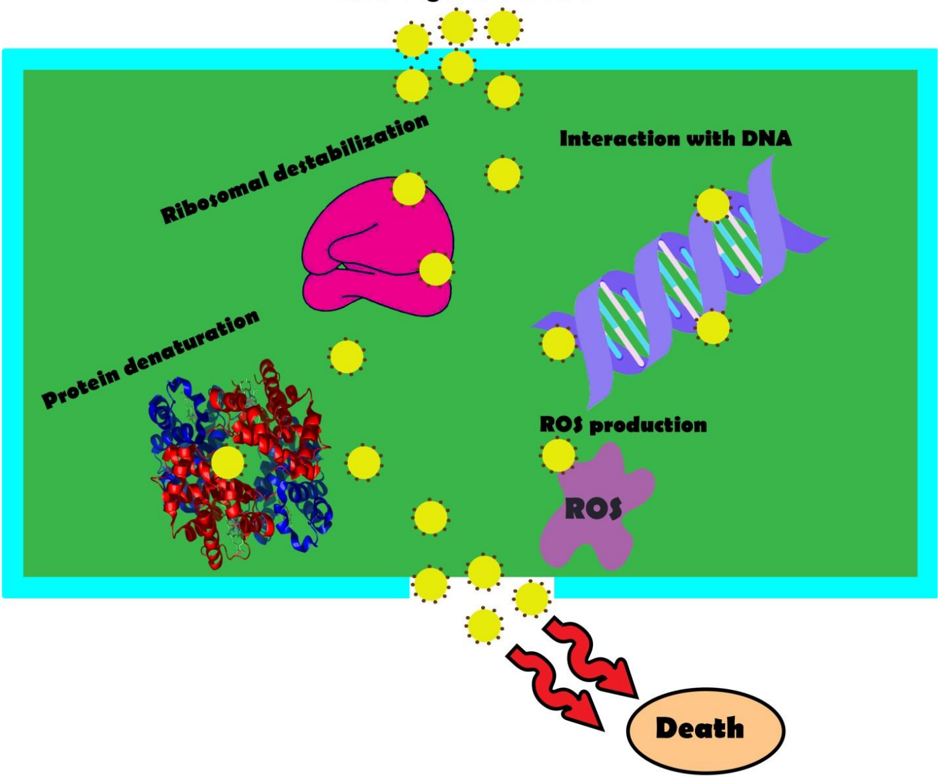
- The paper states the exact mechanism for improved photocatalytic performance “remains subject to further investigation,” and the precise antibacterial mechanism of NPs “is not fully understood.”
- Evident from the text: antibacterial and antioxidant evaluations are in vitro only; no cytotoxicity, in vivo, or biocompatibility data are reported.
- Evident from the text: photocatalytic tests use two model dyes under UV-400 light; no visible-light or real wastewater matrix is reported.
Model-written summary. Check it against the paper before relying on it.
Integrity signals
Registry
Cites
Statistics
Figures
Verification
Claims the paper makes
0 Valid · 0 Not valid · 42 Not checked · 70 Own results and interpretations
A result the paper reports from its own data — it cites no other source for it, so there is none to check. The quote shows it is in the paper.
In the paper
“Antioxidant assays revealed that the nanoparticles inhibited 85% of DPPH free radicals, underscoring their potential in biological applications.”
§ Aesculus Hippocastanum extract-mediated biosynthesis of silver-decorated zinc oxide nanoparticles and investigation of their photocatalytic, antibacterial, and antioxidant properties > Abstract
plainstates a cause- Asserted: passes — The authors put it forward as true.
- Checkable: passes — It can be checked against evidence.
- Load-bearing: passes — The paper’s conclusions depend on it.
- Based: passes — The paper gives a reason why it holds.
A result the paper reports from its own data — it cites no other source for it, so there is none to check. The quote shows it is in the paper.
In the paper
“XRD analysis was conducted to confirm the synthesis of ZnONPs and ZnO-Ag@AHFE NPs.”
§ Aesculus Hippocastanum extract-mediated biosynthesis of silver-decorated zinc oxide nanoparticles and investigation of their photocatalytic, antibacterial, and antioxidant properties > 3.1. XRD patterns
plainstates a cause- Asserted: passes — The authors put it forward as true.
- Checkable: passes — It can be checked against evidence.
- Load-bearing: passes — The paper’s conclusions depend on it.
- Based: passes — The paper gives a reason why it holds.
A result the paper reports from its own data — it cites no other source for it, so there is none to check. The quote shows it is in the paper.
In the paper
“No additional peaks were observed, confirming the high purity of the synthesized NPs.”
§ Aesculus Hippocastanum extract-mediated biosynthesis of silver-decorated zinc oxide nanoparticles and investigation of their photocatalytic, antibacterial, and antioxidant properties > 3.1. XRD patterns
plainstates a cause- Asserted: passes — The authors put it forward as true.
- Checkable: passes — It can be checked against evidence.
- Load-bearing: unclear — It is unclear whether the paper’s conclusions depend on it.
- Based: passes — The paper gives a reason why it holds.
A result the paper reports from its own data — it cites no other source for it, so there is none to check. The quote shows it is in the paper.
In the paper
“The FT-IR spectrum of ZnO NPs exhibits a prominent absorption band at 479 cm -1 , indicating the presence of a metal-oxygen bond in ZnO NPs.”
§ Aesculus Hippocastanum extract-mediated biosynthesis of silver-decorated zinc oxide nanoparticles and investigation of their photocatalytic, antibacterial, and antioxidant properties > 3.2. FT-IR spectra
hedgedstates a cause- Asserted: passes — The authors put it forward as true.
- Checkable: passes — It can be checked against evidence.
- Load-bearing: unclear — It is unclear whether the paper’s conclusions depend on it.
- Based: passes — The paper gives a reason why it holds.
A result the paper reports from its own data — it cites no other source for it, so there is none to check. The quote shows it is in the paper.
In the paper
“The ZnO-Ag@AHFE NPs illustrated high antibacterial performance compared to the extract and ZnO NPs alone, achieving a minimum inhibitory concentration (MIC) of 125 µg/mL against Escherichia coli and Pseudomonas aeruginosa.”
§ Aesculus Hippocastanum extract-mediated biosynthesis of silver-decorated zinc oxide nanoparticles and investigation of their photocatalytic, antibacterial, and antioxidant properties > Abstract
plainstates a cause- Asserted: passes — The authors put it forward as true.
- Checkable: passes — It can be checked against evidence.
- Load-bearing: passes — The paper’s conclusions depend on it.
- Based: passes — The paper gives a reason why it holds.
63 more claims
Create a free account to see all 112 claims and to verify the 49 references still open.
- It may state two separate claims as one. 29
- Probably not a substantial claim. 25
Self-check
Percentages, sums and reported differences re-computed from the paper’s own numbers.
Each contradiction between two passages listed here was confirmed by an independent check.
Rated minor: it would not touch a result — a value no result rests on, a p-value that stays on the same side of the significance level, or a conflict that is clerical, resolved elsewhere in the paper, or outside its own findings.
In the paper
§ Aesculus Hippocastanum extract-mediated biosynthesis of silver-decorated zinc oxide nanoparticles and investigation of their photocatalytic, antibacterial, and antioxidant properties > Figure captions
“Staphylococcus aureus (S. aureus, ATCC 29213)”
§ Aesculus Hippocastanum extract-mediated biosynthesis of silver-decorated zinc oxide nanoparticles and investigation of their photocatalytic, antibacterial, and antioxidant properties > Additional information
“S. aureus (ATCC 25923) >15000 500 250 0.97”
Rated minor: it would not touch a result — a value no result rests on, a p-value that stays on the same side of the significance level, or a conflict that is clerical, resolved elsewhere in the paper, or outside its own findings.
In the paper
§ Aesculus Hippocastanum extract-mediated biosynthesis of silver-decorated zinc oxide nanoparticles and investigation of their photocatalytic, antibacterial, and antioxidant properties > 1. Introduction
“Herein, we report a green, one-pot synthesis of silver-decorated zinc oxide nanoparticles using Aesculus hippocastanum fruit extract.”
§ Aesculus Hippocastanum extract-mediated biosynthesis of silver-decorated zinc oxide nanoparticles and investigation of their photocatalytic, antibacterial, and antioxidant properties > 2.4. Bio-fabrication of ZnO-Ag@AHFE NPs
“To synthesize ZnO-Ag@AHFE NPs, 100 mg of ZnONPs obtained in the previous step were sonicated in a solution of water and ethanol in a ratio of 2:1 to create a uniform suspension.”
Cited works that were retracted
Works this paper cites that were later retracted, from the retraction notices publishers deposit. Major when the notice came out before this paper was published.
Rated major: it would touch a result — a value a result rests on, reported and recomputed p-values on opposite sides of the significance level, two passages that conflict with no sign which is right, or a cited work retracted before this paper was published.
In the paper
“Rafique S, Bashir S, Akram R, Jawaid S, Bashir M, Aftab A, Attique A, Awan SU (2023) In vitro anticancer activity and comparative green synthesis of ZnO/Ag nanoparticles by Moringa oleifera, Mentha piperita, and citrus lemon. Ceram Int 49:5613–5620”
Cited work 10.1016/j.ceramint.2022.10.163 · retracted 2023-02-15 · notice 10.1016/j.ceramint.2022.10.163 · this paper published 2025-06-22
Citations
Cites
1 retracted
Rafique, S., Bashir, S., Akram, R., Javaid, S., Bashir, M., Aftab, A., Attique, A., & Awan, S. U. (2022) · Ceramics International · doi:10.1016/j.ceramint.2022.10.163 · Cited by 55
RetractedJoudeh, N., & Linke, D. (2022) · Journal of Nanobiotechnology · doi:10.1186/s12951-022-01477-8 · Cited by 1,908
The Antibacterial Mechanism of Silver Nanoparticles and Its Application in Dentistry
Yin, I. X., Zhang, J., Zhao, I. S., Mei, M. L., Li, Q., & Chu, C. H. (2020) · International Journal of Nanomedicine · doi:10.2147/ijn.s246764 · Cited by 1,741
Green synthesis of nanoparticles: Current developments and limitations
Ying, S., Guan, Z., Ofoegbu, P. C., Clubb, P., Rico, C., He, F., & Hong, J. (2022) · Environmental Technology & Innovation · doi:10.1016/j.eti.2022.102336 · Cited by 1,677
Rafiq, A., Ikram, M., Ali, S., Niaz, F., Khan, M., Khan, Q., & Maqbool, M. (2021) · Journal of Industrial and Engineering Chemistry · doi:10.1016/j.jiec.2021.02.017 · Cited by 1,172
Frieri, M., Kumar, K., & Boutin, A. (2017) · Journal of Infection and Public Health · doi:10.1016/j.jiph.2016.08.007 · Cited by 1,100
Chaudhary, P., Janmeda, P., Docea, A. O., Yeskaliyeva, B., Abdull Razis, A. F., Modu, B., Calina, D., & Sharifi-Rad, J. (2023) · Frontiers in Chemistry · doi:10.3389/fchem.2023.1158198 · Cited by 1,002
Antioxidant activity, phenol and flavonoid contents of some selected Iranian medicinal plants
Pourmorad, F., Hosseinimehr, S. J., & Shahabimajd, N. (2006) · AFRICAN JOURNAL OF BIOTECHNOLOGY · doi:10.4314/ajb.v5i11.42999 · Cited by 959
Green Synthesis of Metallic Nanoparticles: Applications and Limitations
Dikshit, P., Kumar, J., Das, A., Sadhu, S., Sharma, S., Singh, S., Gupta, P., & Kim, B. (2021) · Catalysts · doi:10.3390/catal11080902 · Cited by 882
Applications of Green Synthesized Metal Nanoparticles — a Review
Vijayaram, S., Razafindralambo, H., Sun, Y.-Z., Vasantharaj, S., Ghafarifarsani, H., Hoseinifar, S. H., & Raeeszadeh, M. (2024) · Biological Trace Element Research · doi:10.1007/s12011-023-03645-9 · Cited by 557
Cited by
Şimşek, G., Sümer, Z., Tunç, T., & Özpınar, H. (2026) · Ankara Universitesi Eczacilik Fakultesi Dergisi · doi:10.33483/jfpau.1782946
Hussein, N. M., & Mortavazi, S. (2026) · Chemical Papers · doi:10.1007/s11696-026-05780-8
Metadata
- Authors
- Mortazavi-Derazkola, S., Samadipour, M., Mohammadparast-Tabas, P., & Yousefi, M.
- Affiliations
- Birjand University of Medical Sciences (IR)
- Corresponding author
- Yousefi, Masoud
- ORCID
- Yousefi, Masoud
- Venue
- Bioprocess and Biosystems Engineering
- Published
- 2025-06-22
- Volume
- 48
- Issue
- 9
- Pages
- 1533-1546
- ISSN
- 1615-7591 (ISSN-L)
- 1615-7605
- OpenAlex
- W4411520009
- Semantic Scholar
- 5e09fe0cb07c833132d46c56f604c900d7e8c5d3
- Cited by
- 2
- References
- 69
- Citations by year
- 2026: 2
- FWCI
- 0.30
- Type
- journal article
- Language
- en
- Open access
- Licence
- cc-by
- www.springernature.com/gp/researchers/text-and-data-mining (tdm)
- www.springernature.com/gp/researchers/text-and-data-mining (vor)
- Locations
- Bioprocess and Biosystems Engineering (publishedVersion)
- PubMed (publishedVersion)
- White Rose Research Online (University of Leeds, The University of Sheffield, University of York) (submittedVersion, cc-by)
- Funders
- Birjand University of Medical Sciences
- Topics
- Physical Sciences › Materials Science › Materials Chemistry › Nanoparticles: synthesis and applications
- Physical Sciences › Energy › Renewable Energy, Sustainability and the Environment › Advanced Photocatalysis Techniques
- Physical Sciences › Environmental Science › Environmental Engineering › Environmental remediation with nanomaterials
- Keywords
- Aesculus hippocastanum, zinc oxide nanoparticles, green synthesis, plant-mediated nanoparticle synthesis, photocatalytic degradation, antibacterial activity, antioxidant activity, methylene blue, rhodamine B, Escherichia coli, Pseudomonas aeruginosa, DPPH radical scavenging
- MeSH terms
- Anti-Bacterial Agents, Antioxidants, Catalysis, Escherichia coli, Microbial Sensitivity Tests, Plant Extracts, Pseudomonas aeruginosa, Silver, Zinc Oxide, Metal Nanoparticles
About these checks
Registry, retraction, Cites and statistics results are computed, not judged, with one exception: a printed reference that no index lists is read once by a model before it counts as a citation error. Claims are extracted by a model and kept only when their quote appears verbatim in the text; each cited source is then checked, with a model’s help, for whether it says what the claim relies on. Those verdicts can be wrong — read the claim’s quote and the cited source before relying on one.
A language model drew the claims from the paper on 2026-11-27, under version 3 of the claim definition (model deepseek-v4.1-flash, prompt extract-v3).
A second model labelled each claim on 2026-11-27 (model jev-1.13-20260917, definition revision gold-guideline-v0.2).
Statistics and arithmetic are recomputed, not judged.
Confidence bands are shown only for fields calibrated on our annotated test set. None is calibrated yet, so no band is shown.
What counts as a claim ›How we measure confidence ›How we check this ›
Are you an author, or do you see a problem with this page? Request a review
Data sources
Bibliographic data: Semantic Scholar, OpenAlex, Crossref.
Contains information from the Semantic Scholar Academic Graph Datasets, made available under the ODC Attribution License (ODC-BY 1.0).
Semantic Scholar’s data is described in: Kinney, R., et al. (2023). The Semantic Scholar Open Data Platform. arXiv:2301.10140.
