

Japanese Society for Cancer of the Colon and Rectum (JSCCR) guidelines 2016 for the treatment of colorectal cancer
Open accessThe DOI matches its Crossref record; 286 of the 286 references it cites were found in a registry or an index; 27 of the 131 sources its claims cite were checked for support.
Abstract
Guideline article describing standard treatment strategies for colorectal cancer and summarizing evidence-based recommendations.
Overview
CoChat Summary
TL;DR
The JSCCR Guidelines 2016 present consensus-based standard treatment strategies for colorectal cancer in Japan, covering endoscopic and surgical treatment, chemotherapy, radiotherapy, palliative care, and surveillance. They use literature review, GRADE-style evidence assessment, and Delphi consensus to issue recommendations for clinical questions.
Key findings
- Colorectal cancer mortality in Japan surpassed 49,000 in 2015, and deaths per unit population increased approximately tenfold over the past 50 years.
- After curative resection of pStage 0–III colorectal cancer, 5-year survival rates by site were: all sites 82.2%, colon 83.8%, rectosigmoid 81.7%, and Ra–Rb rectum 79.3% (patients treated 2000–2004).
- For rectal cancer with the lower tumor border distal to the peritoneal reflection and invasion beyond the muscularis propria, lateral lymph node metastasis rate was 20.1%; lateral lymph node dissection was expected to reduce intrapelvic recurrence risk by 50% and improve 5-year survival by 8–9%.
- For pT1 (SM) colorectal cancer, the lymph node metastasis rate was 12.5% when submucosal invasion depth was ≥1000 μm; Stage II postoperative adjuvant chemotherapy was not recommended routinely (recommendation/evidence level 1A), while 6 months was the standard duration for 5-FU-based adjuvant chemotherapy (1A).
Methods
- These guidelines were prepared by the JSCCR Guideline Committee by consensus, based on literature searches and consideration of the Japanese health insurance system and clinical practice.
- Literature searches used PubMed and Ichushi-Web from January 2008 to March 2012, with the search period extended to July 2016 for adjuvant chemotherapy and chemotherapy for advanced or recurrent colorectal cancer; 12,000 documents were retrieved (PubMed 7909, Ichushi 4091), and 2320 were selected and critically reviewed.
- Evidence levels and strength of recommendations were assessed with reference to the GRADE system; recommendation strength was determined by Delphi-method voting, with ≥70% committee consensus required.
Limitations
- Stated: the guidelines provide only general recommendations and do not control or limit treatment strategies or methods not described; responsibility for treatment outcomes rests with the personnel directly in charge, not the JSCCR or Guideline Committee.
- Stated: no strength of recommendation was presented in clinical questions, and for several interventions the efficacy and safety were not established, with calls for appropriately planned clinical trials.
- Evident from the text: recommendations are explicitly framed around the Japanese medical insurance system and actual clinical practice in Japan, and the literature search periods ended in 2012 or 2016, so applicability outside Japan or to later evidence is limited.
Model-written summary. Check it against the paper before relying on it.
Integrity signals
Registry
Cites
Statistics
Figures
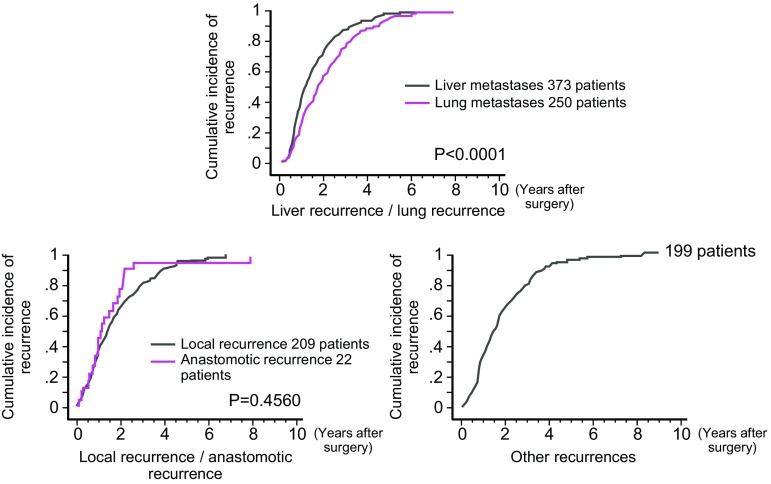
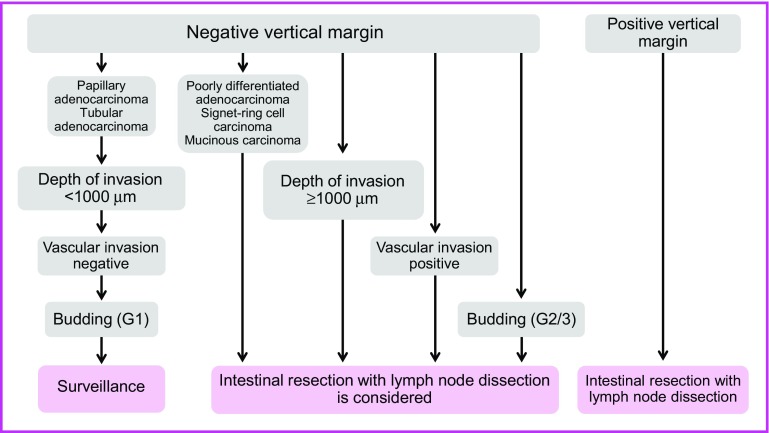
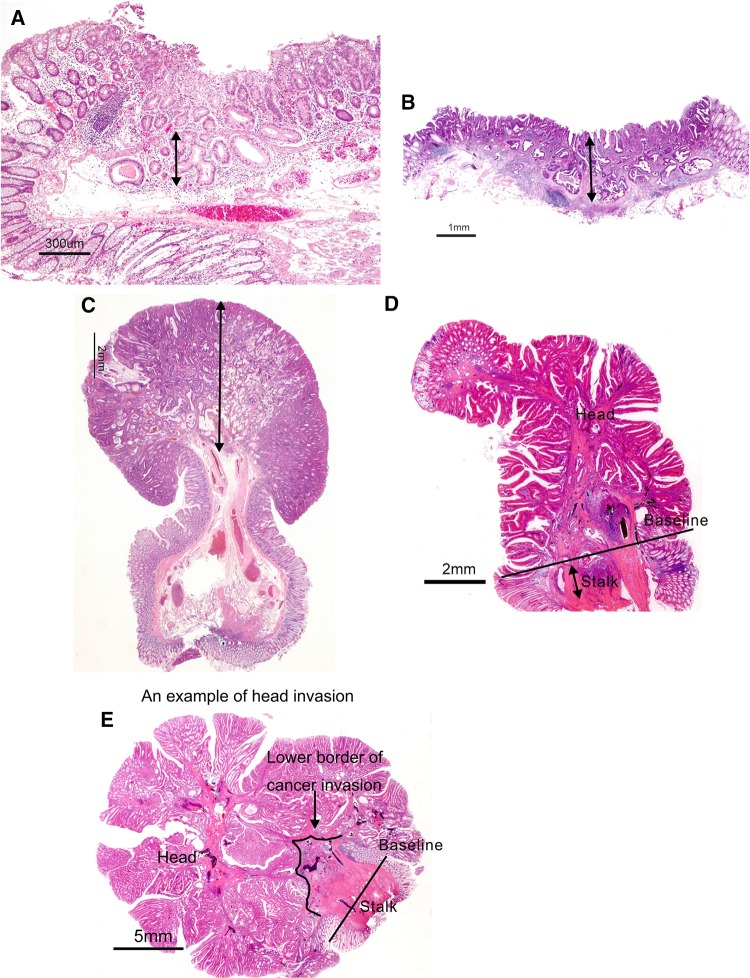
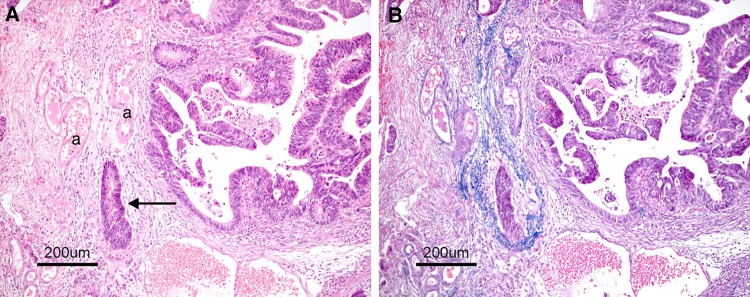
Verification
Claims the paper makes
14 Valid · 15 Not valid · 52 Not checked · 49 Own results and interpretations
The cited sources support only part of this claim — read each source’s verdict below.
In the paper
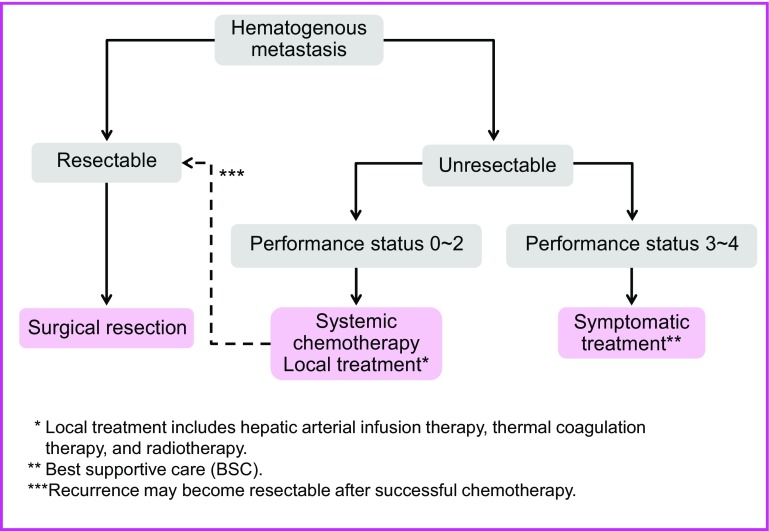
“Randomized controlled trials involving PS 0 to PS 2 patients have shown that chemotherapy groups have a significantly longer survival time than BSC groups that did not receive anticancer drugs [54–56].”
§ Japanese Society for Cancer of the Colon and Rectum (JSCCR) guidelines 2016 for the treatment of colorectal cancer > Abstract
What the sources say
- Partly supportedcites [54] Scheithauer W Rosen H Kornek GV Randomised comparison of combination chemotherapy plus supportive care with supportive care alone in patients with metastatic colorectal cancer BMJ 1993 306 752 755 10.1136/bmj.306.6880.752 7683942 PMC1677246 sourceExperimental — accuracy not yet measured
The Results report significantly longer survival in the chemotherapy arm than in the supportive-care arm (median 11 versus 5 months; p=0.006). However, Table I groups some participants as PS 2–3, so this trial cannot establish that all participants had PS 0–2. The Results also state that two participants assigned to supportive care later received an anticancer drug. (LLM, conf=0.88)
- Partly supportedcites [55] Simmonds PC Palliative chemotherapy for advanced colorectal cancer: systematic review and meta-analysis. Colorectal Cancer Collaborative Group BMJ 2000 321 531 535 10.1136/bmj.321.7260.531 10968812 PMC27466 sourceExperimental — accuracy not yet measured
The Survival section reports significantly longer survival for the chemotherapy group in a pooled analysis of randomized trials. However, the paper does not establish that the patients were restricted to PS 0–2, and the Description of studies and Discussion note that some supportive-care patients subsequently received chemotherapy. The claim’s absolute description of the control groups is therefore not supported. (LLM, conf=0.88)
- Not checked — no full text of the sourcecites [56] Cunningham D Pyrhonen S James RD Randomised trial of irinotecan plus supportive care versus supportive care alone after fluorouracil failure for patients with metastatic colorectal cancer Lancet 1998 352 1413 1418 10.1016/S0140-6736(98)02309-5 9807987 source
plainstates a cause- Asserted: passes — The authors put it forward as true.
- Checkable: passes — It can be checked against evidence.
- Load-bearing: passes — The paper’s conclusions depend on it.
- Based: passes — The paper gives a reason why it holds.
- Partly supported
The sources with a verdict support this claim; the rest weren’t checked yet, have no full text we could read, or their verdicts aren’t rated yet.
In the paper
“There are reports showing the efficacy of hepatectomy in patients who have controllable extrahepatic metastases (mainly lung metastases) in addition to liver metastases [35, 36, 39, 43] (CQ-7).”
§ Japanese Society for Cancer of the Colon and Rectum (JSCCR) guidelines 2016 for the treatment of colorectal cancer > Abstract
What the sources say
- Not checked — no full text of the sourcecites [35] Murata S Moriya Y Akasu T Resection of both hepatic and pulmonary metastases in patients with colorectal carcinoma Cancer 1998 83 1086 1093 10.1002/(SICI)1097-0142(19980915)83:6<1086::AID-CNCR6>3.0.CO;2-6 9740072 doi:10.1002/(sici)1097-0142(19980915)83:6
- Supportedcites [36] Kobayashi K Kawamura M Ishihara T Surgical treatment for both pulmonary and hepatic metastases from colorectal cancer J Thorac Cardiovasc Surg 1999 118 1090 1096 10.1016/S0022-5223(99)70106-6 10595983 source
The Discussion says that synchronous pulmonary metastases should not necessarily be considered a poor prognostic factor for hepatectomy. The paper reports 31% five-year survival after both pulmonary and hepatic resection and concludes that surgery may be appropriate when the metastases are resectable, particularly with a solitary pulmonary metastasis. (LLM, conf=0.90)
- Supportedcites [39] Robinson BJ, Rice TW, Strong SA et al (1999) Is resection of pulmonary and hepatic metastases warranted in patients with colorectal cancer? J Thorac Cardiovasc Surg 117:66–75 (discussion 75–76) 9869759 source
The Conclusions report improved survival after resection of both liver and lung metastases in selected patients with colorectal cancer. This supports the citing sentence’s characterization of the paper as a report of benefit from hepatectomy when lung metastases are also amenable to resection; the finding is limited to selected patients, particularly those with metachronous solitary metastases. (LLM, conf=0.88)
- Not checked — no full text of the sourcecites [43] Regnard JF, Grunenwald D, Spaggiari L et al (1998) Surgical treatment of hepatic and pulmonary metastases from colorectal cancers. Ann Thorac Surg 66:214–8 (discussion 218–219) 9692467 source
- Not matchedcites CQ-7
This doesn’t read as a citation we can look up.
hedgedstates a possible cause- Asserted: passes — The authors put it forward as true.
- Checkable: passes — It can be checked against evidence.
- Load-bearing: passes — The paper’s conclusions depend on it.
- Based: passes — The paper gives a reason why it holds.
The sources with a verdict support this claim; the rest weren’t checked yet, have no full text we could read, or their verdicts aren’t rated yet.
In the paper
“The incidences of sexual dysfunction and bowel dysfunction were higher in the preoperative radiation combination therapy group than in the surgery-alone group [113, 114].”
§ Japanese Society for Cancer of the Colon and Rectum (JSCCR) guidelines 2016 for the treatment of colorectal cancer > Abstract
What the sources say
- Not checked — no full text of the sourcecites [113] Marijnen CA van de Velde CJ Putter H Impact of short-term preoperative radiotherapy on health-related quality of life and sexual functioning in primary rectal cancer: report of a multicenter randomized trial J Clin Oncol 2005 23 1847 1858 10.1200/JCO.2005.05.256 15774778 source
- Supportedcites [114] Peeters KC van de Velde CJ Leer JW Late side effects of short-course preoperative radiotherapy combined with total mesorectal excision for rectal cancer: increased bowel dysfunction in irradiated patients–a Dutch colorectal cancer group study J Clin Oncol 2005 23 6199 6206 10.1200/JCO.2005.14.779 16135487 source
The Patients section reports more bowel dysfunction after preoperative radiotherapy plus surgery than after surgery alone. The Discussion also reports significantly more sexual dysfunction in irradiated patients, citing a concomitant study by the same group. Page numbers are not available in our copy. (LLM, conf=0.90)
plainstates an association- Asserted: passes — The authors put it forward as true.
- Checkable: passes — It can be checked against evidence.
- Load-bearing: passes — The paper’s conclusions depend on it.
- Based: passes — The paper gives a reason why it holds.
The cited sources support only part of this claim — read each source’s verdict below.
In the paper
“OX increased harmful phenomena in three tests”
§ Japanese Society for Cancer of the Colon and Rectum (JSCCR) guidelines 2016 for the treatment of colorectal cancer > Abstract
What the sources say
- Not checked — no full text of the sourcecites [120] Hofheinz RD Wenz F Post S Chemoradiotherapy with capecitabine versus fluorouracil for locally advanced rectal cancer: a randomised, multicentre, non-inferiority, phase 3 trial Lancet Oncol 2012 13 579 588 10.1016/S1470-2045(12)70116-X 22503032 source
- Partly supportedcites [122] Aschele C Cionini L Lonardi S Primary tumor response to preoperative chemoradiation with or without oxaliplatin in locally advanced rectal cancer: pathologic results of the STAR-01 randomized phase III trial J Clin Oncol 2011 29 2773 2780 10.1200/JCO.2010.34.4911 21606427 sourceExperimental — accuracy not yet measured
The Compliance and Acute Toxicity section reports more grade 3–4 adverse events when oxaliplatin was added to preoperative fluorouracil and radiotherapy (24% versus 8%). The Discussion says increased acute toxicity was seen in two randomized phase III trials, not three; the claimed number of tests is unsupported. (LLM, conf=0.87)
- Not checked — no full text of the sourcecites [123] Gerard JP Azria D Gourgou-Bourgade S Comparison of two neoadjuvant chemoradiotherapy regimens for locally advanced rectal cancer: results of the phase III trial ACCORD 12/0405-Prodige 2 J Clin Oncol 2010 28 1638 1644 10.1200/JCO.2009.25.8376 20194850 source
- Supportedcites [124] Gérard JPAD Gourgou-Bourgade S Clinical outcome of the ACCORD 12/0405 PRODIGE 2 randomized trial in rectal cancer J Clin Oncol 2012 30 4558 4565 10.1200/JCO.2012.42.8771 23109696 sourceExperimental — accuracy not yet measured
The Discussion reports increased grade 3–4 acute toxicity with oxaliplatin in the ACCORD 12, STAR-01, and NSABP R04 randomized trials. It also notes that the CAO/ARO 04 trial did not show an overall toxicity increase, although one subgroup did. The claim is supported when “harmful phenomena” refers to acute toxicity. (LLM, conf=0.88)
plainstates a cause- Asserted: passes — The authors put it forward as true.
- Checkable: passes — It can be checked against evidence.
- Load-bearing: passes — The paper’s conclusions depend on it.
- Based: passes — The paper gives a reason why it holds.
The sources with a verdict support this claim; the rest weren’t checked yet, have no full text we could read, or their verdicts aren’t rated yet.
In the paper
“The incidence of acute-phase adverse events was significantly higher in the preoperative chemoradiotherapy groups”
§ Japanese Society for Cancer of the Colon and Rectum (JSCCR) guidelines 2016 for the treatment of colorectal cancer > Abstract
What the sources say
- Not checked — no full text of the sourcecites [111] Peeters KC Marijnen CA Nagtegaal ID The TME trial after a median follow-up of 6 years: increased local control but no survival benefit in irradiated patients with resectable rectal carcinoma Ann Surg 2007 246 693 701 10.1097/01.sla.0000257358.56863.ce 17968156 source
- Not checked — no full text of the sourcecites [112] van Gijn W Marijnen CA Nagtegaal ID Preoperative radiotherapy combined with total mesorectal excision for resectable rectal cancer: 12-year follow-up of the multicentre, randomised controlled TME trial Lancet Oncol 2011 12 575 582 10.1016/S1470-2045(11)70097-3 21596621 source
- Not checked — no full text of the sourcecites [113] Marijnen CA van de Velde CJ Putter H Impact of short-term preoperative radiotherapy on health-related quality of life and sexual functioning in primary rectal cancer: report of a multicenter randomized trial J Clin Oncol 2005 23 1847 1858 10.1200/JCO.2005.05.256 15774778 source
- Could not verifycites [114] Peeters KC van de Velde CJ Leer JW Late side effects of short-course preoperative radiotherapy combined with total mesorectal excision for rectal cancer: increased bowel dysfunction in irradiated patients–a Dutch colorectal cancer group study J Clin Oncol 2005 23 6199 6206 10.1200/JCO.2005.14.779 16135487 sourceExperimental — accuracy not yet measured
The Introduction and Discussion (page unavailable) discuss acute toxicity after preoperative radiotherapy, but the study compares radiotherapy plus surgery with surgery alone and focuses on late side effects. A search for chemoradiotherapy and acute adverse events found no comparison of preoperative chemoradiotherapy with radiotherapy alone in our copy. (LLM, conf=0.76)
- Not checked — no full text of the sourcecites [115] Francois Y Nemoz CJ Baulieux J Influence of the interval between preoperative radiation therapy and surgery on downstaging and on the rate of sphincter-sparing surgery for rectal cancer: the Lyon R90-01 randomized trial J Clin Oncol 1999 17 2396 10.1200/JCO.1999.17.8.2396 10561302 source
- Supportedcites [116] Bosset JF Collette L Calais G Chemotherapy with preoperative radiotherapy in rectal cancer N Engl J Med 2006 355 1114 1123 10.1056/NEJMoa060829 16971718 source
The Preoperative treatment section reports higher rates of grade 2 and grade 3-or-higher acute toxic effects with preoperative chemoradiotherapy than with radiotherapy alone, with a significant difference (P for trend <0.001). The Discussion likewise says that adding chemotherapy increased acute toxic effects. (LLM, conf=0.94)
- Not checked — no full text of the sourcecites [117] Bujko K Nowacki MP Nasierowska-Guttmejer A Long-term results of a randomized trial comparing preoperative short-course radiotherapy with preoperative conventionally fractionated chemoradiation for rectal cancer Br J Surg 2006 93 1215 1223 10.1002/bjs.5506 16983741 source
- Not checked — no full text of the sourcecites [118] Gerard JP Conroy T Bonnetain F Preoperative radiotherapy with or without concurrent fluorouracil and leucovorin in T3-4 rectal cancers: results of FFCD 9203 J Clin Oncol 2006 24 4620 4625 10.1200/JCO.2006.06.7629 17008704 source
plainstates a cause- Asserted: passes — The authors put it forward as true.
- Checkable: passes — It can be checked against evidence.
- Load-bearing: passes — The paper’s conclusions depend on it.
- Based: passes — The paper gives a reason why it holds.
81 more claims · 9 with their cited sources checked
Create a free account to see all 130 claims and to verify the 1 reference still open.
- It may state two separate claims as one. 25
- Probably not a substantial claim. 21
- The quote only partly states this claim. 3
Self-check
Percentages, sums and reported differences re-computed from the paper’s own numbers.
Each contradiction between two passages listed here was confirmed by an independent check.
Rated minor: it would not touch a result — a value no result rests on, a p-value that stays on the same side of the significance level, or a conflict that is clerical, resolved elsewhere in the paper, or outside its own findings.
In the paper
§ Japanese Society for Cancer of the Colon and Rectum (JSCCR) guidelines 2016 for the treatment of colorectal cancer > Abstract
“No strength of recommendation was presented in CQs.”
§ Japanese Society for Cancer of the Colon and Rectum (JSCCR) guidelines 2016 for the treatment of colorectal cancer > Abstract
“Surgical resection is preferable when the vertical margin is positive (recommendation/evidence level 1C).”
Rated minor: it would not touch a result — a value no result rests on, a p-value that stays on the same side of the significance level, or a conflict that is clerical, resolved elsewhere in the paper, or outside its own findings.
In the paper
§ Japanese Society for Cancer of the Colon and Rectum (JSCCR) guidelines 2016 for the treatment of colorectal cancer > Abstract
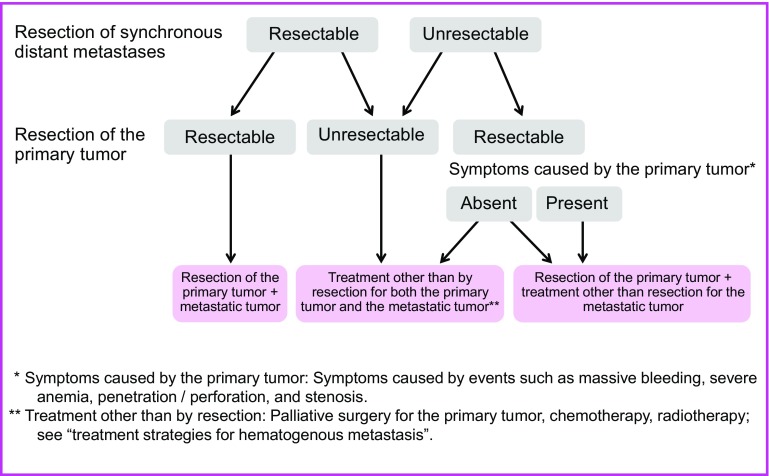
“If the distant metastases are unresectable, but the primary tumor is resectable, the indication for the resection of the primary tumor is determined, based on the clinical symptoms of the primary tumor and the impact on the prognosis (CQ-4).”
§ Japanese Society for Cancer of the Colon and Rectum (JSCCR) guidelines 2016 for the treatment of colorectal cancer > Abstract
“CQ-5: resection of the primary tumor in patients with unresectable distant metastases”
Rated minor: it would not touch a result — a value no result rests on, a p-value that stays on the same side of the significance level, or a conflict that is clerical, resolved elsewhere in the paper, or outside its own findings.
In the paper
§ Japanese Society for Cancer of the Colon and Rectum (JSCCR) guidelines 2016 for the treatment of colorectal cancer > Abstract
““JSCCR Guidelines 2016 for the Clinical Practice of Hereditary Colorectal Cancer.” [105].”
§ Japanese Society for Cancer of the Colon and Rectum (JSCCR) guidelines 2016 for the treatment of colorectal cancer > References
“105. Japanese Society for Cancer of the Colon and Rectum (2016) JSCCR guidelines 2012 for the clinical practice of hereditary colorectal cancer.”
Rated minor: it would not touch a result — a value no result rests on, a p-value that stays on the same side of the significance level, or a conflict that is clerical, resolved elsewhere in the paper, or outside its own findings.
In the paper
§ Japanese Society for Cancer of the Colon and Rectum (JSCCR) guidelines 2016 for the treatment of colorectal cancer > Abstract
“no randomized controlled trials have been implemented regarding whether or not it extends survival [37, 38].”
§ Japanese Society for Cancer of the Colon and Rectum (JSCCR) guidelines 2016 for the treatment of colorectal cancer > References
“37. Portier G Elias D Bouche O Multicenter randomized trial of adjuvant fluorouracil and folinic acid compared with surgery alone after resection of colorectal liver metastases: FFCD ACHBTH AURC 9002 trial”
Citations
Cites
Dermyshi, E., Wang, Y., Yan, C., Hong, W., Qiu, G., Gong, X., & Zhang, T. (2017) · Neonatology · doi:10.1159/000454668 · Cited by 24,451
GRADE: an emerging consensus on rating quality of evidence and strength of recommendations
Guyatt, G. H., Oxman, A. D., Vist, G. E., Kunz, R., Falck-Ytter, Y., Alonso-Coello, P., & Schünemann, H. J. (2008) · BMJ · doi:10.1136/bmj.39489.470347.ad · Cited by 23,305
GRADE guidelines: 1. Introduction—GRADE evidence profiles and summary of findings tables
Guyatt, G., Oxman, A. D., Akl, E. A., Kunz, R., Vist, G., Brozek, J., Norris, S., Falck-Ytter, Y., Glasziou, P., & deBeer, H. (2011) · Journal of Clinical Epidemiology · doi:10.1016/j.jclinepi.2010.04.026 · Cited by 10,681
PD-1 Blockade in Tumors with Mismatch-Repair Deficiency
Le, D. T., Uram, J. N., Wang, H., Bartlett, B. R., Kemberling, H., Eyring, A. D., Skora, A. D., Luber, B. S., Azad, N. S., Laheru, D., et al. (2015) · New England Journal of Medicine · doi:10.1056/nejmoa1500596 · Cited by 9,377
Cancer: Principles and Practice of Oncology.
(1991) · Annals of Internal Medicine · doi:10.7326/0003-4819-114-9-819_4 · Cited by 8,516
GRADE guidelines: 3. Rating the quality of evidence
Balshem, H., Helfand, M., Schünemann, H. J., Oxman, A. D., Kunz, R., Brozek, J., Vist, G. E., Falck-Ytter, Y., Meerpohl, J., & Norris, S. (2011) · Journal of Clinical Epidemiology · doi:10.1016/j.jclinepi.2010.07.015 · Cited by 8,285 · cited 1×
“(CQ-1) Table 2 Definition of levels of evidence (Reference [13])”
BackgroundPreoperative versus Postoperative Chemoradiotherapy for Rectal Cancer
Sauer, R., Becker, H., Hohenberger, W., Rödel, C., Wittekind, C., Fietkau, R., Martus, P., Tschmelitsch, J., Hager, E., Hess, C. F., et al. (2004) · New England Journal of Medicine · doi:10.1056/nejmoa040694 · Cited by 6,050 · cited 1×
“1 3 cantly higher in the preoperative chemoradiotherapy group [119].”
BackgroundCunningham, D., Humblet, Y., Siena, S., Khayat, D., Bleiberg, H., Santoro, A., Bets, D., Mueser, M., Harstrick, A., Verslype, C., et al. (2004) · New England Journal of Medicine · doi:10.1056/nejmoa033025 · Cited by 5,035 · cited 5×
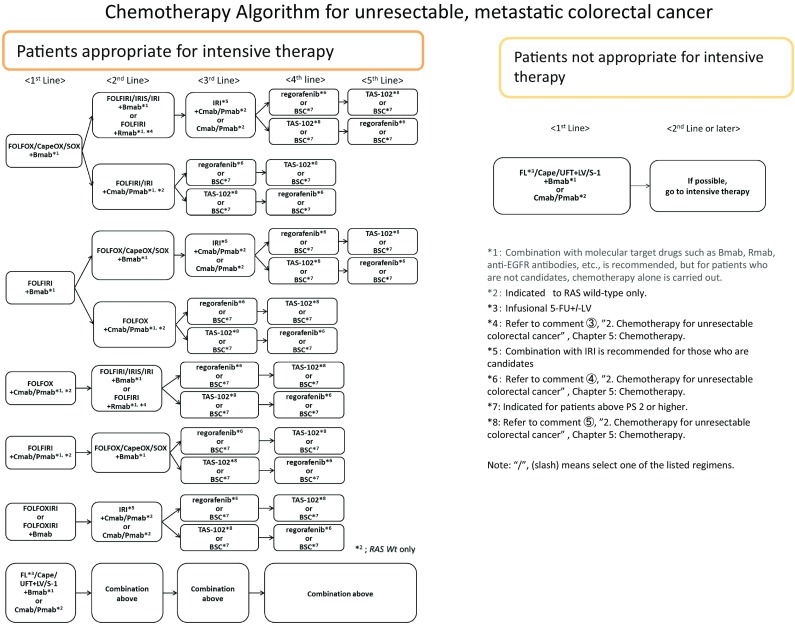
“Patients not appropriate for intensive therapy • BSC • If possible, consider the optimal regimen Third-line and subsequent therapies • The following regimens should be considered for their-line and subsequent therapies • IRI + Cmab/Pmab [93] • Cmab/Pmab [94–97] • Regorafenib [98] ▪ TAS-102 [99, 100].”
BackgroundInfluentialPreoperative Radiotherapy Combined with Total Mesorectal Excision for Resectable Rectal Cancer
Kapiteijn, E., Marijnen, C. A. M., Nagtegaal, I. D., Putter, H., Steup, W. H., Wiggers, T., Rutten, H. J. T., Pahlman, L., Glimelius, B., van Krieken, J. H. J. M., et al. (2001) · New England Journal of Medicine · doi:10.1056/nejmoa010580 · Cited by 4,205 · cited 6×
“• In the USA and Europe, although preoperative chemoradiotherapy has lowered local recurrence rates in comparison with TME-only, reports suggest that it has not contributed to improved survival rates.”
BackgroundInfluentialCetuximab and Chemotherapy as Initial Treatment for Metastatic Colorectal Cancer
Van Cutsem, E., Köhne, C.-H., Hitre, E., Zaluski, J., Chang Chien, C.-R., Makhson, A., D'Haens, G., Pintér, T., Lim, R., Bodoky, G., et al. (2009) · New England Journal of Medicine · doi:10.1056/nejmoa0805019 · Cited by 3,877 · cited 4×
“(1) Patients appropriate for intensive therapy (a) When the patient has become refractory or intolerant to the first-line therapy, including OX • FOLFIRI [62] + Bmab [85] ▪ FOLFIRI + Rmab [86] • IRIS (note 6) [87] + Bmab • IRI [88] + Bmab • FOLFIRI (or IRI) + Cmab/Pmab [88, 89] (b) When the patient has become refracto…”
Influential
Research works printed but not linked: 1
- Beppu TMT Maeda K Microwave coagulation therapy for metastatic liver tumor Surg Ther 2000 83 237 242
Cited by
Items 2,101–2,200 of 2,466
Zhao, X., Bao, M., Cai, Q., et al. (2024) · Frontiers in Oncology · doi:10.3389/fonc.2023.1272808 · Cited by 1
Bellia, M. A., Sofia, C., Marino, M. A., et al. (2024) · Radiology Case Reports · doi:10.1016/j.radcr.2024.02.018 · Cited by 1
Kikuchi, K., Ogawa, M., & Sasaki, A. (2024) · Journal of Medical Case Reports · doi:10.1186/s13256-023-04337-7 · Cited by 1
Yamauchi, K., Inaba, T., Morimoto, T., Aya, Y., Colvin, H. S., Nagahara, T., Ishikawa, S., Wato, M., & Imagawa, A. (2024) · Digestion · doi:10.1159/000538557 · Cited by 1
“The depth of submucosal invasion was measured according to the JSCCR guidelines [11 – 13].”
Aida, T., Kamada, T., Takahashi, J., et al. (2024) · Journal of the Anus Rectum and Colon · doi:10.23922/jarc.2023-048 · Cited by 1
Self-citationTakabatake, K., Shimizu, H., Kuriu, Y., Arita, T., Kiuchi, J., Morimura, R., Shiozaki, A., Ikoma, H., Kubota, T., Fujiwara, H., et al. (2024) · Journal of the Anus Rectum and Colon · doi:10.23922/jarc.2023-038 · Cited by 1
Tsukamoto, Y., Nakada, T., Shigemori, R., et al. (2024) · General Thoracic and Cardiovascular Surgery · doi:10.1007/s11748-024-02035-9 · Cited by 1
Approaches and considerations in the endoscopic treatment of T1 colorectal cancer
Jung, Y. (2024) · The Korean Journal of Internal Medicine · doi:10.3904/kjim.2023.487 · Cited by 2
Chen, W., Cai, Z., Zhou, J., et al. (2024) · Langenbeck s Archives of Surgery · doi:10.1007/s00423-024-03353-5 · Cited by 1
Feng, X., Liao, W., Tang, Y., Yi, X., Tian, T., Li, H., Lin, J., Lü, X., Wan, J., Wang, J., et al. (2024) · Clinical & Translational Oncology · doi:10.1007/s12094-024-03470-z · Cited by 1
Recurrence of rectal cancer on the pelvic sidewall after lateral lymph node dissection
Takao, M., Kawai, K., Nakano, D., Dejima, A., Nakamori, S., Natsume, S., Ise, I., Kato, H., & Yamaguchi, T. (2024) · International Journal of Colorectal Disease · doi:10.1007/s00384-024-04650-7 · Cited by 2
Self-citationToyota, N., Tsuruta, M., Tajima, Y., Shigeta, K., Okabayashi, K., Hasegawa, H., Fujita, S., Yoshimatsu, Y., Ozawa, I., Kondo, T., et al. (2024) · Oncology Letters · doi:10.3892/ol.2024.14514 · Cited by 1
Lafeuille, P., Rivory, J., Lupu, A., Rostain, F., Jacques, J., Wallenhorst, T., Bartoli, A., Torti, S., Fenouil, T., Moll, F. C., et al. (2024) · Endoscopy International Open · doi:10.1055/a-2350-9631 · Cited by 1
Peng, H., Zhang, Z., Wu, Y., et al. (2024) · Journal of the Egyptian National Cancer Institute · doi:10.1186/s43046-024-00228-0 · Cited by 1
Kato, H., Kawai, K., Nakano, D., Dejima, A., Ise, I., Natsume, S., Takao, M., Shibata, S., Iizuka, T., Akimoto, T., et al. (2024) · Journal of the Anus Rectum and Colon · doi:10.23922/jarc.2023-057 · Cited by 4
Toda, S., Kuroyanagi, H., & Matoba, S. (2024) · doi:10.1093/med/9780192863584.003.0013 · Cited by 1
Bibliometrics analysis on the research status and trends of small bowel adenocarcinoma: 1923-2023
Yao, L., Pan, C. C., Hu, X., & Sun, J. (2024) · Frontiers in Oncology · doi:10.3389/fonc.2024.1407315 · Cited by 1
Sakurai, T., Hiyoshi, Y., Daitoku, N., et al. (2024) · Surgery Today · doi:10.1007/s00595-024-02905-y · Cited by 1
Self-citationTamaru, Y., Kuwai, T., Hayashi, S., Nagaike, K., Yakushijin, T., Asai, S., Yamamoto, M., Yamaguchi, S., Yamada, T., Hasatani, K., et al. (2024) · Journal of Clinical Medicine · doi:10.3390/jcm13195924 · Cited by 1
Self-citationImaoka, K., Shimomura, M., Okuda, H., Yano, T., Akabane, S., Ohira, M., Imaoka, Y., Ono, K., Mochizuki, T., Matsubara, K., et al. (2024) · Cureus · doi:10.7759/cureus.71288 · Cited by 2
Sueda, T., Yasui, M., Nishimura, J., et al. (2024) · Langenbeck s Archives of Surgery · doi:10.1007/s00423-024-03501-x · Cited by 1
A Case Report of Envafolimab in the Treatment of Microsatellite Stable (MSS) Metastatic Colon Cancer
Yang, Y., Luo, X., Dai, L., He, T., Luo, S., Zhou, Y., Wang, H., Yan, Z., Wang, Q., & Jin, X. (2024) · OncoTargets and Therapy · doi:10.2147/ott.s473040 · Cited by 2
Eriksen, J., Brisling, S. K., & Gögenür, I. (2024) · International Journal of Colorectal Disease · doi:10.1007/s00384-024-04782-w · Cited by 1
Shimano, R., Kasai, S., Kagawa, H., Shiomi, A., Manabe, S., Yamaoka, Y., Tanaka, Y., Igaki, T., Nankaku, A., & Kinugasa, Y. (2025) · Asian Journal of Endoscopic Surgery · doi:10.1111/ases.70003 · Cited by 2
Self-citationChen, Z., & Zhu, D. (2025) · Frontiers in Oncology · doi:10.3389/fonc.2025.1500623 · Cited by 1
Kobayashi, Y., Suzuki, Y., Seishima, R., Chikaishi, Y., Matsuoka, H., Nakamura, K., Shigeta, K., Okabayashi, K., Hiro, J., Otsuka, K., et al. (2025) · International Journal of Clinical Oncology · doi:10.1007/s10147-025-02722-4 · Cited by 1
Li, A., Xiao, Z., & Zhou, Z. (2025) · Cancer Treatment and Research Communications · doi:10.1016/j.ctarc.2025.100909 · Cited by 1
RetractedSynchronous triple primary colorectal cancer: a rare case report from a rural tibetan population
Zhou, Q., Kang, J.-K., Zhi, Y.-F., et al. (2025) · Discover Oncology · doi:10.1007/s12672-025-02647-4 · Cited by 1
Sekino, Y., Moritani, K., Mizusawa, J., Shida, D., Tsukamoto, S., Hamaguchi, T., Takashima, A., Shiomi, A., Ito, M., Takayama, Y., et al. (2025) · Japanese Journal of Clinical Oncology · doi:10.1093/jjco/hyaf077 · Cited by 1
Self-citationPrinciples of Endoscopic Resection: Diagnostic and Curative Resection of Mucosal Neoplasias
Oyama, T., & Yahagi, N. (2014) · Springer eBooks · doi:10.1007/978-1-4614-8292-5_3 · Cited by 1
Histopathology of Early Mucosal Neoplasias: Morphologic Carcinogenesis in the GI Tract
Neureiter, D., & Kiesslich, T. (2014) · Springer eBooks · doi:10.1007/978-1-4614-8292-5_2 · Cited by 1
Hayward, C., Uraoka, T., & Yahagi, N. (2014) · Frontline Gastroenterology · doi:10.1136/flgastro-2014-100434 · Cited by 2
Endoluminal Resection and Tissue Acquisition
Ang, T. L., & Seewald, S. (2014) · Current Treatment Options in Gastroenterology · doi:10.1007/s11938-014-0010-2 · Cited by 1
Sonoda, H., Shimizu, T., Mekata, E., Endo, Y., Ishida, M., & Tani, T. (2014) · World Journal of Surgical Oncology · doi:10.1186/1477-7819-12-63 · Cited by 1
Nozawa, H., Ishihara, S., Kawai, K., Murono, K., Yasuda, K., Otani, K., Nishikawa, T., Tanaka, T., Kiyomatsu, T., Hata, K., et al. (2016) · Oncology · doi:10.1159/000447241 · Cited by 2
Self-citationSentinel Node Navigation Surgery for Rectal Cancer: Indications for Lateral Node Dissection
Noura, S., Ohue, M., & Miyoshi, N. (2016) · Springer eBooks · doi:10.1007/978-4-431-55528-5_15 · Cited by 1
Hayashi, M., Ikeda, A., Yokota, M., et al. (2017) · International Journal of Surgery Case Reports · doi:10.1016/j.ijscr.2017.06.023 · Cited by 1
Yukawa, N., Aoyama, T., Sato, T., et al. (2017) · Molecular and Clinical Oncology · doi:10.3892/mco.2017.1380 · Cited by 1
Aung, H. M., Huangteerakul, C., Panvongsa, W., Jensen, A. N., Chairoungdua, A., Sukrong, S., & Jensen, L. T. (2018) · Journal of Ethnopharmacology · doi:10.1016/j.jep.2018.05.016 · Cited by 1
Colon liver metastasis complicated with tumor thrombus in the bile duct
Watanabe, Y., Tamagawa, H., Mizushima, T., et al. (2018) · International Journal of Surgery Case Reports · doi:10.1016/j.ijscr.2018.06.040 · Cited by 1
Fujiwara, H., Suto, T., Nakamura, S., et al. (2017) · Nihon Gekakei Rengo Gakkaishi (Journal of Japanese College of Surgeons) · doi:10.4030/jjcs.42.677 · Cited by 1
Yamamoto, A., Toiyama, Y., Okugawa, Y., Saigusa, S., Ide, S., Fujikawa, H., Hiro, J., Yasuda, H., Yoshiyama, S., Ohi, M., et al. (2018) · Oncology · doi:10.1159/000492617 · Cited by 1
Narihiro, S., Suwa, K., Ushigome, T., OHTSU, M., RYU, S., Shimoyama, Y., Okamoto, T., & Yanaga, K. K. (2018) · In Vivo · doi:10.21873/invivo.11426 · Cited by 1
Keiji, M., Kohei, O., Yuka, O., et al. (2017) · Nihon Gekakei Rengo Gakkaishi (Journal of Japanese College of Surgeons) · doi:10.4030/jjcs.42.835 · Cited by 1
Self-citationRobotic pelvic lymph node dissection for rectal cancer
Tejedor, P., Sagias, F., Ahmed, A., et al. (2018) · Techniques in Coloproctology · doi:10.1007/s10151-018-1873-3 · Cited by 1
Laparoscopic Surgery for Colorectal Cancer
Tominaga, T., & Konishi, T. (2018) · Springer eBooks · doi:10.1007/978-981-13-3050-6_4 · Cited by 1
Tanioka, T., Masuko, H., 山上, 英., Takahashi, S., & Ishizu, H. (2019) · Hernia · doi:10.1007/s10029-019-01881-4 · Cited by 2
Clinically diagnosed primary transitional cell carcinoma of the colon
Taketomi, R., Ujiie, N., Enomoto, Y., et al. (2019) · International Journal of Surgery Case Reports · doi:10.1016/j.ijscr.2019.01.035 · Cited by 1
Komori, K., Kinoshita, T., Oshiro, T., et al. (2019) · Surgery Today · doi:10.1007/s00595-019-01800-1 · Cited by 1
Self-citationPrimary Ovarian Carcinoma with Rectal Metastasis—a Rare Presentation (a Case Report)
Kalita, D., Bannoth, S., Talukdar, A., et al. (2019) · Indian Journal of Surgical Oncology · doi:10.1007/s13193-019-00946-1 · Cited by 1
Almási, K., Ábrahám, S., Baracs, J., Bursics, A., Jánó, Z., Sztipits, T., Szűts, Á., Tóth, D., Zaránd, A., & Bánky, B. (2019) · Magyar Sebészet (Hungarian Journal of Surgery) · doi:10.1556/1046.72.2019.2.1 · Cited by 1
The Results of Applying the Original Colostomy in Patients with Acute Large Bowel Obstruction
Чарышкин, А. Л., Keshyan, E. A., Мидленко, О. В., et al. (2019) · International Journal of Biomedicine · doi:10.21103/article9(2)_oa9 · Cited by 1
Mismeasured Covariate in the Long-Term Survival of Colorectal Cancer.
Looha, M. A., Pourhoseingholi, M. A., Hosseini, S. V., et al. (2019) · PubMed · doi:10.22086/gmj.v8i0.1413 · Cited by 1
Meyer, J., Christou, N., Combescure, C., et al. (2019) · International Journal of Surgery Protocols · doi:10.1016/j.isjp.2019.09.001 · Cited by 1
Abe, K., Shimada, Y., Oyanagi, H., et al. (2019) · Surgery Today · doi:10.1007/s00595-019-01882-x · Cited by 1
Self-citationPrognosis and Management of Recurrent Metastatic Colorectal Cancer
Anderson, B. L., & Fields, R. C. (2019) · Springer eBooks · doi:10.1007/978-3-030-25486-5_42 · Cited by 1
Omori, S., Harada, N., Toshima, T., et al. (2020) · Surgical Case Reports · doi:10.1186/s40792-020-0800-9 · Cited by 1
A young woman who developed ascending colon cancer 2 years after the onset of ulcerative colitis
Matsuda, K., Hashiguchi, Y., Asako, K., Okada, Y., Ohno, K., Tsukamoto, M., Fukushima, Y., Shimada, R., Ozawa, T., Hayama, T., et al. (2020) · Clinical Journal of Gastroenterology · doi:10.1007/s12328-020-01207-3 · Cited by 1
Self-citationKuno, T., Yamamura, T., Nakamura, M., Maeda, K., Sawada, T., Mizutani, Y., Esaki, M., Ishikawa, T., Furukawa, K., Ohno, E., et al. (2020) · Surgical Endoscopy · doi:10.1007/s00464-020-07936-3 · Cited by 2
“In T1a cases (SM invasion distance of < 1000 μm), endoscopic treatment is performed because of the very low probability of lymph node metastasis, while T1b cases (SM invasion distance of ≥ 1000 μm) are typically treated surgically, given the occurrence of lymph node metastasis in approximately 10–15% of cases [7, 8].”
BackgroundMethodInfluentialNishizaki, D., Hoshino, N., Hida, K., Nishikawa, Y., Horimatsu, T., Minamiguchi, S., Sakanaka, K., & Sakai, Y. (2020) · Journal of the Anus Rectum and Colon · doi:10.23922/jarc.2020-019 · Cited by 1
Self-citationOverview of FDG PET in Oncology in Japan
Morita, T., & Fujii, H. (2020) · Springer eBooks · doi:10.1007/978-981-15-8423-7_1 · Cited by 1
Self-citationKang, C., Li, X., Hou, S., et al. (2021) · Advances in Therapy · doi:10.1007/s12325-021-01635-8 · Cited by 1
Korai, T., Okita, K., Nishidate, T., et al. (2021) · Surgical Case Reports · doi:10.1186/s40792-021-01254-z · Cited by 1
Moritani, K., Shida, D., Kanemitsu, Y., et al. (2021) · Japanese Journal of Clinical Oncology · doi:10.1093/jjco/hyab165 · Cited by 1
Self-citationClinicopathological features of small T1 colorectal cancers
Takashina, Y., Kudo, S., Ichimasa, K., et al. (2021) · World Journal of Clinical Cases · doi:10.12998/wjcc.v9.i33.10088 · Cited by 1
Minimally Invasive Complete Mesocolic Excision with Extended Lymphadenectomy for Colon Cancer
Sylla, P. A. (2021) · Springer eBooks · doi:10.1007/978-3-030-66049-9_37 · Cited by 1
Kitagawa, Y., Hirasaki, S., & Bando, M. (2021) · International Journal of Surgery Case Reports · doi:10.1016/j.ijscr.2021.106660 · Cited by 1
Colorectum: Mucosal Neoplasias
Wagner, A., Maehata, T., Berr, F., & Yahagi, N. (2019) · Springer eBooks · doi:10.1007/978-3-030-01114-7_11 · Cited by 1
Mismeasured Covariate in the Long-Term Survival of Colorectal Cancer
Looha, M. A., Pourhoseingholi, M. A., Hosseini, S. V., & Khodakarim, S. (2019) · Galen Medical Journal · doi:10.31661/gmj.v8i0.1413 · Cited by 1
Akahoshi, K., Morikawa, T., Fukuda, H., et al. (2022) · Endoscopy · doi:10.1055/a-1838-4311 · Cited by 1
Fujisawa, G., Niikura, R., Kawahara, T., Honda, T., Hasatani, K., Yoshida, N., Nishida, T., Sumiyoshi, T., Kiyotoki, S., Ikeya, T., et al. (2022) · World Journal of Clinical Cases · doi:10.12998/wjcc.v10.i16.5253 · Cited by 2
Zhang, M., Zhang, Y., Jing, H., et al. (2022) · Frontiers in Oncology · doi:10.3389/fonc.2022.888739 · Cited by 1
Miyasaka, M., Kitashiro, S., Okushiba, S., et al. (2022) · International Journal of Surgery Case Reports · doi:10.1016/j.ijscr.2022.107590 · Cited by 1
Complications of transanal endoscopic resection in cancer recti
Nikitenko, R. P., Воротынцева, К. О., Degtyarenko, S. P., et al. (2022) · Klinicheskaia khirurgiia · doi:10.26779/2522-1396.2021.11-12.11 · Cited by 1
Nakatsumi, H., Komatsu, Y., Muranaka, T., Yuki, S., Kawamoto, Y., Harada, K., Dazai, M., Tateyama, M., Sasaki, Y., Miyagishima, T., et al. (2022) · Frontiers in Oncology · doi:10.3389/fonc.2022.939425 · Cited by 2
Self-citationTei, M., Suzuki, Y., Sueda, T., et al. (2022) · BMC Gastroenterology · doi:10.1186/s12876-022-02597-z · Cited by 1
Wang, J., Huang, H., Wang, H., Wei, M., Zhang, Y., Wang, Z., & Zhang, H. (2023) · Quantitative Imaging in Medicine and Surgery · doi:10.21037/qims-22-1412
Mitome, N., Machida, N., Shichiri, Y., et al. (2023) · International Cancer Conference Journal · doi:10.1007/s13691-023-00633-7 · Cited by 1
Utami, T. F. Y., Nikmah, N. N., & Prahesti, M. (2023) · Indonesian Journal of Pharmacy and Natural Product · doi:10.35473/ijpnp.v6i01.2221 · Cited by 1
Ariake, K., Okada, T., Tsuchiya, H., et al. (2023) · Annals of Surgical Oncology · doi:10.1245/s10434-023-14506-z · Cited by 1
Sugihara, K., Kinugasa, Y., & Tsukamoto, S. (2014) · Colorectal Cancer · doi:10.1002/9781118337929.ch5 · Cited by 1
Self-citationSugihara, K., Yoshida, M., & Ishiguro, M. (2014) · Annals of Oncology · doi:10.1093/annonc/mdu476 · Cited by 1
Self-citationTsoukalas, N., Mosa, E., Tsapakidis, K., et al. (2019) · Journal of Investigative Surgery · doi:10.1080/08941939.2019.1650988 · Cited by 1
Editorial: Adjuvant chemotherapy for rectal cancer: playing the devil's advocate
Sclafani, F., & Hendlisz, A. (2019) · Current Opinion in Oncology · doi:10.1097/cco.0000000000000545 · Cited by 1
“Interestingly, in subgroup analyses of the same trial, a statistically significant impact of short-course RT on OS was observed only for stage III patients who are recognized to have the highest risk of metastatic dissemination [11].”
BackgroundMethodInfluentialTsukamoto, S., Fujita, S., & Kanemitsu, Y. (2020) · British journal of surgery · doi:10.1002/bjs.11743 · Cited by 1
Self-citationOkamura, K., Nagayama, S., Tate, T., Chan, H. T., Kiyotani, K., & Nakamura, Y. (2022) · Research Square · doi:10.21203/rs.3.rs-1374720/v1 · Cited by 1
Ichimasa, K., Kudo, S., & Yeoh, K. G. (2024) · Frontiers in Oncology · doi:10.3389/fonc.2024.1337576 · Cited by 1
ZNF326 as a potential prognostic and predictive biomarker in stage II colorectal cancer
Pu, H., Zhang, S., Yan, S., Li, C., Fu, J., You, D., Zhang, T., & Li, Z. (2024) · Journal of Gastrointestinal Oncology · doi:10.21037/jgo-23-908 · Cited by 1
“Many specialist bodies have published separate guidelines for the adjuvant treatment of stage II CRC and there is considerable variation (11-13).”
Luo, X., Chen, Y., Yang, J., Deng, K., Wu, J., & Gan, T. (2024) · PubMed Central · doi:10.12182/20240360502 · Cited by 3
Ogiso, S., Yamaguchi, T., & Sakai, Y. (2012) · Surgical Endoscopy · doi:10.1007/s00464-012-2234-3
Self-citationColon Widefield Endoscopic Mucosal Resection
Bourke, M. J., & Tutticci, N. J. (2015) · Springer eBooks · doi:10.1007/978-1-4939-2032-7_10
“Colonic adenocarcinoma with SM invasion carries a lymph node metastases rate than can be quantified by classification into low- or high-risk categories for lymph node spread [21, 27].”
BackgroundInfluentialAugmented Endoscopy Imaging in the Study of Digestive Anastomosis: Does It Really Work and How?
Makazu, M., Matsuda, T., Sakamoto, T., et al. (2014) · Springer eBooks · doi:10.1007/978-88-470-5370-0_10
Self-citationNarui, K., Ichikawa, Y., Ike, H., et al. (2014) · Colorectal Disease · doi:10.1111/codi.12769
Park, I. J., & Kim, J. C. (2014) · Current Colorectal Cancer Reports · doi:10.1007/s11888-014-0212-y
Fibroblast Growth Factor Receptor-2 IIIc as a Novel Molecular Target in Colorectal Cancer
Matsuda, Y., Shinji, S., Yoshimura, H., Naito, Z., & Ishiwata, T. (2013) · Current Colorectal Cancer Reports · doi:10.1007/s11888-013-0200-7 · Cited by 1
Cho, J., Ko, B. M., & Cho, J. Y. (2014) · Springer eBooks · doi:10.1007/978-1-4939-2041-9_20
Managing colon cancer with good surgery and global guidelines
Gervaz, P. (2013) · Colorectal Cancer · doi:10.2217/crc.13.6
Highlights of International Digestive Endoscopy Network 2013
Kwon, K. A., Choi, I. J., Kim, E. Y., et al. (2013) · Clinical Endoscopy · doi:10.5946/ce.2013.46.5.425
Nakajima, I., Aoki, J., Sakurai, S., et al. (2014) · British Journal of Radiology · doi:10.1259/bjr.20140319
Hsu, W., Sun, M., Lo, H., Tsai, C., Tsai, Y., & Chen, P.-H. (2014) · Advances in digestive medicine · doi:10.1016/j.aidm.2013.09.001
Metadata
- Authors
- Japanese Society for Cancer of the Colon and Rectum, Watanabe, T., Muro, K., Ajioka, Y., Hashiguchi, Y., Ito, Y., Saito, Y., Hamaguchi, T., Ishida, H., Ishiguro, M., Ishihara, S., Kanemitsu, Y., Kawano, H., Kinugasa, Y., Kokudo, N., Murofushi, K., Nakajima, T., Oka, S., Sakai, Y., Tsuji, A., Uehara, K., Ueno, H., Yamazaki, K., Yoshida, M., Yoshino, T., Boku, N., Fujimori, T., Itabashi, M., Koinuma, N., Morita, T., Nishimura, G., Sakata, Y., Shimada, Y., Takahashi, K., Tanaka, S., Tsuruta, O., Yamaguchi, T., Yamaguchi, N., Tanaka, T., Kotake, K., & Sugihara, K.
- Affiliations
- The University of Tokyo (JP)
- Aichi Cancer Center (JP)
- Niigata University (JP)
- National Cancer Center Hospital (JP)
- Saitama Medical Center, Saitama Medical University (JP)
- Tokyo Medical and Dental University (JP)
- St Mary's Hospital (JP)
- Shizuoka Cancer Center (JP)
- The Cancer Institute Hospital (JP)
- St. Marianna University School of Medicine (JP)
- Kyoto University (JP)
- Kagawa University (JP)
- National Defense Medical College (JP)
- National Cancer Center Hospital East (JP)
- Shinko Hospital (JP)
- Tokyo Women's Medical University (JP)
- Aomori Prefectural Central Hospital (JP)
- Misawa City Hospital (JP)
- Tokyo Metropolitan Komagome Hospital (JP)
- Kurume University (JP)
- Seirei Sakura Citizen Hospital (JP)
- Tochigi Cancer Center (JP)
- Corresponding author
- Watanabe, Toshiaki
- ORCID
- Watanabe, Toshiaki
- Muro, Kei
- Ajioka, Yoichi
- Hashiguchi, Yojiro
- Saito, Yutaka
- Hamaguchi, Tetsuya
- Ishiguro, Megumi
- Ishihara, Soichiro
- Kanemitsu, Yukihide
- Kinugasa, Yusuke
- Murofushi, Keiko
- Nakajima, Takako
- Oka, Shiro
- Sakai, Yoshiharu
- Uehara, Keisuke
- Ueno, Hideki
- Yamazaki, Kentaro
- Yoshida, Masahiro
- Yoshino, Takayuki
- Boku, Narikazu
- Itabashi, Michio
- Morita, Takayuki
- Shimada, Yasuhiro
- Takahashi, Keiichi
- Tanaka, Shinji
- Tanaka, Toshiaki
- Kotake, Kenjiro
- Sugihara, Kenichi
- Venue
- International Journal of Clinical Oncology
- Published
- 2017-03-27
- Volume
- 23
- Issue
- 1
- Pages
- 1-34
- ISSN
- 1341-9625 (ISSN-L)
- 1437-7772
- PMC
- PMC5809573
- OpenAlex
- W1990423062
- Cited by
- 2,467
- References
- 285
- Citations by year
- 2026: 15 · 2025: 106 · 2024: 243 · 2023: 256 · 2022: 270 · 2021: 343 · 2020: 322 · 2019: 234 · 2018: 144 · 2017: 116
- FWCI
- 98.39
- Type
- journal article
- Language
- en
- Open access
- hybrid
- doi.org
- Locations
- International Journal of Clinical Oncology (publishedVersion, cc-by)
- PubMed Central (publishedVersion, cc-by)
- PubMed (publishedVersion)
- Funders
- Japan Society for the Promotion of Science (17K08691, 15K10150, 17K10655)
- Topics
- Health Sciences › Medicine › Oncology › Colorectal Cancer Surgical Treatments
- Health Sciences › Medicine › Oncology › Colorectal Cancer Treatments and Studies
- Health Sciences › Medicine › Public Health, Environmental and Occupational Health › Clinical practice guidelines implementation
- Keywords
- colorectal cancer, treatment guidelines, clinical practice variation, informed consent, classification of evidence, clinical questions, health insurance system, Japan
- MeSH terms
- Antineoplastic Combined Chemotherapy Protocols, Colonic Neoplasms, Humans, Japan, Liver Neoplasms, Lymph Node Excision, Laparoscopy, Rectal Neoplasms, Colorectal Neoplasms, Chemotherapy, Adjuvant, Dose Fractionation, Radiation
About these checks
Registry, retraction, Cites and statistics results are computed, not judged, with one exception: a printed reference that no index lists is read once by a model before it counts as a citation error. Claims are extracted by a model and kept only when their quote appears verbatim in the text; each cited source is then checked, with a model’s help, for whether it says what the claim relies on. Those verdicts can be wrong — read the claim’s quote and the cited source before relying on one.
The claim verdicts this report counts are experimental: their accuracy is not yet measured.
A language model drew the claims from the paper on 2026-09-30, under version 3 of the claim definition (model deepseek-v4.1-flash, prompt extract-v3).
A second model labelled each claim on 2026-09-30 (model jev-1.13-20260917, definition revision gold-guideline-v0.2).
Cited sources are checked with a language model’s help (gpt-6-sol).
Statistics and arithmetic are recomputed, not judged.
Confidence bands are shown only for fields calibrated on our annotated test set. None is calibrated yet, so no band is shown.
What counts as a claim ›How we measure confidence ›How we check this ›
Are you an author, or do you see a problem with this page? Request a review
Data sources
Bibliographic data: Semantic Scholar, OpenAlex, Crossref.
Contains information from the Semantic Scholar Academic Graph Datasets, made available under the ODC Attribution License (ODC-BY 1.0).
Semantic Scholar’s data is described in: Kinney, R., et al. (2023). The Semantic Scholar Open Data Platform. arXiv:2301.10140.
