

Cost-Effectiveness of Lipid-Lowering Therapies for Cardiovascular Prevention in Germany
Open accessThe DOI matches its Crossref record; 37 of the 37 references it cites were found in a registry or an index.
Abstract
Purpose: Novel pharmaceutical treatments reducing cardiovascular events in dyslipidaemia patients must demonstrate clinical efficacy and cost-effectiveness to promote long-term adoption by patients, physicians, and insurers. Objective: To assess the cost-effectiveness of statin monotherapy compared to additive lipid-lowering therapies for primary and secondary cardiovascular prevention from the perspective of Germany’s healthcare system. Methods: Transition probabilities and hazard ratios were derived from cardiovascular outcome trials for statin combinations with icosapent ethyl (REDUCE-IT), evolocumab (FOURIER), alirocumab (ODYSSEY), ezetimibe (IMPROVE-IT), and fibrate (ACCORD). Costs and utilities were retrieved from previous literature. The incidence of major adverse cardiovascular events was simulated with a Markov cohort model. The main outcomes were the incremental cost-effectiveness ratios (ICER) per quality adjusted life year (QALY) gained. Results: For primary prevention, the addition of icosapent ethyl to statin generated 0.81 QALY and €14,732 costs (ICER: 18,133), whereas fibrates yielded 0.63 QALY and € − 10,516 costs (ICER: − 16,632). For secondary prevention, the addition of ezetimibe to statin provided 0.61 QALY at savings of € − 5,796 (ICER: − 9,555) and icosapent ethyl yielded 0.99 QALY and €14,333 costs (ICER: 14,485). PCSK9 inhibitors offered 0.55 and 0.87 QALY at costs of €62,722 and €87,002 for evolocumab (ICER: 114,639) and alirocumab (ICER: 100,532), respectively. A 95% probability of cost-effectiveness was surpassed at €20,000 for icosapent ethyl (primary and secondary prevention), €119,000 for alirocumab, and €149,000 for evolocumab. Conclusions: For primary cardiovascular prevention, a combination therapy of icosapent ethyl plus statin is a cost-effective use of resources compared to statin monotherapy. For secondary prevention, icosapent ethyl, ezetimibe, evolocumab, and alirocumab increase patient benefit at different economic costs.
Overview
The claims and statistics of this paper haven’t been checked yet.
Free: it reads the open-access text and checks the first 5 claims that cite a source we can check. Create a free account to check every claim.
Integrity signals
Registry
Cites
Statistics
Figures
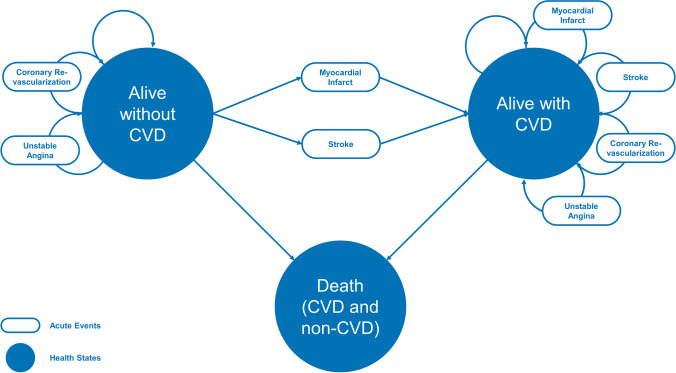
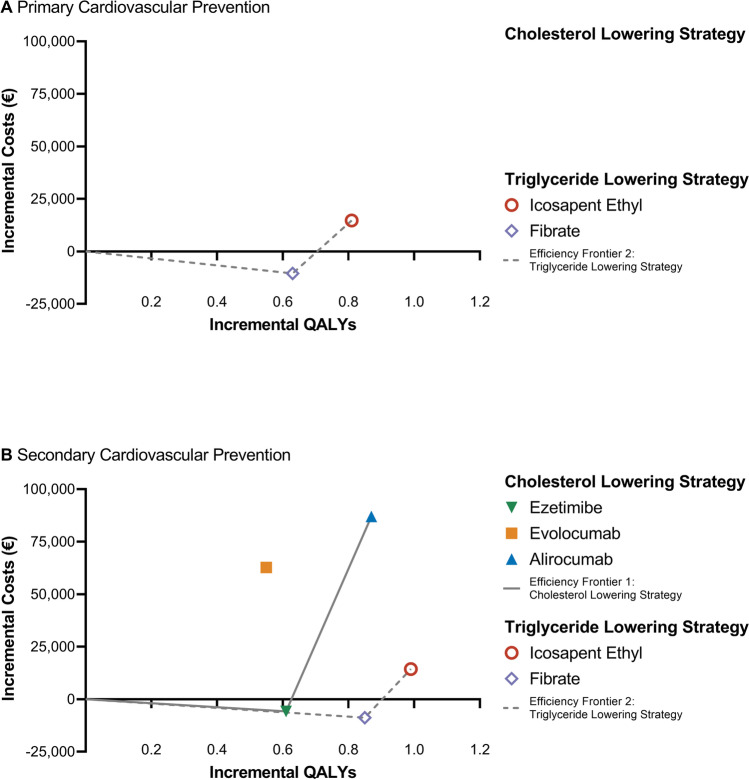
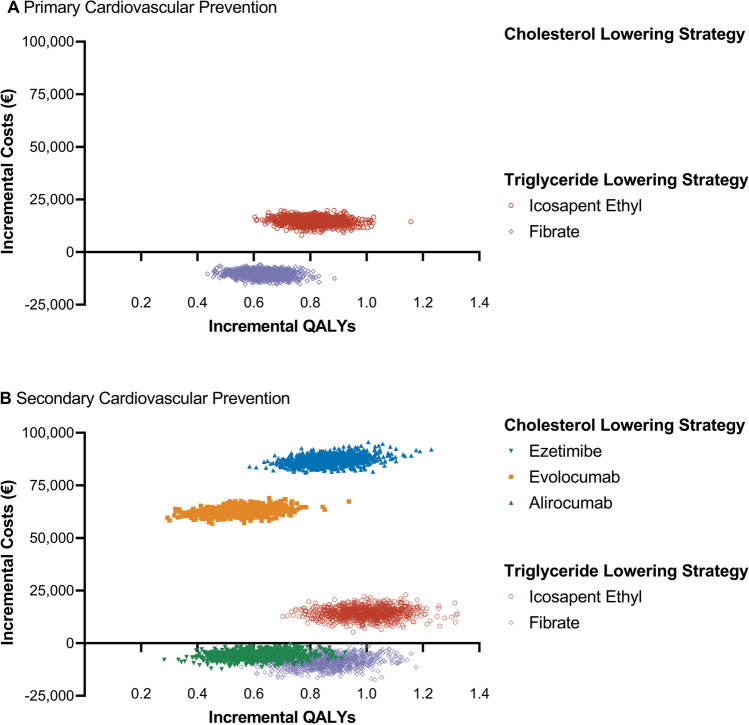
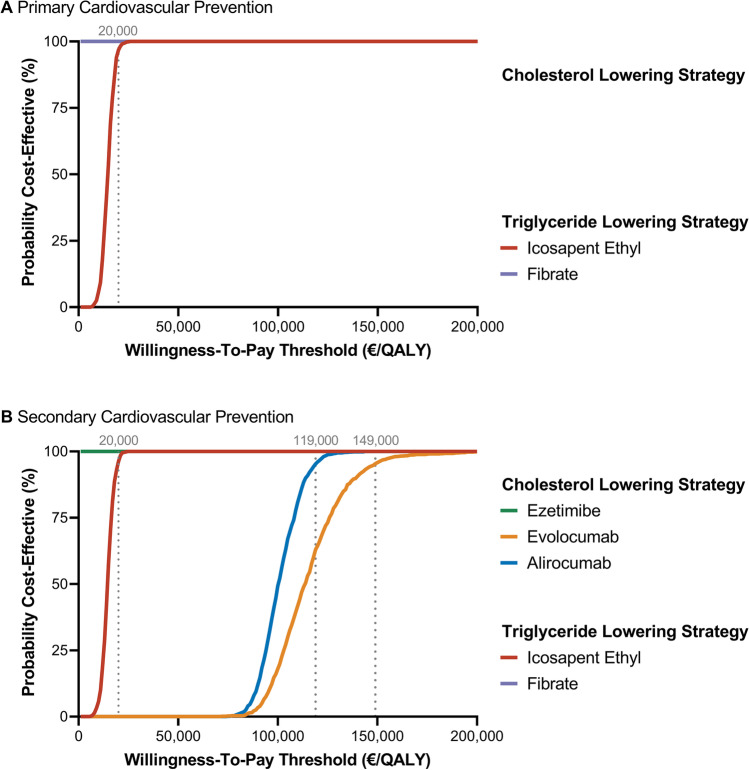
Verification
Claims the paper makes
The claims and statistics of this paper haven’t been checked yet.
Free: it reads the open-access text and checks the first 5 claims that cite a source we can check. Create a free account to check every claim.
Claims other papers make about this one
Each is checked against this paper’s own text: does it say what the citing paper says it does?
The source backs part of the claim, not all of it — or backs it for a different population, condition or comparison.
In the citing paper
“Third, high prices for new treatments, such as PCSK9 inhibitors, have been identified as a barrier to swift coverage and reimbursement by insurers [21–24].”
From Established and Emerging Lipid-Lowering Drugs for Primary and Secondary Cardiovascular Prevention (2023) · cites this paper as [22]
Experimental — accuracy not yet measuredThe source backs part of the claim, not all of it — or backs it for a different population, condition or comparison.
In the citing paper
“Consequently, recent economic analyses found icosapent ethyl could be a cost-effective treatment, particularly for secondary cardiovascular prevention, in the USA, Germany, UK, Canada, Australia, and Japan [22, 23, 116–121].”
From Established and Emerging Lipid-Lowering Drugs for Primary and Secondary Cardiovascular Prevention (2023) · cites this paper as [22]
Experimental — accuracy not yet measured
Self-check
Percentages, sums and reported differences re-computed from the paper’s own numbers.
The self-check needs the paper’s full text.
Citations
Cites
Mach, F., Baigent, C., Catapano, A. L., Koskinas, K. C., Casula, M., Badimon, L., Chapman, M. J., De Backer, G. G., Delgado, V., Ference, B. A., et al. (2020) · European Heart Journal · doi:10.1093/eurheartj/ehz455 · Cited by 8,961
Evolocumab and Clinical Outcomes in Patients with Cardiovascular Disease
Sabatine, M. S., Giugliano, R. P., Keech, A. C., Honarpour, N., Wiviott, S. D., Murphy, S. A., Kuder, J. F., Wang, H., Liu, T., Wasserman, S. M., et al. (2017) · New England Journal of Medicine · doi:10.1056/nejmoa1615664 · Cited by 6,138
Mach, F., Baigent, C., Catapano, A. L., Koskinas, K. C., Casula, M., Badimon, L., Chapman, M. J., De Backer, G. G., Delgado, V., Ference, B. A., et al. (2019) · Atherosclerosis · doi:10.1016/j.atherosclerosis.2019.08.014 · Cited by 4,854
Ezetimibe Added to Statin Therapy after Acute Coronary Syndromes
Cannon, C. P., Blazing, M. A., Giugliano, R. P., McCagg, A., White, J. A., Theroux, P., Darius, H., Lewis, B. S., Ophuis, T. O., Jukema, J. W., et al. (2015) · New England Journal of Medicine · doi:10.1056/nejmoa1410489 · Cited by 4,487
Alirocumab and Cardiovascular Outcomes after Acute Coronary Syndrome
Schwartz, G. G., Steg, P. G., Szarek, M., Bhatt, D. L., Bittner, V. A., Diaz, R., Edelberg, J. M., Goodman, S. G., Hanotin, C., Harrington, R. A., et al. (2018) · New England Journal of Medicine · doi:10.1056/nejmoa1801174 · Cited by 3,634
Cardiovascular Risk Reduction with Icosapent Ethyl for Hypertriglyceridemia
Bhatt, D. L., Steg, P. G., Miller, M., Brinton, E. A., Jacobson, T. A., Ketchum, S. B., Doyle, R. T., Juliano, R. A., Jiao, L., Granowitz, C., et al. (2019) · New England Journal of Medicine · doi:10.1056/nejmoa1812792 · Cited by 3,317 · cited 1×
“Consequently, the efficacy of icosapent ethyl could be upward biased and thus overestimate the cost-effectiveness of icosapent ethyl [5, 43].”
BackgroundEffects of Combination Lipid Therapy in Type 2 Diabetes Mellitus
(2010) · New England Journal of Medicine · doi:10.1056/nejmoa1001282 · Cited by 2,837
Yokoyama, M., Origasa, H., Matsuzaki, M., Matsuzawa, Y., Saito, Y., Ishikawa, Y., Oikawa, S., Sasaki, J., Hishida, H., Itakura, H., et al. (2007) · The Lancet · doi:10.1016/s0140-6736(07)60527-3 · Cited by 2,516
Effects of extended-release niacin with laropiprant in high-risk patients
The HPS2-THRIVE Collaborative Group (2014) · New England Journal of Medicine · doi:10.1056/nejmoa1300955 · Cited by 1,668
Effect of omega-3 fatty acids on cardiovascular outcomes: A systematic review and meta-analysis
Khan, S. U., Lone, A. N., Khan, M. S., Virani, S. S., Blumenthal, R. S., Nasir, K., Miller, M., Michos, E. D., Ballantyne, C. M., Boden, W. E., et al. (2021) · eClinicalMedicine · doi:10.1016/j.eclinm.2021.100997 · Cited by 411 · cited 1×
“1 3 The cost-effectiveness of icosapent ethyl was previously assessed in the USA, Canada, Australia, and Japan [12, 34–38], after several randomized controlled trials demonstrated the dose-dependent benefits of icosapent ethyl in cardiovascular prevention [39, 40].”
BackgroundKazi, D. S., Moran, A. E., Coxson, P. G., Penko, J., Ollendorf, D. A., Pearson, S. D., Tice, J. A., Guzman, D., & Bibbins-Domingo, K. (2016) · JAMA · doi:10.1001/jama.2016.11004 · Cited by 382 · cited 2×
“03) [8] COSTS Alive without CVD 4,522 (±25%) [9] Alive with CVD 8,008 (±25%) [10,11] Non-fatal MI 8,588 (±25%) [11] CVD death 11,842 (±25%) [10–13] Non-CVD death 3,924 (±25%) [12–14] Non-fatal stroke 10,441 (±25%) [11] Hospitalization for unstable angina 4,791 (±25%) [10] Coronary revascularization 9,901 (±25%) [10] A…”
BackgroundDunbar, S. B., Khavjou, O. A., Bakas, T., Hunt, G., Kirch, R. A., Leib, A. R., Morrison, R. S., Poehler, D. C., Roger, V. L., & Whitsel, L. P. (2018) · Circulation · doi:10.1161/cir.0000000000000570 · Cited by 319 · cited 1×
“The American Heart Association identified the ongoing demographic shift, increasing prevalence, and rising treatment costs as main drivers for surging CVD expenses [3].”
BackgroundEconomic Burden of Cardiovascular Disease in Type 2 Diabetes: A Systematic Review
Einarson, T. R., Acs, A., Ludwig, C., & Panton, U. H. (2018) · Value in Health · doi:10.1016/j.jval.2017.12.019 · Cited by 305 · cited 1×
“Besides adverse health effects for the individual, CVD lead to rising medical costs for society [2].”
BackgroundEllert, U., & Kurth, B. M. (2013) · Bundesgesundheitsblatt - Gesundheitsforschung - Gesundheitsschutz · doi:10.1007/s00103-013-1700-y · Cited by 211
Fonarow, G. C., Keech, A. C., Pedersen, T. R., Giugliano, R. P., Sever, P. S., Lindgren, P., van Hout, B., Villa, G., Qian, Y., Somaratne, R., et al. (2017) · JAMA Cardiology · doi:10.1001/jamacardio.2017.2762 · Cited by 151 · cited 1×
“Initially, PCSK9 inhibitors were frequently assessed as cost-ineffective due to high prices in 2015 (US: ICER of 274,000 USD/QALY at annual treatment costs of USD14,350) [31, 32].”
BackgroundHealth Care Costs Associated With Incident Complications in Patients With Type 2 Diabetes in Germany
Kähm, K., Laxy, M., Schneider, U., Rogowski, W. H., Lhachimi, S. K., & Holle, R. (2018) · Diabetes Care · doi:10.2337/dc17-1763 · Cited by 141
Lewis, E. F., Li, Y., Pfeffer, M. A., Solomon, S. D., Weinfurt, K. P., Velazquez, E. J., Califf, R. M., Rouleau, J. L., Køber, L., White, H. D., et al. (2014) · JACC Heart Failure · doi:10.1016/j.jchf.2013.12.003 · Cited by 138
Fonarow, G. C., van Hout, B., Villa, G., Arellano, J., & Lindgren, P. (2019) · JAMA Cardiology · doi:10.1001/jamacardio.2019.1647 · Cited by 91 · cited 5×
“However, price discounts to USD5,850 alongside targeted therapy of high-risk patients decreased the ICER to 92,200 USD/QALY by 2020 [23, 33].”
BackgroundInfluentialFISHing for the Miracle of Eicosapentaenoic Acid
Kastelein, J. J. P., & Stroes, E. S. G. (2019) · New England Journal of Medicine · doi:10.1056/nejme1814004 · Cited by 74 · cited 1×
“Consequently, the efficacy of icosapent ethyl could be upward biased and thus overestimate the cost-effectiveness of icosapent ethyl [5, 43].”
BackgroundKorman, M., & Wisløff, T. (2018) · European Heart Journal - Cardiovascular Pharmacotherapy · doi:10.1093/ehjcvp/pvx010 · Cited by 68
Cost-Effectiveness of Alirocumab: A Just-in-Time Analysis Based on the ODYSSEY Outcomes Trial
Kazi, D. S., Penko, J., Coxson, P. G., Guzman, D., Wei, P. C., & Bibbins-Domingo, K. (2019) · Annals of Internal Medicine · doi:10.7326/m18-1776 · Cited by 65
Cost-Effectiveness of Alirocumab in Patients With Acute Coronary Syndromes
Bhatt, D. L., Briggs, A. H., Reed, S. D., Annemans, L., Szarek, M., Bittner, V. A., Diaz, R., Goodman, S. G., Harrington, R. A., Higuchi, K., et al. (2020) · Journal of the American College of Cardiology · doi:10.1016/j.jacc.2020.03.029 · Cited by 63
Costs of treating cardiovascular events in Germany: a systematic literature review
Schmid, T. (2015) · Health Economics Review · doi:10.1186/s13561-015-0063-5 · Cited by 47 · cited 2×
“This estimate is based on the average treatment cost of CVD 1-year post occurrence [16].”
BackgroundSauer, S., Müller, R., & Rothgang, H. (2013) · Zeitschrift für Gerontologie und Geriatrie · doi:10.1007/s00391-013-0547-z · Cited by 36 · cited 1×
“Expenses were weighted by the location of death as a German large-scale study (n = 59,922) found that 71% of patients die in hospitals/institutions and 29% at home [18].”
MethodSoini, E. J., Davies, G., Martikainen, J. A., Hu, H. X., Tunceli, K., & NISKANEN, L. K. (2009) · Current Medical Research and Opinion · doi:10.1185/03007990903422620 · Cited by 32
Ademi, Z., Ofori-Asenso, R., Zomer, E., Owen, A., & Liew, D. (2021) · European Journal of Preventive Cardiology · doi:10.1177/2047487319896648 · Cited by 30 · cited 1×
“assessed icosapent ethyl as cost-effective (ICER: 45,036 AUD/QALY), especially for secondary prevention [12].”
BackgroundReckless, J. P. D., Davies, G., Tunceli, K., Hu, X., & Brudi, P. (2010) · Value in Health · doi:10.1111/j.1524-4733.2010.00742.x · Cited by 26
Yang, H. M., Li, N., Zhou, Y., Xiao, Z., Tian, H., Hu, M., & Li, S. (2020) · Drug Design Development and Therapy · doi:10.2147/dddt.s213968 · Cited by 24
Kongpakwattana, K., Ademi, Z., Chaiyasothi, T., Nathisuwan, S., Zomer, E., Liew, D., & Chaiyakunapruk, N. (2019) · PharmacoEconomics · doi:10.1007/s40273-019-00820-6 · Cited by 23 · cited 1×
“Nevertheless, ezetimibe’s ICER was found to be higher than the WTP thresholds in Thailand and China [29, 30].”
BackgroundWille, E., Scholze, J., Alegría, E., Ferri, C., Langham, S., Stevens, W., Jeffries, D. J., & Uhl-Hochgräber, K. (2010) · The European Journal of Health Economics · doi:10.1007/s10198-010-0223-9 · Cited by 22 · cited 1×
“03) [8] COSTS Alive without CVD 4,522 (±25%) [9] Alive with CVD 8,008 (±25%) [10,11] Non-fatal MI 8,588 (±25%) [11] CVD death 11,842 (±25%) [10–13] Non-CVD death 3,924 (±25%) [12–14] Non-fatal stroke 10,441 (±25%) [11] Hospitalization for unstable angina 4,791 (±25%) [10] Coronary revascularization 9,901 (±25%) [10] A…”
BackgroundKodera, S., Morita, H., Kiyosue, A., Ando, J., & Komuro, I. (2018) · Circulation Journal · doi:10.1253/circj.cj-17-0995 · Cited by 21
Sarajlic, P., Artiach, G., Larsson, S. C., & Bäck, M. (2021) · Cardiovascular Drugs and Therapy · doi:10.1007/s10557-021-07212-z · Cited by 19 · cited 1×
“1 3 The cost-effectiveness of icosapent ethyl was previously assessed in the USA, Canada, Australia, and Japan [12, 34–38], after several randomized controlled trials demonstrated the dose-dependent benefits of icosapent ethyl in cardiovascular prevention [39, 40].”
BackgroundAlmalki, Z. S., Guo, J. J., Alahmari, A. K., Alotaibi, N., & Thaibah, H. A. (2017) · Heart Lung and Circulation · doi:10.1016/j.hlc.2017.05.139 · Cited by 18
Gao, L., Moodie, M., & Li, S.-C. (2019) · European Journal of Internal Medicine · doi:10.1016/j.ejim.2019.07.001 · Cited by 17 · cited 3×
“evaluated icosapent ethyl as not cost-effective with an ICER of 59,036 AUD/QALY [38].”
BackgroundInfluentialCOST-EFFECTIVENESS OF ICOSAPENT ETHYL IN US REDUCE-IT PATIENTS
Weintraub, W. S., Bhatt, D., Zhang, Z., Zhang, C., Sarahfaye, D., Boden, W. E., Steg, P. G., Miller, M., Brinton, E., King, J., et al. (2020) · Journal of the American College of Cardiology · doi:10.1016/s0735-1097(20)32541-9 · Cited by 13
Lachaîne, J., Charron, J. N., Grégoire, J. C., Hegele, R. A., & Leiter, L. A. (2020) · Value in Health · doi:10.1016/j.jval.2020.08.546 · Cited by 8
A Review of Health Technology Assessments (HTA) of PCSK9 Inhibitors (PSCK9I)
Cork, D., Ralston, S., & Curry, A. (2018) · Value in Health · doi:10.1016/j.jval.2018.04.403 · Cited by 1 · cited 1×
“Initially, PCSK9 inhibitors were frequently assessed as cost-ineffective due to high prices in 2015 (US: ICER of 274,000 USD/QALY at annual treatment costs of USD14,350) [31, 32].”
Background
Research works printed but not linked: 1
- 35. Ollendorf DA, McQueen RB, Campbell JD, et al (2019) Additive therapies for cardiovascular disease: effectiveness and value 38. Gao L, Moodie M, Li S-C. The cost-effectiveness of omega-3 polyunsaturated fatty acids -the Australian healthcare perspective. Eur J Intern Med. 2019;67:70-6.
Cited by
Established and Emerging Lipid-Lowering Drugs for Primary and Secondary Cardiovascular Prevention
Michaeli, D. T., Michaeli, J. C., Albers, S., Boch, T., & Michaeli, T. (2023) · American Journal of Cardiovascular Drugs · doi:10.1007/s40256-023-00594-5 · Cited by 109
Self-citationPCSK9 inhibition: from effectiveness to cost-effectiveness
Mercep, I., Strikic, D., Hrabac, P., Pecin, I., & Reiner, Ž. (2024) · Frontiers in Cardiovascular Medicine · doi:10.3389/fcvm.2024.1339487 · Cited by 31
“…in different regions, including Germany, the United Kingdom, Canada, Spain, China, Saudi Arabia, and the Russian Federation, underlines the favourable economic pro fi le of PCSK9 inhibitors, particularly evolocumab and alirocumab, in the context of cardiovascular risk management (Table 2) (32 – 39).”
BackgroundMichaeli, D. T., Michaeli, J. C., Boch, T., & Michaeli, T. (2022) · Clinical Drug Investigation · doi:10.1007/s40261-022-01173-3 · Cited by 20
“Similar to previous studies, baseline transition probabilities were multiplied by + 10% and + 14% annually to model the age-dependent increased risk of non-CVD and CVD events, respectively [23].”
Self-citationCost-Effectiveness of Bivalent, Quadrivalent, and Nonavalent HPV Vaccination in South Africa
Michaeli, D. T., Stoycheva, S., Marcus, S. M., Zhang, W., Michaeli, J. C., & Michaeli, T. (2022) · Clinical Drug Investigation · doi:10.1007/s40261-022-01138-6 · Cited by 21
Self-citationNew Biological Therapies for Low-Density Lipoprotein Cholesterol
Gill, P. K., & Hegele, R. A. (2023) · Canadian Journal of Cardiology · doi:10.1016/j.cjca.2023.08.003 · Cited by 20
Metadata
- Authors
- Michaeli, D. T., Michaeli, J. C., Boch, T., & Michaeli, T.
- Affiliations
- Heidelberg University (DE)
- German Cancer Research Center (DE)
- Corresponding author
- Michaeli, Daniel Tobias
- Venue
- Cardiovascular Drugs and Therapy
- Published
- 2022-01-11
- Volume
- 37
- Issue
- 4
- Pages
- 683-694
- ISSN
- 0920-3206 (ISSN-L)
- 1573-7241
- PMC
- PMC10397126
- OpenAlex
- W4205437420
- Semantic Scholar
- bcb7b11d35bc67681651fcadf2c00d13d5ff60c4
- Cited by
- 23
- References
- 37
- Citations by year
- 2026: 3 · 2025: 8 · 2024: 5 · 2023: 4 · 2022: 3
- FWCI
- 4.78
- Type
- journal article
- Language
- en
- Open access
- hybrid
- doi.org
- Licence
- cc-by
- creativecommons.org/licenses/by/4.0 (tdm)
- creativecommons.org/licenses/by/4.0 (vor)
- Locations
- Cardiovascular Drugs and Therapy (publishedVersion, cc-by)
- PubMed Central (publishedVersion, cc-by)
- PubMed (publishedVersion)
- Funders
- Medizinische Fakultät Mannheim der Universität Heidelberg
- Topics
- Health Sciences › Medicine › Cardiology and Cardiovascular Medicine › Lipoproteins and Cardiovascular Health
- Social Sciences › Economics, Econometrics and Finance › Economics and Econometrics › Health Systems, Economic Evaluations, Quality of Life
- Social Sciences › Economics, Econometrics and Finance › Economics and Econometrics › Pharmaceutical Economics and Policy
- Keywords
- cost-effectiveness, lipid-lowering therapy, statins, icosapent ethyl, PCSK9 inhibitors, evolocumab, alirocumab, ezetimibe, fibrates, major adverse cardiovascular events, primary prevention, secondary prevention, dyslipidemia, quality-adjusted life years, Markov cohort model
- MeSH terms
- Ezetimibe, Proprotein Convertase 9, Cardiovascular Diseases, Cost-Benefit Analysis, Humans, Quality-Adjusted Life Years, Hydroxymethylglutaryl-CoA Reductase Inhibitors
About these checks
Registry, retraction, Cites and statistics results are computed, not judged, with one exception: a printed reference that no index lists is read once by a model before it counts as a citation error. Claims are extracted by a model and kept only when their quote appears verbatim in the text; each cited source is then checked, with a model’s help, for whether it says what the claim relies on. Those verdicts can be wrong — read the claim’s quote and the cited source before relying on one.
Statistics and arithmetic are recomputed, not judged.
Confidence bands are shown only for fields calibrated on our annotated test set. None is calibrated yet, so no band is shown.
What counts as a claim ›How we measure confidence ›How we check this ›
Are you an author, or do you see a problem with this page? Request a review
Data sources
Bibliographic data: Semantic Scholar, OpenAlex, Crossref.
Contains information from the Semantic Scholar Academic Graph Datasets, made available under the ODC Attribution License (ODC-BY 1.0).
Semantic Scholar’s data is described in: Kinney, R., et al. (2023). The Semantic Scholar Open Data Platform. arXiv:2301.10140.
