

Blending Teacher Autonomy Support and Provision of Structure in the Classroom for Optimal Motivation: A Systematic Review and Meta-Analysis
Open accessThe DOI matches its Crossref record; 192 of the 192 references it cites were found in a registry or an index; 6 of the 21 sources its claims cite were checked for support.
Abstract
Abstract Teacher autonomy support and provision of structure are crucial for students’ learning and motivation, yet it is unclear how to best blend them. Research describes autonomy support and structure as independent but mutually supportive, equivalent, and even opposite. These contradictions jeopardize the generalizability of findings across studies and hamper classroom implementation. Our meta-analysis aims to disentangle the dynamics between autonomy support and structure by synthesizing their definitions, relationships, and effects on students. Following PRISMA guidelines, 94 studies and 110 effect sizes were identified through databases (PsycINFO, ERIC, Education Research Complete, Psychology and Behavioral Sciences Collection, Teacher Reference Center, ProQuest Education Database, and ProQuest Theses & Dissertations) and forward reference searches. Dissertations and peer-reviewed articles examining teacher autonomy support and structure were included. Our synthesis revealed intertwined conceptualizations and plentiful operationalizations of autonomy support and structure. Autonomy support and structure reinforced each other, with a large effect size. This relationship was moderated by the data collection method and school level and appears to be universal. Autonomy support and structure both elevated students’ motivation, engagement, and need satisfaction with moderate to large effect sizes. Teachers who facilitate autonomy and structure were motivated to teach and felt effective as teachers. Our findings suggest blending autonomy support and structure for optimal growth of students and teachers.
Overview
CoChat Summary
TL;DR
This systematic review and meta-analysis synthesizes 94 studies and finds that teacher autonomy support and provision of structure are positively related (r = .53) and both linked to students’ motivation, engagement, and need satisfaction. The authors conclude that teachers should blend autonomy support with structure rather than treat them as opposites.
Key findings
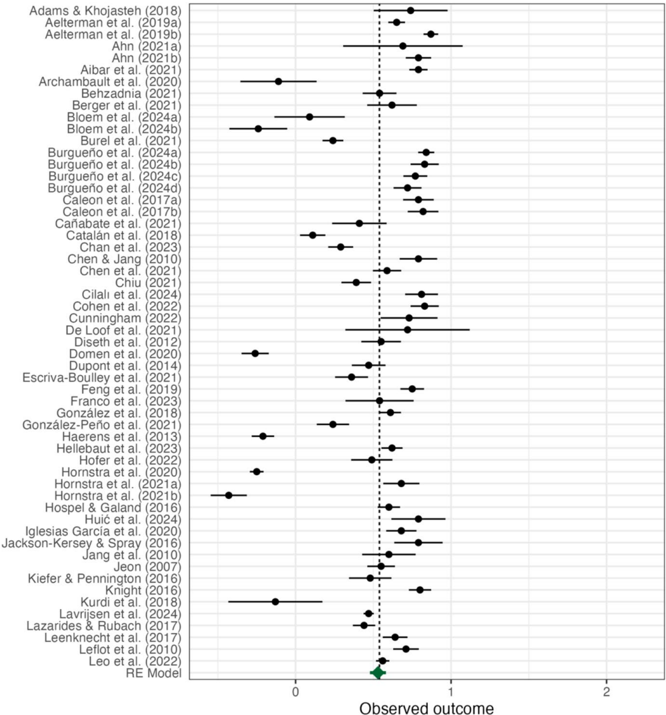
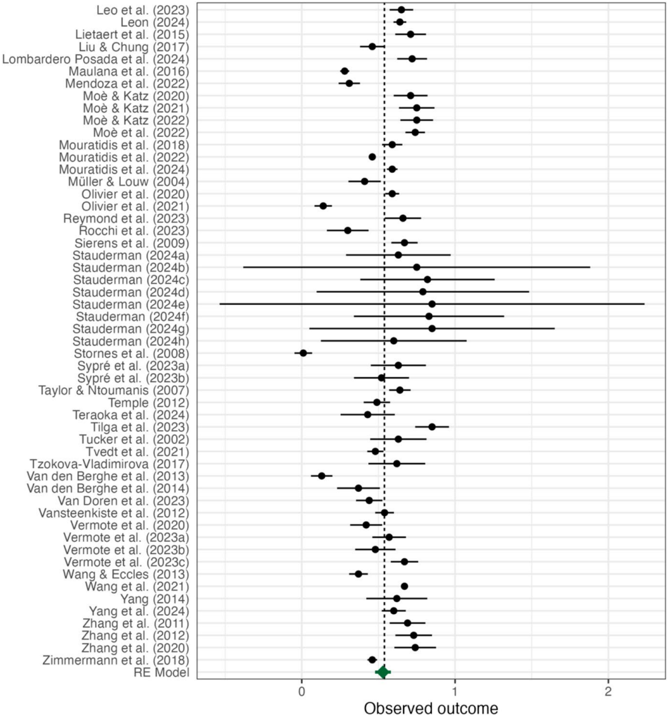
- Across 110 effect sizes, autonomy support and structure were positively correlated, r = 0.53, SE = 0.03, 95% CI [0.48, 0.58], p < .001; 86 of 94 studies described them as independent but positively related, while 8 reported negative correlations ranging from r = −0.01 to −0.43.
- Data collection method moderated the relationship (QM(df = 2) = 11.01, p < .001): student-report r = .59, teacher-report r = .45, observation r = .36. Grade level also moderated it (QM(df = 2) = 11.95, p < .01): elementary r = .29, secondary r = .56, post-secondary r = .57. Subject and culture (individualism score) were not significant moderators.
- Autonomy support correlated with students’ sense of autonomy r = .47, competence r = .36, and engagement r = .35; structure correlated with sense of autonomy r = .43, competence r = .41, and engagement r = .33. Neither was significantly related to controlled motivation. Partial correlations controlling for the other construct reduced effects (e.g., autonomy support with competence from r = .36 to r_partial = .16; structure with autonomous motivation from r = .28 to r_partial = .15).
- Teacher antecedents were synthesized narratively (10 studies; 1–3 per antecedent): autonomy support and structure showed moderate to large correlations with teachers’ motivation to teach, self-efficacy for supporting autonomy/competence, and feeling effective; teachers facilitating autonomy/structure reported less burnout, pressure, and fixed mindset.
Methods
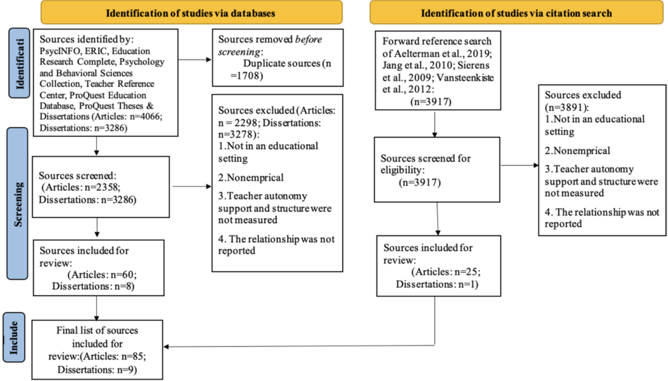
- PRISMA systematic review and meta-analysis; searched PsycINFO, ERIC, Education Research Complete, Psychology and Behavioral Sciences Collection, Teacher Reference Center, ProQuest Education Database, and ProQuest Theses & Dissertations, plus forward reference searches on September 10, 2024; 11,269 results were screened.
- Included 94 studies (85 journal articles, 9 dissertations), 280 effect sizes: 110 correlations between autonomy support and structure and 170 correlations with student learning outcomes; total sample 592,553 (17,776 teachers, 574,777 students).
- Random-effects models in R metafor; moderation by data collection method, school level, subject, and culture (Hofstede individualism); partial correlations to isolate unique contributions; teacher antecedents reviewed narratively because sample size was insufficient for meta-analysis.
Limitations
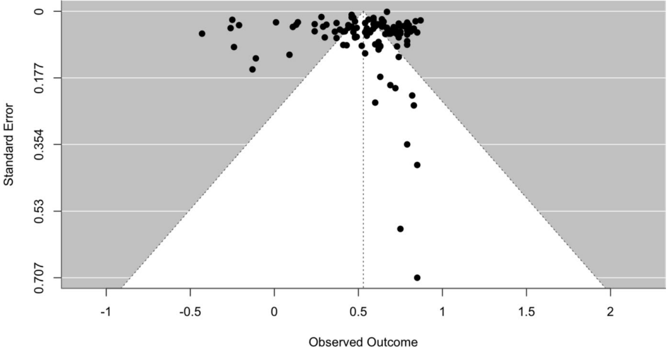
- The paper states heterogeneity was high (Q = 6871.79, df = 109, p < .001; I² = 98.94%; τ² = 0.07) and possible sources include populations, measures, and publication bias; Trim and Fill suggested 25 potentially missing left-side studies, though Egger’s test was not significant (b = 0.50, Z = 1.00, p = .32).
- The paper states it could not identify hypothesized effects among observation studies, differences between school subjects, or relationships with controlled motivation; most studies did not specify subject, reducing power.
- The paper states teacher antecedent findings rest on only 10 studies (1–3 per antecedent) and need robustness testing. Evident from the text: the sample is dominated by secondary schools (63 studies), student-report data (56 studies), and highly individualistic contexts, and one PISA study contributes 513,295 students, which may limit generalizability.
Model-written summary. Check it against the paper before relying on it.
Integrity signals
Registry
Cites
Statistics
Figures
Verification
Claims the paper makes
6 Valid · 0 Not valid · 7 Not checked · 12 Own results and interpretations
Every source the paper cites for this claim was checked and supports it.
In the paper
“For Research Question 2, we conducted a meta-analysis of the relationship between autonomy support and structure and performed moderation analyses using the R Metaphor package (Viechtbauer, 2010).”
§ META > Data Analysis Procedures
What the sources say
- Supportedcites Viechtbauer, 2010 matched to “Conducting Meta-Analyses in R with the metafor Package” (2010) source
The Introduction (p. 2) identifies metafor as an R package for meta-analysis that supports moderator analyses. The Abstract (p. 1) confirms it can conduct meta-regression with continuous and categorical moderators. The citing sentence's “Metaphor” appears to refer to that package despite the spelling difference. (LLM, conf=0.94)
- Supported
Every source the paper cites for this claim was checked and supports it.
In the paper
“This meta-analysis and systematic literature review of teachers' autonomy support and provision of structure follows the guidelines for Preferred Reporting Items for Systematic Reviews and Meta-Analyses (PRISMA; Page et al., 2021)”
§ META > Method
What the sources say
- Supportedcites Page et al., 2021 matched to “The PRISMA 2020 statement: an updated guideline for reporting systematic reviews” (2021) source
The paper’s introductory summary identifies PRISMA 2020 as an updated reporting guideline for systematic reviews and presents its checklists and flow diagrams. The citation identifies the guidelines the citing authors say they followed; it does not ask the source to verify their compliance. (LLM, conf=0.91)
- Supported
The cited sources support only part of this claim — read each source’s verdict below.
In the paper
“Autonomy support and structure are both beneficial for students (Bureau et al., 2022;Hornstra et al., 2021;Howard et al., 2021;Mammadov & Schroeder, 2023) and teacher outcomes (Cheon et al., 2014;Ryan et al., 2022;Slemp et al., 2020).”
§ META > Blending Teacher Autonomy Support and Provision of Structure
What the sources say
- Partly supportedcites Bureau et al., 2022 matched to “Pathways to Student Motivation: A Meta-Analysis of Antecedents of Autonomous and Controlled Motivations” (2022) sourceExperimental — accuracy not yet measured
The Discussion’s ‘The Role of Autonomy Support’ section reports that teacher autonomy support positively predicts students’ self-determined motivation. The paper does not report a finding that classroom structure benefits students; its mention of such a study appears in the References. In the citing sentence, the separate teacher-outcomes claim is attributed to other citations, not Bureau et al. (LLM, conf=0.85)
- Not matchedcites Hornstra et al., 2021
An author–year citation the paper’s reference list doesn’t settle. We don’t search these by name.
- Not checked — no full text of the sourcecites Howard et al., 2021 matched to “Student Motivation and Associated Outcomes: A Meta-Analysis From Self-Determination Theory” (2021) source
- Partly supported
The cited sources support only part of this claim — read each source’s verdict below.
In the paper
“The majority of studies (86 out of 94 studies) described the two constructs as two independent but positively related aspects of teachers' instructional approaches (e.g., Connell & Wellborn, 1991;Skinner & Belmont, 1993;Tucker et al., 2002).Correlations between autonomy support and structure ranged from r = 0.01 to r = 0.87.”
§ META > Systematic Literature Review
What the sources say
- Not matchedcites Connell & Wellborn, 1991
An author–year citation the paper’s reference list doesn’t settle. We don’t search these by name.
- Not checked — no full text of the sourcecites Skinner & Belmont, 1993 matched to “Motivation in the classroom: Reciprocal effects of teacher behavior and student engagement across the school year.” (1993) source
- Partly supportedcites Tucker et al., 2002 matched to “Teacher and child variables as predictors of academic engagement among low‐income African American children” (2002) sourceExperimental — accuracy not yet measured
The Perceived Teacher Context section (page unavailable) measures autonomy support and structure as separate subscales, so Tucker et al. is an example of treating them as distinct constructs. Our copy does not report a correlation between those two subscales or establish that they are positively related. The review-wide count of 86 out of 94 studies and the range r = 0.01–0.87 are not findings of this study. (LLM, conf=0.82)
- Not matched
The sources with a verdict support this claim; the rest weren’t checked yet, have no full text we could read, or their verdicts aren’t rated yet.
In the paper
“Meta-analytic evidence shows culture does not moderate the relationship between autonomy support and need satisfaction (Slemp et al., 2018) or teacher outcomes (Slemp et al., 2020).”
§ META > Cultural Context
What the sources say
- Supportedcites Slemp et al., 2018 matched to “Leader autonomy support in the workplace: A meta-analytic review” (2018) source
The Results (Moderator analyses) report no evidence that individualist versus collectivist country classification moderated the relationship between leader autonomy support and satisfaction of the needs for autonomy, competence, or relatedness. The teacher-outcomes claim is attached to Slemp et al. (2020), not this source. The Discussion cautions that mixed ethnic origins within study samples may have hampered detection of moderation. (LLM, conf=0.91)
- Not checked — no full text of the sourcecites Slemp et al., 2020 matched to “A meta-analysis of autonomous and controlled forms of teacher motivation” (2020) source
- Supported
20 more claims · 1 with their cited sources checked
Create a free account to see all 25 claims and every source verdict.
Statistics recomputed
Every reported test result, recomputed from its test statistic and degrees of freedom. A result shows as not adding up only once an independent check has confirmed it.
- Consistentz = 1reported p = .32 · recomputed p = .317
“Z = 1.00, p = .32”
Self-check
Percentages, sums and reported differences re-computed from the paper’s own numbers.
Each contradiction between two passages listed here was confirmed by an independent check.
Rated minor: it would not touch a result — a value no result rests on, a p-value that stays on the same side of the significance level, or a conflict that is clerical, resolved elsewhere in the paper, or outside its own findings.
In the paper
§ META > Definitions of Teacher Autonomy Support and Provision of Structure are Intertwined
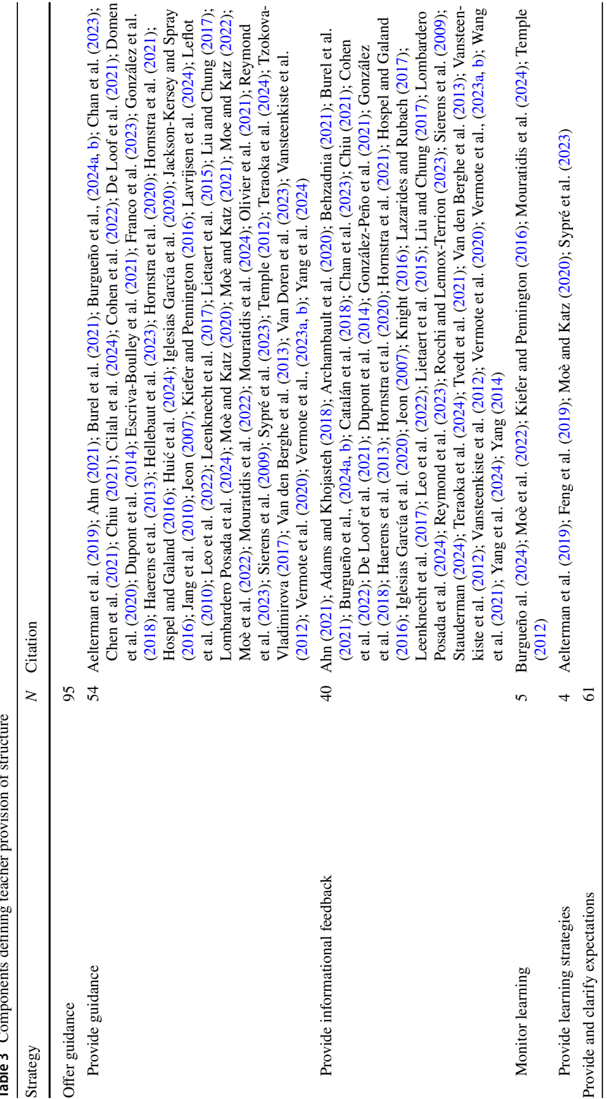
“showing respect was recognized as an autonomy-supportive strategy in five of the reviewed studies (see Table 2)”
§ META > Conclusion
“Show respect 7 Feng et al. (2019); Hornstra et al. (2021); Leenknecht et al. (2017); Liu and Chung (2017); Mouratidis et al. (2022); Olivier et al. (2020); Tzokova-Vladimirova (2017)”
Rated minor: it would not touch a result — a value no result rests on, a p-value that stays on the same side of the significance level, or a conflict that is clerical, resolved elsewhere in the paper, or outside its own findings.
In the paper
§ META > Effects on Students' Learning
“moderately correlated with students' sense of competence (r = 0.36, Fig. 4 Forest plot of effect sizes on correlations between autonomy support and structure (continued).”
§ META > Meta-Analysis
“correlations up to 0.19 are considered small, between 0.2 and 0.29 are deemed moderate, and 0.3 or more are considered large effects.”
Rated minor: it would not touch a result — a value no result rests on, a p-value that stays on the same side of the significance level, or a conflict that is clerical, resolved elsewhere in the paper, or outside its own findings.
In the paper
§ META > Effects on Students' Learning
“moderately correlated with students' sense of competence (r = 0.36, Fig. 4 Forest plot of effect sizes on correlations between autonomy support and structure (continued).”
§ META > Meta-Analysis
“0.3 or more are considered large effects.”
Citations
Cites
Statistical Power Analysis for the Behavioral Sciences
Muller, K. (1989) · Technometrics · doi:10.1080/00401706.1989.10488618 · Cited by 99,167
Ryan, R. M., & Deci, E. L. (2000) · American Psychologist · doi:10.1037//0003-066x.55.1.68 · Cited by 54,599
Statistical Power Analysis for the Behavioral Sciences (2nd ed.).
Lachenbruch, P. A., & Cohen, J. (1989) · Journal of the American Statistical Association · doi:10.2307/2290095 · Cited by 37,395
Conducting Meta-Analyses in R with the metafor Package
Viechtbauer, W. (2010) · Journal of Statistical Software · doi:10.18637/jss.v036.i03 · Cited by 20,464 · cited 1×
“For Research Question 2, we conducted a meta-analysis of the relationship between autonomy support and structure and performed moderation analyses using the R Metaphor package (Viechtbauer, 2010).”
The PRISMA 2020 statement: an updated guideline for reporting systematic reviews
Page, M. J., McKenzie, J. E., Bossuyt, P. M., Boutron, I., Hoffmann, T. C., Mulrow, C. D., Shamseer, L., Tetzlaff, J. M., Akl, E. A., Brennan, S. E., et al. (2021) · Systematic Reviews · doi:10.1186/s13643-021-01626-4 · Cited by 13,874 · cited 1×
“This meta-analysis and systematic literature review of teachers’ autonomy support and provision of structure follows the guidelines for Preferred Reporting Items for Systematic Reviews and Meta-Analyses (PRISMA; Page et al., 2021), see Fig.”
(2000) · Cited by 9,198
Skinner, E. A., & Belmont, M. J. (1993) · Journal of Educational Psychology · doi:10.1037/0022-0663.85.4.571 · Cited by 3,428 · cited 4×
“…autonomy support, students often experience an enhanced sense of competence (Guay et al., 2001; Jang et al., 2016; Lochbaum & Jean-Noel, 2016; Okada, 2023), a feeling typically cultivated through the provision of structure (Jang et al., 2010; Skinner & Belmont, 1993; Vansteenkiste et al., 2020).”
InfluentialEvaluating Effect Size in Psychological Research: Sense and Nonsense
Funder, D. C., & Ozer, D. J. (2019) · Advances in Methods and Practices in Psychological Science · doi:10.1177/2515245919847202 · Cited by 3,295 · cited 1×
“As Cohen’s (1988) effect size benchmarks do not reflect effect size distributions in psychological and educational research, we refer to Funder and Ozer (2019) and Gignac and Szodorai (2016) to gauge the strength of our findings.”
Fixed-and random-effects models in meta-analysis.
Hedges, L. V., & Vevea, J. L. (1998) · Psychological Methods · doi:10.1037/1082-989x.3.4.486 · Cited by 2,977 · cited 1×
“We applied random effects models (Hedges & Vevea, 1998) because they take possible differences in effect sizes among the included studies into account.”
Research works printed but not linked: 11
- 3. Ahn, I. (2021). Differences between teachers' and students' perceptions of teachers' need-supportive practices. (Publication No. 30505009) [Doctoral dissertation, Purdue University]. ProQuest Dis- sertations & Theses Global.
- 13. Bjorklund, D. F. (2000). Children's thinking: Developmental function and individual differences (3rd ed.). Wadsworth/Thomson Learning.
- 27. Chai, X., & Gong, S. (2013). The development of questionnaire on perceived mathematics teacher sup- port for middle school students. Studies of Psychology and Behavior, 11(4), 511-517.
- 40. Cunningham, P. (2022). Examining teaching styles and classroom management through the lens of self-determination theory: Implications for race, culture, and discipline. (Publication No. 29399106) Doctoral dissertation, Northern Illinois University. ProQuest Dissertations & Theses Global.
- 75. Hofstede, G. (2001). Culture's consequences: Comparing values, behaviors, and organizations across nations (2nd ed.). Sage Publications.
- 86. Jeon, S. (2007). The effects of parents' and teachers' motivating styles on adolescents' school out- comes and psychological well-being: A test of self-determination theory in a Korean context (Publication No. 3301715) Doctoral dissertation, The University of Iowa. ProQuest Disserta- tions & Theses Global.
- 99. Leon, L. M. (2024). Students' perception of teacher classroom-interactions as predictors of self-deter- mined motivation and the pursuit of science: A model evaluating cognitive evaluation theory across genders. Doctoral dissertation, Texas Tech University. Electronic Theses and Dissertations. https:// hdl. handle. net/ 2346/ 99958 *
- 163. Temple, A. (2012). A model of student engagement and academic achievement: The role of teacher- student relationships and teacher expectations (Publication No. 3504032) [Doctoral dissertation, Wayne State University]. ProQuest Dissertations & Theses Global.
- 168. Tzokova-Vladimirova, V. (2017). Teachers' support and engagement in learning by academically strug- gling students. (Publication No. 28249733) Doctoral dissertation, McGill University. ProQuest Dissertations & Theses Global. *
- 184. Wang, Y., King, R. B., Wang, F., & Leung, S. O. (2021b). Need-supportive teaching is positively associ- ated with students' well-being: A cross-cultural study. Learning and Individual Differences, 92, 102051. · DOI
- 188. Williams, K. C., & Williams, C. C. (2011). Five key ingredients for improving student motivation. Research in Higher Education Journal, 12, 1. https:// doi. org/ 10. 1080/ 18770 428. 2011. 589493 · doi:10.1080/18770428.2011.589493
Cited by
Guo, Q., Wang, X., Gao, Z., Gao, J., Lin, X., & Samsudin, S. (2025) · PLoS ONE · doi:10.1371/journal.pone.0331876 · Cited by 48
“However, multiple meta-analyses have demonstrated that the beneficial effects of psychological need support in educational settings are applicable across cultural contexts [64–66].”
Participatory learning environments: student and teacher perspectives on classroom decision-making
Kärner, T., Jüttler, M., Bottling, M., & Weiß, J. K. (2026) · Learning Environments Research · doi:10.1007/s10984-026-09576-1 · Cited by 8
“A systematic review and meta-analysis demonstrated that teachers who provide opportunities for autonomy frequently also establish clear structures and guidelines, and that both practices jointly predict more favorable motivational outcomes (Patzak & Zhang, 2025).”
Liu, Y., Dang, M., Chen, J., & Huang, J. (2026) · The Asia-Pacific Education Researcher · doi:10.1007/s40299-026-01121-1 · Cited by 4
Shi, Y., Chen, M. F., Wei, Y., Zhang, X., & Zhu, K. (2026) · European Journal of Education · doi:10.1111/ejed.70507 · Cited by 5
Self-citationCui, S., & Bao, Q. (2025) · Acta Psychologica · doi:10.1016/j.actpsy.2025.105962 · Cited by 3
Dong, S., & Wu, J. (2025) · Frontiers in Psychology · doi:10.3389/fpsyg.2025.1678864 · Cited by 3
Baten, E., Morbée, S., Desoete, A., Flamant, N., Valcke, M., & Vansteenkiste, M. (2026) · ZDM · doi:10.1007/s11858-026-01780-w · Cited by 4
“A well-established strategy is the adoption of a blend of an autonomy-supportive and structuring instructional style (Patzak & Zhang, 2025; Vansteenkiste & Soenens, 2025 for two overviews).”
Vietnamese Primary Teachers' Autonomy in the Context of Educational Reform
Truong, T. D., Dinh, H. T., Ha, X. V., et al. (2026) · European Journal of Education · doi:10.1111/ejed.70587 · Cited by 1
Vaičiūnienė, A., & Kazlauskienė, A. (2026) · Learning Culture and Social Interaction · doi:10.1016/j.lcsi.2026.101035 · Cited by 1
English Language Teachers’ Knowledge toward the Implementation of Independent Learning
Surayya, S. A., Prasetyaningtum, A., & Dwimaulani, A. (2025) · Journey Journal of English Language and Pedagogy · doi:10.33503/journey.v8i1.1515 · Cited by 1
Designing Learning Experiences With Affectagogy: Bridging Emotion and Cognition
Chee, K. N. (2025) · IGI Global eBooks · doi:10.4018/979-8-3373-0184-6.ch004
Llanos-Muñoz, R., Sevil‐Serrano, J., Lobo-Triviño, D., López-Gajardo, M. Á., & Marcos, F. M. L. (2025) · Frontiers in Psychology · doi:10.3389/fpsyg.2025.1629158 · Cited by 2
“Additionally, some SDT-based training programs among PE teachers have focused on both autonomy and competence support (Patzak and Zhang, 2025) or have simultaneously addressed all three basic psychological needs— autonomy, competence, and relatedness (Vasconcellos et al., 2020; White et al., 2021).”
Hanafiah, K. M., & Millen, J. I. (2025) · Journal of Microbiology and Biology Education · doi:10.1128/jmbe.00252-25
Creating a Decision-Making Curriculum for Students with and without Disabilities in Grades P-12
Riley, G., Klein, E., Perez, A., Perez, I. I., Berrol-Young, M., & Nathan, A. (2025) · Excelsior Leadership in Teaching and Learning · doi:10.14305/jn.19440413.2025.18.1.07
BLINOVA, A., Lei, S., & Li, Y. (2026) · Open Journal of Social Sciences · doi:10.4236/jss.2026.141006 · Cited by 1
Specific features of school students’ learning motivation at different levels of general education
dabbah, Y. (2025) · Psychological-Educational Studies · doi:10.17759/psyedu.202610104
Xue, Y. (2026) · Frontiers in Psychology · doi:10.3389/fpsyg.2026.1791070
Participatory learning environments : student and teacher perspectives on classroom decision-making
Kärner, T., Jüttler, M., Bottling, M., et al. (2026) · Zürcher Hochschule für Angewandte Wissenschaften digital collection (Zurich University of Applied Sciences) · doi:10.21256/zhaw-36328
Pösse, L., Rakoczy, K., Tallon, M., Weiß-Wittstadt, S., & Wagner, E. (2026) · SSRN Electronic Journal · doi:10.2139/ssrn.6478161
Gonzalez-Sanchez, J., GARCÍA, M. B., MALDONADO, R. M., & FLORES, I. P. (2026) · ESPACIOS · doi:10.48082/espacios-a26v47n02i04 · Cited by 2
Laranjeira, M. A. C., & Teixeira, M. O. (2026) · Journal of Psychologists and Counsellors in Schools · doi:10.1177/20556365261441045 · Cited by 1
“The literature consistently shows that teachers exert a pivotal influence on SE, motivation, and achievement (e.g., Gebre et al., 2025; Patzak et al., 2025; Roorda et al., 2017; Tao et al., 2022).”
Im, C.-H. (2026) · Frontiers in Psychology · doi:10.3389/fpsyg.2026.1810460
“…integrating autonomy-and relatedness-supportive pedagogy have shown improvements in engagement and, in some contexts, performance in physical education and teacher education settings (Behzadnia et al., 2020; Patzak and Zhang, 2025), offering preliminary practical support for this broader approach.”
Ma, Y., & Li, J. (2026) · Frontiers in Psychology · doi:10.3389/fpsyg.2026.1852105 · Cited by 1
“Need-supportive behaviors uphold students’ autonomous choice, deliver targeted guidance to build competence, and foster warm, inclusive teacher-student relationships (Patzak and Zhang, 2025).”
A study of teachers’ regard for adolescent perspectives in Norwegian upper secondary classrooms
Bø, E. B., Ertesvåg, S. K., & Vaaland, G. S. (2026) · Teaching and Teacher Education · doi:10.1016/j.tate.2026.105648
Gao, H., Cao, D., Ren, Y., Shi, H., Liang, Y., & Liu, Y. (2026) · Frontiers in Psychology · doi:10.3389/fpsyg.2026.1828839 · Cited by 1
“…evidence and systematic reviews have consistently documented positive associations between AST and learning motivation, classroom engagement, emotional experiences, psychological need satisfaction, and learning outcomes (Bureau et al., 2022; Reeve and Cheon, 2024; Patzak and Zhang, 2025).”
Esmurzayeva, N. M. (2026) · Premier Journal of Economics · doi:10.70389/pjec.100010
Tabka, M., & Soudani, M. (2026) · Contextes et didactiques · doi:10.4000/16fks
Nguon, S. O., Hart, B., & Meak, C. (2026) · Indonesian Journal of Education Research (IJoER) · doi:10.37251/ijoer.v7i3.2893
“…autonomy support integrated with structure provisions to balance freedom and guidance, as cognitive autonomy behaviors (e.g., choice in task engagement) predicted deeper conceptual learning in high school science, with path analysis showed mediated effects on resilience (β = 0.32, p 0.01) [33].”
InfluentialTiring, O. (2026) · Okul Psikolojik Danışmanlığı Dergisi · doi:10.58433/opdd.1960161
Exploring reasons and coping strategies among nursing students with nomophobia: a qualitative study
Luo, J., Yoong, T. L., Yahaya, N. A., Zhou, L., & Liu, Q. (2026) · Frontiers in Psychology · doi:10.3389/fpsyg.2026.1863185 · Cited by 1
“This finding supports previous evidence, which suggests that having more free time without enough guidance may lead to negative behavioral outcomes (Patzak and Zhang, 2025).”
Teacher interaction style as a source of different types of motivation in music college students
Nikolaeva, N. S., & Гордеева, Т. О. (2026) · Psychological-Educational Studies · doi:10.17759/psyedu.2026180208
Teacher Communion and Agency in Dyadic Interactions
Kuhl, N. G., Frühauf, M., & Hannover, B. (2026) · Zeitschrift für Entwicklungspsychologie und Pädagogische Psychologie · doi:10.1026/0049-8637/a000321
Compulsory Schooling as a Form of Captivity: A Polemic
Soling, C., & Burrows, K. (2026) · Educational Studies · doi:10.1080/00131946.2026.2705271
Ji, L., Guo, X., Zhuang, Z., Yang, R., Wang, X., Lan, Y., & Zhang, L. (2026) · Research Square · doi:10.21203/rs.3.rs-10211274/v1
Student-Centered Learning and Teaching (SCLT)
Alkandari, K. (2026) · Education and human development · doi:10.5772/intechopen.1014999
Adviento, S. V. M. G., Salvador, R. Q., Basamot, C. M. B., Tamayo, M. L., Gamiao, S. K. A., Franco, D. L., Salvador, M., Laureta, J. R. A., & Limon, M. R. (2026) · Social Sciences & Humanities Open · doi:10.1016/j.ssaho.2026.103414
Liang, H. (2026) · SHS Web of Conferences · doi:10.1051/shsconf/202623601007
“Structure for good classroom management should be a direct relation to autonomy, where teachers give students objectives and choice and have control in setting [3, 6].”
Autonomy-Supportive Assessment for Learner Motivation and Emotional Engagement in Language Learning
Lo, Y. Y., Leow, K., & Lim, Y. L. (2026) · IGI Global eBooks · doi:10.4018/979-8-3373-9639-2.ch003
Sweeney, M. E., Eck, C. J., Terry, R., & Ramsey, J. W. (2026) · Journal of Agricultural Education · doi:10.5032/jae.v67i3.3390
Țăranu, A. M., & Pascal, S. A. (2026) · doi:10.3390/proceedings2026147002
Yang, W., Yang, B., & Zhang, X. (2026) · Frontiers in Psychology · doi:10.3389/fpsyg.2026.1931977
Self-citationМиколаївна, М. А. (2026) · Academic Visions · doi:10.66556/2786-586x.57.moskalenko-a
Setiawan, G., Jacob, G. S., & Yoenanto, N. H. (2026) · Learning and Motivation · doi:10.1016/j.lmot.2026.102358
Nnaji, A. D., Agah, J. J., JEBSON, S. R., & Okhide, O. E. (2026) · European Journal of Health and Biology Education · doi:10.29333/ejhbe/19436
“Patzak and Zhang (2025) offer a more integrative perspective, describing autonomy support as a pedagogical approach that blends the instructional content with structured guidance and maintains students ’ optimal motivation and learning outcomes.”
Wang, K., & 戴熙玉 (2026) · Frontiers in Psychology · doi:10.3389/fpsyg.2026.1963943
Xu, H., & LIU, W. (2026) · Frontiers in Psychology · doi:10.3389/fpsyg.2026.1947710
Tsiouri, E. (2026) · European Journal of Contemporary Education and E-Learning · doi:10.59324/ejceel.2026.4(5).13
Gyimah, I. O., Frimpong, K. O., & Arthur, Y. D. (2026) · European Journal of Mathematics and Science Education · doi:10.12973/ejmse.7.2.169
Nguyen, T., Hidajat, T. J., Zhou, T., Ma, T., Hoang, A., Poed, S., & Edwards, E. J. (2026) · Educational Psychology Review · doi:10.1007/s10648-026-10218-4
“Informed by previous reviews (Aldrup et al., 2022 ; Patzak & Zhang, 2025) and the Joanna Briggs Institute Manual for Evidence Synthesis (Aromataris & Munn, 2020), we extracted the following information from included studies: study aim; sample characteristics (coun - try, sample size, grade level,…”
A Formative Evaluation of a Design Guide for Blended Learning Environments
Marcellis, M., Frèrejean, J., Bredeweg, B., Brand‐Gruwel, S., & van Merriënboer, J. J. G. (2026) · Journal of Formative Design in Learning · doi:10.1007/s41686-026-00124-x
Staying on time and on task: How task sequencing and task timing prompts impact open-ended learning
Coleman, J., Gavarkovs, A. G., & Brydges, R. (2026) · Medical Teacher · doi:10.1080/0142159x.2026.2743046
Metadata
- Authors
- Patzak, A., & Zhang, X.
- Affiliations
- George Mason University (US)
- Corresponding author
- Patzak, Alexandra
- Venue
- Educational Psychology Review
- Published
- 2025-02-21
- Volume
- 37
- Issue
- 1
- ISSN
- 1040-726X (ISSN-L)
- 1573-336X
- OpenAlex
- W4407808779
- Cited by
- 52
- References
- 184
- Citations by year
- 2026: 43 · 2025: 9
- FWCI
- 10.27
- Type
- journal article
- Language
- en
- Open access
- hybrid
- doi.org
- Licence
- cc-by
- creativecommons.org/licenses/by/4.0 (tdm)
- creativecommons.org/licenses/by/4.0 (vor)
- Locations
- Educational Psychology Review (publishedVersion, cc-by)
- Topics
- Social Sciences › Psychology › Social Psychology › Motivation and Self-Concept in Sports
- Social Sciences › Psychology › Developmental and Educational Psychology › Education, Achievement, and Giftedness
- Social Sciences › Psychology › Developmental and Educational Psychology › Innovative Teaching and Learning Methods
- Keywords
- teacher autonomy support, classroom structure, student motivation, student engagement, need satisfaction, teacher motivation, teacher effectiveness, classroom management, self-determination theory
About these checks
Registry, retraction, Cites and statistics results are computed, not judged, with one exception: a printed reference that no index lists is read once by a model before it counts as a citation error. Claims are extracted by a model and kept only when their quote appears verbatim in the text; each cited source is then checked, with a model’s help, for whether it says what the claim relies on. Those verdicts can be wrong — read the claim’s quote and the cited source before relying on one.
The claim verdicts this report counts are experimental: their accuracy is not yet measured.
A language model drew the claims from the paper on 2026-09-26 (prompt extract-v2).
Cited sources are checked with a language model’s help (gpt-6-sol).
Statistics and arithmetic are recomputed, not judged.
Confidence bands are shown only for fields calibrated on our annotated test set. None is calibrated yet, so no band is shown.
What counts as a claim ›How we measure confidence ›How we check this ›
Are you an author, or do you see a problem with this page? Request a review
Data sources
Bibliographic data: Semantic Scholar, OpenAlex, Crossref.
Contains information from the Semantic Scholar Academic Graph Datasets, made available under the ODC Attribution License (ODC-BY 1.0).
Semantic Scholar’s data is described in: Kinney, R., et al. (2023). The Semantic Scholar Open Data Platform. arXiv:2301.10140.
