

Diversity and language technology: how language modeling bias causes epistemic injustice
Open accessThe DOI matches its Crossref record; 65 of the 67 references it cites were found in a registry or an index.
Abstract
It is well known that AI-based language technology—large language models, machine translation systems, multilingual dictionaries, and corpora—is currently limited to three percent of the world’s most widely spoken, financially and politically backed languages. In response, recent efforts have sought to address the “digital language divide” by extending the reach of large language models to “underserved languages.” We show how some of these efforts tend to produce flawed solutions that adhere to a hard-wired representational preference for certain languages, which we call language modeling bias. Language modeling bias is a specific and under-studied form of linguistic bias were language technology by design favors certain languages, dialects, or sociolects with respect to others. We show that language modeling bias can result in systems that, while being precise regarding languages and cultures of dominant powers, are limited in the expression of socio-culturally relevant notions of other communities. We further argue that at the root of this problem lies a systematic tendency of technology developer communities to apply a simplistic understanding of diversity which does not do justice to the more profound differences that languages, and ultimately the communities that speak them, embody. Drawing on the concept of epistemic injustice, we point to the broader ethico-political implications and show how it can lead not only to a disregard for valuable aspects of diversity but also to an under-representation of the needs of marginalized language communities. Finally, we present an alternative socio-technical approach that is designed to tackle some of the analyzed problems.
Overview
The claims and statistics of this paper haven’t been checked yet.
Free: it reads the open-access text and checks the first 5 claims that cite a source we can check. Create a free account to check every claim.
Integrity signals
Registry
Cites
Statistics
Figures
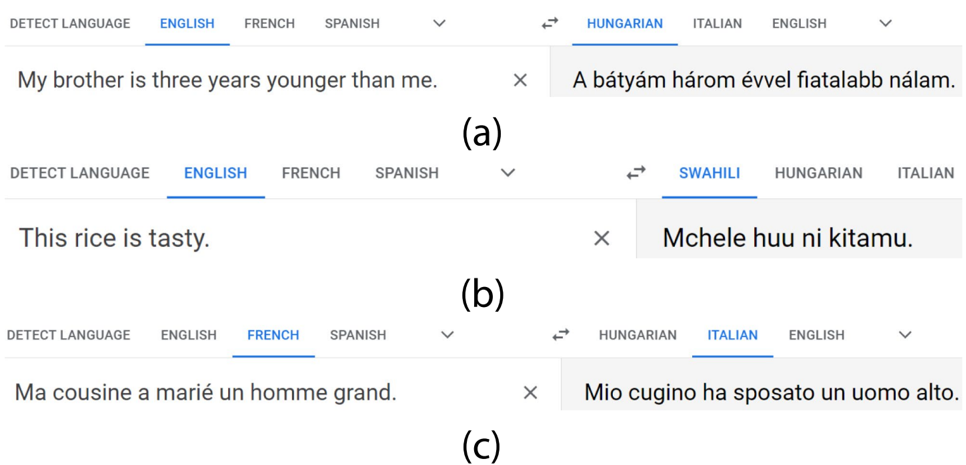
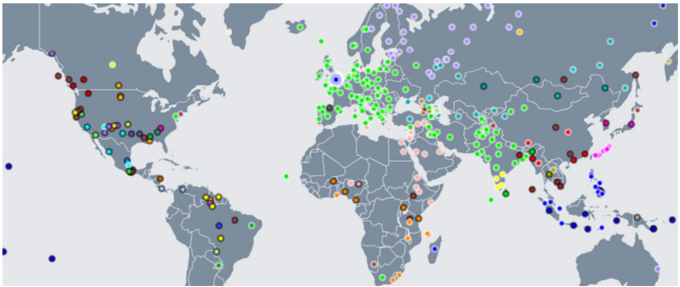
Verification
Claims the paper makes
The claims and statistics of this paper haven’t been checked yet.
Free: it reads the open-access text and checks the first 5 claims that cite a source we can check. Create a free account to check every claim.
Claims other papers make about this one
Each is checked against this paper’s own text: does it say what the citing paper says it does?
The source backs part of the claim, not all of it — or backs it for a different population, condition or comparison.
In the citing paper
“Value alignment through feedback-guided techniques may lead or contribute to homogenisation in values held, in their hierarchical organisation (i.e. which values are seen as more important and which less), as well as in linguistic expression, most often in favour of what is considered proper and acceptable by the hegemonic social groups typically responsible for the design of LLMs (Helm et al., 20”
From Helpful, harmless, honest? Sociotechnical limits of AI alignment and safety through Reinforcement Learning from Human Feedback (2025) · cites this paper as Helm et al., 2024
Experimental — accuracy not yet measured
Self-check
Percentages, sums and reported differences re-computed from the paper’s own numbers.
The self-check needs the paper’s full text.
Citations
Cites
Situated Knowledges: The Science Question in Feminism and the Privilege of Partial Perspective
Haraway, D. (1988) · Feminist Studies · doi:10.2307/3178066 · Cited by 18,364
WordNet: An Electronic Lexical Database
Kilgarriff, A., & Fellbaum, C. (2000) · Language · doi:10.2307/417141 · Cited by 11,464
Epistemic Injustice: Power and the Ethics of Knowing
Fricker, M. (2007) · doi:10.1093/acprof:oso/9780198237907.001.0001 · Cited by 9,198
On the Dangers of Stochastic Parrots: Can Language Models Be Too Big? 🦜
Bender, E. M., Gebru, T., McMillan-Major, A., & Shmitchell, S. (2021) · Proceedings of the 2021 ACM Conference on Fairness, Accountability, and Transparency · doi:10.1145/3442188.3445922 · Cited by 6,988 · cited 7×
“When it comes to questions of linguistic bias in NLP, Hovy and Prabhumoye (2021) identify five sources of bias: (1) the data,(2) the annotation process, (3) the models, (4) the input representation process and (5) the research design for studying bias.”
InfluentialDis-agreement : politics and philosophy
Rancière, J., & Rose, J. (1998) · Cited by 3,865
Decolonising the Mind: The Politics of Language in African Literature
Kamoche, J. G., & Thiong'o, N. W. (1987) · World Literature Today · doi:10.2307/40143257 · Cited by 3,082 · cited 1×
“The Kenyan writer and scholar Ngugi wa Thiong’o (1986), for example, has done extensive research on the cultural diversity embedded in Kenya’s multilingual heritage.”
Barocas, S., & Selbst, A. D. (2014) · doi:10.2139/ssrn.2477899 · Cited by 3,048 · cited 1×
“In the context of digital technology, the notion of bias has gained much attention and was prominently problematized as it has been identified as one of various sources of automated discrimination (Barocas and Selbst, 2016).”
Justice and the Politics of Difference
Young, I. M. (2020) · The New Social Theory Reader · doi:10.4324/9781003060963-43 · Cited by 2,770
Marxism and the Interpretation of Culture
Thompson, J., Nelson, C., & Grossberg, L. (1989) · South Atlantic Review · doi:10.2307/3200554 · Cited by 2,718
Review of “Race After Technology: Abolitionist Tools for the New Jim Code”
Jipguep-Akhtar, M. (2020) · Social Forces · doi:10.1093/sf/soz162 · Cited by 1,473 · cited 2×
“Ruha Benjamin aptly described this as “cosmetic diversity” (Benjamin, 2019, p. 24).”
Research works printed but not linked: 5
- 6. Batsuren, K., Ganbold, A., Chagnaa, A., Giunchiglia, F. (2019). Build- ing the mongolian wordnet. In: Proceedings of the 10th Global Wordnet Conference (pp.238-244).
- 19. Chandran Nair, N., Velayuthan, R.S., Chandrashekar, Y., Bella, G., Giunchiglia, F. (2022, June). IndoUKC: A concept-centered Indian multilingual lexicalresource. Proceedings of the Thirteenth Language Resources and Evaluation Conference (pp. 2833-2840). Marseille, France: European Language Resources Association. Retrieved from https://aclanthology.org/2022.lrec-1.303
- 24. Engel, J. S. (2016). Global clusters of innovation: Entrepreneurial engines of economic growth around the world (Reprint (edition).
- 42. Khishigsuren, T., Bella, G., Batsuren, K., Freihat, A.A., Nair, N.C., Ganbold, A., Giunchiglia, F. (2022). Using linguistic typology to enrich multilingual lexicons: the case of lexical gaps in kinship. arXiv preprint arXiv: 2204. 05049.
- 51. Ranciere, J. (1998). Disagreement: Politics and philosophy. University of Minnesota Press.
Cited by
Items 201–217 of 217
Alzahrani, A. A., & Ahmad, H. (2026) · IntechOpen eBooks · doi:10.5772/intechopen.1018510
Jaber, A., & Rakedzon, T. (2026) · SSRN Electronic Journal · doi:10.2139/ssrn.7664876
Применение сервисов искусственного интеллекта для поиска научной литературы
Львовна, Д. Е., Ярославович, Д. М., & Печерских, А. А. (2025) · Ойкумена. Регионоведческие исследования
Gong, S., Yang, J., & Duan, Y. (2026) · Applied Sciences · doi:10.3390/app162110534
When AI Helps Too Well: Transformative Inquiry and the Risk of Second-Order Drift in Ethics Research
Titz, I. (2026) · Philosophy & Technology · doi:10.1007/s13347-026-01209-y
Ulla, M. B. (2026) · International Journal of TESOL Studies · doi:10.58304/ijts.261122
Mansouri, R. (2025) · Critical Reflections Journal for Philosophy and Social Sciences · doi:10.65932/cr-2025-2-5
Kawu, A. U., Nwogboji, E. U., & Sunday, I. E. (2026) · IIAR Journal of Artificial Intelligence and Emerging Technologies · doi:10.68854/znqp3982
Nwogboji, E. U., & Kawu, A. U. (2026) · IIAR Journal of Artificial Intelligence and Emerging Technologies · doi:10.68854/wga1x870
Pokharel, S. (2026) · uO Research (University of Ottawa) · doi:10.20381/ruor-32353
Kostadinova, V., & Gardner, M. H. (2026) · Journal of Sociolinguistics · doi:10.1111/josl.70067
Woodworth, J. (2026) · Caribbean Curriculum · doi:10.47161/cc.2025.u0054
Solangi, W. A., & Soomro, S. (2026) · AL-HAYAT Research Journal (AHRJ) · doi:10.5281/zenodo.24114448
Shi, W. (2026) · Frontiers in Education · doi:10.3389/feduc.2026.1918665
DigComp 3.0: Evropski okvir digitalnih kompetenc – peta izdaja
Judith, C., & Cachia, R. (2026) · doi:10.18690/um.fnm.6.2026
On Knowledge in AI: Epistemic and Ethical Limitations of Language Models and Knowledge Graphs
Kraft, A. (2025) · Weizenbaum Library (Weizenbaum Institute)
Future-Ready School Reform: Purposes, Contexts, and Habits of Practice
Ng, F. S. D., Yang, Z., Liu, C. S., & Noorman, N. A. B. (2026) · Springer international handbooks of education · doi:10.1007/978-94-024-2385-3_28-1
Metadata
- Authors
- Helm, P., Bella, G., Koch, G., & Giunchiglia, F.
- Affiliations
- University of Amsterdam (NL)
- Centre National de la Recherche Scientifique (FR)
- Universität Hamburg (DE)
- University of Trento (IT)
- Corresponding author
- Helm, Paula
- Venue
- Ethics and Information Technology
- Published
- 2024-01-27
- Volume
- 26
- Issue
- 1
- Pages
- 8
- ISSN
- 1388-1957 (ISSN-L)
- 1572-8439
- OpenAlex
- W4391282676
- Semantic Scholar
- 5ce8f0e5abcf9e62d73e4b0bda56b2224ea1b712
- Cited by
- 110
- References
- 65
- Citations by year
- 2026: 62 · 2025: 38 · 2024: 8
- FWCI
- 44.61
- Type
- journal article
- Language
- en
- Open access
- hybrid
- doi.org
- Licence
- cc-by
- creativecommons.org/licenses/by/4.0 (tdm)
- creativecommons.org/licenses/by/4.0 (vor)
- Locations
- Ethics and Information Technology (publishedVersion, cc-by)
- HAL (submittedVersion, cc-by)
- UvA-DARE (University of Amsterdam) (submittedVersion, cc-by)
- Funders
- EU (JIDEP)
- Topics
- Physical Sciences › Computer Science › Artificial Intelligence › Ethics and Social Impacts of AI
- Physical Sciences › Computer Science › Artificial Intelligence › Natural Language Processing Techniques
- Social Sciences › Sociology and Political Science › Feminist Epistemology and Gender Studies
- Keywords
- epistemic injustice, language bias, large language models, language technology, linguistic diversity, socio-technical approach, machine translation, multilingual dictionary
About these checks
Registry, retraction, Cites and statistics results are computed, not judged, with one exception: a printed reference that no index lists is read once by a model before it counts as a citation error. Claims are extracted by a model and kept only when their quote appears verbatim in the text; each cited source is then checked, with a model’s help, for whether it says what the claim relies on. Those verdicts can be wrong — read the claim’s quote and the cited source before relying on one.
Statistics and arithmetic are recomputed, not judged.
Confidence bands are shown only for fields calibrated on our annotated test set. None is calibrated yet, so no band is shown.
What counts as a claim ›How we measure confidence ›How we check this ›
Are you an author, or do you see a problem with this page? Request a review
Data sources
Bibliographic data: Semantic Scholar, OpenAlex, Crossref.
Contains information from the Semantic Scholar Academic Graph Datasets, made available under the ODC Attribution License (ODC-BY 1.0).
Semantic Scholar’s data is described in: Kinney, R., et al. (2023). The Semantic Scholar Open Data Platform. arXiv:2301.10140.
