

Advances in the Household Archaeology of Highland Mesoamerica
Open accessThe DOI matches its Crossref record; 291 of the 298 references it cites were found in a registry or an index, and 2 are not checked yet; none of the 340 sources its claims cite is checked for support yet.
Abstract
Recent investigations and reconsideration of households in the Mesoamerican highlands illustrate the central role of domestic spheres of interaction to the broader cultural dynamics of the region over four millennia. Methodological advances in the analysis of past houses permit more sophisticated social reconstructions of the spaces and activities that constituted domestic life for the diverse peoples of the region. Current studies highlight the economic interdependence and diversification of households, their strategic flexibility in affiliation, the integrative ritual practices undertaken within domestic spaces, the material correlates of prestige competition between households, and the manner in which households articulated with a larger social universe.
Checked 2026-11-22 · 2 references not checked yet
Overview
CoChat Summary
TL;DR
Carballo reviews advances in household archaeology of highland Mesoamerica over the past 17 years, arguing that households were central, diversified, interdependent, and strategically flexible social and economic units. The review synthesizes evidence on domestic economies, house societies, ritual, status competition and palaces, and household transformations tied to sedentism, urbanization, and political evolution.
Key findings
- Domestic economies were not self-sufficient: high-intensity household production and intermittent multicrafting were common, as at San José Mogote, Ejutla, El Palmillo, Teotihuacan apartment compounds, and Xochicalco, where five or six production activities were undertaken by members of a single household.
- Household composition and affiliation were strategically flexible, consistent with the house society model; Teotihuacan apartment compounds housed dozens to as many as 200 individuals, Cowgill estimates 2300 apartment compounds with a median architectural footprint of 1830 m², and neighborhoods may have held 1500–2000 people.
- Domestic rituals integrated households and neighborhoods while also marking status differences; El Palmillo yielded 78 domestic offerings in the construction nuclei of seven residences, and Teotihuacan evidence distinguishes Old God effigy vessels tied to household ritual from state-linked composite censers.
- Households competed for status and articulated with larger polities; palace definitions remain debated, but examples include the El Palenque palace at approximately 34 × 25 m, Cantona nonelite patio groups averaging 900 m² (range 306 to more than 2000 m²), and Xochicalco’s 14 urban subdivisions of approximately 200–300 individuals.
Methods
- Narrative review and synthesis of literature published over the past 17 years since the earlier seminal volumes by Flannery (1976), Manzanilla (1986), Wilk and Ashmore (1988), MacEachern et al. (1989), and Santley and Hirth (1993).
- Geographic coverage focuses on Central Mexico and Oaxaca, with select cases from western and northern Mexico; southern Mesoamerica/Classic Maya highlands are excluded because of a recent separate review.
- Draws on archaeological household excavations, ethnography and ethnohistory, and multidisciplinary methods including remote sensing, GIS, floor and soil chemistry, bone chemistry isotopes, horizontal excavation, and piece plotting; no new primary data collection or formal meta-analysis is described.
Limitations
- Stated: coverage is uneven because Central Mexico and Oaxaca receive greater attention due to more fieldwork, southern Mesoamerica is excluded, and only select western and northern Mexican cases are included; the author states that all inaccuracies and omissions are his.
- Stated/evident: major questions remain unresolved, including poorly known early domestic architecture at Teotihuacan and Monte Albán, ongoing debate over palace definitions, and controversial claims such as prehispanic maguey distillation that require more supporting evidence.
- Evident: as a thematic review, the findings depend on cited studies and are not a systematic, exhaustive, or quantitative synthesis with explicit search criteria.
Model-written summary. Check it against the paper before relying on it.
Integrity signals
Registry
Cites
Statistics
Figures
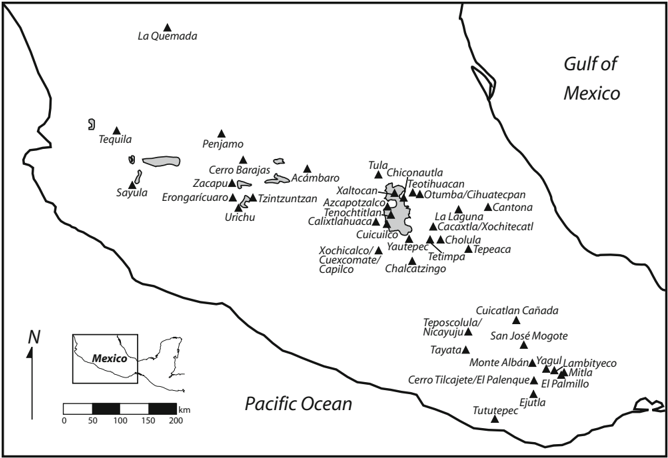
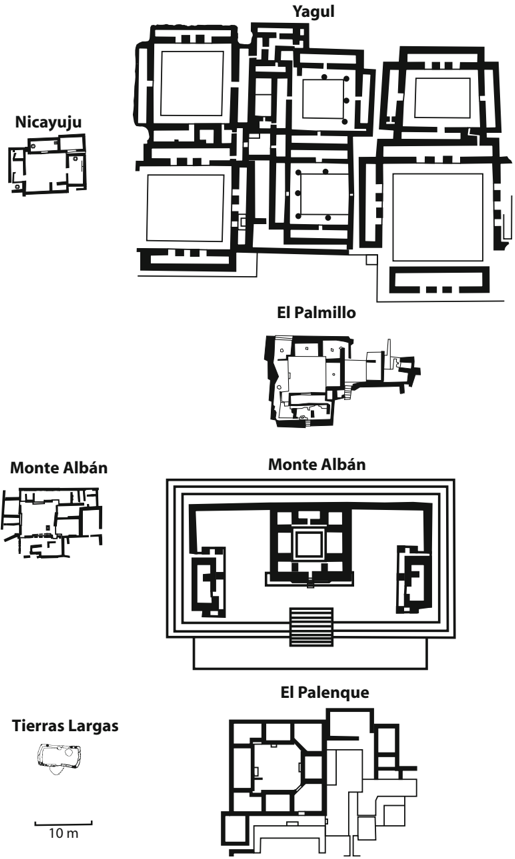
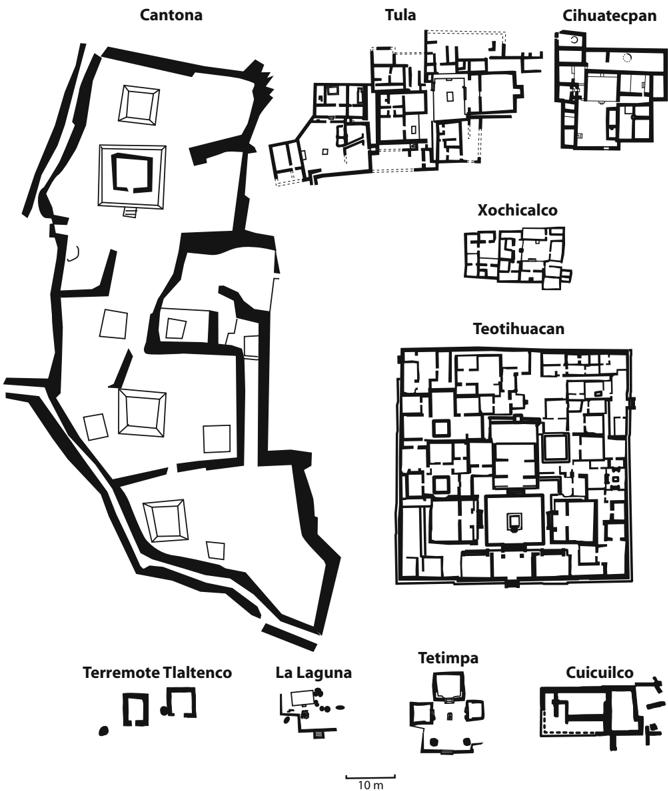
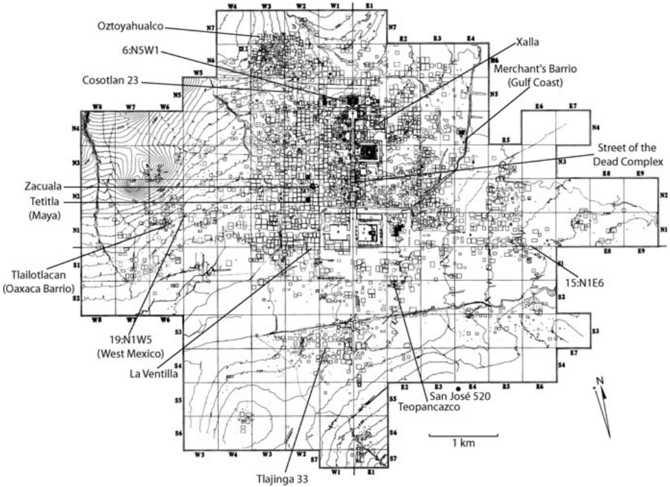
Verification
Claims the paper makes
0 Valid · 10 Not valid · 228 Not checked · 168 Own results and interpretations
In the paper
“Based on deposits from two domestic areas at the Formative site of La Laguna, I argue that knappers in one lower-status household possessed the material and technical competence to make their own fine obsidian bloodletters”
§ Advances in the Household Archaeology of Highland Mesoamerica > General rituals
What the sources say
- Not checked yetcites Carballo 2009 matched to “Household and Status in Formative Central Mexico: Domestic Structures, Assemblages, and Practices at La Laguna, Tlaxcala” (2009) source
plain- Asserted: passes — The authors put it forward as true.
- Checkable: passes — It can be checked against evidence.
- Load-bearing: passes — The paper’s conclusions depend on it.
- Based: passes — The paper gives a reason why it holds.
A conclusion the paper draws from its own results — it cites no other source for it, so there is none to check. The quote shows it is in the paper.
In the paper
“Prehispanic households articulated with their larger social universe through various collective organizations.”
§ Advances in the Household Archaeology of Highland Mesoamerica > Gulf of Mexico
plainstates an association- Asserted: passes — The authors put it forward as true.
- Checkable: passes — It can be checked against evidence.
- Load-bearing: unclear — It is unclear whether the paper’s conclusions depend on it.
- Based: passes — The paper gives a reason why it holds.
None of the sources cited for this claim have been checked yet.
In the paper
“Household arrangements span a broad spectrum of size and composition, from nuclear families to remarkably large multifamily residences (compare Coupland and Banning 1996;Manzanilla 1996Manzanilla , 2009;;McCaa 2003).”
§ Advances in the Household Archaeology of Highland Mesoamerica > Introduction
What the sources say
- Not checked yetcites Coupland and Banning 1996
- Not matchedcites Manzanilla 1996, 2009
A range of references, not one source.
- Not checked yetcites McCaa 2003 matched to “The Nahua calli of ancient Mexico: household, family, and gender” (2003) source
plain- Asserted: passes — The authors put it forward as true.
- Checkable: passes — It can be checked against evidence.
- Load-bearing: unclear — It is unclear whether the paper’s conclusions depend on it.
- Based: passes — The paper gives a reason why it holds.
A conclusion the paper draws from its own results — it cites no other source for it, so there is none to check. The quote shows it is in the paper.
In the paper
“Current studies highlight the economic interdependence and diversification of households, their strategic flexibility in affiliation, the integrative ritual practices undertaken within domestic spaces, the material correlates of prestige competition between households, and the manner in which households articulated with a larger social universe.”
§ Advances in the Household Archaeology of Highland Mesoamerica > Abstract
plain- Asserted: passes — The authors put it forward as true.
- Checkable: passes — It can be checked against evidence.
- Load-bearing: unclear — It is unclear whether the paper’s conclusions depend on it.
- Based: passes — The paper gives a reason why it holds.
A conclusion the paper draws from its own results — it cites no other source for it, so there is none to check. The quote shows it is in the paper.
In the paper
“The significant regional variation in such terms makes it an exercise in futility to attempt any overarching model for the corporate structures of an entire ethnolinguistic group.”
§ Advances in the Household Archaeology of Highland Mesoamerica > Gulf of Mexico
plainstates a cause- Asserted: passes — The authors put it forward as true.
- Checkable: unclear — It is unclear whether it could be checked against evidence.
- Load-bearing: unclear — It is unclear whether the paper’s conclusions depend on it.
- Based: passes — The paper gives a reason why it holds.
181 more claims
Create a free account to see all 406 claims and to verify the 148 references still open.
- It may state two separate claims as one. 145
- Probably not a substantial claim. 115
- The quote only partly states this claim. 1
Citations
Cites
The division of labor in society
Durkheim, É. (1935) · Columbia Law Review · doi:10.4324/9780429499838-5 · Cited by 5,156
Ritual Theory, Ritual Practice
Spickard, J. V., & Bell, C. (1993) · Sociology of Religion · doi:10.2307/3711731 · Cited by 3,357
Ritual: Perspectives and Dimensions
Bird, F., & Bell, C. (1999) · Journal for the Scientific Study of Religion · doi:10.2307/1387617 · Cited by 1,361
Ritual: Perspectives and Dimensions
Bell, C. (1997) · doi:10.1093/oso/9780195110517.001.0001 · Cited by 1,247
A Dual-Processual Theory for the Evolution of Mesoamerican Civilization
Blanton, R. E., Feinman, G. M., Kowalewski, S. A., & Peregrine, P. N. (1996) · Current Anthropology · doi:10.1086/204471 · Cited by 1,006
Francaviglia, R. V., & Rapoport, A. (1969) · Geographical Review · doi:10.2307/213875 · Cited by 849
Archaeological method and theory
(1990) · Choice Reviews Online · doi:10.5860/choice.27-3357 · Cited by 780
About the House: Lévi-Strauss and Beyond
(1995) · Cambridge University Press eBooks · doi:10.1017/cbo9780511607653 · Cited by 716
Collective Action in the Formation of Pre-Modern States
Blanton, R., & Fargher, L. (2008) · Fundamental Issues in Archaeology · doi:10.1007/978-0-387-73877-2 · Cited by 499
Gerhard, P., & Lockhart, J. (1993) · Hispanic American Historical Review · doi:10.1215/00182168-73.4.697 · Cited by 475
Research works printed but not linked: 139
- Aguirre, Z. (2000). Estudios quı ´micos y paleoetnobota ´nicos en unidades dome ´sticas arqueolo ´gicas del sitio de Tetimpa, Puebla. Unpublished Master's thesis, Department of Anthropology, Universidad de las Ame ´ricas-Puebla, Cholula.
- Aguirre, Z., and Quintana, N. (1998). Ana ´lisis quı ´mico de cationes de un espacio dome ´stico arqueolo ´gico de la regio ´n de Tetimpa, Puebla. In Brambila, R. (ed.), Antropologı´a e historia del occidente de Me´xico: XXIV Mesa Redonda, Vol. III, Sociedad Mexicana de Antropologı ´a and Universidad Nacional Auto ´noma de Me ´xico, Mexico City, pp. 1799-1820.
- Alca ´ntara Gallegos, A. (2004). Los barrios de Tenochtitlan: topografı ´a, organizacio ´n interna y tipologı ´a de sus predios. In Escalante Gonzalbo, P. (ed.), Historia de la vida cotidiana en Me´xico, Tomo I, Mesoame´rica y los a´mbitos indı´genas de la Nueva Espan˜a, El Colegio de Me ´xico, Fondo de Cultura Econo ´mica, Mexico City, pp. 167-198.
- A ´lvarez Dı ´az, D. (2009). Vida cotidiana en un sector dome ´stico del Cerro Barajas, Guanajuato: Estudios multidisciplinarios en un asentamiento Epicla ´sico. Unpublished Licenciatura thesis, Departamento de Antropologı ´a, Universidad de las Ame ´ricas, Puebla.
- Barba, L. (1990). El ana ´lisis quı ´mico de pisos de unidades habitacionales para determinar sus a ´reas de actividad. In Sugiura, Y., and Serra Puche, M. C. (eds.), Etnoarqueologı´a: Primer Coloquio Bosch- Gimpera, Instituto de Investigaciones Antropolo ´gicas, Universidad Nacional Auto ´noma de Me ´xico, Mexico City, pp.177-200.
- Barba, L. (1994). A methodology for the study of buried archaeological sites. In Scott, D. A., and Meyers, P. (eds.), Archaeometry for Pre-Columbian Sites and Artifacts: Proceedings of a Symposium, Institute of Archaeology, University of California, Los Angeles, pp. 353-366.
- Barba, L. (2003). The geophysical study of buried archaeological remains and the preservation of the architectural patrimony of Mexico City. In The CIPA International Archives for Documentation of Cultural Heritage, vol XIX, The ICOMOS and ISPRS Committee for Documentation of Cultural Heritage, Paris, pp. 401-406.
- Barba, L., and Bello, G. (1978). Ana ´lisis de fosfato en el piso de una casa habitacio ´n actual. Notas Antropolo´gicas 24: 188-193.
- Barba, L., and Lazos, L. (2000). Chemical analysis of floors for the identification of activity areas: A review. Antropologı´a y Te´cnica 6: 59-70.
- Barba, L., and Manzanilla, L. (1988). Superficie/excavacio ´n: un ensayo de prediccio ´n de rasgos arqueolo ´gicos en Oztoyahualco, valle de Teotihuacan. Antropolo´gicas 1: 19-46.
- Barba, L., Ludlow, B., Manzanilla, L., and Valadez, R. (1987). La vida dome ´stica en Teotihuacan: un estudio interdisciplinario. Ciencia y Desarrollo 13: 21-32.
- Barba, L., Garcı ´a, R., Mejı ´a, E., and Martı ´nez, M. (1999). Determinacio ´n de a ´reas de actividad en una unidad habitacional del Cla ´sico en Azcapotzalco, D.F. Anales de Antropologı´a 33: 69-89.
- Bonafil Olivera, A. (2005). Cultura y contexto: el comportamiento de un sitio del Epicla ´sico en la regio ´n de Tula. In Manzanilla, L. (ed.), Reacomodos demogra´ficos del Cla´sico al Poscla´sico en el centro de Me´xico, Universidad Nacional Auto ´noma de Me ´xico, Mexico City, pp. 227-259.
- Brumfiel, E. M. (ed.) (2005). Production and Power at Postclassic Xaltocan, University of Pittsburgh, Pittsburgh, and Instituto Nacional de Antropologı ´a e Historia, Mexico.
- Brumfiel, E. M., and Earle, T. (1987). Specialization, exchange, and complex societies: An introduction. In Brumfiel, E. M., and Earle, T. (eds), Production, Exchange, and Complex Societies, Cambridge University Press, Cambridge, pp. 1-9.
- Cabrera Castro, R. (1987). Tzintzuntzan: de ´cima temporada de excavaciones. In Serra Puche, M. C. (ed.), Homenaje a Roma´n Pin˜a Chan, Serie Antropolo ´gica 79, Instituto de Investigaciones Antropolo ´g- icas, Universidad Nacional Auto ´noma de Me ´xico, Mexico City, pp. 531-565.
- Cabrera Castro, R. (1996). Las excavaciones en La Ventilla: un barrio teotihuacano. Revista Mexicana de Estudios Antropolo´gicos XLII: 5-30.
- Cabrera Castro, R. (1998). El urbanismo y la arquitectura en La Ventilla: un barrio en la ciudad de Teotihuacan. In Brambila, R. (ed.), Antropologı´a e historia del occidente de Me´xico, XXIV Mesa Redonda de la Sociedad Mexicana de Antropologı ´a, Mexico, pp. 1523-1547.
- Cabrera Castro, R., and Go ´mez Cha ´vez, S. (2008). La Ventilla: A model for a barrio in the urban structure of Teotihuacan. In Mastache, A. G., Cobean, R. H., Garcı ´a Cook, A ´., and Hirth, K. G. (eds.), Urbanism in Mesoamerica, Vol. II, Instituto Nacional de Antropologı ´a e Historia, Mexico, and Pennsylvania State University, University Park, pp. 37-84.
- Calnek, E. E. (2003). Tenochtitlan-Tlatelolco: The natural history of a city. In Sanders, W. T., Mastache, A. G., and Cobean, R. H. (eds.), Urbanism in Mesoamerica, Vol. I, Instituto Nacional de Antropologı ´a e Historia, Mexico, and Pennsylvania State University, University Park, pp. 149-202.
- Carrasco, P. (1976). Estratificacio ´n social indı ´gena en Morelos durante el siglo XVI. In Carrasco, P., and Broda, J. (eds.), Estratificacio´n social en la Mesoame´rica prehispa´nica, Centro de Investigaciones Superiores, Instituto Nacional de Antropologı ´a e Historia, Mexico, pp. 102-117.
- Castanzo, R. A., and Anderson, J. H. (2004). Formative period lime kilns in Puebla, Mexico. Mexicon 26: 86-90.
- Charlton, T. H., Otis Charlton, C., and Sanders, W. T. (2002). Influencias urbanas dentro de comunidades rurales: Teotihuacan y sus dependencias cercanas 100 a.C. -650 d.C. In Ruiz Gallut, M. E. (ed.), Ideologı´a y polı´tica a trave´s de materiales, ima´genes y sı´mbolos: Memoria de la primera mesa redonda de Teotihuacan, Instituto Nacional de Antropologı ´a e Historia, Mexico, pp. 487-499.
- Cobean, R. H., and Mastache, A. G. (eds.) (1999). Tepetitlan: un espacio dome´stico rural en al a´rea de Tula, Instituto Nacional de Antropologı ´a e Historia, Mexico, and University of Pittsburgh, Pittsburgh.
- Cowgill, G. L. (2002). Contextos dome ´sticos en Teotihuacan. In Ruiz Gallut, M. E. (ed.), Ideologı´a y polı´tica a trave´s de materiales, ima´genes y sı´mbolos: Memoria de la Primera Mesa Redonda de Teotihuacan, Instituto Nacional de Antropologı ´a e Historia, Mexico, pp. 61-74.
- Cowgill, G. L. (2008). Teotihuacan as an urban place. In Mastache, A. G., Cobean, R. H., Garcı ´a Cook, A ´., and Hirth, K. G. (eds.), Urbanism in Mesoamerica, Vol. II, Instituto Nacional de Antropologı ´a e Historia, Mexico, and Pennsylvania State University, University Park, pp. 85-112.
- Hirth, K. G. (ed.), Housework: Specialization, Risk, and Domestic Craft Production in Mesoamerica, Archeological Papers No. 19, American Anthropological Association, Washington, DC, pp. 45-57.
- ´az, C. L. (1981). Chingu ´y la expansio ´n teotihuacana. In Rattray, E. C., Litvak King, J., and Oyarzabal, C. D. (eds.), Interaccio´n cultural en Me´xico central, Universidad Nacional Auto ´noma de Me ´xico, Mexico City, pp. 107-112.
- Driessen, J., Schoep, I., and Laffineur, R. (eds.) (2002). Monuments of Minos: Rethinking the Minoan Palaces, Aegaeum 23, Universite ´de Lie `ge, Lie `ge.
- Escalante Gonzalbo, P. (2004). La casa, el cuerpo y las emociones. In Escalante Gonzalbo, P. (ed.), Historia de la vida cotidiana en Me´xico, Tomo I, Mesoame´rica y los a´mbitos indı´genas de la Nueva Espan˜a, El Colegio de Me ´xico, Fondo de Cultura Econo ´mica, Mexico City, pp. 231-259.
- MacEachern, S., Archer, D. J., and Garvin, R. D. (eds.), Households and Communities: Proceedings of the Twenty-first Annual Conference of the Archaeological Association of the University of Calgary, Archaeological Association, University of Calgary, Calgary, pp. 430-440.
- Evans, S. T. (1993). Aztec household organization and village administration. In Santley, R. S., and Hirth, K. G. (eds.), Prehispanic Domestic Units in Western Mesoamerica, CRC Press, Boca Raton, FL, pp. 173-189.
- Evans, S. T. (2001). Aztec noble courts: Men, women, and children of the palace. In Inomata, T., and Houston, S. (eds.), Maya Royal Courts, Westview Press, Boulder, CO, 237-273.
- Evans, S. T., and Pillsbury, J. (eds.) (2004). Palaces of the Ancient New World, Dumbarton Oaks, Washington, DC.
- Evans, S. T. (2004). Aztec palaces and other elite residential architecture. In Evans, S. T., and Pillsbury, J. (eds.), Palaces of the Ancient New World, Dumbarton Oaks, Washington, DC, pp. 7-58.
- Feinman, G. M. (1999). Rethinking our assumptions: Economic specialization at the household scale in ancient Ejutla, Oaxaca, Mexico. In
- Feinman, G. M., and Nicholas L. M. (2007a). Craft production in Classic period Oaxaca: Implications for Monte Alba ´n's political economy. In Shimada, I. (ed.), Craft Production in Complex Societies: Multicraft and Producer Perspectives, University of Utah Press, Salt Lake City, pp. 97-119.
- Feinman, G. M., Nicholas L. M., and Middleton, W. D. (2001). Domestic life at Classic period hilltop terrace sites: Perspectives from El Palmillo, Oaxaca. Mexicon 23: 42-48.
- Flannery, K. V., and Winter, M. C. (1976). Analyzing household activities. In Flannery, K. V. (ed.), The Early Mesoamerican Village, Academic Press, New York, pp. 34-47.
- Flannery, K. V. (1998). The ground plans of archaic states. In Feinman, G. M., and Marcus, J. (eds.), Archaic States, School of American Research Press, Santa Fe, NM, pp. 15-57.
- Flannery, K. V. (2003[1983]a). The legacy of the early urban period: An ethnohistoric approach to Monte Alba ´n's temples, residences, and royal tombs. In Flannery, K. V., and Marcus, J. (eds.), The Cloud People: Divergent Evolution of the Zapotec and Mixtec Civilizations, Percheron Press, Clinton Corners, NY, pp. 132-136.
- Major Monte Alba ´n V sites: Zaachila, Xoxocotla ´n, Cuilapan, Yagul, and Abasolo. In Flannery, K. V., and Marcus, J. (eds.), The Cloud People: Divergent Evolution of the Zapotec and Mixtec Civilizations, Percheron Press, Clinton Corners, NY, pp. 290-295.
- Fournier Garcı ´a, P. (2007). Los Hn˜a¨hn˜u¨del valle del Mezquital: maguey, pulque y alfarerı´a, Escuela Nacional de Antropologı ´a y Historia and Instituto Nacional de Antropologı ´a y Historia, Mexico.
- Garcı ´a Cook, A ´. (2003). Cantona: la ciudad. In Sanders, W. T., Mastache, A. G., and Cobean, R. H. (eds.), Urbanism in Mesoamerica, Vol. I, Instituto Nacional de Antropologı ´a e Historia, Mexico, and Pennsylvania State University, University Park, pp. 312-343.
- Go ´mez Cha ´vez, S. (2000). La Ventilla, un barrio de la antigua ciudad de Teotihuacan. exploraciones y resultados. Unpublished Licenciatura thesis, Departamento de Antropologı ´a, Escuela Nacional de Antropologı ´a e Historia, Mexico.
- Go ´mez Cha ´vez, S. (2002). Presencia del occidente de Me ´xico en Teotihuacan: aproximaciones a la polı ´tica exterior del Estado teotihuacano. In Ruiz Gallut, M. E., and Soto, A. P. (eds.), Ideologı´a y polı´tica a trave´s de materiales, ima´genes y sı´mbolos: Memoria de la Primera Mesa Redonda de Teotihuacan, Instituto Nacional de Antropologı ´a e Historia, Mexico, pp. 563-626.
- ´mez Cha ´vez, S., and Gazzola, J. (2007). Ana ´lisis de las relaciones entre Teotihuaca ´n y el occidente de Me ´xico. In Fauge `re, B. (ed.), Dina´micas culturales entre el occidente, el centro-norte y la cuenca de Me´xico, del Precla´sico al Epicla´sico, Colegio de Michoaca ´n and Centre Franc ¸ais D'E ´tudes Mexicaines et Centrame ´ricaines, La Piedad, pp. 113-137.
- In Evans, S. T., and Pillsbury, J. (eds.), Palaces of the Ancient New World, Dumbarton Oaks, Washington, DC, pp. 83-111.
- Gonza ´lez Lico ´n, E. (2009). Ritual and social stratification at Monte Alba ´n, Oaxaca: Strategies from a household perspective. In Manzanilla, L. R., and Chapdelaine, C. (eds.), Domestic Life in Prehispanic Capitals: A Study of Specialization, Hierarchy, and Ethnicity, Museum of Anthropol- ogy, University of Michigan, Ann Arbor, pp. 720.
- Harvey, H. R. (1986). Household and family structure in early colonial Tepetlaoztoc: An analysis of the Co ´dice de Sant Marı ´a Asuncio ´n. Estudios de Cultural Na´huatl 18: 275-294.
- Hirth, K. G. (1993b). Identifying rank and socioeconomic status in domestic contexts: An example from central Mexico. In Santley, R. S., and Hirth, K. G. (eds.), Prehispanic Domestic Units in Western Mesoamerica: Studies of the Household, Compound, and Residence, CRC Press, Boca Raton, FL, pp. 121-146.
- Healan, D. M. (2009). Household, neighborhood, and urban structure in an ''adobe city'': Tula, Hidalgo, Mexico. In Manzanilla, L. R., and Chapdelaine, C. (eds.), Domestic Life in Prehispanic Capitals: A Study of Specialization, Hierarchy, and Ethnicity, Museum of Anthropology, University of Michigan, Ann Arbor, pp. 67-88.
- Hirth, K. G. (1975). Estudio de fosfatos en el contexto de arqueologı ´a. Vı´nculos 1: 99-102.
- Hirth, K. G. (1993a). The household as an analytical unit: Problems in method and theory. In Santley, R. S., and Hirth, K. G. (eds.), Prehispanic Domestic Units in Western Mesoamerica: Studies of the Household, Compound, and Residence, CRC Press, Boca Raton, FL, pp. 21-36.
- Healan, D. M. (1993). Urbanism at Tula from the perspective of residential archaeology. In Santley, R. S., and Hirth, K. G. (eds.), Prehispanic Domestic Units in Western Mesoamerica: Studies of the Household, Compound, and Residence, CRC Press, Boca Raton, FL, pp. 105-119.
- Hirth, K. G. (1998b). La identificacio ´n de mercados en contextos arqueolo ´gicos: una perspectiva sobre el consumo dome ´stico. In Rattray, E. C. (ed.), Rutas de intercambio en Mesoame´rica: III Coloquio Pedro Bosch Gimpera, Universidad Nacional Auto ´noma de Me ´xico, Mexico City, pp. 41-54.
- Hirth, K. G. (2003). Urban structure at Xochicalco, Mexico. In Sanders, W. T., Mastache, A. G., and Cobean, R. H. (eds.), Urbanism in Mesoamerica, Vol. I, Instituto Nacional de Antropologı ´a e Historia, Mexico, and Pennsylvania State University, University Park, pp. 257-309.
- Hirth, K. G. (ed.) (2006). Obsidian Craft Production in Ancient Central Mexico, University of Utah Press, Salt Lake City.
- Hirth, K. G. (2009a). Household, workshop, guild, and barrio: The organization of obsidian craft production in a prehispanic urban center. In Manzanilla, L. R., and Chapdelaine, C. (eds.), Domestic Life in Prehispanic Capitals: A Study of Specialization, Hierarchy, and Ethnicity, Museum of Anthropology, University of Michigan, Ann Arbor, pp. 43-66.
- Hruby, Z. X., and Flad, R. K. (eds.) (2007). Rethinking Craft Specialization in Complex Societies: Archaeological Analyses of the Social Meaning of Production, Archeological Papers No. 17, American Anthropological Association, Washington, DC.
- Lazcano Arce, J. C. (2007). Explotacio ´n de recursos en el sitio Natavitas, durante los periodos Formativo y Epicla ´sico. In Memoria del Primer Coloquio Internacional sobre Cacaxtla a sus XXX An˜os de Investigacio´n, Centro Regional INAH, Tlaxcala, Mexico.
- Le ´vi-Strauss, C. (1982). The Way of the Masks (trans. S. Modelski), University of Washington Press, Seattle.
- R. Willis), Blackwell, Oxford.
- Levine, M. N. (2007). Linking Household and Polity at Late Postclassic Period Yucu Dzaa (Tututepec), a Mixtec Capital on the Coast of Oaxaca, Mexico, Ph.D. dissertation, Department of Anthropology, University of Colorado, Boulder.
- Litvak, J., Barba, L., and Schmidt, P. (1990). A mobile laboratory for surface archaeology. Journal of Field Archaeology 17: 373-378.
- Lo ´pez Corral, A. (2000). Dos mil an ˜os de tradicio ´n agrı ´cola: tecnologı ´a y organizacio ´n social durante el Formativo Terminal en Tetimpa, Puebla. Unpublished Licenciatura thesis, Departamento de Antropologı ´a, Universidad de las Ame ´ricas, Puebla.
- Lo ´pez Corral, A. (2006). Productividad agrı ´cola y explotacio ´n de recursos naturales durante el Formativo en Tetimpa, Puebla. Unpublished masters thesis, Departamento de Antropologı ´a, Universidad de las Ame ´ricas, Puebla.
- Lo ´pez Luja ´n, L., and Manzanilla, L. (2001). Excavaciones en un palacio de Teotihuacan: Proyecto Xalla. Arqueologı´a Mexicana 50: 14-15.
- Manzanilla, L. (1985). El sitio de Cuanalan en el marco de las cominidades pre-urbanas del Valle de Teotihuacan. In Monjara ´s-Ruiz, J., Brambila, R., and Pe ´rez Rocha, E. (eds.), Mesoame´rica y el centro de Me´xico, Instituto Nacional de Antropologı ´a e Historia, Mexico, pp. 133-178.
- Manzanilla, L. (ed.) (1986). Unidades habitacionales mesoamericanas y sus a´reas de actividad, Universidad Nacional Auto ´noma de Me ´xico, Mexico City.
- Manzanilla, L. (2002b). Organizacio ´n sociopolı ´tica de Teotihuacan: lo que los materiales arqueolo ´gicos nos dicen o nos callan. In Ruiz Gallut, M. E. (ed.), Ideologı´a y polı´tica a trave´s de materiales, ima´genes y sı´mbolos: Memoria de la Primera Mesa Redonda de Teotihuacan, Instituto Nacional de Antropologı ´a e Historia, Mexico, pp. 3-21.
- Manzanilla, L. (2003). The abandonment of Teotihuacan. In Inomata, T., and Webb, R. W. (eds.), The Archaeology of Settlement Abandonment in Middle America, University of Utah Press, Salt Lake City, pp. 91-101.
- Manzanilla, L. (2007a). La unidad dome ´stica y las unidades de produccio ´n: propuesta interdisciplinaria de estudio. La Memoria 2007, El Colegio Nacional, Mexico City, pp. 415-451.
- Manzanilla, L. (2007b). Las 'casas' nobles de los barrios de Teotihuacan: estructuras exclusionistas en un entorno corporativo. La Memoria 2007, El Colegio Nacional, Mexico City, pp. 453-470.
- Manzanilla, L., and Barba, L. (1994). La arqueologı´a: una visio´n cientı´fica del pasado del hombre, Fondo de Cultura Econo ´mica, Mexico City.
- Manzanilla, L. (2009). Corporate life in apartment and barrio compounds at Teotihuacan, central Mexico: Craft specialization, hierarchy, and ethnicity. In Manzanilla, L. R., and Chapdelaine, C. (eds.), Domestic Life in Prehispanic Capitals: A Study of Specialization, Hierarchy, and Ethnicity, Museum of Anthropology, University of Michigan, Ann Arbor, pp. 21-42.
- Manzanilla, L., and Lo ´pez Luja ´n, L. (2001). Exploraciones en un posible palacio de Teotihuacan: El Proyecto Xalla (2000-2001). Tezontle, Boletı´n del Centro de Estudios Teotihuacanos 5: 4-6.
- Manzanilla, L., and Serrano, C. (eds.) (1999). Pra´cticas funerarias en la ciudad de los dioses: los enterramientos humanos de la antigua Teotihuacan, Instituto de Investigaciones Antropolo ´gicas, Universidad Nacional Auto ´noma de Me ´xico, Mexico City.
- Marcus, J. (2008). Monte Alba´n, El Colegio de Me ´xico and Fideicomiso Historia de las Ame ´ricas, Mexico.
- Mastache, A. G., and Cobean, R. H. (2003). Urbanism at Tula. In Sanders, W. T., Mastache, A. G., and Cobean, R. H. (eds.), Urbanism in Mesoamerica, Vol. I, Instituto Nacional de Antropologı ´a e Historia, Mexico, and Pennsylvania State University, University Park, pp. 217-255.
- Mastache, A. G., and Cobean, R. H. (2006). El recinto sagrado de Tula. In Lo ´pez Luja ´n, L., Carrasco, D., and Cue ´, L (eds.), Arqueologı´a e historia del centro de Me´xico: homenaje a Eduardo Matos Moctezuma, Instituto Nacional de Antropologı ´a e Historia, Mexico, pp. 203-216.
- Mastache, A.G., Cobean, R. H., and Healan, D. M. (eds.) (2002). Ancient Tollan: Tula and the Toltec Heartland, University Press of Colorado, Boulder.
- Mejı ´a Pe ´rez Campos, E., and Barba, L. (1991). Estudio de a ´reas de actividad por medios quı ´micos en Ranas y Toluquilla, Quere ´taro. In Crespo, A. M., and Brambila, R. (eds.), Quere´taro prehispa´nico, Instituto Nacional de Antropologı ´a e Historia, Mexico, pp. 225-252.
- Mock, S. B. (ed.) (1998). The Sowing and the Dawning: Termination, Dedication, and Transformation in the Archaeological and Ethnographic Record of Mesoamerica, University of New Mexico Press, Albuquerque.
- Mu ´nera Bermu ´dez, L. C. (1985). Un taller de cera ´mica ritual en la Ciudadela, Teotihuacan. Unpublished Licenciatura thesis, Departamento de Antropologı ´a, Escuela Nacional de Antropologı ´a e Historia, Mexico.
- Nelson, B. A. (2004). Elite residences in west Mexico. In Evans, S. T., and Pillsbury, J. (eds.), Palaces of the Ancient New World, Dumbarton Oaks, Washington, DC, pp. 59-81.
- Niederberger, C. (1987). Paleopaysages et archaeologie pre-urbaine du bassin de Me´xico (Mexique), Vols. 1 and 2, Centre d'Etudes Me ´soame ´ricaines et Centramericaines, Mexico.
- Ortiz Butro ´n, A., and Barba, L. (1993). La quı ´mica en el estudio de a ´reas de actividad. In Manzanilla, L. (ed.), Anatomı´a de un conjunto residencial teotihuacano en Oztoyahualco, Vol. II, Instituto de Investigaciones Antropolo ´gicas, Universidad Nacional Auto ´noma de Me ´xico, Mexico City, pp. 617-660.
- Paredes Gudin ˜o, B. L. (1990). Unidades habitacionales en Tula, Hidalgo, Coleccio ´n Cientı ´fica No. 210, Instituto Nacional de Antropologı ´a e Historia, Mexico.
- Paredes Gudin ˜o, B. (2005). Ana ´lisis de flujos migratorios y comparacio ´n multie ´tnica de la poblacio ´n de Tula, Hgo. In Manzanilla, L. (ed.), Reacomodos demogra´ficos del Cla´sico al Poscla´sico en el centro de Me´xico, Instituto de Investigaciones Antropolo ´gicas, Universidad Nacional Auto ´noma de Me ´xico, Mexico City, pp. 203-225.
- Paredes Gudiño, B. (2005). Análisis de flujos migratorios y comparación multiétnica de la población de Tula, Hgo. In Manzanilla, L. (ed.), Reacomodos demográficos del Clásico al Posclásico en el centro de México, Instituto de Investigaciones Antropológicas, Universidad Nacional Autónoma de México, Mexico City, pp. 203–225.
- Parsons, J. R. (2006) The aquatic component of Aztec subsistence: Hunters, fishers, and collectors in an urbanized society. In Lo ´pez Luja ´n, L., Carrasco, D., and Cue ´, L. (eds.), Arqueologı´a e historia del centro de Me´xico: homenaje a Eduardo Matos Moctezuma, Instituto Nacional de Antropologı ´a e Historia, Mexico, pp. 241-256.
- Pereira, G., Michelet, D., and Migeon, G. (2007). Cerro Barajas, Guanajuato. Arqueología Mexicana XV(87): 77–82.
- Pe ´rez Negrete, M. (2004). El Cerro de la Estrella: unidades polı ´ticas de la cuenca de Me ´xico, perife ´ricas a Teotihuacan y la transicio ´n al Epicla ´sico. Arqueologı´a 34: 38-61.
- In Plunket, P. (ed.), Domestic Ritual in Ancient Mesoamerica, Cotsen Institute of Archaeology, University of California, Los Angeles, pp. 31-42.
- Plunket, P., and Urun ˜uela, G. (2003). From episodic to permanent abandonment: Responses to volcanic hazards at Tetimpa, Puebla, Mexico. In Inomata, T., and Webb, R. W. (eds.), The Archaeology of Settlement Abandonment in Middle America, University of Utah Press, Salt Lake City, pp. 13-27.
- Pollard, H. P. (2003). Central places and cities in the core of the Tarascan state. In Sanders, W. T., Mastache, A. G., and Cobean, R. H. (eds.), Urbanism in Mesoamerica, Vol. I, Instituto Nacional de Antropologı ´a e Historia, Mexico, and Pennsylvania State University, University Park, pp. 345-390.
- Rattray, E. C. (1993). The Oaxaca Barrio at Teotihuacan, Universidad de las Ame ´ricas -Puebla, Cholula.
- Rattray, E. C. (2001). Teotihuacan: Ceramics, Chronology and Cultural Trends, University of Pittsburgh, Pittsburgh, and Instituto Nacional de Antropologı ´a e Historia, Mexico.
- Rattray, E. C., (2004). Etnicidad en el Barrio de los Comerciantes, Teotihuacan, y sus relaciones con Veracruz. In Ruiz Gallut, M. E., and Pascual Soto, A. (eds.), La costa del Golfo en tiempos teotihuacanos: propuestas y perspectivas, Instituto Nacional de Antropologı ´a e Historia, Mexico, pp. 493-512.
- Robertson, I. G. (2005). Patrones diacro ´nicos en la constitucio ´n de los vecindarios teotihuacanos. In Ruiz Gallut, M. E., and Torres Peralta, J. (eds.), Arquitectura y urbanismo: pasado y presente de los espacios en Teotihuacan, Instituto Nacional de Antropologı ´a e Historia, Mexico, pp. 277-294.
- Robertson, I. G. (in press). Mapping the Social Landscape of an Early City: Teotihuacan, Mexico, University of Arizona Press, Tucson.
- Robles Garcı ´a, N., and Spores, R. (2008). Teposcolula, Oaxaca. Arqueologı´a Mexicana XV(90): 42-43.
- Santley, R. S. (1989). Residential site structure in the Basin of Mexico during the Formative and Classic periods. In MacEachern, S., Archer, D. J. W., and Garvin, R. D. (eds.), Households and Communities: Proceedings of the Twenty-first Annual Conference of the Archaeological Association of the University of Calgary, University of Calgary Archaeological Association, Calgary, pp. 398-406.
- Smith, M. E. (1993). Houses and the settlement hierarchy in Late Postclassic Morelos: A comparison of archaeology and ethnohistory. In Santley, R. S., and Hirth, K. G. (eds.), Prehispanic Domestic Units in Western Mesoamerica: Studies of the Household, Compound, and Residence, CRC Press, Boca Raton, FL, pp. 191-206.
- Serra Puche, M. C. (1986). Unidades habitacionales del Formativo en la cuenca de Me ´xico. In Manzanilla, L. (ed.), Unidades habitacionales mesoamericanas y sus a´reas de actividad, Universidad Nacional Auto ´noma de Me ´xico, Mexico City, pp. 161-192.
- Serra Puche, M. C. (1988). Los recursos lacustres de la cuenca de Me´xico durante el Formativo, Universidad Nacional Auto ´noma de Me ´xico, Mexico City.
- Serra Puche, M. C., and Lazcano Arce, J. C. (2005). El Epicla ´sico en el valle Puebla-Tlaxcala y los sitios de Cacaxtla-Xochite ´catl-Natavitas. In Manzanilla, L. (ed)., Reacomodos demogra´ficos del Cla´sico al Poscla´sico en el centro de Me´xico, Instituto de Investigaciones Antropolo ´gicas, Universidad Nacional Auto ´noma de Me ´xico, Mexico City, pp. 287-301.
- Serra Puche, M. C., and Lazcano Arce, J. C. (2006). Produccio ´n y especializacio ´n en Cacaxtla- Xochite ´catl-Natavitas durante los periodos Formativo y Epicla ´sico. In Fournier, P., Wiesheu, W., and Charlton, T. H. (eds.), Arqueologı´a y complejidad social, special issue of Cuicuilco 13(36): 69-86.
- Serra Puche, M. C., and Lazcano Arce, J. C. (2008). Urban configuration at Cacaxtla-Xochitecatl. In Mastache, A. G., Cobean, R. H., Garcı ´a Cook, A ´., and Hirth, K. G. (eds.), Urbanism in Mesoamerica, Vol. II, Instituto Nacional de Antropologı ´a e Historia, Mexico, and Pennsylvania State University, University Park, pp. 133-164.
- Serra Puche, M. C., Lazcano Arce, J. C., and Herna ´ndez Herna ´ndez, J. S. (2000). Hornos para la produccio ´n de mezcal en un sitio del Formativo de Tlaxcala? Arqueologı´a 24: 149-157.
- Serra Puche, M. C., Lazcano Arce, J. C., and de la Torre Mendoza, M. (2004). Explotacio ´n prehispa ´nica de recursos en el sur del valle de Tlaxcala: una perspectiva de ge ´nero. In Alberti Manzanares, P. (ed.), Ge´nero, ritual y desarrollo sostenido en comunidades rurales de Tlaxcala, Plaza y Valde ´s, Mexico, pp. 199-226.
- Sheehy, J. J. (1996). Ethnographic analogy and the royal household in 8th century Copan. In Mastache, A. G., Parsons, J., Santley, R., and Serra Puche, M. C. (eds.), Arqueologı´a mesoamericana: homenaje a William T. Sanders Vol. 2, Instituto Nacional de Antropologı ´a e Historia, Mexico, pp. 253-276.
- Smith, M. E. (1992). Archaeological Research at Aztec Period Rural Sites in Morelos, Mexico, Vol. 1, Memoirs No. 4, Latin American Archaeology, University of Pittsburgh, Pittsburgh.
- Santley, R. S., (1993). Late Formative period society at Loma Torremote: A consideration of the redistribution vs. the great provider models as a basis for the emergence of complexity in the Basin of Mexico. In Santley, R. S., and Hirth, K. G. (eds.), Prehispanic Domestic Units in Western Mesoamerica: Studies of the Household, Compound, and Residence, CRC Press, Boca Raton, FL, pp. 67-86.
- Smith, M. E. (2004b). Los hogares de Morelos en el sistema mundial mesoamericano postcla ´sico. Relaciones (El Colegio de Michoaca ´n) 25(99): 79-113.
- Smith, M. E. (2005). Aztec-style ceramic figurines from Yautepec, Morelos. Mexicon 27: 45-55.
- Spence, M. W., White, C. D., Longstaffe, F. J., Rattray, E. C., and Law, K. R. (2004). Un ana ´lisis de las proporciones de los iso ´topos del oxı ´geno en los entierros del Barrio de los Comerciantes. In Ruiz Gallut, M. E., and Pascual Soto, A. (eds.), La costa del Golfo en tiempos teotihuacanos: propuestas y perspectivas, Instituto Nacional de Antropologı ´a e Historia, Mexico, pp. 469-492.
- Spencer, C. S., and Redmond, E. M. (1997). Archaeology of the Can˜ada de Cuicatla´n, Oaxaca, Anthropological Papers No. 80, American Museum of Natural History, New York.
- Spencer, C. S., and Redmond, E. M. (2005). Institutional development in Late Formative Oaxaca: The view from San Martı ´n Tilcajete. In Powis, T. G. (ed.), New Perspectives on Formative Mesoamerican Cultures, BAR International Series No. 1377, British Archaeological Reports, Oxford, pp. 171-182.
- Flannery, K. V., and Marcus, J. (eds.), The Cloud People: Divergent Evolution of the Zapotec and Mixtec Civilizations, Percheron Press, Clinton Corners, NY, pp. 339-342.
- Sullivan, K. S. (2007). Commercialization in Early State Economies: Craft Production and Market Exchange in Classic period Teotihuacan, Ph.D. dissertation, School of Human Evolution and Social Change, Arizona State University, Tempe.
- Urun ˜uela, G., and Plunket, P. (2001). ''De piedra ha de ser la cama…'' Las tumbas en el Formativo de Puebla-Tlaxcala y la Cuenca de Me ´xico, a partir de la evidencia de Tetimpa, Puebla. Arqueologı´a 25: 3-22.
- Vaillant, G. C., and Sanders, W. T. (2000). Excavations at Chiconautla. In Sanders, W. T., and Evans, S. T. (eds.), The Teotihuacan Valley Project Vinal Report, Vol. 5: The Aztec Period Occupation of the Valley, Pt. 2: Excavations at T.A. 40 and Related Projects, Occasional Papers in Anthropology 26, Pennsylvania State University, University Park, pp. 757-787.
- van der Leeuw, S. (1977). Towards a study of the economics of pottery making. In Beek, B. L., Brant, R. W., and van Watteringe, W. G. (eds.), Ex Horreo, Albert Egges van Giffen Instituut voor Prae-en Protohistorie, University of Amsterdam, Amsterdam, pp. 68-76.
- Vega Nova, H. (1996). Proyecto de investigacio ´n arqueolo ´gica en Yautepec, Morelos. In Memoria, III Congreso Interno del Centro INAH Morelos a los xx an˜os de su fundacio´n, Instituto Nacional de Antropologı ´a e Historia, Centro Regional Morelos, Cuernavaca, pp. 149-168.
- Lazcano Arce, J. C. (1998). Exploraciones arqueolo ´gicas en Cacaxtla: Plaza de los Tres Cerritos. In Brambila, R. (ed.), Antropologı´a e historia del occidente de Me´xico, XXIV Mesa Redonda de la Sociedad Mexicana de Antropologı ´a, Mexico, pp. 1733-1749.
- Lo ´pez Wario, L. A. (1993). Ecatepec: hace 2600 an ˜os. In Castillo Mangas, M. T. (ed.), A propo´sito del Formativo, Subdireccio ´n de Salvamento Arqueolo ´gico, Instituto Nacional de Antropologı ´a e Historia, Mexico, pp. 85-92.
- Manzanilla, L. (ed.) (1993). Anatomı´a de un conjunto residencial teotihuacano en Oztoyahualco, Vols. I and II, Instituto de Investigaciones Antropolo ´gicas, Universidad Nacional Auto ´noma de Me ´xico, Mexico City.
- Pollard, H. P. (1996). La transformacio ´n de elites regionales en Michoaca ´n central. In Williams, E., and Weigand, E. (eds.), Las cuencas del occidente de Me´xico: e´poca prehispa´nica, Cologio de Michoaca ´n and Centre d'Etudes Mexicaines et Centre-Americaines, Zamora, Michoaca ´n, Mexico, pp. 131-156.
- Rattray, E. C. (2003). The Teotihuacan-Oaxaca relationship. In Plunket, R. (ed.), Homenaje a John Paddock, Universidad de las Ame ´ricas -Puebla, Cholula, pp. 139-147.
- Serra Puche, M. C. (2005). Xochite ´catl y sus volcanes: pasado y presente. In Vargas Pacheco, E. (ed.), IV Coloquio Pedro Bosh Gimpera: El occidente y centro de Me´xico, Universidad Nacional Auto ´noma de Me ´xico, Mexico City, pp. 331-347.
- Watanabe, J. M. (2007). Ritual economy and the negotiation of autarky and interdependence in a ritual mode of production. In Wells, E. C., and Davis-Salazar, K. L. (eds.), Mesoamerican Ritual Economy: Archaeological and Ethnological Perspectives, University Press of Colorado, Boulder, pp. 301-322.
- Webb, R. W., and Hirth, K. G. (2003). Xochicalco, Morelos: The abandonment of households at an Epiclassic urban center. In Inomata, T., and Webb, R. W. (eds.), The Archaeology of Settlement Abandonment in Middle America, University of Utah Press, Salt Lake City, pp. 29-42.
- Winter, M. (2003). Monte Alba ´n and Late Classic site abandonment in highland Oaxaca. In Inomata, T., and Webb, R. W. (eds.), The Archaeology of Settlement Abandonment in Middle America, University of Utah Press, Salt Lake City, pp. 103-119.
- Brumfiel, E. M. (2005). Opting in and opting out: Tula, Cholula, and Xaltocan. In Blanton, R. E. (ed.), Settlement, Subsistence, and Social Complexity: Essays Honoring the Legacy of Jeffrey R. Parsons, Cotsen Institute of Archaeology, University of California, Los Angeles, pp. 63-88.
- Escalante Gonzalbo, P. (ed.) (2004). Historia de la vida cotidiana en Me´xico, Tomo I, Mesoame´rica y los a´mbitos indı´genas de la Nueva Espan˜a, El Colegio de Me ´xico, Fondo de Cultura Econo ´mica, Mexico City.
- Hare, T. S. (2000). Between the household and the empire: Structural relationships within and among Aztec communities and polities. In Canuto, M. A., and Yaeger, J. (eds.), The Archaeology of Communities: A New World Perspective, Routledge, New York, pp. 78-101.
- Hendon, J. A. (2002). Social relations and collective identities: Household and community in ancient Mesoamerica. In O'Donovan, M. (ed.), The Dynamics of Power, Center for Archaeological Investigations, Southern Illinois University, Carbondale, pp. 273-300.
Cited by
Items 101–128 of 128
Networked Landscapes: Exterior Space
Eriksen, M. H. (2019) · Cambridge University Press eBooks · doi:10.1017/9781108667043.008
Eriksen, M. H. (2019) · Cambridge University Press eBooks · doi:10.1017/9781108667043.001
House Sites from Late Iron Age Norway
Eriksen, M. H. (2019) · Cambridge University Press eBooks · doi:10.1017/9781108667043.013
Eriksen, M. H. (2019) · Cambridge University Press eBooks · doi:10.1017/9781108667043.011
Eriksen, M. H. (2019) · Cambridge University Press eBooks · doi:10.1017/9781108667043.014
Eriksen, M. H. (2019) · Cambridge University Press eBooks · doi:10.1017/9781108667043.003
Eriksen, M. H. (2019) · Cambridge University Press eBooks · doi:10.1017/9781108667043.015
Exits: A Social Archaeology of the Viking Age
Eriksen, M. H. (2019) · Cambridge University Press eBooks · doi:10.1017/9781108667043.012
Rodríguez‐Alegría, E. (2023) · Oxford University Press eBooks · doi:10.1093/oso/9780197682296.002.0003
How to Build Sociotechnical Systems: Tools, Livestock, and Slaves
Rodríguez‐Alegría, E. (2023) · Oxford University Press eBooks · doi:10.1093/oso/9780197682296.003.0007
How to Link Wealth and Consumption, or Not
Rodríguez‐Alegría, E. (2023) · Oxford University Press eBooks · doi:10.1093/oso/9780197682296.003.0008
Rodríguez‐Alegría, E. (2023) · Oxford University Press eBooks · doi:10.1093/oso/9780197682296.003.0003
Rodríguez‐Alegría, E. (2023) · Oxford University Press eBooks · doi:10.1093/oso/9780197682296.003.0002
A Note on Terminology and Gentilics
Rodríguez‐Alegría, E. (2023) · Oxford University Press eBooks · doi:10.1093/oso/9780197682296.002.0007
Rodríguez‐Alegría, E. (2023) · Oxford University Press eBooks · doi:10.1093/oso/9780197682296.003.0004
Rodríguez‐Alegría, E. (2023) · Oxford University Press eBooks · doi:10.1093/oso/9780197682296.003.0006
How to Enter the Material and Social Worlds
Rodríguez‐Alegría, E. (2023) · Oxford University Press eBooks · doi:10.1093/oso/9780197682296.003.0001
Conclusion: The Material Worlds of Spanish Colonizers
Rodríguez‐Alegría, E. (2023) · Oxford University Press eBooks · doi:10.1093/oso/9780197682296.003.0009
Rodríguez‐Alegría, E. (2023) · Oxford University Press eBooks · doi:10.1093/oso/9780197682296.005.0001
Rodríguez‐Alegría, E. (2023) · Oxford University Press eBooks · doi:10.1093/oso/9780197682296.005.0002
Rodríguez‐Alegría, E. (2023) · Oxford University Press eBooks · doi:10.1093/oso/9780197682296.005.0003
Rodríguez‐Alegría, E. (2023) · Oxford University Press eBooks · doi:10.1093/oso/9780197682296.003.0005
Rodríguez‐Alegría, E. (2023) · Oxford University Press eBooks · doi:10.1093/oso/9780197682296.002.0005
Vecindad: Redistribution of Domestic Space in Mexico City 1519-2022
Lozano Lara, L. (2024) · Open Research Online (The Open University) · doi:10.21954/ou.ro.00103796
Harris, S. L. (2021) · Knowledge@UChicago (University of Chicago) · doi:10.6082/dfkts-91x46
A New Lens on the Aztec Economy
Berdan, F. F. (2026) · Journal of Archaeological Research · doi:10.1007/s10814-026-09229-0
Metadata
- Authors
- Carballo, D. M.
- Affiliations
- Boston University (US)
- Corresponding author
- Carballo, David M.
- ORCID
- Carballo, David M.
- Venue
- Journal of Archaeological Research
- Published
- 2010-11-06
- Volume
- 19
- Issue
- 2
- Pages
- 133-189
- ISSN
- 1059-0161 (ISSN-L)
- 1573-7756
- OpenAlex
- W2074290458
- Cited by
- 129
- References
- 298
- Citations by year
- 2026: 2 · 2025: 3 · 2024: 4 · 2023: 20 · 2022: 7 · 2021: 13 · 2020: 5 · 2019: 22 · 2018: 5 · 2017: 4 · 2016: 9 · 2015: 19 · 2014: 6 · 2013: 3 · 2012: 7
- FWCI
- 45.74
- Type
- journal article
- Language
- en
- Open access
- hybrid
- doi.org
- Licence
- cc-by-nc
- Locations
- Journal of Archaeological Research (publishedVersion, cc-by-nc)
- Topics
- Social Sciences › Arts and Humanities › History › Historical Studies in Central America
- Social Sciences › Arts and Humanities › History › Latin American history and culture
- Social Sciences › Archeology › Archaeology and ancient environmental studies
- Keywords
- household archaeology, domestic space, domestic life, household diversification, social affiliation, ritual, social reconstruction
About these checks
Registry, retraction, Cites and statistics results are computed, not judged, with one exception: a printed reference that no index lists is read once by a model before it counts as a citation error. Claims are extracted by a model and kept only when their quote appears verbatim in the text; each cited source is then checked, with a model’s help, for whether it says what the claim relies on. Those verdicts can be wrong — read the claim’s quote and the cited source before relying on one.
A language model drew the claims from the paper on 2026-11-18, under version 3 of the claim definition (model deepseek-v4.1-flash, prompt extract-v3).
A second model labelled each claim on 2026-11-18 (model jev-1.13-20260917, definition revision gold-guideline-v0.2).
Statistics and arithmetic are recomputed, not judged.
Confidence bands are shown only for fields calibrated on our annotated test set. None is calibrated yet, so no band is shown.
What counts as a claim ›How we measure confidence ›How we check this ›
Are you an author, or do you see a problem with this page? Request a review
Data sources
Bibliographic data: Semantic Scholar, OpenAlex, Crossref.
Contains information from the Semantic Scholar Academic Graph Datasets, made available under the ODC Attribution License (ODC-BY 1.0).
Semantic Scholar’s data is described in: Kinney, R., et al. (2023). The Semantic Scholar Open Data Platform. arXiv:2301.10140.
