

A pre-trained language model approach for triaging surgical patients for preoperative anesthesia clinics
Open accessThe DOI matches its Crossref record; 23 of the 23 references it cites were found in a registry or an index.
Abstract
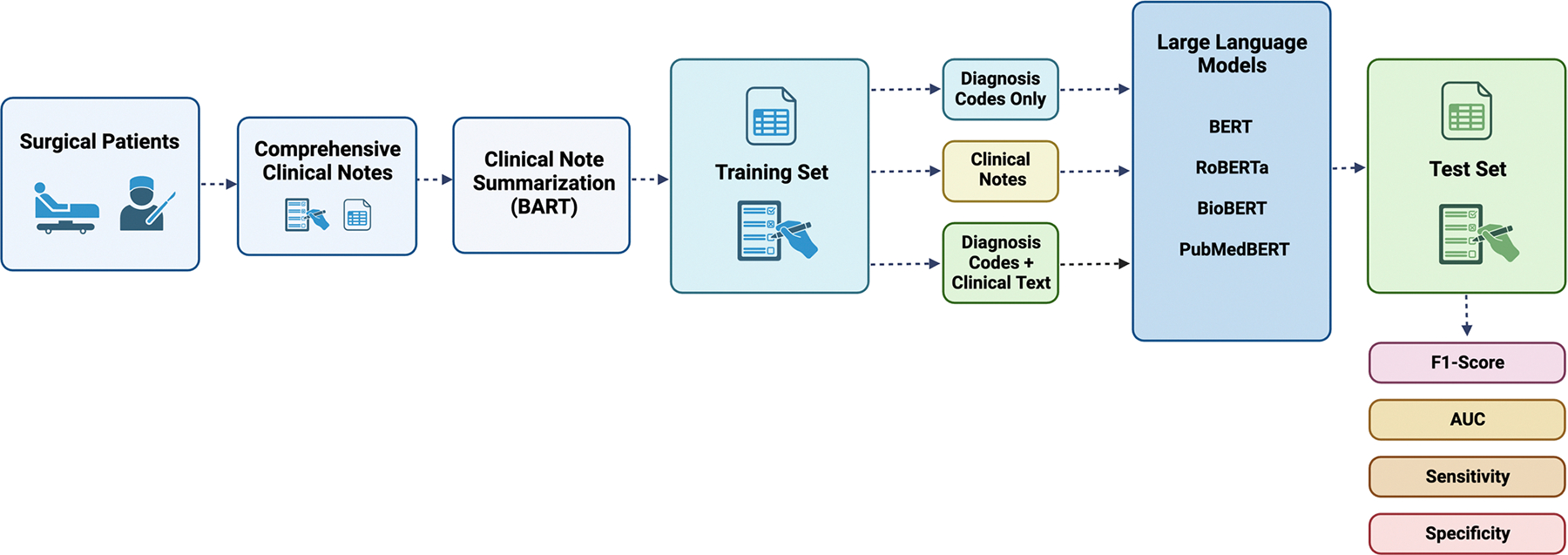
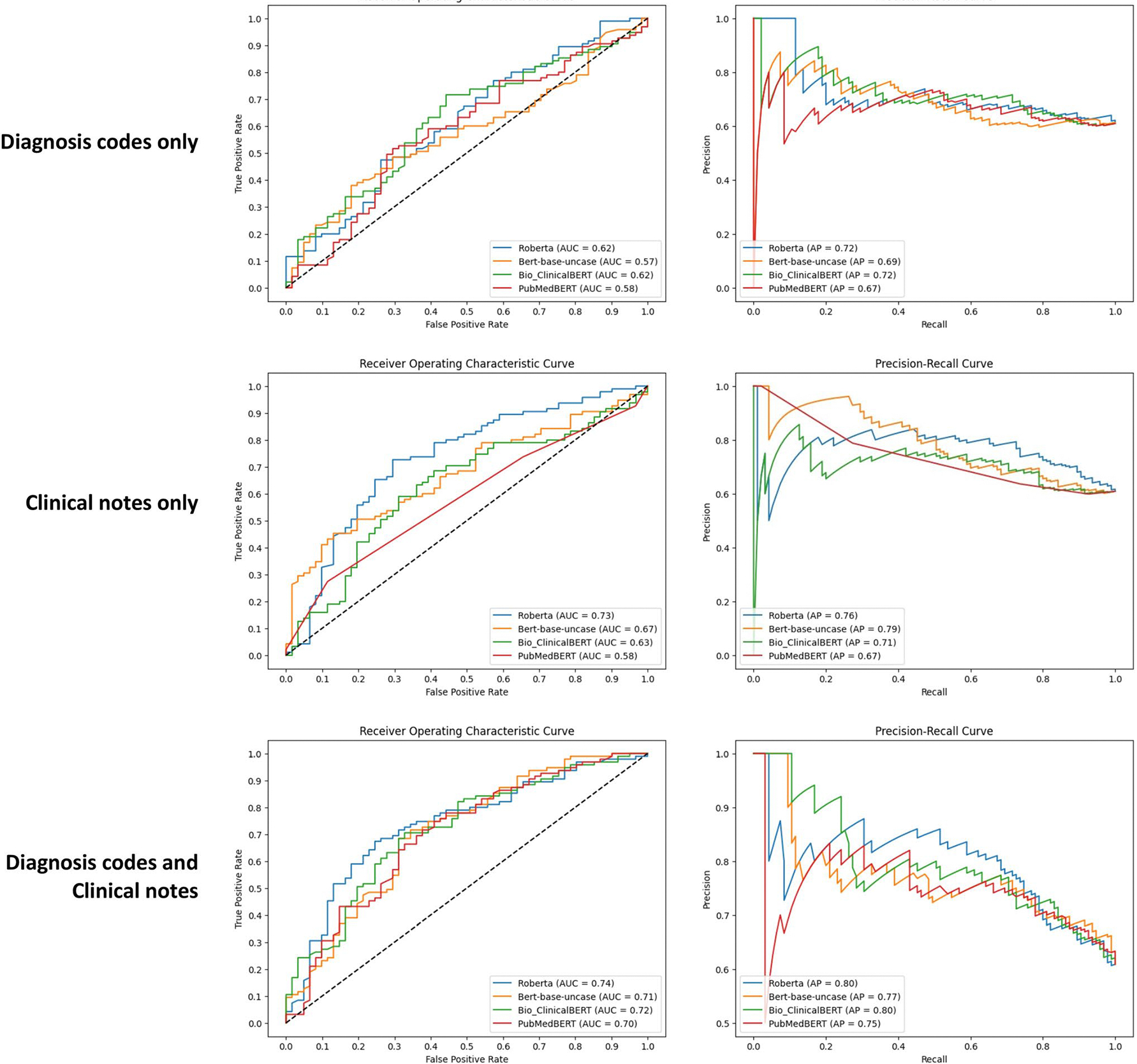
Purpose: Preoperative anesthesia evaluation is a crucial step in ensuring patient safety and optimizing perioperative care. A heterogenous patient population requiring varying levels of assessment often leads to inefficiencies and additional resource allocation. This study proposes using pre-trained language models to assist in triaging the appropriate degree of preoperative anesthesia evaluation for surgical patients. Methods: Retrospective institutional data were obtained from surgical patients evaluated at a single center preoperative anesthesia care clinic. The performance of four pre-trained language models (RoBERTa, BERT, ClinicalBERT, and PubMedBERT) in the classification of which patients would be appropriate for a nursing preoperative phone call versus in-person clinician evaluation was assessed using F1-score, area under the receiver operating characteristics curve (AUC), specificity, sensitivity, and average precision. For each pre-trained language model, three different data input combinations were assessed: (1) diagnosis codes (D); (2) clinical text data (N); and (3) diagnosis codes and clinical text (D + N). The data were split into training (75%) and test set (25%). Results: There were 1,761 unique patients, with an average of 12 notes per patient and a total of 46,922 clinical documents, included in the analysis. The AUC range between the four language models was highest in the D + N analyses (0.70 – 0.74), lower in the N analyses (0.58 – 0.73) and lowest in the D analyses (0.57 – 0.62). RoBERTa had the highest score compared to the other language models for all data types. Conclusions: Automating integrated analysis using pre-trained language models to aid in preoperative triaging could enhance accuracy and efficiency at scale, reducing manual review and provider burden.
Overview
The claims and statistics of this paper haven’t been checked yet.
Free: it reads the open-access text and checks the first 5 claims that cite a source we can check. Create a free account to check every claim.
Integrity signals
Registry
Cites
Statistics
Figures

Verification
Claims the paper makes
The claims and statistics of this paper haven’t been checked yet.
Free: it reads the open-access text and checks the first 5 claims that cite a source we can check. Create a free account to check every claim.
Claims other papers make about this one
Each is checked against this paper’s own text: does it say what the citing paper says it does?
The source backs part of the claim, not all of it — or backs it for a different population, condition or comparison.
In the citing paper
“The Xu et al. classifier reproduces an institutional triage standard [1]”
From From promising prototypes to “instructions for use”: embedding LLMs safely in perioperative and intensive care (2026) · cites this paper as [1]
Experimental — accuracy not yet measuredThe source backs part of the claim, not all of it — or backs it for a different population, condition or comparison.
In the citing paper
“The architecture described by Xu et al.—a classifier integrating diagnosis codes and summarised clinical notes—is readily transferable to ICU-related tasks such as admission and transfer triage, alert prioritisation for sepsis or respiratory failure, and routing of complex consults [1].”
From From promising prototypes to “instructions for use”: embedding LLMs safely in perioperative and intensive care (2026) · cites this paper as [1]
Experimental — accuracy not yet measuredThe source backs part of the claim, not all of it — or backs it for a different population, condition or comparison.
In the citing paper
“Performance was best when structured and unstructured data were combined, with RoBERTa reaching an area under the receiver operating characteristic curve of about 0.70–0.74 and F1-scores around 0.75–0.77 [1].”
From From promising prototypes to “instructions for use”: embedding LLMs safely in perioperative and intensive care (2026) · cites this paper as [1]
Experimental — accuracy not yet measuredThe source backs part of the claim, not all of it — or backs it for a different population, condition or comparison.
In the citing paper
“Crucially, the model effectively “learned” local triage practice standards”
From From promising prototypes to “instructions for use”: embedding LLMs safely in perioperative and intensive care (2026) · cites this paper as [1]
Experimental — accuracy not yet measuredThe cited source says what the claim attributes to it.
In the citing paper
“Xu et al. demonstrate good practice in transparency by clearly reporting data sources, preprocessing choices, model selection, and performance, and by sharing code [1].”
From From promising prototypes to “instructions for use”: embedding LLMs safely in perioperative and intensive care (2026) · cites this paper as [1]
5 more claims about this paper
Create a free account to see every claim other papers make about this one.
Self-check
Percentages, sums and reported differences re-computed from the paper’s own numbers.
The self-check needs the paper’s full text.
Citations
Cites
Lewis, M., Liu, Y., Goyal, N., Ghazvininejad, M., Mohamed, A., Levy, O., Stoyanov, V., & Zettlemoyer, L. (2020) · Proceedings of the 58th Annual Meeting of the Association for Computational Linguistics · doi:10.18653/v1/2020.acl-main.703 · Cited by 8,821
MIMIC-III, a freely accessible critical care database
Johnson, A. E. W., Pollard, T. J., Shen, L., Lehman, L.-W. H., Feng, M., Ghassemi, M., Moody, B., Szolovits, P., Anthony Celi, L., & Mark, R. G. (2016) · Scientific Data · doi:10.1038/sdata.2016.35 · Cited by 8,141 · cited 1×
“The Medical Information Mart for Intensive Care-III (MIMIC-III) database, consisting of EHRs from Beth Israel Hospital’s intensive care unit, was then used to train the Bio_ClinicalBERT model [15].”
Domain-specific language model pretraining for biomedical natural language processing
Gu, Y., Tinn, R., Cheng, H., Lucas, M., Usuyama, N., Liu, X., Naumann, T., Gao, J., & Poon, H. (2022) · ACM Transactions on Computing for Healthcare · doi:10.1145/3458754 · Cited by 2,170 · cited 2×
“The two domain-specific language models included versions specifically trained on clinical text and biomedical literature, ClinicalBERT and PubMedBERT, respectively [13, 14].”
The Aging Population and Its Impact on the Surgery Workforce
Etzioni, D. A., Liu, J. H., Maggard, M. A., & Ko, C. Y. (2003) · Annals of Surgery · doi:10.1097/01.sla.0000081085.98792.3d · Cited by 886 · cited 1×
“Surgical patient volume is increasing dramatically with the expanding aging population and emerging surgical technologies [3].”
Bias in artificial intelligence algorithms and recommendations for mitigation
Nazer, L. H., Zatarah, R., Waldrip, S., Ke, J. X. C., Moukheiber, M., Khanna, A. K., Hicklen, R. S., Moukheiber, L., Moukheiber, D., Ma, H., et al. (2023) · PLOS Digital Health · doi:10.1371/journal.pdig.0000278 · Cited by 621 · cited 1×
“Such algorithms also need further external validation to assess for generalizability and presence of bias [24].”
ClinicalBERT: Modeling Clinical Notes and Predicting Hospital Readmission
Huang, K., Altosaar, J., & Ranganath, R. (2019) · arXiv · doi:10.48550/arxiv.1904.05342 · Cited by 618 · cited 2×
“The two domain-specific language models included versions specifically trained on clinical text and biomedical literature, ClinicalBERT and PubMedBERT, respectively [13, 14].”
Health system-scale language models are all-purpose prediction engines
Jiang, L. Y., Liu, X. C., Nejatian, N. P., Nasir-Moin, M., Wang, D., Abidin, A., Eaton, K., Riina, H. A., Laufer, I., Punjabi, P., et al. (2023) · Nature · doi:10.1038/s41586-023-06160-y · Cited by 460 · cited 1×
“In recent years, advances in natural language processing (NLP) and machine learning have sparked interest in language model approaches to enhance healthcare decision-making and reduce provider burden [9].”
Wright, A., McCoy, A. B., Hickman, T.-T. T., Hilaire, D. S., Borbolla, D., Bowes, W. A., Dixon, W. G., Dorr, D. A., Krall, M., Malholtra, S., et al. (2015) · International Journal of Medical Informatics · doi:10.1016/j.ijmedinf.2015.06.011 · Cited by 150 · cited 1×
“This may be due to the incompleteness or inaccuracy of patients’ problem list, where the diagnosis codes are sourced from [20].”
Incidence of major adverse cardiac events following non-cardiac surgery
Sazgary, L., Puelacher, C., Buse, G. L., Glarner, N., Lampart, A., Bolliger, D., Steiner, L. A., Gürke, L., Wolff, T. E., Mujagić, E., et al. (2020) · European Heart Journal Acute Cardiovascular Care · doi:10.1093/ehjacc/zuaa008 · Cited by 131 · cited 1×
“It is estimated that the occurrence of a postoperative major adverse cardiac event such as stroke, myocardial infarction, and cardiovascular death is around 20% in high-risk patients undergoing non-cardiac surgery [1].”
Abate, S. M., Chekole, Y. A., Yimer, S., & Basu, B. (2020) · International Journal of Surgery Open · doi:10.1016/j.ijso.2020.08.006 · Cited by 107 · cited 1×
“Inadequate preoperative evaluations may also lead to case cancellations on the intended day of surgery, significantly reducing patient access to care [6].”
Artificial intelligence and anesthesia: a narrative review
Bellini, V., Rafano Carnà, E., Russo, M., Di Vincenzo, F., Berghenti, M., Baciarello, M., & Bignami, E. (2022) · Annals of Translational Medicine · doi:10.21037/atm-21-7031 · Cited by 62 · cited 1×
“Integration of artificial intelligence technology like these language model-based classifiers into clinical workflows may optimize preoperative care [21].”
Grosso, M. J., Courtney, P. M., Kerr, J. M., Valle, C. J. D., & Huddleston, J. I. (2020) · The Journal of Arthroplasty · doi:10.1016/j.arth.2020.01.079 · Cited by 61 · cited 1×
“…increased demand for preoperative evaluation that is difficult to meet due to the expansion of electronic health record (EHR) data management and limited healthcare resources, potentially leading to overburdened clinicians as well as less effective surgical optimization and worse outcomes [4, 5].”
Wang, Y., Li, N., Chen, L., Wu, M., Meng, S., Dai, Z., Zhang, Y., & Clarke, M. (2023) · Journal of Medical Internet Research · doi:10.2196/46089 · Cited by 45 · cited 1×
“However, widespread adoption of these modalities is limited by several barriers, including more consistent consensus guidelines for the use of artificial intelligence and limitations of infrastructure capabilities [22, 23].”
Identification of Preanesthetic History Elements by a Natural Language Processing Engine
Suh, H. S., Tully, J. L., Meineke, M. N., Waterman, R. S., & Gabriel, R. A. (2022) · Anesthesia & Analgesia · doi:10.1213/ane.0000000000006152 · Cited by 44 · cited 2×
“NLP has been investigated in its use to streamline and automate preoperative evaluation processes [16–19].”
Self-citationClinical use of artificial intelligence requires AI-capable organizations
Novak, L. L., Russell, R. G., Garvey, K., Patel, M., Thomas Craig, K. J., Snowdon, J., & Miller, B. (2023) · JAMIA Open · doi:10.1093/jamiaopen/ooad028 · Cited by 43 · cited 1×
“However, widespread adoption of these modalities is limited by several barriers, including more consistent consensus guidelines for the use of artificial intelligence and limitations of infrastructure capabilities [22, 23].”
Chen, P., Chen, L., Lin, Y.-K., Li, G.-H., Lai, F., Lü, C.-W., Yang, C.-Y., Chen, K., & Lin, T. (2022) · JMIR Medical Informatics · doi:10.2196/38241 · Cited by 31 · cited 1×
“NLP models were also used to accurately detect preoperative cannabis use in perioperative clinical documentation and to predict postoperative mortality [17, 18].”
Chung, P., Fong, C. T., Walters, A. M., Yetişgen, M., & O’Reilly-Shah, V. N. (2023) · BMC Anesthesiology · doi:10.1186/s12871-023-02248-0 · Cited by 26 · cited 2×
“NLP has been investigated in its use to streamline and automate preoperative evaluation processes [16–19].”
A qualitative study of patient and provider experiences during preoperative care transitions
Malley, A., & Young, G. J. (2017) · Journal of Clinical Nursing · doi:10.1111/jocn.13610 · Cited by 24 · cited 1×
“…increased demand for preoperative evaluation that is difficult to meet due to the expansion of electronic health record (EHR) data management and limited healthcare resources, potentially leading to overburdened clinicians as well as less effective surgical optimization and worse outcomes [4, 5].”
Sajdeya, R., Mardini, M., Tighe, P. J., Ison, R. L., Chen, B., Jugl, S., Hanzhi, G., Zandbiglari, K., Adiba, F. I., Winterstein, A. G., et al. (2023) · Journal of the American Medical Informatics Association · doi:10.1093/jamia/ocad080 · Cited by 22 · cited 1×
“NLP models were also used to accurately detect preoperative cannabis use in perioperative clinical documentation and to predict postoperative mortality [17, 18].”
Patient selection in ambulatory surgery
Hodgson, J. A., Cyr, K. L., & Sweitzer, B. (2023) · Best practice & research. Clinical anaesthesiology · doi:10.1016/j.bpa.2022.12.005 · Cited by 15 · cited 1×
“Resource allocation and optimization within preoperative anesthesia clinics is vital [7].”
Jonker, P., van den Heuvel, S. F., Hoeks, S. E., Heijkoop, È. R. H., Stolker, R.-J., & Korstanje, J. H. (2023) · European Journal of Anaesthesiology · doi:10.1097/eja.0000000000001815 · Cited by 15
Designing and Running a Preoperative Clinic
Blitz, J. D., & Mabry, C. (2018) · Anesthesiology Clinics · doi:10.1016/j.anclin.2018.07.001 · Cited by 14 · cited 1×
“Preoperative care clinics have been established to catalogue co-morbid disease, stratify perioperative risks, and facilitate interventions or consultations prior to surgery [2].”
Pahar, M., Mirheidari, B., Illingworth, C. H., Braun, D., Tao, F., Sproson, L., Blackburn, D. J., & Christensen, H. (2025) · IEEE Journal of Biomedical and Health Informatics · doi:10.1109/jbhi.2025.3624043 · Cited by 11 · cited 1×
“External validation with transfer learning of multimodal models leveraging language modeling is essential for confirming generalizability and stability [ 25].”
Research works printed but not linked: 2
- Devlin JC, M-W, Lee K, Tutanova K. BERT; Pre-training of Deep Bidirectional Transformers for Langauge Understanding. arXiv (cscl). 2018.
- Liu Y, Ott M, Goyal N, Du J, Joshi M, Chen D, Levy O, Lewis M, Zettlemoyer L, Stoyanov V. RoBERTa: A Robustly Optimized BERT Pretraining Approach. arXiv (cscl) V1. 2019.
Cited by
Bignami, E. G., & Russo, M. (2026) · Journal of Clinical Monitoring and Computing · doi:10.1007/s10877-026-01418-y
“In Xu et al., preoperative triage is per - formed by nursing staff and the model is intended to reduce workload while preserving oversight [1].”
InfluentialZheng, 郑. M., & Wen, 温. B. (2025) · 前沿护理学(Frontiers in Nursing) · doi:10.66106/fnabaf.20250103
Metadata
- Authors
- Xu, N. Y., Litake, O., Tully, J. L., Meineke, M. N., Sinha, A., Meyer, M., & Gabriel, R. A.
- Affiliations
- University of California San Diego (US)
- UC San Diego Health System (US)
- Corresponding author
- Gabriel, Rodney A.
- Venue
- Journal of Clinical Monitoring and Computing
- Published
- 2025-12-24
- Volume
- 40
- Issue
- 2
- Pages
- 517-524
- ISSN
- 1387-1307 (ISSN-L)
- 1573-2614
- PMC
- PMC13053591
- OpenAlex
- W7117142939
- Cited by
- 2
- References
- 20
- Citations by year
- 2026: 1 · 2025: 1
- FWCI
- 0.80
- Type
- journal article
- Language
- en
- Open access
- hybrid
- doi.org
- Licence
- cc-by
- creativecommons.org/licenses/by/4.0 (tdm)
- creativecommons.org/licenses/by/4.0 (vor)
- Locations
- Journal of Clinical Monitoring and Computing (publishedVersion, cc-by)
- PubMed Central (publishedVersion, cc-by)
- PubMed (publishedVersion)
- Funders
- U.S. National Library of Medicine (T15LM011271)
- Topics
- Physical Sciences › Computer Science › Artificial Intelligence › Machine Learning in Healthcare
- Health Sciences › Health Professions › Health Information Management › Artificial Intelligence in Healthcare
- Health Sciences › Medicine › Health Informatics › Artificial Intelligence in Healthcare and Education
- Keywords
- triage, pre-trained language models, clinical text classification, RoBERTa, BERT, ClinicalBERT, PubMedBERT, diagnosis codes, automated clinical decision support, surgical patients
- MeSH terms
- Adult, Aged, Algorithms, Anesthesia, Female, Humans, Language, Male, Middle Aged, Preoperative Care, Retrospective Studies, ROC Curve, Sensitivity and Specificity, Triage, Area Under Curve, Electronic Health Records
About these checks
Registry, retraction, Cites and statistics results are computed, not judged, with one exception: a printed reference that no index lists is read once by a model before it counts as a citation error. Claims are extracted by a model and kept only when their quote appears verbatim in the text; each cited source is then checked, with a model’s help, for whether it says what the claim relies on. Those verdicts can be wrong — read the claim’s quote and the cited source before relying on one.
Statistics and arithmetic are recomputed, not judged.
Confidence bands are shown only for fields calibrated on our annotated test set. None is calibrated yet, so no band is shown.
What counts as a claim ›How we measure confidence ›How we check this ›
Are you an author, or do you see a problem with this page? Request a review
Data sources
Bibliographic data: Semantic Scholar, OpenAlex, Crossref.
Contains information from the Semantic Scholar Academic Graph Datasets, made available under the ODC Attribution License (ODC-BY 1.0).
Semantic Scholar’s data is described in: Kinney, R., et al. (2023). The Semantic Scholar Open Data Platform. arXiv:2301.10140.
