

Extraction of Ejection Fraction from Echocardiography Notes for Constructing a Cohort of Patients having Heart Failure with reduced Ejection Fraction (HFrEF)
Open accessThe DOI matches its Crossref record; 33 of the 33 references it cites were found in a registry or an index.
Abstract
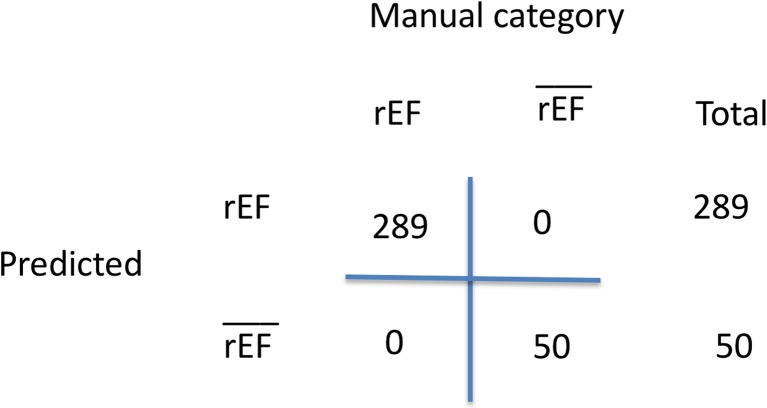
Left ventricular ejection fraction (LVEF) is an important prognostic indicator of cardiovascular outcomes. It is used clinically to determine the indication for several therapeutic interventions. LVEF is most commonly derived using in-line tools and some manual assessment by cardiologists from standardized echocardiographic views. LVEF is typically documented in free-text reports, and variation in LVEF documentation pose a challenge for the extraction and utilization of LVEF in computer-based clinical workflows. To address this problem, we developed a computerized algorithm to extract LVEF from echocardiography reports for the identification of patients having heart failure with reduced ejection fraction (HFrEF) for therapeutic intervention at a large healthcare system. We processed echocardiogram reports for 57,158 patients with coded diagnosis of Heart Failure that visited the healthcare system over a two-year period. Our algorithm identified a total of 3910 patients with reduced ejection fraction. Of the 46,634 echocardiography reports processed, 97% included a mention of LVEF. Of these reports, 85% contained numerical ejection fraction values, 9% contained ranges, and the remaining 6% contained qualitative descriptions. Overall, 18% of extracted numerical LVEFs were ≤ 40%. Furthermore, manual validation for a sample of 339 reports yielded an accuracy of 1.0. Our study demonstrates that a regular expression-based approach can accurately extract LVEF from echocardiograms, and is useful for delineating heart-failure patients with reduced ejection fraction.
Overview
The claims and statistics of this paper haven’t been checked yet.
Free: it reads the open-access text and checks the first 5 claims that cite a source we can check. Create a free account to check every claim.
Integrity signals
Registry
Cites
Statistics
Figures


Verification
Claims the paper makes
The claims and statistics of this paper haven’t been checked yet.
Free: it reads the open-access text and checks the first 5 claims that cite a source we can check. Create a free account to check every claim.
Self-check
Percentages, sums and reported differences re-computed from the paper’s own numbers.
The self-check needs the paper’s full text.
Citations
Cites
2013 ACCF/AHA Guideline for the Management of Heart Failure
Yancy, C. W., Jessup, M., Bozkurt, B., Butler, J., Casey, D. E., Drazner, M. H., Fonarow, G. C., Geraci, S. A., Horwich, T., Januzzi, J. L., et al. (2013) · Journal of the American College of Cardiology · doi:10.1016/j.jacc.2013.05.019 · Cited by 12,536
2017 ACC/AHA/HFSA Focused Update of the 2013 ACCF/AHA Guideline for the Management of Heart Failure
Yancy, C. W., Jessup, M., Bozkurt, B., Butler, J., Casey, D. E., Colvin, M. M., Drazner, M. H., Filippatos, G. S., Fonarow, G. C., Givertz, M. M., et al. (2017) · Journal of the American College of Cardiology · doi:10.1016/j.jacc.2017.04.025 · Cited by 3,418
Yancy, C. W., Jessup, M., Bozkurt, B., Butler, J., Casey, D. E., Colvin, M. M., Drazner, M. H., Filippatos, G. S., Fonarow, G. C., Givertz, M. M., et al. (2017) · Circulation · doi:10.1161/cir.0000000000000509 · Cited by 3,109
Serving the enterprise and beyond with informatics for integrating biology and the bedside (i2b2)
Murphy, S. N., Weber, G., Mendis, M., Gainer, V., Chueh, H. C., Churchill, S., & Kohane, I. (2010) · Journal of the American Medical Informatics Association · doi:10.1136/jamia.2009.000893 · Cited by 925
Self-citationData-intensive text processing with MapReduce
Lin, J., & Dyer, C. (2009) · Proceedings of Human Language Technologies: The 2009 Annual Conference of the North American Chapter of the Association for Computational Linguistics, Companion Volume: Tutorial Abstracts on - NAACL '09 · doi:10.3115/1620950.1620951 · Cited by 445
Dunlay, S. M., Roger, V. L., Weston, S. A., Jiang, R., & Redfield, M. M. (2012) · Circulation: Heart Failure · doi:10.1161/circheartfailure.111.966366 · Cited by 312
Electronic health records-driven phenotyping: challenges, recent advances, and perspectives
Pathak, J., Kho, A. N., & Denny, J. C. (2013) · Journal of the American Medical Informatics Association · doi:10.1136/amiajnl-2013-002428 · Cited by 274
Left Ventricular Ejection Fraction and Volumes: It Depends on the Imaging Method
Wood, P. W., Choy, J. B., Nanda, N. C., & Becher, H. (2014) · Echocardiography · doi:10.1111/echo.12331 · Cited by 244
Data-Intensive Text Processing with MapReduce
Lin, J., & Dyer, C. (2010) · Synthesis lectures on human language technologies · doi:10.2200/s00274ed1v01y201006hlt007 · Cited by 221
Sweitzer, N. K., Lopatin, M., Yancy, C. W., Mills, R. M., & Stevenson, L. W. (2008) · The American Journal of Cardiology · doi:10.1016/j.amjcard.2007.12.014 · Cited by 161
Using machine learning for concept extraction on clinical documents from multiple data sources
Torii, M., Wagholikar, K., & Liu, H. (2011) · Journal of the American Medical Informatics Association · doi:10.1136/amiajnl-2011-000155 · Cited by 127
Self-citationLearning regular expressions for clinical text classification
Bui, D. D. A., & Zeng-Treitler, Q. (2014) · Journal of the American Medical Informatics Association · doi:10.1136/amiajnl-2013-002411 · Cited by 112
Inference of Regular Expressions for Text Extraction from Examples
Bartoli, A., Lorenzo, A. D., Medvet, E., & Tarlao, F. (2016) · IEEE Transactions on Knowledge and Data Engineering · doi:10.1109/tkde.2016.2515587 · Cited by 110
Measuring Left Ventricular Ejection Fraction – Techniques and Potential Pitfalls
Foley, T. A., Mankad, S. V., Anavekar, N. S., Bonnichsen, C. R., Miller, M. F., Morris, T. D., Araoz, P. A., Cardiologist, Cardiologist, & Cardiologist (2012) · European Cardiology Review · doi:10.15420/ecr.2012.8.2.108 · Cited by 104
Garvin, J. H., DuVall, S. L., South, B. R., Bray, B. E., Bolton, D., Heavirland, J., Pickard, S., Heidenreich, P., Shen, S., Weir, C., et al. (2012) · Journal of the American Medical Informatics Association · doi:10.1136/amiajnl-2011-000535 · Cited by 101
Unlocking echocardiogram measurements for heart disease research through natural language processing
Patterson, O. V., Freiberg, M. S., Skanderson, M., J. Fodeh, S., Brandt, C. A., & DuVall, S. L. (2017) · BMC Cardiovascular Disorders · doi:10.1186/s12872-017-0580-8 · Cited by 99
Anderson, A. E., Kerr, W. T., Thames, A., Li, T., Xiao, J., & Cohen, M. S. (2016) · Journal of Biomedical Informatics · doi:10.1016/j.jbi.2015.12.006 · Cited by 96
Siegersma, K. R., Leiner, T., Chew, D. P., Appelman, Y., Hofstra, L., & Verjans, J. W. (2019) · Netherlands Heart Journal · doi:10.1007/s12471-019-01311-1 · Cited by 96
Liao, K. P., Ananthakrishnan, A. N., Kumar, V., Xia, Z., Cagan, A., Gainer, V. S., Goryachev, S., Chen, P., Savova, G. K., Agniel, D., et al. (2015) · PLOS ONE · doi:10.1371/journal.pone.0136651 · Cited by 92
Self-citationHuang, H., Nijjar, P. S., Misialek, J. R., Blaes, A. H., Derrico, N. P., Kazmirczak, F., Klem, I., Farzaneh‐Far, A., & Shenoy, C. (2016) · Journal of Cardiovascular Magnetic Resonance · doi:10.1186/s12968-017-0348-4 · Cited by 88
A Natural Language Processing Tool for Large-Scale Data Extraction from Echocardiography Reports
Nath, C., Albaghdadi, M. S., & Jonnalagadda, S. R. (2016) · PLOS ONE · doi:10.1371/journal.pone.0153749 · Cited by 69
Assisted annotation of medical free text using RapTAT
Gobbel, G. T., Garvin, J., Reeves, R., Cronin, R. M., Heavirland, J., Williams, J., Weaver, A., Jayaramaraja, S., Giuse, D., Speroff, T., et al. (2014) · Journal of the American Medical Informatics Association · doi:10.1136/amiajnl-2013-002255 · Cited by 45
Meystre, S. M., Kim, Y., Gobbel, G. T., Matheny, M. E., Redd, A., Bray, B. E., & Garvin, J. H. (2017) · Journal of the American Medical Informatics Association · doi:10.1093/jamia/ocw097 · Cited by 44
Gaasch, W. H., Delorey, D. E., Kueffer, F. J., & Zile, M. R. (2009) · The American Journal of Cardiology · doi:10.1016/j.amjcard.2009.06.064 · Cited by 37
Active Learning of Regular Expressions for Entity Extraction
Bartoli, A., Lorenzo, A. D., Medvet, E., & Tarlao, F. (2017) · IEEE Transactions on Cybernetics · doi:10.1109/tcyb.2017.2680466 · Cited by 37
Extraction of left ventricular ejection fraction information from various types of clinical reports
Kim, Y.-J., Garvin, J. H., Goldstein, M. K., Hwang, T. S., Redd, A. M., Bolton, D., Heidenreich, P. A., & Meystre, S. M. (2017) · Journal of Biomedical Informatics · doi:10.1016/j.jbi.2017.01.017 · Cited by 29
Blood, A. J., Fischer, C. M., Fera, L. E., MacLean, T. E., Smith, K. V., Dunning, J. R., Bosque-Hamilton, J. W., Aronson, S., Gaziano, T. A., MacRae, C. A., et al. (2019) · Clinical Cardiology · doi:10.1002/clc.23291 · Cited by 25
Self-citationChung, J. A., & Murphy, S. N. (2005) · PubMed · Cited by 24
Self-citationXie, F., Zheng, C., Shen, A. Y., & Chen, W. (2016) · Health Informatics Journal · doi:10.1177/1460458216651917 · Cited by 17
Improving Heart Failure Information Extraction by Domain Adaptation
Youngjun, K., Jennifer, G., Julia, H., & Meystre Stéphane, M. (2013) · Studies in Health Technology and Informatics · doi:10.3233/978-1-61499-289-9-185 · Cited by 14 · cited 1×
“approaches for EF extraction and reported an improvement in EF extraction accuracy [12].”
MethodFogel, M. A. (2002) · International Journal of Cardiology · doi:10.1016/s0167-5273(02)00134-1 · Cited by 12
Han, J., Kubala, M., Aranda-Michel, E. C., & Trumble, D. R. (2019) · PLoS ONE · doi:10.1371/journal.pone.0219162 · Cited by 8
Phenotyping to Facilitate Accrual for a Cardiovascular Intervention
Wagholikar, K. B., Fischer, C. M., Goodson, A. P., Herrick, C. D., MacLean, T. E., Smith, K. V., Fera, L. E., Gaziano, T. A., Dunning, J. R., Bosque-Hamilton, J. W., et al. (2019) · Journal of Clinical Medicine Research · doi:10.14740/jocmr3830 · Cited by 7
Self-citation
Research works printed but not linked: 1
- Garvin JH Automated extraction of ejection fraction for quality measurement using regular expressions in Unstructured Information Management Architecture (UIMA) for heart failure Journal of the American Medical Informatics Association: JAMIA 2012 19 859 866 10.1136/amiajnl-2011-000535 22437073 PMC3422820 · DOI · Paper page
Cited by
Desai, A. S., MacLean, T. E., Blood, A. J., Bosque-Hamilton, J. W., Dunning, J. R., Fischer, C., Fera, L. E., Smith, K. V., Wagholikar, K. B., Zelle, D., et al. (2020) · JAMA Cardiology · doi:10.1001/jamacardio.2020.3757 · Cited by 124
Self-citationSystematic review of current natural language processing methods and applications in cardiology
Reading Turchioe, M., Volodarskiy, A., Pathak, J., Wright, D. N., Tcheng, J. E., & Slotwiner, D. (2022) · Heart · doi:10.1136/heartjnl-2021-319769 · Cited by 102
Siegersma, K. R., Leiner, T., Chew, D. P., Appelman, Y., Hofstra, L., & Verjans, J. W. (2019) · Netherlands Heart Journal · doi:10.1007/s12471-019-01311-1 · Cited by 96
Blood, A. J., Fischer, C. M., Fera, L. E., MacLean, T. E., Smith, K. V., Dunning, J. R., Bosque-Hamilton, J. W., Aronson, S., Gaziano, T. A., MacRae, C. A., et al. (2019) · Clinical Cardiology · doi:10.1002/clc.23291 · Cited by 25
“We further refined this data-mart using natural language processing to identify patients who were most likely to meet the eligibility criteria.(4) Baseline characteristics of the patients recruited into the study are included in Table 2.”
MethodSelf-citationA Registry-Based Algorithm to Predict Ejection Fraction in Patients with Heart Failure
Uijl, A., Lund, L. H., Vaartjes, I. C. H., Brugts, J. J., Linssen, G. C. M., Asselbergs, F. W., Hoes, A. W., Dahlström, U., Koudstaal, S., & Savarese, G. (2020) · ESC Heart Failure · doi:10.1002/ehf2.12779 · Cited by 22
“Several natural language processing models could be used to extract data on left ventricular systolic function reported as free text in EHR.21,22 For those instances that this information is not available, simple prediction models for EF might be used to gain more knowledge on HF phenotypic information in EHRs, claim…”
Method
Metadata
- Authors
- Wagholikar, K. B., Fischer, C. M., Goodson, A., Herrick, C. D., Rees, M., Toscano, E., MacRae, C. A., Scirica, B. M., Desai, A. S., & Murphy, S. N.
- Affiliations
- Harvard University (US)
- Massachusetts General Hospital (US)
- Brigham and Women's Hospital (US)
- Corresponding author
- Wagholikar, Kavishwar B.
- Venue
- Journal of Medical Systems
- Published
- 2018-09-25
- Volume
- 42
- Issue
- 11
- Pages
- 209-209
- ISSN
- 0148-5598 (ISSN-L)
- 1573-689X
- PMC
- PMC6153777
- OpenAlex
- W2894204771
- Cited by
- 27
- References
- 33
- Citations by year
- 2026: 2 · 2025: 2 · 2024: 3 · 2023: 2 · 2022: 5 · 2021: 4 · 2020: 5 · 2019: 4
- FWCI
- 4.10
- Type
- journal article
- Language
- en
- Open access
- hybrid
- doi.org
- Licence
- cc-by
- creativecommons.org/licenses/by/4.0 (tdm)
- Locations
- Journal of Medical Systems (publishedVersion, cc-by)
- Europe PMC (PubMed Central) (publishedVersion, cc-by)
- PubMed Central (publishedVersion, cc-by)
- PubMed (publishedVersion)
- Funders
- National Human Genome Research Institute (R01-HG009174)
- U.S. National Library of Medicine (R00-LM011575)
- Topics
- Health Sciences › Health Professions › Health Information Management › Artificial Intelligence in Healthcare
- Health Sciences › Medicine › Health Informatics › Biomedical Text Mining and Ontologies
- Health Sciences › Health Professions › Health Information Management › Electronic Health Records Systems
- Keywords
- left ventricular ejection fraction, heart failure with reduced ejection fraction, natural language processing, clinical text mining, cohort identification, clinical workflow automation, manual validation
- MeSH terms
- Algorithms, Echocardiography, Heart Failure, Humans, Prognosis, Stroke Volume, Ventricular Function, Left
About these checks
Registry, retraction, Cites and statistics results are computed, not judged, with one exception: a printed reference that no index lists is read once by a model before it counts as a citation error. Claims are extracted by a model and kept only when their quote appears verbatim in the text; each cited source is then checked, with a model’s help, for whether it says what the claim relies on. Those verdicts can be wrong — read the claim’s quote and the cited source before relying on one.
Statistics and arithmetic are recomputed, not judged.
Confidence bands are shown only for fields calibrated on our annotated test set. None is calibrated yet, so no band is shown.
What counts as a claim ›How we measure confidence ›How we check this ›
Are you an author, or do you see a problem with this page? Request a review
Data sources
Bibliographic data: Semantic Scholar, OpenAlex, Crossref.
Contains information from the Semantic Scholar Academic Graph Datasets, made available under the ODC Attribution License (ODC-BY 1.0).
Semantic Scholar’s data is described in: Kinney, R., et al. (2023). The Semantic Scholar Open Data Platform. arXiv:2301.10140.
