

‘Keseph’: The Use of Silver Money in the Southern Levant from the Middle Bronze Age to the End of the Iron Age (~ 2000–600 BC)
Open accessThe DOI matches its Crossref record; 206 of the 207 references it cites were found in a registry or an index, and 1 are not checked yet; none of the 225 sources its claims cite is checked for support yet.
Abstract
This paper examines the use of silver as a form of pre-coinage money in the Southern Levant from the Middle Bronze Age to the end of the Iron Age (~ 2000–600 BC). Drawing on evidence from unearthed hoards, it also explores how silver gradually emerged as a preferred medium of exchange, beginning with its introduction in Mesopotamia and Syria in the EBA, in Anatolia during the MBA, in the Southern Levant during MB III, in Egypt, Cyprus and the Northern Levant during the Late Bronze Age (LBA) II, and finally in the Aegean during Iron Age II. The Southern Levant saw significant use of silver during the final stages of the Middle Bronze Age, with the first silver-currency hoards appearing at Shiloh and Gezer (~ 1650/1600–1600/1550 BC), predating other regions. Although silver was temporarily replaced by gold in the Late Bronze Age, it re-emerged as the dominant form of money by the Late Bronze Age IIB, ~ 1300 BC, a status it retained until the end of the Iron Age (~ 600 BC), despite occasional shortages. The distribution and context of silver hoards suggest evolving socio-economic patterns, where silver was initially restricted to elite transactions but later became more widely used in both domestic and public spheres. This study emphasizes that while silver became the leading form of money in the Southern Levant, other regions used different metals, such as gold, copper and bronze, at various times. The adoption of silver in the Levant likely reflects broader political and economic ties with Mesopotamia, Syria and Anatolia.
Checked 2026-11-27 · 1 reference not checked yet
Overview
CoChat Summary
TL;DR
This paper synthesizes 42 silver hoards and ingots from the Southern Levant (~2000–600 BC) to argue that silver served as pre-coinage money from the Middle Bronze Age III onward, with changing contexts, weights, purity, and provenance tied to trade and political shifts. It compares these hoards with other Near Eastern and East Mediterranean assemblages and traces silver’s adoption, shortage/debasement, and Phoenician-driven revival until coinage.
Key findings
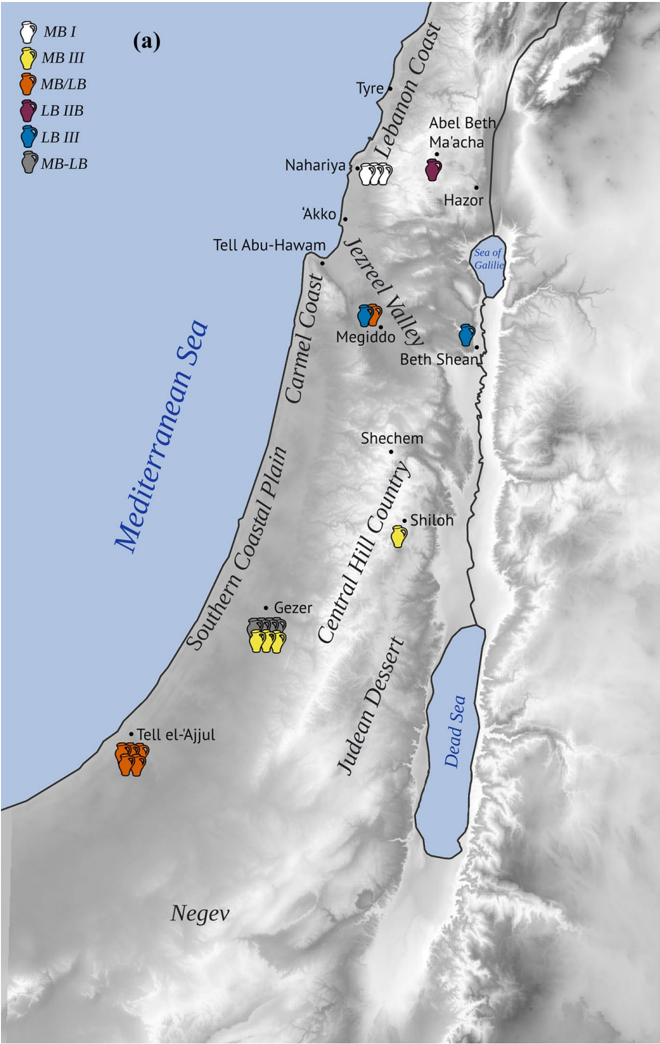
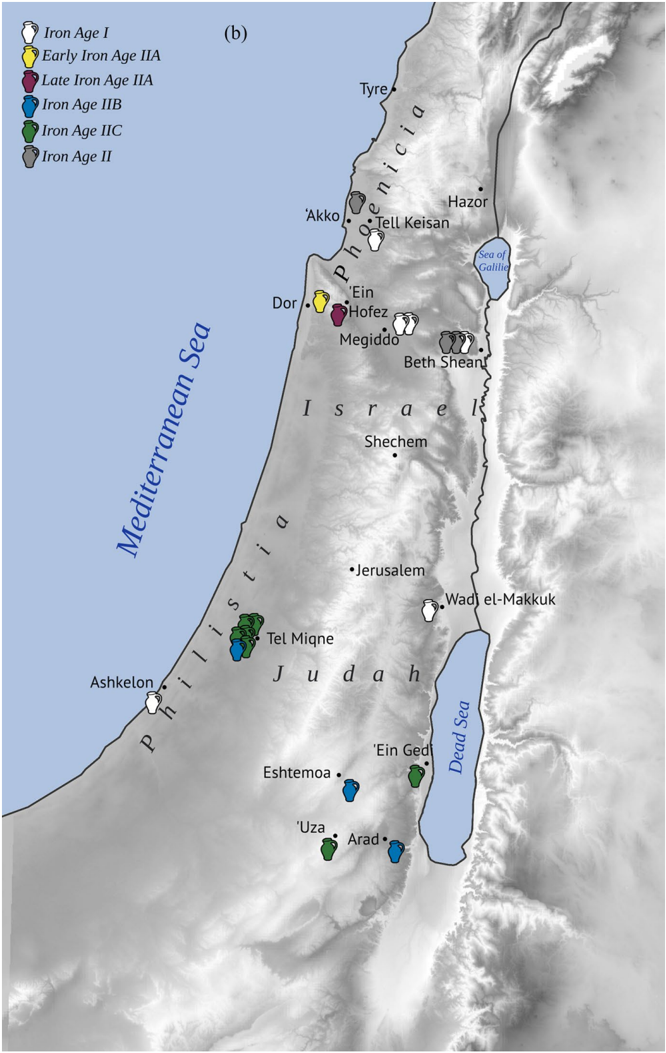
- The corpus comprises 42 silver hoards/ingots; 33 could be accurately dated, spanning MB I to Iron Age IIC (~2000–600 BC), c. 1500 years. The earliest silver-currency hoards are from Shiloh and Gezer in MB III (~1650/1600–1600/1550 BC), predating other regions.
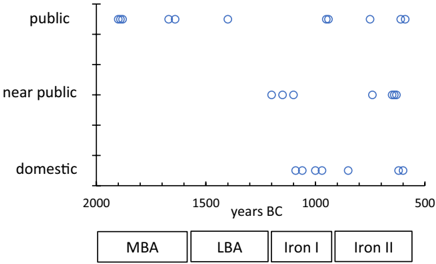
- Hoard contexts shift over time: Bronze Age hoards were mostly public; LB III hoards were only near public structures (2/2); Iron Age I hoards were mostly domestic (4/6); Iron Age II hoards appear in both public and domestic contexts. Of 38 currency hoards, 19 were associated with destruction or abandonment, 6 with continuity, and 13 lacked sufficient data; 16/42 were stored below beaten earth floors, 24/42 in ceramic vessels, and 15/42 wrapped in fabric.
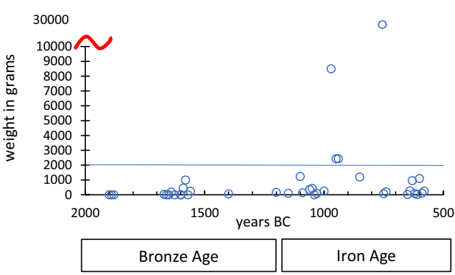
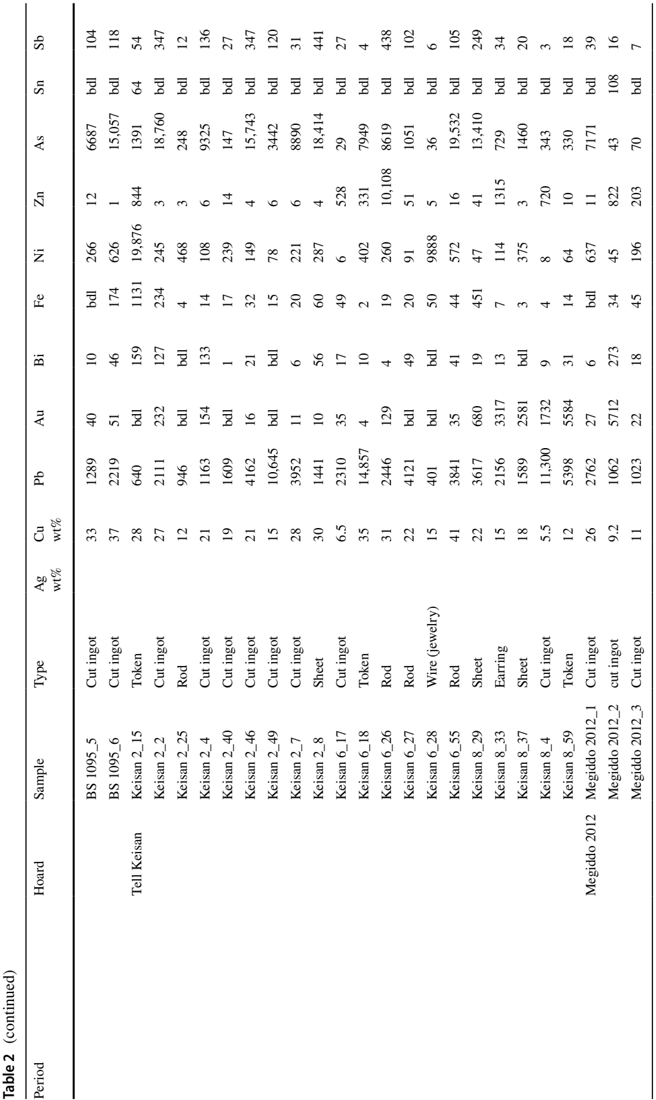
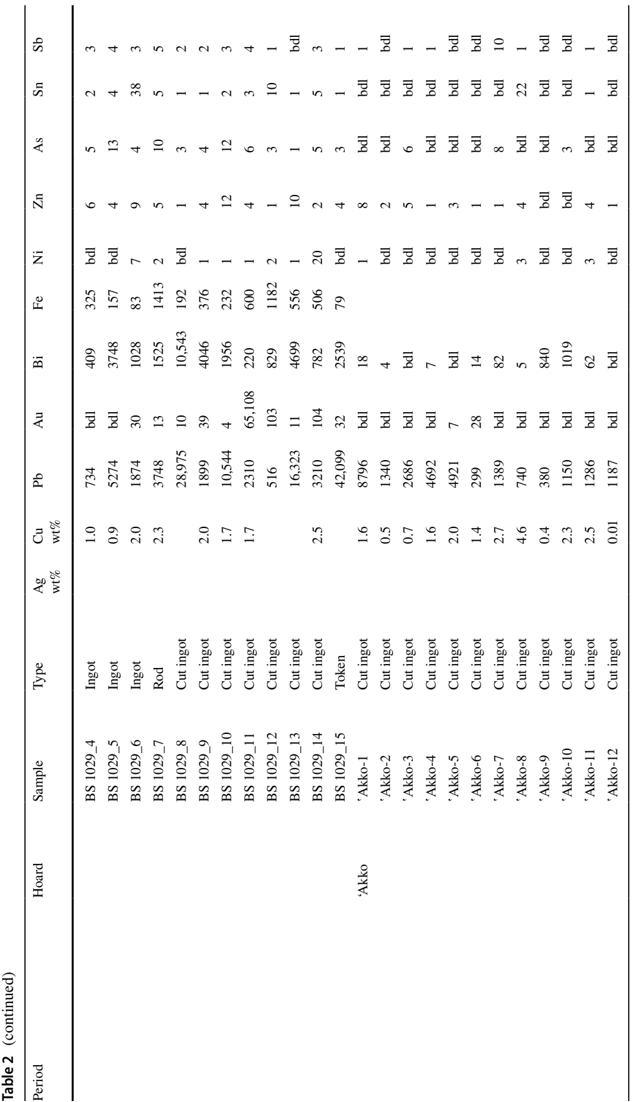
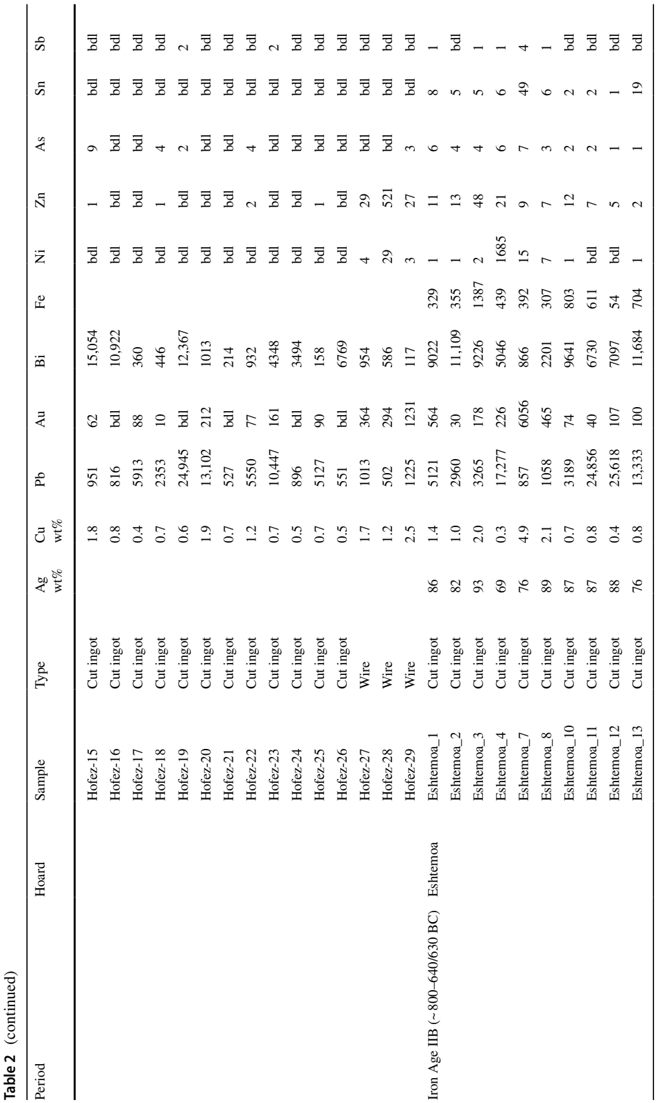
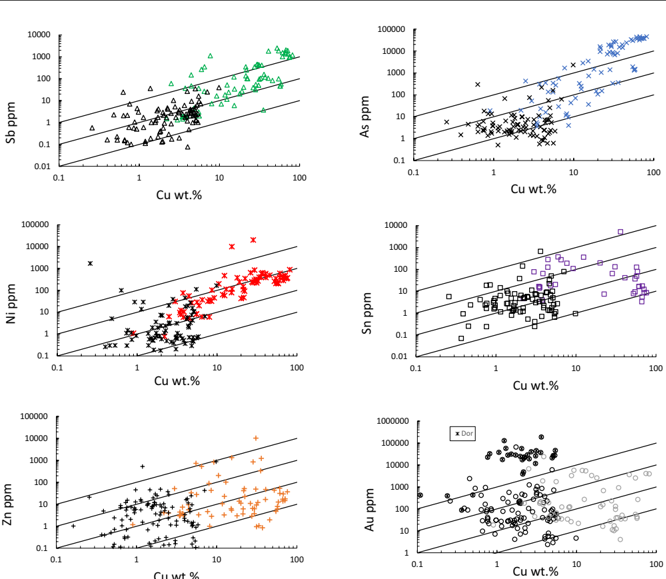
- Hoard weight increases dramatically in Iron Age IIA–B. The four largest hoards, each over 2 kg, are Dor (~8.5 kg), Beth Shean 1029 (two hoards, ~2 kg each), and Eshtemoa (~23 kg). Chemical analysis of 237 samples from 234 artifacts from 19 well-dated hoards shows LB III–Iron Age I copper debasement: 54/72 items were alloyed with Cu (6–82 wt.% Cu) with As, Sb, or Ni above thresholds; Iron Age II silver was mostly unalloyed, while Dor has Au concentrations up to 30 wt.%.
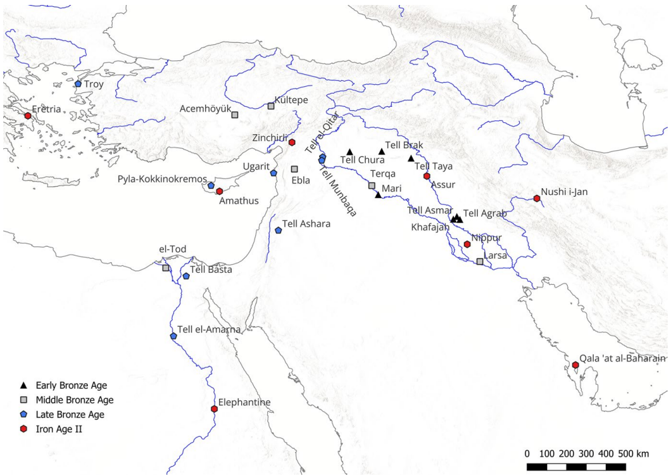
- The Southern Levant corpus is the largest known: the Syrian-Mesopotamian-Anatolian realm yielded only 29 hoards, Egypt six, Cyprus two, the Aegean one, and the Northern Levant one (Ugarit). Silver money spread from Mesopotamia/Syria in the EBA to Anatolia in the MBA, the Southern Levant in MB III, Egypt/Cyprus/Northern Levant in LB II, and the Aegean in Iron Age II.
Methods
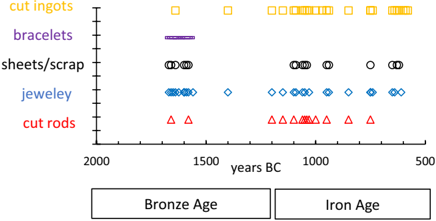
- The study analyzes 42 silver hoards and loose ingots from the Southern Levant, dating to the Bronze and Iron Ages, and compares them with East Mediterranean and Near Eastern silver hoards. It reviews context, chronology, typology, weight, and chemical composition, with full data in Appendix A.
- Chronology was reassessed using stratigraphy, ceramic chronology, field notes, excavation plans, and radiocarbon dates from textile wrappings of bundles from Tell Keisan, Arad, and previously Megiddo Area H; most hoards were dated indirectly.
- Chemical composition was determined for 237 samples from 234 silver artifacts from 19 well-dated hoards using quadrupole ICP-MS at the Hebrew University of Jerusalem. The Nahariya and Miqne_5 hoards were excluded; artifact typology follows Yeivin (1990).
Limitations
- Stated: most silver hoards cannot be dated directly and were dated by reassessing stratigraphy and associated ceramics; some dates relied on personal communications, especially for unpublished sites. One hoard from Shechem was excluded because it is poorly published and could not be dated. Chemical composition was limited to 19 well-dated hoards, excluding Nahariya and Miqne_5. Insufficient contextual data prevented determining destruction/abandonment versus continuity for 13 hoards.
- Stated: comparison with other regions is constrained because many hoards from Syria, Mesopotamia, and Troy are only generally dated to the LBA, so the scope of silver-hoard absence during LB I–IIa cannot be evaluated.
- Evident from the text: chemical composition is used to identify production and alloying practices, not ore sources, because trace elements such as Cu, Bi, and Pb are only partially separated during cupellation and offer little help in identifying the ore; provenance relies on prior lead isotope studies.
Model-written summary. Check it against the paper before relying on it.
Integrity signals
Registry
Cites
Statistics
Figures
Verification
Claims the paper makes
0 Valid · 8 Not valid · 131 Not checked · 143 Own results and interpretations
The paper states this without a source or data behind it here, so there is nothing to check it against. The quote shows it is in the paper.
In the paper
“In the Southern Levant, 42 silver hoards (and ingots) unearthed in various locations comprise by far the largest corpus of pre-coinage silver currency known from the second and first millennia BC in the Mediterranean region, in terms of hoard numbers, amount of silver, and chronological and geographical scope.”
§ 'Keseph': The Use of Silver Money in the Southern Levant from the Middle Bronze Age to the End of the Iron Age (~ 2000-600 BC) > Background and Aims
plain- Asserted: passes — The authors put it forward as true.
- Checkable: passes — It can be checked against evidence.
- Load-bearing: passes — The paper’s conclusions depend on it.
- Based: unclear — It is unclear why the paper says it holds.
A result the paper states — it cites no source for it, so there is none to check. The quote shows it is in the paper.
In the paper
“it re-emerged as the dominant form of money by the Late Bronze Age IIB, ~ 1300 BC”
§ 'Keseph': The Use of Silver Money in the Southern Levant from the Middle Bronze Age to the End of the Iron Age (~ 2000-600 BC) > Abstract
plain- Asserted: passes — The authors put it forward as true.
- Checkable: passes — It can be checked against evidence.
- Load-bearing: passes — The paper’s conclusions depend on it.
- Based: passes — The paper gives a reason why it holds.
A check of a cited source is scheduled, or we don’t hold its full text yet; the claim is checked once it runs.
In the paper
“Some of the hoards were previously classified as silversmiths' scrap (Gezer: Macalister, 1912, pp. 262-263;Beth Shean: Thompson, 2009), however there is no contextual evidence to support this.”
§ 'Keseph': The Use of Silver Money in the Southern Levant from the Middle Bronze Age to the End of the Iron Age (~ 2000-600 BC) > Context
What the sources say
- Not checked yetcites Macalister, 1912
A check is scheduled.
- Not matchedcites Thompson, 2009
An author–year citation the paper’s reference list doesn’t settle. We don’t search these by name.
plain- Asserted: passes — The authors put it forward as true.
- Checkable: passes — It can be checked against evidence.
- Load-bearing: unclear — It is unclear whether the paper’s conclusions depend on it.
- Based: passes — The paper gives a reason why it holds.
- Not checked yet
A result the paper reports from its own data — it cites no other source for it, so there is none to check. The quote shows it is in the paper.
In the paper
“and shows a correlation between the use of silver and the growth of merchant-based economies.”
§ 'Keseph': The Use of Silver Money in the Southern Levant from the Middle Bronze Age to the End of the Iron Age (~ 2000-600 BC) > Background and Aims
plainstates an association- Asserted: passes — The authors put it forward as true.
- Checkable: passes — It can be checked against evidence.
- Load-bearing: passes — The paper’s conclusions depend on it.
- Based: passes — The paper gives a reason why it holds.
A result the paper reports from its own data — it cites no other source for it, so there is none to check. The quote shows it is in the paper.
In the paper
“In some of the hoards (15/42), the silver was wrapped in fabric.”
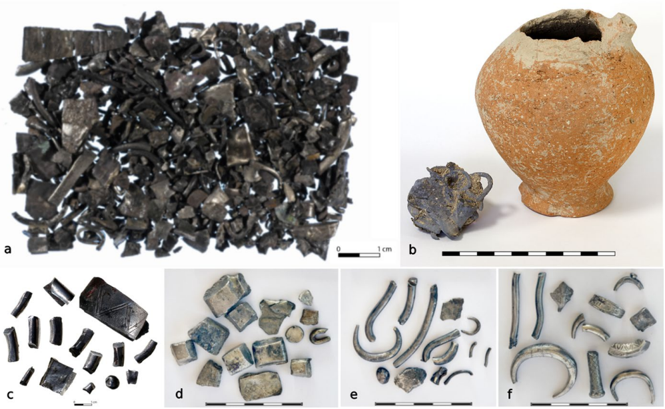
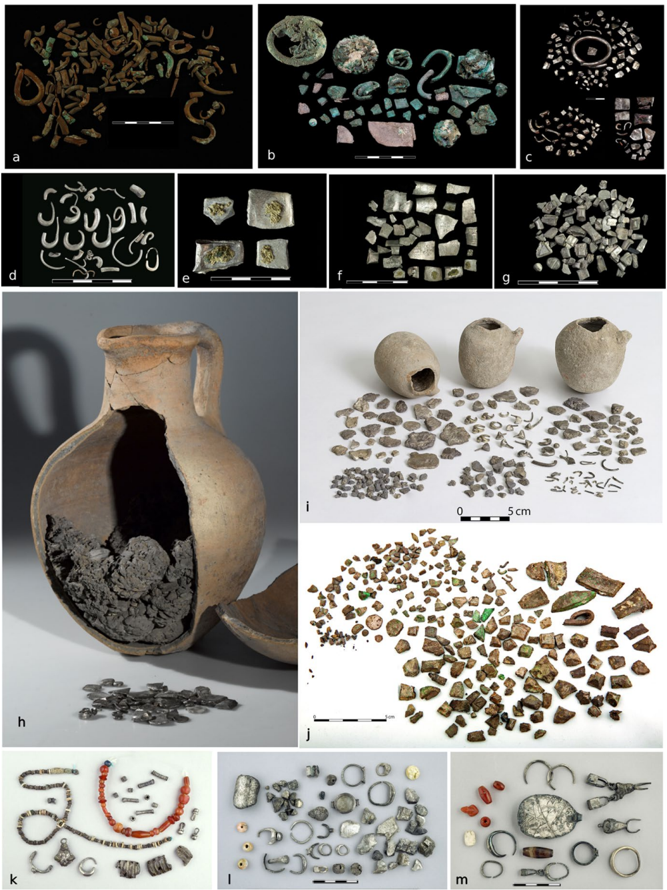
§ 'Keseph': The Use of Silver Money in the Southern Levant from the Middle Bronze Age to the End of the Iron Age (~ 2000-600 BC) > (Iron Age I). Image courtesy of the Collection of Israel Antiquities Authority; b Tell Keisan silver hoard before cleaning; c Tell Keisan silver hoard after cleaning (Iron Age I). Images courtesy of the Collection of Israel Antiquities Authority by Yael Yolovich (photographer); d, g Megiddo L. 2012 silver hoard (Late Iron Age I). Image courtesy of the Collection of Israel Antiquities Authority by Clara Amit (photographer); h Dor silver hoard (Early Iron Age IIA) image courtesy of the Collection of Israel Antiquities Authority © The Israel Museum by Ardon Bar-Hama (photographer), the Tel Dor Expedition; i ʽEin Hofez silver hoard (Late Iron Age IIA), image courtesy of the Collection of Israel Antiquities Authority by Warhaftig Venezian (photographer); j ʽAkko silver hoard (Iron Age II) image courtesy of Michael Eisenberg (photographer); k Selected items from the Tel Miqne 1 silver hoard (Iron Age IIC). Image courtesy of the Israel Antiquities Authority, by Clara Amit (photographer); l Selected items from the Tel Miqne 2 silver hoard (Iron Age IIC). Image courtesy of the Israel Antiquities Authority, by Clara Amit (photographer); m Selected items from the Tel Miqne 4 silver hoard (Iron Age IIC). Image courtesy of the Israel Antiquities Authority, by Clara Amit (photographer)
plain- Asserted: passes — The authors put it forward as true.
- Checkable: passes — It can be checked against evidence.
- Load-bearing: unclear — It is unclear whether the paper’s conclusions depend on it.
- Based: passes — The paper gives a reason why it holds.
147 more claims
Create a free account to see all 282 claims and to verify the 148 references still open.
- It may state two separate claims as one. 117
- Probably not a substantial claim. 28
- The quote only partly states this claim. 1
Self-check
Percentages, sums and reported differences re-computed from the paper’s own numbers.
Each contradiction between two passages listed here was confirmed by an independent check.
Rated minor: it would not touch a result — a value no result rests on, a p-value that stays on the same side of the significance level, or a conflict that is clerical, resolved elsewhere in the paper, or outside its own findings.
In the paper
§ 'Keseph': The Use of Silver Money in the Southern Levant from the Middle Bronze Age to the End of the Iron Age (~ 2000-600 BC) > Context
“Only one hoard was placed below the foundations of a structure, signaling no intention of later recovery (Tel Miqne-Ekron_5: Gitin & Brandl, 2018;Gitin & Golani, 2001).”
§ 'Keseph': The Use of Silver Money in the Southern Levant from the Middle Bronze Age to the End of the Iron Age (~ 2000-600 BC) > Context and Chronology
“10 Gezer 7 MB III (~ 1650/1600-1600/1550 BC) Yes Public: under the foundations of a room near the city gate”
Rated minor: it would not touch a result — a value no result rests on, a p-value that stays on the same side of the significance level, or a conflict that is clerical, resolved elsewhere in the paper, or outside its own findings.
In the paper
§ 'Keseph': The Use of Silver Money in the Southern Levant from the Middle Bronze Age to the End of the Iron Age (~ 2000-600 BC) > Silver Forgery: Late Bronze Age III (~ 1200-1150 BC)
“chemically, the silver was debased with copper for the first time, a practice which lasted throughout the Iron Age I”
§ 'Keseph': The Use of Silver Money in the Southern Levant from the Middle Bronze Age to the End of the Iron Age (~ 2000-600 BC) > Chemical Composition
“only one item from the MB III-LB IIB (~ 1650/1600-1200 BC) period, 'Ajjul 1312_1, can be positively identified as alloyed with copper”
Rated minor: it would not touch a result — a value no result rests on, a p-value that stays on the same side of the significance level, or a conflict that is clerical, resolved elsewhere in the paper, or outside its own findings.
In the paper
§ 'Keseph': The Use of Silver Money in the Southern Levant from the Middle Bronze Age to the End of the Iron Age (~ 2000-600 BC) > Conclusions
“the earliest uncontested silver hoards date ~ 200 years later, to LB IIB (~ 1400-1300 BC; the chronology of the el-Tod hoard is disputed)”
§ 'Keseph': The Use of Silver Money in the Southern Levant from the Middle Bronze Age to the End of the Iron Age (~ 2000-600 BC) > Chronology
“one hoard dates to the Late Bronze Age IIB (~ 1300-1200 BC)”
Rated minor: it would not touch a result — a value no result rests on, a p-value that stays on the same side of the significance level, or a conflict that is clerical, resolved elsewhere in the paper, or outside its own findings.
In the paper
§ 'Keseph': The Use of Silver Money in the Southern Levant from the Middle Bronze Age to the End of the Iron Age (~ 2000-600 BC) > (Iron Age I). Image courtesy of the Collection of Israel Antiquities Authority; b Tell Keisan silver hoard before cleaning; c Tell Keisan silver hoard after cleaning (Iron Age I). Images courtesy of the Collection of Israel Antiquities Authority by Yael Yolovich (photographer); d, g Megiddo L. 2012 silver hoard (Late Iron Age I). Image courtesy of the Collection of Israel Antiquities Authority by Clara Amit (photographer); h Dor silver hoard (Early Iron Age IIA) image courtesy of the Collection of Israel Antiquities Authority © The Israel Museum by Ardon Bar-Hama (photographer), the Tel Dor Expedition; i ʽEin Hofez silver hoard (Late Iron Age IIA), image courtesy of the Collection of Israel Antiquities Authority by Warhaftig Venezian (photographer); j ʽAkko silver hoard (Iron Age II) image courtesy of Michael Eisenberg (photographer); k Selected items from the Tel Miqne 1 silver hoard (Iron Age IIC). Image courtesy of the Israel Antiquities Authority, by Clara Amit (photographer); l Selected items from the Tel Miqne 2 silver hoard (Iron Age IIC). Image courtesy of the Israel Antiquities Authority, by Clara Amit (photographer); m Selected items from the Tel Miqne 4 silver hoard (Iron Age IIC). Image courtesy of the Israel Antiquities Authority, by Clara Amit (photographer)
“As the majority of the silver hoards in this study can be associated with destruction or abandonment layers, their context helps explain why they were not retrieved.”
§ 'Keseph': The Use of Silver Money in the Southern Levant from the Middle Bronze Age to the End of the Iron Age (~ 2000-600 BC) > (Iron Age I). Image courtesy of the Collection of Israel Antiquities Authority; b Tell Keisan silver hoard before cleaning; c Tell Keisan silver hoard after cleaning (Iron Age I). Images courtesy of the Collection of Israel Antiquities Authority by Yael Yolovich (photographer); d, g Megiddo L. 2012 silver hoard (Late Iron Age I). Image courtesy of the Collection of Israel Antiquities Authority by Clara Amit (photographer); h Dor silver hoard (Early Iron Age IIA) image courtesy of the Collection of Israel Antiquities Authority © The Israel Museum by Ardon Bar-Hama (photographer), the Tel Dor Expedition; i ʽEin Hofez silver hoard (Late Iron Age IIA), image courtesy of the Collection of Israel Antiquities Authority by Warhaftig Venezian (photographer); j ʽAkko silver hoard (Iron Age II) image courtesy of Michael Eisenberg (photographer); k Selected items from the Tel Miqne 1 silver hoard (Iron Age IIC). Image courtesy of the Israel Antiquities Authority, by Clara Amit (photographer); l Selected items from the Tel Miqne 2 silver hoard (Iron Age IIC). Image courtesy of the Israel Antiquities Authority, by Clara Amit (photographer); m Selected items from the Tel Miqne 4 silver hoard (Iron Age IIC). Image courtesy of the Israel Antiquities Authority, by Clara Amit (photographer)
“Out of 38 currency hoards examined,foot_0 19 were found to have been associated with destruction or abandonment”
Citations
Cites
Toward An Anthropological Theory of Value
Graeber, D. (2001) · Palgrave Macmillan US eBooks · doi:10.1057/9780312299064 · Cited by 1,836
Bitcoin: Economics, Technology, and Governance
Böhme, R., Christin, N., Edelman, B., & Moore, T. (2015) · Journal of Economic Perspectives · doi:10.1257/jep.29.2.213 · Cited by 1,823
1177 B.C.: The Year Civilization Collapsed
Cline, E. H. (2014) · doi:10.1515/9781400849987 · Cited by 452
Ancient Mesopotamian materials and industries: the archaeological evidence
(1995) · Choice Reviews Online · doi:10.5860/choice.32-4091 · Cited by 452
Domestication of the donkey: Timing, processes, and indicators
Rossel, S., Marshall, F., Peters, J., Pilgram, T., Adams, M. D., & O'Connor, D. (2008) · Proceedings of the National Academy of Sciences · doi:10.1073/pnas.0709692105 · Cited by 325
Janssen, J. (1975) · BRILL eBooks · doi:10.1163/9789004663305 · Cited by 255
Reading and Writing in Babylon
Charpin, D., & Todd, J. M. (2010) · Cited by 241
Aspects of Old Assyrian Trade and its Terminology
Veenhof (1972) · BRILL eBooks · doi:10.1163/9789004668805 · Cited by 220
Beck, L., Bosonnet, S., Réveillon, S., Eliot, D., & Pilon, F. (2004) · Nuclear Instruments and Methods in Physics Research Section B Beam Interactions with Materials and Atoms · doi:10.1016/s0168-583x(04)00831-6 · Cited by 199
The Philistines and Aegean Migration at the End of the Late Bronze Age
Yasur-Landau, A. (2010) · Cambridge University Press eBooks · doi:10.1017/cbo9780511761201 · Cited by 198
Research works printed but not linked: 89
- Alexandre, Y. (2013) An Iron II silver hoard from ʿEn Hofez, near Tel Joqneʿam. (In Hebrew.) In O. Guri-Rimon (Ed.), Hoards and Genizot as chapters in history. Hecht Museum Catalogue 33 (pp. 19-22). Hecht Museum, University of Haifa.
- Altenmüller, H. (2001). Trade and markets. In D. B. Redford (Ed.), The Oxford encyclopedia of ancient Egypt (pp. 445-450). Oxford University Press.
- Artzy, M. (2019). Middle Bronze Age II Cypriot imports. In S. Gitin (Ed.), The ancient pottery of Israel and its neighbors from the Middle Bronze Age through the Late Bronze Age (Vol. 3, pp. 145-150). Israel Exploration Society;
- Aubet, M. E. (2001). The Phoenicians and the West: Politics, colonies and trade (2nd ed.). Cambridge University Press.
- Balmuth, M. S. (1967). The monetary forerunners of coinage in Phoenicia and Palestine. In A. Kindler (Ed.), The patterns of monetary development in Phoenicia and Palestine in antiquity: Proceedings; International Numismatic Convention, Jerusalem 27-31 December 1963 (pp. 25-32).
- International Numismatic Convention, Jerusalem 27-31 December 1963 (pp. 25-32).
- Balmuth, M. S. (2001). Hacksilber to coinage: New insights into the monetary history of the Near East and Greece: A collection of eight papers presented at the 99th Annual Meeting of the Archaeologi- cal Institute of America. American Numismatic Society.
- Bass, G. F. (1997). Prolegomena to a study of maritime traffic in raw materials to the Aegean during the fourteenth and thirteenth centuries BC. In R. Laffineur & P. P. Betancourt (Eds.), TEXNH Crafts- men, craftswomen and craftmanship in the Aegean Bronze Age. Proceedings of the 6th Interna- tional Aegean Conference / 5e Rencontre égéenne internationale. Philadelphia, Temple University, 18-21 April 1996. AEGAEUM 16 Annales d'archéologie égéenne de l'Université de Liège et UT- PASP (pp. 153-170). Université de Liège, Histoire de l'art et archéologie de la Grèce antique and University of Texas at Austin Program in Aegean Scripts and Prehistory.
- Bell, C. (2009). Continuity and change: The divergent destinies of Late Bronze Age ports in Syria and Lebanon across the LBA Iron Age transition. In C. Bachhuber & R. G. Roberts (Eds.), Forces of transformation: The end of the Bronze Age in the Mediterranean: Proceedings of an interna- tional symposium held at St. John's College, University of Oxford 25-6th March, 2006 (Vol. 1, pp. 30-38). Oxbow.
- Ben-Dor, I. (1951). A Canaanite temple at Nahariya. (In Hebrew.) Eretz-Israel: Archaeological, his- torical and geographical studies, dedicated to Professor M. Schwabe on his sixtieth birthday (pp. 17-28). Israel Exploration Society.
- Bergoffen, C. J. (2001). The Proto White Slip and White Slip I pottery from Tell el-Ajjul. In V. Karageorghis (Ed.), The White Slip ware of Late Bronze Age Cyprus (pp. 145–155). Verlag der Österreichischen Akademie der Wissenschaften.
- Bietak, M. (1994). Die Wandmalereien aus Tell el-Daba/Ezbet Helmi: Erste Eindrücke. Ägypten und Levante, 4, 44-58.
- Bietak, M. (2010). From where came the Hyksos and where did they go? In M. Marée (Ed.), The Second Intermediate Period (thirteenth-seventeenth dynasties): Current research, future prospects (pp. 139-181).
- Bietak, M. (2013). Hyksos. In R. S. Bagnall (Ed.), The encyclopedia of ancient history. Wiley.
- Bleiberg, E. (2002). Loans, credit and interest in ancient Egypt. In M. Hudson & M. Van De Mieroop (Eds.), Debt and economic renewal in the ancient Near East (pp. 257-276). CDL Press.
- Bonfil, R. (2019). Middle Bronze Age II B-C. In S. Gitin (Ed.), The ancient pottery of Israel and its neighbors from the Middle Bronze Age through the Late Bronze Age (Vol. 3, pp. 77-136). Israel Exploration Society;
- Bourogiannis, G. (2013). Who hides behind the pots? A reassessment of the Phoenician presence in Early Iron Age Cos and Rhodes. Ancient near Eastern Studies, 50, 139-189.
- Finkelstein, S. Bunimovitz, & Z. Lederman (Eds.), Shiloh: The archaeology of a Biblical site (pp. 223-263). Institute of Archaeology of Tel Aviv University.
- Briend, J., & Humbert, J.-B. (1980). Tell Keisan (1971-1976): Une cité phénicienne en Galilée (Vol. 1). Éditions Universitaires/Vandenhoeck & Ruprecht.
- Dercksen, J. G. (1999). Trade and finance in ancient Mesopotamia: Proceedings of the First MOS Sympo- sium (Leiden 1997). Nederlands Historisch-Archeologisch Instituut.
- Dercksen, J. G. (1996). The Old Assyrian copper trade in Anatolia. Historisch-Archeologisch Instituut te Istanbul.
- Dothan, M. (1981). Sanctuaries along the coast of Canaan in the MB period: Nahariyah. In M. J. Mellink & A. Biran (Eds.), Temples and high places in Biblical times: Proceedings of the Colloquium in Honor of the Centennial of Hebrew Union College-Jewish Institute of Religion (Jerusalem: 1977) (pp. 74-80).
- Dothan, M. (1993). Nahariya. In E. Stern & A. Leṿinzon-Gilboa (Eds.), Encyclopaedia of archaeological excavations in the Holy Land (Vol. 3, pp. 1088-1089). Israel Exploration Society.
- Farhi, Y. (2014). A preliminary report on the coins and selected small finds. In Y. Garfinkel, S. Ganor, M. G. Hasel, & M. G. Klingbeil (Eds.), Khirbet Qeiyafa: Vol. 2. Excavation report 2009-2013: Stratigraphy and architecture (Areas B, C, D, E) (pp. 375-390). Southern Adventist University Institute of Archaeology; Israel Exploration Society; Hebrew University of Jerusalem Institute of Archaeology.
- Finkelstein, I. (2008). The settlement history of Jerusalem in the eighth and seventh centuries BC. Revue Biblique, 4, 499-515.
- Finkelstein, I., & Brandl, B. (1985). A group of metal objects from Shiloh. Israel Museum Journal, 4, 17-26.
- Földi, Z. (2014). On Old Babylonian Palastgeschäft in Larsa: The meaning of sūtum and the 'circulation' of silver in state/private business. In Z. Csabai (Ed.), Studies in economic and social history of the ancient Near East in memory of Péter Vargyas. (pp. .)711-97 Department of Ancient History, University of Pecs.
- Gale, N. H. (1980). Some aspects of lead and silver mining in the Aegean. In C. Doumas (Ed.), Thera and the Aegean World II (Papers and Proceedings of the Second International Scientific Congress, Santorini, Greece). Thera and the Aegean World.
- Gilboa, A. (2014). Iron Age I in the Southern Levant (Cis-Jordan). In A. E. Killebrew & M. L. Steiner (Eds.), The Oxford handbook of the archaeology of the Levant: c. 8000-332 BC (pp. 624-648). Oxford University Press.
- Gilboa, A., Sharon, I., & Boaretto, E. (2008). Tel Dor and the chronology of Phoenician 'pre-coloniza- tion' stages. In C. E. Sagona (Ed.), Beyond the homeland: Markers in Phoenician chronology (pp. 113-204).
- Gilboa, A., Waiman-Barak, P., & Sharon, I. (2015). Dor, the Carmel coast and Early Iron Age Mediter- ranean exchanges. In A. Babbi, F. Bubenheimer-Erhart, B. Marín-Aguilera, & S. Mühl (Eds.), The Mediterranean mirror: Cultural contacts in the Mediterranean sea between 1200 and 750 BC (pp. 85-109). Verlag des Römisch-Germanischen Zentralmuseums.
- Gitin, S., & Brandl, B. (2018). An Iron Age II cache of Phoenician jewelry from Tel Miqne-Ekron. In Y. Shai, J. R. Chadwick, L. Hitchcock, A. Dagan, C. McKinny, & J. Uziel (Eds.), Tell it in Gath: Stud- ies in the history and archaeology of Israel: Essays in honor of Aren M. Maeir on the occasion of his sixtieth birthday (pp. 294-303).
- Gitler, H., & Tal, O. (2019). A view from the Near East. The transition from metal to coin economy in the Southern Levant. In P. W. U. Van Alfen (Ed.), White gold: Studies in early electrum coinage. American Numismatic Society.
- Golani, A. (2013). Jewelry from the Iron Age II Levant. Academic Press Fribourg.
- Golani, A. (2022). Jewelry. In S. Gitin (Ed.), Tel Miqne-Ekron excavations 1994-1996; Field IV Upper and Field V the Elite Zone Part 1 Iron Age IIC Temple Complex (pp. 233-308). Eisenbrauns.
- Grierson, P. (1975). Numismatics. Oxford University Press.
- Heymans, E. D. (2019). Pre-coinage money in the grave? The case of Amathus t. 198. Journal of Archaeological Numismatics, 9, 45-66.
- Jurman, C. (2015). 'Silver of the treasury of Herishef': Considering the origin and economic signifi- cance of silver in Egypt during the Third Intermediate Period. In: F. B.-E. Andrea Babbi, Beat- riz Marín-Aguilera, & Simone Mühl (Eds.), The Mediterranean mirror: Cultural contacts in the Mediterranean sea between 1200 and 750 BC (pp. 51-68). Verlag des Römisch-Germanischen Zentralmuseums.
- Kelder, J. M. (2016). Mycenae, rich in silver. In K. Kleber & R. Pirngruber (Eds.), Silver, money and credit. A tribute to Robartus J. van der Spek on occasion of his 65th birthday on 18th Septem- ber 2014 (Vol. CXXIII, pp. 307-317).
- Kelder, J. M., Cole, S. E., & Cline, E. H. (2018). Memphis, Minos, and Mycenae: Bronze Age con- tact between Egypt and the Aegean. In J. Spier, T. Potts, & S. E. Cole (Eds.), Beyond the Nile: Egypt and the classical world (pp. 9-17). J. Paul Getty Museum.
- Kemp, B., Merrillees, R., & Elmar, E. (1980). Appendix II: The el-Tod treasure, with particular refer- ence to its archaeological context. In B. J. Kemp & R. S. Merrillees (Eds.), Minoan pottery in second millennium Egypt (pp. 290-301). Philipp von Zabern.
- Kempinski, A. (1974). Tell el-‛Ajjûl-Beth-Aglayim or Sharuḥen? Israel Exploration Journal, 24, 145-152.
- Kempinski, A. (1992). Middle and Late Bronze Age fortifications. In A. Kempinski & K. Hannah (Eds.), The architecture of ancient Israel: From the prehistoric to the Persian periods (pp. 127- 142). Israel Exploration Society.
- Kletter, R., & De-Groot, A. (2007). Iron Age hoard of hacksilber from En-Gedi. In E. Stern (Ed.), En- Gedi excavations I. Final report (pp. 1961-1965). Israel Exploration Society.
- Kourou, N. (2019). Cyprus and the Aegean in the Geometric Period: The case of Salamis. In S. Rogge, C. Ioannou, & T. Mavrojannis (Eds.), Salamis of Cyprus: History and archaeology from the earliest times to Late Antiquity (pp. 77-97). Waxmann.
- Kourou, N. (2008). The evidence from the Aegean. In C. Sagona (Ed.), Beyond the homeland: Markers in Phoenician chronology (pp. 305-364).
- Kroll, J. H. (2001). A small find of silver bullion from Egypt. American Journal of Numismatics (1989), 13, 1-20.
- Liverani, M. (1979). Three Amarna essays (Vol. 1). Undena.
- Loud, G., & Crowfoot, G. M. (1948). Megiddo: Seasons of 1935-39. University of Chicago Press.
- Marcus, E. (2006). Venice on the Nile? On the maritime character of Tell Dab‛a/Avaris. In E. Czerny, I. Hein, H. Hunger, D. Melman, & A. Schwab (Eds.), Timelines: Studies in honour of Manfred Bietak. Peeters.
- Meyers, P. (2003). Production of silver in antiquity: Ore types identified based upon elemental composi- tions of ancient silver artifacts. In L. V. Zelst (Ed.), Patterns and process: A Festschrift in honor of Dr. Edward V. Sayre (pp. 271-288). Smithsonian Institution Press.
- Mielke, D. P., & Torres-Ortiz, M. (2012). Technologietransfer und -entwicklung auf der iberischen Hal- binsel im Rahmen der orientalisch-phönizischen Kulturkontakte. In A. Kern, J. K. Koch, I. Balzer, J. Fries-Knoblach, K. Kowarik, C. Later, P. C. Ramsl, P. Trebsche, & J. Wiethold (Eds.), Technolo- gieentwicklung und -transfer in der Hallstatt-und Latènezeit. Beiträge zur Internationalen Tagung der AG Eisenzeit und des Naturhistorischen Museums Wien, Prähistorische Abteilung-Hallstatt 2009 (pp. 263-286).
- Nezafati, N., & Pernicka, E. (2012). Early silver production in Iran. Iranian Archaeology, 3, 38-45.
- O'Rourke, P. F. (2001). Coinage. In D. B. Redford (Ed.), The Oxford encyclopedia of ancient Egypt (pp. 288-291). Oxford University Press.
- Pernicka, E., & Bachmann, H.-G. (1983). Archäometallurgische Untersuchungen zur Antiken Sil- bergewinnung in Laurion. Erzmetall, 36(12), 592-597.
- Pierrat-Bonnefois, G. (2008). The Tôd treasure. In A. Joan, K. Benzel, & J. M. Evans (Eds.), Beyond Babylon: Art, trade, and diplomacy in the second millennium BC (pp. 65-67).
- Prag, K. (1978). Silver in the Levant in the fourth millennium BC. In P. Moorey & P. P. Warminster (Eds.), Archaeology in the Levant: Essays for Kathleen Kenyon (p. 45). Aris & Phillips.
- Pulak, C. (2001). The cargo of the Uluburun ship and evidence for trade with the Aegean and beyond. In L. Bonfante & V. Karagiorgis (Eds.), Italy and Cyprus in antiquity: 1500-450 BC: Proceedings of an international symposium held at the Italian Academy for Advanced Studies in America at Columbia University, November 16-18, 2000 (pp. 13-60). Costakis and Leto Severis Foundation.
- Pulak, C. (1997). The Uluburun shipwreck. In S. Swiny, R. L. Hohlfelder, & H. W. Swiny (Eds.), Res maritimae: Cyprus and the Eastern Mediterranean from prehistory to late antiquity (pp. 233-262). American School of Archaeological Research.
- Quirke, S. G. J. (2001). Administration: State administration. In The Oxford encyclopedia of ancient Egypt (pp. 13-16). Oxford University Press.
- Rahmstorf, L. (2007). In search of the earliest balance weights, scales and weighing systems from the East Mediterranean, the Near and Middle East. In: Alberti, M. E., Peyronel, L., & Ascalone, E. (Eds.) Weights in context. Bronze Age weighing systems of eastern Mediterranean: Chronology, typology, material and archaeological contexts. Proceedings of the International Colloquium Rome 22nd-24th November 2004 (pp. 9-45). Istituto italiano di numismatica.
- Rahmstorf, L., Barjamovic, G., & Ialongo, N. (2021). Understanding technologies of early trade in a comparative perspective. In: Rahmstorf, L., Barjamovic, G., & Ialongo, N. (Eds). Merchants, measures and money: Understanding technologies of early trade in a comparative perspective. Proceedings of two workshops funded by the European Research Council (ERC). Vol. 2: Weight & Value (pp. 1-11). Göttingen.
- Rehren, T., & Klappauf, L. (1995).... ut oleum aquis. Vom Schwimmen des Silbers auf Bleiglätte. Met- alla, 2(1), 19-28.
- Regulski, I. (2014). The origins and early development of writing in Egypt. The Oxford Handbook of Topics in Archaeology (online edn, Oxford Academic, 2 Oct. 2014)
- Rowe, A. (1940). The four Canaanite temples of Beth-Shean I. University of Pennsylvania Press.
- Sass, B. (1997). Jewelry. In E. M. Meyers (Ed.), The Oxford Encyclopedia of Archaeology in the Near East (Vol. 3, pp. 238-246). Oxford University Press.
- Schliemann, H. (1881). Ilios. Stadt und Land der Trojaner: Forschungen und Entdeckungen in der Troas und besonders auf der Baustelle von Troja. Brockhaus.
- In: V. Karageorghis (Ed.), Cyprus in the 11th Century BC: Proceedings of the international sympo- sium organized by the Archaeological Research Unit of the University of Cyprus and the Anastasios G. Leventis Foundation, Nicosia 30-31 October, 1993 (pp. 59-106).
- A.G. Leventis Foundation. Sherratt, A., & Sherratt, S. (1991). From luxuries to commodities: The nature of Mediterranean Bronze Age trading systems. In N. Gale (Ed.), Bronze Age trade in the Mediterranean (pp. 351-386).
- Steinkeller, P. (2004). The function of written documentation in the administrative praxis of early Baby- lonia. In M. Hudson & C. Wunsch (Eds.), Creating economic order: Record-keeping, standardiza- tion, and the development of accounting in the ancient Near East (pp. 65-88). CDL.
- Stern, E. (2001). The silver hoard from Tel Dor. In: M. S. Balmuth (Ed.), Hacksilber to coinage: New insights into the monetary history of the Near East and Greece. A collection of eight papers presented at the 99th Annual Meeting of the Archaeological Institute of America (pp. 19-26). American Numismatic Society.
- Stern, E. (1998). Buried treasure: The silver hoard from Dor. The Biblical Archaeology Review, 24(4), 46-51.
- Stos-Gale, Z. A. (2001). The impact of the natural sciences on studies of hacksilber and early silver coinage.
- Stos-Gale, Z. (2009). Across the wine dark seas: Sailor tinkers and royal cargoes in the Late Bronze Age east- ern Mediterranean. In A. J. Shortland, I. C. Freestone, & T. Rehren (Eds.), From mine to microscope: Advances in the study of ancient technology (pp. 163-180). Oxbow.
- Tadmor, M., & Misch-Brandl, O. (1980). The Beth Shemesh hoard of jewellery. Israel Museum News, 16, 71-79.
- Thompson, C. M. (2007). Silver in the age of iron and the orientalizing economics of archaic Greece. Uni- versity of California.
- Thompson, C. (2009). Three 20th Dynasty silver hoards from the Egyptian Garrison. In N. Panitz-Cohen & A. Mazar (Eds.), Excavations at Tel Beth-Shean 1989-1996 (pp. 597-607). Israel Exploration Society.
- Thompson, C. M. (2020). Two bundles of hacksilber. In L. E. Stager, D. M. Master, & A. J. Aja (Eds.), Ashkelon 7: The Iron Age I (pp. 596-604). Eisenbrauns.
- van Koppen, F. (2007). Syrian trade routes of the Mari age and MB II Hazor. In M. Bietak & H. Hunger (Eds.), The synchronization of civilizations in the eastern Mediterranean in the second millennium BC III (pp. 367-374). Verlag der Österreichischen Akademie der Wissenschaften.
- Vargyas, P. (2007). Fakes before coins? On the gold and silver hoards from Level V at Beth-Shean. In: S. W. Crawford, A. Ben-Tor, J.P. Dessel, W.G. Dever, A. Mazar & J. Aviram (Eds.) Up to the gates of Ekron': Essays on the archaeology and history of the eastern Mediterranean in Honor of Sy Gitin (pp. 295-304). Israel Exploration Society, W.F. Albright Institute of Archaeological Research.
- Vargyas, P. (2010). Monetary hoards in the Egyptian Museum. In: Z. Csabai (Ed.), From Elephantine to Babylon: Selected studies of Péter Vargyas on ancient Near Eastern economy (pp. 156-164).
- Veenhof, K. R. (1999). Silver and credit in Old Assyrian trade. In: J. G. Dercksen (Ed.), Trade and finance in ancient Mesopotamia: Proceedings of the first MOS symposium (Leiden 1997) (pp. 55-83). Neder- lands Historisch-Archaeologisch Instituut.
- Velde, F. R. (2021). A functional approach to money in the ancient world. In: Rahmstorf, L., Barjamovic, G., & Ialongo, N. (Eds). Merchants, measures and money: Understanding technologies of early trade in a comparative perspective. Proceedings of two workshops funded by the European Research Council (ERC). Vol. 2: Weight and value, (pp. 199-206). Nederlands Historisch-Archaeologisch Instituut.
- Walton, J. T. (2018). Trade in the Late Bronze and Iron Age Levant. In J. S. Greer, J. W. Hilber, & J. H. Walton (Eds.), Behind the scenes of the Old Testament: Cultural, social, and historical contexts (pp. 416-422).
- Warburton, D. A. (2010). The Egyptian economy: Sources, models and history. In: A. Hudecz & M. Petrik (Eds.), Commerce and economy in ancient Egypt. Proceedings of the Third International Congress for Young Egyptologists 25-27 September 2010, Budapest (pp. 165-175).
- van Wijngaarden, G. J. (2016). Foreign affairs. Diplomacy, trade, war and migration in the Mycenaean Medi- terranean (1400-1100 BC). In: J. Driessen, J. (Ed.) RA-PI-NE-U: Studies on the Mycenaean World offered to Robert Laffineur for his 70th Birthday (pp. 349-363). Presses universitaires de Louvain.
- Yagel, O., & Ben-Yosef, E. (2022). Lead in the levant during the late bronze and early iron ages. Journal of Archaeological Science: Reports, 46, Article 103649.
- Yasur-Landau, A. (2019). Middle Bronze Age. In A. Faust & H. Catz (Eds.), Introduction to archaeology of Israel. (In Hebrew.)
- Zurbach, J. (2018). New perspectives on money in the Late Bronze to Iron Age Aegean. In O. Tekin & R. B. Seyhan (Eds.), Second International Congress on the History of Money and Numismatics in the Medi- terranean World, 5-8 January 2017, Antalya: Proceedings (pp. 1-13). AKMED.
Cited by
Eshel, T., Groman-Yaroslavski, I., Shochat, H., Harlavan, Y., & Bar, S. (2025) · Archaeological and Anthropological Sciences · doi:10.1007/s12520-025-02274-8 · Cited by 1
Self-citation
Metadata
- Authors
- Eshel, T.
- Affiliations
- University of Haifa (IL)
- Corresponding author
- Eshel, Tzilla
- ORCID
- Eshel, Tzilla
- Venue
- Journal of World Prehistory
- Published
- 2025-08-18
- Volume
- 38
- Issue
- 2
- Pages
- 5
- ISSN
- 0892-7537 (ISSN-L)
- 1573-7802
- OpenAlex
- W4413299684
- Cited by
- 1
- References
- 207
- Citations by year
- 2025: 1
- FWCI
- 1.71
- Type
- journal article
- Language
- en
- Open access
- hybrid
- doi.org
- Licence
- cc-by
- creativecommons.org/licenses/by/4.0 (tdm)
- creativecommons.org/licenses/by/4.0 (vor)
- Locations
- Journal of World Prehistory (publishedVersion, cc-by)
- Funders
- University of Haifa
- Topics
- Social Sciences › Arts and Humanities › Archeology (arts and humanities) › Ancient Near East History
- Social Sciences › Arts and Humanities › Archeology (arts and humanities) › Ancient Mediterranean Archaeology and History
- Social Sciences › Arts and Humanities › Religious studies › Biblical Studies and Interpretation
- Keywords
- Southern Levant, Middle Bronze Age, Late Bronze Age, Iron Age, silver hoards, Shiloh, Gezer, Late Bronze Age II, Mesopotamia, Syria, Anatolia, Aegean Sea, Northern Levant, Cyprus, copper, bronze
About these checks
Registry, retraction, Cites and statistics results are computed, not judged, with one exception: a printed reference that no index lists is read once by a model before it counts as a citation error. Claims are extracted by a model and kept only when their quote appears verbatim in the text; each cited source is then checked, with a model’s help, for whether it says what the claim relies on. Those verdicts can be wrong — read the claim’s quote and the cited source before relying on one.
A language model drew the claims from the paper on 2026-11-27, under version 3 of the claim definition (model deepseek-v4.1-flash, prompt extract-v3).
A second model labelled each claim on 2026-11-27 (model jev-1.13-20260917, definition revision gold-guideline-v0.2).
Statistics and arithmetic are recomputed, not judged.
Confidence bands are shown only for fields calibrated on our annotated test set. None is calibrated yet, so no band is shown.
What counts as a claim ›How we measure confidence ›How we check this ›
Are you an author, or do you see a problem with this page? Request a review
Data sources
Bibliographic data: Semantic Scholar, OpenAlex, Crossref.
Contains information from the Semantic Scholar Academic Graph Datasets, made available under the ODC Attribution License (ODC-BY 1.0).
Semantic Scholar’s data is described in: Kinney, R., et al. (2023). The Semantic Scholar Open Data Platform. arXiv:2301.10140.
