

What’s Happening During Home Visits? Exploring the Relationship of Home Visiting Content and Dosage to Parenting Outcomes
Open accessThe DOI matches its Crossref record; 14 of the 14 references it cites were found in a registry or an index.
Abstract
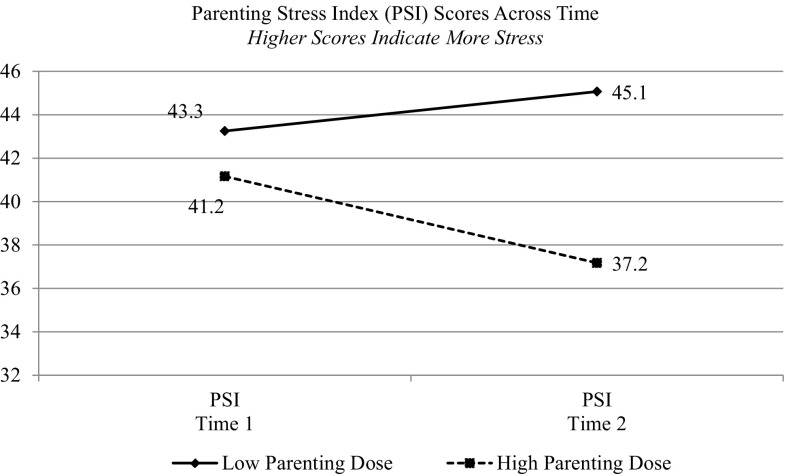
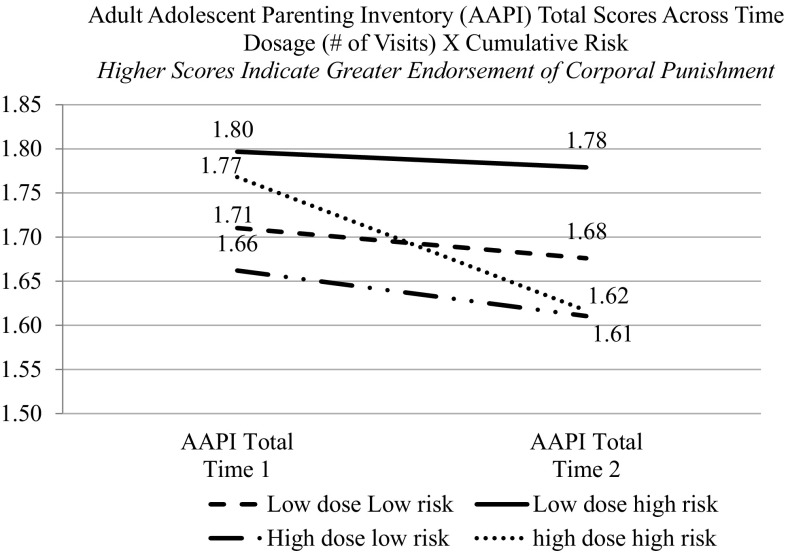
Introduction Research has documented modest positive impacts of early childhood home visiting programs. However, understanding more about what home visitors do during visits and how much time they spend on specific topics may provide insight into the variability in effectiveness of services. Methods Outcome data were collected via parent survey at program enrollment and 12 months from 123 women in three MIECHV-funded home visiting models. Home visitors completed weekly home visit content and activity logs. Results Families received an average of 28 visits during the study (3.1 visits per month). Of ten content areas, the three most often discussed were early childhood development, physical care of children, and the parent-child-relationship. Multivariate regression models were used to explore the association of home visit dosage, home visit content and cumulative risk factors on parenting outcomes. Women whose visits were focused more on parenting topics reported lower parenting-related stress at follow-up compared to those whose visits had less parenting content. Additionally, higher-risk women who received greater numbers of home visits showed larger reductions in their attitudes about harsh punishment over time, compared to high-risk women with fewer home visits. Discussion Receiving home visits that emphasize parenting content may contribute to reduced parenting-related stress. For high-risk women in particular, receiving more visits overall may be important to achieving positive outcomes. Implications for practice include working to engage and retain high-risk families. Future home visiting research calls for improved methods for collecting data on content/activity during visits, the necessity for long-term follow-up, and testing for the effectiveness of varied and flexible visit schedules/content focus for women and families with trauma exposure.
Overview
The claims and statistics of this paper haven’t been checked yet.
Free: it reads the open-access text and checks the first 5 claims that cite a source we can check. Create a free account to check every claim.
Integrity signals
Registry
Cites
Statistics
Figures
Verification
Claims the paper makes
The claims and statistics of this paper haven’t been checked yet.
Free: it reads the open-access text and checks the first 5 claims that cite a source we can check. Create a free account to check every claim.
Claims other papers make about this one
Each is checked against this paper’s own text: does it say what the citing paper says it does?
The source backs part of the claim, not all of it — or backs it for a different population, condition or comparison.
In the citing paper
“The home-visiting programs are generally more beneficial with the increase in the number of visits (Nygren et al., 2018).”
From Post-partum Women’s Anxiety and Parenting Stress: Home-Visiting Protective Effect During the COVID-19 Pandemic (2022) · cites this paper as Nygren et al., 2018
Experimental — accuracy not yet measuredThe source backs part of the claim, not all of it — or backs it for a different population, condition or comparison.
In the citing paper
“Research has shown that a lower socio-economic status can be associated with family violence (Löve et al., 2021), but home visits can decrease the risk of children being exposed to parental abuse (Nygren et al., 2018).”
From Extended home visits can provide multidimensional adapted professional support for parents – an intervention study (2023) · cites this paper as Nygren et al., 2018
Experimental — accuracy not yet measured
Self-check
Percentages, sums and reported differences re-computed from the paper’s own numbers.
The self-check needs the paper’s full text.
Citations
Cites
The PHQ-9: Validity of a brief depression severity measure
Kroenke, K., Spitzer, R. L., & Williams, J. B. W. (2001) · Journal of General Internal Medicine · doi:10.1046/j.1525-1497.2001.016009606.x · Cited by 44,910
Sweet, M. A., & Appelbaum, M. I. (2004) · Child Development · doi:10.1111/j.1467-8624.2004.00750.x · Cited by 798 · cited 1×
“Meta-analytic strategies to summarize home visiting outcome literature looking at service variability, including dosage predictors, point to increases in number of total hours in home visits, and home visit ‘frequency/intensity’ to be related to stronger program effects (Sweet and Appelbaum 2004; Nievar et al. 2010).”
BackgroundHome Visiting: Recent Program Evaluations: Analysis and Recommendations
Gomby, D. S., Culross, P. L., & Behrman, R. E. (1999) · The Future of Children · doi:10.2307/1602719 · Cited by 581
Factor structure and validity of the parenting stress index-short form.
Haskett, M. E., Ahern, L. S., Ward, C. S., & Allaire, J. C. (2006) · Journal of Clinical Child & Adolescent Psychology · doi:10.1207/s15374424jccp3502_14 · Cited by 556 · cited 1×
“We also used two of three subscales of the Parenting Stress Index-Short Form (PSI-SF), the Parenting Distress (PD) and Parent–Child Dysfunctional Interaction (P-CDI) subscales (Abidin 1995; Haskett et al. 2006), to measure stress related to the parenting role.”
MethodThe Role of Home-Visiting Programs in Preventing Child Abuse and Neglect
Howard, K. S., & Brooks-Gunn, J. (2009) · The Future of Children · doi:10.1353/foc.0.0032 · Cited by 371 · cited 1×
“1999; Howard and Brooks-Gunn 2009).”
The relations among cumulative risk, parenting, and behavior problems during early childhood
Trentacosta, C. J., Hyde, L. W., Shaw, D. S., Dishion, T. J., Gardner, F., & Wilson, M. (2008) · Journal of Child Psychology and Psychiatry · doi:10.1111/j.1469-7610.2008.01941.x · Cited by 290 · cited 1×
“Research contends that as the number of risk factors accumulate for women and families, so does the potential for negative maternal and child outcomes (Burchinal et al. 2008; Trentacosta et al. 2008; Cabrera et al. 2011).”
BackgroundComponents Associated With Home Visiting Program Outcomes: A Meta-analysis
Filene, J. H., Kaminski, J. W., Valle, L. A., & Cachat, P. (2013) · Pediatrics · doi:10.1542/peds.2013-1021h · Cited by 211
Cabrera, N. J., Fagan, J., Wight, V., & Schadler, C. (2011) · Child Development · doi:10.1111/j.1467-8624.2011.01667.x · Cited by 202 · cited 1×
“Research contends that as the number of risk factors accumulate for women and families, so does the potential for negative maternal and child outcomes (Burchinal et al. 2008; Trentacosta et al. 2008; Cabrera et al. 2011).”
Raikes, H., Green, B. L., Atwater, J., Kisker, E., Constantine, J., & Chazan-Cohen, R. (2006) · Early Childhood Research Quarterly · doi:10.1016/j.ecresq.2006.01.006 · Cited by 198 · cited 1×
“One study that collected data specific to visit content reported that the larger the percentage of time home visitors spent on child-focused activities, the greater positive outcomes were found for child cognitive and language development, parenting, and maternal depression (Raikes et al. 2006).”
Self-citationCumulative Social Risk, Parenting, and Infant Development in Rural Low-Income Communities
Burchinal, M., Vernon-Feagans, L., Cox, M., & Key Family Life Project Investigato (2008) · Parenting · doi:10.1080/15295190701830672 · Cited by 195
Research works printed but not linked: 2
- Abidin, R. R. (1995). PSI-SF: Parenting Stress Index, 3rd edition short form. Retrieved from https://www.parinc.com/Products/Pkey/332.
- Filene J Meta-analytic review of components associated with home visiting programs: Final report 2012 Arlington, VA James Bell Associates
Cited by
Bhushan, D., Kotz, K. J., McCall, J., Wirtz, S., Gilgoff, R., Dube, S. R., Powers, C., Olson-Morgan, J., Galeste, M., Patterson, K., et al. (2020) · doi:10.48019/peam8812 · Cited by 121
An Inquiry into Home Visits as a Practice of Culturally Sustaining Pedagogy in Urban Schools
Park, S., & Paulick, J. H. (2021) · Urban Education · doi:10.1177/0042085921998416 · Cited by 45
“In the last few decades, despite some research indicating only modest benefits of home visits (Astuto & Allen, 2009; Nygren et al., 2018), home visiting has expanded considerably as agencies and foundations have invested millions of dollars into home visit programs (Bhavnagri & Krolikowski, 2000).”
BackgroundDesenvolvimento infantil e visita domiciliar na primeira infância: mapa conceitual
Hilário, J. S. M., Henrique, N. C. P., Santos, J. S., Andrade, R. D., Fracolli, L. A., & de Mello, D. F. (2022) · Acta Paulista de Enfermagem · doi:10.37689/acta-ape/2022ar03653 · Cited by 35
“NYGREN et al.((22)) EUA 2018 Identificar e analisar a atuação dos visitadores durante visitas domiciliares e quanto tempo utilizam em tópicos específicos.”
BackgroundInfluentialKristensen, I. H., Juul, S., & Kronborg, H. (2020) · BMC Psychology · doi:10.1186/s40359-020-00467-5 · Cited by 23
“It has been documented that the effects of health visitor delivered home visits are associated with the number and duration of visits and with the health visitor’s education [46, 47].”
BackgroundFolger, A. T., Nidey, N., Ding, L., Ji, H., Yolton, K. A., Ammerman, R. T., & Bowers, K. A. (2021) · American Journal of Epidemiology · doi:10.1093/aje/kwab270 · Cited by 22
Stargel, L. E., Fauth, R. C., Goldberg, J. L., & Easterbrooks, M. A. (2020) · Prevention Science · doi:10.1007/s11121-020-01090-x · Cited by 19
Julian, M. M., Muzik, M., Jester, J. M., Handelzalts, J. E., Erickson, N. L., Stringer, M. K., Brophy‐Herb, H. E., Ribaudo, J., Huth‐Bocks, A. C., Lawler, J. M., et al. (2021) · Children and Youth Services Review · doi:10.1016/j.childyouth.2021.106135 · Cited by 17
Impact of Intimate Partner Violence on Children
Doswell, A., Kazmir, S., Segal, R. S., & Tiyyagura, G. K. (2025) · Pediatric Clinics of North America · doi:10.1016/j.pcl.2024.12.005 · Cited by 13
Vivências de interação entre mãe adolescente e enfermeira visitadora: um estudo fenomenológico
de Abreu, F. C. P., Charepe, Z. B., Reticena, K. D. O., Siqueira, L. D., & Fracolli, L. A. (2020) · Revista da Escola de Enfermagem da USP · doi:10.1590/s1980-220x2019030103635 · Cited by 13
McKelvey, L. M., & Fitzgerald, S. (2020) · Infant Mental Health Journal · doi:10.1002/imhj.21842 · Cited by 12
Larsson, M., Bäckström, C., Larsson, R., Gahm, S., & Wilhsson, M. (2023) · Primary Health Care Research & Development · doi:10.1017/s1463423623000336 · Cited by 11
“Research has shown that a lower socio-economic status can be associated with family violence (Löve et al., 2021), but home visits can decrease the risk of children being exposed to parental abuse (Nygren et al., 2018).”
BackgroundPeacock‐Chambers, E., Buckley, D., Lowell, A. F., Clark, M. C., Friedmann, P. D., Byatt, N., & Feinberg, E. (2022) · Journal of Child and Family Studies · doi:10.1007/s10826-022-02313-1 · Cited by 11
“…retention, more time focused on facilitating mother–child interactions led to an increased engagement in interventions and services, improved the quality of home visits, and decreased parenting related stress (Nygren et al., 2018; Peterson et al., 2018; Peterson et al., 2007; Roggman et al., 2008).”
BackgroundPostnatal quality of care measures for mothers and newborns at home: A scoping review
Mespreuve, A.-S., Apers, L., Moller, A., & Galle, A. (2024) · PLOS Global Public Health · doi:10.1371/journal.pgph.0003498 · Cited by 10
Perinatal interventions to prevent Adverse Childhood Experiences (ACEs): A scoping review
Kinsey, J., Charite, J. L., Russ, S. A., & Schickedanz, A. B. (2024) · PLoS ONE · doi:10.1371/journal.pone.0307441 · Cited by 11
Mersky, J. P., Janczewski, C. E., Lee, C. P., & Yasin, T. (2022) · Children and Youth Services Review · doi:10.1016/j.childyouth.2022.106638 · Cited by 9
The Practice of Family Life Education: Toward an Implementation Framework
Ballard, S. M. (2020) · Family Relations · doi:10.1111/fare.12443 · Cited by 9
Roberti, E., Giacchero, R., Grumi, S., Biasucci, G., Cuzzani, L., Decembrino, L., Magnani, M. L., Motta, M., Nacinovich, R., Pisoni, C., et al. (2022) · Maternal and Child Health Journal · doi:10.1007/s10995-022-03540-0 · Cited by 8
“The home-visiting programs are generally more beneficial with the increase in the number of visits (Nygren et al., 2018).”
BackgroundVariations in sustained home visiting care for mothers and children experiencing adversity
Kanda, K., Blythe, S. L., Grace, R., Elcombe, E. L., & Kemp, L. (2021) · Public Health Nursing · doi:10.1111/phn.13014 · Cited by 6
Evaluation of the impact of the MECSH programme in England: A mixed methods study
Kemp, L., Elcombe, E. L., Sumpton, W., Hook, B., Cowley, S., & Byrne, F. (2022) · Journal of Health Visiting · doi:10.12968/johv.2022.10.5.200 · Cited by 5
Yamaoka, Y., Ochi, M., Fukui, M., Isumi, A., Doi, S. K., Fujiwara, T., & Nawa, N. (2024) · Child Abuse & Neglect · doi:10.1016/j.chiabu.2024.106853 · Cited by 5
Demographic and psychological factors that predict retention in infant mental health home visiting
Jester, J. M., Rosenblum, K. L., Muzik, M., Niec, L. N., Stringer, M. K., Handelzalts, J. E., Brophy‐Herb, H. E., Stacks, A. M., Weatherston, D. J., Torres, C., et al. (2022) · Early Childhood Research Quarterly · doi:10.1016/j.ecresq.2022.07.010 · Cited by 5
EL VÍNCULO EN LA INTERVENCIÓN SOCIAL: UN COMPONENTE PARADÓJICO DEL ACOMPAÑAMIENTO DOMICILIARIO
Undurraga, C., Muñoz, F. C., & Aracena, M. (2022) · Psicologia em Estudo · doi:10.4025/psicolestud.v27i0.59021 · Cited by 3
Siqueira, L. D., & Fracolli, L. A. (2021) · Ciência Cuidado e Saúde · doi:10.4025/ciencuidsaude.v20i0.55613 · Cited by 3
D'Agostini, F. C. P. D. A. (2019) · Digital Library of Theses and Dissertations (Universidade de São Paulo) · doi:10.11606/t.7.2019.tde-22022021-162253 · Cited by 3
Franck, L. S., Johnson, I., Mehra, R., Remy, L. L., & Rienks, J. (2023) · Journal of Public Health Management and Practice · doi:10.1097/phh.0000000000001820 · Cited by 2
Andom, F., Jonson‐Reid, M., Henk, J. K., & Kemner, A. L. (2025) · Child Maltreatment · doi:10.1177/10775595251368358 · Cited by 1
“Early childhood home visiting programs for the prevention of child maltreatment are identi fi ed in the current literature as popular and promising interventions with mixed effectiveness results (Nygren et al., 2018).”
A visita domiciliar na primeira infância: mapa conceitual
Hilário, J. S. M. (2020) · Digital Library of Theses and Dissertations (Universidade de São Paulo) · doi:10.11606/d.22.2020.tde-17032021-111354 · Cited by 1
Patounas, M. P. (2020) · Queensland University of Technology · doi:10.5204/thesis.eprints.200066
Effectiveness of Home Visits by Public Health Workers in Maternal and Child Health in Naga City
Licup-Periña, L. (2023) · Journal of Education Management and Development Studies · doi:10.52631/jemds.v3i2.209
Liel, C., & Liel, K. (2025) · Praxis der Kinderpsychologie und Kinderpsychiatrie · doi:10.13109/prkk.2025.74.5.414
Home Visitor Attendance at Well Child Checks: A Mixed Methods Study of a Novel Intervention
Segal, R. S., Rose, S., Dutcher, M., Myroniuk, T. W., Moffatt, M. E., & Anderst, J. D. (2025) · Clinical Pediatrics · doi:10.1177/00099228251359443
Ev Ziyaretlerinin Önemi: Geleneksel Derleme
Ceylantekin, Y., & Dayanır, D. (2025) · Halk Sağlığı Hemşireliği Dergisi · doi:10.54061/jphn.1602502
Kristensen, I. H., Juul, S., & Kronborg, H. (2020) · Figshare · doi:10.6084/m9.figshare.13115280
Beyond the School Walls: Counsellors, Community, and Cooperative Strategies in Home Visit Programs
Mohd-Tajuddin, A. H., Yusof, N., & Tugiman, N. (2026) · Leadership and Policy in Schools · doi:10.1080/15700763.2026.2640591 · Cited by 1
Preventing Adverse Childhood Experiences: A Framework for Culturally Responsive Home Visitation
Ballard, J., Asiodu, I. V., Dawson-Rose, C. S., Leutwyler, H. C., & Waters, C. M. (2026) · Journal of Transcultural Nursing · doi:10.1177/10436596261430091
“Home visitors typically have sufficient time for these conversations, with visits averaging approximately 1 hr and a mean of 28 visits annually (Hughes-Belding et al., 2019; Nygren et al., 2018), providing a feasible platform for ACEs awareness and prevention.”
Building the workforce for an early childhood home-visiting programme: Reflections from the field
Schmidt, K. L. (2026) · Perspectives in Education · doi:10.38140/pie.v44i1.8709
PARLAK, Ş. Y., & Aksoy, F. (2026) · Ankara Üniversitesi Eğitim Bilimleri Fakültesi Özel Eğitim Dergisi · doi:10.21565/ozelegitimdergisi.1865883
Ballard, J., Dawson-Rose, C. S., Waters, C. M., Asiodu, I. V., & Leutwyler, H. C. (2026) · Journal of Advanced Nursing · doi:10.1111/jan.70712
Aldossari, K. M. D. (2024) · Review of Contemporary Philosophy
Exploring the Spectrum of Home Visiting Programmes for Infant Care: A Systematic Review
Auglytė, V., Kirka, V., & Toros, K. (2026) · Developmental Child Welfare · doi:10.1177/25161032261499274
Metadata
- Authors
- Nygren, P., Green, B., Winters, K., & Rockhill, A.
- Affiliations
- Portland State University (US)
- Corresponding author
- Nygren, Peggy
- Venue
- Maternal and Child Health Journal
- Published
- 2018-06-13
- Volume
- 22
- Issue
- S1
- Pages
- 52-61
- ISSN
- 1092-7875 (ISSN-L)
- 1573-6628
- PMC
- PMC6153727
- OpenAlex
- W2808050529
- Cited by
- 38
- References
- 14
- Citations by year
- 2026: 4 · 2025: 5 · 2024: 3 · 2023: 3 · 2022: 8 · 2021: 5 · 2020: 9 · 2019: 1
- FWCI
- 5.73
- Type
- journal article
- Language
- en
- Update notices
- correction (2018-08-22)
- Open access
- hybrid
- doi.org
- Licence
- cc-by
- creativecommons.org/licenses/by/4.0 (tdm)
- Locations
- Maternal and Child Health Journal (publishedVersion, cc-by)
- Europe PMC (PubMed Central) (publishedVersion, cc-by)
- PubMed Central (publishedVersion, cc-by)
- PubMed (publishedVersion)
- PDXScholar (Portland State University) (submittedVersion, cc-by)
- Funders
- Maternal and Child Health Bureau (D89MC26363)
- Topics
- Health Sciences › Medicine › Pediatrics, Perinatology and Child Health › Maternal and Neonatal Healthcare
- Health Sciences › Medicine › Pediatrics, Perinatology and Child Health › Infant Development and Preterm Care
- Health Sciences › Medicine › Public Health, Environmental and Occupational Health › Maternal Mental Health During Pregnancy and Postpartum
- Keywords
- home visits, parenting outcomes, parental stress, high-risk families, cumulative risk factors, early childhood development, parent-child relationship, visit scheduling, trauma exposure
- MeSH terms
- Child, Child Abuse, Child, Preschool, Female, Home Care Services, House Calls, Humans, Infant, Outcome and Process Assessment, Health Care, Postnatal Care, Pregnancy, Quality of Health Care, Program Evaluation, Parenting
About these checks
Registry, retraction, Cites and statistics results are computed, not judged, with one exception: a printed reference that no index lists is read once by a model before it counts as a citation error. Claims are extracted by a model and kept only when their quote appears verbatim in the text; each cited source is then checked, with a model’s help, for whether it says what the claim relies on. Those verdicts can be wrong — read the claim’s quote and the cited source before relying on one.
Statistics and arithmetic are recomputed, not judged.
Confidence bands are shown only for fields calibrated on our annotated test set. None is calibrated yet, so no band is shown.
What counts as a claim ›How we measure confidence ›How we check this ›
Are you an author, or do you see a problem with this page? Request a review
Data sources
Bibliographic data: Semantic Scholar, OpenAlex, Crossref.
Contains information from the Semantic Scholar Academic Graph Datasets, made available under the ODC Attribution License (ODC-BY 1.0).
Semantic Scholar’s data is described in: Kinney, R., et al. (2023). The Semantic Scholar Open Data Platform. arXiv:2301.10140.
