

The DOI matches its Crossref record; 1 of the 1 references it cites were found in a registry or an index.
Treating Emotion-Related Disorders in Japanese Traditional Medicine: Language, Patients and Doctors
Open accessAbstract
This paper analyses how the conceptual and therapeutic formation of Japanese traditional medicine (Kampo) has been socially constructed through interactions with popular interpretations of illness. Taking the example of emotion-related disorders, this paper focuses on the changing meaning of constraint (utsu) in Kampo medicine. Utsu was once a name for one of the most frequently cited emotion-related disorders and pathological concerns during the Edo period. With the spread of Western medicine in the Meiji period, neurasthenia replaced utsu as the dominant emotion-related disorder in Japanese society. As a result, post-Meiji doctors developed other conceptual tools and strategies to respond to these new disease categories, innovations that continue to influence contemporary practitioners. I begin this history by focusing on Wada Tōkaku, a Japanese doctor of the Edo period who developed a unique theory and treatment strategy for utsu. Secondly, I examine. Yomuto Kyūshin and Mori Dōhaku, Kampo doctors of the early twentieth century, who privileged neurasthenia over utsu in their medical practice. The paper concludes with a discussion of the flexibility and complexity of Kampo medicine, how its theory and practices have been influenced by cross-cultural changes in medicine and society, while incorporating the popular experience of illness as well.
Overview
The claims and statistics of this paper haven’t been checked yet.
Run the check — free, no account needed. It reads the open-access text and checks the sources it cites.
Integrity signals
Registry
Cites
Statistics
Figures
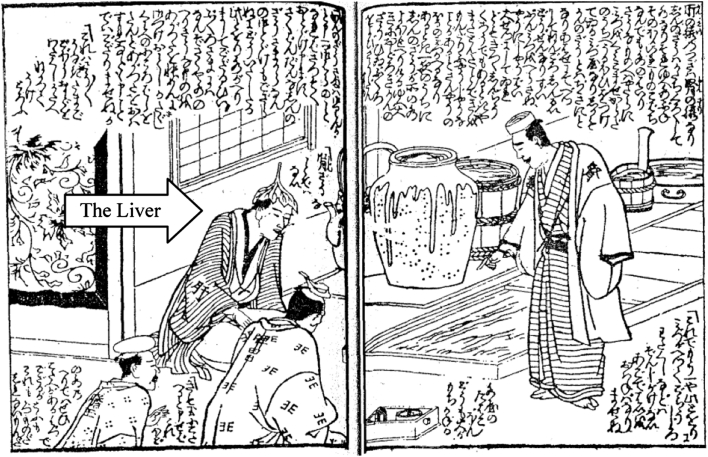
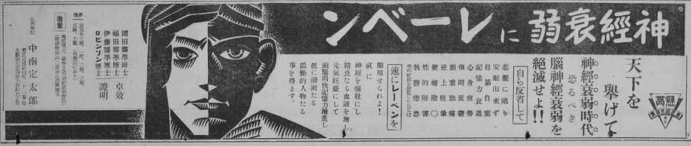
Verification
Claims the paper makes
The claims and statistics of this paper haven’t been checked yet.
Run the check — free, no account needed. It reads the open-access text and checks the sources it cites.
Claims other papers make about this one
Each is checked against this paper’s own text: does it say what the citing paper says it does?
The source backs part of the claim, not all of it — or backs it for a different population, condition or comparison.
In the citing paper
“the interpretation of emotion-related disorders as predominantly organ system disorders began in modern Japan during the Republican Era, which led to the definition of Utsu as “cultural” disorder [13].”
From Understanding Mind‐Body Interaction from the Perspective of East Asian Medicine (2017) · cites this paper as [13]
Experimental — accuracy not yet measuredThe cited source says what the claim attributes to it.
In the citing paper
“Previous studies have argued that the issue of translation in cultural medical history has not only brought about a linguistic expansion but also led to the conceptual fusion of new ideas [13].”
From Understanding Mind‐Body Interaction from the Perspective of East Asian Medicine (2017) · cites this paper as [13]
The check wasn’t confident either way, so it gives no verdict — never disputed.
In the citing paper
“the uniquely Korean attributes of Hwa-byung have never been established by a clear consensus [12, 13].”
From Understanding Mind‐Body Interaction from the Perspective of East Asian Medicine (2017) · cites this paper as [13]
Experimental — accuracy not yet measured
Self-check
Percentages, sums and reported differences re-computed from the paper’s own numbers.
The self-check needs the paper’s full text.
Citations
Cites
‘The Puzzle of Spermatorrhea in Republican China’
Shapiro, H. (1998) · positions: asia critique · doi:10.1215/10679847-6-3-551 · Cited by 53
Research works printed but not linked: 44
- Azai, Teian 浅井貞庵 1865 Oral Secrecy of Methods and Materials 方彙口訣. In Kinsei Kampō Igakusho Shūsei 近世漢方医学書集成 (hereafter abbreviated as KKIS) (Vol. 78). Ōtsuka, Keisetsu and Yakazu, Dōmei, eds. Tokyo: Meicho Shuppan.
- Cohen, Lawrence 1998 No Aging in India: Alzheimer’s, the Bad Family, and Other Modern Things. Berkeley: University of California Press. · DOI
- Daidoji, Keiko 2009 What a Household with Sick Persons Should Know: Expressions of Body and Illness in a Medical Text of Early Nineteenth-Century Japan. Ph.D. Thesis, University of London, London.
- Egashira, Yosuke 江頭洋祐 2007 Historical Analysis of NBM in Oriental Medicine 東洋医学/漢方診療における NBM (ナラティブ ・ア プローチ) の歴史的検証. In Japan Journal of Psychosomatic Medicine 47: 283–289.
- Endō, Toyokichi 遠藤豊吉 1981 The God of Rescue 救いの神. In Prices of the Meiji, Taisho, Showa: History of Japanese Customs 値段の明治・大正・昭和風俗史. Shūkan Asahi 週刊朝日, ed., pp. 156–161. Tokyo: Asahi Shinbunsha.
- Fleck, Ludowik 1981 Genesis and Development of a Scientific Fact. New Edition. Chicago: Chicago University Press. · DOI
- Frühstück, Sabine 2005 Male Anxieties: Nerve Force, Nation, and the Power of Sexual Knowledge. In Building a Modern Japan: Science, Technology, and Medicine in the Meiji era and Beyond. Low, Morris, ed., pp. 37–59. New York and England: Palgrave McMillan. · DOI
- Gijswijt-Hofstra, Marijke, and Roy Porter, eds. 2001 Cultures of Neurasthenia from Beard to the First World War. Clio Medica 63, Wellcome Series in the History of Medicine. Amsterdam and New York: Rodopi. · DOI
- Goto Konzan 後藤艮山 1776 Notes of Master’s Talk 師説筆記 (Vol. 13). Facsimiled in 1985, 2nd Edition. Pittsburgh: KKIS.
- Hsu, Elisabeth 2001 Innovation in Chinese Medicine. Cambridge, UK: Cambridge University Press.
- Huang, Chung-hsiu 黄崇修 2011 Between Desire and Constraint: the Influence from Daoism of the Song Period Found in the Theory of Constraint by a Confucian Doctor, Zhu Danxi 欲と鬱の間: 儒医朱丹渓鬱説の展開における宋代道学の受容. Ph.D Thesis, The University of Tokyo.
- Ishibashi, Chōei 石橋長英 1935 The Lecture Notes of International Medicine 国際医学講演録. 第 1 輯 (Vol. 1). Kokusai Igaku Kyōkai 国際医学協会, ed. Tokyo: Kanehara Shoten.
- Kagawa, Shuan 香川修庵 1788 Medical Record of Ippondō 一本堂行余医言 (Vol. 65). Facsimiled in 1981. Pittsburgh: KKIS.
- Kitanaka, Junko 北中淳子 2004b Disease of Constraint 鬱の病. In Kuriyama, Shigehisa 栗山茂久 and Kitazawa, Kazutoshi 北澤一利, eds., Bodily Experiences in Modern Japan 近代日本の身体感覚, pp. 360–390. Tokyo: Seikyūsha.
- Kitanaka, Junko 北中淳子 2012 Depression in Japan: Psychiatric Cures for a Society in Distress. Woodstock UK: Princeton University press. · DOI
- Kleinman, Arthur 1980 Patients and Healers in the Context of Culture. An Exploration of the Borderland Between Anthropology, Medicine, and Psychiatry. California: University of California Press. · DOI · Paper page
- Kleinman, Arthur 1986 Social Origins of Distress and Diseases: Depression, Neurasthenia, and Pain in Modern China. New Haven: Yale University Press.
- Kleinman, Arthur 1988 The Illness Narratives: Suffering, Healing and the Human Condition. New York: Basis Books, Inc.
- Kuriyama, Shigehisa 栗山茂久 1997 The Thought on Stiff-Shoulders 肩凝り考. In Illness and medicine in history 歴史の中の病と医学. Yamada, Keiji 山田慶児 and Kuriyama, Shigehisa 栗山茂久, eds., pp. 37–62. Kyoto: Shibunkaku.
- Kuriyama, Shigehira 2004 Translation and the History of Japanese Irritability. Traduire, Transposer, Naturaliser: La Formation D’une Langue Scientifique Moderne Hors Des Frontières De L’Europe Au XIXe Siècle, pp. 27–41. France: L’Harmattan.
- Lock, Margaret. 1980 East Asian Medicine in Urban Japan. Berkeley: University of California Press. · DOI
- 1987 Protests of a Good Wife and Wise Mother: The Medicalization of Distress in Japan. In Health, Illness and Medical Care in Japan. Norbeck, Edward and Lock, Margaret, eds., pp. 130–157. Honolulu: University of Hawaii Press.
- Lucas, AnElissa 1982 Chinese Medical Modernization: Comparative Policy Continuities, 1930s–1980s. Cambridge: Cambridge University Press.
- Matsuda, Kunio 松田邦夫 2001 Annotation. In Idle Talk Under Palm Trees (Vol. 15) 蕉窓雑話. 1821 Published. Facsimiled in 2001. 4th Edition, pp. 5–29. Pittsburgh: KKIS.
- Morita, Masatake 森田正馬 2004 True Nature and Therapy of Anxiety-Based Disorders 新版 神経質の本態と療法. Reprint of Morita Collection (Vol. 2) 森田正馬全集第二巻 (1974). Tokyo: Hakuyosha.
- Oberländer, Christian 1995 The Modernisation of Japan’s Kanpô Medicine (1850–1950). In East Asian Science: Tradition and beyond. Hashimoto, Jami, and Skar, eds., pp. 141–146. Japan: Kansai University Press.
- Ochiai, Taizō 落合泰三 1883 Record of the Correspondences Between Chinese and Western Disease Names 漢洋病名対照録. In Oriento Rinshō bunken kenkyūsho オリエン ト臨床文献研究所, ed. 1996. Compilation of Clinical Kampō Textbooks 臨床漢方診断学叢書 (Vol. 1). Tokyo: Oriento sha.
- Ohnuki-Tierney, Emiko 1984 Health and Illness in Contemporary Japan. Cambridge: Cambridge University Press. · DOI
- 2000 Practice of Kampo Treatment by Symptoms 症候による漢方治療の実際, Firstly Published in 1963. 5th Edition in 2000. In Ōtsuka, Yasuo and Watanabe, Kenji, eds. Tokyo: Nanzando.
- Ozawa-de Silva, Chikako 1996 Japanese Indigenous Psychologies: Concepts of Mental Illness in Light of Different Cultural Epistemologies. British Medical Anthropology Review 3(2): 11–21. · DOI
- 1995 The Impact of Western Medicine and the Concept of Medical Treatment in Japan. In History of Therapy‐ Preceding of the 10th International Symposium on the Comparative History of Medicine‐East and West. Kawakita Yoshio, Sakai Sizu, Ōtsuka Yasuo, eds., pp. 157–172. Tokyo: Saikon.
- Scheid, Volker., Bensky, Dan., Ellis, Andrew., Barolet, Randall 2009 Chinese Herbal Medicine: Formulas & Strategies, 2nd Edition. Seattle, USA: Eastland Press Inc.
- 2003 How Different Are Western and Chinese Medicine? The Case of Nerves. In Medicine Across Cultures. Helaine Selin, ed., pp. 351–372. Dordrecht, Boston, and London: Kluwer Academic Publishers.
- Shiba, Zenkō 芝全交 1793 Jūshi keisei hara no uchi 十四傾城腹の内. Illustrated by Kitao Shigemasa 北尾重政. Reprint 1983. In Edo no gesaku ehon 江戸の戯作絵本, pp. 47–86 (Vol. 4). Tokyo: Shakai Shisōsha.
- Shin, Chang-Geon 愼蒼健 2011 The Formation and Development of Self-Portrait of Japanese Kampo Medicine: The Relationship Between ‘Showa’ Kampo and Science 日本漢方医学における自画像の形成と展開──「昭和」漢方と科学の関係’. In Essays of the philosophical history of science in modern Japan 昭和前期の科学思想史. Kanamori, Osamu, ed., pp. 311–340. Tokyo: Keiso shobo.
- Sivin, Nathan 1988 Traditional Medicine in Contemporary China. Ann Arbor: University of Michigan Press.
- Suzuki, Akihito 鈴木晃仁 2007 Medicine, State, and Society in Japan, 500–2000. In Bynum, W.F. and Bynum, Helen, eds., pp. 79–89. New York: Greenwood Press.
- Tanaka, Yūkichi 田中祐吉 1909 General Discussion of Pathology (Vol. 2) 病理総論下巻. Tokyo: Kahōdō Shoten.
- Wada, Tōkaku 和田東郭 1821 Idle Talk Under Palm Trees 蕉窓雑話. Facsimiled in 2001. 4th Edition (Vol. 15). Pittsburgh: KKIS.
- Yakazu, Kaku 矢数格 1964 Kampo Medicine of Ikkandō 漢方一貫堂医学. 7th Edition. Yokosuka: Idō no Nihonsha.
- Yokota, Fuyuhiko 横田冬彦 2009 Peaceful World 天下泰平 History of Japan 日本の歴史 (Vol. 16). Tokyo: Kodansha Gakujutu Bunko 講談社学術文庫.
- Yoshida, Nobuyuki 吉田信之 2009 Maturity of the Edo period: History of Japan 成熟する江戸 日本の歴史 (Vol. 17). Tokyo: Kodansha Gakujutsu Bunko 講談社学術文庫.
- Young, Alan 1995 The Harmony of Illusions: Inventing Post-Traumatic Stress Disorder. Princeton, NJ: Princeton University Press. · DOI
- Zhao, Xianke 張献可 Ming Dynasty 1991 Thread Through Medicine 医貫, Wakoku Kanseki Isho Shusei (Vol. 14) 和刻漢籍医書集成第十四輯. Tokyo: Enterprise.
Cited by
Sorted by citations
Karchmer, E. I. (2013) · Culture, Medicine, and Psychiatry · doi:10.1007/s11013-012-9289-4 · Cited by 36
Understanding Mind‐Body Interaction from the Perspective of East Asian Medicine
Lee, Y.-S., Ryu, Y., Jung, W.-M., Kim, J., Lee, T., & Chae, Y. (2017) · Evidence-based Complementary and Alternative Medicine · doi:10.1155/2017/7618419 · Cited by 21
“Previous studies have argued that the issue of translation in cultural medical history has not only brought about a linguistic expansion but also led to the conceptual fusion of new ideas [13].”
Metadata
- Authors
- Daidoji, K.
- Affiliations
- Keio University (JP)
- Corresponding author
- Daidoji, Keiko
- Venue
- Culture, Medicine, and Psychiatry
- Published
- 2012-12-30
- Volume
- 37
- Issue
- 1
- Pages
- 59-80
- ISSN
- 0165-005X (ISSN-L)
- 1573-076X
- PMC
- PMC3586063
- OpenAlex
- W2001314121
- Cited by
- 55
- References
- 1
- Citations by year
- 2026: 2 · 2025: 25 · 2024: 1 · 2022: 13 · 2021: 1 · 2019: 1 · 2018: 1 · 2017: 5 · 2016: 1 · 2015: 2 · 2014: 1 · 2013: 2
- FWCI
- 1.82
- Type
- journal article
- Language
- en
- Open access
- hybrid
- doi.org
- Locations
- Culture Medicine and Psychiatry (publishedVersion, cc-by)
- Europe PMC (PubMed Central) (publishedVersion, cc-by)
- PubMed Central (publishedVersion, cc-by)
- PubMed (publishedVersion)
- Funders
- Wellcome Trust (088246)
- University of Westminster
- Japan Society for the Promotion of Science
- Topics
- Social Sciences › Psychology › Clinical Psychology › Historical Psychiatry and Medical Practices
- Health Sciences › Medicine › Complementary and alternative medicine › Traditional Chinese Medicine Studies
- Social Sciences › Arts and Humanities › History › History of Emotions Research
- Keywords
- Kampo medicine, neurasthenia, Edo period medicine, social construction of illness, history of medicine
- MeSH terms
- Culture, Depression, Humans, Japan, Language, Liver, Neurasthenia, Qi, Medicine, Kampo, History, 17th Century, History, 18th Century, History, 19th Century, History, 20th Century
About these checks
Registry, retraction, Cites and statistics results are computed, not judged, with one exception: a printed reference that no index lists is read once by a model before it counts as a citation error. Claims are extracted by a model and kept only when their quote appears verbatim in the text; each cited source is then checked, with a model’s help, for whether it says what the claim relies on. Those verdicts can be wrong — read the claim’s quote and the cited source before relying on one.
Statistics and arithmetic are recomputed, not judged.
Confidence bands are shown only for fields calibrated on our annotated test set. None is calibrated yet, so no band is shown.
What counts as a claim ›How we measure confidence ›How we check this ›
Are you an author, or do you see a problem with this page? Request a review
