

Applicability of the time–temperature superposition principle in modeling dynamic response of a polyurea
Open accessThe DOI matches its Crossref record; 7 of the 7 references it cites were found in a registry or an index.
Abstract
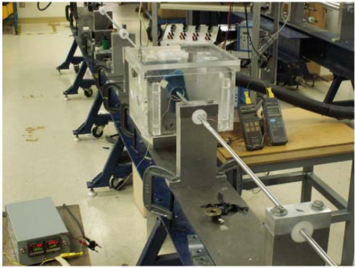
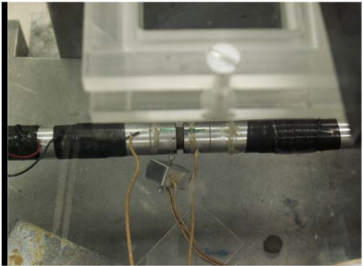
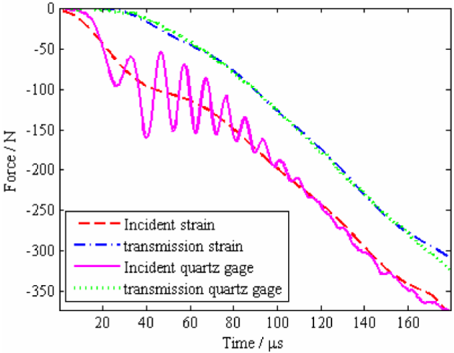
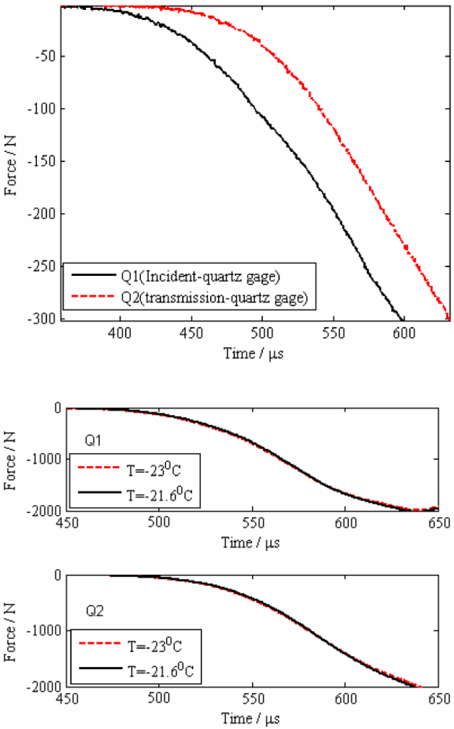
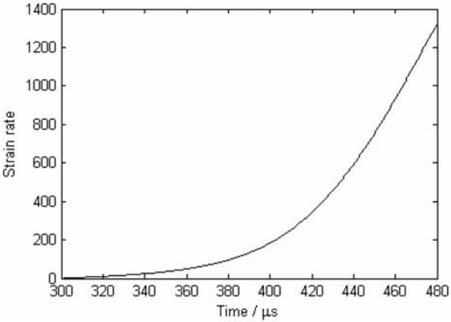
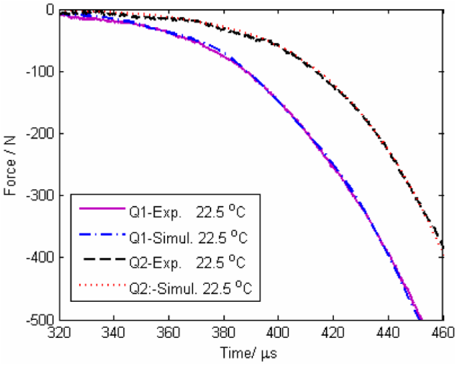
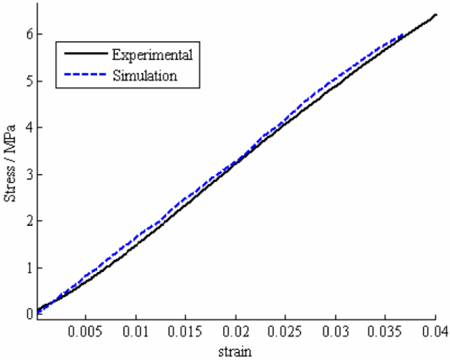
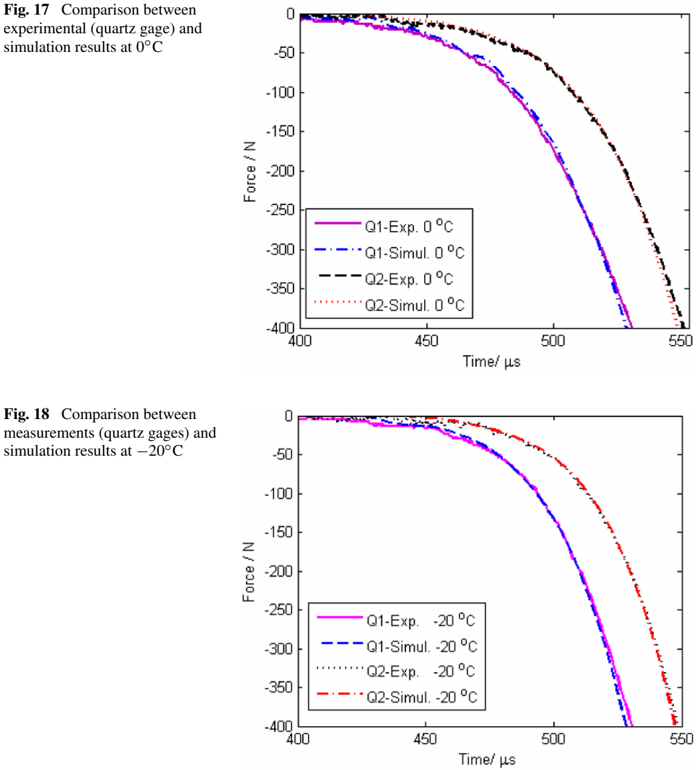
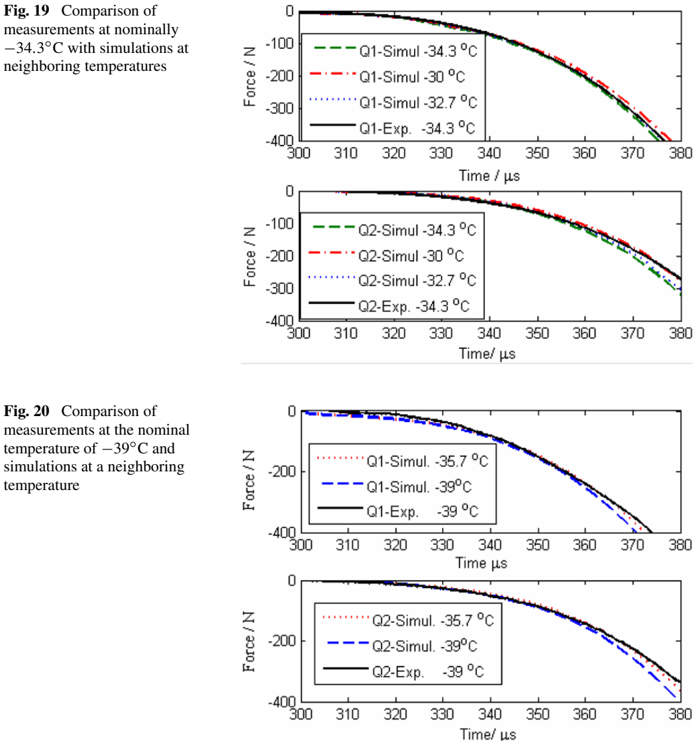
This paper addresses the applicability of the Time–Temperature Superposition Principle in the dynamic response of a polyurea polymer at high strain rates and different temperatures. Careful and extensive measurements in the time domain of the relaxation behavior and subsequent deduction of a master-relaxation curve establish the mechanical behavior for quasistatic deformations over a time range of 16 decades. To examine its validity in a highly dynamic environment, experiments with the aid of a split Hopkinson (Kolsky) pressure bar are carried out. The use of a two-material pulse shaper allows for stress equilibrium across the specimen during the compression process, to concentrate on the initial, small deformation part that characterizes linearly viscoelastic behavior. This behavior of polyurea at high strain rates and different temperatures is then investigated by comparing results from a physically fully three-dimensional (axisymmetric) numerical model, employing the quasistatically obtained properties, with corresponding Hopkinson bar measurements. The experimentally determined wave history entering the specimen is used as input to the model. Experimental and simulation results are compared with each other to demonstrate that the Time–Temperature Superposition Principle can indeed provide the requisite data for high strain rate loading of viscoelastic solids, at least to the extent that linear viscoelasticity applies with respect to the polyurea material.
Overview
The claims and statistics of this paper haven’t been checked yet.
Free: it reads the open-access text and checks the first 5 claims that cite a source we can check. Create a free account to check every claim.
Integrity signals
Registry
Cites
Statistics
Figures
Verification
Claims the paper makes
The claims and statistics of this paper haven’t been checked yet.
Free: it reads the open-access text and checks the first 5 claims that cite a source we can check. Create a free account to check every claim.
Claims other papers make about this one
Each is checked against this paper’s own text: does it say what the citing paper says it does?
The cited source says what the claim attributes to it.
In the citing paper
“Equation ( 2) has been validated with higher strain rates than typical experimental test rates [24,25].”
Self-check
Percentages, sums and reported differences re-computed from the paper’s own numbers.
The self-check needs the paper’s full text.
Citations
Cites
Williams, M. L., Landel, R. F., & Ferry, J. D. (1955) · Journal of the American Chemical Society · doi:10.1021/ja01619a008 · Cited by 8,083 · cited 2×
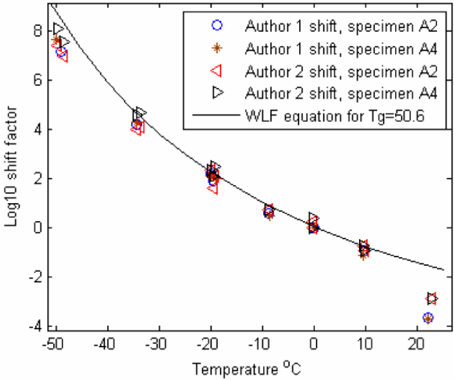
“The WLF equation (Williams et al. 1955) referenced in the figure was fitted in the most often used form of logaT = −8.”
MethodInfluentialThe Physics of Rubber Elasticity
Treloar, L. R. G., & Montgomery, D. J. (1959) · Physics Today · doi:10.1063/1.3060678 · Cited by 3,787 · cited 2×
“In particular, it has been accepted for a long time that, apart from other small temperature effects related to rubber elasticity concepts (Treloar 1975) that, when plotted on a base-10 logarithmic time basis the physical characteristic response functions—the relaxation modulus or the creep…”
BackgroundThe physics of rubber elasticity
Zimm, B. H., & Kilb, R. W. (1959) · Journal of Physics and Chemistry of Solids · doi:10.1016/0022-3697(59)90114-3 · Cited by 2,950
Dynamic Compression Testing of Soft Materials
Chen, W., Lu, F., Frew, D. J., & Forrestal, M. J. (2002) · Journal of Applied Mechanics · doi:10.1115/1.1464871 · Cited by 186 · cited 2×
“To deal with a similar situation involving materials of relatively low rigidity, Chen et al. (2002) introduced the pulse shaping technique, which seems to work quite well for polymeric materials under large deformations.”
BackgroundTschoegl, N. W., Knauss, W. G., & Emri, I. (2002) · Mechanics of Time-Dependent Materials · doi:10.1023/a:1014421519100 · Cited by 148
Self-citationImproved relaxation time coverage in ramp-strain histories
Knauss, W. G., & Zhao, J. (2007) · Mechanics of Time-Dependent Materials · doi:10.1007/s11043-007-9035-4 · Cited by 92
Self-citationCharacterization of Multiaxial Constitutive Properties of Rubbery Polymers
Chakkarapani, V., Ravi‐Chandar, K., & Liechti, K. M. (2006) · Journal of Engineering Materials and Technology · doi:10.1115/1.2345439 · Cited by 31 · cited 1×
“We choose as the best approximation the time-dependent, uniaxial (Young’s) modulus and the corresponding shift factor as summarized above, and a constant bulk modulus of 263 GPa11 (Chakkarapani et al. 2006).”
Method
Cited by
High Strain Rate Mechanics of Polymers: A Review
Siviour, C. R., & Jordan, J. L. (2016) · Journal of Dynamic Behavior of Materials · doi:10.1007/s40870-016-0052-8 · Cited by 397
Polyurea coatings for enhanced blast-mitigation: a review
Iqbal, N., Tripathi, M., Parthasarathy, S., Kumar, D., & Roy, P. K. (2016) · RSC Advances · doi:10.1039/c6ra23866a · Cited by 183
A review of fracture in viscoelastic materials
Knauss, W. G. (2015) · International Journal of Fracture · doi:10.1007/s10704-015-0058-6 · Cited by 144
“It has been demonstrated in themeantime, that at least in the context of small deformation viscoelasticity this procedure is justifiable (Zhao et al. 2007).”
BackgroundSelf-citationDynamic mechanical and ultrasonic properties of polyurea
Qiao, J., Amirkhizi, A. V., Schaaf, K., Nemat‐Nasser, S., & Wu, G. (2011) · Mechanics of Materials · doi:10.1016/j.mechmat.2011.06.012 · Cited by 111
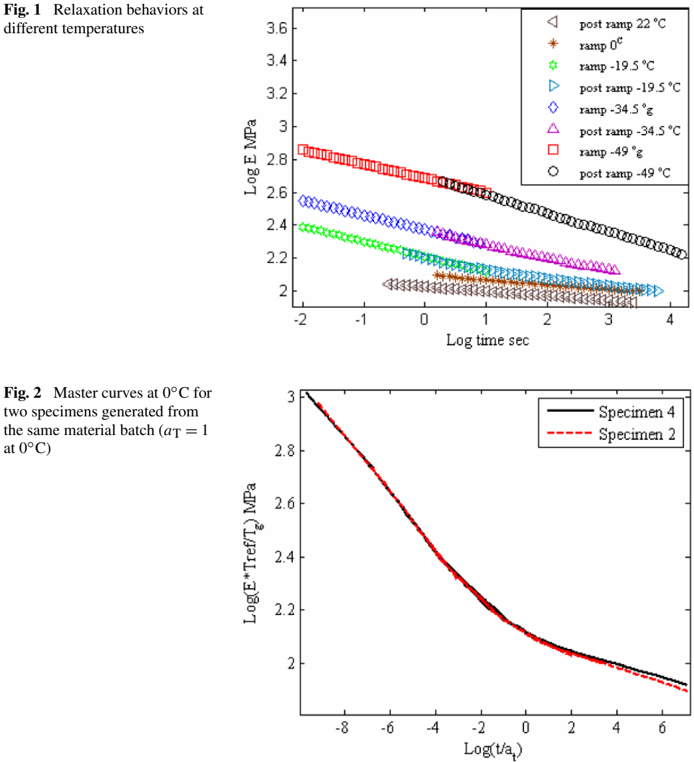
“In order to extend the time/frequency scale, Zhao et al. (2007) determined the compressive relaxation behavior of polyurea using quasistatic tests in a servo-hydraulic system at temperatures between À49 and 22 °C and then constructed a relaxation master curve at 0 °C over a reduced time range of 10…”
BackgroundMethodResultInfluentialStructure Evolution in a Polyurea Segmented Block Copolymer Because of Mechanical Deformation
Pathak, J. A., Twigg, J. N., Nugent, K. E., Ho, D. L., Lin, E. K., Mott, P. H., Robertson, C. G., Vukmir, M. K., Epps, T. H. I., & Roland, C. M. (2008) · Macromolecules · doi:10.1021/ma8011009 · Cited by 111
The closed form t-T-P shifting (CFS) algorithm
Gergesova, M., Zupančič, B., Saprunov, I., & Emri, I. (2010) · Journal of Rheology · doi:10.1122/1.3503529 · Cited by 103
3D printed cellular solid outperforms traditional stochastic foam in long-term mechanical response
Maiti, A., Small, W., Lewicki, J. P., Weisgraber, T. H., Duoss, E. B., Chinn, S. C., Pearson, M. A., Spadaccini, C., Maxwell, R. S., & Wilson, T. S. (2016) · Scientific Reports · doi:10.1038/srep24871 · Cited by 109
Effect of isocyanate content on thermal and mechanical properties of polyurea
Holzworth, K., Jia, Z., Amirkhizi, A. V., Qiao, J., & Nemat‐Nasser, S. (2013) · Polymer · doi:10.1016/j.polymer.2013.03.067 · Cited by 90
“Knauss and coworkers have also successfully applied the superposition process to polyurea and developed mastercurves [34,35].”
MethodTemperature effects on the mechanical behavior of aluminum foam under dynamic loading
Wang, P., Xu, S., Li, Z., Yang, J., Zheng, H., & Shi-sheng, H. (2014) · Materials Science and Engineering A · doi:10.1016/j.msea.2014.01.076 · Cited by 83
Sahputra, I. H., & Echtermeyer, A. T. (2013) · Modelling and Simulation in Materials Science and Engineering · doi:10.1088/0965-0393/21/6/065016 · Cited by 76
“Equation (2) has been validated with higher strain rates than typical experimental test rates [24, 25].”
BackgroundDeformation of polyurea: Where does the energy go?
Mott, P. H., Giller, C. B., Fragiadakis, D. M., Rosenberg, D. A., & Roland, C. M. (2016) · Polymer · doi:10.1016/j.polymer.2016.10.029 · Cited by 59
Song, B., Lu, W., Syn, C. J., & Chen, W. (2009) · Journal of Materials Science · doi:10.1007/s10853-008-3105-0 · Cited by 57
Zhang, P., & Li, G. (2013) · Journal of Polymer Science Part B Polymer Physics · doi:10.1002/polb.23295 · Cited by 53
Agrawal, V., Holzworth, K., Nantasetphong, W., Amirkhizi, A. V., Oswald, J., & Nemat‐Nasser, S. (2016) · Journal of Polymer Science Part B Polymer Physics · doi:10.1002/polb.23976 · Cited by 47
Dynamic tensile strength of polyurea
Youssef, G., & Gupta, V. (2011) · Journal of materials research/Pratt's guide to venture capital sources · doi:10.1557/jmr.2011.405 · Cited by 43
Mesoscale structure-based investigation of polyurea dynamic modulus and shock-wave dissipation
Yao, K., Liu, Z., Li, T., Guo, B., & Zhuang, Z. (2020) · Polymer · doi:10.1016/j.polymer.2020.122741 · Cited by 43
Dynamic properties of ultraviolet-exposed polyurea
Youssef, G., & Whitten, I. (2016) · Mechanics of Time-Dependent Materials · doi:10.1007/s11043-016-9333-9 · Cited by 41
Dynamic properties of polyurea-milled glass composites Part I: Experimental characterization
Nantasetphong, W., Jia, Z., Amirkhizi, A. V., & Nemat‐Nasser, S. (2016) · Mechanics of Materials · doi:10.1016/j.mechmat.2016.04.005 · Cited by 40
The Effect of Ultraviolet Radiation on the Hyperelastic Behavior of Polyurea
Youssef, G., Brinson, J., & Whitten, I. (2017) · Journal of Polymers and the Environment · doi:10.1007/s10924-016-0933-x · Cited by 39
Youssef, G., Reed, N., Huynh, N. U., Rosenow, B., & Manlulu, K. (2020) · Mechanics of Materials · doi:10.1016/j.mechmat.2020.103432 · Cited by 39
The effect of ultraviolet radiation on ultrasonic properties of polyurea
Whitten, I., & Youssef, G. (2015) · Polymer Degradation and Stability · doi:10.1016/j.polymdegradstab.2015.11.009 · Cited by 38
On the dynamics of localization and fragmentation—III. Effect of cladding with a polymer
Zhang, H., Liechti, K. M., & Ravi‐Chandar, K. (2009) · International Journal of Fracture · doi:10.1007/s10704-009-9332-9 · Cited by 38
Johnson, T. P., Sarva, S. S., & Socrate, S. (2009) · Experimental Mechanics · doi:10.1007/s11340-009-9305-y · Cited by 35
Dynamic response of polyurea subjected to nanosecond rise-time stress waves
Youssef, G., & Gupta, V. (2011) · Mechanics of Time-Dependent Materials · doi:10.1007/s11043-011-9164-7 · Cited by 34
“Thus, the findings of Zhao et al. (2007) can be extended to much higher strain rates.”
BackgroundMethodInfluentialDynamic fracture energy of polyurea-bonded steel/E-glass composite joints
Kim, H., Citron, J., Youssef, G., Navarro, A., & Gupta, V. (2011) · Mechanics of Materials · doi:10.1016/j.mechmat.2011.08.017 · Cited by 33
Smithson, C. S., Stamenović, M., Nujkić, M. M., & Putić, S. (2014) · Zastita materijala · doi:10.5937/zasmat1404395l · Cited by 32
“Similiarly, Zhao et al [24] obtained data from the application of TTS and WLF modeling for the dynamic response of polyurea.”
Deformation of high density polyethylene by dynamic equal-channel-angular pressing
Wu, X., Pu, L., Xu, Y., Shi, J., Liu, X., Zhong, Z. Y., & Luo, S. (2018) · RSC Advances · doi:10.1039/c8ra03366h · Cited by 31
Dynamic-Tensile-Extrusion for investigating large strain and high strain rate behavior of polymers
Furmanski, J., Trujillo, C. P., Martinez, D. T., Gray, G. T., III, & Brown, E. (2012) · Polymer Testing · doi:10.1016/j.polymertesting.2012.07.011 · Cited by 30
Luo, H., Lu, G., Roy, S., & Lu, H. (2012) · Mechanics of Time-Dependent Materials · doi:10.1007/s11043-012-9189-6 · Cited by 30
Do, S., Stepp, S., & Youssef, G. (2020) · Materials Today Communications · doi:10.1016/j.mtcomm.2020.101464 · Cited by 30
Dynamic tensile strength of polyurea-bonded steel/E-glass composite joints
Jain, A., Youssef, G., & Gupta, V. (2012) · Journal of Adhesion Science and Technology · doi:10.1080/01694243.2012.705545 · Cited by 30
Partially-Perforated Self-Reinforced Polyurea Foams
Do, S., Huynh, N. U., Reed, N., Shaik, A. M., Nacy, S. M., & Youssef, G. (2020) · Applied Sciences · doi:10.3390/app10175869 · Cited by 26
Luo, H., Zhang, Y., Wang, B., & Lu, H. (2010) · Journal of Offshore Mechanics and Arctic Engineering · doi:10.1115/1.4000396 · Cited by 26
A New Shear-Compression-Specimen for Determining Quasistatic and Dynamic Polymer Properties
Zhao, J., Knauss, W. G., & Ravichandran, G. (2008) · Experimental Mechanics · doi:10.1007/s11340-008-9171-z · Cited by 25
“Nowhere is this more apparent than in connection with the dynamic responses of these materials where considerable experimental difficulties arise [1] though problems involving quasistatic deformations have not disappeared from the research domain [2].”
BackgroundMethodSelf-citationZhang, X., Wang, J., Guo, W., & Zou, R. (2017) · Journal of Applied Polymer Science · doi:10.1002/app.45256 · Cited by 24
Heyden, S., Li, B., Weinberg, K., Conti, S., & Ortíz, M. (2014) · Journal of the Mechanics and Physics of Solids · doi:10.1016/j.jmps.2014.08.005 · Cited by 23
“In calculations we account for the viscoelastic behavior of polyurea by means of a standard Prony series as characterized experimentally by (Zhao et al., 2007; Kn uss and Zhao, 2007).”
Research on the time–temperature–damage superposition principle of NEPE propellant
Han, L., Chen, X., Xu, J., Zhou, C., & Yu, J.-Q. (2015) · Mechanics of Time-Dependent Materials · doi:10.1007/s11043-015-9280-x · Cited by 21
Viscoelastic behavior of polymers
Youssef, G. (2022) · Elsevier eBooks · doi:10.1016/b978-0-12-821078-9.00006-5 · Cited by 21
Characterization and Damping Property of a Modified Polyurea Material
Huang, W., Yang, Y., Li, H., Lyu, P., & Zhang, R. (2017) · DEStech Transactions on Materials Science and Engineering · doi:10.12783/dtmse/ictim2017/9926 · Cited by 20
“A lot of works have been done over the strain rate range from 10 −3 s −1 to 10 4 s −1 by means of SHPB system and the high frequency even to 10 7 s −1 based on the TTS principle has been carried out (Roland et al. 2007; Zhao et al. 2007).”
BackgroundOn the measurements of viscoelastic functions of a sphere by nanoindentation
Zhou, Z., & Lu, H. (2009) · Mechanics of Time-Dependent Materials · doi:10.1007/s11043-009-9095-8 · Cited by 20
A geometry-based approach to determining time-temperature superposition shifts in aging experiments
Maiti, A. (2015) · Rheologica Acta · doi:10.1007/s00397-015-0898-z · Cited by 20
“In such cases, the process of shifting the elevated temperature curves manually (i.e., “by eye”) in an attempt to create an appropriate master curve can be difficult and often subjective (Zhao et al. 2007; Knauss 2008), which can lead to significant error in long-term prediction.”
BackgroundAghayan, S., Bieler, S., & Weinberg, K. (2021) · Mechanics of Time-Dependent Materials · doi:10.1007/s11043-021-09511-2 · Cited by 17
“…device to determine the dynamic material properties, mainly capable of subjecting the material to moderate and high strain rates (Kolsky 1963; Chen and Song 2011; Owens and Tippu 2009; Weinberg et al. 2018; Weinberg and Khosravani 2018; Hopkinson 1914; Chen and Zhou 1998; Zhao and Knauss 2007).”
BackgroundHigh strain rate out‐of‐plane compression of birch plywood from ambient to cryogenic temperatures
Caetano, L., Grolleau, V., Galpin, B., Penin, A., & Capdeville, J.-D. (2018) · Strain · doi:10.1111/str.12264 · Cited by 16
“Thus, to superimpose the stress strain curve at a temperature T onto the curve at a reference temperature Tref and strain rate ε̇ref , the strain rate has to be scaled by a factor a(T ,Tref ) and reads log10(a(T ,Tref )) = −CT (T −Tref )/CSR using the standard WLF formulation [31, 34].”
MethodLong‐term Coarsening and Function‐time Evolution of an Initiator Powder
Maiti, A., Olson, T. Y., Han, T. Y., & Gee, R. H. (2017) · Propellants Explosives Pyrotechnics · doi:10.1002/prep.201700186 · Cited by 14
Investigating the molecular origins of deformation in polyurea
Roy, A. S., Mitra, N., & Ghosh, S. (2022) · Polymer · doi:10.1016/j.polymer.2022.125474 · Cited by 13
Spectro‐Microscopic Characterization of Elastomers Subjected to Laser‐Induced Shock Waves
Huynh, N. U., Gámez, C., & Youssef, G. (2021) · Macromolecular Materials and Engineering · doi:10.1002/mame.202100506 · Cited by 12
Characterization of the Transient Response of Polyurea
Albrecht, A. B., Liechti, K. M., & Ravi‐Chandar, K. (2012) · Experimental Mechanics · doi:10.1007/s11340-012-9663-8 · Cited by 12
“The initial modulus of elasticity is often taken to be around 100 to 200 MPa (see [10–13]) but the measured initial slope in this case was closer to 70 MPa.”
BackgroundÁlvarez-Vázquez, A., Fernández‐Canteli, A., Castillo, E., Pelayo, F., Muñiz‐Calvente, M., & Lamela, M. J. (2020) · Materials & Design · doi:10.1016/j.matdes.2020.108828 · Cited by 12
On the Elastic Modeling of Highly Extensible Polyurea
Reppel, T., Dally, T., & Weinberg, K. (2013) · Cited by 12
Maiti, A. (2019) · Rheologica Acta · doi:10.1007/s00397-019-01138-y · Cited by 11
Superposition-based predictions of creep for polymer films at cryogenic temperatures
Bonning, B., Blackburn, C. J., Stretz, H. A., Wilson, C. D., & Johnson, W. R. (2019) · Cryogenics · doi:10.1016/j.cryogenics.2019.102979 · Cited by 11
Kelly, M., & Farhad, S. (2022) · Polymer Engineering and Science · doi:10.1002/pen.26164 · Cited by 10
On the dynamics of localization and fragmentation: V. Response of polymer coated Al 6061-O tubes
Morales, S. A., Albrecht, A. B., Zhang, H., Liechti, K. M., & Ravi‐Chandar, K. (2011) · International Journal of Fracture · doi:10.1007/s10704-011-9654-2 · Cited by 9
Resonance-based bandwidth Fourier decomposition method for gearbox fault diagnosis
Deng, M., Deng, A., Zhu, J., Shi, Y., Liu, Y., & Chen, Q. (2020) · Measurement Science and Technology · doi:10.1088/1361-6501/abcbcd · Cited by 9
Yang, D., & Li, M. (2024) · Mechanics of Advanced Materials and Structures · doi:10.1080/15376494.2024.2406416 · Cited by 8
“There is a similarity between the yield stress of foam material as a function of strain rate and temperature, Zhao et al. [39] also reported on this phenomenon.”
Signal Correction for the Split-Hopkinson Bar Testing of Soft Materials
Bieler, S., & Weinberg, K. (2025) · Dynamics · doi:10.3390/dynamics5010005 · Cited by 7
“The SHPB experiment has since been proven as a convinient method to investigate the dynamic behavior of materials, cf. [6–9].”
Effect of polyol on physico-mechanical properties of polyurea film
Negim, E., Bekbayeva, L., Omurbekova, K., & Ibrahim, M. N. M. (2019) · AIP conference proceedings · doi:10.1063/1.5117111 · Cited by 7
An Orthotropic Nonlinear Thermoviscoelastic Model for Polymeric Battery Separators
Ihuaenyi, R. C., Deng, J., Bae, C., & Xiao, X. (2023) · Journal of The Electrochemical Society · doi:10.1149/1945-7111/acb178 · Cited by 7
Maiti, A. (2021) · Rheologica Acta · doi:10.1007/s00397-021-01262-8 · Cited by 5
“However, in numerous other applications, either the data is noisy or the property follows the TTS principle only approximately, in which case manual isotherm shifting becomes a subjective process with large uncertainty in the generated master curve and long-term prediction from it (Zhao et al. 2007; Knauss 2008).”
BackgroundA Note on Automated Time-Temperature and Time-Pressure Shifting
Gergesova, M., Zupančič, B., & Emri, I. (2011) · Conference proceedings of the Society for Experimental Mechanics · doi:10.1007/978-1-4419-9794-4_30 · Cited by 5
Alkhader, M., Knauss, W. G., & Ravichandran, G. (2011) · Experimental Mechanics · doi:10.1007/s11340-011-9572-2 · Cited by 5
Self-citationConstitutive Modeling of High Strain-Rate Elastomeric Polymers
(2015) · Elsevier eBooks · doi:10.1016/b978-0-323-35400-4.00004-0 · Cited by 6
Ultra-violet radiation effect on the mechanical properties polyurea
Brinson, J. (2013) · CSUN ScholarWorks (California State University, Northridge) · Cited by 5
Linear Viscoelasticity: Mechanics, Analysis and Approximation
Ortíz, M. (2025) · Archives of Computational Methods in Engineering · doi:10.1007/s11831-025-10426-1 · Cited by 4
“…mainly with the identification of parameters in a given class of models, e. g., polynomial expansions [41, 42, 43, 21] or Prony series [72, 73, 74, 75], in contrast to the more challenging problem of identifying the functional form of the hereditary law itself (see, e. g., [76] and references…”
InfluentialNegim, E., Omurbekova, K., Bekbayeva, L., & Abdelhafiz, A. (2020) · Egyptian Journal of Chemistry · doi:10.21608/ejchem.2020.23845.2416 · Cited by 4
“Polyurethane prepolymer with an isocyanate terminated consists of reaction between an excess of isocyanates and polyols to yield [6-9].”
BackgroundLocalized creep analysis of polyurea elastomer from full-field measurements
Huynh, N. U., Koohbor, B., & Youssef, G. (2022) · Mechanics of Time-Dependent Materials · doi:10.1007/s11043-022-09572-x · Cited by 4
The influence of pressure on the large deformation shear response of a Polyurea
Alkhader, M., Knauss, W. G., & Ravichandran, G. (2011) · Conference proceedings of the Society for Experimental Mechanics · doi:10.1007/978-1-4419-9794-4_40 · Cited by 4
“For the FE models, the time dependent shear constitutive response of polyurea is obtained from [ 11 ] and represented by a 6 term Prony series.”
MethodSelf-citationComparison of the transient stress–strain response of rubber to its linear dynamic behavior
Mott, P. H., Twigg, J. N., Roland, C. M., Nugent, K. E., Hogan, T. E., & Robertson, C. G. (2011) · Journal of Polymer Science Part B Polymer Physics · doi:10.1002/polb.22292 · Cited by 4
Ex situ Spectroscopic Characterization of Residual Effects of Thermomechanical Loading on Polyurea
Huynh, N. U., & Youssef, G. (2021) · Journal of Engineering Materials and Technology · doi:10.1115/1.4053349 · Cited by 3
Experimental Investigation of Unidirectional Glass-Fiber-Reinforced Plastics under High Strain Rates
Bieler, S., Haller, S., Brandt, R., & Weinberg, K. (2023) · Applied Mechanics · doi:10.3390/applmech4040058 · Cited by 3
“The SHPB is a common experimental device for determining the dynamic material properties under moderate and high strain rates [1,2].”
BackgroundMolecular Dynamics (MD) and Coarse Grain Simulation of High Strain-Rate Elastomeric Polymers (HSREP)
(2015) · Elsevier eBooks · doi:10.1016/b978-0-323-35400-4.00005-2 · Cited by 2
(2015) · Elsevier eBooks · doi:10.1016/b978-0-323-35400-4.00006-4 · Cited by 2
Behaviour of two semi-crystalline polymers at a wide range of rates and temperatures
Schwenke, E., Morin, D., & Clausen, A. H. (2025) · International Journal of Impact Engineering · doi:10.1016/j.ijimpeng.2025.105292 · Cited by 2
Testing, Experiments and Properties of HSREP
(2015) · Elsevier eBooks · doi:10.1016/b978-0-323-35400-4.00003-9 · Cited by 3
Kuwashiro, S., Kumar, A., & Youssef, G. (2026) · Polymer Degradation and Stability · doi:10.1016/j.polymdegradstab.2026.111982 · Cited by 1
Romero, I., & Ortíz, M. (2026) · Computer Methods in Applied Mechanics and Engineering · doi:10.1016/j.cma.2026.119122 · Cited by 1
“…mainly with the identification of parameters in a given class of models, e. g., polynomial expansions [52, 53, 54, 55] or Prony series [56, 57, 58, 59], in contrast to the more challenging problem of identifying the functional form of the hereditary law itself (see, e. g., [60] and references…”
Frequency and temperature dependent dynamic shear response of polyurethane foams
Saha, M. C., Mohan, S., & Balakrishnan, A. (2009) · International Journal of Materials Engineering Innovation · doi:10.1504/ijmatei.2009.029365 · Cited by 1
(2015) · Elsevier eBooks · doi:10.1016/b978-0-323-35400-4.00010-6 · Cited by 1
Simulation of polyurea shock response under high-velocity microparticle impact
Gorfain, J. E., Key, C. T., Veysset, D. G., & Nelson, K. A. (2018) · AIP conference proceedings · doi:10.1063/1.5044862 · Cited by 1
Integrated Simulation of Injection Molding Process and Mechanical Behavior
Zhang, W., & Xu, Y. (2019) · Elsevier eBooks · doi:10.1016/b978-1-78548-313-4.50004-2 · Cited by 1
Mitigating Effect of Polymer Coating on Deformation From Non-Ideal Explosions
Damazo, J., Chow-Yee, K., Karnesky, J., & Shepherd, J. E. (2010)
Zhang, P. (2015) · Louisiana State University · doi:10.31390/gradschool_dissertations.352
“The long-term stress relaxation was obtained by a practical and validated timetemperature superposition principle (TTSP).[135-137]”
Yoon, S.-H. (2016) · Oxford University Research Archive (ORA) (University of Oxford) · doi:10.5287/ora-devx5vm9e
Liu, D., Zhu, H., Ding, Z., & Li, D. (2024) · SSRN Electronic Journal · doi:10.2139/ssrn.4791992
Viscoelastic damping in defect-engineered CoNiCrFeMn cantor alloy
Deshmukh, A. A., Lahkar, S., Sahoo, M., Keblinski, P., & Ranganathan, R. (2025) · Journal of Materials Research and Technology · doi:10.1016/j.jmrt.2025.10.223
Chassaigne, A. (2020) · theses.fr (ABES) · doi:10.70675/6acf5bc1z6bd7z45bazb219ze9ff10e4eb58
Zhang, Z. J., Zeng, Y., Luo, P., Tian, X., & Wu, A. (2026) · Results in Engineering · doi:10.1016/j.rineng.2026.113208
Metadata
- Authors
- Zhao, J., Knauss, W. G., & Ravichandran, G.
- Affiliations
- California Institute of Technology (US)
- Corresponding author
- Knauss, W. G.
- ORCID
- Ravichandran, G.
- Venue
- Mechanics of Time-Dependent Materials
- Published
- 2007-12
- Volume
- 11
- Issue
- 3-4
- Pages
- 289-308
- ISSN
- 1385-2000 (ISSN-L)
- 1573-2738
- OpenAlex
- W2057304328
- Semantic Scholar
- 60a620d004dfe909d8b4344817f72f4252f2920a
- Cited by
- 86
- References
- 7
- Citations by year
- 2026: 3 · 2025: 4 · 2024: 2 · 2023: 2 · 2022: 4 · 2021: 4 · 2020: 8 · 2019: 4 · 2018: 3 · 2017: 4 · 2016: 7 · 2015: 10 · 2014: 3 · 2013: 5 · 2012: 4
- FWCI
- 1.84
- Type
- journal article
- Language
- en
- Open access
- hybrid
- doi.org
- Licence
- cc-by-nc
- creativecommons.org/licenses/by-nc/2.0 (tdm)
- creativecommons.org/licenses/by-nc/2.0 (vor, 54 d)
- Locations
- Mechanics of Time-Dependent Materials (publishedVersion, cc-by-nc)
- CaltechAUTHORS (California Institute of Technology) (submittedVersion, cc-by-nc)
- Funders
- Office of Naval Research (N00014)
- Topics
- Physical Sciences › Engineering › Mechanics of Materials › High-Velocity Impact and Material Behavior
- Physical Sciences › Chemical Engineering › Fluid Flow and Transfer Processes › Rheology and Fluid Dynamics Studies
- Physical Sciences › Engineering › Biomedical Engineering › Elasticity and Material Modeling
- Keywords
- time-temperature superposition, polyurea, dynamic response, high strain rate loading, linear viscoelasticity, split Hopkinson pressure bar, pulse shaper, stress equilibrium, viscoelastic materials, temperature dependence
About these checks
Registry, retraction, Cites and statistics results are computed, not judged, with one exception: a printed reference that no index lists is read once by a model before it counts as a citation error. Claims are extracted by a model and kept only when their quote appears verbatim in the text; each cited source is then checked, with a model’s help, for whether it says what the claim relies on. Those verdicts can be wrong — read the claim’s quote and the cited source before relying on one.
Statistics and arithmetic are recomputed, not judged.
Confidence bands are shown only for fields calibrated on our annotated test set. None is calibrated yet, so no band is shown.
What counts as a claim ›How we measure confidence ›How we check this ›
Are you an author, or do you see a problem with this page? Request a review
Data sources
Bibliographic data: Semantic Scholar, OpenAlex, Crossref.
Contains information from the Semantic Scholar Academic Graph Datasets, made available under the ODC Attribution License (ODC-BY 1.0).
Semantic Scholar’s data is described in: Kinney, R., et al. (2023). The Semantic Scholar Open Data Platform. arXiv:2301.10140.
