

Evaluation of Digital Drawing Tests and Paper-and-Pencil Drawing Tests for the Screening of Mild Cognitive Impairment and Dementia: A Systematic Review and Meta-analysis of Diagnostic Studies
Open accessThe DOI matches its Crossref record; 45 of the 45 references it cites were found in a registry or an index.
Abstract
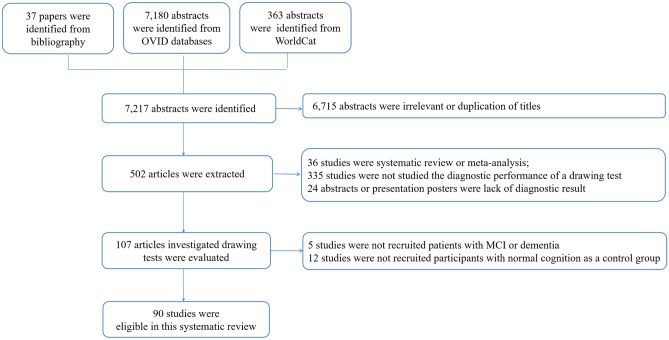
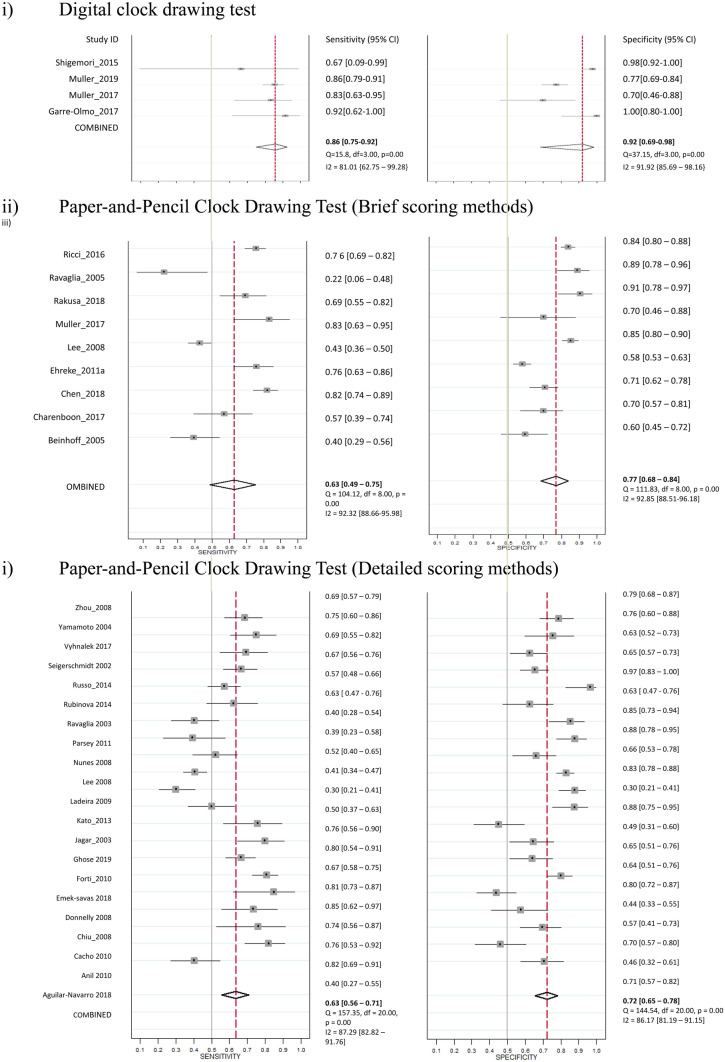
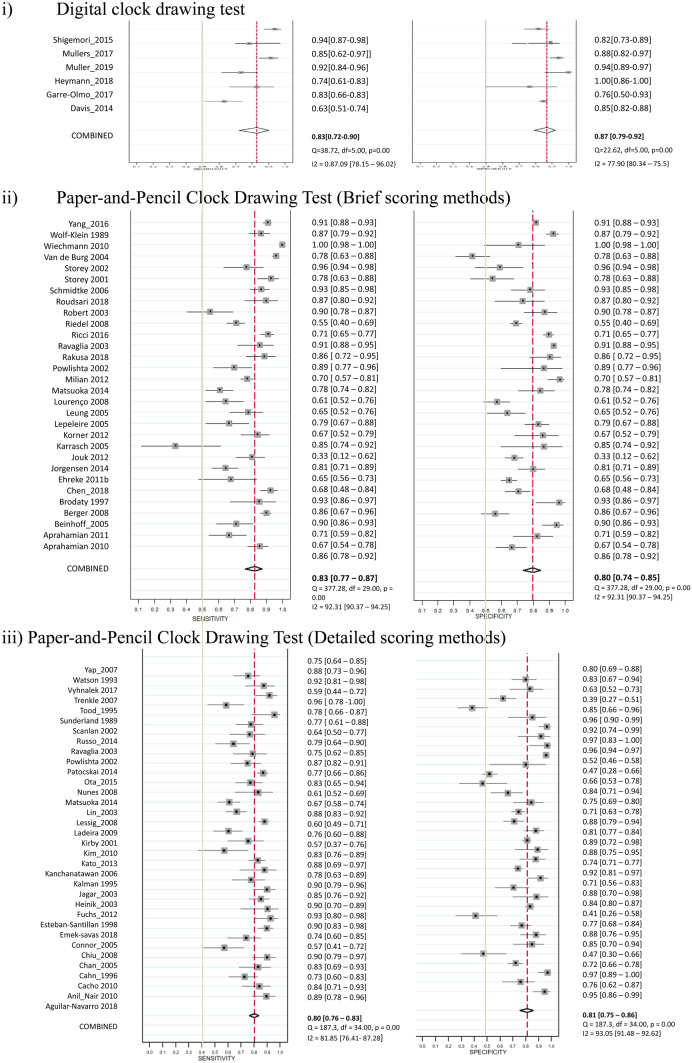
Digital drawing tests have been proposed for cognitive screening over the past decade. However, the diagnostic performance is still to clarify. The objective of this study was to evaluate the diagnostic performance among different types of digital and paper-and-pencil drawing tests in the screening of mild cognitive impairment (MCI) and dementia. Diagnostic studies evaluating digital or paper-and-pencil drawing tests for the screening of MCI or dementia were identified from OVID databases, included Embase, MEDLINE, CINAHL, and PsycINFO. Studies evaluated any type of drawing tests for the screening of MCI or dementia and compared with healthy controls. This study was performed according to PRISMA and the guidelines proposed by the Cochrane Diagnostic Test Accuracy Working Group. A bivariate random-effects model was used to compare the diagnostic performance of these drawing tests and presented with a summary receiver-operating characteristic curve. The primary outcome was the diagnostic performance of clock drawing test (CDT). Other types of drawing tests were the secondary outcomes. A total of 90 studies with 22,567 participants were included. In the screening of MCI, the pooled sensitivity and specificity of the digital CDT was 0.86 (95% CI = 0.75 to 0.92) and 0.92 (95% CI = 0.69 to 0.98), respectively. For the paper-and-pencil CDT, the pooled sensitivity and specificity of brief scoring method was 0.63 (95% CI = 0.49 to 0.75) and 0.77 (95% CI = 0.68 to 0.84), and detailed scoring method was 0.63 (95% CI = 0.56 to 0.71) and 0.72 (95% CI = 0.65 to 0.78). In the screening of dementia, the pooled sensitivity and specificity of the digital CDT was 0.83 (95% CI = 0.72 to 0.90) and 0.87 (95% CI = 0.79 to 0.92). The performances of the digital and paper-and-pencil pentagon drawing tests were comparable in the screening of dementia. The digital CDT demonstrated better diagnostic performance than paper-and-pencil CDT for MCI. Other types of digital drawing tests showed comparable performance with paper-and-pencil formats. Therefore, digital drawing tests can be used as an alternative tool for the screening of MCI and dementia.
Overview
The claims and statistics of this paper haven’t been checked yet.
Free: it reads the open-access text and checks the first 5 claims that cite a source we can check. Create a free account to check every claim.
Integrity signals
Registry
Cites
Statistics
Figures
Verification
Claims the paper makes
The claims and statistics of this paper haven’t been checked yet.
Free: it reads the open-access text and checks the first 5 claims that cite a source we can check. Create a free account to check every claim.
Claims other papers make about this one
Each is checked against this paper’s own text: does it say what the citing paper says it does?
The cited source says what the claim attributes to it.
In the citing paper
“The first category is the digital version of the existing pen-and-paper conventional tests, like the electronic version of the Montreal cognitive assessment (eMoCA) (19) and the digital Clock Drawing Tests (dCDT) (20, 21).”
From Research on digital tool in cognitive assessment: a bibliometric analysis (2023) · cites this paper as [20]
Self-check
Percentages, sums and reported differences re-computed from the paper’s own numbers.
The self-check needs the paper’s full text.
Citations
Cites
Diagnostic and Statistical Manual of Mental Disorders
American Psychiatric Association (2013) · doi:10.1176/appi.books.9780890425596 · Cited by 116,369
Diagnostic and Statistical Manual of Mental Disorders
Williams, J. B. W., & First, M. (2013) · Encyclopedia of Social Work · doi:10.1093/acrefore/9780199975839.013.104 · Cited by 109,519 · cited 2×
“…and Related Disorders Association (NINCDS-ADRDA) (McKhann et al., 1984), any version of the Diagnostic and Statistical Manual of Mental Disorder (DSM) (American Psychiatric Association, 2013), consensus by qualified clinicians using the Clinical Dementia Rating (CDR) (Morris, 1993) or…”
MethodPreferred reporting items for systematic reviews and meta-analyses: the PRISMA Statement.
(2009) · PubMed Central · Cited by 44,859
Meta-analysis in clinical trials
DerSimonian, R., & Laird, N. (1986) · Controlled Clinical Trials · doi:10.1016/0197-2456(86)90046-2 · Cited by 39,552
Preferred reporting items for systematic reviews and meta-analyses: The PRISMA statement
Moher, D., Liberati, A., Tetzlaff, J., Altman, D. G., & the PRISMA Group* (2009) · Annals of Internal Medicine · doi:10.7326/0003-4819-151-4-200908180-00135 · Cited by 37,554
McKhann, G., Drachman, D., Folstein, M., Katzman, R., Price, D., & Stadlan, E. M. (1984) · Neurology · doi:10.1212/wnl.34.7.939 · Cited by 27,915
The Montreal Cognitive Assessment, MoCA: a brief screening tool for mild cognitive impairment
Nasreddine, Z. S., Phillips, N. A., Bédirian, V., Charbonneau, S., Whitehead, V., Collin, I., Cummings, J. L., & Chertkow, H. (2005) · Journal of the American Geriatrics Society · doi:10.1111/j.1532-5415.2005.53221.x · Cited by 25,553
McKhann, G. M., Knopman, D. S., Chertkow, H., Hyman, B. T., Jack, C. R., Kawas, C. H., Klunk, W. E., Koroshetz, W. J., Manly, J. J., Mayeux, R., et al. (2011) · Alzheimer's & Dementia · doi:10.1016/j.jalz.2011.03.005 · Cited by 18,657
QUADAS-2: a revised tool for the quality assessment of diagnostic accuracy studies
Whiting, P. F., Rutjes, A. W. S., Westwood, M. E., Mallett, S., Deeks, J. J., Reitsma, J. B., Leeflang, M. M. G., Sterne, J. A. C., Bossuyt, P. M. M., & the QUADAS-2 Group* (2011) · Annals of Internal Medicine · doi:10.7326/0003-4819-155-8-201110180-00009 · Cited by 14,199
Albert, M. S., DeKosky, S. T., Dickson, D., Dubois, B., Feldman, H. H., Fox, N. C., Gamst, A., Holtzman, D. M., Jagust, W. J., Petersen, R. C., et al. (2011) · Alzheimer's & Dementia · doi:10.1016/j.jalz.2011.03.008 · Cited by 10,152
Research works printed but not linked: 1
- Macaskill, P., Gatsonis, C., Deeks, J., Harbord, R., & Takwoingi, Y. (2010). Chapter 10: analysing and presenting results. In: Deeks, J.J., Bossuyt, P.M. & Gatsonis, C. (editors). Cochrane handbook for systematic reviews of diagnostic test accuracy version 1.0. the cochrane collaboration. Available from: http://srdta.cochrane.org/
Cited by
Ruengchaijatuporn, N., Chatnuntawech, I., Teerapittayanon, S., Sriswasdi, S., Itthipuripat, S., Hemrungrojn, S., Bunyabukkana, P., Petchlorlian, A., Chunamchai, S., Chotibut, T., et al. (2022) · Alzheimer's Research & Therapy · doi:10.1186/s13195-022-01043-2 · Cited by 47
Kobayashi, M., Yamada, Y., Shinkawa, K., Nemoto, M., Nemoto, K., & Arai, T. (2022) · Journal of Alzheimer s Disease · doi:10.3233/jad-215714 · Cited by 48
Jiménez-Mesa, C., Arco, J. E., Valentí, M., Payo, B. F., Zea‐Sevilla, M. A., Ortíz, A., Ávila‐Villanueva, M., Castillo-Barnés, D., Ramírez, J., del Ser-Quijano, T., et al. (2023) · International Journal of Neural Systems · doi:10.1142/s0129065723500156 · Cited by 39
Research on digital tool in cognitive assessment: a bibliometric analysis
Chen, L., Zhen, W., & Peng, D. (2023) · Frontiers in Psychiatry · doi:10.3389/fpsyt.2023.1227261 · Cited by 26
Yamada, Y., Shinkawa, K., Kobayashi, M., Badal, V. D., Glorioso, D., Lee, E., Daly, R., Nebeker, C., Twamley, E. W., Depp, C. A., et al. (2022) · JMIR Formative Research · doi:10.2196/37014 · Cited by 17
“Drawing tests have been widely used for screening cognitive impairments and dementia (eg, trail making [13] and clock drawing [14]), and automated analysis of the drawing process has shown that features characterizing the drawing process are sensitive to cognitive impairments and diagnoses of dementia [15-18].”
MethodWu, J., Tu, J., Liu, Z., Cao, L., He, Y., Huang, J., Tao, J., Wong, M. N.-K., Chen, L., Lee, T. M. C., et al. (2023) · Journal of Medical Internet Research · doi:10.2196/40858 · Cited by 15
“CD and CC are tests for visuospatial, planning, and executive functions, which have been reported to be effective for screening for individuals with MCI [50,51].”
Automated Analysis of Drawing Process for Detecting Prodromal and Clinical Dementia
Yamada, Y., Kobayashi, M., Shinkawa, K., Nemoto, M., Ota, M., Nemoto, K., & Arai, T. (2022) · IEEE International Conference on Digital Health (ICDH) · doi:10.1109/icdh55609.2022.00008 · Cited by 13
Validation study of “Santé-Cerveau”, a digital tool for early cognitive changes identification
Lesoil, C., Bombois, S., Guinebretiere, O., Houot, M., Bahrami, M., Lévy, M., Genthon, R., Bozon, F., Jean-Marie, H., Epelbaum, S., et al. (2023) · Alzheimer s Research & Therapy · doi:10.1186/s13195-023-01204-x · Cited by 14
“However, most of them still need to be validated in large, controlled study settings, to allow their widespread use [11, 12].”
BackgroundResultInfluentialPENSIEVE-AI a brief cognitive test to detect cognitive impairment across diverse literacy
Liew, T. M., Foo, J. Y. H., Yang, H., Tay, S. Y., Koay, W. I., Yip, K. F., Ting, S. K. S., Narasimhalu, K., Li, W., Tan, C., et al. (2025) · Nature Communications · doi:10.1038/s41467-025-58201-x · Cited by 11
“In extant literature, few digital cognitive tests rely solely on drawing tasks, with clock drawing being most widely adopted 50 .”
Chiranakorn‐Costa, S., George, R. J. S., McDonald, J. S., Wang, X., & Alty, J. (2022) · Geriatrics · doi:10.3390/geriatrics7040072 · Cited by 9
“[8] identified 90 studies including NC, MCI, and dementia patients and determined that the CDT can detect dementia and is also fair in detecting MCI.”
BackgroundResultWang, C., Li, K., Huang, S., Liu, J., Li, S., Tu, Y., Wang, B., Zhang, P., Luo, Y., & Chen, T. (2025) · Frontiers in Neuroscience · doi:10.3389/fnins.2025.1558448 · Cited by 9
Jiménez-Mesa, C., Arco, J. E., Valentí, M., Payo, B. F., Zea‐Sevilla, M. A., Ortíz, A., Ávila‐Villanueva, M., Castillo-Barnés, D., Ramı́rez, J., del Ser-Quijano, T., et al. (2022) · Lecture notes in computer science · doi:10.1007/978-3-031-06242-1_4 · Cited by 6
Zhang, X., Zhang, F., Hou, S., Hao, C., Fan, X., Zhao, Y., Bao, W., An, J., Du, S., Min, G., et al. (2025) · The Journal of Prevention of Alzheimer s Disease · doi:10.1016/j.tjpad.2025.100080 · Cited by 10
Hosseini-Kivanani, N., Salobrar‐García, E., Elvira‐Hurtado, L., Salas, M., Schommer, C., & Leiva, L. A. (2024) · IEEE International Conference on eScience · doi:10.1109/e-science62913.2024.10678661 · Cited by 7
“ML in digital medicine has recently shown considerable promise in enhancing healthcare outcomes and improving the efficiency of the diagnostic process [26], [28]–[30].”
BackgroundBabatope, E. Y., Ramírez‐Acosta, A. Á., Ávila‐Funes, J. A., & Vázquez, M. S. G. (2024) · Journal of Clinical Medicine · doi:10.3390/jcm13237068 · Cited by 6
“Several authors have examined and assessed the performance of the pen-paper-based approach, along with technology-based or digital devices, for the assessments of cognitive impairment [35,36].”
InfluentialYıldırım, E. (2022) · Psikoloji Çalışmaları / Studies in Psychology · doi:10.26650/sp2021-963370 · Cited by 5
Soldini, A., Vogelmann, U., Aust, S., Goerigk, S. A., Plewnia, C., Fallgatter, A. J., Normann, C., Frase, L., Zwanzger, P., Kammer, T., et al. (2024) · European Archives of Psychiatry and Clinical Neuroscience · doi:10.1007/s00406-024-01759-2 · Cited by 8
“While efforts are being made to digitize previously validated cognitive tests [55, 56], such tools which also reduce documentation errors [57, 58], are still underused.”
Engedal, K., Benth, J. Š., Wagle, J., Gjøra, L., Selbæk, G., & Persson, K. (2024) · Journal of Alzheimer s Disease · doi:10.3233/jad-231331 · Cited by 2
Using deep learning predictions to study the development of drawing behaviour in children
Beltzung, B., Pelé, M., Martinet, L., Maître, E., Falck, J., & Sueur, C. (2025) · Displays · doi:10.1016/j.displa.2025.103166 · Cited by 5
Cognition Assessment with ICOPE-Monitor: Identifying Candidates for Novel Therapies
González-Bautista, E., Soto, M. E., Fourteau, M., Berbon, C., Vellas, B. J., Delrieu, J., & Angioni, D. (2025) · Journal of the American Medical Directors Association · doi:10.1016/j.jamda.2024.105483 · Cited by 2
Hao, Z., Tran, J. Y. S., Bat, B. K. K., Yiu, K. K. L., Chan, J. Y. C., & Tsoi, K. K. F. (2024) · Digital Health · doi:10.1177/20552076241271875 · Cited by 4
“40,41 Digital cognitive tests already demonstrated good performances in the detection of cognitive decline, 42,43 with the detection of mild cognitive impairment providing better opportunities for early intervention.”
BackgroundSelf-citationHigher Amyloid and Tau Burden Is Associated With Faster Decline on a Digital Cognitive Test
Fu, J. F., Robinson, T. L., Alonso, M. R., Francis-Malavé, A. M., Jutten, R. J., Properzi, M. J., Healy, B. C., Thompson, J. C., Montenegro, G. D. C., Thibault, E. G., et al. (2025) · Annals of Clinical and Translational Neurology · doi:10.1002/acn3.70233 · Cited by 2
Düzel, E., Schöttler, M., Sommer, H., & Griebe, M. (2024) · BMJ Open · doi:10.1136/bmjopen-2023-081159 · Cited by 2
Jiménez-Mesa, C., Arco, J. E., Valentí, M., Payo, B. F., Zea‐Sevilla, M. A., Ortíz, A., Ávila‐Villanueva, M., Ramírez, J., del Ser-Quijano, T., Pardo, C. C., et al. (2024) · Lecture notes in computer science · doi:10.1007/978-3-031-61140-7_19 · Cited by 2
Sawada, Y., Satoh, T., Saba, H., Kato, Y., Kuwada, T., Shima, S., Murakami, K., Sasaki, M., Abe, Y., & Harano, K. (2026) · Journal of Alzheimer s Disease · doi:10.1177/13872877251410947 · Cited by 1
Pinto, J. O., Peixoto, B., Dores, A. R., & Barbosa, F. (2026) · Journal of Personalized Medicine · doi:10.3390/jpm16070363 · Cited by 1
Design of a New Digital Cognitive Screening Tool on Tablet: AlzVR Project
Maronnat, F., Loup, G., Degand, J., Davesne, F., & Otmane, S. (2024) · International Conference on Software Technologies (ICSOFT) · doi:10.5220/0012837800003753 · Cited by 1
“The assessment should browse several cognitive functions in a short time.”
Chunharas, C., Ruengchaijatuporn, N., Chatnuntawech, I., Teerapittayanon, S., Sriswa, S., Itthipuripat, S., Hemrungrojn, S., Bunyabukkana, P., Petchlorlian, A., Chunamchai, S., et al. (2022) · Research Square · doi:10.21203/rs.3.rs-1363649/v1
Computer Aided Analysis of Clock Drawing Test Samples via PACS Plugin
Kawa, J., Bieńkowska, M., Bednorz, A., Smoliński, M., & Sitek, E. J. (2022) · Advances in intelligent systems and computing · doi:10.1007/978-3-031-09135-3_17
Digital Biomarkers for Alzheimer’s Disease
Kim, Y. L., Shin, B., & Kim, K. W. (2023) · Journal of the Korean Neurological Association · doi:10.17340/jkna.2023.0037
Maronnat, F., Loup, G., Degand, J., Davesne, F., & Otmane, S. (2025) · Digital Health · doi:10.1177/20552076251317352 · Cited by 1
Wang, Z. (2025) · Lecture notes in networks and systems · doi:10.1007/978-3-031-96759-7_7
Sun, R., Wang, Y., Xie, Y., Li, H., Pan, Z., Wu, B., Liu, X., & Wang, Y. (2025) · Journal of the American Medical Directors Association · doi:10.1016/j.jamda.2025.106026
Wang, H., Ding, M., Shen, Y., Wei, H., Huang, Z., Teng, J., Song, J., Lu, Q., Huang, T., Liu, H., et al. (2026) · Journal of Alzheimer s Disease · doi:10.1177/13872877251413723
Dementia screening with the Rivermead Behavioural Memory Test: A machine learning analysis
Fujiwara, Y., Toyoda, K., Maruyama, S., Kitano, M., Toda, H., & Kanazawa, T. (2026) · Journal of Alzheimer s Disease · doi:10.1177/13872877261443699
“20 Such tools may ultimately complement or replace more time-intensive assessments for initial triage.”
Wang, Y., Wang, Y., Xiang, Y., Fang, F., Yan, N., & Hu, Y. (2026) · BMC Neurology · doi:10.1186/s12883-026-05008-y
“These tests have been employed to screen for MCI and dementia [16], as well as PSCI [17, 18], and can be administered alone or in combination with other multidimensional cognitive assessments [18, 19].”
Mychajliw, C., Wortha, F., Suenkel, U., Eschweiler, G. W., Dawidowsky, K., von Thaler, A., Fallgatter, A. J., Maetzler, W., Metzger, F. G., & Holz, H. (2026) · Research Square · doi:10.21203/rs.3.rs-9453201/v1
Resheka, R. K., Vigneshwar, R. K., Aurchana, P., & Baskaran, N. (2026) · International Conference on Augmented Intelligence and Sustainable Systems (ICAISS) · doi:10.1109/icaiss68683.2026.11526384
“Persistent deployment barriers such as cross-dataset performance drops, domain shifts between image-based and stroke-based representations, and unreliable handling of atypical or partially correct clock drawings remain insufficiently resolved [11], [12].”
Gerritzen, E. V., Dillon, E. C., Ilchovska, Z. G., Yates, J., Fortinsky, R. H., Finelli, M. J., & Craven, M. P. (2026) · Frontiers in Dementia · doi:10.3389/frdem.2026.1770741
“Technology has the potential for use in screening and early diagnosis at the stage of mild cognitive impairment, such as the digital clock drawing test (Chan et al., 2022).”
TUTU, Ö. G., Bilen, V., & Ziroğlu, Z. (2026) · Family Practice · doi:10.1093/fampra/cmag051
Xing, R., Sun, W., Zhou, J., Chen, T., Chen, L., Peng, P., & Xu, G. (2026) · Journal of Alzheimer s Disease · doi:10.1177/13872877261489816
“11 In pentagon drawing assessment, computational approaches have been developed from several directions.”
Luo, J.-L., & Chen, Q. (2026) · Journal of Alzheimer's Disease Reports · doi:10.1177/25424823261500993
Yang, M., Deng, H., Lang, Q., Liao, C., Ma, Q., 高涵, Jiang, X., Zhu, Y., Ma, R., & Li, S. (2026) · Research Square · doi:10.21203/rs.3.rs-11027863/v1
Metadata
- Authors
- Chan, J. Y. C., Bat, B. K. K., Wong, A., Chan, T. K., Huo, Z., Yip, B. H. K., Kowk, T. C. Y., & Tsoi, K. K. F.
- Affiliations
- Chinese University of Hong Kong (HK)
- Corresponding author
- Tsoi, Kelvin K. F.
- Venue
- Neuropsychology Review
- Published
- 2021-10-16
- Volume
- 32
- Issue
- 3
- Pages
- 566-576
- ISSN
- 1040-7308 (ISSN-L)
- 1573-6660
- PMC
- PMC9381608
- OpenAlex
- W3205109224
- Cited by
- 43
- References
- 45
- Citations by year
- 2026: 12 · 2025: 9 · 2024: 8 · 2023: 4 · 2022: 10
- FWCI
- 0.98
- Type
- journal article
- Language
- en
- Open access
- hybrid
- doi.org
- Licence
- cc-by
- creativecommons.org/licenses/by/4.0 (tdm)
- creativecommons.org/licenses/by/4.0 (vor)
- Locations
- Neuropsychology Review (publishedVersion, cc-by)
- PubMed Central (publishedVersion, cc-by)
- PubMed (publishedVersion)
- Topics
- Health Sciences › Medicine › Psychiatry and Mental health › Dementia and Cognitive Impairment Research
- Social Sciences › Psychology › Applied Psychology › Psychological Testing and Assessment
- Social Sciences › Psychology › Clinical Psychology › Historical and Modern Theater Studies
- Keywords
- clock drawing test, mild cognitive impairment, dementia screening, diagnostic accuracy, sensitivity and specificity, cognitive screening, digital health tools, cognitive impairment detection, test format comparison, summary receiver operating characteristic, dementia with Lewy bodies, Alzheimer's disease, Parkinson's disease dementia, vascular dementia
- MeSH terms
- Dementia, Humans, Neuropsychological Tests, Research Design, Sensitivity and Specificity, Cognitive Dysfunction
About these checks
Registry, retraction, Cites and statistics results are computed, not judged, with one exception: a printed reference that no index lists is read once by a model before it counts as a citation error. Claims are extracted by a model and kept only when their quote appears verbatim in the text; each cited source is then checked, with a model’s help, for whether it says what the claim relies on. Those verdicts can be wrong — read the claim’s quote and the cited source before relying on one.
Statistics and arithmetic are recomputed, not judged.
Confidence bands are shown only for fields calibrated on our annotated test set. None is calibrated yet, so no band is shown.
What counts as a claim ›How we measure confidence ›How we check this ›
Are you an author, or do you see a problem with this page? Request a review
Data sources
Bibliographic data: Semantic Scholar, OpenAlex, Crossref.
Contains information from the Semantic Scholar Academic Graph Datasets, made available under the ODC Attribution License (ODC-BY 1.0).
Semantic Scholar’s data is described in: Kinney, R., et al. (2023). The Semantic Scholar Open Data Platform. arXiv:2301.10140.
