

The ability of different peer review procedures to flag problematic publications
Open accessThe DOI matches its Crossref record; 77 of the 78 references it cites were found in a registry or an index; 5 of the 27 sources its claims cite were checked for support.
Abstract
There is a mounting worry about erroneous and outright fraudulent research that gets published in the scientific literature. Although peer review's ability to filter out such publications is contentious, several peer review innovations attempt to do just that. However, there is very little systematic evidence documenting the ability of different review procedures to flag problematic publications. In this article, we use survey data on peer review in a wide range of journals to compare the retraction rates of specific review procedures, using the Retraction Watch database. We were able to identify which peer review procedures were used since 2000 for 361 journals, publishing a total of 833,172 articles, of which 670 were retracted. After addressing the dual character of retractions, signalling both a failure to identify problems prior to publication, but also the willingness to correct mistakes, we empirically assess review procedures. With considerable conceptual caveats, we were able to identify peer review procedures that seem able to detect problematic research better than others. Results were verified for disciplinary differences and variation between reasons for retraction. This leads to informed recommendations for journal editors about strengths and weaknesses of specific peer review procedures, allowing them to select review procedures that address issues most relevant to their field.
Overview
CoChat Summary
TL;DR
Using survey data on peer review procedures for 361 journals and Retraction Watch data, this paper compares retraction rates across peer review models. It finds some procedures are associated with fewer retractions, but stresses that retractions are ambivalent indicators of both problematic research and willingness to correct it.
Key findings
- Across 361 journals, 833,172 articles published since 2000 were identified, of which 670 were retracted.
- Pre-submission review was associated with fewer retractions: 7.6% of all articles went through pre-submission review, versus 4.8% of retractions (Λ(3)=18.899, p<0.001).
- Journals using novelty and anticipated impact as review criteria had more retractions; author blinding was associated with fewer retractions, especially in Social Sciences and Humanities, where 79% of articles went through double-blind review but only 13% of retractions did.
- Plagiarism-detection software introduction was followed by fewer plagiarism/duplication retractions: journals published 70,097 articles before introduction with 38 retractions, 11 for plagiarism/duplication, and 41,043 articles after with 19 retractions, only 1 for plagiarism/duplication.
Methods
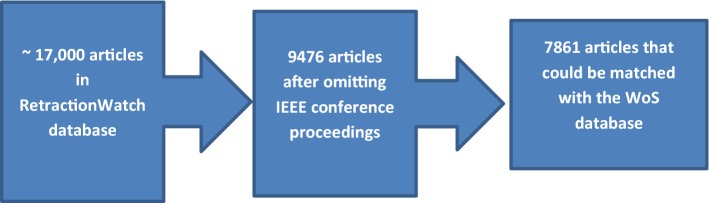
- Retracted journal articles were collected from the Retraction Watch database on December 11, 2017, then matched to Web of Science; this yielded 7,861 retractions, and the final sample covered 833,172 articles and 670 retractions.
- A 12-question survey on peer review attributes was sent to journal editors; 361 useful responses were obtained, a 6.12% response rate, and responses were used to assign each article to the review procedure it went through since 2000.
- Analyses used log likelihood ratio tests on retracted/non-retracted ratios, binary logistic regression interaction tests for research areas, and ANOVA/multinomial logistic regression for retraction reasons, in SPSS 25.0.
Limitations
- The paper states selection and response bias: only Web of Science-indexed journals were sampled, and journals more attentive to or innovative in peer review were more likely to respond.
- The paper states that retractions are an imperfect proxy: many problematic articles are never retracted, the non-retracted control group may contain problematic papers, and manuscripts rejected during review cannot be observed.
- The paper states that survey self-reports may misclassify procedures or not reflect actual review practice; the text also makes evident that the design is observational/correlational and cannot establish causal mechanisms.
Model-written summary. Check it against the paper before relying on it.
Integrity signals
Registry
Cites
Statistics
Figures
Verification
Claims the paper makes
5 Valid · 3 Not valid · 12 Not checked · 124 Own results and interpretations
The cited sources support only part of this claim — read each source’s verdict below.
In the paper
“are not reproducible (Open Science Collaboration 2015)”
§ The ability of different peer review procedures to flag problematic publications > Introduction
What the sources say
- Partly supportedcites Open Science Collaboration 2015 matched to “Estimating the reproducibility of psychological science” (2015) sourceExperimental — accuracy not yet measured
The Discussion (p. 12) reports that a large portion of replications of 100 published psychology findings did not reproduce evidence supporting the original results. That supports concern about reproducibility, but the claim extends the finding to published articles generally and states categorically that they are not reproducible. Insights on Reproducibility (p. 13) cautions that failure to replicate does not necessarily mean an original result was a false positive. (LLM, conf=0.84)
plain- Asserted: passes — The authors put it forward as true.
- Checkable: passes — It can be checked against evidence.
- Load-bearing: passes — The paper’s conclusions depend on it.
- Based: passes — The paper gives a reason why it holds.
- Partly supported
The cited sources support only part of this claim — read each source’s verdict below.
In the paper
“involve questionable research practices, or even outright misconduct (e.g. Horbach and Halffman 2017b; Nuijten et al. 2016)”
§ The ability of different peer review procedures to flag problematic publications > Introduction
What the sources say
- Not checked yetcites Horbach and Halffman 2017b
- Partly supportedcites Nuijten et al. 2016 matched to “The prevalence of statistical reporting errors in psychology (1985–2013)” (2016) sourceExperimental — accuracy not yet measured
Nuijten et al. (2016) support the 'large proportion ... questionable research practices' side only in a limited form: Results ('General prevalence of inconsistencies') report that 49.6% of articles with NHST results in eight psychology journals contained at least one inconsistency and 12.9% at least one gross inconsistency, and the Abstract/Introduction frames such inconsistencies as 'honest mistakes' that have 'also been categorized as one of several fairly common questionable research practices' (citing John et al., 2012) as a possible indicator of other QRPs. Nothing in our copy attributes 'outright misconduct' (fabrication/fraud) to these articles; on the contrary, the Discussion states that 'the large majority of inconsistencies are accidental' and that it remains important 'to know whether reporting inconsistencies are mere sloppiness or whether they are intentional'. The Discussion's limitations also explicitly avoid conclusions about psychology in general, restricting them to the APA-reported NHST results in the eight selected journals, so 'a large proportion of published articles' overstates the source's scope. (LLM, conf=0.82)
boosted- Asserted: passes — The authors put it forward as true.
- Checkable: passes — It can be checked against evidence.
- Load-bearing: passes — The paper’s conclusions depend on it.
- Based: passes — The paper gives a reason why it holds.
The cited sources support only part of this claim — read each source’s verdict below.
In the paper
“scholars have demonstrated that a large proportion of published articles contains flaws (Ioannidis 2005)”
§ The ability of different peer review procedures to flag problematic publications > Introduction
What the sources say
- Partly supportedcites Ioannidis 2005 matched to “Why Most Published Research Findings Are False” (2005) sourceExperimental — accuracy not yet measured
Ioannidis 2005 argues and simulates that most published research CLAIMS/FINDINGS are likely to be false (Abstract; 'Most Research Findings Are False for Most Research Designs and for Most Fields'), not that a quantified large proportion of articles contain identifiable flaws — and he explicitly concedes 'there is no good large-scale empirical evidence' for the frequency of some problems (Bias section), so 'demonstrated' overstates an essay built on proofs and simulations. The paper does support the general tenor: Corollary 4 (p. ~Box 1) says 'even in the most stringent research designs, bias seems to be a major problem... selective outcome reporting... is a common problem even for randomized trials', and Corollary 5 says conflicts of interest 'are very common in biomedical research, and typically they are inadequately and sparsely reported'. The unsupplied part is the article-level, demonstrated prevalence of flaws; the prevalent-flaw evidence there is credited to other works (Chan et al. [25], Krimsky et al. [26], Papanikolaou et al. [27]) rather than established by this paper. (LLM, conf=0.70)
boosted- Asserted: passes — The authors put it forward as true.
- Checkable: passes — It can be checked against evidence.
- Load-bearing: passes — The paper’s conclusions depend on it.
- Based: passes — The paper gives a reason why it holds.
- Partly supported
Every source the paper cites for this claim was checked and supports it.
In the paper
“A quarter of retractions do not involve misconduct, but honest error (Fang et al. 2012)”
§ The ability of different peer review procedures to flag problematic publications > Theoretical framework > What are retractions?
What the sources say
- Supportedcites Fang et al. 2012 matched to “Misconduct accounts for the majority of retracted scientific publications” (2012) source
The Causes of Retraction section states outright that 'for articles in which the reason for retraction is known, three-quarters were retracted because of misconduct or suspected misconduct, and only onequarter was retracted for error,' with the full-sample figure given as 21.3% attributable to error (also in the abstract heading passage). The cited sentence's 'a quarter ... honest error' therefore reproduces the source's own proportion and its complementary framing to the 67.4%/three-quarters misconduct figure. The only nuance is that the exact one-quarter figure is stated for the known-cause subset while the unrestricted error rate is 21.3%, which is the same point at slightly different specificity rather than a discrepancy. (LLM, conf=0.85)
plain- Asserted: passes — The authors put it forward as true.
- Checkable: passes — It can be checked against evidence.
- Load-bearing: unclear — It is unclear whether the paper’s conclusions depend on it.
- Based: passes — The paper gives a reason why it holds.
- Supported
A result the paper reports from its own data — it cites no other source for it, so there is none to check. The quote shows it is in the paper.
In the paper
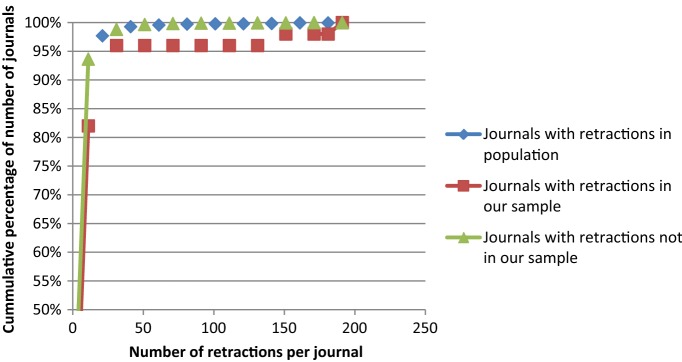
“Indeed, relatively many journals with a high number of retractions have responded to our survey.”
§ The ability of different peer review procedures to flag problematic publications > Methods > Data analysis
plainstates an association- Asserted: passes — The authors put it forward as true.
- Checkable: passes — It can be checked against evidence.
- Load-bearing: unclear — It is unclear whether the paper’s conclusions depend on it.
- Based: passes — The paper gives a reason why it holds.
53 more claims
Create a free account to see all 144 claims and to verify the 22 references still open.
- Probably not a substantial claim. 30
- It may state two separate claims as one. 64
- The quote only partly states this claim. 1
Claims other papers make about this one
Each is checked against this paper’s own text: does it say what the citing paper says it does?
The source backs part of the claim, not all of it — or backs it for a different population, condition or comparison.
In the citing paper
“Evidence that peer review substantially improves reporting, or catches errors or questionable research practices, is limited [9, 10].”
From Is the future of peer review automated? (2022) · cites this paper as [9]
Experimental — accuracy not yet measured
Statistics that don’t add up
Each reported p-value recomputed from its test statistic and degrees of freedom, each partial η² from its F, and each ratio, mean difference or B printed with a p checked against its own confidence interval.
Rated major: it would touch a result — a value a result rests on, reported and recomputed p-values on opposite sides of the significance level, two passages that conflict with no sign which is right, or a cited work retracted before this paper was published.
In the paper
“F(3,1262) = 2.839, p = 0.784”
§ The ability of different peer review procedures to flag problematic publications > Results > Reviewer anonymity
Reported p = .784 · recomputed p = .037
Rated minor: it would not touch a result — a value no result rests on, a p-value that stays on the same side of the significance level, or a conflict that is clerical, resolved elsewhere in the paper, or outside its own findings.
In the paper
“t(280) = − 3.043, p = 0.016”
§ The ability of different peer review procedures to flag problematic publications > Results > Review criteria
Reported p = .016 · recomputed p = .003
Statistics recomputed
Every reported test result, recomputed from its test statistic and degrees of freedom. A result shows as not adding up only once an independent check has confirmed it.
- Doesn’t add upF(3, 1262) = 2.839reported p = .784 · recomputed p = .037The two fall on opposite sides of .05
“F(3,1262) = 2.839, p = .784”
- Doesn’t add upt(280) = -3.043reported p = .016 · recomputed p = .003
“t(280) = − 3.043, p = .016”
- ConsistentF(1, 1266) = 5.409reported p = .02 · recomputed p = .020
“F(1,1266) = 5.409, p = .020”
- ConsistentF(3, 4665) = 1.22reported p = .301 · recomputed p = .301
“F(3,4665) = 1.220, p = .301”
- ConsistentF(4, 2782) = 10.538reported p < .001 · recomputed p < .001
“F(4,2782) = 10.538, p < .001”
8 more recomputed tests
Create a free account to see every test the Stats check recomputed.
Self-check
Percentages, sums and reported differences re-computed from the paper’s own numbers.
Each contradiction between two passages listed here was confirmed by an independent check.
Rated major: it would touch a result — a value a result rests on, reported and recomputed p-values on opposite sides of the significance level, two passages that conflict with no sign which is right, or a cited work retracted before this paper was published.
In the paper
§ The ability of different peer review procedures to flag problematic publications > Results > External sources
“Our data (Table 12), suggest no difference in retraction rates due to the usage of review reports from external sources (Λ(3) = 42.270, p < 0.0001).”
§ The ability of different peer review procedures to flag problematic publications > Results > Summary results
“Using review reports from partner journals is related to fewer retractions.”
Rated minor: it would not touch a result — a value no result rests on, a p-value that stays on the same side of the significance level, or a conflict that is clerical, resolved elsewhere in the paper, or outside its own findings.
In the paper
“| Interaction between reviewers is facilitated | 48 (9.0%) | 5.3–9.0 | 75,100 (9.0%) | 9.0–9.1 |”
§ The ability of different peer review procedures to flag problematic publications > Results > Interaction between actors
Reported 9 · recomputed 7.164179
Citations
Cites
1 retracted
Retraction rates are on the rise
Cokol, M., Ozbay, F., & Rodriguez‐Esteban, R. (2008) · The EMBO Reports · doi:10.1038/sj.embor.7401143 · Cited by 149
RetractedWhy Most Published Research Findings Are False
Ioannidis, J. P. A. (2005) · PLoS Medicine · doi:10.1371/journal.pmed.0020124 · Cited by 10,505
Estimating the reproducibility of psychological science
Open Science Collaboration (2015) · Science · doi:10.1126/science.aac4716 · Cited by 8,515
Why Most Published Research Findings Are False
Ioannidis, J. P. A. (2005) · CHANCE · doi:10.1080/09332480.2005.10722754 · Cited by 4,702 · cited 1×
“Mainly originating in the biomedical sciences, scholars have demonstrated that a large proportion of published articles contains flaws (Ioannidis 2005), are not reproducible (Open Science Collaboration 2015), involve questionable research practices, or even outright misconduct (e.g. Horbach and…”
BackgroundMeasuring the Prevalence of Questionable Research Practices With Incentives for Truth Telling
John, L. K., Loewenstein, G., & Prelec, D. (2012) · Psychological Science · doi:10.1177/0956797611430953 · Cited by 2,239
Medication Errors and Adverse Drug Events in Pediatric Inpatients
Kaushal, R. (2001) · JAMA · doi:10.1001/jama.285.16.2114 · Cited by 1,917 · cited 1×
“Indeed, in other settings, such as detecting medication errors, it has been suggested that higher levels of cooperation and interaction would be beneficial for effective error detection (Kaushal et al. 2001).”
BackgroundFanelli, D. (2009) · PLoS ONE · doi:10.1371/journal.pone.0005738 · Cited by 1,911 · cited 1×
“As a result, the number of retractions has grown sharply over the last decades, which has led some scholars and journalists to use retractions as a window to study problematic research practices (e.g. Fanelli 2009; Fanelli et al.”
BackgroundThe oligopoly of academic publishers in the digital era
Larivière, V., Haustein, S., & Mongeon, P. (2015) · PLOS ONE · doi:10.1371/journal.pone.0127502 · Cited by 1,240
Misconduct accounts for the majority of retracted scientific publications
Fang, F. C., Steen, R. G., & Casadevall, A. (2012) · Proceedings of the National Academy of Sciences · doi:10.1073/pnas.1212247109 · Cited by 1,232
Martinson, B. C., Anderson, M. S., & de Vries, R. (2005) · Nature · doi:10.1038/435737a · Cited by 1,096
Research works printed but not linked: 15
- Amsen, E. (2014). What is open peer review. F1000 Researchblog (Vol. 2017).
- BMJ Open. (2018). Reviewer guidelines. http://bmjopen.bmj.com/pages/reviewerguidelines/.
- Davis, P. (2010). Cascading peer-review: The future of open access publishing? The Scholarly Kitchen.
- EMBO Press. (2017). About: Cross peer review. http://emboj.embopress.org/about#Cross_peer_review.
- Frontiers. (2014). Frontiers is a community-rooted, open-access academic publisher. https://www.frontiersin.org/about/reviewsystem.
- Goodman, S. N. (2017). Statistical review in biomedical journals: Can we get SMARTA? In Eight international congress on peer review and scientific publication, Chicago.
- Hiney M What it means, why it is important and how we might protect it 2015 Brussels Science Europe, working group research integrity
- Mellor, D. (2016). Registered reports: Peer review before results are known to align scientific values and practices. https://cos.io/rr/.
- Pattinson, D., & Prater, C. (2017). Assessment of the prevalence of integrity issues in submitted manuscripts. In Paper presented at the eighth international congress on peer review and scientific publication, Chicago.
- PLOS. (2018). Guidelines for reviewers. http://journals.plos.org/plosone/s/reviewer-guidelines2018.
- Research Square. (2017). Editorial checks and badges. https://www.researchsquare.com/publishers/badges.
- Sage Open. (2018). More information: Description. https://uk.sagepub.com/en-gb/eur/journal/sage-open#description2018.
- Scheman, R., & Bennett, C. N. (2017) Assessing the outcomes of introducing a digital image quality control review into the publication process for research articles in physiology journals. In International congress on peer review and scientific publication, Chicago.
- Van Buggenhout M Christiaens J Deviance in science: A criminological analysis 2016 Brussels Free University of Brussels
- Van Leeuwen, T., Reyes Elizondo, A., & De Rijcke, S. (2017). Analysis of papers retracted in the Web of Science. In PRINTEGER (Ed.). Leiden.
Cited by
The limitations to our understanding of peer review
Tennant, J. P., & Ross-Hellauer, T. (2020) · Research Integrity and Peer Review · doi:10.1186/s41073-020-00092-1 · Cited by 384
“rigorous methodological interrogation, identification of statistical errors and flaws, speed or turn-around of review, or strengthening of argumentation style or narrative [87].”
BackgroundChecco, A., Bracciale, L., Loreti, P., Pinfield, S., & Bianchi, G. (2021) · Humanities and Social Sciences Communications · doi:10.1057/s41599-020-00703-8 · Cited by 286
Pandemic publishing: Medical journals strongly speed up their publication process for COVID-19
Horbach, S. P. J. M. (2020) · Quantitative Science Studies · doi:10.1162/qss_a_00076 · Cited by 268
Self-citationOpen science saves lives: lessons from the COVID-19 pandemic
Besançon, L., Peiffer-Smadja, N., Segalas, C., Jiang, H., Masuzzo, P., Smout, C., Billy, E., Deforet, M., & Leyrat, C. (2021) · BMC Medical Research Methodology · doi:10.1186/s12874-021-01304-y · Cited by 249
Bryanov, K., & Vziatysheva, V. (2021) · PLOS ONE · doi:10.1371/journal.pone.0253717 · Cited by 211
Is the future of peer review automated?
Schulz, R., Barnett, A., Bernard, R., Brown, N. J. L., Byrne, J. A., Eckmann, P., Gazda, M. A., Kilicoglu, H., Prager, E. M., Salholz-Hillel, M., et al. (2022) · BMC Research Notes · doi:10.1186/s13104-022-06080-6 · Cited by 80
“Evidence that peer review substantially improves reporting, or catches errors or questionable research practices, is limited [9, 10].”
BackgroundOpen Science Saves Lives: Lessons from the COVID-19 PandemicPreprint
Besançon, L., Peiffer‐Smadja, N., Ségalas, C., Jiang, H., Masuzzo, P., Smout, C., Billy, É., Déforet, M., & Leyrat, C. (2020) · bioRxiv (Cold Spring Harbor Laboratory) · doi:10.1101/2020.08.13.249847 · Cited by 59
Innovative Strategies for Peer Review
Barroga, E. F. (2020) · Journal of Korean Medical Science · doi:10.3346/jkms.2020.35.e138 · Cited by 58
Fortification of retraction notices to improve their transparency and usefulness
da Silva, J. A. T., & Vuong, Q. (2021) · Learned Publishing · doi:10.1002/leap.1409 · Cited by 51
Journal Peer Review and Editorial Evaluation: Cautious Innovator or Sleepy Giant?
Horbach, S. P. J. M., & Halffman, W. (2019) · Minerva · doi:10.1007/s11024-019-09388-z · Cited by 59
Self-citationThe Chinese scientific publication system: Specific features, specific challenges
Wang, J., Halffman, W., & Zwart, H. A. E. (2020) · Learned Publishing · doi:10.1002/leap.1326 · Cited by 50
“Editorial procedures in Chinese scientific journals Reviewing manuscripts is a critical function of the academic publishing process and especially meant to safeguard the quality and integrity of the published research (Horbach & Halffman, 2018).”
MethodSelf-citationFactors affecting journal submission numbers: Impact factor and peer review reputation
Gaston, T., Ounsworth, F., Senders, T., Ritchie, S., & Jones, E. (2020) · Learned Publishing · doi:10.1002/leap.1285 · Cited by 48
“(Previous researchers have used retractions as a metric for peer review quality; see Horbach and Halffman (2018)).”
MethodBoschiero, M. N., Carvalho, T. A., & Marson, F. A. L. (2020) · Pulmonology · doi:10.1016/j.pulmoe.2020.10.011 · Cited by 45
Classification and analysis of PubPeer comments: How a web journal club is used
Ortega, J. L. (2022) · Journal of the Association for Information Science and Technology · doi:10.1002/asi.24568 · Cited by 37
Towards theorizing peer review
Hug, S. E. (2022) · Quantitative Science Studies · doi:10.1162/qss_a_00195 · Cited by 38
“Horbach and Halffman (2019) used a taxonomy of peer review procedures to assess the effectiveness of review models at 361 journals to detect erroneous or fraudulent research and found that author blinding, involving the wider community, using digital tools, constraining interaction between authors…”
MethodAn observation framework for retracted publications in multiple dimensions
Feng, L., Yuan, J., & Yang, L. (2020) · Scientometrics · doi:10.1007/s11192-020-03702-3 · Cited by 34
Peer-review procedures as practice, decision, and governance—the road to theories of peer review
Reinhart, M., & Schendzielorz, C. (2024) · Science and Public Policy · doi:10.1093/scipol/scad089 · Cited by 35
Christopher, M. M. (2022) · BMC Veterinary Research · doi:10.1186/s12917-022-03167-x · Cited by 30
“Retractions reflect a failure to identify problems prior to publication but also signal a willingness on the part of journals and authors to correct mistakes [36].”
BackgroundThe effectiveness of peer review in identifying issues leading to retractions
Zheng, X. M., Chen, J., Tollas, A., & Ni, C. (2023) · Journal of Informetrics · doi:10.1016/j.joi.2023.101423 · Cited by 23
Bolek, M., Bolek, C., Shopovski, J., & Marolov, D. (2022) · Accountability in Research · doi:10.1080/08989621.2022.2030719 · Cited by 17
Understanding peer review of software engineering papers
Ernst, N., Carver, J. C., Méndez, D., & Torchiano, M. (2021) · Empirical Software Engineering · doi:10.1007/s10664-021-10005-5 · Cited by 20
“The broader area of peer review is the focus of scientometrics research [24], which has looked at several relevant areas: whether open peer review improves paper quality [34], whether peer review is effective at catching flawed papers (not always [3]), and the effectiveness of single- vs double-blind reviews [17].”
BackgroundWhen Shooting for the Stars Becomes Aiming for Asterisks: P -Hacking in Family Business Research
Brinkerink, J. (2021) · Entrepreneurship Theory and Practice · doi:10.1177/10422587211050354 · Cited by 16
Schneider, J., Woods, N. D., Proescholdt, R., Fu, Y., & The RISRS Team (2021) · MetArXiv (OSF Preprints) · doi:10.31222/osf.io/ms579 · Cited by 18
Motivating and Maintaining Ethics, Equity, Effectiveness, Efficiency, and Expertise in Peer Review
Brain Health Alliance, Craig, A., Lee, C., Bala, N., & Taswell, C. (2022) · Brainiacs Journal of Brain Imaging And Computing Sciences · doi:10.48085/i5b147d9d · Cited by 16
“Although (Horbach and Halffman, 2018) argue that journals’ use of peer review to identify fraudulent research is imperfect, peer review can serve as a key line of defense to catch potential fraudulent papers before their publication can cause harm by spreading false information.”
BackgroundMethodPeer review: the attitudes and behaviours of Covid-19 pandemic-era early career researchers
Nicholas, D., Herman, E., Bravo, B. R., Watkinson, A., Boukacem‐Zeghmouri, C., Świgoń, M., Abrizah, A., Sims, D., Xu, J., Clark, D., et al. (2023) · El Profesional de la Informacion · doi:10.3145/epi.2023.may.06 · Cited by 9
Citation network analysis of retractions in molecular biology field
Feng, S., Feng, L., Han, F., Zhang, Y., Ren, Y., Wang, L., & Yuan, J. (2024) · Scientometrics · doi:10.1007/s11192-024-05101-4 · Cited by 16
“The growing number of retracted papers in recent years has caused worldwide concern, and scholars have conducted research on analyzing retracted papers (Banerjee et al., 2022; Horbach & Halffman, 2019).”
A harm reduction approach to improving peer review by acknowledging its imperfections
Cooke, S. J., Young, N., Peiman, K. S., Roche, D. G., Clements, J. C., Kadykalo, A. N., Provencher, J. F., Raghavan, R., DeRosa, M. C., Lennox, R. J., et al. (2024) · FACETS · doi:10.1139/facets-2024-0102 · Cited by 14
Writing reviews: perspectives from the editors of Educational Studies in Mathematics
Mesa, V., Bakker, A., Venkat, H., Wagner, D., Bikner‐Ahsbahs, A., FitzSimons, G. E., Gutiérrez, Á., Meaney, T., Prediger, S., Radford, L., et al. (2021) · Educational Studies in Mathematics · doi:10.1007/s10649-021-10114-4 · Cited by 8
Peer review experiences of academic chemists in Ph.D. granting institutions in the United States
Seeman, J. I., & House, M. C. (2021) · Accountability in Research · doi:10.1080/08989621.2021.1962714 · Cited by 7
Horbach, S. P. J. M., Hepkema, W. M., & Halffman, W. (2020) · Learned Publishing · doi:10.1002/leap.1312 · Cited by 7
Self-citationBalyakina, E. A., & Кривенцова, Л. А. (2021) · European Science Editing · doi:10.3897/ese.2021.e51999 · Cited by 8
Best practices for considering retractions
Edlund, J. E., Okdie, B. M., & Scherer, C. R. (2022) · Current Psychology · doi:10.1007/s12144-022-03764-x · Cited by 5
“Although it is worth noting that the focus of typical science in publishing novel and large claims contributes to the possibility of this occurring (e.g., Horbach & Halffman, 2019).”
TIER2: enhancing Trust, Integrity and Efficiency in Research through next-level Reproducibility
Ross‐Hellauer, T., Klebel, T., Bannach‐Brown, A., Horbach, S. P. J. M., Jabeen, H., Manola, N., Metodiev, T., Papageorgiou, H., Reczko, M., Sansone, S., et al. (2022) · Research Ideas and Outcomes · doi:10.3897/rio.8.e98457 · Cited by 10
Self-citationIncorrect method for calculation of grey water footprint in several articles
Ansorge, L. (2021) · The Science of The Total Environment · doi:10.1016/j.scitotenv.2021.152048 · Cited by 6
Toma, C., Padureanu, L., & Toma, B. (2022) · Publications · doi:10.3390/publications10020018 · Cited by 8
Research misconduct: Use of generative artificial intelligence in writing may lower the threshold
Matsubara, S., & Matsubara, D. (2024) · European Journal of Obstetrics & Gynecology and Reproductive Biology · doi:10.1016/j.ejogrb.2024.11.038 · Cited by 6
Peer Review in Pharmacovigilance: Lens on Disproportionality Analysis
Raschi, E., Salvo, F., Bate, A., Ponti, F. D., Poluzzi, E., Tuccori, M., van Puijenbroek, E., Joshi, N., & Khouri, C. (2024) · Drug Safety · doi:10.1007/s40264-024-01419-3 · Cited by 5
Os Princípios de Hong Kong e sua importância para o ecossistema científico atual
da Costa, G. G., Alves, C. P. D. L., & Luizeti, B. O. (2020) · Journal of Evidence-Based Healthcare · doi:10.17267/2675-021xevidence.v2i2.3247 · Cited by 6
Hamade, L., Ali, A., Hijazi, A. R. A., Itani, D., Habob, H. A., Lababidi, G. H., Khabsa, J., & Akl, E. A. (2022) · Journal of Clinical Epidemiology · doi:10.1016/j.jclinepi.2022.02.007 · Cited by 6
Seeman, J. I. (2025) · The Chemical Record · doi:10.1002/tcr.202400051 · Cited by 4
The importance of a good review(er) for educational technology research
Corrin, L., Lodge, J. M., & Thompson, K. (2023) · Australasian Journal of Educational Technology · doi:10.14742/ajet.8887 · Cited by 6
“It has been suggested that other methods, such as the use of technologies to detect academic integrity issues, need to complement peer review in identifying fraudulent work (Horbach & Halffman, 2019).”
BackgroundMethodDeveloping a Criteria Framework for Peer Review: A Critical Interpretive Synthesis
Li, Y., Xu, X., Lyu, D., Zhang, Z., Xie, J., & Cheng, Y. (2025) · Learned Publishing · doi:10.1002/leap.2016 · Cited by 9
Reviving rejected manuscripts: Some strategies based on a seasoned doctor's experience
Matsubara, S. (2025) · Journal of obstetrics and gynaecology research · doi:10.1111/jog.70006 · Cited by 2
On the Dearth of Retractions in Social Work: A Cross-Sectional Study of Ten Leading Journals
Dunleavy, D. J. (2025) · Metrics · doi:10.3390/metrics2030016 · Cited by 4
“If retractions are scarce or altogether absent, it may signify suboptimal mechanisms for self-correction within journals or the broader scientific community [44,84,85].”
Assessment of the academic quality of scientific journals of Ukraine in physical culture
Єрмаков, С., Korobeynikov, G., & Curby, D. G. (2025) · Pedagogy of Health · doi:10.15561/health.2025.0202 · Cited by 2
Xu, Q., Lin, Z., Fan, Q., & Zhu, M. (2026) · Scientometrics · doi:10.1007/s11192-026-05551-y · Cited by 2
“enforcement of academic norms, such as authors’ failure to adhere to scientific ethics or editors and publishers’ inability to ensure rigorous review processes, as well as potential flaws in the peer review process (Horbach & Halffman, 2019).”
Disclosing the fates of rejected papers: A possible measure to enhance review ability
Matsubara, S., & Matsubara, D. (2024) · International Journal of Gynecology & Obstetrics · doi:10.1002/ijgo.15902 · Cited by 2
Onuoha, E. C. (2025) · Trends in Scholarly Publishing · doi:10.21124/tsp.2025.15.21 · Cited by 3
“Tools like Grammarly and Write full help non-native English speakers refine manuscripts, while AI-powered statistical reviewers detect inconsistencies 8 .”
InfluentialMedical Journalism at the Time of the COVID-19 Pandemic
Venkataramanan, R., & Chatterjee, A. (2020) · Journal of Gastrointestinal and Abdominal Radiology · doi:10.1055/s-0040-1714180 · Cited by 2
Retractions as a Bitter Pill Corrective Measure to Eliminate Flawed Science
Joshi, P. B., & Minirani, S. (2024) · Springer eBooks · doi:10.1007/978-981-97-4060-4_18 · Cited by 3
Ervens, B., Carslaw, K. S., Koop, T., & Pöschl, U. (2025) · EGUsphere · doi:10.5194/egusphere-2025-419 · Cited by 5
From Editor-in-Chief: Peer-review experience at the Heart, Vessels and Transplantation
Kudaiberdieva, G. (2020) · Heart Vessels and Transplantation · doi:10.24969/hvt.2020.190 · Cited by 1
“It is worth mentioning that number of problematic retracted papers was significantly lower in double-blind peer-review as compared to single- blind review (11).”
BackgroundIncentivize Peer Review Without Rewarding: Using OSS-Like Citation Pull Request
Miura, C., & Ito, K. (2024) · Lecture notes in computer science · doi:10.1007/978-3-031-78090-5_10 · Cited by 1
Eckmann, P., Barnett, A. G., Bannach‐Brown, A., Atria, E. B., Cabanac, G., Franzen, L. D. O., Gazda, M. A., Hair, K., Howison, J., Kilicoglu, H., et al. (2026) · PLoS ONE · doi:10.1371/journal.pone.0342225 · Cited by 4
“Peer review can help to address many of these issues, but human reviewers often fail to point out important missing information such as catalog numbers for key resources, and may not comment when a criterion like blinding is absent when it is not commonly reported in the field [13].”
EDUCAÇÃO AMBIENTAL E DIVULGAÇÃO CIENTÍFICA NA LIMNOLOGIA: ONDE ESTAMOS E PARA ONDE VAMOS?
Jimenez, L. A., da Cunha, N. F., Bozelli, R. L., & Freire, L. (2022) · Oecologia Australis · doi:10.4257/oeco.2022.2602.22 · Cited by 2
Motivating and Maintaining Ethics, Equity, Effectiveness, Efficiency, and Expertise in Peer ReviewPreprint
Craig, A. (2022) · doi:10.31219/osf.io/srhe9 · Cited by 1
On the Dearth of Retractions in Social Work: A Preliminary Analysis of Ten Leading JournalsPreprint
Dunleavy, D. J. (2024) · doi:10.31222/osf.io/y9pvm · Cited by 1
Retraction Citation Network Analysis of Iranian Computer Scientists
Zahedi, P., & Sulaimany, S. (2025) · International Conference on Web Research (ICWR) · doi:10.1109/icwr65219.2025.11006170 · Cited by 1
“Horbach and Halffman (2019) stressed the need for robust peer review mechanisms to prevent the spread of flawed research [11].”
The peer review system no longer works to guarantee academic rigour – a different approach is needed
Pinfield, S., Zeiler, K., & Waltman, L. (2024) · doi:10.64628/ab.gwjxqceuu · Cited by 1
Toma, C., Padureanu, L., & Toma, B. (2022) · bioRxiv (Cold Spring Harbor Laboratory) · doi:10.1101/2022.01.23.477400
“The quality and structure of the peer review process (author blinding, use of digital tools, mandatory interaction between reviewers and authors, community involveme t in review, an regist ed reports) d es have a positive role in preventing the publication of problematic articles [44].”
BackgroundInconsistencies between journal policies and editors in China
Wang, L., Zeng, X. B., & Yue, X. (2024) · Publishing Research · doi:10.48130/pr-2024-0001
Baker, L. A. (2025) · European Journal of Engineering Education · doi:10.1080/03043797.2025.2454695 · Cited by 2
“…more general understanding of academic misconduct represents a social norm in academia, a socially constructed view of how we build upon one another’s work with appropriate credit, and how safeguards in the publishing cycle do and do not ensure credibility (McCook 2006; Horbach and Halffman 2019).”
Sertel, G., Karadağ, E., & Çiftçi, Ş. K. (2025) · International Journal for Educational Integrity · doi:10.1007/s40979-025-00194-7 · Cited by 2
Tsybulnik, D. Y., Gillette, J. J., & Heston, T. F. (2025) · medRxiv · doi:10.1101/2025.10.03.25337291 · Cited by 1
“…represents only one quality Additionally, exploration of LLM capabilities for detecting other forms of research misconduct, including statistical fraud and citation manipulation, warrants investigation, given the documented limitations of traditional peer review in identifying such issues (14).”
Kamel, R., & Ghassemi-Barghi, N. (2025) · Trends in Scholarly Publishing · doi:10.21124/tsp.2025.81.87 · Cited by 2
Beyond the p < 0.05 trap: the adaptive integrity model for preventing and detecting P-hacking
Affognon, D. A. (2025) · Frontiers in Education · doi:10.3389/feduc.2025.1675991 · Cited by 1
Retractions in Scholarly Publishing: Causes, Consequences, and the Path Forward
Negm, A. M., Farhan, S. H., & Singh, R. (2026) · Trends in Scholarly Publishing · doi:10.21124/tsp.2026.15.22
Targets of Countermeasures against Disinformation: Individual Beliefs and Group Beliefs
Niu, L. (2026) · Springer eBooks · doi:10.1007/978-3-031-96790-0_9
Shaping the Field: A Review of the Use of Theory in Research on Research Integrity
Lambert, M., & Degn, L. (2026) · Science and Engineering Ethics · doi:10.1007/s11948-026-00587-y · Cited by 2
Scientific ghosts: Life after retraction – A case of Nature Index journals
Akbulut, M. (2026) · Journal of Information Science · doi:10.1177/01655515261424867
Diagnosing event dependence in computer-generated-content retraction metadata, 2010–2025Preprint
Sokolov, A. (2026) · Research Square · doi:10.21203/rs.3.rs-10458624/v1
Tsybulnik, D. Y., Gillette, J. J., & Heston, T. F. (2026) · PLoS ONE · doi:10.1371/journal.pone.0358873
“Traditional peer review has documented limitations in identifying research misconduct [14].”
Metadata
- Authors
- Horbach, S. P. J. M., & Halffman, W.
- Affiliations
- Leiden University (NL)
- Radboud University Nijmegen (NL)
- Corresponding author
- Horbach, S. P. J. M.
- Venue
- Scientometrics
- Published
- 2018-11-29
- Volume
- 118
- Issue
- 1
- Pages
- 339-373
- ISSN
- 0138-9130 (ISSN-L)
- 1588-2861
- PMC
- PMC6404393
- OpenAlex
- W2902356319
- Semantic Scholar
- e38dfec9a644c3dc3a07eb1bffb5ffd37fb9d56d
- Cited by
- 73
- References
- 78
- Citations by year
- 2026: 8 · 2025: 13 · 2024: 11 · 2023: 3 · 2022: 12 · 2021: 12 · 2020: 13 · 2019: 1
- FWCI
- 31.55
- Type
- journal article
- Language
- en
- Open access
- hybrid
- doi.org
- Licence
- cc-by
- creativecommons.org/licenses/by/4.0 (tdm)
- Locations
- Scientometrics (publishedVersion, cc-by)
- Europe PMC (PubMed Central) (publishedVersion, other-oa)
- PubMed Central (publishedVersion, cc-by)
- PubMed (publishedVersion)
- RePEc: Research Papers in Economics (submittedVersion)
- Radboud Repository (Radboud University) (submittedVersion)
- Radboud Repository (Radboud University) (submittedVersion, other-oa)
- Funders
- ZonMw (445001001)
- Topics
- Social Sciences › Library and Information Sciences › Publishing and Scholarly Communication
- Social Sciences › Library and Information Sciences › Academic Publishing and Open Access
- Social Sciences › Education › Academic integrity and plagiarism
- Keywords
- peer review procedures, retraction rates, research misconduct, scientific fraud, Retraction Watch, journal editorial policy, disciplinary differences, retraction reasons
About these checks
Registry, retraction, Cites and statistics results are computed, not judged, with one exception: a printed reference that no index lists is read once by a model before it counts as a citation error. Claims are extracted by a model and kept only when their quote appears verbatim in the text; each cited source is then checked, with a model’s help, for whether it says what the claim relies on. Those verdicts can be wrong — read the claim’s quote and the cited source before relying on one.
The claim verdicts this report counts are experimental: their accuracy is not yet measured.
A language model drew the claims from the paper on 2026-10-04, under version 3 of the claim definition (model deepseek-v4.1-flash, prompt extract-v3).
A second model labelled each claim on 2026-10-04 (model jev-1.13-20260917, definition revision gold-guideline-v0.2).
Cited sources are checked with a language model’s help (gpt-6-sol and qwen3.8-omni-flash).
Statistics and arithmetic are recomputed, not judged.
Confidence bands are shown only for fields calibrated on our annotated test set. None is calibrated yet, so no band is shown.
What counts as a claim ›How we measure confidence ›How we check this ›
Are you an author, or do you see a problem with this page? Request a review
Data sources
Bibliographic data: Semantic Scholar, OpenAlex, Crossref.
Contains information from the Semantic Scholar Academic Graph Datasets, made available under the ODC Attribution License (ODC-BY 1.0).
Semantic Scholar’s data is described in: Kinney, R., et al. (2023). The Semantic Scholar Open Data Platform. arXiv:2301.10140.
