

The DOI matches its Crossref record; 2 of the 2 references it cites were found in a registry or an index.
In-vivo and in-silico studies to identify toxicity mechanisms of permethrin with the toxicity-reducing role of ginger
Abstract
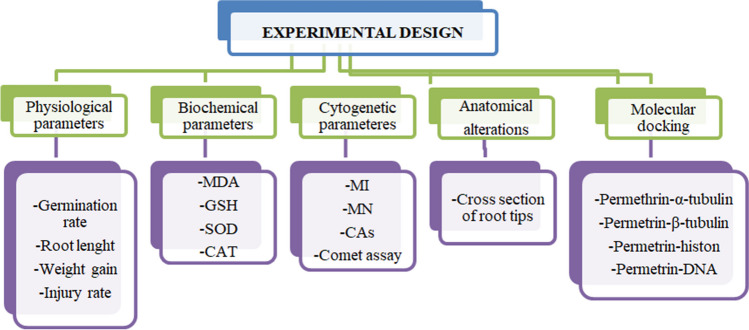
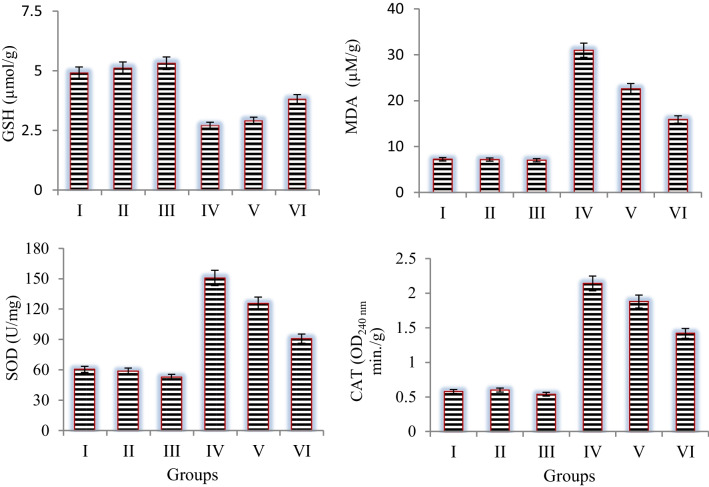
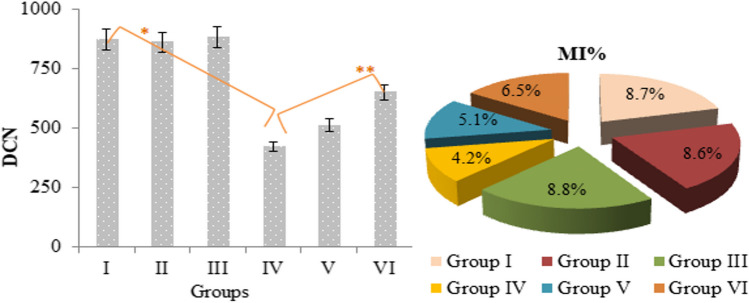
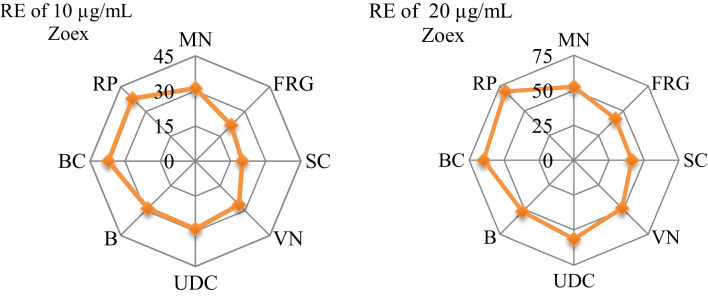
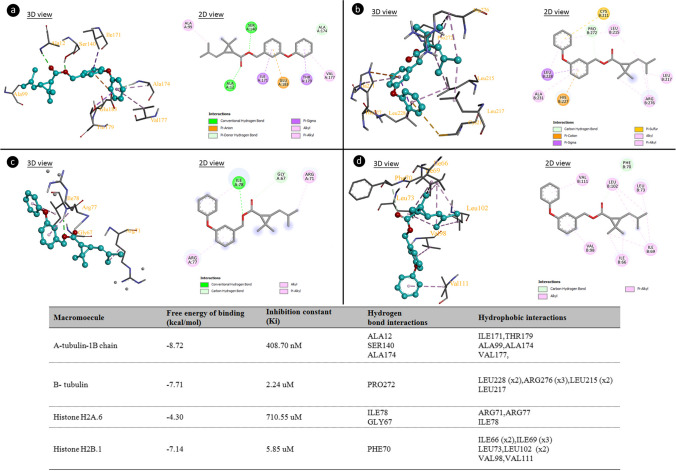
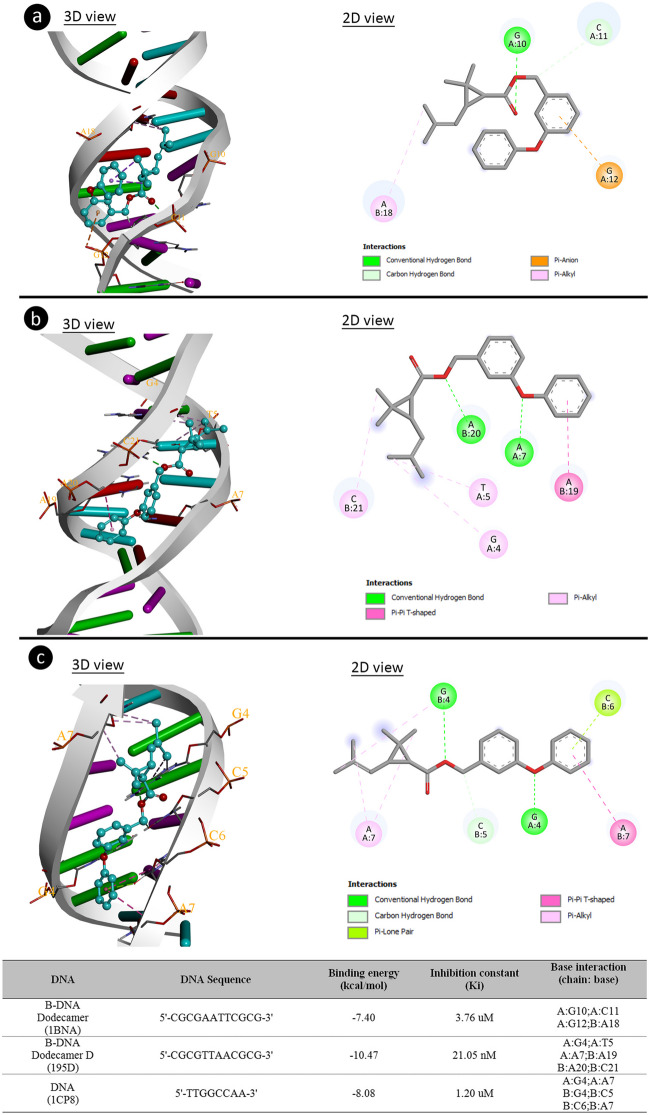
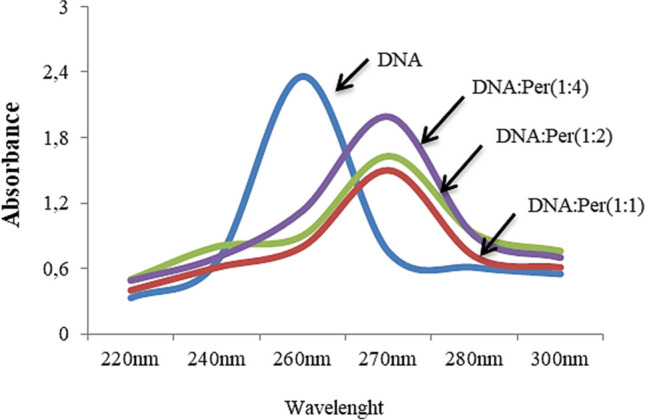
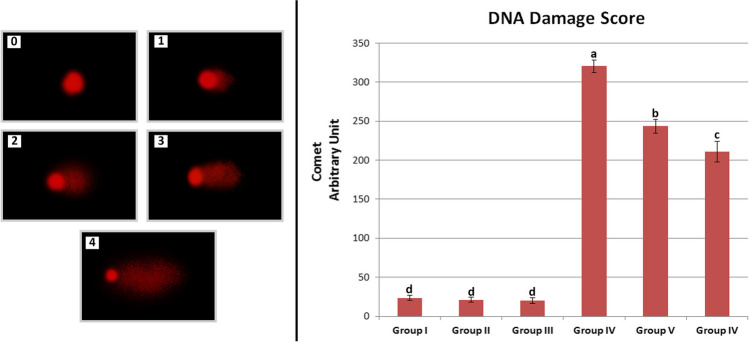
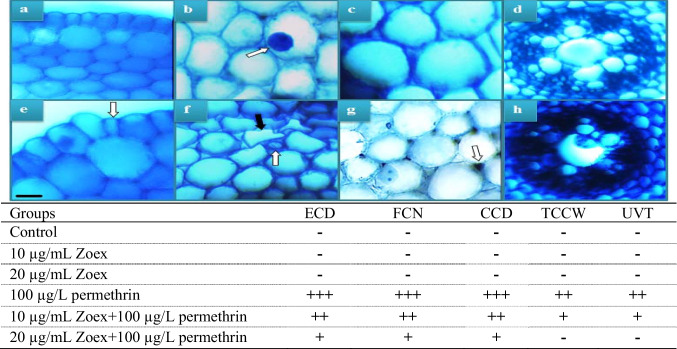
In this study, the toxic effects of permethrin on Allium cepa L. and the protective role of Zingiber officinale rhizome extract (Zoex) were investigated. In this context, 6 different groups were formed. While the control group was treated with tap water, the groups II and III were treated with 10 µg/mL and 20 µg/mL Zoex, respectively, and the group IV was treated with 100 µg/L permethrin. The protective effect of Zoex against permethrin toxicity was studied as a function of dose, and groups V and VI formed for this purpose were treated with 10 µg/mL Zoex + 100 µg/L permethrin and 20 µg/mL Zoex + 100 µg/L permethrin, respectively. After 72 h of germination, cytogenetic, biochemical, physiological, and anatomical changes in meristematic cells of A. cepa were studied. As a result, permethrin application decreased the mitotic index (MI) and increased the frequency of micronuclei (MN), and chromosomal abnormalities. The increase in malondialdehyde (MDA), superoxide dismutase (SOD), and catalase (CAT) and the decrease in glutathione (GSH) indicate that permethrin causes oxidative damage. Compared to the control group, a 68.5% decrease in root elongation (p < 0.05) and an 81.8% decrease (p < 0.05) in weight gain were observed in the permethrin-treated group. It was found that the application of Zoex together with permethrin resulted in regression of all detected abnormalities, reduction in the incidence of anatomical damage, MN and chromosomal aberrations, and improvement in MI rates. The most significant improvement was observed in group VI treated with 20 µg/mL Zoex, and Zoex was also found to provide dose-dependent protection. The toxicity mechanism of permethrin was also elucidated by molecular docking and spectral studies. From the data obtained during the study, it was found that permethrin has toxic effects on A. cepa, a non-target organism, while Zoex plays a protective role by reducing these effects.
Overview
The claims and statistics of this paper haven’t been checked yet.
Run the check — free, no account needed. It reads the open-access text and checks the sources it cites.
Integrity signals
Registry
Cites
Statistics
Figures
Verification
Claims the paper makes
The claims and statistics of this paper haven’t been checked yet.
Run the check — free, no account needed. It reads the open-access text and checks the sources it cites.
Claims other papers make about this one
Each is checked against this paper’s own text: does it say what the citing paper says it does?
In the citing paper
“Phenolic compounds and flavonoids are very valuable molecules in terms of antioxidant properties. These metabolites, which contain at least one hydroxyl group in their structures, have many different biological effects such as antioxidant, anticancer, antibacterial, cardioprotective, antiinflammatory, antiviral, antifungal20,33.”
From Synergistic and antagonistic contributions of main components to the bioactivity profile of Anethum graveolens extract (2025) · cites this paper as [33]
Self-check
Percentages, sums and reported differences re-computed from the paper’s own numbers.
The self-check needs the paper’s full text.
Citations
Cites
The Comet Assay for DNA Damage and Repair: Principles, Applications, and Limitations
Collins, A. R. (2004) · Molecular Biotechnology · doi:10.1385/mb:26:3:249 · Cited by 2,892
Bioactive Compounds and Bioactivities of Ginger (Zingiber officinale Roscoe)
Mao, Q.-Q., Xu, X.-Y., Cao, S.-Y., Gan, R.-Y., Corke, H., Beta, T., & Li, H.-B. (2019) · Foods · doi:10.3390/foods8060185 · Cited by 1,418
Research works printed but not linked: 62
- Agu PC, Afiukwa CA, Orji OU, Ezeh EM, Ofoke IH, Ogbu CO, Ugwuja EI, Aja PM (2023) Molecular docking as a tool for the discovery of molecular targets of nutraceuticals in diseases management. Sci Rep 13:13398. https://doi.org/10.1038/s41598-023-40160-2 · DOI
- Ahmad P, Jaleel CA, Salem MA, Nabi G, Sharma S (2010) Roles of enzymatic and nonenzymatic antioxidants in plants during abiotic stress. Crit Rev Biotechnol 30:161–175. https://doi.org/10.3109/07388550903524243 · DOI
- Akgeyik AU, Yalçın E, Çavuşoğlu K (2023) Phytochemical fingerprint and biological activity of raw and heat-treated Ornithogalum umbellatum. Sci Rep 13(1):13733. https://doi.org/10.1038/s41598-023-41057-w · DOI
- Akgündüz MÇ, Çavuşoğlu K, Yalçın E (2020) The potential risk assessment of phenoxyethanol with a versatile model system. Sci Rep 10(1):1–10. https://doi.org/10.1038/s41598-020-58170-9 · DOI
- Al-Amoudi WM (2018) Toxic effects of lambda-cyhalothrin, on the rat thyroid: involvement of oxidative stress and ameliorative effect of ginger extract. Toxicol Rep 5:728–736. https://doi.org/10.1016/j.toxrep.2018.06.005 · DOI
- Al-Nahain A, Jahan R, Rahmatullah M (2014) Zingiber officinale: a potential plant against rheumatoid arthritis. Arthritis 2014. https://doi.org/10.1155/2014/159089 · DOI
- Aydin D, Yalçın E, Çavuşoğlu K (2022) Metal chelating and anti-radical activity of Salvia officinalis in the ameliorative effects against uranium toxicity. Sci Rep 12(1):15845. https://doi.org/10.1038/s41598-022-20115-9 · DOI
- Balendiran K, Rao ST, Sekharudu CY, Zon G, Sundaralingam M (1995) X-ray structures of the B-DNA dodecamer d (CGCGTTAACGCG) with an inverted central tetranucleotide and its netropsin complex. Acta Crystallogr D Biol Crystallogr 51:190–198. https://doi.org/10.1107/S0907444994010759 · DOI
- Banerjee S, Mullick HI, Banerjee J, Ghosh A (2011) Zingiber officinale: ‘a natural gold.’ Int J Pharmaceutical Bio-Sci 2:283–294
- Borowik A, Wyszkowska J, Zaborowska M, Kucharski J (2023) The impact of permethrin and cypermethrin on plants, soil enzyme activity, and microbial communities. Int J Mol Sci 24(3):2892. https://doi.org/10.3390/ijms24032892 · DOI
- Çakir F, Kutluer F, Yalçın E, Çavuşoğlu K, Acar A (2023) Deep neural network and molecular docking supported toxicity profile of prometryn. Chemosphere 139962. https://doi.org/10.1016/j.chemosphere.2023.139962 · DOI
- Çavuşoğlu K, Yalçın E (2023) Spectral shift supported epichlorohydrin toxicity and the protective role of sage. Environ Sci Pollut Res 30(1):1374–1385. https://doi.org/10.1007/s11356-022-22288-2 · DOI
- Çavuşoğlu K, Gür B, Yalçın E, Demirtaş G, Çiçek F (2014) The effect of lambda-cyhalothrin on root tip cytology, pigment contents and antioxidant defense system of Allium cepa. Cytologia 79(1):95–101. https://doi.org/10.1508/cytologia.79.95 · DOI
- Çavuşoğlu K, Kaya A, Yilmaz F, Yalçın E (2012) Effects of cypermethrin on Allium cepa. Env Toxicol 27(10):583–589. https://doi.org/10.29130/dubited.457074 · DOI
- Chakraborty R, Mukherjee AK, Mukherjee A (2009) Evaluation of genotoxicity of coal fly ash in Allium cepa root cells by combining comet assay with the Allium test. Environ Monit Assess 153:351–357. https://doi.org/10.1007/s10661-008-0361-z · DOI
- Dahl KN, Ribeiro AJ, Lammerding J (2008) Nuclear shape, mechanics, and mechanotransduction. Circ Res 102:1307–1318. https://doi.org/10.1161/CIRCRESAHA.108.173989 · DOI
- Dauer WT, Worman HJ (2009) The nuclear envelope as a signaling node in development and disease. Dev Cell 17(5):626–638. https://doi.org/10.1016/j.devcel.2009.10.016 · DOI
- Davoodi R, Gholamreza ABDİ (2012) Comparative study on the acute toxicity of synthetic pesticides, permethrin 25% and monocrotophos 36%, and neem-based pesticide, neem gold EC 0.03%, to Juvenile Cyprinus carpio Linn. J Biol Environ Sci 6(16):105–108
- Delic N (1998) Effect of permethrin on mitotic activity of cultured human lymphocytes. Pesticides 13:233–238
- Demirtaş G, Çavuşoğlu K, Yalçın E (2020) Aneugenic, clastogenic, and multi-toxic effects of diethyl phthalate exposure. Environ Sci Pollut Res 27:5503–5510. https://doi.org/10.1007/s11356-019-07339-5 · DOI
- Drew HR, Wing RM, Takano T, Broka C, Tanaka S, Itakura K, Dickerson RE (1981) Structure of a B-DNA dodecamer: conformation and dynamics. Proc Natl Acad Sci 78(4):2179–2183. https://doi.org/10.1073/pnas.78.4.2179 · DOI
- Dubus IG, Hollis JM, Brown CD (2000) Pesticide in rainfall in Europe. Environ Pollut 110:331–344. https://doi.org/10.1016/S0269-7491(99)00295-X · DOI
- Dugasani S, Pichika MR, Nadarajah VD, Balijepalli MK, Tandra S, Korlakunta JN (2020) Comparative antioxidant and anti-inflammatory effects of [6]-gingerol, [8]-gingerol, [10]-gingerol and [6]-shogaol. J Ethnopharmacol 127(2):515–520. https://doi.org/10.1016/j.jep.2009.10.004 · DOI
- Falcioni ML, Nasuti C, Bergamini C, Fato R, Lenaz G, Gabbianelli R (2010) The primary role of glutathione against nuclear DNA damage of striatum induced by permethrin in rats. Neuroscience 168(1):2–10. https://doi.org/10.1016/j.neuroscience.2010.03.053 · DOI
- Fenech M, Neville S (1992) Conversion of excision-repairable DNA lesions to micronuclei within one cell cycle in human lymphocytes. Environ Mol Mut 19:27–36. https://doi.org/10.1002/em.2850190106 · DOI
- Ferguson LR, Denny WA (2007) Genotoxicity of non-covalent interactions: DNA intercalators. Mutat Res Fundam Mol Mech Mutagen 623(1–2):14–23. https://doi.org/10.1016/j.mrfmmm.2007.03.014 · DOI
- Gabbianelli R, Palan M, Flis DJ, Fedeli D, Nasuti C, Skarydova L, Ziolkowski W (2013) Imbalance in redox system of rat liver following permethrin treatment in adolescence and neonatal age. Xenobiotica 43:1103–1110. https://doi.org/10.3109/00498254.2013.796427 · DOI
- Govindarajan VS (1982) Ginger: chemistry, technology and quality evaluation. Crit Rev Food Sci Nutr 17(1):1–96. https://doi.org/10.1080/10408398209527343 · DOI
- Guengerich FP (2014) Base intercalation in DNA. In: Wells RD, Bond JS, Klinman J, Masters BSS (eds) Molecular life sciences, Springer, New York, pp 1–2. https://doi.org/10.1007/978-1-4614-6436-5_432-1 · DOI
- Guex N, Peitsch M (2005) CSWISS-MODEL and the Swiss-Pdb Viewer: an environment for comparative protein modeling. Electrophoresis 18:2714–2723. https://doi.org/10.1002/elps.1150181505 · DOI
- Hausladen A, Alscher RG (1993) Glutathione. In: Alscher RG, Hess JL (eds) Antioxidants in higher plants. CRC Press, Boca Raton, pp 1–30
- Jeena K, Liju VB, Ramanath V, Kuttan R (2016) Protection against whole body gamma-irradiation induced oxidative stress and clastogenic damage in mice by ginger essential oil. APJCP 17(3):1325–1332. https://doi.org/10.7314/APJCP.2016.17.3.1325 · DOI
- Katahira R, Katahira M, Yamashita Y, Ogawa H, Kyogoku Y, Yoshida M (1998) Solution structure of the novel antitumor drug UCH9 complexed with d (TTGGCCAA) 2 as determined by NMR. Nucleic Acids Res 26:744–755. https://doi.org/10.1093/nar/26.3.744 · DOI
- Kerksick C, Willoughby D (2005) The antioxidant role of glutathione and N-acetyl-cysteine supplements and exercise-induced oxidative stress. J Internat Soc Sports Nutr 2(2):1–7. https://doi.org/10.1186/1550-2783-2-2-38 · DOI
- Khanna N, Sharma S (2013) Allium cepa root chromosomal aberration assay: a review. Indian J Pharm Biol Res 1(3):105–11. https://doi.org/10.30750/ijpbr.1.3.15 · DOI
- Kim YS, Hong CS, Lee SW, Nam JH, Kim BJ (2017) Effects of ginger and its pungent constituents on transient receptor potential channels. Biophys J 112(3):250 · DOI
- Końca K, Lankoff A, Banasik A, Lisowska H, Kuszewski T, Góźdź S, Koza Z, Wojcik A (2003) A cross-platform public domain PC image-analysis program for the comet assay. Mutat Res 534:15–20. https://doi.org/10.1016/s1383-5718(02)00251-6 · DOI
- Kuhad A, Tirkey N, Pilkhwal S, Chopra K (2006) 6-Gingerol prevents cisplatin-induced acute renal failure in rats. BioFactors 26(3):189–200. https://doi.org/10.1002/biof.5520260304 · DOI
- Kurt D, Yalçin E, Çavuşoğlu K (2023) GC–MS and HPLC supported phytochemical analysis of watercress and the protective role against paraben toxicity. Environ Sci Pollut Res 30(3):6033–6046. https://doi.org/10.1007/s11356-022-22380-7 · DOI
- Kutluer F, Çavuşoğlu K, Yalçin E (2019) The investigation of the physiological, anatomical and genotoxic effects in Allium cepa L. of deltamethrin. Duzce Univ J Sci Technol 7(3):961–972. https://doi.org/10.29130/dubited.457074 · DOI
- Lacey SE, He S, Scheres SH, Carter AP (2019) Cryo-EM of dynein microtubule-binding domains shows how an axonemal dynein distorts the microtubule. Elife 8:e47145. https://doi.org/10.7554/eLife.47145 · DOI
- Luo Q, Wang B, Wu Z, Jiang W, Wang Y, Du K, Zhou N, Zheng L, Gan J, Shen WH, Ma J, Dong A (2020) NAP1-Related Protein 1 (NRP1) has multiple interaction modes for chaperoning histones H2A–H2B. Proc Natl Acad Sci USA 117(48):30391–30399. https://doi.org/10.1073/pnas.2011089117 · DOI
- Macar O, Kalefetoğlu Macar T, Çavuşoğlu K, Yalçın E (2020) Protective effects of anthocyanin-rich bilberry (Vaccinium myrtillus L.) extract against copper (II) chloride toxicity. Environ Sci Pollut Res 27:1428–1435. https://doi.org/10.1007/s11356-019-06781-9 · DOI
- Morris GM, Huey R, Lindstrom W, Sanner MF, Belew RK, Goodsell DS, Olson AJ (2009) AutoDock4 and AutoDockTools4: automated docking with selective receptor flexibility. J Comput Chem 30:2785–2791. https://doi.org/10.1002/jcc.21256 · DOI
- O’Boyle NM, Banck M, James CA, Morley C, Vandermeersch T, Hutchison GR (2011) Open Babel: an open chemical toolbox. J Cheminform 3:33. https://doi.org/10.1186/1758-2946-3-33 · DOI
- Okesola MA, Ajiboye BO, Oyinloye BE, Ojo OA (2019) Effect of Zingiber officinale on some biochemical parameters and cytogenic analysis in lead-induced toxicity in experimental rats. Tox Mech Meth 29(4):255–262
- Ozluer C, Satana Kara HE (2014) In vitro DNA binding studies of anticancer drug idarubicin using spectroscopic techniques. J Photochem Photobiol B 138:36–42. https://doi.org/10.1016/j.jphotobiol.2014.05.015 · DOI
- Policegoudra RS, Rehna K, Rao LJ, Aradhya SM (2010) Antimicrobial, antioxidant, cytotoxicity and platelet aggregation inhibitory activity of a novel molecule isolated and characterized from mango ginger rhizome. J Biosci 35(2):231–240. https://doi.org/10.1007/s12038-010-0027-1 · DOI
- Roma GC, De Oliveira PR, Araujo AM, Bechara GH, Mathias MIC (2012) Genotoxic and mutagenic effects of permethrin in mice: micronuclei analysis in peripheral blood erythrocytes. Mic Res Tech 75(12):1732–1736. https://doi.org/10.1002/jemt.22124 · DOI
- Saha C, Kumar R, Das A (2017) Understanding nucleosomal histone and DNA interactions: a biophysical study. J Biomol Struct Dyn 35(12):2531–2538. https://doi.org/10.1080/07391102.2016.1225603 · DOI
- Sellami B, Louati H, Dellali M, Aissa P, Mahmoudi E, Coelho AV, Sheehan D (2014) Effects of permethrin exposure on antioxidant enzymes and protein status in Mediterranean clams Ruditapes decussatus. Environ Sci Pollut Res 21(6):4461–4472. https://doi.org/10.1007/s11356-013-2404-4 · DOI
- Sharma AD, Gill PK, Singh P (2002) DNA isolation from dry and fresh samples of polysaccharide-rich plants. Plant Mol Biol Rep 20:415. https://doi.org/10.1007/BF02772129 · DOI
- Shu X, Yin L, Zhang Q, Wang W (2012) Effect of Pb toxicity on leaf growth, antioxidant enzyme activities, and photosynthesis in cuttings and seedlings of Jatropha curcas L. Environ Sci Pollut Res Int 19:893–902. https://doi.org/10.1007/s11356-011-0625-y · DOI
- Singh D, Pal M, Singh R, Singh CK, Chaturvedi AK (2015) Physiological and biochemical characteristics of Vigna species for Al stress tolerance. Acta Physiol Plant 37:1–13 · DOI
- Sun YJ, Liang YJ, Yang L, Long DX, Wang HP, Wu YJ (2022) Long-term low-dose exposure of permethrin induces liver and kidney damage in rats. BMC Pharmacol Toxicol 23:46. https://doi.org/10.1186/s40360-022-00586-2 · DOI
- Tang W, Wang D, Wang J, Wu Z, Li L, Huang M, Xu S, Yan D (2018) Pyrethroid pesticide residues in the global environment: an overview. Chemosphere 191:990–1007. https://doi.org/10.1016/j.chemosphere.2017.10.115 · DOI
- Tiryaki O, Canhilal R, Horuz S (2010) The use of pesticides and their risks. Erciyes Univ J Inst Sci Technol 26(2):154–169
- Tütüncü E, Yalçin E, Acar A, Yapar K, Çavuşoğlu K (2019) Investigation of the toxic effects of a carbamate insecticide methiocarb in Allium cepa L. Cytologia 84(2):113–117. https://doi.org/10.1508/cytologia.84.113 · DOI
- Weidinger A, Kozlov AV (2015) Biological activities of reactive oxygen and nitrogen species: oxidative stress versus signal transduction. Biomolecules 5(2):472–548. https://doi.org/10.3390/biom5020472 · DOI
- Yalçın E, Uzun A, Çavuşoğlu K (2019) In vivo epiclorohidrine toxicity: cytogenetic, biochemical, physiological, and anatomical evidences. Environ Sci Pollut Res 26:22400–22406. https://doi.org/10.1007/s11356-019-05518-y · DOI
- Yalçin E, Çavuşoğlu K (2022a) Toxicity assessment of potassium bromate and the remedial role of grape seed extract. Sci Rep 12(1):20529. https://doi.org/10.1038/s41598-022-25084-7 · DOI
- Yalçin E, Çavuşoğlu K (2022b) Spectroscopic contribution to glyphosate toxicity profile and the remedial effects of Momordica charantia. Sci Rep 12(1):20020. https://doi.org/10.1038/s41598-022-24692-7 · DOI
Cited by
Kesti Usta, S., Yalçın, E., & Çavuşoğlu, K. (2025) · Scientific Reports · doi:10.1038/s41598-025-07297-8 · Cited by 10
Self-citation
Metadata
- Authors
- Himtaş, D., Yalçin, E., Çavuşoğlu, K., & Acar, A.
- Venue
- Environmental Science and Pollution Research
- Published
- 2024-01-08
- Volume
- 31
- Issue
- 6
- Pages
- 9272-9287
- ISSN
- 1614-7499
- PMC
- PMC10824804
- Cited by
- 37
- References
- 2
- Language
- en
- Funders
- Giresun University
About these checks
Registry, retraction, Cites and statistics results are computed, not judged, with one exception: a printed reference that no index lists is read once by a model before it counts as a citation error. Claims are extracted by a model and kept only when their quote appears verbatim in the text; each cited source is then checked, with a model’s help, for whether it says what the claim relies on. Those verdicts can be wrong — read the claim’s quote and the cited source before relying on one.
Statistics and arithmetic are recomputed, not judged.
Confidence bands are shown only for fields calibrated on our annotated test set. None is calibrated yet, so no band is shown.
What counts as a claim ›How we measure confidence ›How we check this ›
Are you an author, or do you see a problem with this page? Request a review
How to cite
Cite CoChat for the checks on this page, and the paper for its own findings.
- This page
- CoChat. (2026). Citation check: In-vivo and in-silico studies to identify toxicity mechanisms of permethrin with the toxicity-reducing role of ginger. https://app.cochat.ai/papers/10.1007/s11356-023-31729-5
- The paper
- Himtaş, D., Yalçin, E., Çavuşoğlu, K., & Acar, A. (2024). In-vivo and in-silico studies to identify toxicity mechanisms of permethrin with the toxicity-reducing role of ginger. Environmental Science and Pollution Research. https://doi.org/10.1007/s11356-023-31729-5
Data sources
Bibliographic data: Semantic Scholar, OpenAlex, Crossref.
Contains information from the Semantic Scholar Academic Graph Datasets, made available under the ODC Attribution License (ODC-BY 1.0).
Semantic Scholar’s data is described in: Kinney, R., et al. (2023). The Semantic Scholar Open Data Platform. arXiv:2301.10140.
