

The DOI matches its Crossref record; 1 of the 1 references it cites were found in a registry or an index.
Human Umbilical Cord Blood-Derived Mesenchymal Stem Cell Transplantation for Patients with Decompensated Liver Cirrhosis
Open accessAbstract
BACKGROUND OR PURPOSE: Although human umbilical cord blood-derived mesenchymal stem cell transplantation (HUCB-MSCT) resulted in a good short-term therapeutic effect on patients with decompensated liver cirrhosis (DLC), the long-term survival remained unclear. This study aimed to evaluate the impact of HUCB-MSCT on long-term outcomes in patients with DLC. METHODS: This retrospective cohort study included hospitalized patients with decompensated cirrhosis in Liuzhou Hospital of Traditional Chinese Medicine between November 2010 and February 2013. The primary outcome was overall survival (OS). The secondary outcomes were 3-year and 5-year survival rates and the occurrence rate of hepatocellular carcinoma (HCC). RESULTS: A total of 201 subjects were enrolled, including 36 patients who underwent HUCB-MSCT (SCT group) and 165 patients who did not (non-SCT group). After PSM (1:2), there were 36 patients in the SCT group and 72 patients in non-SCT group. The 3-year and 5-year survival rates of the two groups were 83.3% vs. 61.8% and 63.9% vs. 43.6%, and median OS time was 92.50 and 50.80 months, respectively. HUCB-MSCT treatment was found to be an independent beneficial factor for patient OS (hazard ratio = 0.47; 95% CI: 0.29-0.76; P = 0.002). There was no significant difference in the occurrence rate of HCC between the two groups (P = 0.410). DISCUSSION OR CONCLUSIONS: HUCB-MSCT may improve long-term OS without increasing the occurrence of HCC in patients with DLC. TRIAL REGISTRATION: The Chinese Clinical Trial Registry (ChiCTR2100047550).
Overview
The claims and statistics of this paper haven’t been checked yet.
Run the check — free, no account needed. It reads the open-access text and checks the sources it cites.
Integrity signals
Registry
Cites
Statistics
Figures
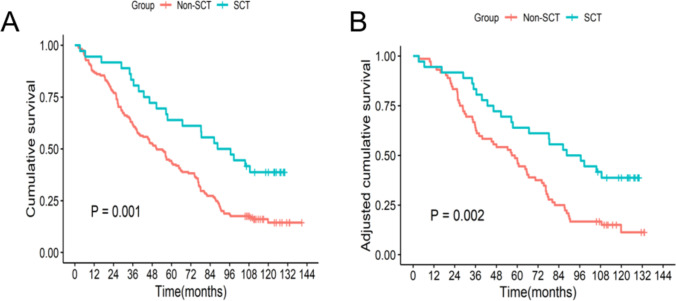
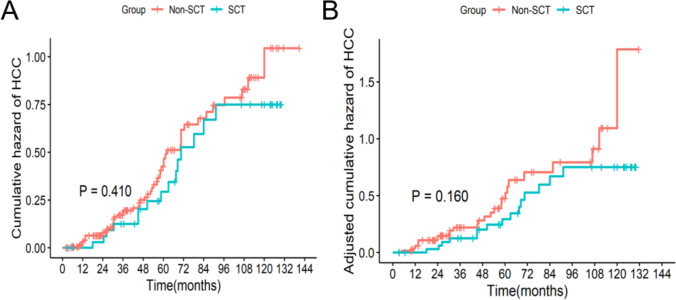
Verification
Claims the paper makes
The claims and statistics of this paper haven’t been checked yet.
Run the check — free, no account needed. It reads the open-access text and checks the sources it cites.
Claims other papers make about this one
Each is checked against this paper’s own text: does it say what the citing paper says it does?
The source backs part of the claim, not all of it — or backs it for a different population, condition or comparison.
In the citing paper
“Recently, a clinical trial in China involving 201 patients with DLC even reported a significantly higher overall survival rate following MSC therapy during a 5-year follow-up period, suggesting its long-term safety and feasibility [285].”
From Mechanisms, efficacy, and future perspectives of cellular-based therapies for liver fibrosis/cirrhosis: focusing on mesenchymal stromal cells (2025) · cites this paper as [285]
Experimental — accuracy not yet measured
Self-check
Percentages, sums and reported differences re-computed from the paper’s own numbers.
The self-check needs the paper’s full text.
Citations
Cites
Suk, K. T., Yoon, J., Kim, M. Y., Kim, C. W., Kim, J. K., Park, H., Hwang, S. G., Kim, D. J., Lee, B. S., Lee, S. H., et al. (2016) · Hepatology · doi:10.1002/hep.28693 · Cited by 303
Research works printed but not linked: 24
- Ginès, 2021, Liver cirrhosis, Lancet, 398, 1359, 10.1016/S0140-6736(21)01374-X · DOI · Paper page
- Campana, 2017, Regression of Liver Fibrosis, Semin Liver Dis, 37, 1, 10.1055/s-0036-1597816 · DOI
- Ge, 2016, Treatment of Patients with Cirrhosis, N Engl J Med, 375, 767, 10.1056/NEJMra1504367 · DOI
- Belli, 2021, Liver transplantation for patients with acute-on-chronic liver failure (ACLF) in Europe: Results of the ELITA/EF-CLIF collaborative study (ECLIS), J Hepatol, 75, 610, 10.1016/j.jhep.2021.03.030 · DOI
- Moon, 2020, Contemporary Epidemiology of Chronic Liver Disease and Cirrhosis, Clin Gastroenterol Hepatol, 18, 2650, 10.1016/j.cgh.2019.07.060 · DOI
- de Miguel, 2019, Mesenchymal Stem Cells for Liver Regeneration in Liver Failure: From Experimental Models to Clinical Trials, Stem Cells Int, 2019, 3945672, 10.1155/2019/3945672 · DOI
- Wu, 2019, Effect of Autologous Bone Marrow Stem Cell Therapy in Patients with Liver Cirrhosis: A Meta-analysis, J Clin Transl Hepatol, 7, 238, 10.14218/JCTH.2019.00008 · DOI
- Sun, 2020, Autologous bone marrow stem cell transplantation via the hepatic artery for the treatment of hepatitis B virus-related cirrhosis: a PRISMA-compliant meta-analysis based on the Chinese population, Stem Cell Res Ther, 11, 104, 10.1186/s13287-020-01627-5 · DOI
- Mizukami, 2018, Mesenchymal Stromal Cells: From Discovery to Manufacturing and Commercialization, Stem Cells Int, 2018, 4083921, 10.1155/2018/4083921 · DOI
- Yamada Y, Nakamura-Yamada S, Kusano K, Baba S. Clinical Potential and Current Progress of Dental Pulp Stem Cells for Various Systemic Diseases in Regenerative Medicine: A Concise Review. Int J Mol Sci 2019;20. · DOI
- Yu, 2018, Differentiation of umbilical cord mesenchymal stem cells into hepatocytes in comparison with bone marrow mesenchymal stem cells, Mol Med Rep, 18, 2009
- Hu, 2019, Current understanding of adipose-derived mesenchymal stem cell-based therapies in liver diseases, Stem Cell Res Ther, 10, 199, 10.1186/s13287-019-1310-1 · DOI
- Song, 2020, Human umbilical cord blood-derived mesenchymal stem cell implantation for osteoarthritis of the knee, Arch Orthop Trauma Surg, 140, 503, 10.1007/s00402-020-03349-y · DOI
- El Baz, 2019, Potentials of Differentiated Human Cord Blood-Derived Unrestricted Somatic Stem Cells in Treatment of Liver Cirrhosis, Exp Clin Transplant, 17, 251, 10.6002/ect.2017.0249 · DOI
- Tao, 2018, Umbilical cord blood stem cells transplantation as an adjunctive treatment strategy for liver cirrhosis in Chinese population: a meta-analysis of effectiveness and safety, Ther Clin Risk Manag, 14, 417, 10.2147/TCRM.S157603 · DOI
- Lezmi E, Benvenisty N. The Tumorigenic Potential of Human Pluripotent Stem Cells. Stem Cells Transl Med 2022. · DOI
- Zhou, 2020, Therapeutic effect and safety of stem cell therapy for chronic liver disease: a systematic review and meta-analysis of randomized controlled trials, Stem Cell Res Ther, 11, 419, 10.1186/s13287-020-01935-w · DOI
- Qiao, 2020, Single cell derived spheres of umbilical cord mesenchymal stem cells enhance cell stemness properties, survival ability and therapeutic potential on liver failure, Biomaterials, 227, 10.1016/j.biomaterials.2019.119573 · DOI
- Kim, 2010, Application of human umbilical cord blood-derived mesenchymal stem cells in disease models, World J Stem Cells, 2, 34, 10.4252/wjsc.v2.i2.34 · DOI
- Qi, 2015, Clinical outcomes of the transplantation of stem cells from various human tissue sources in the management of liver cirrhosis: a systematic review and meta-analysis, Curr Stem Cell Res Ther, 10, 166, 10.2174/1574888X09666141112114011 · DOI
- Guo, 2019, Long-term Outcomes of Autologous Peripheral Blood Stem Cell Transplantation in Patients With Cirrhosis, Clin Gastroenterol Hepatol, 17, 1175, 10.1016/j.cgh.2018.10.034 · DOI
- Wang, 2018, Efficacy and safety of autologous stem cell transplantation for decompensated liver cirrhosis: A retrospective cohort study, World J Stem Cells, 10, 138, 10.4252/wjsc.v10.i10.138 · DOI
- Matsuura, 2019, Evaluation of the Effects of Cultured Bone Marrow Mesenchymal Stem Cell Infusion on Hepatocarcinogenesis in Hepatocarcinogenic Mice With Liver Cirrhosis, Transplant Proc, 51, 925, 10.1016/j.transproceed.2019.03.011 · DOI
- Cui, 2014, Immunological basis of stem cell therapy in liver diseases, Expert Rev Clin Immunol, 10, 1185, 10.1586/1744666X.2014.930665 · DOI
Cited by
Sorted by citations
Pan, X., Gao, T., & Wang, B. (2025) · Cell & Bioscience · doi:10.1186/s13578-025-01520-9 · Cited by 2
“Recently, a clinical trial in China involving 201 patients with DLC even reported a significantly higher overall survival rate following MSC therapy during a 5-year follow-up period, suggesting its long-term safety and feasibility [285].”
Metadata
- Authors
- Li, Z., Zhou, X., Han, L., Shi, M., Xiao, H., Lin, M., & Chi, X.
- Affiliations
- Guangzhou University of Chinese Medicine (CN)
- Guangdong Provincial Hospital of Chinese Medicine (CN)
- Corresponding author
- Chi, Xiaoling
- Venue
- Journal of Gastrointestinal Surgery
- Publisher
- Elsevier BV
- Published
- 2023-05
- Volume
- 27
- Issue
- 5
- Pages
- 926-931
- ISSN
- 1091-255X (ISSN-L)
- PMC
- PMC10133084
- OpenAlex
- W4318162933
- Cited by
- 18
- References
- 1
- Citations by year
- 2026: 5 · 2025: 5 · 2024: 3 · 2023: 5
- FWCI
- 3.12
- Type
- journal article
- Language
- en
- Open access
- hybrid
- doi.org
- Licence
- Locations
- Journal of Gastrointestinal Surgery (publishedVersion, cc-by)
- PubMed Central (publishedVersion, cc-by)
- PubMed (publishedVersion)
- Funders
- the National Natural Science Foundation of China (No. 81500462, No. 82160882)
- Topics
- Life Sciences › Biochemistry, Genetics and Molecular Biology › Cell Biology › Mesenchymal stem cell research
- Health Sciences › Medicine › Hepatology › Liver Disease and Transplantation
- Health Sciences › Medicine › Hepatology › Liver physiology and pathology
- Keywords
- human umbilical cord blood-derived mesenchymal stem cells, mesenchymal stem cell transplantation, decompensated cirrhosis, overall survival, long-term outcomes, hepatocellular carcinoma, liver transplantation
- MeSH terms
- Fetal Blood, Carcinoma, Hepatocellular, Humans, Liver Cirrhosis, Liver Neoplasms, Retrospective Studies, Treatment Outcome, Mesenchymal Stem Cell Transplantation
About these checks
Registry, retraction, Cites and statistics results are computed, not judged, with one exception: a printed reference that no index lists is read once by a model before it counts as a citation error. Claims are extracted by a model and kept only when their quote appears verbatim in the text; each cited source is then checked, with a model’s help, for whether it says what the claim relies on. Those verdicts can be wrong — read the claim’s quote and the cited source before relying on one.
Statistics and arithmetic are recomputed, not judged.
Confidence bands are shown only for fields calibrated on our annotated test set. None is calibrated yet, so no band is shown.
What counts as a claim ›How we measure confidence ›How we check this ›
Are you an author, or do you see a problem with this page? Request a review
