

UK clinical guideline for the prevention and treatment of osteoporosis
Open accessThe DOI matches its Crossref record; 291 of the 291 references it cites were found in a registry or an index.
Abstract
Summary: The National Osteoporosis Guideline Group (NOGG) has revised the UK guideline for the assessment and management of osteoporosis and the prevention of fragility fractures in postmenopausal women, and men age 50 years and older. Accredited by NICE, this guideline is relevant for all healthcare professionals involved in osteoporosis management. Introduction: The UK National Osteoporosis Guideline Group (NOGG) first produced a guideline on the prevention and treatment of osteoporosis in 2008, with updates in 2013 and 2017. This paper presents a major update of the guideline, the scope of which is to review the assessment and management of osteoporosis and the prevention of fragility fractures in postmenopausal women, and men age 50 years and older. Methods: Where available, systematic reviews, meta-analyses and randomised controlled trials were used to provide the evidence base. Conclusions and recommendations were systematically graded according to the strength of the available evidence. Results: Review of the evidence and recommendations are provided for the diagnosis of osteoporosis, fracture-risk assessment and intervention thresholds, management of vertebral fractures, non-pharmacological and pharmacological treatments, including duration and monitoring of anti-resorptive therapy, glucocorticoid-induced osteoporosis, and models of care for fracture prevention. Recommendations are made for training; service leads and commissioners of healthcare; and for review criteria for audit and quality improvement. Conclusion: The guideline, which has received accreditation from the National Institute of Health and Care Excellence (NICE), provides a comprehensive overview of the assessment and management of osteoporosis for all healthcare professionals involved in its management. This position paper has been endorsed by the International Osteoporosis Foundation and by the European Society for the Clinical and Economic Aspects of Osteoporosis, Osteoarthritis and Musculoskeletal Diseases.
Overview
The claims and statistics of this paper haven’t been checked yet.
Free: it reads the open-access text and checks the first 5 claims that cite a source we can check. Create a free account to check every claim.
Integrity signals
Registry
Cites
Statistics
Figures
Verification
Claims the paper makes
The claims and statistics of this paper haven’t been checked yet.
Free: it reads the open-access text and checks the first 5 claims that cite a source we can check. Create a free account to check every claim.
Claims other papers make about this one
Each is checked against this paper’s own text: does it say what the citing paper says it does?
The cited source says what the claim attributes to it.
In the citing paper
“Fracture risk approximately doubles with every SD T-score reduction.137,138”
From EASL Clinical Practice Guidelines on sclerosing cholangitis (2022) · cites this paper as [137]
Self-check
Percentages, sums and reported differences re-computed from the paper’s own numbers.
The self-check needs the paper’s full text.
Citations
Cites
Items 201–291 of 291
Interventions to improve adherence to anti-osteoporosis medications: an updated systematic review
On behalf of the European Society for Clinical and Economic Aspect of Osteoporosis, O. A. M. D. (., Cornelissen, D., de Kunder, S., Si, L., Reginster, J.-Y., Evers, S., Boonen, A., & Hiligsmann, M. (2020) · Osteoporosis International · doi:10.1007/s00198-020-05378-0 · Cited by 101 · cited 1×
“No one type of intervention has been demonstrated to enhance medicines adherence in osteoporosis care, but multi-component models with active patient engagement have the most positive effects [305, 306]; (evidence level Ia).”
BackgroundEverts-Graber, J., Reichenbach, S., Ziswiler, H. R., Studer, U., & Lehmann, T. (2020) · Journal of Bone and Mineral Research · doi:10.1002/jbmr.3962 · Cited by 99
Fracture risk following high-trauma versus low-trauma fracture: a registry-based cohort study
Leslie, W. D., Schousboe, J. T., Morin, S. N., Martineau, P., Lix, L. M., Johansson, H., McCloskey, E. V., Harvey, N. C., & Kanis, J. А. (2020) · Osteoporosis International · doi:10.1007/s00198-019-05274-2 · Cited by 98 · cited 2×
“A history of a prior fracture, particularly if sustained from low trauma and at a site characteristic for osteoporosis, is an important risk factor for further fracture [49].”
BackgroundSelf-citationLeslie, W. D., Orwoll, E. S., Nielson, C. M., Morin, S. N., Majumdar, S. R., Johansson, H., Odén, A., McCloskey, E. V., & Kanis, J. A. (2014) · Journal of Bone and Mineral Research · doi:10.1002/jbmr.2280 · Cited by 96 · cited 1×
“Additionally, FRAX values have been shown to be largely unaffected by socioeconomic status [91], variation in body composition [92], and chronic renal disease [93]; (evidence level Ib).”
BackgroundSelf-citationDarling, A. L., MANDERS, R. J. F., Sahni, S., Zhu, K., Hewitt, C. E., Prince, R. L., Millward, D. J., & Lanham-New, S. A. (2019) · Osteoporosis International · doi:10.1007/s00198-019-04933-8 · Cited by 93 · cited 1×
“75 g/kg body weight/day are associated with higher BMD at the neck of femur and total hip in one RCT, and in observational studies, has been associated with a reduced risk of hip fractures[143, 144]; (evidence levels Ib and IIa); however, in a meta-analysis of 30 interventional studies, no significant effects of prote…”
ResultEffects of Zoledronate on Cancer, Cardiac Events, and Mortality in Osteopenic Older Women
Reid, I. R., Horne, A. M., Mihov, B., Stewart, A., Garratt, E., Bastin, S., & Gamble, G. D. (2020) · Journal of Bone and Mineral Research · doi:10.1002/jbmr.3860 · Cited by 93 · cited 1×
“When given (without calcium supplementation) every 18 months to women with osteopenia, there were fewer vertebral and non-vertebral fractures [137, 193]; (evidence level Ib).”
BackgroundKanis, J. A., Johansson, H., Harvey, N. C., Gudnason, V. G., Sigurðsson, G., Siggeirsdóttir, K., Lorentzon, M., Liu, E., Vandenput, L., & McCloskey, E. V. (2020) · Osteoporosis International · doi:10.1007/s00198-020-05517-7 · Cited by 93 · cited 14×
“Although FRAX has a limited input of variables, relatively simple arithmetic procedures are available (Table 1) which can be applied to conventional FRAX estimates of probabilities of hip fracture and major osteoporotic fracture to adjust the probability assessment with knowledge of high, moderate, and low exposure to…”
BackgroundMethodInfluentialSelf-citationSmoking, smoking cessation, and fracture risk in elderly women followed for 10 years
Thorin, M., Wihlborg, A., Åkesson, K. S., & Gerdhem, P. (2015) · Osteoporosis International · doi:10.1007/s00198-015-3290-z · Cited by 88 · cited 1×
“Smoking cessation has been demonstrated to reduce the risk of vertebral and hip fractures in women [172, 173]; (evidence levels Ilb and IIa).”
BackgroundBrown, J. E., Handforth, C., Compston, J. E., Cross, W. R., Parr, N. J., Selby, P. L., Wood, S. L., Drudge‐Coates, L., Walsh, J., Mitchell, C. A., et al. (2020) · Journal of bone oncology · doi:10.1016/j.jbo.2020.100311 · Cited by 88 · cited 1×
“Those with FRAX probability near to, but below the intervention threshold, and patients going on to additional systemic therapies (particularly those requiring glucocorticoids), should have FRAX with BMD repeated after 12–18 months [267]; (evidence level IIa).”
BackgroundSelf-citationMild morphometric vertebral fractures predict vertebral fractures but not non-vertebral fractures
Johansson, H., Odén, A., McCloskey, E. V., & Kanis, J. А. (2013) · Osteoporosis International · doi:10.1007/s00198-013-2460-0 · Cited by 87 · cited 1×
“Moderate or severe vertebral fractures, even when asymptomatic, are strong risk factors for subsequent fracture at the spine and other skeletal sites [51, 96, 97]; (evidence level Ia).”
BackgroundSelf-citationCigarette smoking and risk of hip fracture in women: A meta-analysis of prospective cohort studies
Shen, G., Li, Y., Zhao, G., Zhou, H. B., Xie, Z. G., Xu, W., Chen, H. N., Dong, Q. R., & Xu, Y. J. (2015) · Injury · doi:10.1016/j.injury.2015.04.008 · Cited by 85 · cited 1×
“Smoking cessation has been demonstrated to reduce the risk of vertebral and hip fractures in women [172, 173]; (evidence levels Ilb and IIa).”
BackgroundOsteoporosis Diagnosis in Men: The T-Score Controversy Revisited
Binkley, N., Adler, R. A., & Bilezikian, J. P. (2014) · Current Osteoporosis Reports · doi:10.1007/s11914-014-0242-z · Cited by 84 · cited 1×
“At the same DXA-measured femoral neck BMD, men and women are at approximately the same fracture risk [34, 35]; (evidence level IIa).”
BackgroundBone Densitometry and Vertebral Fracture Assessment
Lewiecki, E. M. (2010) · Current Osteoporosis Reports · doi:10.1007/s11914-010-0018-z · Cited by 84 · cited 1×
“The latter delivers a significantly lower radiation dose whilst performing comparably to traditional radiographs [99].”
BackgroundWhitlock, R. H., Leslie, W. D., Shaw, J., Rigatto, C., Thorlacius, L., Komenda, P., Collister, D., Kanis, J. A., & Tangri, N. (2019) · Kidney International · doi:10.1016/j.kint.2018.09.022 · Cited by 84 · cited 1×
“Additionally, FRAX values have been shown to be largely unaffected by socioeconomic status [91], variation in body composition [92], and chronic renal disease [93]; (evidence level Ib).”
BackgroundSelf-citationOsteoporosis Treatment Efficacy for Men: A Systematic Review and Meta‐Analysis
Nayak, S., & Greenspan, S. L. (2017) · Journal of the American Geriatrics Society · doi:10.1111/jgs.14668 · Cited by 79
Jóhannesdóttir, F., Allaire, B., & Bouxsein, M. (2018) · Current Osteoporosis Reports · doi:10.1007/s11914-018-0450-z · Cited by 79
McCloskey, E. V., Kanis, J. A., Johansson, H., Harvey, N. C., Odén, A., Cooper, A., Cooper, C. C., Francis, R. M., Reid, D. M., Marsh, D., et al. (2015) · Osteoporosis International · doi:10.1007/s00198-015-3176-0 · Cited by 78 · cited 2×
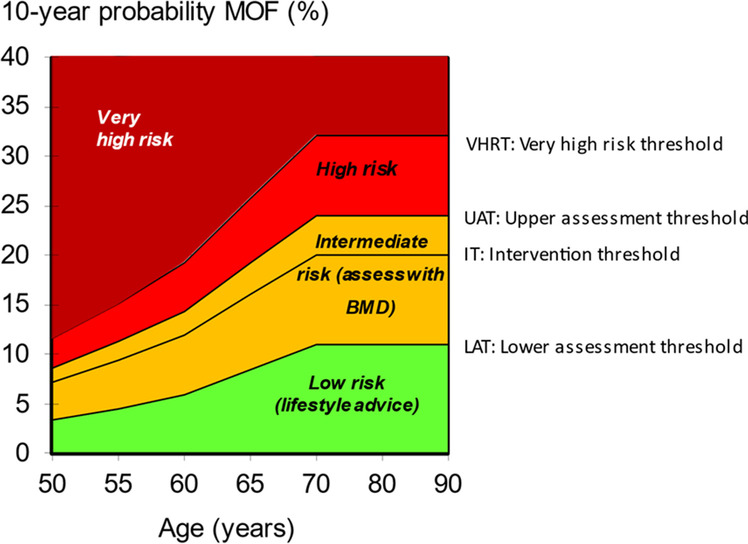
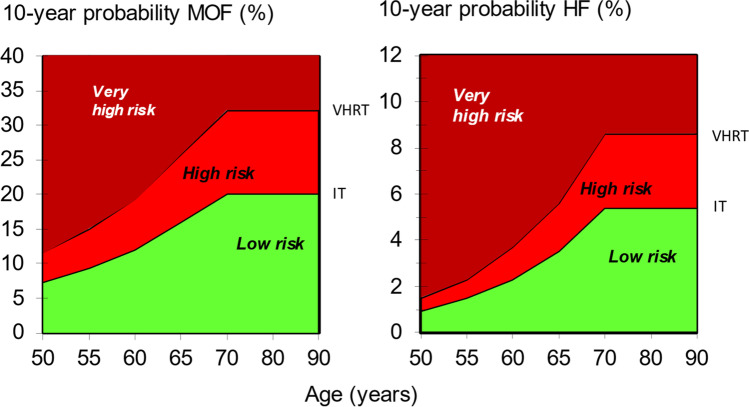
“At age 70 years and above, fixed thresholds are applied [112]; (evidence level Ib).”
BackgroundSelf-citationExercise and bone mineral density in men: A meta-analysis of randomized controlled trials
Kelley, G. A., Kelley, K. S., & Kohrt, W. M. (2012) · Bone · doi:10.1016/j.bone.2012.11.031 · Cited by 78 · cited 1×
“A meta-analysis of the effects of exercise interventions on BMD in men found only three studies and identified a significant but moderate improvement in BMD at the femoral neck and a trend towards increased BMD at the lumbar spine [161]; (evidence level Ia).”
BackgroundAxelsson, K. F., Johansson, H., Lundh, D., Möller, M., & Lorentzon, M. (2020) · Journal of Bone and Mineral Research · doi:10.1002/jbmr.3990 · Cited by 76 · cited 1×
“Fracture Liaison Service (FLS) programmes reduce re-fracture rates and improve survival [291, 292] (evidence levels Ia and IIb).”
BackgroundFracture risk following intermission of osteoporosis therapy
On behalf of the IOF Epidemiology/Quality of Life Working Group, Dennison, E. M., Cooper, C. C., Kanis, J. A., Bruyère, O., Silverman, S. S., McCloskey, E. V., Abrahamsen, B., Prieto‐Alhambra, D., & Ferrari, S. (2019) · Osteoporosis International · doi:10.1007/s00198-019-05002-w · Cited by 73 · cited 3×
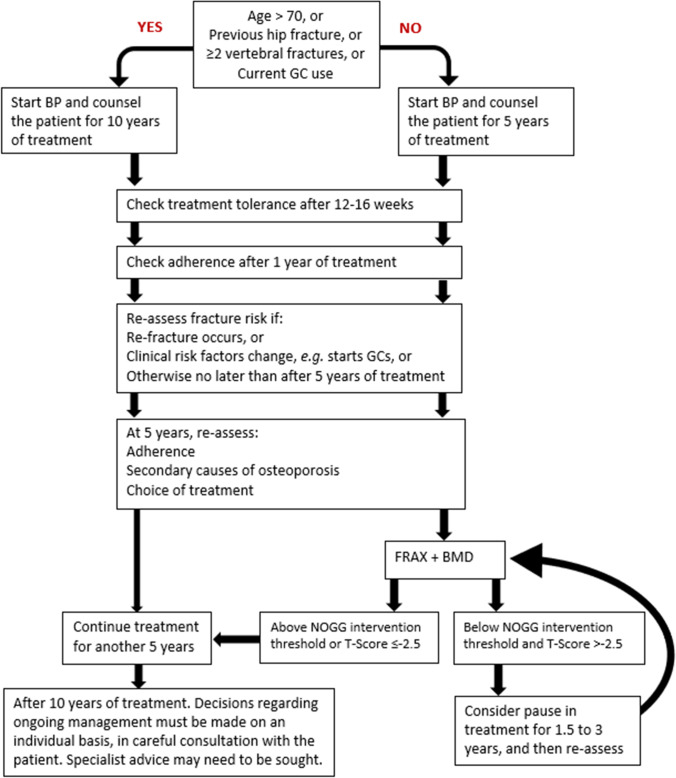
“Treatment review in patients taking bisphosphonates is therefore critical [242] and each patient must be assessed individually to assess relative risks and benefits; there is no standard policy for ‘all patients’ [204]; (evidence level IIa).”
BackgroundSelf-citationDiabetes mellitus and risk of low-energy fracture: a meta-analysis
Bai, J., Gao, Q., Wang, C., & Dai, J. (2019) · Aging Clinical and Experimental Research · doi:10.1007/s40520-019-01417-x · Cited by 73 · cited 1×
“In type II diabetes; a longer duration of disease and insulin use is associated with an increased risk [59, 60]; (evidence level Ia), which is partly independent of BMD [61, 62].”
BackgroundCTXA Hip—An Extension of Classical DXA Measurements Using Quantitative CT
Cann, C. E., Adams, J. E., Brown, J. K., & Brett, A. (2014) · PLoS ONE · doi:10.1371/journal.pone.0091904 · Cited by 72
Simpson, E. L., James, M. M., Hamilton, J. A., Wong, R., Gittoes, N. J. L., Selby, P. L., & Davis, S. (2019) · Bone · doi:10.1016/j.bone.2019.115081 · Cited by 72 · cited 1×
“73) for hip fracture in patients treated with teriparatide compared with placebo [229]; (evidence level Ia).”
BackgroundSelf-citationJohansson, H., Kanis, J. A., Odén, A., Leslie, W. D., Fujiwara, S., Glüer, C. C., Kroger, H., LaCroix, A. Z., Lau, E., Melton, L. J., et al. (2014) · Calcified Tissue International · doi:10.1007/s00223-014-9911-2 · Cited by 71 · cited 1×
“Although FRAX has a limited input of variables, relatively simple arithmetic procedures are available (Table 1) which can be applied to conventional FRAX estimates of probabilities of hip fracture and major osteoporotic fracture to adjust the probability assessment with knowledge of high, moderate, and low exposure to…”
MethodSelf-citationEbina, K., Hirao, M., Tsuboi, H., Nagayama, Y., Kashii, M., Kaneshiro, S., Miyama, A., Nakaya, H., Kunugiza, Y., Okamura, G., et al. (2020) · Bone · doi:10.1016/j.bone.2020.115574 · Cited by 71 · cited 1×
“When romosozumab is given following denosumab therapy, there is attenuation of the BMD increase at the spine and hip [232, 240]; (evidence level IIb).”
BackgroundMakras, P., Appelman‐Dijkstra, N. M., Papapoulos, S. E., van Wissen, S., Winter, E. M., Pοlyzos, S. A., Yavropoulou, M. P., & Anastasilakis, A. D. (2021) · The Journal of Clinical Endocrinology & Metabolism · doi:10.1210/clinem/dgab321 · Cited by 71
Armingeat, T., Brondino, R., Pham, T., Legré-Boyer, V., & Lafforgue, P. (2006) · Osteoporosis International · doi:10.1007/s00198-006-0169-z · Cited by 70 · cited 1×
“A single, small, randomised double-blind, controlled trial found 30 mg intravenous pamidronate, given within 21 days of acute vertebral fracture, to be more effective than placebo in reducing pain [284]; (evidence level IIb).”
BackgroundMerlijn, T., Swart, K. M. A., van Schoor, N. M., Heymans, M. W., van der Zwaard, B. C., van der Heijden, A. A. W. A., Rutters, F., Lips, P. T. A. M., van der Horst, H. E., Niemeijer, C., et al. (2019) · Journal of Bone and Mineral Research · doi:10.1002/jbmr.3815 · Cited by 70 · cited 1×
“Similar results were observed in a study from Denmark [105], but with lesser effects observed in a further study in the Netherlands [106].”
ResultRavn, P., Christensen, J. O., Baumann, M., & Clemmesen, B. (1998) · Bone · doi:10.1016/s8756-3282(98)00044-1 · Cited by 67 · cited 1×
“Withdrawal of bisphosphonate treatment is associated with decreases in BMD and increased bone turnover after 2–3 years for alendronate [245, 246]; (evidence level Ib), and 1–2 years for ibandronate and risedronate [247, 248]; (evidence level Ib).”
BackgroundZiemlewicz, T. J., Maciejewski, A., Binkley, N., Brett, A., Brown, J. K., & Pickhardt, P. J. (2016) · Journal of Bone and Mineral Research · doi:10.1002/jbmr.2856 · Cited by 66
Myint, Z. W., Momo, H. D., Otto, D. E., Yan, D., Wang, P., & Kolesar, J. (2020) · JAMA Network Open · doi:10.1001/jamanetworkopen.2020.25826 · Cited by 66
Bone densitometry worldwide: a global survey by the ISCD and IOF
on behalf of the International Society for Clinical Densitometry (ISCD) and the International Osteoporosis Foundation (IOF), Clynes, M. A., Westbury, L. D., Dennison, E. M., Kanis, J. A., Javaid, M. K., Harvey, N. C., Fujita, M., Cooper, C., Leslie, W. D., et al. (2020) · Osteoporosis International · doi:10.1007/s00198-020-05435-8 · Cited by 64 · cited 1×
“Despite two decades of training initiatives in osteoporosis densitometry, many centres are falling short of the standards of the IOF-ISCD Osteoporosis Essentials criteria [307].”
BackgroundSelf-citationSecular trends in fracture incidence in the UK between 1990 and 2012
van der Velde, R. Y., Wyers, C. E., Curtis, E. M., Geusens, P., van den Bergh, J. P., de Vries, F., Cooper, C. C., van Staa, T. P., & Harvey, N. C. (2016) · Osteoporosis International · doi:10.1007/s00198-016-3650-3 · Cited by 63
Self-citationNayak, S., & Greenspan, S. L. (2019) · Osteoporosis International · doi:10.1007/s00198-018-4791-3 · Cited by 63 · cited 1×
“This has raised the possibility that some patients may benefit from a period off treatment to restore the benefit/risk balance [241]; (evidence level IIa), in which treatment is stopped after some years and the need for the reinstitution of therapy is subsequently reassessed.”
BackgroundMedications as a Risk Factor for Fragility Hip Fractures: A Systematic Review and Meta-analysis
Mortensen, S. J., Mohamadi, A., Wright, C. L., Chan, J. J., Weaver, M. J., Keudell, A. G. V., & Nazarian, A. (2020) · Calcified Tissue International · doi:10.1007/s00223-020-00688-1 · Cited by 63
Raloxifene and Risk for Stroke Based on the Framingham Stroke Risk Score
Barrett-Connor, E. L., Cox, D. A., Song, J., Mitlak, B., Mosca, L. J., & Grady, D. G. (2009) · The American Journal of Medicine · doi:10.1016/j.amjmed.2009.01.033 · Cited by 62 · cited 1×
“There is a small increase in the risk of venous thromboembolism, mostly within the first few months of treatment and a small increase in the risk of fatal stroke has been reported [219], (evidence level IIa) such that it should be used with caution in women with a history of stroke or with risk factors for stroke dise…”
BackgroundLeslie, W. D., Lix, L. M., Morin, S. N., Johansson, H., Odén, A., McCloskey, E. V., & Kanis, J. А. (2015) · Journal of Clinical Densitometry · doi:10.1016/j.jocd.2015.07.004 · Cited by 61 · cited 1×
“Although FRAX has a limited input of variables, relatively simple arithmetic procedures are available (Table 1) which can be applied to conventional FRAX estimates of probabilities of hip fracture and major osteoporotic fracture to adjust the probability assessment with knowledge of high, moderate, and low exposure to…”
MethodSelf-citationAn assessment of intervention thresholds for very high fracture risk applied to the NOGG guidelines
Kanis, J. А., Johansson, H., Harvey, N. C., Lorentzon, M., Liu, E., Vandenput, L., & McCloskey, E. V. (2021) · Osteoporosis International · doi:10.1007/s00198-021-05942-2 · Cited by 61 · cited 1×
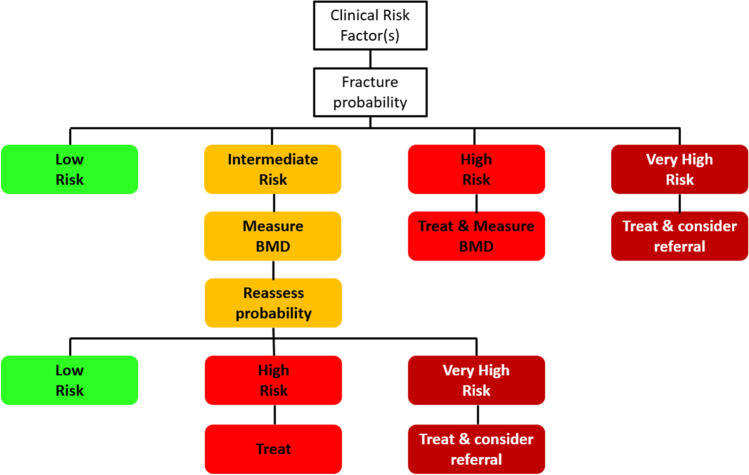
“3 Management algorithm for the assessment of individuals at risk of fracture [130].”
BackgroundSelf-citationYanbeiy, Z. A., & Hansen, K. E. (2019) · Drug Design, Development and Therapy · doi:10.2147/dddt.s148654 · Cited by 59
Current Concepts in the Management of Osteoporotic Vertebral Fractures: A Narrative Review
Jang, H., Kim, E.-H., Lee, J. C., Choi, S.-W., Kim, K., & Shin, B.-J. (2020) · Asian Spine Journal · doi:10.31616/asj.2020.0594 · Cited by 58 · cited 1×
“Vertebral fracture assessment (VFA) should therefore be considered in high-risk individuals, using either lateral lumbar and thoracic spine radiographs or lateral spine DXA imaging [98]; (evidence level Ia).”
BackgroundIdentifying characteristics of an effective fracture liaison service: systematic literature review
Wu, C., Chen, C., Chen, P.-H., Yang, J.-J., Chang, P.-C., Huang, T.-Y., Bagga, S., Sharma, Y., Lin, R.-M., & Chan, D. (2018) · Osteoporosis International · doi:10.1007/s00198-017-4370-z · Cited by 56 · cited 1×
“FLS models with a greater number of patient interactions have demonstrated greater clinical effectiveness [299]; (evidence level Ia).”
BackgroundA comparison of case-finding strategies in the UK for the management of hip fractures
Johansson, H., Kanis, J. A., Odén, A., Compston, J. E., & McCloskey, E. V. (2012) · Osteoporosis International · doi:10.1007/s00198-011-1864-y · Cited by 55 · cited 1×
“The targeted use of BMD assessments with the NOGG strategy makes more efficient use of often limited resources than would DXA scanning of all individuals with risk factors [132]; (evidence level Ib).”
MethodSelf-citationZhang, Q., Dong, J., Zhou, D., & Liu, F. (2020) · International Journal of Surgery · doi:10.1016/j.ijsu.2020.01.018 · Cited by 54 · cited 1×
“There are many clinical risk factors for fracture in addition to those included in FRAX which can be used to trigger fracture risk assessment (Table 3), including thoracic kyphosis and height loss (> 4 cm), either in comparison with recalled young adult height or a documented loss on serial measurements [108]; (eviden…”
BackgroundZhao, R., Bu, W., & Chen, X. (2019) · BMC Geriatrics · doi:10.1186/s12877-019-1359-9 · Cited by 53
Clinical Utility of Computer-Aided Diagnosis of Vertebral Fractures From Computed Tomography Images
Kolanu, N., Silverstone, E. J., Ho, B., Pham, H., Hansen, A., Pauley, E., Quirk, A. R., Sweeney, S. C., & POCOCK, N. A. (2020) · Journal of Bone and Mineral Research · doi:10.1002/jbmr.4146 · Cited by 53
Kanis, J. А., Johansson, H., Harvey, N. C., Gudnason, V. G., Sigurðsson, G., Siggeirsdóttir, K., Lorentzon, M., Liu, E., Vandenput, L., & McCloskey, E. V. (2021) · Osteoporosis International · doi:10.1007/s00198-020-05803-4 · Cited by 52
Self-citationJoseph, J., Lam, V. W. T., & Patel, M. I. (2018) · European Urology Oncology · doi:10.1016/j.euo.2018.11.001 · Cited by 49 · cited 1×
“Exercise programmes are a less effective alternative which are insufficient in isolation [272]; (evidence level Ib).”
BackgroundPaskins, Z., Roldan, V. D. T., Hawarden, A., Bullock, L., Urtecho, M., Torres, G. F., Morera, L., Suárez, N. R. E., Worrall, A., Blackburn, S. J., et al. (2020) · Osteoporosis International · doi:10.1007/s00198-020-05479-w · Cited by 47 · cited 1×
“The use of decision aids in osteoporosis to support communication of medicine risk–benefit has been shown to improve shared decision making, reduce decisional conflict and improve the accuracy of patient-perceived fracture risk [303]; (evidence level Ib).”
BackgroundSelf-citationOsborne, V., Layton, D., Perrio, M. J., Wilton, L., & Shakir, S. (2010) · Drug Safety · doi:10.2165/11533770-000000000-00000 · Cited by 45
Howlett, D. C., Drinkwater, K. J., Mahmood, N., Illes, J., Griffin, J., & Javaid, M. K. (2020) · European Radiology · doi:10.1007/s00330-020-06845-2 · Cited by 45
Is the Swedish FRAX model appropriate for Swedish immigrants?
Johansson, H., Odén, A., Lorentzon, M., McCloskey, E. V., Kanis, J. А., Harvey, N. C., Karlsson, M. K., & Mellström, D. (2015) · Osteoporosis International · doi:10.1007/s00198-015-3180-4 · Cited by 43 · cited 1×
“Although FRAX has a limited input of variables, relatively simple arithmetic procedures are available (Table 1) which can be applied to conventional FRAX estimates of probabilities of hip fracture and major osteoporotic fracture to adjust the probability assessment with knowledge of high, moderate, and low exposure to…”
MethodSelf-citationSvensson, H., Olsson, L., Hansson, T., Karlsson, J., & Olofsson, E. H. (2017) · Osteoporosis International · doi:10.1007/s00198-017-4099-8 · Cited by 43 · cited 1×
“Combining exercise with physiotherapy-delivered education and guidance can reduce fear of falling and improve psychological symptoms associated with vertebral fractures [162, 287]; (evidence level Ia).”
BackgroundBhimjiyani, A. G., Neuburger, J., Jones, T., Ben‐Shlomo, Y., & Gregson, C. L. (2017) · Osteoporosis International · doi:10.1007/s00198-017-4238-2 · Cited by 41
Self-citationDopaminergic drugs and the risk of hip or femur fracture: a population-based case–control study
Arbouw, M. E. L., Movig, K. L. L., van Staa, T. P., Egberts, T. C. G., Souverein, P. C., & de Vries, F. (2010) · Osteoporosis International · doi:10.1007/s00198-010-1455-3 · Cited by 40
Poon, Y., Pechlivanoglou, P., Alibhai, S. M. H., Naimark, D. M. J., Hoch, J. S., Papadimitropoulos, E., Hogan, M., & Krahn, M. D. (2017) · British Journal of Urology · doi:10.1111/bju.14015 · Cited by 40 · cited 1×
“However, zoledronate generated greater improvements in BMD compared to other drug treatments at all bone density sites, except for risedronate which had better BMD improvement compared to zoledronate at the femoral neck site in one small study [273]; (evidence level IIa).”
BackgroundEfficacy of weekly teriparatide does not vary by baseline fracture probability calculated using FRAX
Harvey, N. C., Kanis, J. A., Odén, A., Nakamura, T., Shiraki, M., Sugimoto, T., Kuroda, T., Johansson, H., & McCloskey, E. V. (2015) · Osteoporosis International · doi:10.1007/s00198-015-3129-7 · Cited by 39
Self-citationSöreskog, E., Lindberg, I., Kanis, J. А., Åkesson, K., Willems, D., Lorentzon, M., Ström, O., Berling, P., & Borgström, F. (2021) · Osteoporosis International · doi:10.1007/s00198-020-05780-8 · Cited by 39 · cited 1×
“The NOGG recommendations have been previously demonstrated to be costeffective and at the time of writing, NICE’s appraisal of romosozumab is awaited, with preliminary evidence of its cost-effectiveness established [5].”
BackgroundSelf-citationCould Strontium Ranelate Have a Synergistic Role in the Treatment of Osteoporosis?
Blake, G. M., Compston, J. E., & Fogelman, I. (2009) · Journal of Bone and Mineral Research · doi:10.1359/jbmr.090601 · Cited by 38 · cited 1×
“The higher atomic number of strontium compared with calcium artefactually increases BMD when incorporated into the bone matrix [226].”
BackgroundSelf-citationLeslie, W. D., Tsang, J. F., Caetano, P. A., Lix, L. M., & Program, F. T. M. B. D. (2006) · Journal of Bone and Mineral Research · doi:10.1359/jbmr.061112 · Cited by 38 · cited 1×
“However, fracture risk prediction is not improved by the use of measurements from multiple sites [37, 38]; (evidence level IIa).”
BackgroundFRAX provides robust fracture prediction regardless of socioeconomic status
Brennan-Olsen, S. L., Leslie, W. D., Lix, L. M., Johansson, H., Oden, A., McCloskey, E. V., & Kanis, J. A. (2013) · Osteoporosis International · doi:10.1007/s00198-013-2525-0 · Cited by 38 · cited 1×
“Additionally, FRAX values have been shown to be largely unaffected by socioeconomic status [91], variation in body composition [92], and chronic renal disease [93]; (evidence level Ib).”
BackgroundSelf-citationKim, T. Y., Bauer, D. C., McNabb, B., Schafer, A. L., Cosman, F., Black, D. M., & Eastell, R. (2018) · Journal of Bone and Mineral Research · doi:10.1002/jbmr.3654 · Cited by 37 · cited 1×
“Comparison between the offset of alendronate and zoledronate at 3 years showed alendronatetreated patients had greater reductions in total hip BMD and greater rises in PINP, despite a longer treatment exposure with alendronate, supporting a more rapid offset of drug effect than with zoledronate [250]; (evidence level…”
ResultZambito, A., Bianchini, D., Gatti, D., Rossini, M., Adámi, S., & Viapiana, O. (2007) · Osteoporosis International · doi:10.1007/s00198-007-0391-3 · Cited by 36 · cited 1×
“In older women with vertebral fractures and chronic back pain stable for 6 months or more, a small randomised control has shown electrical nerve stimulation, administered as inferential therapy or horizontal therapy 5 days a week for 2 weeks, can improve pain over 14 weeks [290]; (evidence level IIb).”
BackgroundWang, Y.-K., Zhang, Y.-M., QIN, S.-Q., Wang, X., Ma, T., Guo, J.-B., Zhu, C., & Luo, Z.-J. (2018) · Medicine · doi:10.1097/md.0000000000012691 · Cited by 36
Leslie, W. D., Martineau, P., Bryanton, M., & Lix, L. M. (2019) · Osteoporosis International · doi:10.1007/s00198-019-04975-y · Cited by 36 · cited 1×
“Serial BMD measurement can be used to monitor response to treatment [39].”
Kunutsor, S. K., Leyland, S., Skelton, D. A., James, L., Cox, M., Gibbons, N., Whitney, J. C., & Clark, E. (2018) · Journal of Frailty Sarcopenia and Falls · doi:10.22540/jfsf-03-155 · Cited by 35
Self-citationKanis, J. А., Johansson, H., Harvey, N. C., Gudnason, V. G., Sigurðsson, G., Siggeirsdóttir, K., Lorentzon, M., Liu, E., Vandenput, L., Leslie, W. D., et al. (2020) · Osteoporosis International · doi:10.1007/s00198-020-05700-w · Cited by 33 · cited 1×
“Shorter time horizons do not aid the categorisation of risk [77, 78].”
BackgroundSelf-citationSalzman, R., Hoza, J., Peřina, V., & Stárek, I. (2013) · Otology & Neurotology · doi:10.1097/mao.0b013e31827ca34d · Cited by 32
Lee, Y., Lee, E., Kim, H. Y., Lee, Y., Lee, S.-M., Suh, D., Yoo, J., & Lee, S. (2020) · Journal of Korean Medical Science · doi:10.3346/jkms.2020.35.e403 · Cited by 32
Body, J., Marín, F., Kendler, D. L., Zerbini, C. A. F., López‐Romero, P., Moericke, R., Casado, E., Fahrleitner‐Pammer, A., Stepan, J. J., Lespessailles, É., et al. (2020) · Osteoporosis International · doi:10.1007/s00198-020-05463-4 · Cited by 31 · cited 1×
“Few therapeutic studies have reported the recency of fracture in those patients whom they have recruited, though rapid clinical efficacy has been demonstrated within studies of zoledronate, risedronate, teriparatide, and romosozumab [115, 128, 129]; (evidence level Ib).”
BackgroundDeng, J., Silver, Z. A., Huang, E., Zheng, E., Kavanagh, K., Wen, A., Cheng, W., Dobransky, J. S., Sanger, S., & Grammatopoulos, G. A. (2020) · Rheumatology · doi:10.1093/rheumatology/keaa228 · Cited by 30 · cited 1×
“This protection against vertebral fractures was confirmed in a recent metanalysis which showed that co-prescription of teriparatide, alendronate, risedronate or denosumab with glucocorticoids could reduce the incidence of vertebral fractures, with further evidence of a reduction in non-vertebral fracture rates with al…”
ResultHarvey, N. C., McCloskey, E. V., Kanis, J. А., Compston, J., & Cooper, C. C. (2018) · Osteoporosis International · doi:10.1007/s00198-018-4505-x · Cited by 28 · cited 1×
“Cost-effectiveness analyses are generally supportive for treatment guided by clinical effectiveness thresholds, rather than defining intervention thresholds per se [4].”
BackgroundSelf-citationHofler, R. C., & Jones, G. A. (2020) · World Neurosurgery · doi:10.1016/j.wneu.2020.05.199 · Cited by 27 · cited 1×
“There is currently no evidence that bracing with soft or rigid external orthoses improves fracture healing [288].”
BackgroundBullock, L., Manning, F., Cottrell, E., Fleming, J., Leyland, S., Edwards, J., Clark, E., Thomas, S., Chapman, S., Gidlow, C. J., et al. (2021) · Archives of Osteoporosis · doi:10.1007/s11657-021-00913-w · Cited by 27
Self-citationKim, Y. M., Demissie, S., Genant, H. K., Cheng, X., yu, W. S., Samelson, E. J., Kiel, D. P., & Bouxsein, M. (2011) · Osteoporosis International · doi:10.1007/s00198-011-1774-z · Cited by 26
Effect of Zoledronate on Bone Loss After Romosozumab/Denosumab: 2-Year Follow-up
Horne, A. M., Mihov, B., & Reid, I. R. (2019) · Calcified Tissue International · doi:10.1007/s00223-019-00553-w · Cited by 25
Zeng, L., Pan, B.-Q., Liang, G.-H., Luo, M., Cao, Y., Guo, D., Chen, H., Pan, J., Huang, H., Liu, Q., et al. (2019) · Frontiers in Pharmacology · doi:10.3389/fphar.2019.00882 · Cited by 25 · cited 30×
“2015 SR & MA Medium [173] Sherrington et al.”
InfluentialMiyashita, H., Satoi, S., Kuno, T., Cruz, C., Malamud, S. C., & Kim, S. (2020) · Breast Cancer Research and Treatment · doi:10.1007/s10549-020-05640-3 · Cited by 25 · cited 1×
“Denosumab and zoledronate both lead to significant gains in BMD at the spine and hip in postmenopausal women with breast cancer receiving AI, and both denosumab and risedronate have been shown to reduce fracture risk [278]; (evidence level Ia).”
BackgroundBhimjiyani, A. G., Neuburger, J., Jones, T., Ben‐Shlomo, Y., & Gregson, C. L. (2018) · Public Health · doi:10.1016/j.puhe.2018.05.002 · Cited by 24
Self-citationShort time horizons for fracture prediction tools: time for a rethink
McCloskey, E. V., Borgström, F., Cooper, C. C., Harvey, N. C., Javaid, M. K., Lorentzon, M., & Kanis, J. А. (2021) · Osteoporosis International · doi:10.1007/s00198-021-05962-y · Cited by 24 · cited 2×
“The mechanism underlying imminent risk is not yet fully understood and no clinical risk factors have yet been identified for short term recurrent fractures that differ from those identified for fracture over a longer time horizon [78].”
BackgroundSelf-citationInterventions to improve osteoporosis care: a systematic review and meta-analysis
Martin, J., Viprey, M., Castagné, B., Merle, B., Giroudon, C., Chapurlat, R. D., & Schott, A. (2020) · Osteoporosis International · doi:10.1007/s00198-020-05308-0 · Cited by 23 · cited 1×
“No one type of intervention has been demonstrated to enhance medicines adherence in osteoporosis care, but multi-component models with active patient engagement have the most positive effects [305, 306]; (evidence level Ia).”
BackgroundOsteoporotic fractures among foreign-born individuals: a national Swedish study
Wändell, P. E., Li, X., Carlsson, A. C., Sundquist, J., & Sundquist, K. (2020) · Osteoporosis International · doi:10.1007/s00198-020-05597-5 · Cited by 23
Challenges for the Development of Bone-Forming Agents in Europe
Kanis, J. А., Rizzoli, R., Cooper, C. C., & Reginster, J. (2014) · Calcified Tissue International · doi:10.1007/s00223-014-9844-9 · Cited by 21 · cited 1×
“It can be used to identify patients who likely require specialist referral for assessment of their osteoporosis (which should include DXA measurement of BMD), and further consideration of appropriate treatment strategies [117, 131].”
BackgroundSelf-citationIncreased Bone Mineral Density after Abstinence in Male Patients with Alcohol Dependence
Song, T.-H., Shim, J.-C., Jung, D.-U., Moon, J., Jeon, D.-W., Kim, S.-J., & Oh, M. (2018) · Clinical Psychopharmacology and Neuroscience · doi:10.9758/cpn.2018.16.3.282 · Cited by 21 · cited 1×
“In men with previous alcohol dependence, BMD is significantly lower than in controls, but improves following 3–4 years of abstinence [175]; (evidence level IIa).”
BackgroundA BMD threshold for treatment efficacy in osteoporosis? A need to consider the whole evidence base
McCloskey, E. V. (2015) · Osteoporosis International · doi:10.1007/s00198-015-3406-5 · Cited by 20
Self-citationBabatunde, O. O., Bourton, A. L., Hind, K., Paskins, Z., & Forsyth, J. J. (2019) · Archives of Physical Medicine and Rehabilitation · doi:10.1016/j.apmr.2019.07.007 · Cited by 19 · cited 1×
“Similarly, upper body resistance exercise increases forearm bone mass [160]; (evidence level Ia).”
BackgroundSelf-citationPrevention of Glucocorticoid-Induced Osteoporosis
Carter, M. (2018) · Journal of Clinical Densitometry · doi:10.1016/j.jocd.2018.03.009 · Cited by 18 · cited 1×
“Although guidance on the prevention and management of glucocorticoid-induced osteoporosis has been developed in many countries, there is evidence that in the UK osteoporosis risk assessment and management are still inadequate in long-term users of oral glucocorticoids [262]; (evidence level IIIb).”
BackgroundModels of Secondary Fracture Prevention
Ganda, K., Mitchell, P., & Seibel, M. J. (2019) · Elsevier eBooks · doi:10.1016/b978-0-12-813136-7.00003-x · Cited by 17
Assessment and management of imminent fracture risk in the setting of the fracture liaison service
Javaid, M. K., Harvey, N. C., McCloskey, E. V., Kanis, J. А., & Cooper, C. C. (2022) · Osteoporosis International · doi:10.1007/s00198-021-06284-9 · Cited by 17 · cited 1×
“In England, the move to Integrated Care Systems (ICS) provides an opportunity to embed enhanced pathways of care for patients at risk of fragility fracture, including imminent fracture risk [309], as part of routine service delivery, for example enabling direct referrals between different secondary care services to st…”
BackgroundSelf-citationBromiley, P. A., Clark, E., & Poole, K. E. S. (2020) · Journal of Bone and Mineral Research · doi:10.1002/jbmr.4205 · Cited by 11
Self-citationWarrington (2001) · Pure Amsterdam UMC · doi:10.1002/1529-0131(200101)44:1 · Cited by 2
Research works printed but not linked: 6
- Royal College of Physicians The challenge of the next decade: are hip fracture services ready? A review of data from the National Hip Fracture Database (January–December 2019) 2021 London RCP
- National Institute for Health and Care Excellence (2012) Osteoporosis: assessing the risk of fragility fracture. NICE clinical guideline [CG146]. Manchester: NICE. www.nice.org.uk/guidance/cg146 31869026
- Department of Health Dietary reference values for food energy and nutrients for the United Kingdom 1991 London HMSO
- Min W An R Li S Feng J Yang J Huang Z The effects of preoperative smoking cessation on the healing of fractures and postoperative complications: a systematic review and meta-analysis Biomed Res 2017 28 1883 1889
- Health. Do (2016) UK Chief Medical Officers’ Alcohol Guidelines Review Summary of the proposed new guidelines. Williams Lea
- Excellence. NIfHaC (2019) NICE guideline [NG132]: Hyperparathyroidism (primary): diagnosis, assessment and initial management. https://www.nice.org.uk/guidance/ng132/chapter/Recommendations#diagnostic-testing-in-primary-care 31194309
Cited by
EASL Clinical Practice Guidelines on sclerosing cholangitis
Chazouilleres, O., Beuers, U., Bergquist, A., Karlsen, T. H., Levy, C., Samyn, M., Schramm, C., & Trauner, M. (2022) · Journal of Hepatology · doi:10.1016/j.jhep.2022.05.011 · Cited by 419
Riegger, J., Schoppa, A., Ruths, L., Haffner-Luntzer, M., & Ignatius, A. (2023) · Cellular & Molecular Biology Letters · doi:10.1186/s11658-023-00489-y · Cited by 235
Morin, S. N., Leslie, W. D., & Schousboe, J. T. (2025) · JAMA · doi:10.1001/jama.2025.6003 · Cited by 220
Morin, S. N., Feldman, S., Funnell, L., Giangregorio, L., Kim, S., McDonald-Blumer, H., Santesso, N., Ridout, R., Ward, W., Ashe, M. C., et al. (2023) · Canadian Medical Association Journal · doi:10.1503/cmaj.221647 · Cited by 210
Humphrey, M. B., Russell, L., Danila, M. I., Fink, H. A., Guyatt, G., Cannon, M., Caplan, L., Gore, S., Grossman, J., Hansen, K. E., et al. (2023) · Arthritis & Rheumatology · doi:10.1002/art.42646 · Cited by 197
Metadata
- Authors
- Gregson, C. L., Armstrong, D. J., Bowden, J., Cooper, C., Edwards, J., Gittoes, N. J. L., Harvey, N., Kanis, J., Leyland, S., Low, R., McCloskey, E., Moss, K., Parker, J., Paskins, Z., Poole, K., Reid, D. M., Stone, M., Thomson, J., Vine, N., & Compston, J.
- Affiliations
- Royal United Hospital (GB)
- University of Ulster (GB)
- Southmead Hospital (GB)
- University Hospital Southampton NHS Foundation Trust (GB)
- Arthritis UK (GB)
- Queen Elizabeth Hospital Birmingham (GB)
- Australian Catholic University (AU)
- Royal Osteoporosis Society (GB)
- Nuffield Orthopaedic Centre (GB)
- St George's Hospital (GB)
- University of Cambridge (GB)
- University of Aberdeen (GB)
- Cardiff and Vale University Health Board (GB)
- Corresponding author
- Gregson, Celia L.
- ORCID
- Venue
- Archives of Osteoporosis
- Published
- 2022-04-05
- Volume
- 17
- Issue
- 1
- Pages
- 58-58
- ISSN
- 1862-3514 (ISSN-L)
- 1862-3522
- PMC
- PMC8979902
- OpenAlex
- W4226048997
- Cited by
- 593
- References
- 290
- Citations by year
- 2026: 77 · 2025: 177 · 2024: 165 · 2023: 113 · 2022: 33
- FWCI
- 126.48
- Type
- journal article
- Language
- en
- Update notices
- correction (2022-05-19)
- Open access
- hybrid
- doi.org
- Licence
- cc-by
- creativecommons.org/licenses/by/4.0 (tdm)
- creativecommons.org/licenses/by/4.0 (vor)
- Locations
- Archives of Osteoporosis (publishedVersion, cc-by)
- PubMed Central (publishedVersion, cc-by)
- PubMed (publishedVersion)
- Explore Bristol Research (publishedVersion, cc-by)
- ePrints Soton (University of Southampton) (acceptedVersion)
- St George's Online Research Archive (St George's University of London) (acceptedVersion)
- Ulster University Research Portal (Ulster University) (submittedVersion, cc-by)
- Funders
- National Institute for Health Research (CS-2018-18-ST2-010)
- Topics
- Health Sciences › Medicine › Orthopedics and Sports Medicine › Bone health and osteoporosis research
- Health Sciences › Medicine › Endocrinology, Diabetes and Metabolism › Menopause: Health Impacts and Treatments
- Health Sciences › Medicine › Oncology › Bone health and treatments
- Keywords
- osteoporosis, osteoporosis prevention, osteoporosis treatment, fragility fractures, postmenopausal women, older men, fracture risk assessment, vertebral fractures, antiresorptive therapy, glucocorticoid-induced osteoporosis, non-pharmacological treatment, models of care, osteoporosis diagnosis
- MeSH terms
- Female, United Kingdom, Humans, Male, Middle Aged, Osteoporosis, Bone Density, Risk Assessment, Fractures, Bone
About these checks
Registry, retraction, Cites and statistics results are computed, not judged, with one exception: a printed reference that no index lists is read once by a model before it counts as a citation error. Claims are extracted by a model and kept only when their quote appears verbatim in the text; each cited source is then checked, with a model’s help, for whether it says what the claim relies on. Those verdicts can be wrong — read the claim’s quote and the cited source before relying on one.
Statistics and arithmetic are recomputed, not judged.
Confidence bands are shown only for fields calibrated on our annotated test set. None is calibrated yet, so no band is shown.
What counts as a claim ›How we measure confidence ›How we check this ›
Are you an author, or do you see a problem with this page? Request a review
Data sources
Bibliographic data: Semantic Scholar, OpenAlex, Crossref.
Contains information from the Semantic Scholar Academic Graph Datasets, made available under the ODC Attribution License (ODC-BY 1.0).
Semantic Scholar’s data is described in: Kinney, R., et al. (2023). The Semantic Scholar Open Data Platform. arXiv:2301.10140.
