

The DOI matches its Crossref record; 61 of the 62 references it cites were found in a registry or an index.
Fecal Microbiota Transplantation: Indications, Methods, Evidence, and Future Directions
Open accessAbstract
Fecal microbiota transplantation (FMT) has attracted great interest in recent years, largely due to the global Clostridium difficile infection (CDI) epidemic and major advances in metagenomic sequencing of the gastrointestinal (GI) microbiota, with growing understanding of its structure and function. FMT is now recommended as the most effective therapy for relapsing CDI and, with further refinement, may even be used in "first-time" CDI. There is interest also in other conditions related to GI dysbiosis--for example, inflammatory bowel disease, irritable bowel syndrome, obesity, and diabetes mellitus--although quality evidence is at present lacking. A few trials are now underway in FMT for ulcerative colitis. Many unanswered questions remain, including FMT methodology--for example, optimal route of administration, what makes a "good donor," safety issues, and long-term effects of FMT.
Overview
The claims and statistics of this paper haven’t been checked yet.
Run the check — free, no account needed. It reads the open-access text and checks the sources it cites.
Integrity signals
Registry
Cites
Statistics
Figures
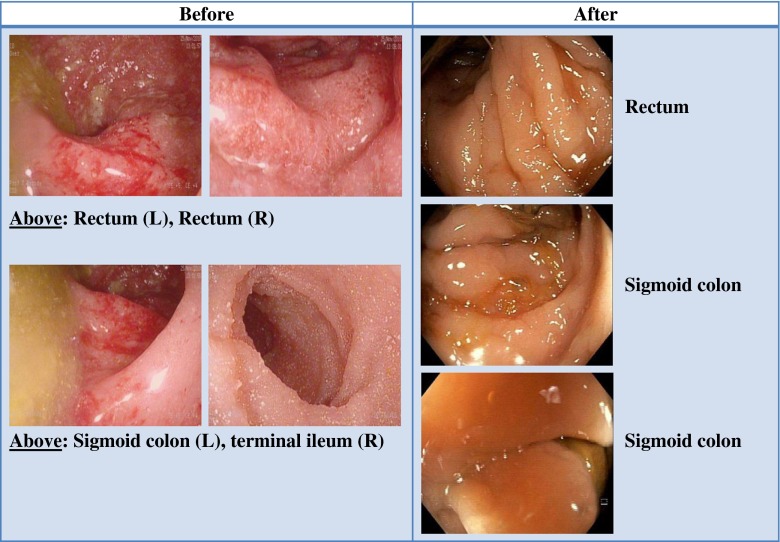
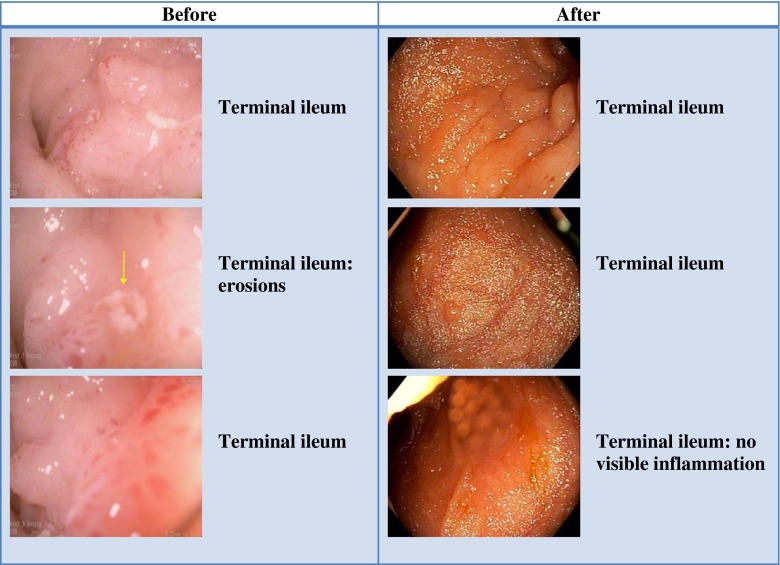
Verification
Claims the paper makes
The claims and statistics of this paper haven’t been checked yet.
Run the check — free, no account needed. It reads the open-access text and checks the sources it cites.
Claims other papers make about this one
Each is checked against this paper’s own text: does it say what the citing paper says it does?
In the citing paper
“Since that publication, the lead Author has treated with FMT more than 300 DIBS patients whose symptoms had failed to respond to conventional therapies [306]”
From Gut microbiota role in irritable bowel syndrome: New therapeutic strategies (2016) · cites this paper as [306]
Self-check
Percentages, sums and reported differences re-computed from the paper’s own numbers.
The self-check needs the paper’s full text.
Citations
Cites
A human gut microbial gene catalogue established by metagenomic sequencing
MetaHIT Consortium, Qin, J., Li, R., Raes, J., Arumugam, M., Burgdorf, K. S., Manichanh, C., Nielsen, T., Pons, N., Levenez, F., et al. (2010) · Nature · doi:10.1038/nature08821 · Cited by 11,624
Diversity of the Human Intestinal Microbial Flora
Eckburg, P. B., Bik, E. M., Bernstein, C. N., Purdom, E., Dethlefsen, L., Sargent, M., Gill, S. R., Nelson, K. E., & Relman, D. A. (2005) · Science · doi:10.1126/science.1110591 · Cited by 7,913
Enterotypes of the human gut microbiome
MetaHIT Consortium (additional members), Arumugam, M., Raes, J., Pelletier, E., Le Paslier, D., Yamada, T., Mende, D. R., Fernandes, G. R., Tap, J., Bruls, T., et al. (2011) · Nature · doi:10.1038/nature09944 · Cited by 7,548
Linking long-term dietary patterns with gut microbial enterotypes
Wu, G. D., Chen, J., Hoffmann, C., Bittinger, K., Chen, Y.-Y., Keilbaugh, S. A., Bewtra, M., Knights, D., Walters, W. A., Knight, R., et al. (2011) · Science · doi:10.1126/science.1208344 · Cited by 6,513
Host-Bacterial Mutualism in the Human Intestine
Bäckhed, F., Ley, R. E., Sonnenburg, J. L., Peterson, D. A., & Gordon, J. I. (2005) · Science · doi:10.1126/science.1104816 · Cited by 5,277
Frank, D. N., St. Amand, A. L., Feldman, R. A., Boedeker, E. C., Harpaz, N., & Pace, N. R. (2007) · Proceedings of the National Academy of Sciences · doi:10.1073/pnas.0706625104 · Cited by 4,611
Induction of Colonic Regulatory T Cells by Indigenous Clostridium Species
Atarashi, K., Tanoue, T., Shima, T., Imaoka, A., Kuwahara, T., Momose, Y., Cheng, G., Yamasaki, S., Saito, T., Ohba, Y., et al. (2011) · Science · doi:10.1126/science.1198469 · Cited by 3,752
Duodenal Infusion of Donor Feces for Recurrent Clostridium difficile
van Nood, E., Vrieze, A., Nieuwdorp, M., Fuentes, S., Zoetendal, E. G., de Vos, W. M., Visser, C. E., Kuijper, E. J., Bartelsman, J. F. W. M., Tijssen, J. G. P., et al. (2013) · New England Journal of Medicine · doi:10.1056/nejmoa1205037 · Cited by 3,708
Cohen, S. H., Gerding, D. N., Johnson, S., Kelly, C. P., Loo, V. G., McDonald, L. C., Pépin, J., & Wilcox, M. H. (2010) · Infection Control and Hospital Epidemiology · doi:10.1086/651706 · Cited by 2,965
Vrieze, A., Van Nood, E., Holleman, F., Salojärvi, J., Kootte, R. S., Bartelsman, J. F. W. M., Dallinga–Thie, G. M., Ackermans, M. T., Serlie, M. J., Oozeer, R., et al. (2012) · Gastroenterology · doi:10.1053/j.gastro.2012.06.031 · Cited by 2,913
Research works printed but not linked: 5
- Andrews PJ, Barnes P, Borody TJ. Chronic constipation reversed by restoration of the bowel flora.A case and a hypothesis. European J Gastroenterol Hepatol. 1992;4:245–7.
- Borody T, Leis S, McGrath K et al. Treatment of Chronic Constipation and Colitis using human probiotic infusions. Probiotics, Prebiotics and New Foods Conference, Universita Urbaniana, Rome, Sept 2–4 2001
- Borody TJ, Leis S, Campbell J, et al. Fecal microbiota transplantation (FMT) in multiple sclerosis (MS) [abstract]. Am J Gastroenterol. 2011;106:S352.
- Anathaswamy A. Fecal transplant eases symptoms of Parkinson’s. New Scientist Issue. 2011;2796:19.
- 58: Kahn SA, Goeppinger SR, Rubin DT. Fecal Transplantation: a new therapy for IBD? Proceeding with Caution. Inflamm Bowel Dis Monit 2013; accepted manuscript [in press]
Cited by
Sorted by citations
Items 201–275 of 275
Chlorogenic Acid as a Model Compound for Optimization of an In Vitro Gut Microbiome-Metabolism Model
Mortelé, O., Iturrospe, E., Breynaert, A., Lammens, C., Xavier, B. B., Malhotra‐Kumar, S., Jorens, P. G., Pieters, L. A. C., van Nuijs, A. L. N., & Hermans, N. (2019) · COST Action CA16112 NutRedOx Meeting · doi:10.3390/proceedings2019011031 · Cited by 3
Hedayat, K. M., & Lapraz, J.-C. (2019) · Elsevier eBooks · doi:10.1016/b978-0-12-816908-7.00006-2 · Cited by 3
Current Strategies for Addressing Antibiotic Resistance: A Comprehensive Review
Maji, R., Chowdhury, S., Kar, K., & Mazumder, K. (2025) · Journal of Bio-X Research · doi:10.34133/jbioxresearch.0040 · Cited by 2
Swiss expert opinion: current approaches in faecal microbiota transplantation in daily practice
Rossier, L., Matter, C., Burri, E., Galpérine, T., Hruz, P. L., Juillerat, P., Schoepfer, A. M., Vavricka, S. R., Zahnd, N., Décosterd, N., et al. (2023) · Swiss Medical Weekly · doi:10.57187/smw.2023.40100 · Cited by 4
The Microbiota: A New Player in the Etiology of Colorectal Cancer
Levy, M., Thaiss, C. A., & Elinav, E. (2013) · Current Colorectal Cancer Reports · doi:10.1007/s11888-013-0196-z · Cited by 3
Pascu, M. L. (2014) · Journal of Gastrointestinal & Digestive System · doi:10.4172/2161-069x.1000183 · Cited by 2
Bacterioterapia preventiva de la obesidad en la comunidad de los indios Pima: evidencias científicas
Llorens, S., & Fernández-Rius, A. (2017) · Duazary · doi:10.21676/2389783x.1970 · Cited by 1
Castaneda, L., Singharaj, B., & Martirosyan, D. M. (2018) · Bioactive Compounds in Health and Disease · doi:10.31989/bchd.v1i4.409 · Cited by 4
Current Status of Fecal Microbiota Transplantation
Reygner, J., & Kapel, N. (2019) · Elsevier eBooks · doi:10.1016/b978-0-12-815249-2.00016-6 · Cited by 2
Fecal microbiota transplant for more than Clostridioides difficile: Dermatology a new frontier
Snyder, A. M., Abbott, J., Jensen, M. K., & Secrest, A. M. (2020) · World Journal of Dermatology · doi:10.5314/wjd.v8.i2.10 · Cited by 1
Zhang, K., Zhang, L., Jian, Y., Xue Ming, T. A. N. G., Han, M., Pu, Z., Zhang, Y., & Zhou, P. (2024) · Journal of Agricultural and Food Chemistry · doi:10.1021/acs.jafc.4c05425 · Cited by 1
Conservation of microbes – why, what and how?
Thomas, T., Singh, B. K., & Greening, C. (2026) · Microbiology Australia · doi:10.1071/ma26107 · Cited by 1
Dong, J., Cao, Y., Chen, X., Xie, T., Zhang, X., Zhao, Q., Shi, C., Miao, Q., Xu, Z., Yan, L., et al. (2026) · Chinese Medicine · doi:10.1186/s13020-026-01408-x · Cited by 1
Li, H., Wang, X., Yin, L., Li, Y. P., Fan, S., Zhang, H., Zhang, W., Ou, H., & Wang, J. (2026) · Frontiers in Microbiology · doi:10.3389/fmicb.2026.1730607 · Cited by 1
Fecal microbiota transplantation for Clostridium difficile infection: A surgeon׳s perspective
Borody, T. J., & Finlayson, S. (2014) · Seminars in Colon and Rectal Surgery · doi:10.1053/j.scrs.2014.05.013 · Cited by 1
Self-citationRoundoc Rx: Optimal Integrative Treatment for Ulcerative Colitis
ROUNTREE, R. L. (2014) · Alternative and Complementary Therapies · doi:10.1089/act.2014.20410 · Cited by 1
Fecal Microbial Transplant: For Whom, How, and When
Kahn, S. A., & Kaplan, J. L. (2015) · Springer eBooks · doi:10.1007/978-3-319-17169-2_35 · Cited by 1
Obesity and Weight Control: Is There Light at the End of the Tunnel?
Poppitt, S. D. (2017) · Current Nutrition Reports · doi:10.1007/s13668-017-0206-x · Cited by 1
Fecal Matter Implantation as a Way to Fight Diarrhea-Causing Microorganisms
Villa, T. G., Feijoo-Siota, L., Rama, J. L. R., Sánchez-Pérez, Á., & de Miguel, T. (2016) · Springer eBooks · doi:10.1007/978-3-319-28368-5_13 · Cited by 1
Immune Dysfunction in Autism Spectrum Disorder
Malkova, N. V., & Hsiao, E. Y. (2016) · Elsevier eBooks · doi:10.1016/b978-0-12-800109-7.00005-4 · Cited by 2
Gut Microbiome in Inflammation and Chronic Enteric Infections
Aditya, A., Galleher, C., Ad, Y., Coburn, M., & Zweig, A. (2020) · Springer eBooks · doi:10.1007/978-3-030-47384-6_6 · Cited by 1
Trends in Saliva Research and Biomedical Clinical Applications
Park, S., Lee, E., Shin, J., & Jeong, T.-S. (2023) · THE JOURNAL OF THE KOREAN ACADEMY OF PEDTATRIC DENTISTRY · doi:10.5933/jkapd.2023.50.1.1 · Cited by 1
Letter: faecal microbiota transplantation – not a one‐size‐fits‐all approach; authors' reply
Sha, S., & Wu, K. (2014) · Alimentary Pharmacology & Therapeutics · doi:10.1111/apt.12801 · Cited by 1
Wang, Y., Hu, T., Zhou, X., ye, M., wang, X., & Zhu, Y. (2024) · SSRN Electronic Journal · doi:10.2139/ssrn.4766291 · Cited by 1
Ameade, E. P. K., Gmawurim, S., & Adom, E. (2024) · Research Square · doi:10.21203/rs.3.rs-4305896/v1 · Cited by 1
Starostzik, C. (2014) · MMW - Fortschritte der Medizin · doi:10.1007/s15006-014-3193-5
Munoz, S. (2013) · QSpace (Queen's University Library)
FECAL MICROBIOTA THERAPY AND ITS POTENTIAL IN MEDICAL PRACTICE
Hašková, K., Dyrhonová, M., & Boštíková, V. (2016) · Military Medical Science Letters · doi:10.31482/mmsl.2016.020
Mikrobiomische Selbstwirksamkeit
Mahr, D. (2018) · Öffentliche Wissenschaft und gesellschaftlicher Wandel · doi:10.1007/978-3-658-16428-7_3
Place de la transplantation de microbiote fécal dans l’infection à Clostridium difficile
Ducours, M., & Cazanave, C. (2020) · Côlon & Rectum · doi:10.3166/cer-2020-0144
Vedala, K., Sobash, P. T., Shah, P., & Kamoga, G. (2021) · Frontiers in Public Health · doi:10.3389/fpubh.2021.670941
Mehr Vorteile mit Eigen-Transplantat als mit Spendermikrobiota?
Adamek, H. E. (2021) · Info Diabetologie · doi:10.1007/s15034-021-3730-0
Improving the Gut Microbiota with Probiotics and Faecal Microbiota Transplantation
Patil, Y. M., Patwardhan, R. B., & Abhyankar, P. S. (2021) · Journal of Pure and Applied Microbiology · doi:10.22207/jpam.15.3.53
Update on fecal microbial transplantation for the treatment of inflammatory bowel disease
Llirós, M., Lluansí, A., Peries, L., Bahí, A., Ramió‐Pujol, S., & Aldeguer, X. (2021) · Journal of IMIDs · doi:10.24875/jimids.m21000008
Zhu, H., He, Y., Zhou, J., Ma, J., Cheng-yin, W., Kong, M., Mao, Q., Lin, G., & Li, S. (2019) · doi:10.21203/rs.2.17649/v1
Suplemento do IX Congresso SAMMG
(2021) · Revista Médica de Minas Gerais · doi:10.5935/2238-3182.v31supl.2
Establishment and Resilience of Transplanted Gut Microbiota in Aged MicePreprint
Wang, Y., Tang, J., Lv, Q., Tan, Y., Dong, X., Liu, H., Zhao, N., He, Z., Kou, Y., Tan, Y., et al. (2021) · SSRN Electronic Journal · doi:10.2139/ssrn.3956825
Springer-Verlag (2014) · CME · doi:10.1007/s11298-014-1448-1
Lowes, M. A., & Soliman, Y. S. (2018) · Faculty Opinions – Post-Publication Peer Review of the Biomedical Literature · doi:10.3410/f.731254308.793546375
Ahmed, M., Khalil, K., Eida, M. M., & Salem, A. (2022) · Afro-Egyptian Journal of Infectious and Endemic Diseases · doi:10.21608/aeji.2022.136572.1223
Transplante fecal y sus indicaciones
dos Reis, E. B. B., Batista, G. S., & Santos, P. C. F. (2023) · Contribuciones a las Ciencias Sociales · doi:10.55905/revconv.16n.5-065
Wanner, K. E., Mitchell, C. J., Mhlanga, S. N., Howarth, G. S., Chartier, L. C., & Mashtoub, S. (2023) · Research Square · doi:10.21203/rs.3.rs-3467823/v1
Review of Possible Etiologies and Treatment Options in a Teen With Coprophagia
Giles, C. L. (2017) · JAACAP Connect · doi:10.62414/001c.92570
Gut-Brain Interplay and Cognitive Degeneration
Krishnamoorthy, K., Rajagopal, P., & Jayaraman, S. (2024) · Springer eBooks · doi:10.1007/978-981-99-8803-7_4
Associaçao entre microbiota intestinal e transtorno depressivo maior: uma revisão da literatura
Bochi, G. V., & Quincozes, J. A. V. (2021) · Revista Ciência & Humanização do Hospital de Clínicas de Passo Fundo · doi:10.29327/2185320.1.2-10
Fecal microbiota transplantation: a step into the past or the future? A review
Zakharova, I. N., & Gostyukhina, A. D. (2024) · Pediatrics Consilium Medicum · doi:10.26442/26586630.2024.2.202972
Liu, F., Zhang, H., Fan, L., Yu, Q., & Wang, S. (2024) · Medicine · doi:10.1097/md.0000000000040931
Ameade, E. P. K., Gmawurim, S., & Adom, E. (2025) · BMC Complementary Medicine and Therapies · doi:10.1186/s12906-025-05089-1
Microbial rhythms – a new target to promote health?
Gorbunova, E., Heddes, M., van der Veen, D. R., & Kießling, S. (2025) · Trends in Microbiology · doi:10.1016/j.tim.2025.10.017
Novel Biologics for the Treatment of Ulcerative Colitis
Rashid, F., & Lichtenstein, G. R. (2014) · Springer eBooks · doi:10.1007/978-1-4939-1677-1_17
Xi, J., Ding, D., Zhu, H., Wang, R., Su, F., Wu, W., Xiao, Z., Liang, X., Zhao, Q., Hong, Z., et al. (2021) · Figshare · doi:10.6084/m9.figshare.15162101
Jing, Y., Yu, Y., Bai, F., Wang, L., Yang, D., Zhang, C., Qin, C., Yang, M., Zhang, D., Zhu, Y., et al. (2021) · Figshare · doi:10.6084/m9.figshare.14177102
Additional file 1 of Medical students’ perception on fecal microbiota transplantation
Madar, P. C., Petre, O., Băban, A., & Dumitrascu, D. L. (2020) · Figshare · doi:10.6084/m9.figshare.11981385
Jing, Y., Yu, Y., Bai, F., Wang, L., Yang, D., Zhang, C., Qin, C., Yang, M., Zhang, D., Zhu, Y., et al. (2021) · Figshare · doi:10.6084/m9.figshare.14177111
Jing, Y., Yu, Y., Bai, F., Wang, L., Yang, D., Zhang, C., Qin, C., Yang, M., Zhang, D., Zhu, Y., et al. (2021) · Figshare · doi:10.6084/m9.figshare.14177117
Xi, J., Ding, D., Zhu, H., Wang, R., Su, F., Wu, W., Xiao, Z., Liang, X., Zhao, Q., Hong, Z., et al. (2021) · Figshare · doi:10.6084/m9.figshare.15162098
Xi, J., Ding, D., Zhu, H., Wang, R., Su, F., Wu, W., Xiao, Z., Liang, X., Zhao, Q., Hong, Z., et al. (2021) · Figshare · doi:10.6084/m9.figshare.15162104
Xi, J., Ding, D., Zhu, H., Wang, R., Su, F., Wu, W., Xiao, Z., Liang, X., Zhao, Q., Hong, Z., et al. (2021) · Figshare · doi:10.6084/m9.figshare.15162095
Xi, J., Ding, D., Zhu, H., Wang, R., Su, F., Wu, W., Xiao, Z., Liang, X., Zhao, Q., Hong, Z., et al. (2021) · Figshare · doi:10.6084/m9.figshare.15162092
Jing, Y., Yu, Y., Bai, F., Wang, L., Yang, D., Zhang, C., Qin, C., Yang, M., Zhang, D., Zhu, Y., et al. (2021) · Figshare · doi:10.6084/m9.figshare.14177114
Chen, C., Xu, J.-L., Gu, Z., Zhou, S.-S., Wei, G.-L., Gu, J.-L., Ma, H.-L., Feng, Y.-Q., Song, Z.-W., Yan, Z.-P., et al. (2024) · Figshare · doi:10.6084/m9.figshare.26703271
Jing, Y., Yu, Y., Bai, F., Wang, L., Yang, D., Zhang, C., Qin, C., Yang, M., Zhang, D., Zhu, Y., et al. (2021) · Figshare · doi:10.6084/m9.figshare.14177105
Jing, Y., Yu, Y., Bai, F., Wang, L., Yang, D., Zhang, C., Qin, C., Yang, M., Zhang, D., Zhu, Y., et al. (2021) · Figshare · doi:10.6084/m9.figshare.14177120
Rehman, A. U., Khan, A. I., Xin, Y., & Liang, W. (2022) · Figshare · doi:10.6084/m9.figshare.20887520
Jing, Y., Yu, Y., Bai, F., Wang, L., Yang, D., Zhang, C., Qin, C., Yang, M., Zhang, D., Zhu, Y., et al. (2021) · Figshare · doi:10.6084/m9.figshare.14177099
Xi, J., Ding, D., Zhu, H., Wang, R., Su, F., Wu, W., Xiao, Z., Liang, X., Zhao, Q., Hong, Z., et al. (2021) · Figshare · doi:10.6084/m9.figshare.15162089
Xi, J., Ding, D., Zhu, H., Wang, R., Su, F., Wu, W., Xiao, Z., Liang, X., Zhao, Q., Hong, Z., et al. (2021) · Figshare · doi:10.6084/m9.figshare.15162086
Dietary modulation of gut microbiota and gut–brain axis
Viana, S., Ferreira, C., Violante, C., Hinchado, M. D., & Reis, F. (2026) · Elsevier eBooks · doi:10.1016/b978-0-443-33841-0.00017-8
Neurobiological effects of microbial treatments within psychiatry: a systematic review
Sgarbossa, C., Forth, E., Squires, S. D., Groth, A., Farid, M., Gallant, K., Desai, D., Redfearn, W., & Milev, R. V. (2026) · Frontiers in Psychiatry · doi:10.3389/fpsyt.2026.1745964
Bénard, M. V., van der Spek, M. J., Davids, M., Visser, C. E., Zoetendal, E. G., Rethans, B., Zwezerijnen-Jiwa, F. H., Visschedijk, M. C., Oldenburg, B., Weersma, R. K., et al. (2026) · BMJ Open · doi:10.1136/bmjopen-2025-107097
Kumar, M., Singh, P., Almohannadi, N., & Khodor, S. A. (2026) · Frontiers in Microbiology · doi:10.3389/fmicb.2026.1943873
Dysbiosis as a determinant factor of systemic and oral pathology: Importance of micorbiome
Chimenos-Küstner, E., Giovannoni, M. L., & Schemel-Suárez, M. (2017) · Medicina Clínica (English Edition) · doi:10.1016/j.medcle.2017.05.023 · Cited by 2
Metadata
- Authors
- Borody, T. J., Paramsothy, S., & Agrawal, G.
- Affiliations
- Centre For Digestive Diseases (AU)
- St Vincent's Hospital Sydney (AU)
- Corresponding author
- Borody, Thomas J.
- Venue
- Current Gastroenterology Reports
- Published
- 2013-07-14
- Volume
- 15
- Issue
- 8
- Pages
- 337-337
- ISSN
- 1522-8037 (ISSN-L)
- 1534-312X
- PMC
- PMC3742951
- OpenAlex
- W2112681005
- Cited by
- 275
- References
- 62
- Citations by year
- 2026: 7 · 2025: 11 · 2024: 23 · 2023: 25 · 2022: 15 · 2021: 41 · 2020: 21 · 2019: 20 · 2018: 22 · 2017: 23 · 2016: 20 · 2015: 19 · 2014: 22 · 2013: 6
- FWCI
- 2.90
- Type
- journal article
- Language
- en
- Open access
- hybrid
- doi.org
- Locations
- Current Gastroenterology Reports (publishedVersion, cc-by)
- Europe PMC (PubMed Central) (publishedVersion)
- PubMed Central (publishedVersion, cc-by-nc)
- PubMed (publishedVersion)
- Funders
- U.S. Food and Drug Administration
- Topics
- Health Sciences › Medicine › Infectious Diseases › Clostridium difficile and Clostridium perfringens research
- Life Sciences › Biochemistry, Genetics and Molecular Biology › Molecular Biology › Gut microbiota and health
- Health Sciences › Medicine › Gastroenterology › Gastrointestinal motility and disorders
- Keywords
- fecal microbiota transplantation, Clostridium difficile infection, gut dysbiosis, gut microbiota, inflammatory bowel disease, ulcerative colitis, irritable bowel syndrome, obesity, diabetes mellitus, donor selection, route of administration
- MeSH terms
- Biological Therapy, Enterocolitis, Pseudomembranous, Feces, Humans, Inflammatory Bowel Diseases, Evidence-Based Medicine, Gastrointestinal Tract, Irritable Bowel Syndrome, Microbiota
About these checks
Registry, retraction, Cites and statistics results are computed, not judged, with one exception: a printed reference that no index lists is read once by a model before it counts as a citation error. Claims are extracted by a model and kept only when their quote appears verbatim in the text; each cited source is then checked, with a model’s help, for whether it says what the claim relies on. Those verdicts can be wrong — read the claim’s quote and the cited source before relying on one.
Statistics and arithmetic are recomputed, not judged.
Confidence bands are shown only for fields calibrated on our annotated test set. None is calibrated yet, so no band is shown.
What counts as a claim ›How we measure confidence ›How we check this ›
Are you an author, or do you see a problem with this page? Request a review
