

The role of cognitive appraisals and illness-related beliefs in adaptation to life with rheumatoid arthritis: variable- and person-centered approach
Open accessThe DOI matches its Crossref record; 31 of the 31 references it cites were found in a registry or an index; none of the 5 sources its claims cite is checked for support yet.
Abstract
Rheumatoid arthritis (RA) is a serious chronic disease that affects daily functioning and quality of life. Two studies were conducted to analyze the role of cognitive variables (namely cognitive appraisals and illness-related beliefs) in adaptation to life with chronic disease. A total of 150 people with rheumatoid arthritis (47 men and 103 women) were assessed both stationary (N = 69) and online (N = 81). The results of study 1 indicate that cognitive appraisals explain a greater percentage of variance than coping strategies with regard to the severity of depressive symptoms and the level of acceptance of living with the disease. In turn, the second study found that social support mediates the relationship between selected cognitive appraisals (loss, challenge and value) and anxiety. The latent profile analysis showed that the subgroups distinguished according to the illness-related beliefs levels differed in cognitive appraisals, but do not in the level of anxiety. The results indicate that cognitive appraisals, in line with theoretical assumptions, seem to be the key psychological factor determining the level of adaptation to life with rheumatoid arthritis. Social resources mediate the relationship between selected cognitive appraisals and anxiety. Cognitive appraisals are modeled through illness-related beliefs, which, in turn, can be modified, e.g. as part of psychological intervention. © The Author(s) 2023.
Overview
CoChat Summary
TL;DR
This paper examined how cognitive appraisals and illness-related beliefs relate to adaptation in rheumatoid arthritis using both variable-centered and person-centered analyses. Across two studies, cognitive appraisals emerged as the stronger psychological factor, with social support mediating some appraisal–anxiety links and illness-related beliefs forming distinct profiles that differed in appraisals but not anxiety.
Key findings
- In Study 1, hierarchical regression showed that cognitive appraisals explained adaptation outcomes better than coping strategies; the models explained 61% of the variance in acceptance of living with the disease and 51% of the variance in depressive symptoms.
- When controlling for cognitive appraisals, coping strategies did not make a statistically significant contribution to either acceptance or depressive symptoms.
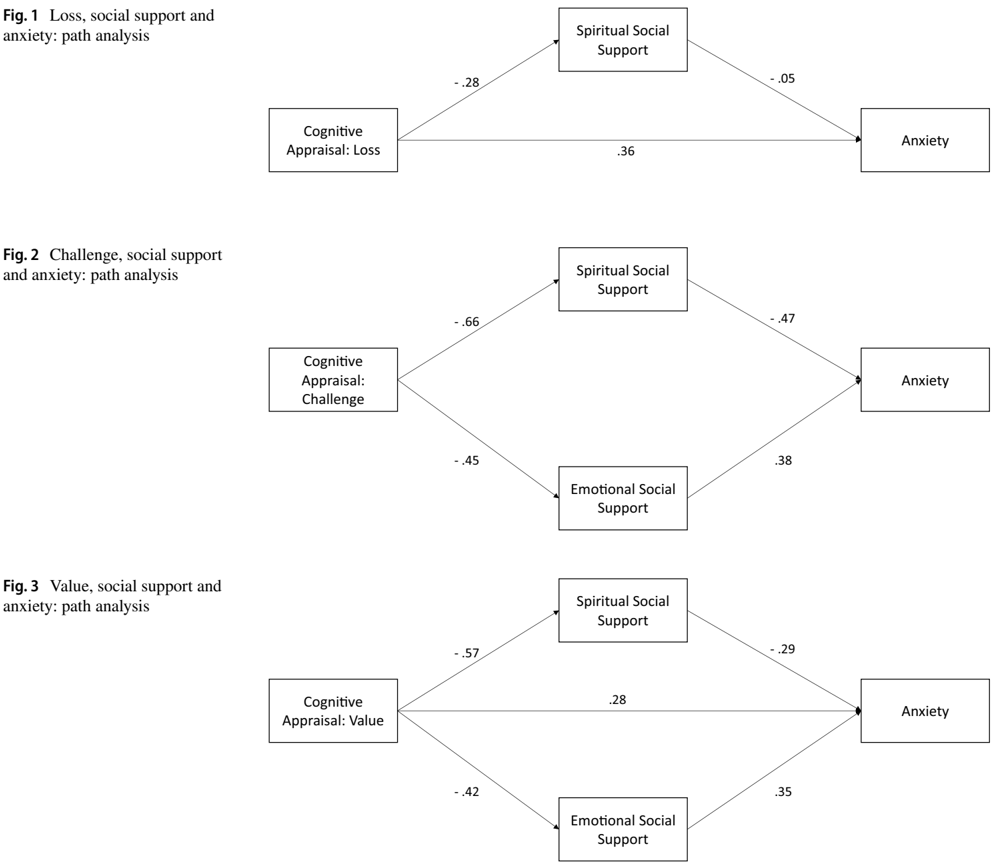
- In Study 2, social support mediated the relationship between selected cognitive appraisals and anxiety: specifically, Loss, Challenge, and Value were linked to anxiety through social support, with Spiritual support significant in all three models and Emotional support significant for Value and Challenge.
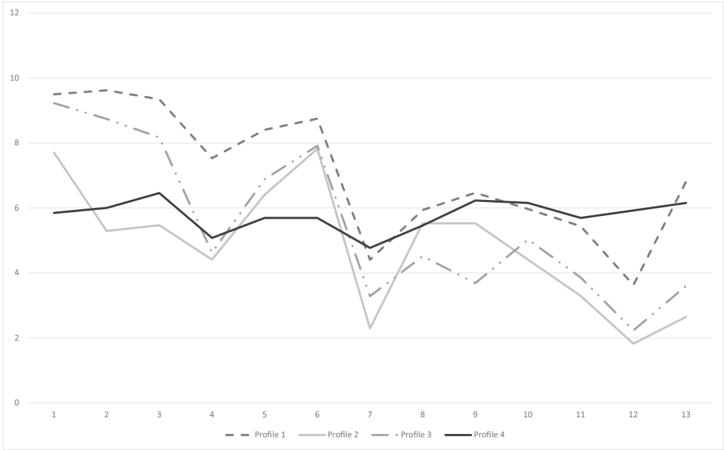
- Latent profile analysis identified 4 illness-related belief profiles (from solutions ranging from 1 to 6), and these profiles differed in cognitive appraisals but did not differ in anxiety; the profile comparison also found significant differences for several appraisals, including Loss, Harm, Benefit, Challenge, Threat, and Importance.
Methods
- Two studies were conducted with 150 people with rheumatoid arthritis in total (47 men, 103 women): Study 1 was a multi-center hospital/clinic study (N = 69), and Study 2 was conducted online (N = 81) during the pandemic.
- Measures included illness-related appraisals, coping strategies, illness-related beliefs, disease-related social support, acceptance of life with the disease, depressive symptoms, and anxiety; the paper names the IRAS-R/DRAS, COPE, IRBS, D-RSSS, ALDS, BDI-I, and GAD-7.
- Analyses included hierarchical regression for Study 1, confirmatory factor analysis (CFA) and structural equation modeling (SEM) for cognitive appraisals/social support/anxiety, and latent profile analysis (LPA) plus ANOVA/post hoc tests for illness-related beliefs and group comparisons.
Limitations
- The authors explicitly state that the study had relatively small groups of respondents and a cross-sectional design.
- They also state that Study 2 was conducted online, so some people with RA may have lacked computer access, which could have affected sample selection.
- Evident from the text: the design does not allow causal inference about whether changing appraisals or beliefs would alter adaptation outcomes; the authors themselves note that longitudinal and interventional studies are needed.
Model-written summary. Check it against the paper before relying on it.
Integrity signals
Registry
Cites
Statistics
Figures
Verification
Claims the paper makes
0 Valid · 0 Not valid · 5 Not checked · 38 Own results and interpretations
A result the paper reports from its own data — it cites no other source for it, so there is none to check. The quote shows it is in the paper.
In the paper
“Pairwise comparisons showed that profile 1 differed from profile 2 in terms of the appraisals of Loss, Challenge, Threat, and Importance.”
plain- Asserted: passes — The authors put it forward as true.
- Checkable: passes — It can be checked against evidence.
- Load-bearing: passes — The paper’s conclusions depend on it.
- Based: passes — The paper gives a reason why it holds.
A result the paper reports from its own data — it cites no other source for it, so there is none to check. The quote shows it is in the paper.
In the paper
“Profile 2 differed from Profile 3 in terms of the Threat CA.”
plain- Asserted: passes — The authors put it forward as true.
- Checkable: passes — It can be checked against evidence.
- Load-bearing: unclear — It is unclear whether the paper’s conclusions depend on it.
- Based: passes — The paper gives a reason why it holds.
In the paper
“The results of the first study indicated that CAs play a key role in the process of adaptation to RA, which is consistent with our theoretical assumptions (Maes etal., 1996).”
What the sources say
- Not matchedcites Maes etal., 1996
An author–year citation the paper’s reference list doesn’t settle. We don’t search these by name.
hedgedstates a cause- Asserted: passes — The authors put it forward as true.
- Checkable: passes — It can be checked against evidence.
- Load-bearing: passes — The paper’s conclusions depend on it.
- Based: passes — The paper gives a reason why it holds.
- Not matched
A result the paper reports from its own data — it cites no other source for it, so there is none to check. The quote shows it is in the paper.
In the paper
“The obtained results indicate that the Spiritual SS is a significant factor in the case of each of the 3 analyzed models (Loss, Challenge and Value).”
hedgedstates an association- Asserted: passes — The authors put it forward as true.
- Checkable: passes — It can be checked against evidence.
- Load-bearing: passes — The paper’s conclusions depend on it.
- Based: passes — The paper gives a reason why it holds.
A result the paper reports from its own data — it cites no other source for it, so there is none to check. The quote shows it is in the paper.
In the paper
“When controlling the variance explained by CA, the contribution of disease-coping strategies turned out to be insignificant for both dependent variables.”
plainn = 69- Asserted: passes — The authors put it forward as true.
- Checkable: passes — It can be checked against evidence.
- Load-bearing: passes — The paper’s conclusions depend on it.
- Based: passes — The paper gives a reason why it holds.
19 more claims
Create a free account to see all 43 claims and every source verdict.
- It may state two separate claims as one. 14
- Probably not a substantial claim. 9
Citations
Cites
An inventory for measuring depression
BECK, A. T. (1961) · Archives of General Psychiatry · doi:10.1001/archpsyc.1961.01710120031004 · Cited by 38,032 · cited 1×
“I (BDI-I), original version by Beck et al. (1961), Polish version by Parnowski and Jer-najczyk (1977).”
Eysenck, H. J. (1985) · Behaviour Research and Therapy · doi:10.1016/0005-7967(85)90087-7 · Cited by 31,975
A Brief Measure for Assessing Generalized Anxiety Disorder: The GAD-7
Spitzer, R. L., Kroenke, K., Williams, J. B. W., & Löwe, B. (2006) · Archives of Internal Medicine · doi:10.1001/archinte.166.10.1092 · Cited by 31,765 · cited 1×
“Generalized Anxiety Disorder – 7 (GAD-7), a self-report questionnaire used for screening for Generalized Anxiety Disorder (Spitzer et al., 2006; Polish version by the MAPI Institute; www. phqsc reene rs. com).”
Conservation of resources: A new attempt at conceptualizing stress
Hobfoll, S. E. (1989) · American Psychologist · doi:10.1037/0003-066x.44.3.513 · Cited by 18,187 · cited 1×
“Maes et al. (1996) tailored this model to chronic diseases and developed it to include factors that may mediate the adaptation process, such as personal and social resources like social support (Hobfoll, 1989).”
Assessing coping strategies: A theoretically based approach.
Carver, C. S., Scheier, M. F., & Weintraub, J. K. (1989) · Journal of Personality and Social Psychology · doi:10.1037/0022-3514.56.2.267 · Cited by 11,507 · cited 1×
“The COPE questionnaire (Carver et al., 1989; Juczyński & Ogińska-Bulik, 2009) was used to evaluate coping strategies.”
Weinman, J., Petrie, K. J., Moss-morris, R., & Horne, R. (1996) · Psychology & Health · doi:10.1080/08870449608400270 · Cited by 1,541 · cited 2×
“In the Common-Sense Model (CSM) of illness, IRBs are postulated to cover five key components of a disease (Leventhal et al., 1980; Weinman et al., 1996): 1) an identity component; 2) a causal component; 3) a time component; 4) a consequence component; and 5) a disease treatment / controllability…”
Contributions to Medical Psychology
(1977) · Elsevier eBooks · doi:10.1016/c2009-0-10944-3 · Cited by 982
Rosenberg, J., Beymer, P., Anderson, D., van Lissa, C. J., & Schmidt, J. (2018) · Journal of Open Source Software · doi:10.21105/joss.00978 · Cited by 785
Psychological adjustment to chronic disease
de Ridder, D., Geenen, R., Kuijer, R., & van Middendorp, H. (2008) · The Lancet · doi:10.1016/s0140-6736(08)61078-8 · Cited by 759 · cited 1×
“The effects of adaptation to living with a chronic disease may be operationalized as, for example, the severity of depressive symptoms or anxiety (negative indicators), the level of acceptance of living with the disease, or satisfaction with life (positive indicators; de Ridder et al., 2008).”
Update on the epidemiology, risk factors, and disease outcomes of rheumatoid arthritis
van der Woude, D., & van der Helm-van Mil, A. H. M. (2018) · Best Practice & Research Clinical Rheumatology · doi:10.1016/j.berh.2018.10.005 · Cited by 479 · cited 1×
“The prevalence of RA is estimated to be 0.5–1.0%, and both genetic and environmental factors are indicated as risk factors (van der Woude et al., 2018).”
InfluentialAn Approach for Determining the Number of Clusters in a Model-Based Cluster Analysis
Akogul, S., & Erisoglu, M. (2017) · Entropy · doi:10.3390/e19090452 · Cited by 269 · cited 2×
“Model 1 was used (Equal variances and covariances fixed to 0) and an analytic hierarchy process, based on the fit indices AIC, AWE, BIC, CLC, and KIC (Akogul & Erisoglu, 2017), was adopted as the matching criterion.”
Rheumatoid Arthritis Pathogenesis, Prediction, and Prevention: An Emerging Paradigm Shift
Deane, K. D., & Holers, V. M. (2021) · Arthritis & Rheumatology · doi:10.1002/art.41417 · Cited by 255 · cited 1×
“Rheumatoid arthritis (RA) is a chronic systemic disease whose etiopathogenesis is not fully understood (Deane & Holers, 2021).”
Maes, S., Leventhal, H., & de Ridder, D. T. D. (1996) · Cited by 234
Gatchel, R. J., & Oordt, M. S. (2003) · American Psychological Association eBooks · doi:10.1037/10592-000 · Cited by 165 · cited 1×
“…2018) and depression (Fu et al., 2017), which may additionally hinder the process of treatment (Xia et al., 2016) and the patient’s functioning (Ormseth et al., 2015), which makes it very important to identify factors that can potentially be targeted by therapeutic efforts (Gatchel & Oordt, 2003).”
Increased Burden of Psychiatric Disorders in Rheumatoid Arthritis
Marrie, R. A., Hitchon, C. A., Walld, R., Patten, S. B., Bolton, J. M., Sareen, J., Walker, J. R., Singer, A., Lix, L. M., El‐Gabalawy, R., et al. (2018) · Arthritis Care & Research · doi:10.1002/acr.23539 · Cited by 159 · cited 1×
“Due to the high prevalence of depressive symptoms among patients with RA (Marrie et al., 2018), it is worth adding these symptoms to the outcome variables.”
Social support and adaptation to the disease in men and women with psoriasis
Janowski, K., Steuden, S., Pietrzak, A., Krasowska, D., Kaczmarek, L. D., Gradus, I., & Chodorowska, G. (2012) · Archives of Dermatological Research · doi:10.1007/s00403-012-1235-3 · Cited by 109 · cited 1×
“The Acceptance of Life with the Disease Scale (ALDS; Janowski et al., 2012) is a self-report tool designed to measure the degree of acceptance of one’s life with a disease.”
Self-citationMartínez-Calderón, J., Meeus, M., Struyf, F., & Luque-Suárez, A. (2018) · Physiotherapy Theory and Practice · doi:10.1080/09593985.2018.1482512 · Cited by 96
Conner, T. S., Tennen, H., Zautra, A. J., Affleck, G., Armeli, S., & Fifield, J. (2006) · Pain · doi:10.1016/j.pain.2006.06.033 · Cited by 93 · cited 1×
“It should also be noted that CA has so far been the subject of few studies in the group of RA patients: studies conducted so far indicate that it is related to e.g. pain (Benefit; Conner et al., 2006) or anxiety and intensification of depressive symptoms (Loss; Dirik & Karanci, 2010).”
Pu, D., Luo, J., Wang, Y., Ju, B., Lv, X., Fan, P., & He, L. (2017) · Clinical Rheumatology · doi:10.1007/s10067-017-3874-4 · Cited by 78 · cited 1×
“Numerous publications also indicate a high intensity of symptoms of anxiety (Pu et al., 2018) and depression (Fu et al., 2017), which may additionally hinder the process of treatment (Xia et al., 2016) and the patient’s functioning (Ormseth et al., 2015), which makes it very important to identify…”
Dirik, G., & Karanci, A. N. (2009) · Psychology and Health · doi:10.1080/08870440902721818 · Cited by 68 · cited 1×
“It should also be noted that CA has so far been the subject of few studies in the group of RA patients: studies conducted so far indicate that it is related to e.g. pain (Benefit; Conner et al., 2006) or anxiety and intensification of depressive symptoms (Loss; Dirik & Karanci, 2010).”
D’Aloisio, A. A., Nichols, H. B., Hodgson, M. E., et al. (2017) · BMC Cancer · doi:10.1186/s12885-017-3686-6 · Cited by 68
Gu, Z., Xia, Y., Yin, R., Fu, T., Zhang, L., Zhang, Q., Guo, G., & Li, L. (2016) · Patient Preference and Adherence · doi:10.2147/ppa.s98034 · Cited by 64 · cited 1×
“…a high intensity of symptoms of anxiety (Pu et al., 2018) and depression (Fu et al., 2017), which may additionally hinder the process of treatment (Xia et al., 2016) and the patient’s functioning (Ormseth et al., 2015), which makes it very important to identify factors that can potentially be…”
Berner, C., Erlacher, L., Fenzl, K. H., & Dorner, T. E. (2018) · Health and Quality of Life Outcomes · doi:10.1186/s12955-018-1064-y · Cited by 60 · cited 1×
“Both in the above-mentioned analyzes and in many other studies, IRBs also play an important role in translating the variance of the level, e.g. quality of life (Berner et al., 2018) in the group of RA patients.”
Dalili, Z., & Bayazi, M. H. (2019) · Complementary Therapies in Clinical Practice · doi:10.1016/j.ctcp.2018.11.012 · Cited by 45 · cited 1×
“…be very important, in particular from a clinical point of view: IRBs can be modified as part of various types of therapeutic interactions, e.g. as part of cognitive-behavioral or mindfulness-based therapy (Dalili & Bayazi, 2019), which may later shape specific CAs or modify adaptation indicators.”
The prevalence of depression in rheumatoid arthritis in China: A systematic review
Fu, X., Li, Z., Yang, C.-J., Feng, L., Sun, L., Yao, Y., & Huang, Y. (2017) · Oncotarget · doi:10.18632/oncotarget.17323 · Cited by 42 · cited 1×
“Numerous publications also indicate a high intensity of symptoms of anxiety (Pu et al., 2018) and depression (Fu et al., 2017), which may additionally hinder the process of treatment (Xia et al., 2016) and the patient’s functioning (Ormseth et al., 2015), which makes it very important to identify…”
Sörensen, J., Rzeszutek, M., & Gasik, R. (2019) · Current Psychology · doi:10.1007/s12144-019-0131-9 · Cited by 38 · cited 1×
“These resources help a person in the process of adapting to living with a chronic disease: in the case of RA, the literature points to the important role of social support in the context of excess disability (Gwinnutt et al., 2022), PTG (Sörensen et al., 2021) or quality of life (Suh et al., 2022).”
tidyLPA: Easily Carry Out Latent Profile Analysis (LPA) Using Open-Source or Commercial Software
Rosenberg, J. M., & Lissa, C. J. V. (2018) · CRAN: Contributed Packages · doi:10.32614/cran.package.tidylpa · Cited by 30
Suh, C., Lee, K., Kim, J.-W., & Boo, S. (2021) · Clinical Rheumatology · doi:10.1007/s10067-021-05944-9 · Cited by 21
Gwinnutt, J. M., Norton, S., Hyrich, K. L., et al. (2022) · Arthritis Care & Research · doi:10.1002/acr.24996 · Cited by 21 · cited 1×
“These resources help a person in the process of adapting to living with a chronic disease: in the case of RA, the literature points to the important role of social support in the context of excess disability (Gwinnutt et al., 2022), PTG (Sörensen et al., 2021) or quality of life (Suh et al., 2022).”
Pankowski, D., Wytrychiewicz‐Pankowska, K., Pisula, E., Fal, A., Kisiel, B. M., Kamińska, E., & Tłustochowicz, W. (2022) · International Journal of Environmental Research and Public Health · doi:10.3390/ijerph19053136 · Cited by 9 · cited 1×
“Previous analyses conducted on the RA patients showed that IRBs shape the way patients appraise their disease (Pankowski et al., 2022).”
Self-citationMultidimensional Model of Disability and Role Functioning in Rheumatoid Arthritis
Ormseth, S. R., Draper, T. L., Irwin, M. R., Weisman, M. H., Aréchiga, A. E., Hartoonian, N., Bui, T., & Nicassio, P. M. (2015) · Arthritis Care & Research · doi:10.1002/acr.22658 · Cited by 7 · cited 2×
“…2018) and depression (Fu et al., 2017), which may additionally hinder the process of treatment (Xia et al., 2016) and the patient’s functioning (Ormseth et al., 2015), which makes it very important to identify factors that can potentially be targeted by therapeutic efforts (Gatchel & Oordt,…”
Research works printed but not linked: 3
- Brachowicz, M. (2008). Psychological factors in coping with infertility-related stress. Unpublished doctoral dissertation, JohnPaul II Catholic University of Lublin, Lublin, Poland.
- Janowski, K., Steuden, S., Kuryłowicz, J., & Nieśpiałowska-Steuden, M. (2009). The Disease-Related Appraisals Scale: A tool to measure subjective perception of the disease situation. Biopsychosocial Aspects of Health and Disease, 1, 108–125.
- Parnowski, T., & Jernajczyk, W. (1977). Inwentarz Depresji Becka w ocenie nastroju osób zdrowych i chorych na choroby afektywne [Measuring the mood of healthy persons and persons suffering from affective disorders with the Beck Depression Inventory]. Psychiatria Polska, 11(4), 417–421.
Cited by
Pre- and post-diagnosis experiences of people living with HIV in northern Philippines
Remigio, R. L. C. (2026) · Multidisciplinary Science Journal · doi:10.31893/multiscience.2026600
Metadata
- Authors
- Pankowski, D., Wytrychiewicz-Pankowska, K., Pisula, E., Janowski, K., Fal, A. M., Kisiel, B., & Tłustochowicz, W.
- Affiliations
- VIZJA University (PL)
- University of Warsaw (PL)
- Central Clinical Hospital (PL)
- Wojskowy Instytut Medyczny (PL)
- Corresponding author
- Pankowski, Daniel
- ORCID
- Venue
- Current Psychology
- Published
- 2023-03-30
- Volume
- 43
- Issue
- 4
- Pages
- 3416-3425
- ISSN
- 1046-1310 (ISSN-L)
- 1936-4733
- OpenAlex
- W4362553858
- Cited by
- 1
- References
- 31
- Citations by year
- 2026: 1
- FWCI
- 0.26
- Type
- journal article
- Language
- en
- Open access
- hybrid
- dx.doi.org
- Licence
- cc-by
- creativecommons.org/licenses/by/4.0 (tdm)
- creativecommons.org/licenses/by/4.0 (vor)
- Locations
- Current Psychology (publishedVersion, cc-by)
- Topics
- Social Sciences › Psychology › Applied Psychology › Optimism, Hope, and Well-being
- Health Sciences › Medicine › Rheumatology › Rheumatoid Arthritis Research and Therapies
- Social Sciences › Psychology › Clinical Psychology › Resilience and Mental Health
- Keywords
- rheumatoid arthritis, cognitive appraisal, depressive symptoms, anxiety, acceptance of illness, social support, coping strategies, latent profile analysis, person-centered approach, psychological intervention
About these checks
Registry, retraction, Cites and statistics results are computed, not judged, with one exception: a printed reference that no index lists is read once by a model before it counts as a citation error. Claims are extracted by a model and kept only when their quote appears verbatim in the text; each cited source is then checked, with a model’s help, for whether it says what the claim relies on. Those verdicts can be wrong — read the claim’s quote and the cited source before relying on one.
A language model drew the claims from the paper on 2026-10-11, under version 3 of the claim definition (model deepseek-v4.1-flash, prompt extract-v3).
A second model labelled each claim on 2026-10-11 (model jev-1.13-20260917, definition revision gold-guideline-v0.2).
Statistics and arithmetic are recomputed, not judged.
Confidence bands are shown only for fields calibrated on our annotated test set. None is calibrated yet, so no band is shown.
What counts as a claim ›How we measure confidence ›How we check this ›
Are you an author, or do you see a problem with this page? Request a review
Data sources
Bibliographic data: Semantic Scholar, OpenAlex, Crossref.
Contains information from the Semantic Scholar Academic Graph Datasets, made available under the ODC Attribution License (ODC-BY 1.0).
Semantic Scholar’s data is described in: Kinney, R., et al. (2023). The Semantic Scholar Open Data Platform. arXiv:2301.10140.
