

Ion-Exchange Chromatographic Method for the Determination of the Free Amino Acid Composition of Cheese and Other Dairy Products: an Inter-Laboratory Validation Study
Open accessThe DOI matches its Crossref record; 33 of the 33 references it cites were found in a registry or an index.
Abstract
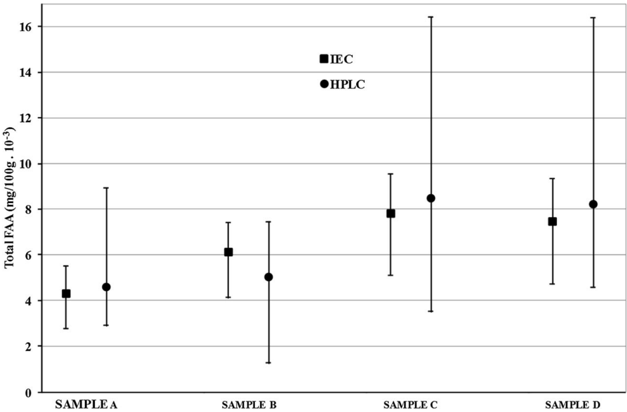
Although free amino acids (FAAs) represent a significant component of ripened cheeses and can provide useful information for their characterization, no inter-laboratory validated analytical method exists which allows a reliable comparison of data obtained by different laboratories and the adoption of quality control schemes based on FAA pattern. The objective of the present work was to test the effectiveness of an analytical protocol for the determination of the FAA composition of cheese and to verify the adequateness of this type of analysis for quality control procedures of Grana Padano PDO cheese as well as for research purposes. After an initial test to compare performances of ion-exchange chromatography (IEC) and HPLC techniques, an inter-laboratory collaborative study (seven laboratories, four samples) was organized to validate an IEC method with post-column ninhydrin derivatization and using l -norleucine as an internal standard. Determined amounts of individual FAA ranged from 8 to over 1380 mg/100 g cheese, with relative standard deviation of repeatability (RSD r ) ranging from 0.5 to 4.6%, and relative standard deviation of reproducibility (RSD R ) ranging from 1.3 to 9.9% for FAA concentrations over 100 mg/100 g. For lower concentrations, RSD r and RSD R were about thrice as high. On the basis of the results of this investigation, at present, the validated method is adopted as the official method for the determination of FAA patterns in the quality control of Grana Padano PDO cheese.
Overview
The claims and statistics of this paper haven’t been checked yet.
Free: it reads the open-access text and checks the first 5 claims that cite a source we can check. Create a free account to check every claim.
Integrity signals
Registry
Cites
Statistics
Figures



Verification
Claims the paper makes
The claims and statistics of this paper haven’t been checked yet.
Free: it reads the open-access text and checks the first 5 claims that cite a source we can check. Create a free account to check every claim.
Self-check
Percentages, sums and reported differences re-computed from the paper’s own numbers.
The self-check needs the paper’s full text.
Citations
Cites
Chromatography of Amino Acids on Sulfonated Polystyrene Resins. An Improved System
Moore, S., Spackman, D. H., & Stein, W. H. (1958) · Analytical Chemistry · doi:10.1021/ac60139a005 · Cited by 2,196 · cited 1×
“Since the first time that Moore et al. (1958) proposed the determination of AA by IEC coupled with post-column derivatization with ninhydrin, fully automated instruments have been developed, making this analysis feasible on a routine basis and applicable in research studies in many fields.”
BackgroundZhao, C. J., Schieber, A., & Gänzle, M. G. (2016) · Food Research International · doi:10.1016/j.foodres.2016.08.042 · Cited by 790 · cited 1×
“…acids (FAAs) are usually considered minor cheese constituents, they have been shown to contribute to sensory properties (Toelstede et al. 2009; Zhao et al. 2016), nutritional characteristics (Bottesini et al. 2013), and physiological functions (San Gabriel and Uneyama 2013) of several cheese…”
BackgroundAdvances in the study of proteolysis during cheese ripening
Sousa, M. J., Ardö, Y., & McSweeney, P. L. H. (2001) · International Dairy Journal · doi:10.1016/s0958-6946(01)00062-0 · Cited by 691 · cited 1×
“According to the manufacturing process and ripening period, up to 20–25% of the cheese protein may be split into FAAs, which can represent over 50% of the soluble N fraction (Sousa et al. 2001; Pellegrino et al. 2013).”
BackgroundThe Horwitz Ratio (HorRat): A Useful Index of Method Performance with Respect to Precision
Horwitz, W., & Albert, R. (2006) · Journal of AOAC INTERNATIONAL · doi:10.1093/jaoac/89.4.1095 · Cited by 613 · cited 3×
“From this equation derives the Horwitz ratio (HorRat) (Horwitz and Albert 2006), which is the ratio of the RSDR calculated from the test data to the predicted RSDR (PRSDR) obtained by the Horwitz equation (2): HorRat ¼ RSDR=PRSDR ð3Þ Under reproducibility conditions, HorRat values range between 0.5…”
MethodInfluentialFlavour formation by amino acid catabolism
Ardö, Y. (2006) · Biotechnology Advances · doi:10.1016/j.biotechadv.2005.11.005 · Cited by 568 · cited 5×
“During cheese ripening, protein is progressively degraded by a number of proteolytic enzymes including (1) chymosin, (2) indigenousmilk proteases, and (3) proteases and peptidases from both starter (LAB) and non-starter lactic acid bacteria (NSLAB), mainly released after cell lysis (Borsting et al. 2012; Gatti et al.…”
BackgroundInfluentialDetermination of Amino Acids in Feeds: Collaborative Study
Llames, C. R., & Fontaine, J. (1994) · Journal of AOAC INTERNATIONAL · doi:10.1093/jaoac/77.6.1362 · Cited by 497
Quality Assurance in the Analysis of Foods for Trace Constituents
Horwitz, W., Kamps, L. V. R., & Boyer, K. W. (1980) · Journal of AOAC INTERNATIONAL · doi:10.1093/jaoac/63.6.1344 · Cited by 359 · cited 1×
“To further evaluate the results of the collaborative study, the obtained RSDR values were compared to those calculated by applying the Horwitz equation (Horwitz et al. 1980).”
MethodA Series of Kokumi Peptides Impart the Long-Lasting Mouthfulness of Matured Gouda Cheese
Toelstede, S., Dunkel, A., & Hofmann, T. (2009) · Journal of Agricultural and Food Chemistry · doi:10.1021/jf803376d · Cited by 259 · cited 2×
“Although free amino acids (FAAs) are usually considered minor cheese constituents, they have been shown to contribute to sensory properties (Toelstede et al. 2009; Zhao et al. 2016), nutritional characteristics (Bottesini et al. 2013), and physiological functions (San Gabriel and Uneyama 2013) of…”
BackgroundGatti, M., Bottari, B., Lazzi, C., Neviani, E., & Mucchetti, G. (2014) · Journal of Dairy Science · doi:10.3168/jds.2013-7187 · Cited by 216 · cited 2×
“…is progressively degraded by a number of proteolytic enzymes including (1) chymosin, (2) indigenousmilk proteases, and (3) proteases and peptidases from both starter (LAB) and non-starter lactic acid bacteria (NSLAB), mainly released after cell lysis (Borsting et al. 2012; Gatti et al. 2014).”
BackgroundProduction of γ-Aminobutyric Acid By Cheese Starters During Cheese Ripening
Nomura, M., Kimoto, H., Someya, Y., Furukawa, S., & Suzuki, I. (1998) · Journal of Dairy Science · doi:10.3168/jds.s0022-0302(98)75714-5 · Cited by 171
Research works printed but not linked: 7
- European Commission (2009) Regulation (EC) 152/2009, laying down the methods of sampling and analysis for the official control of feed. Official Journal L94, 26/2/2009, p. 1–130.
- European Commission (2011a) Implementing Regulation (EU) No 584/ 2011, approving non-minor amendments to the specification for a name entered in the register of protected designations of origin and protected geographical indications (Grana Padano (PDO)). Official Journal L160, 18/6/2011, p.65-70.
- European Commission (2011b). Commission Regulation (EU) No 794/ 2011, approving amendments to the specification for a name entered in the register of protected designations of origin and protected geo- graphical indications (Parmigiano-Reggiano (PDO). Official Journal L204/19, 9/8/2011, p.19-20.
- European Council (2012) Regulation (EU) No 1151/2012, on quality schemes for agricultural products and foodstuffs. Official Journal L343, 14/12/2012, p. 1-29.
- ISO (2008) Milk and milk products—guidance on sampling. ISO standard 707/IDF 050:2008. International Organization for Standardization, Geneva
- ISO (2015) Statistical methods for use in proficiency testing by inter-laboratory comparisons: ISO standard 13528. International Organization for Standardization, Geneva
- Resmini P, Pellegrino L, Pazzaglia C, Hogenboom JA (1985) Free amino acids for the quality control of Parmigiano-Reggiano cheese and particularly for the grated products. Sci Tecn Latt-Cas 36:557-592 (in Italian)
Cited by
D’Incecco, P., Rosi, V., Cabassi, G., Hogenboom, J. A., & Pellegrino, L. (2018) · Food Research International · doi:10.1016/j.foodres.2018.02.068 · Cited by 74
Self-citationD’Incecco, P., Limbo, S., Hogenboom, J., Rosi, V., Gobbi, S., & Pellegrino, L. (2020) · Foods · doi:10.3390/foods9030268 · Cited by 57
Self-citationLiyanaarachchi, G. V. V., Mahanama, K. R. R., Somasiri, H. P. P. S., & Punyasiri, P. A. N. (2018) · Journal of Chromatography A · doi:10.1016/j.chroma.2018.07.035 · Cited by 56
D’Incecco, P., Pellegrino, L., Hogenboom, J. A., Cocconcelli, P. S., & Bassi, D. (2017) · LWT · doi:10.1016/j.lwt.2017.08.083 · Cited by 54
Self-citationTsiasioti, A., & Tzanavaras, P. D. (2024) · Food Chemistry · doi:10.1016/j.foodchem.2024.138577 · Cited by 49
Limbo, S., Pellegrino, L., D’Incecco, P., Gobbi, S., Rosi, V., & Fracassetti, D. (2020) · Food Chemistry · doi:10.1016/j.foodchem.2020.127116 · Cited by 40
Self-citationWarakaulle, S., Mohamed, H., Ranasinghe, M., Shah, I., Xu, Y., Chen, G., Ayyash, M. M., Vincent, D., & Kamal‐Eldin, A. (2023) · Journal of Food Composition and Analysis · doi:10.1016/j.jfca.2023.105854 · Cited by 35
Estivi, L., Pellegrino, L., Hogenboom, J. A., Brandolini, A., & Hidalgo, A. (2022) · Molecules · doi:10.3390/molecules27217541 · Cited by 29
Self-citationEvaluating the Authenticity of the Raw-Milk Cheese Fontina (PDO) with Respect to Similar Cheeses
Pellegrino, L., Hogenboom, J. A., Rosi, V., & D’Incecco, P. (2021) · Foods · doi:10.3390/foods10020350 · Cited by 28
“Based on these data, a chemometric model for Fontina PDO cheese was developed, similarly to the one previously proposed for Grana Padano cheese [15].”
MethodSelf-citationMusatti, A., Cavicchioli, D., Mapelli, C., Bertoni, D., Hogenboom, J. A., Pellegrino, L., & Rollini, M. (2020) · Biomolecules · doi:10.3390/biom10040597 · Cited by 27
Self-citationFocus on the Protein Fraction of Sports Nutrition Supplements
Pellegrino, L., Hogenboom, J. A., Rosi, V., Sindaco, M., Gerna, S., & D’Incecco, P. (2022) · Molecules · doi:10.3390/molecules27113487 · Cited by 26
Self-citationKorcari, D., Fanton, A., Ricci, G., Rabitti, N. S., Laureati, M., Hogenboom, J. A., Pellegrino, L., Emide, D., Barbiroli, A. G., & Fortina, M. G. (2023) · Foods · doi:10.3390/foods12020340 · Cited by 25
Self-citationAlterations in Serum-Free Amino Acid Profiles in Childhood Asthma
Matysiak, J., Klupczyńska-Gabryszak, A., Packi, K., Mackowiak-Jakubowska, A., Bręborowicz, A., Pawlicka, O., Olejniczak, K., Kokot, Z. J., & Matysiak, J. (2020) · International Journal of Environmental Research and Public Health · doi:10.3390/ijerph17134758 · Cited by 25
“The applied method offers a valid alternative to the most conventional method of AA quantification that employs ion exchange chromatography (IEC) followed by post column ninhydrin derivatization and UV detection [41].”
MethodPundi, A., Chang, C., Chen, J.-K., Hsieh, S., & Lee, M.-C. (2022) · Spectrochimica Acta Part A Molecular and Biomolecular Spectroscopy · doi:10.1016/j.saa.2022.121108 · Cited by 23
d’Adduzio, L., Fanzaga, M., Capriotti, A. L., Taglioni, E., Boschin, G., Laganà, A., Rueller, L., Robert, J., van Gemmern, A., Bollati, C., et al. (2024) · Current Research in Food Science · doi:10.1016/j.crfs.2024.100919 · Cited by 24
“The solution was filtered on 0.2 μ m membrane filter (Millipore, Milford MA, USA) and analyzed by ion exchange chromatography using an amino acid analyser Biochrom 30 + (Erreci, Milan, Italy) as described by Hogenboom et al. (Hogenboom et al., 2017).”
InfluentialGrosso, A. L., Cestonaro, G., Scampicchio, M., Ferrentino, G., & Costanzo, E. (2025) · LWT · doi:10.1016/j.lwt.2025.117644 · Cited by 22
Determination of Free Amino Acids in Three Species of Duckweed (Lemnaceae)
Zhang, X., Chen, H., Wu, D., Gu, W., Sun, X. D., Jian, C., & Wu, Q. (2018) · Journal of Food Quality · doi:10.1155/2018/7673652 · Cited by 22
Shi, E., Zuo, L., Yao, H., Sun, Z., & Chen, D. (2024) · TrAC Trends in Analytical Chemistry · doi:10.1016/j.trac.2024.117799 · Cited by 18
A Study of Greek Graviera Cheese by NMR-Based Metabolomics
Spyros, A., & Ralli, E. (2023) · Molecules · doi:10.3390/molecules28145488 · Cited by 15
“Since ion exchange chromatography, which is another analytical methodology used for FAA quantification, is not suitable for determining Trp and Cys in cheese (as per [29]), NMR can be very useful as a fast and efficient complementary methodology for FAA quantification in cheese.”
The impact of sodium chloride reduction on Grana-type cheese production and quality
Tidona, F., Bernardi, M., Francolino, S., Ghiglietti, R., Hogenboom, J. A., Locci, F., Zambrini, V., Carminati, D., & Giraffa, G. (2019) · Journal of Dairy Research · doi:10.1017/s0022029919000797 · Cited by 13
Self-citationDonzella, S., Capusoni, C., Pellegrino, L., & Compagno, C. (2021) · Journal of Fungi · doi:10.3390/jof7121028 · Cited by 12
“2 and analyzed with a Biochrom 30plus amino acid analyzer (Biochrom, Cambridge, UK) adopting the conditions described [26].”
MethodSelf-citationD'Incecco, P., Bettera, L., Bancalari, E., Rosi, V., Sindaco, M., Gobbi, S., Candotti, P., Nazzicari, N., Limbo, S., Gatti, M., et al. (2023) · Food Research International · doi:10.1016/j.foodres.2023.113102 · Cited by 10
“The free amino acids (FAA), that account for around 20% of cheese protein, proved to have a characteristic pattern in GP at selected ages (Hogenboom et al., 2017).”
Self-citationChromatographic profile of major whey proteins in some dairy beverages based on milk serum
Prodan, D., Filip, M., VLASSA, M. C., Moldovan, M., Carpa, R., Tarmure, V., & Popa, A. A. S. (2022) · TURKISH JOURNAL OF CHEMISTRY · doi:10.55730/1300-0527.3497 · Cited by 10
D'Incecco, P., Hogenboom, J. A., Rosi, V., Cabassi, G., & Pellegrino, L. (2022) · Food Chemistry · doi:10.1016/j.foodchem.2021.131043 · Cited by 9
Self-citationYang, Y., Yu, M., Xing, F., Zhang, L., Dong, W., & Wang, X. (2025) · Journal of Dairy Science · doi:10.3168/jds.2025-26666 · Cited by 7
Romo, M., D’Auria, G., Nitride, C., Garro, G., Picariello, G., D’Incecco, P., Pellegrino, L., Sindaco, M., Castellari, M., Murphy, E. G., et al. (2024) · Food and Bioprocess Technology · doi:10.1007/s11947-024-03624-5 · Cited by 3
“Immunodetection was performed using rabbit polyclonal antibodies against bovine β-lactoglobulin (β–Lg) and α-lactalbumin (α–La) produced by Primm (Milan, Italy), as primary antibodies and the horseradish peroxidase-labelled goat anti-rabbit IgG polyclonal antibodies as secondary reagents (BioRad, Hercules, CA) (Pourjo…”
InfluentialSelf-citationAvci, H. R., Özcan, T., Asan, A. A., Eren, O., Kaygısız, M., & Polat, F. G. (2026) · Journal of Food Composition and Analysis · doi:10.1016/j.jfca.2026.109154 · Cited by 3
Pellegrino, L., Rosi, V., Sindaco, M., & D’Incecco, P. (2024) · Foods · doi:10.3390/foods13030355 · Cited by 3
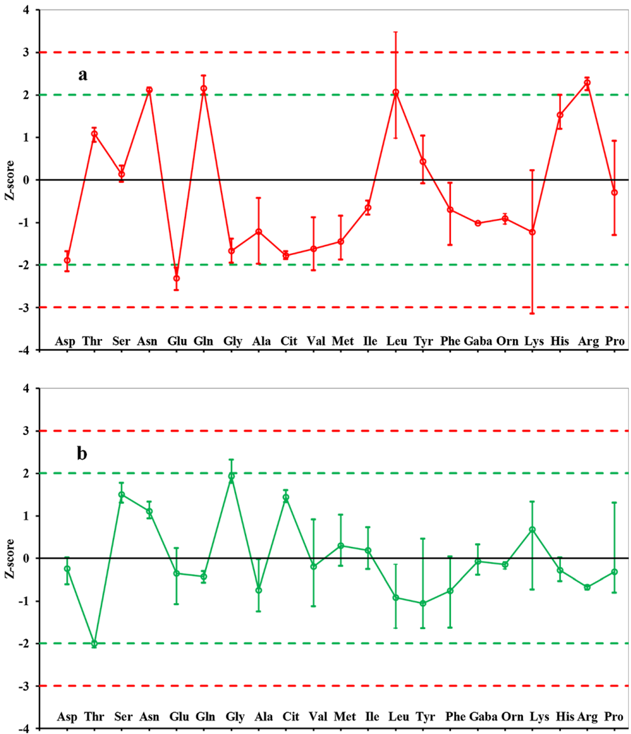
“The Z-scores were calculated for the actual content of each FAA and the quality control scheme adopted by the Consortium was applied to evaluate their acceptability [23].”
MethodSelf-citationDelaiti, S., Nardin, T., Pedò, S., & Larcher, R. (2025) · Beverages · doi:10.3390/beverages11050124 · Cited by 3
“…have been developed for this purpose, including high-performance liquid chromatography (HPLC) with fluorescence detection [21–24], mass spectrometry (MS and MS/MS) [25–28], gas chromatography (GC) [29,30], capillary electrophoresis (CE) [31,32], and ion-exchange chromatography (IEC) [33,34].”
Alijanibaei, S., Bolandi, M., Abbaszadeh, R., & Bostanabad, M. K. (2025) · Applied Food Research · doi:10.1016/j.afres.2025.101509 · Cited by 2
Grant, C., Godfrey, H., Chan, J., Palermo, T. M., Shoveller, A. K. K., Bakovic, M., Blois, S. L., & Verbrugghe, A. (2025) · American Journal of Veterinary Research · doi:10.2460/ajvr.25.05.0156 · Cited by 1
Characterization of Tiroler Bergkäse PDO cheese: A multimethodological approach
Innerbichler, H., Trockenbacher, A., Höller, A., Scholl‐Bürgi, S., Vecchio, L. D., Cirlini, M., König, J. S., & Bach, K. E. (2025) · Food Chemistry Molecular Sciences · doi:10.1016/j.fochms.2025.100336 · Cited by 1
d’Adduzio, L., Fanzaga, M., Musco, M. S., Sindaco, M., D’Incecco, P., Boschin, G., Bollati, C., & Lammi, C. (2026) · Nutrients · doi:10.3390/nu18020323 · Cited by 1
“…were diluted 1:4 in 0.2 N lithium citrate buffer (pH 2.2), filtered through a 0.2 µ m membrane (Millipore, Milford, MA, USA), and analyzed by ion-exchange chromatography using a Biochrom 30+ amino acid analyzer (Erreci, Milan, Italy), according to the method reported by Hogenboom et al. [17].”
InfluentialSelf-citationIon chromatography for dairy product analysis: a technical and regulatory review
da Costa, J. F., de Moraes, M. N., Correa, K. D. P., Fontes, E. A. F., Ribeiro, O. A. S., Mesquita, B. M. A. D. C., de Oliveira, E. B., & Coimbra, J. S. D. R. (2026) · Brazilian journal of food technology/Brazilian Journal of Food Technology · doi:10.1590/1981-6723.0252026 · Cited by 1
Tong, F., Gong, J., Zhang, M. Y., Wang, Y. J., & Jiang, J. L. (2020) · Materials science forum · doi:10.4028/www.scientific.net/msf.1003.115 · Cited by 1
“However, ion exchange resin is easy to be polluted, and a large amount of waste water are generated[12].”
BackgroundGrant, C. (2020) · The Atrium (University of Guelph)
Graphene-based Nanocomposites for Amino Acid Sensing
Manoj, D., Rajendran, S., Murphy, M., & Marimuthu, M. (2023) · Royal Society of Chemistry eBooks · doi:10.1039/bk9781837671847-00369
Tibbs‐Cortes, B. W., Strathman‐Runyan, J. L., & Schmitz‐Esser, S. (2025) · FEMS Microbes · doi:10.1093/femsmc/xtaf012
“This possibility is particularly relevant for the growth of L. monocytogenes in dairy products where oligopeptides of casein (which contain high levels of isoleucine) and free isoleucine are highly prevalent (Liu and Ream 2008 , Phelan et al. 2009 , Hogenboom et al. 2017 , Nielsen et al. 2022 ).”
Amadei, S., Gottardi, D., Sindaco, M., Gandolfi, I., D’Alessandro, M., Pellegrino, L., Nunzio, M. D., Siroli, L., Patrignani, F., & Lanciotti, R. (2026) · Foods · doi:10.3390/foods15071239
“Free amino acid (FAA) content was determined by ion exchange chromatography using a Biochrom 30+ amino acid analyzer (Erreci, Milan, Italy), following the method described by Hogenboom et al. [22].”
Self-citationRodríguez, J., Martínez-Martín, I., Hernández-Jiménez, M., Revilla, İ., Flórez, A. B., Mayo, B., & Quintana, A. M. V. (2026) · Talanta · doi:10.1016/j.talanta.2026.130731
D’Auria, G., Sardella, C., Bresciani, A., Graziuso, F., Nitride, C., Pellegrino, L., Ferranti, P., Marti, A., & Blandino, M. (2026) · Current Research in Food Science · doi:10.1016/j.crfs.2026.101595
“The electrophoresis reagents were all obtained from Bio-Rad (Milan, Italy).”
InfluentialSelf-citationLammi, C., Vistoli, G., & D'Adduzio, L. (2025) · Archivio Istituzionale della Ricerca (Universita Degli Studi Di Milano)
Metadata
- Authors
- Hogenboom, J. A., D’Incecco, P., Fuselli, F., & Pellegrino, L.
- Affiliations
- Ministry of Agricultural, Food and Forestry Policies (IT)
- Corresponding author
- Hogenboom, Johannes A.
- Venue
- Food Analytical Methods
- Published
- 2017-04-01
- Volume
- 10
- Issue
- 9
- Pages
- 3137-3148
- ISSN
- 1936-9751 (ISSN-L)
- 1936-976X
- OpenAlex
- W2599125977
- Cited by
- 38
- References
- 33
- Citations by year
- 2026: 6 · 2025: 6 · 2024: 5 · 2023: 5 · 2022: 3 · 2021: 3 · 2020: 5 · 2019: 1 · 2018: 3 · 2017: 1
- FWCI
- 3.08
- Type
- journal article
- Language
- en
- Open access
- hybrid
- doi.org
- Locations
- Food Analytical Methods (publishedVersion, cc-by)
- Archivio Istituzionale della Ricerca (Universita Degli Studi Di Milano) (submittedVersion, other-oa)
- Funders
- Università degli Studi di Napoli Federico II
- Topics
- Life Sciences › Agricultural and Biological Sciences › Food Science › Food Nutrient Composition and Product Development
- Physical Sciences › Chemistry › Analytical Chemistry › Analytical Methods in Pharmaceuticals
- Physical Sciences › Chemistry › Analytical Chemistry › Analytical Chemistry and Chromatography
- Keywords
- free amino acids, cheese, ion-exchange chromatography, ninhydrin derivatization, ripened cheese, dairy products, method validation, interlaboratory comparison, quality control, HPLC comparison
About these checks
Registry, retraction, Cites and statistics results are computed, not judged, with one exception: a printed reference that no index lists is read once by a model before it counts as a citation error. Claims are extracted by a model and kept only when their quote appears verbatim in the text; each cited source is then checked, with a model’s help, for whether it says what the claim relies on. Those verdicts can be wrong — read the claim’s quote and the cited source before relying on one.
Statistics and arithmetic are recomputed, not judged.
Confidence bands are shown only for fields calibrated on our annotated test set. None is calibrated yet, so no band is shown.
What counts as a claim ›How we measure confidence ›How we check this ›
Are you an author, or do you see a problem with this page? Request a review
Data sources
Bibliographic data: Semantic Scholar, OpenAlex, Crossref.
Contains information from the Semantic Scholar Academic Graph Datasets, made available under the ODC Attribution License (ODC-BY 1.0).
Semantic Scholar’s data is described in: Kinney, R., et al. (2023). The Semantic Scholar Open Data Platform. arXiv:2301.10140.
