

Physiological Roles of β-amyloid in Regulating Synaptic Function: Implications for AD Pathophysiology
Open accessThe DOI matches its Crossref record; 253 of the 257 references it cites were found in a registry or an index.
Abstract
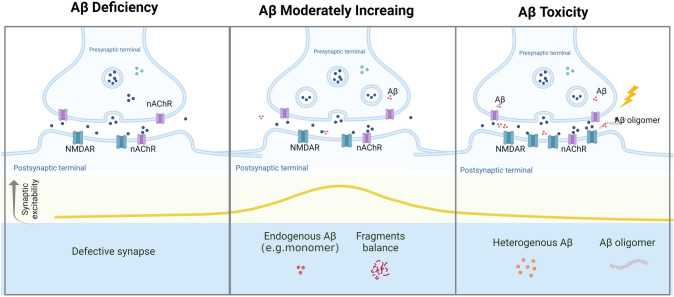
The physiological functions of endogenous amyloid-β (Aβ), which plays important role in the pathology of Alzheimer's disease (AD), have not been paid enough attention. Here, we review the multiple physiological effects of Aβ, particularly in regulating synaptic transmission, and the possible mechanisms, in order to decipher the real characters of Aβ under both physiological and pathological conditions. Some worthy studies have shown that the deprivation of endogenous Aβ gives rise to synaptic dysfunction and cognitive deficiency, while the moderate elevation of this peptide enhances long term potentiation and leads to neuronal hyperexcitability. In this review, we provide a new view for understanding the role of Aβ in AD pathophysiology from the perspective of physiological meaning.
Overview
The claims and statistics of this paper haven’t been checked yet.
Free: it reads the open-access text and checks the first 5 claims that cite a source we can check. Create a free account to check every claim.
Integrity signals
Registry
Cites
Statistics
Figures
Verification
Claims the paper makes
The claims and statistics of this paper haven’t been checked yet.
Free: it reads the open-access text and checks the first 5 claims that cite a source we can check. Create a free account to check every claim.
Claims other papers make about this one
Each is checked against this paper’s own text: does it say what the citing paper says it does?
In the citing paper
“growing evidence indicates that a normal level of Aβ peptides may play a key role in the maintenance of synaptic function and cognition.368,369”
From Amyloid β-based therapy for Alzheimer’s disease: Challenges, successes and future (2023) · cites this paper as [369]
In the citing paper
“Although Aβ aggregates, especially the soluble oligomeric species impair synaptic plasticity by inhibition of LTP and induction of LTD”
From Amyloid β-based therapy for Alzheimer’s disease: Challenges, successes and future (2023) · cites this paper as [369]
Self-check
Percentages, sums and reported differences re-computed from the paper’s own numbers.
The self-check needs the paper’s full text.
Citations
Cites
1 retracted
Wang, H.-Y., Trocmé, C., Stucky, A., Shah, S. M., Kvasic, J., Khan, A., Morain, P., Guignot, I., Bouguen, E., Deschet, K., et al. (2017) · Alzheimer s Research & Therapy · doi:10.1186/s13195-017-0280-8 · Cited by 15
RetractedAmyloid oligomers exacerbate tau pathology in a mouse model of tauopathy
Selenica, M.-L. B., Brownlow, M., Jimenez, J. P., Lee, D. C., Pena, G., Dickey, C. A., Gordon, M. N., & Morgan, D. (2013) · Neurodegenerative Diseases · doi:10.1159/000337230 · Cited by 10,359
Terry, R. D., Masliah, E., Salmon, D. P., Butters, N., DeTeresa, R., Hill, R., Hansen, L. A., & Katzman, R. (1991) · Annals of Neurology · doi:10.1002/ana.410300410 · Cited by 4,397 · cited 2×
“As early as 1991, it was recognized that synaptic loss is a factor correlated with the cognitive deficit in AD [12] and an important cytopathological feature of cognitive decline [13].”
BackgroundWalsh, D. M., Klyubin, I., Fadeeva, J. V., Cullen, W. K., Anwyl, R., Wolfe, M. S., Rowan, M. J., & Selkoe, D. J. (2002) · Nature · doi:10.1038/416535a · Cited by 4,291
Vassar, R., Bennett, B. D., Babu-Khan, S., Kahn, S., Mendiaz, E. A., Denis, P., Teplow, D. B., Ross, S., Amarante, P., Loeloff, R., et al. (1999) · Science · doi:10.1126/science.286.5440.735 · Cited by 3,876
Clinical and biomarker changes in dominantly inherited Alzheimer's disease
Bateman, R. J., Xiong, C., Benzinger, T. L. S., Fagan, A. M., Goate, A., Fox, N. C., Marcus, D. S., Cairns, N. J., Xie, X., Blazey, T. M., et al. (2012) · New England Journal of Medicine · doi:10.1056/nejmoa1202753 · Cited by 3,814 · cited 2×
“Population studies have shown that Aβ deposition does not increase all the time, while CSF Aβ42 is significantly negatively correlated with disease progression [139].”
BackgroundShankar, G. M., Li, S., Mehta, T. H., Garcia-Munoz, A., Shepardson, N. E., Smith, I., Brett, F. M., Farrell, M. A., Rowan, M. J., Lemere, C. A., et al. (2008) · Nature Medicine · doi:10.1038/nm1782 · Cited by 3,685
Diffusible, nonfibrillar ligands derived from Aβ 1–42 are potent central nervous system neurotoxins
Lambert, M. P., Barlow, A. K., Chromy, B. A., Edwards, C., Freed, R., Liosatos, M., Morgan, T. E., Rozovsky, I., Trommer, B., Viola, K. L., et al. (1998) · Proceedings of the National Academy of Sciences · doi:10.1073/pnas.95.11.6448 · Cited by 3,506
Phases of Aβ-deposition in the human brain and its relevance for the development of AD
Thal, D. R., Rüb, U., Orantes, M., & Braak, H. (2002) · Neurology · doi:10.1212/wnl.58.12.1791 · Cited by 3,490 · cited 1×
“In AD brains, the Aβ deposits first appear in the neocortex, followed by allocortical regions, diencephalic nuclei, the striatum, and the cholinergic nuclei of the basal forebrain [60]; the entorhinal cortex is one of the most vulnerable regions [61].”
BackgroundKnopman, D. S., Amieva, H., Petersen, R. C., Chételat, G., Holtzman, D. M., Hyman, B. T., Nixon, R. A., & Jones, D. T. (2021) · Nature Reviews Disease Primers · doi:10.1038/s41572-021-00269-y · Cited by 2,606 · cited 1×
“Alzheimer’s disease (AD) is an irreversible neurodegenerative disorder and the most common cause of dementia [1, 2], www.”
Background
Cited by
Amyloid β-based therapy for Alzheimer’s disease: Challenges, successes and future
Zhang, Y., Chen, H., Li, R., Sterling, K., & Song, W. (2023) · Signal Transduction and Targeted Therapy · doi:10.1038/s41392-023-01484-7 · Cited by 988
“Although Aβ aggregates, especially the soluble oligomeric species impair synaptic plasticity by inhibition of LTP and induction of LTD, growing evidence indicates that a normal level of Aβ peptides may play a key role in the maintenance of synaptic function and cognition.(368,369) It has been shown that the KLVFF (16~…”
BackgroundLim, D. W., Lee, J., Lee, C.-H., & Kim, Y. T. (2024) · International Journal of Molecular Sciences · doi:10.3390/ijms252011223 · Cited by 77
“However, the abnormal accumulation of A β leads to the formation of A β oligomers and subsequently A β plaques [26].”
BackgroundLiu, Y., Guttman, L. C., Dawson, V. L., & Dawson, T. M. (2024) · Biochemical Pharmacology · doi:10.1016/j.bcp.2024.116174 · Cited by 73
Alzheimer’s disease and drug delivery across the blood–brain barrier: approaches and challenges
Iqbal, I., Saqib, F., Mubarak, Z., Latif, M. F., Wahid, M., Nasir, B., Shahzad, H., Sharifi-Rad, J., & Mubarak, M. S. (2024) · European Journal of Medical Research · doi:10.1186/s40001-024-01915-3 · Cited by 60
“These cognitive issues are not so obvious and may only be noticeable to close family and friends, as the brain is not able to repair the damage and loss of nerve cells caused by AD, which results in minor changes in thinking ability [20].”
BackgroundBashir, B., Gulati, M., Vishwas, S., Gupta, G., Dhanasekaran, M., Paudel, K. R., Chellappan, D. K., Anand, K., Negi, P., Singh, P. K., et al. (2025) · Ageing Research Reviews · doi:10.1016/j.arr.2025.102689 · Cited by 48
Abbas, K., Mustafa, M., Alam, M., Habib, S., Ahmad, W., Adnan, M., Hassan, M. I., & Usmani, N. (2025) · Neurogenetics · doi:10.1007/s10048-025-00821-y · Cited by 51
Current strategies of detecting Aβ species and inhibiting Aβ aggregation: Status and prospects
Li, J., Liao, W., Huang, D., Ou, M., Chen, T., Wang, X., Zhao, R., Zhang, L., Mei, L., Liu, J., et al. (2023) · Coordination Chemistry Reviews · doi:10.1016/j.ccr.2023.215375 · Cited by 38
Controversial Properties of Amyloidogenic Proteins and Peptides: New Data in the COVID Era
Surguchov, A. P., Emamzadeh, F. N., Titova, M., & Surguchev, A. A. (2023) · Biomedicines · doi:10.3390/biomedicines11041215 · Cited by 37
“, β-amyloid, possess toxic properties [40,41].”
BackgroundYin, X., Zhou, H., Cao, T., Yang, X., Meng, F., Dai, X., Wang, Y., Li, S., Zhai, W., Yang, Z., et al. (2024) · ACS Nano · doi:10.1021/acsnano.3c08823 · Cited by 28
Tahir, M., Kang, M. H., Park, T. J., Ali, J., Choe, K., Park, J. S., & Kim, M. O. (2024) · Frontiers in Cellular Neuroscience · doi:10.3389/fncel.2024.1453038 · Cited by 25
“Various conditions, such as AD hypoxia and oxidative stress, cause an increase in BACE1 expression (Cai et al., 2023).”
BackgroundMcGeachan, R. I., Meftah, S., Taylor, L. W., Catterson, J. H., Negro, D., Bonthron, C., Holt, K., Tulloch, J., Rose, J. L., Gobbo, F., et al. (2025) · Nature Communications · doi:10.1038/s41467-025-58879-z · Cited by 26
O’Day, D. H. (2023) · Current Issues in Molecular Biology · doi:10.3390/cimb45080393 · Cited by 23
Mulumba, J., Duan, R., Luo, B., Wu, J., Sulaiman, M., Wang, F., & Yang, Y. (2025) · Exploration of neuroscience · doi:10.37349/en.2025.100675 · Cited by 25
Schilling, S., Pradhan, A., Heesch, A., Helbig, A., Blennow, K., Koch, C., Bertgen, L., Koo, E. H., Brinkmalm, G., Zetterberg, H., et al. (2023) · Acta Neuropathologica Communications · doi:10.1186/s40478-023-01577-y · Cited by 26
“It has been shown that reduced endogenous Aβ may also impair synaptic function [102].”
BackgroundMiR-431 attenuates synaptic plasticity and memory deficits in APPswe/PS1dE9 mice
Ge, J., Xue, Z., Shu, S., Yu, L., Qin, R., Tao, W., Liu, P., Dong, X., Lan, Z., Bao, X., et al. (2023) · JCI Insight · doi:10.1172/jci.insight.166270 · Cited by 19
Resveratrol and Sir2 Reverse Sleep and Memory Defects Induced by Amyloid Precursor Protein
Hao, Y., Shao, L., Hou, J., Zhang, Y., Ma, Y., Liu, J., Xu, C., Chen, F., Cao, L., & Ping, Y. (2023) · Neuroscience Bulletin · doi:10.1007/s12264-023-01056-3 · Cited by 17
Coronel, R., Bernabeu-Zornoza, A., Palmer, C., González-Sastre, R., Rosca, A., Mateos-Martínez, P., López-Alonso, V., & Liste, I. (2023) · International Journal of Molecular Sciences · doi:10.3390/ijms241612964 · Cited by 22
Yang, X., Yao, K., Zhang, M., Zhang, W., & Zu, H. (2025) · Brain Research Bulletin · doi:10.1016/j.brainresbull.2025.111321 · Cited by 12
“Moreover, accumulating data reveal that there are an extensive expression of amyloid-β peptides all over the body in normal subjects, including brain, strongly supporting physiological role of β -amyloid in the brain (Bishop and Robinson, 2004; Cai et al., 2023).”
Latif‐Hernandez, A., Yang, T., Butler, R. R., Losada, P. M., Minhas, P. S., White, H., Tran, K. C., Liu, H., Simmons, D. A., Langness, V. F., et al. (2024) · Alzheimer s & Dementia · doi:10.1002/alz.13857 · Cited by 14
The potential link between the development of Alzheimer’s disease and osteoporosis
Nasme, F., Behera, J., Tyagi, P., Debnath, N., Falcone, J. C., & Tyagi, N. (2025) · Biogerontology · doi:10.1007/s10522-024-10181-z · Cited by 15
“As a result, the probable role of glia in Alzheimer’s disease pathogenesis has received a lot of attention recently (Gratuze et al. 2018; Andrade-Guerrero et al. 2023; Li and Zhang 2018; Li et al. 2023).”
Min, J.-H., Sarlus, H., & Harris, R. A. (2024) · Frontiers in Neuroscience · doi:10.3389/fnins.2024.1467333 · Cited by 14
“However, it is important to note that optimal levels of A β lie within a tight range and that either deficiency or excess can cause impairment (Cai et al., 2023).”
BackgroundAndrade, K. S., & Pacella, V. (2024) · Communications Biology · doi:10.1038/s42003-024-07076-7 · Cited by 14
“Synaptic failure is an early event in the pathogenesis of AD which, in most early stages, engages neural compensatory mechanisms, suggesting an initial reversible stage of down-regulation preceding a stage of decompensated and irreversible function 123,124,175 .”
Amyloid-beta peptide toxicity in the aged brain is a one-way journey into Alzheimer’s disease
Culley, G. R., Henriques, A., Hardy, D., Wojcinski, A., Chabert, A., Waly, B. E., Poindron, P., & Callizot, N. (2025) · Frontiers in Aging Neuroscience · doi:10.3389/fnagi.2025.1569181 · Cited by 13
“…A β is present and physiologically important (including both A β 1 − 40 and A β 1 − 42 ), for example for synaptic plasticity, in healthy brains of all ages (Cai et al., 2023), the aging brain tends to have a higher proportion of A β 1 − 42 , which is more prone to forming oligomers and fibrils.”
Neuronal and Glial α7 Nicotinic Acetylcholine Receptors: Role in Alzheimer’s Disease Pathophysiology
Rennie, K. (2025) · Life · doi:10.3390/life15071032 · Cited by 14
“A β has been implicated in protecting against microbial infection, regulating the blood brain barrier, promoting recovery from injury, and regulating synaptic function and thereby cognitive function [94–96].”
Ma, Y., Gong, J., Zeng, L., Wang, Q., Yao, X., Li, H., Chen, Y., Liu, F., Zhang, M., Ren, H., et al. (2023) · Journal of Alzheimer s Disease Reports · doi:10.3233/adr-230067 · Cited by 10
Neurostimulation devices to treat Alzheimer’s disease
Perez, F. P., Walker, B., Morisaki, J., Kanakri, H. M., & Rizkalla, M. (2025) · Exploration of neuroscience · doi:10.37349/en.2025.100674 · Cited by 9
“In AD mice, REMFS at 915–2,000 MHz and power deposition with a specific absorption rate (SAR) of 0.25 to 5 W/kg [21, 22] stopped AD progression [23] by lowering Aβ levels [24] in numerous AD rodent studies [19–21, 25– 35] without causing”
InfluentialZhang, X., Zhang, Y., Zhang, T., Wang, J., Liu, C., Shang, Q. S., Wei, X., Zhu, H., Shen, H., & Sun, B. (2025) · Alzheimer s Research & Therapy · doi:10.1186/s13195-025-01704-y · Cited by 10
“Although the precise roles of Aβ and tau in AD pathogenesis are not clear, the accumulation of both Aβ and tau leads to abnormal neuronal activity which may account for the dysregulation of the neural circuits and the impaired cognitive functions in AD [5–12].”
Rethinking early Alzheimer’s disease: An impaired internal model updating disorder?
Antonioni, A. (2026) · Neuroscience & Biobehavioral Reviews · doi:10.1016/j.neubiorev.2026.106790 · Cited by 9
Siemers, E., Feaster, T., Sethuraman, G., Sundell, K. L., Skljarevski, V., Cline, E. N., Zhang, H., Jerecìć, J., Honig, L. S., Salloway, S., et al. (2025) · The Journal of Prevention of Alzheimer s Disease · doi:10.1016/j.tjpad.2024.100005 · Cited by 8
Cline, E. N., Antwi‐Berko, D., Sundell, K. L., Johnson, E. A., Hyland, M., Zhang, H., Vanderstichele, H., Kaplow, J. M., Dean, R. A., Stoops, E., et al. (2025) · The Journal of Prevention of Alzheimer s Disease · doi:10.1016/j.tjpad.2025.100082 · Cited by 9
The mTOR pathway: a common link between Alzheimer's disease and Down Syndrome
Wohlfert, A. J., Phares, J., & Granholm, A.-C. (2024) · Journal of Clinical Medicine · doi:10.3390/jcm13206183 · Cited by 6
“The production of A β peptides increases under stress [11], which in mild increments can lead to enhanced long-term potentiation and hyperexcitability [12].”
BackgroundToxic mechanisms of amyloid oligomers and therapeutic strategies
Ivanova, M. I., Rosa, C. L., & Ramamoorthy, A. (2026) · Protein Science · doi:10.1002/pro.70519 · Cited by 6
Cerebrospinal fluid biomarkers in psychiatric autoimmune encephalitis: a retrospective cohort study
Hansen, N., Juhl, A. L., Grenzer, I. M., Teegen, B., Wiltfang, J., & Fitzner, D. (2023) · Frontiers in Psychiatry · doi:10.3389/fpsyt.2023.1165153 · Cited by 8
Su, M., Xuan, E., Sun, X., Pan, G., Li, D., Zheng, H., Zhang, Y., & Li, Y. (2024) · Journal of Neurochemistry · doi:10.1111/jnc.16066 · Cited by 7
Qiu, N., Hou, H.-M., Guo, T.-Y., Lv, Y.-L., zhou, Y., Zhang, F., Zhang, F., Wang, X., Chen, W., Gao, Y., et al. (2024) · Neurochemical Research · doi:10.1007/s11064-024-04156-2 · Cited by 5
“…of AD is not fully understood, studies have well demonstrated that the characteristic pathological changes of AD are the deposition of beta-amyloid (Aβ) to form senile plaques (SP), excessive phosphorylation of tau proteins leading to neurofibrillary tangles (NFTs), and neuronal loss [4, 5].”
Plasmalogens Improve Lymphatic Clearance of Amyloid Beta from Mouse Brain and Cognitive Functions
Shirokov, A. A., Zlatogosrkaya, D., Adushkina, V., Vodovozova, E. L., Kardashevskaya, K., Sultanov, R. M., Kasyanov, S. P., Blokhina, I., Terskov, A. V., Tsoy, M. O., et al. (2024) · International Journal of Molecular Sciences · doi:10.3390/ijms252312552 · Cited by 5
Perez, F. P., Morisaki, J., Kanakri, H. M., Rizkalla, M., & Abdalla, A. (2025) · IEEE Journal of Translational Engineering in Health and Medicine · doi:10.1109/jtehm.2025.3559693 · Cited by 5
“…deposition (900-2000 MHz) with a specific absorption rate (SAR) of 0.25 to 5 Wkg [17], [18] stopped AD progression [19] by lowering ( A β ) levels [2], without causing brain swelling or hemorrhages in numerous AD rodent studies [2], [19], [20], [21], [22], [23], [24], [25], [26], [27], [28], [29].”
InfluentialDiversity of amyloid beta peptide actions
Mardanyan, S. S., Sharoyan, S. G., & Antonyan, A. A. (2024) · Reviews in the Neurosciences · doi:10.1515/revneuro-2023-0100 · Cited by 5
Linking Cerebral Malaria Pathogenesis to APOE-Mediated Amyloidosis: Observations and Hypothesis
Mwikali, K., Mwangi, S., Njunge, J. M., Berkley, J. A., Bejon, P., & Abdi, A. I. (2024) · Molecular Neurobiology · doi:10.1007/s12035-024-04366-3 · Cited by 4
“Some AD cases are caused by the accumulation and deposition of amyloid-β (Aβ) peptides in the brain, a process termed amyloidosis [12], followed by hyper-phosphorylation of tau to form toxic neurofibrillary tangles, a process termed tauopathy [13].”
Tian, N., Li, J., Shi, X., Xu, M., Xiao, Q., Tian, Q., Chen, M., Song, W., Du, Y., & Dong, Z. (2025) · Neuroscience Bulletin · doi:10.1007/s12264-025-01386-4 · Cited by 4
“It has been well documented that the overproduction and accumulation of Aβ in the AD brain triggers subsequent pathological events, including neuroinflammation, oxidative stress, neuritic and synaptic degeneration, and neuronal loss [35, 36].”
Steiner, K., & Humpel, C. (2024) · Frontiers in Bioscience-Landmark · doi:10.31083/j.fbl2906232 · Cited by 4
Amyloidogenic proteolysis of APP regulates glutamatergic presynaptic functionPreprint
Kapadia, A., Schuhmann, F., Daşkın, E., Walter, J., Lindahl, I., Rahmani, N., Pezeshkian, W., & Hafner, A. (2025) · bioRxiv (Cold Spring Harbor Laboratory) · doi:10.1101/2025.08.01.667924 · Cited by 4
Latina, V., Introna, M. D., Malerba, F., Florio, R., Balzamino, B. O., Natale, G. D., Sciacca, M. F. M., Pappalardo, G., Micera, A., Pignataro, A., et al. (2025) · Acta Neuropathologica Communications · doi:10.1186/s40478-025-02022-y · Cited by 4
Heo, C., Kwak, H.-J., Hoang, L. N., Woo, R., & Lee, S.-J. (2023) · Journal of Neuroscience Methods · doi:10.1016/j.jneumeth.2023.110029 · Cited by 4
Halting the Progression of Alzheimer’s Disease: Is the Goal in Sight?
Jia, Y., Wang, X.-Y., Liu, J., Wang, Y., Masters, C. L., & Guo, J. (2024) · Neuroscience Bulletin · doi:10.1007/s12264-024-01339-3 · Cited by 3
“Normally, Aβ plays a role in intercellular communication and the maintenance of synaptic plasticity [6].”
Advances in Alzheimer's Disease Biomarkers
Li, K., Gao, Y., Liu, M., & Chen, Y. (2024) · Current Alzheimer Research · doi:10.2174/0115672050366767241223050957 · Cited by 3
Ando, K., Kosa, A., Mehadji, Y., Lasri, H., Lopez‐Gutierrez, L., Quintanilla‐Sánchez, C., Aydin, E., Doeraene, E., Wathelet‐Depauw, A., Nagaraj, S., et al. (2025) · Biomolecules · doi:10.3390/biom15020159 · Cited by 3
Meprin β elevates hippocampal soluble Aβ in the APP/V717I mouse model
Keller, M., Gallagher, C., Marengo, L., Bickenbach, K., Schmitt, U., Abukhalaf, M., Tholey, A., Kreiselmaier, S., Becker-Pauly, C., Mittmann, T., et al. (2025) · Experimental Neurology · doi:10.1016/j.expneurol.2025.115600 · Cited by 2
Vesicular Transport and Amyloids: The Growing Relationship
Upadhyay, A. (2024) · Biologics · doi:10.3390/biologics4040023 · Cited by 1
“The vesicles facilitate the movement of substances/molecules across di ff erent compartments of a cell and from one cell to another [33,34].”
Sayyah, E., Kurul, E., Tunç, H., & Durdağı, S. (2025) · ACS Chemical Neuroscience · doi:10.1021/acschemneuro.5c00201 · Cited by 1
Mandloi, U., Giri, N., Kumar, S., & Modi, G. P. (2026) · RSC Medicinal Chemistry · doi:10.1039/d5md00713e · Cited by 1
Glutamate and glutamine metabolism in neurodegenerative diseases
Karthikeyan, K., Velmurugan, G., Upadhyay, R., Sevanan, M., & Chinnathambi, S. (2026) · International review of neurobiology · doi:10.1016/bs.irn.2026.01.008 · Cited by 1
Guo, J., Liu, J., Zhang, Y., Liu, J., Zhai, H., Li, L., & Han, H. (2026) · Neuroscience Bulletin · doi:10.1007/s12264-026-01606-5 · Cited by 1
“Simultaneously, AD patients undergo neurodegeneration, marked by progressive neuronal and synaptic loss along with reductions in neuronal connectivity [2, 3].”
Self-citationA new neuroprotective candidate TJ1 targeting amyloidogenesis in 5xFAD Alzheimer’s disease mice
Deng, J., Huang, L.-F., Bian, Z.-Y., Feng, X.-Y., Qi, R.-Y., Dong, W.-X., Gao, J., & Tang, J. (2024) · International Immunopharmacology · doi:10.1016/j.intimp.2024.112653 · Cited by 1
Investigating Alzheimer’s Disease Biomarkers by Applying Machine Learning ModelsPreprint
Khorsand, B., Salehi, S., Karimi, S., Karimipasand, S., Fariborzi, N., Houri, H., & Asri, N. (2025) · bioRxiv (Cold Spring Harbor Laboratory) · doi:10.1101/2025.03.19.643368 · Cited by 1
APP-CTFβ/C99 Oligomers Drive Synaptic Vesicle Tethering through C-Terminal InteractionsPreprint
Kapadia, A., Cijffers, E., Van, S., & Hafner, A. (2026) · SSRN Electronic Journal · doi:10.2139/ssrn.7162192 · Cited by 1
Wu, M., Wei, X., Chen, Q., Liu, Y., He, Y., Zhang, K., Liu, Y., & Wei, W. (2024) · Research Square · doi:10.21203/rs.3.rs-3898800/v1
Kamoona, H. R., Farhan, T. M., Mubarak, H. J., Mohammad, B. I., Hadi, N. R., Abid, H. A., Philip, A. K., Jamil, D. A., & Al-Aubaidy, H. A. (2024) · Arab Journal of Basic and Applied Sciences · doi:10.1080/25765299.2024.2355696
How Alzheimer’s Aβ propagates and triggers tau pathology in intact neuronsPreprint
Sasahara, T., Hongo, S., Ito, M., Takino, N., Muramatsu, S., Kakita, A., & Hoshi, M. M. (2024) · bioRxiv (Cold Spring Harbor Laboratory) · doi:10.1101/2024.08.28.608712
“Aβ is constantly produced in all neurons in all people, as it plays vital roles in maintaining synaptic function and memory 12 .”
BackgroundBiomarkers in Alzheimer’s Disease: Structure and Assays
Gezen‐Ak, D., Alaylioglu, M., Çamoğlu, T., Yurttaş, Z., Şengül, B., & Dursun, E. (2024) · doi:10.69860/nobel.9786053359166.6
Adu-Agyarko, A., Etekochay, M. O., Gurajala, S., Oduoye, M. O., & Majumdar, S. (2024) · Microbiology Independent Research Journal (MIR Journal) · doi:10.18527/2024118096
Receptor for Advanced Glycation End Products in Neuronal Pathophysiology
Malik, P., Rani, R., & Mukherjee, T. K. (2025) · BENTHAM SCIENCE PUBLISHERS eBooks · doi:10.2174/9789815322521125010012
Samsami, S., Parvar, M. D., Mehralitabar, H., Dehghanbanadaki, N., & Naderi‐Manesh, H. (2025) · Biochemical and Biophysical Research Communications · doi:10.1016/j.bbrc.2025.152899
The Role of c-Abl in Alzheimer’s Disease: Guilty or not Guilty?
Li, W., Wang, X., Liu, J., & Chen, Y. (2025) · Cellular and Molecular Neurobiology · doi:10.1007/s10571-025-01650-1
Food toxicants and brain health
Efremenko, E. N. (2026) · Elsevier eBooks · doi:10.1016/b978-0-443-33841-0.00019-1
ApoE-directed CpG nano-immunoadjuvant ameliorates Alzheimer's-like pathology in mice
Huang, X., Sun, Y.-Y., Qin, Y.-R., Chen, H., Pan, T.-T., Zhao, S., Cai, Q., Zhang, X., Nie, X.-D., Feng, L., et al. (2026) · Journal of Controlled Release · doi:10.1016/j.jconrel.2026.114687 · Cited by 1
Kuragano, M., Nishishita, N., Araya, K., Kobayashi, A., Noguchi, T. Q. P., Watanabe, K., Watanabe, S., Stefan, B., Uwai, K., & Tokuraku, K. (2026) · Nature Communications · doi:10.1038/s41467-026-71078-8 · Cited by 1
“However, the complexity of A β ’ s features in living organisms, which contain various biomolecules, causes a dissociation between in vivo and in vitro fi ndings 19 .”
Balaan, C., Patwardhan, G. Y., Sachs, R. K., Kumasaka, H., Sadagopan, S., Aou, S., Lee, A. J., Nelson, L. T., Hew, B. E., Owens, J. B., et al. (2026) · bioRxiv (Cold Spring Harbor Laboratory) · doi:10.64898/2026.04.14.717551
Majerníková, N., Corci, B., Zhang, Y., Chen, T., van Koeveringe, M., Mensinga, D., Mulder, P. P. M. F. A., Verpoorte, E. M. J., Mattarei, A., Pendin, D., et al. (2026) · Lab on a Chip · doi:10.1039/d5lc00834d
Exploring and Targeting the Connection of Iron and Copper Homeostasis to Neurodegenerative Diseases
Liu, X., Jia, L., Wu, K., Chen, M., Sun, J., Yang, C., Xu, C., Sun, J., Wang, J., & Dai, L. (2026) · MedComm · doi:10.1002/mco2.70766
High intensity 40 Hz flicker improves amyloid pathology and cognition with autophagy in 3xTg mice
Gu, Z., Fu, Y., Huang, Y., Zuo, C., Song, Y., Guo, Y., Cao, H., Jiang, Y., & Wang, F. (2026) · iScience · doi:10.1016/j.isci.2026.115994
“56,57 Preservation of synaptic proteins such as PSD95 and SYP, which are essential for synaptic structure and plasticity, is closely linked to cognitive function.”
Валерьевна, С.-Г. О., Saranceva, E. I., & Дмитриевна, И. Т. (2026) · NATURAL SCIENCES · doi:10.54398/2500-2805.2025.21.4.001
Wan, F., Wang, L., Wang, Q., Yang, J., & Liu, C. (2026) · CNS Neuroscience & Therapeutics · doi:10.1002/cns.70962
Treatment Using Anti-Amyloid Antibodies for Alzheimer’s Disease
Chatterjee, S., Gayen, S., & Roy, S. (2026) · BENTHAM SCIENCE PUBLISHERS eBooks · doi:10.2174/9798898815646126010012
Kumar, N., & Yarlagadda, V. (2026) · ACS Chemical Neuroscience · doi:10.1021/acschemneuro.6c00255
Amyloid Precursor Protein as a Functional Hub of Synaptic Plasticity
САБУРОВА, Е. А., Sarantseva, S. V., & Krivoi, I. I. (2026) · Journal of Evolutionary Biochemistry and Physiology · doi:10.1134/s0022093026040174
Targeting Aberrant Protein-Protein Interactions in Cancer and Neurodegenerative Diseases
Ball, T. D. (2025) · Digital Commons - DU (University of Denver) · doi:10.56902/etdcrp.2025.222
Yi, F., Ma, J., Zhao, R., Xie, Q., Lu, S., Zhang, K., Zhong, Z., Ouyang, H., Qin, Y., Xu, M., et al. (2026) · European Journal of Pharmacology · doi:10.1016/j.ejphar.2026.179279
Helical Antenna for Electromagnetic Field Stimulation in Alzheimer’s Disease Therapy
Perez, F. P., Morisaki, J., Kanakri, H. M., Rizkalla, M., Choplin, S., Mann, R., Li, H.-C., Bonham, C., Hou, T. C., Aziz, R., et al. (2026) · IEEE International Midwest Symposium on Circuits and Systems (MWSCAS) · doi:10.1109/mwscas67364.2026.11680873
Mohamed, M. A.-E., Elbakry, M. M. M., Bakary, N. M. E., Moselhy, S. S., & Said, Y. A. (2026) · Inflammopharmacology · doi:10.1007/s10787-026-02377-1
Rajabi, E., Seyedi, Z. P., Ghamari, M., Mohammadzadeh, R., Mansouri, M., Götz, F., & Bostanghadiri, N. (2026) · Infectious Medicine · doi:10.1016/j.imj.2026.100290
Lyagin, I. (2026) · Moscow University Chemistry Bulletin · doi:10.3103/s0027131426700276
Metadata
- Authors
- Cai, W., Li, L., Sang, S., Pan, X., & Zhong, C.
- Affiliations
- Fudan University (CN)
- Nanchang University (CN)
- Shanghai Medical College of Fudan University (CN)
- Corresponding author
- Pan, Xiaoli
- Zhong, Chunjiu
- Venue
- Neuroscience Bulletin
- Published
- 2022-11-28
- Volume
- 39
- Issue
- 8
- Pages
- 1289-1308
- ISSN
- 1995-8218 (ISSN-L)
- 1673-7067
- PMC
- PMC10387033
- OpenAlex
- W4310089621
- Cited by
- 83
- References
- 257
- Citations by year
- 2026: 23 · 2025: 24 · 2024: 24 · 2023: 12
- FWCI
- 2.06
- Type
- journal article
- Language
- en
- Open access
- hybrid
- doi.org
- Licence
- cc-by
- creativecommons.org/licenses/by/4.0 (tdm)
- creativecommons.org/licenses/by/4.0 (vor)
- Locations
- Neuroscience Bulletin (publishedVersion, cc-by)
- PubMed Central (publishedVersion, cc-by)
- PubMed (publishedVersion)
- Funders
- National Natural Science Foundation of China (82171411, 82171408, 91332201, 81600930, 81901081, 81870822)
- Natural Science Foundation of Fujian Province (2020CXB049)
- National Key Research and Development Program of China (2016YFC1306403)
- Topics
- Life Sciences › Neuroscience › Cellular and Molecular Neuroscience › Alzheimer's disease research and treatments
- Life Sciences › Neuroscience › Cellular and Molecular Neuroscience › Neuroscience and Neuropharmacology Research
- Life Sciences › Neuroscience › Neurology › Neuroinflammation and Neurodegeneration Mechanisms
- Keywords
- amyloid-beta, Alzheimer's disease, synaptic function, synaptic transmission, synaptic dysfunction, long-term potentiation, neuronal hyperexcitability, cognitive impairment
- MeSH terms
- Alzheimer Disease, Hippocampus, Humans, Synaptic Transmission, Amyloid beta-Peptides, Long-Term Potentiation
About these checks
Registry, retraction, Cites and statistics results are computed, not judged, with one exception: a printed reference that no index lists is read once by a model before it counts as a citation error. Claims are extracted by a model and kept only when their quote appears verbatim in the text; each cited source is then checked, with a model’s help, for whether it says what the claim relies on. Those verdicts can be wrong — read the claim’s quote and the cited source before relying on one.
Statistics and arithmetic are recomputed, not judged.
Confidence bands are shown only for fields calibrated on our annotated test set. None is calibrated yet, so no band is shown.
What counts as a claim ›How we measure confidence ›How we check this ›
Are you an author, or do you see a problem with this page? Request a review
Data sources
Bibliographic data: Semantic Scholar, OpenAlex, Crossref.
Contains information from the Semantic Scholar Academic Graph Datasets, made available under the ODC Attribution License (ODC-BY 1.0).
Semantic Scholar’s data is described in: Kinney, R., et al. (2023). The Semantic Scholar Open Data Platform. arXiv:2301.10140.
