

The DOI matches its Crossref record; 102 of the 102 references it cites were found in a registry or an index.
Antibody–Drug Conjugates (ADCs) for Personalized Treatment of Solid Tumors: A Review
Open accessAbstract
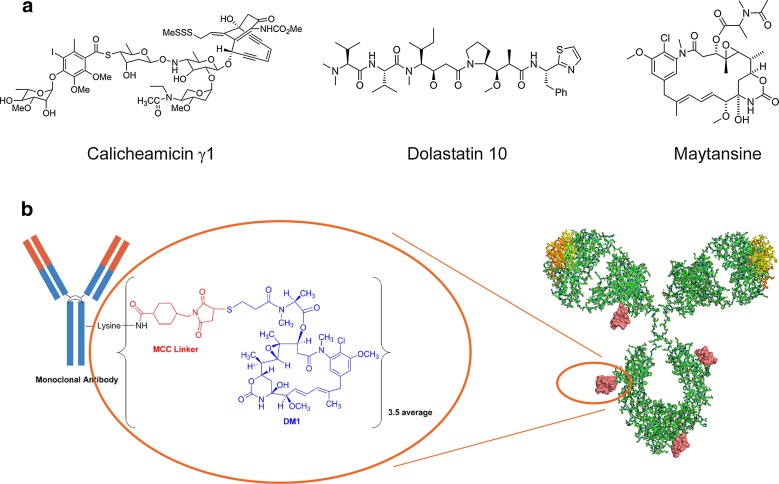
Attaching a cytotoxic "payload" to an antibody to form an antibody-drug conjugate (ADC) provides a mechanism for selective delivery of the cytotoxic agent to cancer cells via the specific binding of the antibody to cancer-selective cell surface molecules. The first ADC to receive marketing authorization was gemtuzumab ozogamicin, which comprises an anti-CD33 antibody conjugated to a highly potent DNA-targeting antibiotic, calicheamicin, approved in 2000 for treating acute myeloid leukemia. It was withdrawn from the US market in 2010 following an unsuccessful confirmatory trial. The development of two classes of highly potent microtubule-disrupting agents, maytansinoids and auristatins, as payloads for ADCs resulted in approval of brentuximab vedotin in 2011 for treating Hodgkin lymphoma and anaplastic large cell lymphoma, and approval of ado-trastuzumab emtansine in 2013 for treating HER2-positive breast cancer. Their success stimulated much research into the ADC approach, with >60 ADCs currently in clinical evaluation, mostly targeting solid tumors. Five ADCs have advanced into pivotal clinical trials for treating various solid tumors-platinum-resistant ovarian cancer, mesothelioma, triple-negative breast cancer, glioblastoma, and small cell lung cancer. The level of target expression is a key parameter in predicting the likelihood of patient benefit for all these ADCs, as well as for the approved compound, ado-trastuzumab emtansine. The development of a patient selection strategy linked to target expression on the tumor is thus critically important for identifying the population appropriate for receiving treatment.
Overview
The claims and statistics of this paper haven’t been checked yet.
Run the check — free, no account needed. It reads the open-access text and checks the sources it cites.
Integrity signals
Registry
Cites
Statistics
Figures
Verification
Claims the paper makes
The claims and statistics of this paper haven’t been checked yet.
Run the check — free, no account needed. It reads the open-access text and checks the sources it cites.
Claims other papers make about this one
Each is checked against this paper’s own text: does it say what the citing paper says it does?
In the citing paper
“They bind to cell surface receptors that are upregulated by mutant RAS and exhibit potent antitumor activity, demonstrating their efficacy in targeting undruggable proteins outside the cell.645–649”
From Recent advances in targeting the “undruggable” proteins: from drug discovery to clinical trials (2023) · cites this paper as [646]
Self-check
Percentages, sums and reported differences re-computed from the paper’s own numbers.
The self-check needs the paper’s full text.
Citations
Cites
Continuous cultures of fused cells secreting antibody of predefined specificity
Köhler, G., & Milstein, C. (1975) · Nature · doi:10.1038/256495a0 · Cited by 17,200
Trastuzumab emtansine for HER2-positive advanced breast cancer
Verma, S., Miles, D., Gianni, L., Krop, I. E., Welslau, M., Baselga, J., Pegram, M., Oh, D.-Y., Diéras, V., Guardino, E., et al. (2012) · New England Journal of Medicine · doi:10.1056/nejmoa1209124 · Cited by 3,834
Pertuzumab plus Trastuzumab plus Docetaxel for Metastatic Breast Cancer
Baselga, J., Cortés, J., Kim, S.-B., Im, S.-A., Hegg, R., Im, Y.-H., Roman, L., Pedrini, J. L., Pienkowski, T., Knott, A., et al. (2012) · New England Journal of Medicine · doi:10.1056/nejmoa1113216 · Cited by 2,532
Govindan, R., Page, N. C., Morgensztern, D., Read, W. L., Tierney, R. M., Vlahiotis, A., Spitznagel, E. L., & Piccirillo, J. F. (2006) · Journal of Clinical Oncology · doi:10.1200/jco.2005.04.4859 · Cited by 1,844
Patient-Derived Xenograft Models: An Emerging Platform for Translational Cancer Research
Hidalgo, M. M., Amant, F. C., Biankin, A. V., Budínská, E., Byrne, A. T., Caldas, C., Clarke, R. B., de Jong, S., Jonkers, J., Mælandsmo, G. M., et al. (2014) · Cancer Discovery · doi:10.1158/2159-8290.cd-14-0001 · Cited by 1,797
Targeting HER2-Positive Breast Cancer with Trastuzumab-DM1, an Antibody–Cytotoxic Drug Conjugate
Phillips, G. D. L., Li, G., Dugger, D. L., Crocker, L., Parsons, K. L., Mai, E., Blättler, W. A., Lambert, J. M., Chari, R. V. J., Lutz, R. J., et al. (2008) · Cancer Research · doi:10.1158/0008-5472.can-08-1776 · Cited by 1,708
Self-citationYounes, A., Gopal, A. K., Smith, S. E., Ansell, S. M., Rosenblatt, J. D., Savage, K. J. J., Ramchandren, R., Bartlett, N. L., Cheson, B. D., de Vos, S., et al. (2012) · Journal of Clinical Oncology · doi:10.1200/jco.2011.38.0410 · Cited by 1,528
Inotuzumab Ozogamicin versus Standard Therapy for Acute Lymphoblastic Leukemia
Kantarjian, H. M., DeAngelo, D. J., Stelljes, M., Martinelli, G., Liedtke, M., Stock, W., Gökbuget, N., O'Brien, S. M., Wang, K., Wang, T., et al. (2016) · New England Journal of Medicine · doi:10.1056/nejmoa1509277 · Cited by 1,444
Polymer Therapeutics: Concepts and Applications
Haag, R., & Kratz, F. (2006) · Angewandte Chemie International Edition · doi:10.1002/anie.200502113 · Cited by 1,119
Pro, B., Advani, R. H., Brice, P., Bartlett, N. L., Rosenblatt, J. D., Illidge, T., Matous, J., Ramchandren, R., Fanale, M. A., Connors, J. M., et al. (2012) · Journal of Clinical Oncology · doi:10.1200/jco.2011.38.0402 · Cited by 1,004
Research works printed but not linked: 1
- Hassan R, Bendell JC, Blumenschein Jr G, Kindler HL, Moore KN, Santin AD, Seward SM, Nemunaitis J, Rajagopalan P, Walter A, Sarapa N. Phase I study of anti-mesothelin antibody-drug conjugate anetumab ravtansine (BAY 94-9394). 16th World Conference on Lung Cancer, Denver CO. 2015; presentation No. 1574.
Cited by
Sorted by citations
Items 201–300 of 304
Henn, J. G., Aguirre, T. A. S., Nugent, M., & Moura, D. J. (2023) · Journal of Drug Delivery Science and Technology · doi:10.1016/j.jddst.2023.105254 · Cited by 8
Les immuno-conjugués en oncologie
Beck, A., Dumontet, C., & Joubert, N. (2019) · médecine/sciences · doi:10.1051/medsci/2019227 · Cited by 8
Porter, J. R., Ding, Y., Hale, S. J. M., Perrins, R. D., Robinson, A., Mazanetz, M. P., Wu, Y., Ma, Y., Conlon, K. M., & Coulter, T. (2020) · Bioorganic & Medicinal Chemistry Letters · doi:10.1016/j.bmcl.2020.127634 · Cited by 7
Concept of Targeted Drug Conjugate and Its Application in Reversing Drug Resistance
Wang, Y., Xu, W., Zhang, B., Wang, X., & Gou, S. (2025) · Journal of Medicinal Chemistry · doi:10.1021/acs.jmedchem.4c03006 · Cited by 6
Saraei, P., Ghasemi, M., Talebi, A., Vafaeinezhad, A., & Saberzadeh, J. (2025) · Nutrition and Cancer · doi:10.1080/01635581.2025.2497096 · Cited by 6
Antibody Drug Conjugates in the Treatment of Epithelial Ovarian Cancer
Richardson, D. L., Seward, S. M., & Moore, K. N. (2018) · Hematology/Oncology Clinics of North America · doi:10.1016/j.hoc.2018.07.014 · Cited by 6
Antibody–Drug Conjugates in the Treatment of Urothelial Cancer
Singh, A., Guevara-Patino, J. A., Wang, X., Li, R., Sonpavde, G., & Jain, R. (2023) · BioDrugs · doi:10.1007/s40259-023-00606-5 · Cited by 6
Antibody–Drug Conjugates: A New Therapeutic Approach for Triple-Negative Breast Cancer
Jarroudi, O. A., Bairi, K. E., Curigliano, G., & Afqir, S. (2023) · Cancer treatment and research · doi:10.1007/978-3-031-33602-7_1 · Cited by 7
Monoclonal Antibodies, Bispecific Antibodies and Antibody-Drug Conjugates in Oncohematology
Mihăilă, R. G. (2020) · Recent Patents on Anti-Cancer Drug Discovery · doi:10.2174/1574892815666200925120717 · Cited by 6
Antibody–Drug Conjugates: Empowering Antibodies for the Fight Against Cancer
Denevault‐Sabourin, C., Bryden, F., Viaud‐Massuard, M., & Joubert, N. (2019) · doi:10.1002/9783527814695.ch3 · Cited by 6
Antibody-drug conjugates in cancer treatment: from molecular design to clinical implementation
Mansinho, A., Albuquerque, J., Barigazzi, C., & Calvo, E. (2026) · The Lancet Regional Health - Europe · doi:10.1016/j.lanepe.2026.101634 · Cited by 7
Xie, D., Yang, C. C.-K., Gao, S., Li, J., Yang, J., Li, X., Jiang, R., Cao, F., Zhang, S., Wang, L., et al. (2026) · International Journal of Molecular Sciences · doi:10.3390/ijms27073287 · Cited by 5
Clinical toxicity of ADCs and ICI–ADC combinations: mechanisms, patterns and management
Peters, S., Grivas, P. D., Massard, C., Tolaney, S. M., & Obéid, M. (2026) · Nature Reviews Clinical Oncology · doi:10.1038/s41571-026-01188-1 · Cited by 6
Lami, I., & Wiemer, A. J. (2024) · Drugs in R&D · doi:10.1007/s40268-024-00473-7 · Cited by 5
Dai, H., Chen, X., Yang, J., Wang, Y., Loiola, R. A., Lü, A., & Cheung, K. C. P. (2024) · Frontiers in Cell and Developmental Biology · doi:10.3389/fcell.2024.1460544 · Cited by 5
Chattaraj, K. G., Ferreira, J., Myerson, A. S., & Trout, B. L. (2025) · Molecular Systems Design & Engineering · doi:10.1039/d4me00187g · Cited by 5
Sensitive manipulation of CAR T cell activity using a chimeric endocytosing receptor
Zhang, B., Napoleon, J. V., Liu, X., Luo, Q., Srinivasarao, M., & Low, P. S. (2020) · Journal for ImmunoTherapy of Cancer · doi:10.1136/jitc-2020-000756 · Cited by 5
Sawant, S., Naik, G. G., Sahu, A. N., & Jagtap, V. A. (2024) · Medical Oncology · doi:10.1007/s12032-024-02542-y · Cited by 5
Schunselaar, L. M., Monkhorst, K., van der Noort, V., Wijdeven, R. H. M., Peters, D. D. G. C., Zwart, W. T., Neefjes, J., & Baas, P. (2018) · Journal of Thoracic Oncology · doi:10.1016/j.jtho.2018.06.008 · Cited by 5
Li, K., Lin, Z. J., Shi, H., & Ma, Y. (2019) · Analytical Chemistry · doi:10.1021/acs.analchem.9b01808 · Cited by 5
Zhou, J., Hou, J., Liu, Y., & Rao, J. (2020) · Nanomedicine · doi:10.2217/nnm-2020-0186 · Cited by 5
Kavaliauskas, P., Žukauskas, Š., Anusevičius, K., Balandis, B., Vaickelionienė, R., Petraitis, V., & Mickevičius, V. (2021) · Results in Chemistry · doi:10.1016/j.rechem.2021.100193 · Cited by 5
Peng, J., Wu, A., Yu, X., Zhong, Q., Deng, X., & Zhu, Y. (2021) · Nutrition and Cancer · doi:10.1080/01635581.2021.2012582 · Cited by 5
Zhang, L., Aldossari, M. F., Ansari, A. J., Kao, G., Kim, S. H., Hoang, T. O., Shen, K., Zhang, Z., Srinivasarao, S., Li, Z., et al. (2025) · Biomedicine & Pharmacotherapy · doi:10.1016/j.biopha.2025.118274 · Cited by 4
Novel Therapies in Oncology: An Individualized Approach
Gregory, S., Kelley, M., & Lalani, T. (2021) · AACN Advanced Critical Care · doi:10.4037/aacnacc2021102 · Cited by 4
Mahmood, I. (2022) · Antibodies · doi:10.3390/antib11020042 · Cited by 4
Design Factors Important for Antibody–Drug Conjugate (ADC) Payloads
Lambert, J. M. (2019) · Royal Society of Chemistry eBooks · doi:10.1039/9781788012898-00031 · Cited by 4
Self-citationWu, X., Kilpatrick, T., & Chau, I. (2018) · Cancer Drug Resistance · doi:10.20517/cdr.2018.16 · Cited by 4
Li, Y., Chen, K., Li, H., & Fan, Y. (2026) · Cancer Treatment Reviews · doi:10.1016/j.ctrv.2026.103091 · Cited by 3
Targeting HER2 in urothelial carcinoma: from pathway inhibition to antibody–drug conjugates
Wafa, H., van Creij, N. C. H., Guenther, M., Noeparast, M., Subiela, J. D., Terbuch, A., Niedersuess‐Beke, D., Čulig, Z., Ormanns, S., & Pichler, R. (2026) · Cancer Treatment Reviews · doi:10.1016/j.ctrv.2026.103173 · Cited by 3
Wang, Y., Xu, K., Liu, H., Zhang, W., Hu, C., & Li, Y. (2023) · Bioorganic & Medicinal Chemistry Letters · doi:10.1016/j.bmcl.2023.129493 · Cited by 3
Role of targeted drug delivery in cancer therapeutics
Rodrigues, F. C., Devi, N. G. K., & Thakur, G. (2021) · Elsevier eBooks · doi:10.1016/b978-0-12-820043-8.00008-6 · Cited by 3
Innovations dans les traitements systémiques du carcinome urothélial infiltrant
Thibault, C., & Gross‐Goupil, M. (2020) · Bulletin du Cancer · doi:10.1016/s0007-4551(20)30273-3 · Cited by 3
Miletín, M. (2019) · Klinická farmakologie a farmacie · doi:10.36290/far.2018.033 · Cited by 3
Brain Cancer Receptors and Targeting Strategies
John, R., Vaswani, H., Dandekar, P. P., & Devarajan, P. V. (2019) · AAPS advances in the pharmaceutical sciences series · doi:10.1007/978-3-030-29168-6_2 · Cited by 3
Michaels, L., Noor, M., & Aslam, T. M. (2025) · European Journal of Cancer · doi:10.1016/j.ejca.2025.115452 · Cited by 2
Wang, J., Chen, Z., Wu, Y., Zhang, W., & Awadasseid, A. (2025) · Biomedicine & Pharmacotherapy · doi:10.1016/j.biopha.2025.118517 · Cited by 2
Akinsulie, O. C., Ulusan, S., Idris, I., Shahzad, S., Okon, J., Ukauwa, C. B., Oladoye, M. J., Aliyu, V. A., Ugwu, C. E., Ayandokun, T. F., et al. (2026) · Immuno · doi:10.3390/immuno6020023 · Cited by 2
Progress in bioorthogonal chemistry for prodrug activation and imaging
Wang, S., Wang, X., Zhong, Z., Liu, Y., Lv, X., Huang, W., & Pan, Y. (2026) · European Journal of Medicinal Chemistry · doi:10.1016/j.ejmech.2026.118994 · Cited by 2
Can we do better with Mylotarg? Model-based assessment of opportunities to improve therapeutic index
Stoddard, M., Yuan, L., Cooper, J., Neumar, C., Hibner, B., Gardner, H., & Chakravarty, A. (2024) · Toxicology and Applied Pharmacology · doi:10.1016/j.taap.2024.117034 · Cited by 2
Protein Ligases: Nature’s Gift for Protein/Peptide Synthesis
Ritsema, Y., Li, H., & Zheng, Q. (2025) · BioChem · doi:10.3390/biochem5020011 · Cited by 2
Review of Smart Materials for Controlled Drug Release
Alvarez‐Lorenzo, C., & Concheiro, Á. (2020) · Royal Society of Chemistry eBooks · doi:10.1039/bk9781782626459-00170 · Cited by 2
ADCs on the Market and in Clinical Development
Abe, Y., Sugihara, K., Nakada, T., Shahidi, J., Gallant, G., Jikoh, T., & Agatsuma, T. (2019) · Springer eBooks · doi:10.1007/978-4-431-56880-3_7 · Cited by 2
Ghosh, D., Sugimoto, H., Lee, J. Y., & Qian, M. G. (2021) · Analytical Chemistry · doi:10.1021/acs.analchem.1c00146 · Cited by 2
Rossin, R., & Robillard, M. S. (2021) · Royal Society of Chemistry eBooks · doi:10.1039/9781839165153-00263 · Cited by 1
Development of Antibody-Drug Conjugates
Jackson, D. Y. (2024) · Springer eBooks · doi:10.1007/978-3-031-62007-2_12 · Cited by 1
Antibody conjugates in neuroblastoma: a step forward in precision medicine
Balla, J., Siddi, C., Scherma, M., Fadda, P., & Dedoni, S. (2025) · Frontiers in Oncology · doi:10.3389/fonc.2025.1548524 · Cited by 1
Targeting claudins in gastric cancer: A novel GLOWing strategy in the SPOTLIGHT
Pena, M. B., Alonso, S., Sánchez, L., Bugés, C., Layos, L., Calvo, M., Garsot, E., Viciano, M., Clavell, A., López, R., et al. (2026) · Cancer Treatment Reviews · doi:10.1016/j.ctrv.2026.103141 · Cited by 2
Zhang, X., Shahryari, J., Kingsley, L. G., McCluggage, W. G., & Howitt, B. E. (2026) · Gynecologic Oncology · doi:10.1016/j.ygyno.2026.04.020 · Cited by 1
Mishra, P., Gautam, Y., Verma, N., Singh, A. K., Kumar, V., Verma, A. K., Srivastava, A., Singh, S., & Verma, A. K. (2026) · Results in Chemistry · doi:10.1016/j.rechem.2026.103551 · Cited by 1
Harnessing multispecific antibodies for next-generation cancer treatments
Liu, W.-Q., Xiao-li, Z., & Fan, X. (2026) · Pharmacology & Therapeutics · doi:10.1016/j.pharmthera.2026.109073 · Cited by 1
Tashima, T. (2026) · Journal of Medicinal Chemistry · doi:10.1021/acs.jmedchem.6c00602 · Cited by 1
Targeting tissue factor in advanced solid tumours
Davis, E. J., & Johnson, D. B. (2019) · The Lancet Oncology · doi:10.1016/s1470-2045(18)30912-4 · Cited by 1
Payan, S., Montana, M., Curti, C., Greillier, L., & Vanelle, P. (2020) · Targeted Oncology · doi:10.1007/s11523-020-00740-y · Cited by 1
Antibody–drug conjugate: Emerging trend for targeted treatment
Pandey, M., Gorain, B., Kushwaha, S. P., Gulati, N., Mayuren, J., & Butt, A. M. (2023) · Elsevier eBooks · doi:10.1016/b978-0-323-91663-9.00013-8 · Cited by 1
Engineering repeat proteins of the immune system
McCord, J. P., & Grove, T. Ž. (2020) · Biopolymers · doi:10.1002/bip.23348 · Cited by 1
Papageorgiou, L., Papakonstantinou, E., Salis, C., Polychronidou, E., Hagidimitriou, M., Maroulis, D., Eliopoulos, E., & Vlachakis, D. (2020) · Advances in experimental medicine and biology · doi:10.1007/978-3-030-32622-7_18 · Cited by 1
Delivery strategies for immune checkpoint blockade
Zhu, R., Lang, T., Yin, Q., & Li, Y. (2021) · Elsevier eBooks · doi:10.1016/b978-0-323-85781-9.00001-4 · Cited by 1
Byun, J. H., & Jung, I. H. (2021) · Applied Mathematical Modelling · doi:10.1016/j.apm.2021.12.032 · Cited by 1
Monoclonal Antibody-Directed Therapy
Kayser, V., & Datta‐Mannan, A. (2022) · MDPI eBooks · doi:10.3390/books978-3-0365-2872-4 · Cited by 1
Mittendorf, E. A., & Prabhakaran, S. (2018) · doi:10.1002/9781118684535.ch2
Introduction: Motivations for Next-Generation ADCs
Damelin, M. I. (2018) · Cancer drug discovery and develogment/Cancer drug discovery and development · doi:10.1007/978-3-319-78154-9_1
Co-Opting Host Receptors for Targeted Delivery of Bioconjugates—From Drugs to Bugs
Tummillo, K. M., & Hazlett, K. R. O. (2021) · Molecules · doi:10.3390/molecules26051479
Ban, D., Rice, C., & McCoy, M. A. (2021) · mAbs · doi:10.1080/19420862.2021.1978132
Antibody glycoengineering for drug delivery applications
Sehgal, D. N. (2019) · University of Minnesota Digital Conservancy (University of Minnesota)
Li, Q., Guo, Y., Lin, F., Li, L., Ge, X., Zhao, W., & Li, J. (2021) · Translational Breast Cancer Research · doi:10.21037/tbcr-21-33
Drug Metabolism/Transport and Pharmacokinetics
Song, I.-S. (2021) · MDPI eBooks · doi:10.3390/books978-3-0365-2458-0
Simonaggio, A., & Marabelle, A. (2018) · Bulletin du Cancer · doi:10.1016/s0007-4551(18)30397-7
Antibody–Drug Conjugates: Development and Applications
Pradhan, R., Pandey, M., Hejmady, S., Taliyan, R., Singhvi, G., Dubey, S. K., & Dubey, S. (2022) · Methods and principles in medicinal chemistry · doi:10.1002/9783527827855.ch5
Demetri, G. D., Luke, J. J., Hollebecque, A., Powderly, J. D., Spira, A. I., Subbiah, V., Naumovski, L., Chen, C., Hua, F., Lai, D. W., et al. (2023) · doi:10.1158/1078-0432.c.6530123
Demetri, G. D., Luke, J. J., Hollebecque, A., Powderly, J. D., Spira, A. I., Subbiah, V., Naumovski, L., Chen, C., Hua, F., Lai, D. W., et al. (2023) · doi:10.1158/1078-0432.c.6530123.v1
Tsujii, S., Serada, S., Fujimoto, M., Uemura, S., Namikawa, T., Nomura, T., Murakami, I., Hanazaki, K., & Naka, T. (2023) · doi:10.1158/1535-7163.c.6543376
Tsujii, S., Serada, S., Fujimoto, M., Uemura, S., Namikawa, T., Nomura, T., Murakami, I., Hanazaki, K., & Naka, T. (2023) · doi:10.1158/1535-7163.22522438
Tran, X., Mulac, D., & Langer, K. (2025) · Journal of Drug Delivery Science and Technology · doi:10.1016/j.jddst.2025.106701
Risk factors and therapeutic significance of HER2 overexpression in urothelial carcinoma
Ke, C., Wan, J., Wang, G., Hu, Z., & Yang, C. (2025) · Pathology - Research and Practice · doi:10.1016/j.prp.2025.156079
Leiva-Escobar, I., Scherkl, C., Haefeli, W. E., & Meid, A. D. (2025) · BMJ Open · doi:10.1136/bmjopen-2024-089218
Targeting autophagy to enhance Nectin-4-MMAE efficacy in gastric cancer
Cui, L., Ge, M., Yin, K., & Chang, X. (2025) · Biochimica et Biophysica Acta (BBA) - Molecular Basis of Disease · doi:10.1016/j.bbadis.2025.168095
de Albuquerque, L. Z., da Silva, J. L., Rodrigues, F. R., Fernandes, P. V., Small, I. A., Leite, L. F., Guitmann, G., & de Melo, A. C. (2025) · BMC Cancer · doi:10.1186/s12885-025-15298-z
Zhou, W., Xu, Z., Liu, S., Lou, X., Liu, P., Xie, H., Zhang, S., Liu, X., Zhuo, B., & Huang, H. (2024) · Figshare · doi:10.6084/m9.figshare.26384629
Ren, J.-S., Dong, Q.-W., Liu, S.-Y., Kang, Y.-P., Liu, W., & Wang, A.-L. (2025) · Russian Journal of Organic Chemistry · doi:10.1134/s1070428025601670
Nanotherapeutics to Overcome Chemotherapy Resistance in Ovarian Cancer
Mahira, S., Sathe, P., Krishnan, S., Shaik, R., & Pamula, V. (2026) · Pharmaceutical Research · doi:10.1007/s11095-026-04020-8 · Cited by 1
Sasikala, S., Sowmiya, A., & Usharani, N. (2026) · Journal of Drug Delivery Science and Technology · doi:10.1016/j.jddst.2026.108248
A docking-based method for in silico epitope determination
Tahir, S. (2018) · theses.fr (ABES) · doi:10.70675/483a0541zdf73z4730za717z0786809dc6bd
La valence du ligand du récepteur à la transferrine 1 (TfR1) détermine son routage intracellulaire
Marchal, M. (2019) · theses.fr (ABES) · doi:10.70675/287f4632z1a33z4f6fzae7aze178b58027f9
Developement of targeted RNA delivery agents for a pattern-recognition receptor
Rady, T. (2021) · theses.fr (ABES) · doi:10.70675/5b41e5b4zb748z40f1z99d7z1459176d4c90
Holden, B., Mutaher, M., Raychowdhury, R., Bakalar, M., Lopez, A., Schwartz, M. A., Olajide, E., Santos, M., & Hacohen, N. (2026) · Scientific Reports · doi:10.1038/s41598-026-46452-7
Deng, Y. Q., & Li, Z. (2026) · Current Oncology Reports · doi:10.1007/s11912-026-01784-5
Bukke, S. P. N., Vuyyala, B., Thalluri, C., Chettupalli, A. K., Gupta, N., Almoyad, M. A. A., Abdalla, S. A., Yata, V. K., Shogar, A. E., Narapureddy, B. R., et al. (2026) · Frontiers in Pharmacology · doi:10.3389/fphar.2026.1804164
Zhang, L., Ma, X., & Zhao, X. (2026) · Frontiers in Oncology · doi:10.3389/fonc.2026.1792883
Transforming cancer treatment through immunotherapy innovations
Mukherjee, S., Pramanick, A., & Bariar, V. (2026) · Elsevier eBooks · doi:10.1016/b978-0-443-44181-3.00013-8
Kawczak, P., Kawczak, K., & Bączek, T. (2026) · Journal of Clinical Medicine · doi:10.3390/jcm15145521
Chun, J., Jung, D., Shin, J., Jeong, H., Yoo, C., Myung, S., & Hong, S. (2026) · Applied immunohistochemistry & molecular morphology · doi:10.1097/pai.0000000000001341
Wu, G., Xu, G., Zhao, Y., Gao, T., Ni, Y., Xiaolei, L. V., Chen, H., Li, M., Du, J., & Yu, C. (2026) · Applied Biochemistry and Biotechnology · doi:10.1007/s12010-026-05823-6
Ghaemi, B., Olkowski, C. P., Basuli, F., Shi, J., Lang, L., Thomas, A., Choyke, P. L., & Jacobson, O. (2026) · Cancer Research · doi:10.1158/0008-5472.can-25-5938
Xue, Y., Ma, E., Melo, B., Masilamani, M., Cheng, Y., Shen, J. X., Woolf, M. S., Allen, K. D., Honrine, J. M., Waldron, M. P., et al. (2026) · Bioanalysis · doi:10.1080/17576180.2026.2716471
Metadata
- Authors
- Lambert, J. M., & Morris, C. Q.
- Affiliations
- ImmunoGen (United States) (US)
- Corresponding author
- Lambert, John M.
- Venue
- Advances in Therapy
- Published
- 2017-03-30
- Volume
- 34
- Issue
- 5
- Pages
- 1015-1035
- ISSN
- 0741-238X (ISSN-L)
- 1865-8652
- PMC
- PMC5427099
- OpenAlex
- W2603088210
- Cited by
- 304
- References
- 102
- Citations by year
- 2026: 30 · 2025: 21 · 2024: 18 · 2023: 24 · 2022: 16 · 2021: 49 · 2020: 48 · 2019: 45 · 2018: 45 · 2017: 7
- FWCI
- 5.99
- Type
- journal article
- Language
- en
- Open access
- hybrid
- doi.org
- Licence
- Locations
- Advances in Therapy (publishedVersion, cc-by-nc)
- Europe PMC (PubMed Central) (publishedVersion, cc-by-nc)
- PubMed Central (publishedVersion, cc-by-nc)
- PubMed (publishedVersion)
- Topics
- Life Sciences › Immunology and Microbiology › Immunology › Monoclonal and Polyclonal Antibodies Research
- Life Sciences › Immunology and Microbiology › Immunology › Toxin Mechanisms and Immunotoxins
- Physical Sciences › Materials Science › Biomaterials › Nanoparticle-Based Drug Delivery
- Keywords
- antibody-drug conjugates, solid tumors, precision oncology, targeted drug delivery, maytansinoids, auristatin, calicheamicin, gemtuzumab ozogamicin, brentuximab vedotin, trastuzumab emtansine, target expression, patient selection, platinum-resistant ovarian cancer, mesothelioma, triple-negative breast cancer, glioblastoma, small cell lung cancer, cytotoxic payloads
- MeSH terms
- Trastuzumab, Gemtuzumab, Ado-Trastuzumab Emtansine, Aminoglycosides, Antineoplastic Agents, Humans, Maytansine, Neoplasms, Oligopeptides, Immunoconjugates, Antibodies, Monoclonal, Humanized, Aminobenzoates, Sialic Acid Binding Ig-like Lectin 3
About these checks
Registry, retraction, Cites and statistics results are computed, not judged, with one exception: a printed reference that no index lists is read once by a model before it counts as a citation error. Claims are extracted by a model and kept only when their quote appears verbatim in the text; each cited source is then checked, with a model’s help, for whether it says what the claim relies on. Those verdicts can be wrong — read the claim’s quote and the cited source before relying on one.
Statistics and arithmetic are recomputed, not judged.
Confidence bands are shown only for fields calibrated on our annotated test set. None is calibrated yet, so no band is shown.
What counts as a claim ›How we measure confidence ›How we check this ›
Are you an author, or do you see a problem with this page? Request a review
