

Pottery production, early urbanization and the Uruk phenomenon at Tell Brak in Upper Mesopotamia
Open accessThe DOI matches its Crossref record; 92 of the 94 references it cites were found in a registry or an index, and 2 are not checked yet; none of the 93 sources its claims cite is checked for support yet.
Abstract
Tell Brak is one of the largest sites in Upper Mesopotamia, where urbanism and social complexity already emerged in the late 5th and early 4th millennia BCE. This paper combines ceramic petrography and trace element analyses to examine how these changes impacted pottery production and regional trade. The results indicate that paste preparation modes, unlike shaping procedures, remained unaffected by urbanization, with paste recipes showing no link to variations in vessel function or technology. To meet the growing demands of an urbanizing society, production likely involved multiple units producing diverse vessels, whereby certain tasks such as the raw material procurement were coordinated collectively. The only notable change in paste recipes occurred during the final phase of the Late Chalcolithic (LC5, 3350–3100 BCE), possibly reflecting the full establishment of craftspeople from southern Mesopotamia. This period also saw the import of a few jars from the Upper and Lower Euphrates and Tigris regions, likely used to transport specific goods.
Checked 2026-11-24 · 2 references not checked yet
Overview
CoChat Summary
TL;DR
Combining ceramic petrography and neutron activation analysis on 50 Late Chalcolithic pottery samples from Tell Brak, the study finds most vessels were locally made and paste recipes remained largely stable across early urbanization, with a notable shift only in LC5 Uruk-style vessels. It argues production involved multiple units with coordinated raw-material procurement, while LC5 imports were few jars from Upper and Lower Euphrates and Tigris regions.
Key findings
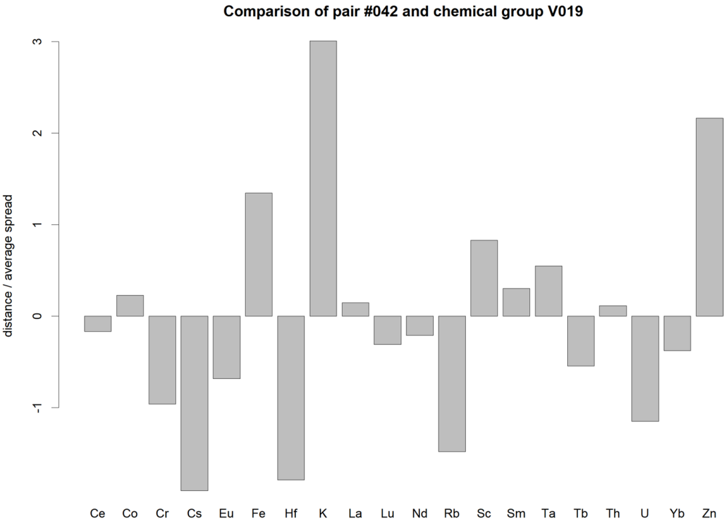
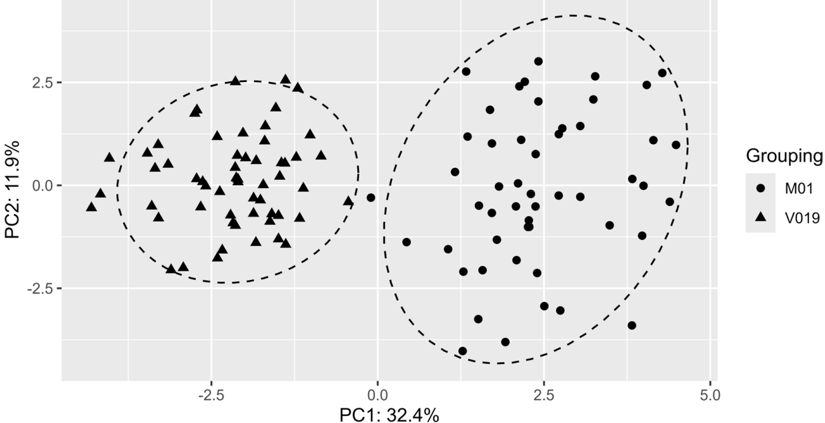
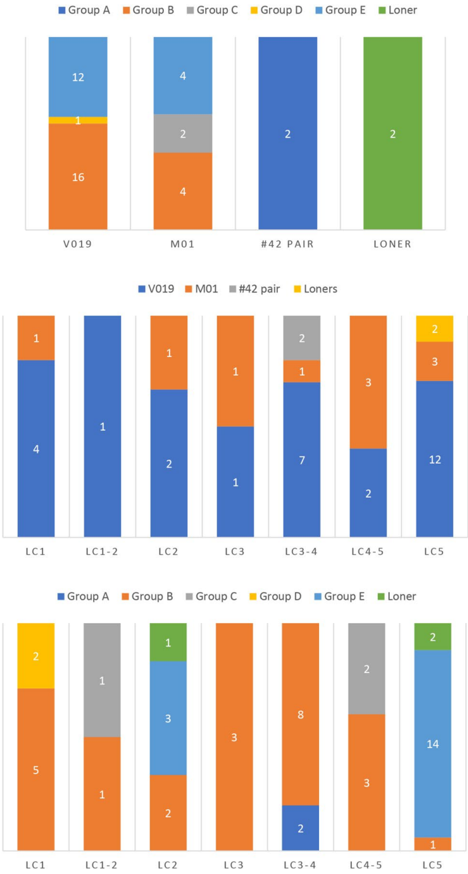
- Most Late Chalcolithic vessels at Tell Brak were locally manufactured. Petrography distinguished five groups (A–E), with most samples in Group B (n = 22) and Group E (n = 17), while Groups A, C, and D each included only two samples; NAA identified a chemical group V019 containing 29 samples, plus a distinct TB19–TB21 pair (#42) and a second group M01.
- Paste preparation modes, unlike shaping procedures, remained unaffected by urbanization and showed no link to variations in vessel function or technology. Petrographic and geochemical groups mostly did not align, suggesting the use of at least two distinct clay sources followed by multiple paste preparation modes.
- The only notable change in paste recipes occurred during LC5 (3350–3100 BCE), associated with Uruk-style vessels; these were predominantly produced locally using distinct recipes and higher firing temperatures, with only very limited long-distance imports. Shaping techniques shifted more drastically with urbanization, while forming techniques in LC5 showed continuity with earlier wheel-coiling practices.
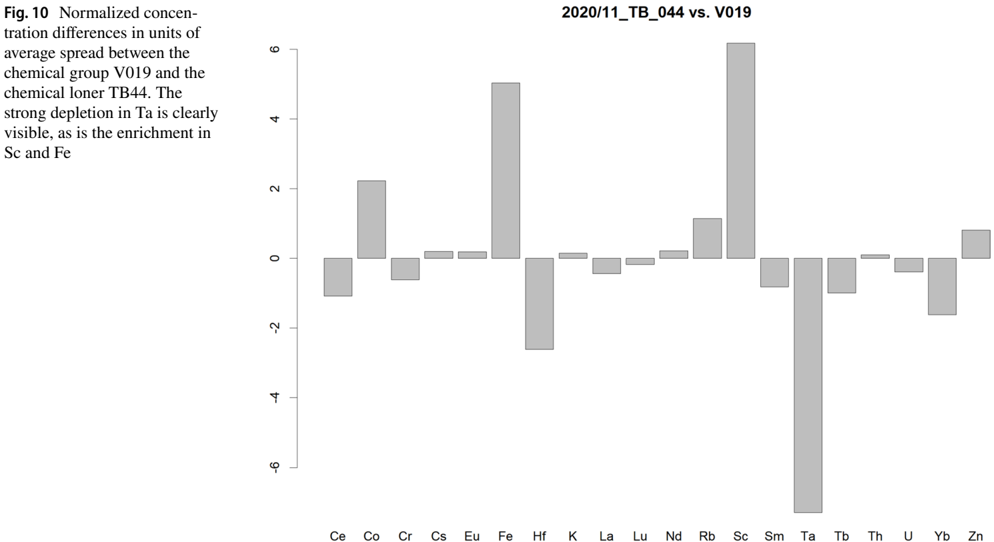
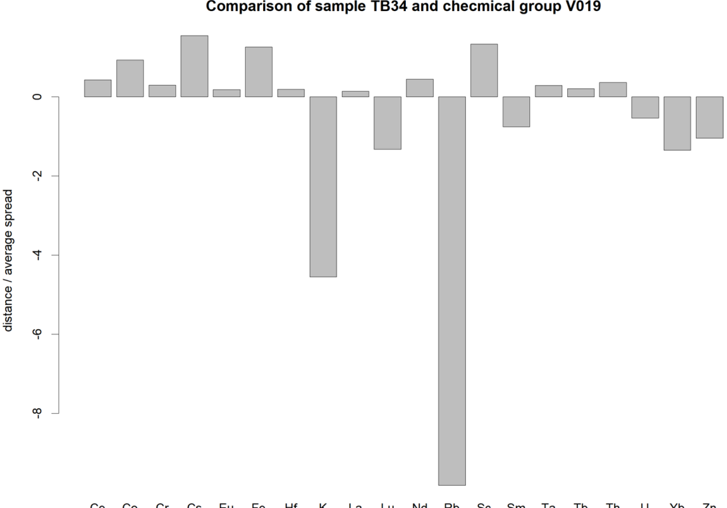
- LC5 imports were limited and linked to the Upper and Lower Euphrates and Tigris regions, not the Upper Khabur, and were predominantly jars likely used to transport specific goods. Outliers included TB34, plausibly from the lower Euphrates/Tigris, and TB44, plausibly from the Upper Euphrates (Tell Hadidi) or Luristan (Kunji Cave); TB9, a mass-produced LC2 bowl not analyzed chemically, contained high-grade metamorphic rocks likely from the Zagros or Anti-Taurus.
Methods
- Fifty pottery samples dating to different Late Chalcolithic phases were studied; all were analyzed by ceramic petrography, and 43 also by Neutron Activation Analysis. Samples covered tableware, large storage containers, and cooking vessels, with diverse surface treatments; diachronic observations of manufacturing technology were based on the restricted assemblage kept at the University of Cambridge.
- Ceramic petrography used thin sections examined with a polarizing microscope LEICA DM 2700P and grouped by textural, mineralogical, and technological features; comparative charts quantified main components, and petrographic associations were compared with geological maps and literature to distinguish imports from local products.
- NAA was conducted in Vienna: each sample weighed approximately 100 mg, was irradiated for 35 h at a neutron flux density of 1·10¹³ cm⁻² s⁻¹, and concentrations of 28 elements were calculated. Statistical analysis used best relative-fit factor calculations and modified Mahalanobis distance grouping in R, with comparisons to the combined Bonn/Vienna database and Minc’s database of 1777 ceramic vessels from 24 sites.
Limitations
- Stated: the paper notes methodological challenges in comparing petrographic and geochemical approaches, limited geological research outside petroleum exploration complicating provenance work, and that further analysis is needed to confirm the proposed LC5 high-temperature firing pattern.
- Stated: for TB19–TB21 it is unclear whether the vessels are imports or local adaptations of paste recipes; provenance assignments for TB34 and TB44 are plausible rather than definitive; and the Nineveh reference group shows significant internal variability and only partial overlap with Tell Brak.
- Evident from the text: the sample size is 50, with only 43 analyzed chemically; petrographic Groups A, C, and D each contain only two samples; TB9 was not analyzed chemically; and diachronic manufacturing observations rely on a restricted assemblage at the University of Cambridge.
Model-written summary. Check it against the paper before relying on it.
Integrity signals
Registry
Cites
Statistics
Figures
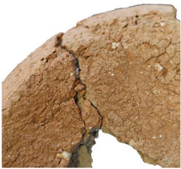
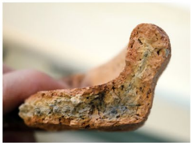
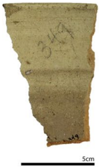
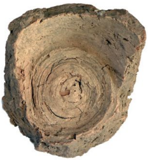
Verification
Claims the paper makes
0 Valid · 1 Not valid · 50 Not checked · 129 Own results and interpretations
A result the paper reports from its own data — it cites no other source for it, so there is none to check. The quote shows it is in the paper.
In the paper
“This period also saw the import of a few jars from the Upper and Lower Euphrates and Tigris regions, likely used to transport specific goods.”
§ Pottery production, early urbanization and the Uruk phenomenon at Tell Brak in Upper Mesopotamia > Abstract
plain- Asserted: passes — The authors put it forward as true.
- Checkable: passes — It can be checked against evidence.
- Load-bearing: unclear — It is unclear whether the paper’s conclusions depend on it.
- Based: passes — The paper gives a reason why it holds.
A result the paper reports from its own data — it cites no other source for it, so there is none to check. The quote shows it is in the paper.
In the paper
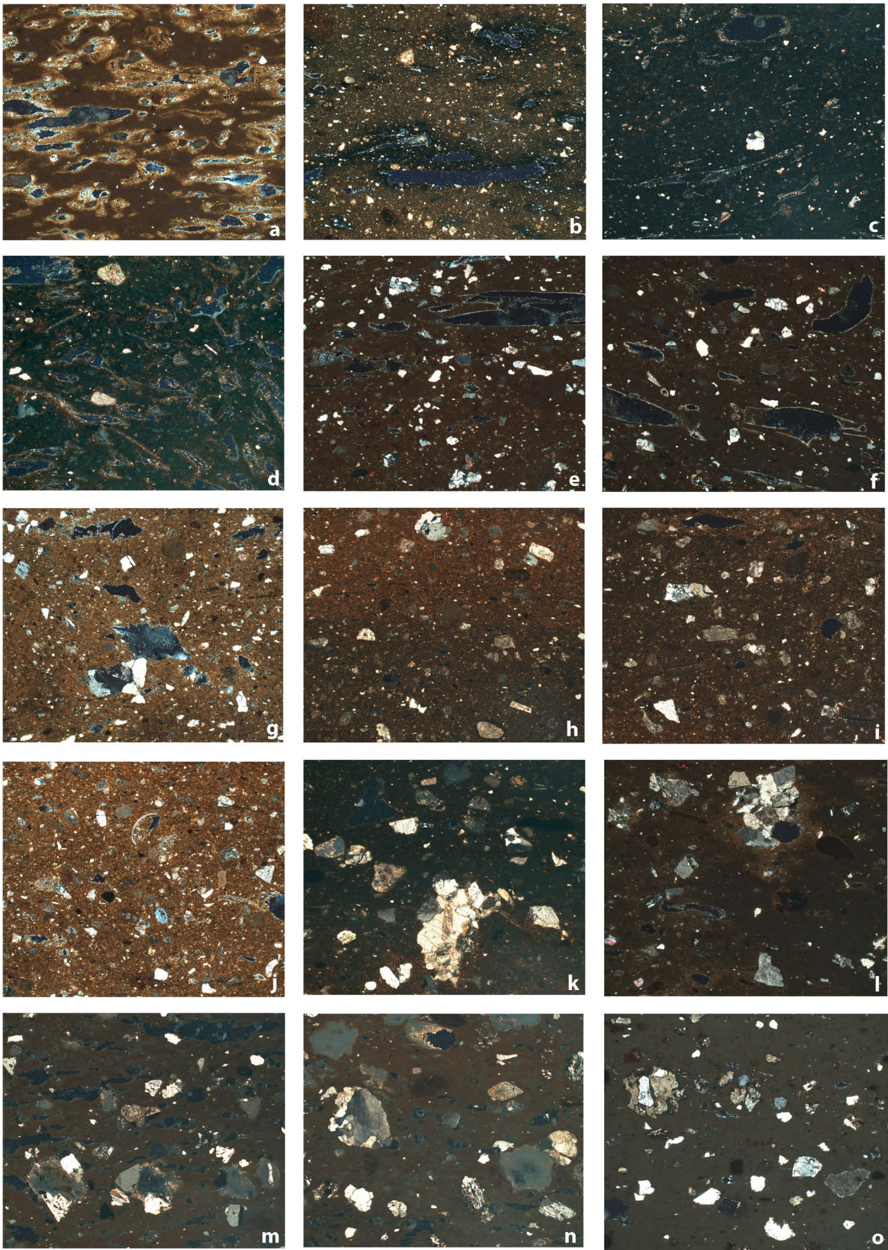
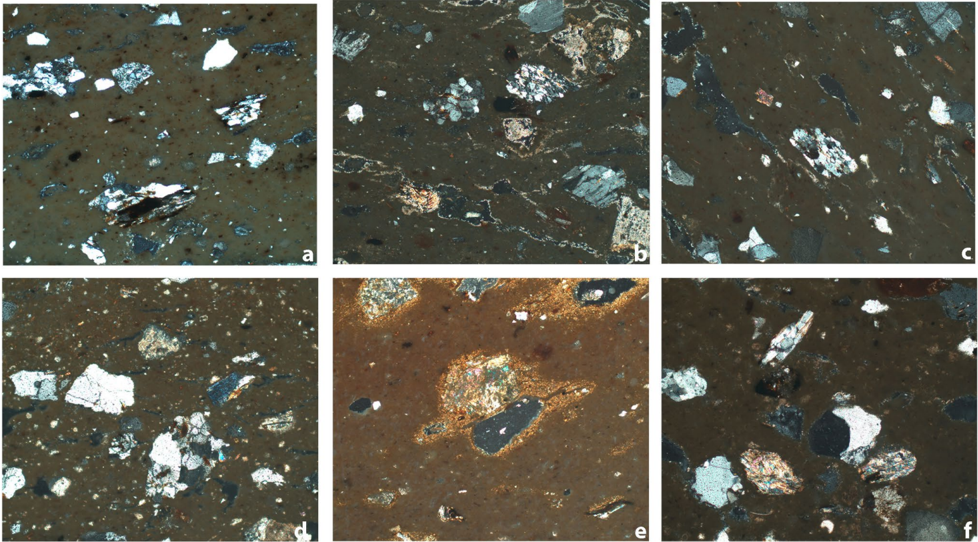
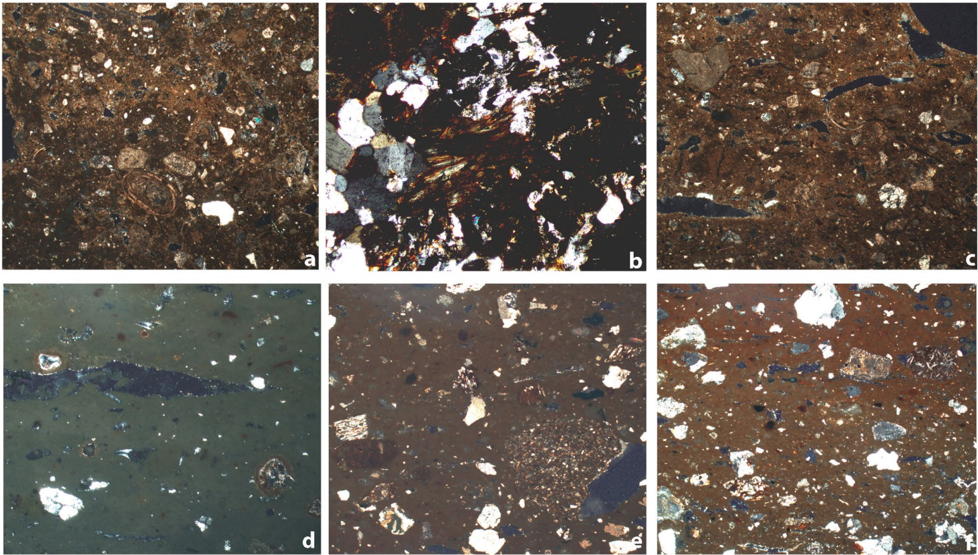
“Five groups were distinguished-Group A, B, C, D, and Ebased on the incidence and size of vegetal temper and mineral inclusions (Tables 1, and 2; Fig. 4).”
§ Pottery production, early urbanization and the Uruk phenomenon at Tell Brak in Upper Mesopotamia > Ceramic petrography
plainstates an association- Asserted: passes — The authors put it forward as true.
- Checkable: passes — It can be checked against evidence.
- Load-bearing: passes — The paper’s conclusions depend on it.
- Based: passes — The paper gives a reason why it holds.
A result the paper reports from its own data — it cites no other source for it, so there is none to check. The quote shows it is in the paper.
In the paper
“The only notable change in paste recipes occurred during the final phase of the Late Chalcolithic (LC5, 3350-3100 BCE), possibly reflecting the full establishment of craftspeople from southern Mesopotamia.”
§ Pottery production, early urbanization and the Uruk phenomenon at Tell Brak in Upper Mesopotamia > Abstract
plain- Asserted: passes — The authors put it forward as true.
- Checkable: passes — It can be checked against evidence.
- Load-bearing: passes — The paper’s conclusions depend on it.
- Based: passes — The paper gives a reason why it holds.
A result the paper reports from its own data — it cites no other source for it, so there is none to check. The quote shows it is in the paper.
In the paper
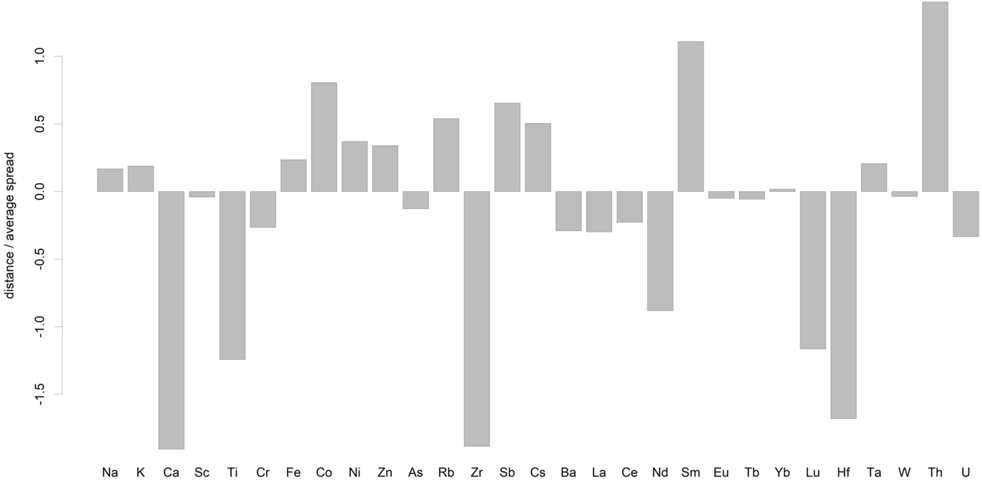
“The most dominant differences emerged in Ca, Zr, Hf, Sm, and Th, with the first three elements higher in M01, and Th, and Sm more prominent in V019.”
§ Pottery production, early urbanization and the Uruk phenomenon at Tell Brak in Upper Mesopotamia > Neutron activation analysis (NAA)
plainstates an association- Asserted: passes — The authors put it forward as true.
- Checkable: passes — It can be checked against evidence.
- Load-bearing: unclear — It is unclear whether the paper’s conclusions depend on it.
- Based: passes — The paper gives a reason why it holds.
A result the paper reports from its own data — it cites no other source for it, so there is none to check. The quote shows it is in the paper.
In the paper
“Although clay sources remained relatively consistent over time, paste preparation modes shifted by the LC5 period, as indicated by the predominance of Group E, associated with Uruk-style vessels.”
§ Pottery production, early urbanization and the Uruk phenomenon at Tell Brak in Upper Mesopotamia > Discussion
plain- Asserted: passes — The authors put it forward as true.
- Checkable: passes — It can be checked against evidence.
- Load-bearing: unclear — It is unclear whether the paper’s conclusions depend on it.
- Based: passes — The paper gives a reason why it holds.
68 more claims
Create a free account to see all 180 claims and to verify the 62 references still open.
- It may state two separate claims as one. 65
- The quote only partly states this claim. 5
- Probably not a substantial claim. 59
Self-check
Percentages, sums and reported differences re-computed from the paper’s own numbers.
Each contradiction between two passages listed here was confirmed by an independent check.
Rated minor: it would not touch a result — a value no result rests on, a p-value that stays on the same side of the significance level, or a conflict that is clerical, resolved elsewhere in the paper, or outside its own findings.
In the paper
§ Pottery production, early urbanization and the Uruk phenomenon at Tell Brak in Upper Mesopotamia > Data availability
“No datasets were generated or analysed during the current study.”
§ Pottery production, early urbanization and the Uruk phenomenon at Tell Brak in Upper Mesopotamia > Neutron activation analysis (NAA)
“The raw data used for the statistical analysis of the Tell Brak samples is available in the supplementary materials (file 2).”
Rated minor: it would not touch a result — a value no result rests on, a p-value that stays on the same side of the significance level, or a conflict that is clerical, resolved elsewhere in the paper, or outside its own findings.
In the paper
§ Pottery production, early urbanization and the Uruk phenomenon at Tell Brak in Upper Mesopotamia > Conclusion
“Moreover, they remain consistent throughout the Late Chalcolithic, suggesting a strong continuity in production practices.”
§ Pottery production, early urbanization and the Uruk phenomenon at Tell Brak in Upper Mesopotamia > Conclusion
“In contrast, during the LC5 period, which coincides with a possible full establishment of Uruk-related groups or at least with the presence of a totally Uruk-style ceramic repertoire, new paste recipes were introduced.”
Citations
Cites
McClusky, S., Balassanian, S., Barka, A., Demir, C., Ergintav, S., Georgiev, I., Gurkan, O., Hamburger, M., Hurst, K. J., Kahle, H. ‐., et al. (2000) · Journal of Geophysical Research Atmospheres · doi:10.1029/1996jb900351 · Cited by 2,159
Pottery Analysis: A Sourcebook.
Tobert, N., & Rice, P. (1990) · Man · doi:10.2307/2804120 · Cited by 1,821
Tectonics of the zagros orogenic belt of iran: new data and interpretations
Alavi, M. (1994) · Tectonophysics · doi:10.1016/0040-1951(94)90030-2 · Cited by 1,532
Regional stratigraphy of the Zagros fold-thrust belt of Iran and its proforeland evolution
Alavi, M. (2004) · American Journal of Science · doi:10.2475/ajs.304.1.1 · Cited by 1,455
Structures of the Zagros fold-thrust belt in Iran
Alavi, M. (2007) · American Journal of Science · doi:10.2475/09.2007.02 · Cited by 700
Kolb, C. C., & Ucko, P. J. (1973) · Man · doi:10.2307/2800336 · Cited by 640
Materializing Identities: An African Perspective
Gosselain, O. P. (2000) · Journal of Archaeological Method and Theory · doi:10.1023/a:1026558503986 · Cited by 542
Frontiers and Boundaries in Archaeological Perspective
Lightfoot, K. G., & Martinez, A. (1995) · Annual Review of Anthropology · doi:10.1146/annurev.an.24.100195.002351 · Cited by 337
The Social Construction of Ancient Cities
KOHL, P. L. (2004) · American Anthropologist · doi:10.1525/aa.2004.106.4.779 · Cited by 306
Ancient Mesopotamia at the Dawn of Civilization: The Evolution of an Urban Landscape
Algaze, G. (2008) · University of Chicago Press eBooks · doi:10.7208/chicago/9780226013787.001.0001 · Cited by 280
Mieroop, M. V. D. (1997) · doi:10.1093/oso/9780198150626.001.0001 · Cited by 258
Tectonic and Geologic Evolution of Syria
Brew, G., Barazangi, M., Al-Maleh, A. K., & Sawaf, T. (2001) · GeoArabia · doi:10.2113/geoarabia0604573a · Cited by 256
Early Mesopotamian urbanism: a new view from the north
Oates, J., McMahon, A., Karsgaard, P., Quntar, S. A., & Ur, J. (2007) · Antiquity · doi:10.1017/s0003598x00095600 · Cited by 252
Chiefdoms and early states in the Near East : the organizational dynamics of complexity
Stein, G. J., & Rothman, M. S. (1994) · Medical Entomology and Zoology · Cited by 178
Robertson, A. H. F., Ustaömer, T., Parlak, O., Ünlügenç, U. C., Taşlı, K., & İnan, N. (2006) · Journal of Asian Earth Sciences · doi:10.1016/j.jseaes.2005.02.004 · Cited by 161
MODIFIED MAHALANOBIS FILTERS FOR GROUPING POTTERY BY CHEMICAL COMPOSITION*
Beier, T., & Mommsen, H. (1994) · Archaeometry · doi:10.1111/j.1475-4754.1994.tb00971.x · Cited by 139
Early Urbanism in Northern Mesopotamia
McMahon, A. (2020) · Journal of Archaeological Research · doi:10.1007/s10814-019-09136-7 · Cited by 137
A METHOD FOR GROUPING POTTERY BY CHEMICAL COMPOSITION
Mommsen, H., Kreuser, A., & WEBER, J. (1988) · Archaeometry · doi:10.1111/j.1475-4754.1988.tb00434.x · Cited by 106
Ancient Mesopotamia at the dawn of civilization: the evolution of an urban landscape
(2009) · Choice Reviews Online · doi:10.5860/choice.47-2077 · Cited by 95
Mommsen, H., & Sjöberg, B. (2007) · Archaeometry · doi:10.1111/j.1475-4754.2007.00306.x · Cited by 89
Early Urban Development in the Near East
Ur, J. A., Karsgaard, P., & Oates, J. (2007) · Science · doi:10.1126/science.1138728 · Cited by 82
Liverani, M. (2006) · Equinox Publishing eBooks · doi:10.1558/isbn.9781845534875 · Cited by 78
Tectonic Evolution of the Northern Arabian Plate in Western Syria
Barazangi, M., Seber, D., Chaimov, T., Best, J., Litak, R., Al-Saad, D., & Sawaf, T. (1993) · Recent Evolution and Seismicity of the Mediterranean Region · doi:10.1007/978-94-011-2016-6_5 · Cited by 76
The Uruk World System: The Dynamics of Expansion of Early Mesopotamian Civilization
Postgate, J. N., & Algaze, G. (1996) · Journal of the American Oriental Society · doi:10.2307/606398 · Cited by 69
The influence of different tempers on the composition of pottery
Sterba, J. H., Mommsen, H., Steinhäuser, G., & Bichler, M. (2009) · Journal of Archaeological Science · doi:10.1016/j.jas.2009.03.022 · Cited by 69
Self-citationThe Spatial Dimensions of Early Mesopotamian Urbanism: The Tell Brak Suburban Survey, 2003–2006
Ur, J., Karsgaard, P., & Oates, J. (2011) · Iraq · doi:10.1017/s0021088900000061 · Cited by 55
KHALIDI, L., GRATUZE, B., & BOUCETTA, S. (2009) · Archaeometry · doi:10.1111/j.1475-4754.2009.00459.x · Cited by 50
Different Trajectories in State Formation in Greater Mesopotamia: A View from Arslantepe (Turkey)
Frangipane, M. (2018) · Journal of Archaeological Research · doi:10.1007/s10814-017-9106-2 · Cited by 49
Ali, S. A., Mohajjel, M., ASWAD, K. J. A., Ismail, S. A., Buckman, S., & Jones, B. G. (2014) · Journal of environment and earth science · Cited by 47
Wilkinson, T. J., Gurney, W. C. B. D., McDonald, M. M. A., & Miller, A. N. F. (1990) · ISAC Data Research Center · doi:10.83354/pdbw-gp78 · Cited by 46
Proto-Urbanism in the Late 5th Millennium BC: Survey and Excavations at Khirbat al-Fakhar (Hamoukar)
Al-Quntar, S., Khalidi, L., & Ur, J. (2011) · Paléorient · doi:10.3406/paleo.2011.5428 · Cited by 44
Excavations at Tell Brak 2006–2007
McMahon, A., Oates, J., Al-Quntar, S., Charles, M., Colantoni, C., Hald, M. M., Karsgaard, P., Khalidi, L., Soltysiak, A., Stone, A., et al. (2007) · Iraq · doi:10.1017/s0021088900001091 · Cited by 42
Frangipane, M. (2010) · Cited by 42
The lion, the king and the cage: Late Chalcolithic iconography and ideology in northern Mesopotamia
McMahon, A. (2009) · Iraq · doi:10.1017/s0021088900000772 · Cited by 39
Excavations at Tell Brak 2001-2002: Preliminary Report
Emberling, G., & McDonald, H. (2003) · Iraq · doi:10.2307/4200533 · Cited by 38
Settlement and Economic Landscapes of Tell Beydar and its Hinterland
Ur, J. A., & Wilkinson, T. J. (n.d.) · Cited by 38
Baldi, J., & Roux, V. (2016) · Levant · doi:10.1080/00758914.2016.1230379 · Cited by 37
Local components in the development of centralized societies in Syro-Anatolian regions"
Frangipane, M. (1993) · IRIS Research product catalog (Sapienza University of Rome) · Cited by 34
Roux, V., & Courty, M.-A. (1997) · Paléorient · doi:10.3406/paleo.1997.4643 · Cited by 33
Sterba, J. H. (2018) · Journal of Radioanalytical and Nuclear Chemistry · doi:10.1007/s10967-018-5803-7 · Cited by 29
Self-citationBarber, D. E., Stockli, D. F., & Galster, F. (2019) · Geochemistry, Geophysics, Geosystems · doi:10.1029/2019gc008185 · Cited by 27
New evidence on Uruk expansion in the Central Mesopotamian Zagros Piedmont
Vallet, R., Baldi, J. S., Naccaro, H., Rasheed, K., Saber, S. A., & Hamarasheed, S. J. (2017) · Paléorient · doi:10.3406/paleo.2017.5752 · Cited by 26
A comparison of the ceramic assemblages from Tell Feres al-Sharqi and Hamoukar
Baldi, J. S., & Jayyab, K. A. (2012) · Varia Anatolica · doi:10.3406/anatv.2012.1265 · Cited by 25
Coba bowls, mass-production and social change in Post-Ubaid times
Baldi, J. S. (2012) · Varia Anatolica · doi:10.3406/anatv.2012.1276 · Cited by 24
Rise and collapse of the Late Uruk Centres in Upper Mesopotamia and Eastern Anatolia
Frangipane, M. (2009) · IRIS Research product catalog (Sapienza University of Rome) · Cited by 22
A Tale of Two Oikumenai: Variation in the Expansionary Dynamics of ʿUbaid and Uruk Mesopotamia
Stein, G. J., & Özbal, R. (2007) · Settlement and Society · doi:10.2307/j.ctvdjrqjp.21 · Cited by 22
Tell Hamoukar: early city in northeastern Syria
Gibson, M., & Maktash, M. (2000) · Antiquity · doi:10.1017/s0003598x00059731 · Cited by 21
Renette, S., Jayyab, K. A., Gibbon, E., Lewis, M. P., Abdullkarim Qadir, Z., Cabral, R., & Tomé, A. G. (2021) · Iraq · doi:10.1017/irq.2021.1 · Cited by 20
Restelli, F. B. (2019) · Cited by 20
Self-citationVallet, R., Baldi, J. S., Zingarello, M., Sauvage, M., Naccaro, H., Paladre, C., Padovani, C., Bridey, F., Rasheed, K., Raeuf, K., et al. (2019) · Paléorient · doi:10.4000/paleorient.751 · Cited by 17
Baldi, J. S. (2012) · Varia Anatolica · doi:10.3406/anatv.2012.1264 · Cited by 17
Fragnoli, P., & Frangipane, M. (2021) · World Archaeology · doi:10.1080/00438243.2021.2015623 · Cited by 16
Self-citationBALDI, J. S. (2016) · Trajectories of Complexity · doi:10.2307/j.ctvckq3z1.8 · Cited by 16
Fragnoli, P. (2021) · PLOS ONE · doi:10.1371/journal.pone.0245660 · Cited by 15
Self-citationFrangipane, M. (2022) · Frontiers in economic history · doi:10.1007/978-3-031-08763-9_6 · Cited by 14
Fragnoli, P., & Palmieri, A. M. (2017) · Archaeometry · doi:10.1111/arcm.12266 · Cited by 14
Self-citationChemical Characterization of Local Anatolian and Uruk Style Sealing Clays from Hacinebi
Blackman, M. J. (1999) · Paléorient · doi:10.3406/paleo.1999.987 · Cited by 13
Baldi, J. S. (2022) · Paléorient · doi:10.4000/paleorient.1539 · Cited by 12
Restelli, F. B. (2006) · Anatolian Studies · doi:10.1017/s0066154600000739 · Cited by 12
Self-citationCeramics and long-distance trade in early Mesopotamian states
Emberling, G., & Minc, L. (2016) · Journal of Archaeological Science: Reports · doi:10.1016/j.jasrep.2016.02.024 · Cited by 11
Petrographic Analysis of Bronze Age Pottery from Tell Hadidi, Syria
Mason, R. B., & Cooper, L. (1999) · Levant · doi:10.1179/lev.1999.31.1.135 · Cited by 11
The beginning of the Late Chalcolithic occupation at Arslantepe, Malatya
Restelli, F. B. (2012) · IRIS Research product catalog (Sapienza University of Rome) · Cited by 10
Self-citationMinc, L. D., Alden, J. R., & Stein, G. J. (2019) · Paléorient · doi:10.4000/paleorient.732 · Cited by 10
Iamoni, M. (2016) · Harrassowitz Verlag eBooks · doi:10.2307/j.ctvckq3z1 · Cited by 10
Location of the River Euphrates in the Late Miocene; dating of terrace gravel at Shireen, Syria
Demir, T., Pringle, M., Yurtmen, S., Westaway, R., Bridgland, D., Beck, A., Challis, K., & Rowbotham, G. (2007) · eEarth · doi:10.5194/ee-2-27-2007 · Cited by 9
Trace-element analyses of Uruk ceramics: Establishing a database to track interregional exchange
Minc, L. D. (2016) · Journal of Archaeological Science: Reports · doi:10.1016/j.jasrep.2016.03.025 · Cited by 8
Physical and Cultural Landscapes of the Hamoukar Area
Wilkinson, T. J. (2002) · Akkadica · doi:10.21825/akkadica.99508 · Cited by 8
Geomorphology of tell 'Atij, Northern Syria
Blackburn, M., & Fortin, M. (1994) · Geoarchaeology · doi:10.1002/gea.3340090104 · Cited by 7
Lewis, M. P., Quinn, P. S., & Carter, R. (2020) · Journal of Archaeological Science: Reports · doi:10.1016/j.jasrep.2020.102516 · Cited by 5
Lewis, M. P. (2025) · Journal of Archaeological Science: Reports · doi:10.1016/j.jasrep.2025.105005 · Cited by 4
Early Bronze Age painted wares from Tell el-'Abd, Syria: A compositional and technological study
Russo, G., Amicone, S., Berthold, C., Siddall, R., & Sconzo, P. (2018) · Journal of Archaeological Science: Reports · doi:10.1016/j.jasrep.2018.08.005 · Cited by 3
Res Antiquitatis. Journal of Ancient History
Caramelo, F. J. G. (2013) · Portuguese National Funding Agency for Science, Research and Technology (RCAAP Project by FCT) · doi:10.34619/uvrz-kwsw · Cited by 3
Minc, L. D. (2014) · doi:10.7267/n9f769gv · Cited by 2
Anaya, S. C., Quinn, P. S., Amicone, S., & Sconzo, P. (2024) · Journal of Archaeological Science: Reports · doi:10.1016/j.jasrep.2024.104492 · Cited by 2
Location of the River Euphrates in the Late Miocene; dating of terrace gravel at Shireen, Syria
Demir, T., Pringle, M. S., Yurtmen, S., Westaway, R., Bridgland, D. R., Beck, A. R., Challis, K., & Rowbotham, G. (2006) · eEarth Discussions · doi:10.5194/eed-1-167-2006 · Cited by 2
The Terminal Ubaid (LC 1) Level at Tell Brak
Oates, J. (2012) · Varia Anatolica · doi:10.3406/anatv.2012.1262 · Cited by 1
ARROYO-BARRANTES, D. (2016) · Trajectories of Complexity · doi:10.2307/j.ctvckq3z1.9 · Cited by 1
KİBAROĞLU, G. M. (2021) · Arkeoloji Dergisi · doi:10.51493/egearkeoloji.857928 · Cited by 1
Westaway, R., Bridgland, D., & Khalil, A. (2010) · Bulletin for the Council for British Research in the Levant · doi:10.1179/175272710x12828116506071 · Cited by 1
Iamoni, M., & Sconzo, P. (2022) · Brepols Publishers eBooks · doi:10.1484/m.subart-eb.5.126363 · Cited by 1
Iamoni, M. (2016) · Institutional Research Information System (University of Udine) · Cited by 1
Regional variation in the composition of Late Chalcolithic pottery assemblages
Helwing, B. (2000) · Varia Anatolica · doi:10.3406/anatv.2000.926
The Late Chalcolithic sequence at Hacinebi Tepe, Turkey
Pearce, J. (2000) · Varia Anatolica · doi:10.3406/anatv.2000.925
(2001) · IRIS Research product catalog (Sapienza University of Rome)
(2001)
(2012) · Origini: Preistoria e protostoria delle civiltà antiche
(2013) · Origini: Preistoria e protostoria delle civiltà antiche
The Uruk Countryside: The Natural Setting or Urban Societies
Adams, R. M., & Nissen, H. J. (1972) · University of Chicago Press · doi:10.83354/we5m-je27
(2015) · Origini: Preistoria e protostoria delle civiltà antiche
McClusky, S., Balassanian, S., Barka, A., Demir, C., Ergintav, S., Georgiev, I., Gurkan, O., Hamburger, M., Hurst, K., Kahle, H., et al. (2000) · Journal of Geophysical Research: Solid Earth · doi:10.1029/1999jb900351
(2003) · CNRS Éditions eBooks
(1996)
The beginning of the Late Chalcolithic occupation at Arslantepe, Malatya
Restelli, F. B. (2012) · Varia Anatolica · doi:10.3406/anatv.2012.1269
Self-citation
Research works printed but not linked: 16
- Adams RM (1981) Heartland of Cities. University of Chicago Press, Chicago
- Al Quntar S, Abu Jayyab AK (2014) The Political Economy of the Upper Khabur in the Late Chalcolithic 1-2: Ceramic Mass-pro- duction, Standardization and Specialization. In: McMahon A, Crawford H (eds) Preludes to Urbanism the Late Chalcolithic of Mesopotamia. McDonald Institute for Archaeological Research, Cambridge, pp 89-108
- Ali AR, Al-Bassam KS, Al-Tawash BS (2013) Geochemical and min- eralogical analysis of recent flood plain and river deposits in Baghdad. Iraq Iraqi Bull Geol Min 9(2):97-129
- Baldi JS, Abu Jayyab KA (2012) A comparison of the ceramic assem- blages from Tell Feres al-Sharqi and Hamoukar. In: Marro C (ed) After the Ubaid. Interpreting change from the Caucasus to Mesopotamia at the dawn of urban civilization (4500-3500 BC). Papers from The Post-Ubaid Horizon in the Fertile Crescent and Beyond. International Workshop held at Fosseuse, 29th June- 1 st July 2009, Varia Anatolica XXVII. De Boccard, Paris, pp 163-180
- Baldi JS (2014) Ceramic production and management of the fire between late Ubaid and LC1. The potter's kilns of Tell Feres al-Sharqi. In: Bielinski P, Gawlikowski M, Kolinski R, Lawecka D, Soltysiak A, Wygnanska Z (eds) Proceedings of the 8th Inter- national Congress on the Archaeology of the Ancient Near East 30 April -4 May 2012, University of Warsaw, Vol. III. Harras- sowitz, Wiesbaden, pp 187-200
- Beier T (1993) Mathematische Filter bei der Herkunftsbestimmung archäologischer Keramik durch Multielementanalysen unter besonderer Berücksichtigung von Verdünnungseffekten. Dissertation, Rheinische Friedrich-Wilhelms-Universität zu Bonn. https://mommsen.hiskp.uni-bonn.de/promothom/thomasdiss.pdf
- Bolger D, Stephen F (1999) Scientific Analysis of Uruk Ceramics from Sites of the Syrian and Southeast Anatolian Euphrates: Preliminary Results. In: del Olmo Lete G, Montero Fenollós JL (eds) Archaeology of the Upper Syrian Euphrates, the Tishrin Dam Area. Proceedings of the International Symposium Held at Barcelona, January 28th-30th 1998, Aula Orientalis-Supple- menta 15. Sabadell, Barcelona, pp 301-310
- Bozkaya Ö, Yalçin H, Başibüyük Z, Özfırat O, Yılmaz H (2007) Origin and evolution of the southeast Anatolian metamorphic complex (Turkey). Geol Carpath 58(3):197-210
- Daszkiewicz M, Van Ess M, Schneider G (2012) Pottery and clay from Uruk, Southern Iraq, laboratory analysis of pottery fabrics from the late Uruk to the seleucid period. Zeitschrift Für Orient- Archäologie 5:90-102
- Eiland M (2003) Chapter 8. Ceramics and Society. In: Matthews R (ed) Excavations at Tell Brak, Vol. 4: Exploring an Upper Mesopotamian regional center, 1994-1996. McDonald Institute Monographs, British School of Archaeology in Iraq, London, pp 321-362
- Matthews R (2003) Traces of Early Complexity. Late Fifth to Early Fourth-millennia investigations: The Early Northern Uruk Period. In: Matthews R. (ed) Excavations at Tell Brak. Vol. 4: Exploring an Upper Mesopotamian regional centre, 1994-1996. British School of Archaeology in Iraq, Cambridge, pp 25-52
- Nissen H (2002) Uruk: Key Site of the Period and Key Site of the Problem. In: Postgate JN (ed) Artefacts of Complexity; Tracking the Uruk in the Near East, Iraq Archaeological Report 5. Aris and Phillips Ltd., Warminster, pp 1–16
- Oates J (2012) The Terminal Ubaid (LC 1) Level at Tell Brak. In: Marro C (ed) After the Ubaid. Interpreting change from the Cau- casus to Mesopotamia at the dawn of urban civilization (4500- 3500 BC). Papers from The Post-Ubaid Horizon in the Fertile Crescent and Beyond. International Workshop held at Fosseuse, 29th June-1 st July 2009, Varia Anatolica XXVII. De Boccard, Paris, pp 65-86
- Rothman MS (2001) Uruk Mesopotamia and its Neighbors. Cross Cultural Interactions in the Era of State Formation. School of American Research Press, Santa Fe
- Sürenhagen D (1978) Keramikproduktion in Habūba Kabira-Süd: Untersuchungen zur Keramikproduktion innerhalb der Spät- Urukzeitlichen Siedlung Habūba Kabira-Süd in Nordsyrien. Verlag Bruno Hessling, Berlin Team RC (2017) R: a language and environment for statistical com- puting. R Foundation for Statistical Computing, Vienna. https:// www.R-proje ct. org/
- Ur JA (2014) Urban Form at Tell Brak Across Three Millennia. In: McMahon A, Crawford H (eds) Preludes to Urbanism: Studies in the Late Chalcolithic of Mesopotamia in Honour of Joan Oates. McDonald Institute for Archaeological Research and the British School of Archaeology in Iraq, Cambridge, pp 49-62
Cited by
Hacar, A., Johnson, M., & Egeci, H. S. (2026) · Journal of Field Archaeology · doi:10.1080/00934690.2026.2649120 · Cited by 3
Padovani, C. (2025) · Paléorient · doi:10.4000/15apm · Cited by 1
Amicone, S. R., Dinçkal, A., Gur-Arieh, S., Solard, B., Frenken, M., Squitieri, A., Herr, J.-J., Berthold, C., Miller, C. E., & Radner, K. (2025) · Journal of Archaeological Science · doi:10.1016/j.jas.2025.106425 · Cited by 1
(2022) · Austrian Biographical Dictionary (Austrian Academy of Sciences)
Perkins, C., & Quinn, P. (2026) · Journal of Archaeological Science Reports · doi:10.1016/j.jasrep.2026.106036
Metadata
- Authors
- Fragnoli, P., Crocco, R., Sterba, J. H., & Restelli, F. B.
- Affiliations
- Austrian Academy of Sciences (AT)
- Sapienza University of Rome (IT)
- TU Wien (AT)
- Corresponding author
- Fragnoli, P.
- Venue
- Archaeological and Anthropological Sciences
- Published
- 2025-08-05
- Volume
- 17
- Issue
- 9
- Pages
- 178
- ISSN
- 1866-9557 (ISSN-L)
- 1866-9565
- OpenAlex
- W4412948348
- Semantic Scholar
- f04474d6c95da9927a80da8f917dfda65a7d3526
- Cited by
- 5
- References
- 90
- Citations by year
- 2026: 2 · 2025: 2
- FWCI
- 6.95
- Type
- journal article
- Language
- en
- Open access
- hybrid
- doi.org
- Licence
- cc-by
- creativecommons.org/licenses/by/4.0 (tdm)
- creativecommons.org/licenses/by/4.0 (vor)
- Locations
- Archaeological and Anthropological Sciences (publishedVersion, cc-by)
- reposiTUm (TU Wien) (submittedVersion, cc-by)
- IRIS Research product catalog (Sapienza University of Rome) (submittedVersion, cc-by)
- Funders
- Österreichische Akademie der Wissenschaften
- Topics
- Social Sciences › Arts and Humanities › Archeology (arts and humanities) › Cultural Heritage Materials Analysis
- Social Sciences › Arts and Humanities › Archeology (arts and humanities) › Ancient Near East History
- Social Sciences › Arts and Humanities › Archeology (arts and humanities) › Ancient Mediterranean Archaeology and History
- Keywords
- pottery production, early urbanization, Tell Brak, Upper Mesopotamia, ceramic petrography, trace element analysis, paste preparation, vessel function, craft specialization, regional trade, Late Chalcolithic, raw material procurement
About these checks
Registry, retraction, Cites and statistics results are computed, not judged, with one exception: a printed reference that no index lists is read once by a model before it counts as a citation error. Claims are extracted by a model and kept only when their quote appears verbatim in the text; each cited source is then checked, with a model’s help, for whether it says what the claim relies on. Those verdicts can be wrong — read the claim’s quote and the cited source before relying on one.
A language model drew the claims from the paper on 2026-11-24, under version 3 of the claim definition (model deepseek-v4.1-flash, prompt extract-v3).
A second model labelled each claim on 2026-11-24 (model jev-1.13-20260917, definition revision gold-guideline-v0.2).
Statistics and arithmetic are recomputed, not judged.
Confidence bands are shown only for fields calibrated on our annotated test set. None is calibrated yet, so no band is shown.
What counts as a claim ›How we measure confidence ›How we check this ›
Are you an author, or do you see a problem with this page? Request a review
Data sources
Bibliographic data: Semantic Scholar, OpenAlex, Crossref.
Contains information from the Semantic Scholar Academic Graph Datasets, made available under the ODC Attribution License (ODC-BY 1.0).
Semantic Scholar’s data is described in: Kinney, R., et al. (2023). The Semantic Scholar Open Data Platform. arXiv:2301.10140.
