

Characterization of domestic gray water from point source to determine the potential for urban residential reuse: a short review
Open accessThe DOI matches its Crossref record; 30 of the 30 references it cites were found in a registry or an index.
Abstract
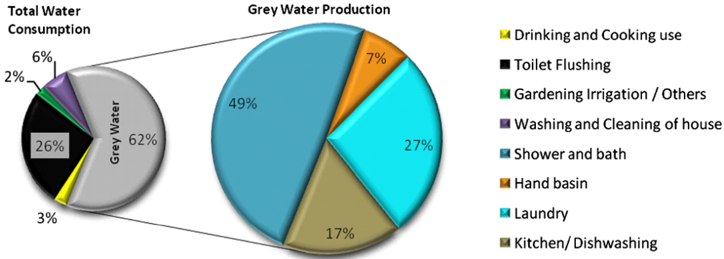
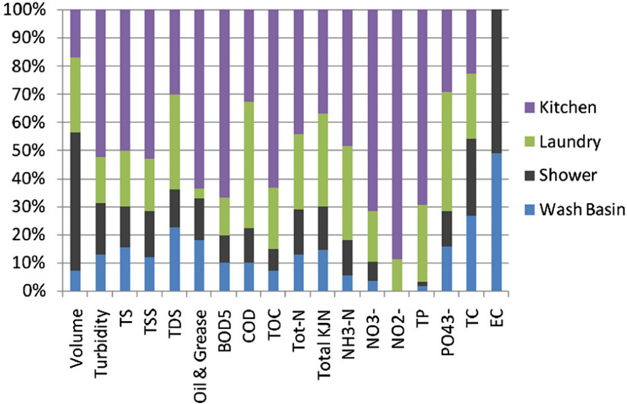
This study aims to discern the domestic gray water (GW) sources that is least polluting, at the urban households of India, by examining the GW characteristics, comparing with literature data, reuse standards and suitable treatment technologies. In view of this, the quantitative and qualitative characteristics of domestic GW originating from bath, wash basin, laundry and kitchen sources are determined and compared with established standards for reuse requirements. Quality of different gray water sources is characterized with respect to the physical, chemical, biological, nutrient, ground element and heavy metal properties. The pollutant loads indicate that the diversion techniques are not suitable for household application and, therefore, treatment is necessary prior to storage and reuse. It is observed that the total volume of GW generated exceeds the reuse requirement for suggested reuse such as for flushing and gardening/irrigation. In spite of generating less volume, the kitchen source is found to be the major contributor for most of the pollutant load and, therefore, not recommended to be considered for treatment. It is concluded that treatment of GW from bathroom source alone is sufficient to meet the onsite reuse requirements and thereby significantly reduce the potable water consumption by 28.5 %. Constructed wetland systems and constructed soil filters are suggested as suitable treatment alternatives owing to its ability to treat highly variable pollutant load with lower operational and maintenance cost, which is more practical for tropical and developing countries.
Overview
The claims and statistics of this paper haven’t been checked yet.
Free: it reads the open-access text and checks the first 5 claims that cite a source we can check. Create a free account to check every claim.
Integrity signals
Registry
Cites
Statistics
Figures

Verification
Claims the paper makes
The claims and statistics of this paper haven’t been checked yet.
Free: it reads the open-access text and checks the first 5 claims that cite a source we can check. Create a free account to check every claim.
Claims other papers make about this one
Each is checked against this paper’s own text: does it say what the citing paper says it does?
The source backs part of the claim, not all of it — or backs it for a different population, condition or comparison.
In the citing paper
“The concentration of total suspended solids in greywater can range within 190–537 mg/L as has been reported (Edwin et al. 2014; Oteng-Peprah et al. 2018).”
From Greywater Characteristics, Treatment Systems, Reuse Strategies and User Perception—a Review (2018) · cites this paper as Edwin et al. 2014
Experimental — accuracy not yet measured
Self-check
Percentages, sums and reported differences re-computed from the paper’s own numbers.
The self-check needs the paper’s full text.
Citations
Cites
Standard methods for the examination of water and waste water.
Gilcreas, F. W. (1966) · American Journal of Public Health and the Nations Health · doi:10.2105/ajph.56.3.387 · Cited by 9,591
Wastewater engineering : treatment and reuse
Metcalf, & Eddy (2004) · McGraw-Hill eBooks · Cited by 9,028
Crook, J. A., Ammerman, D. K., Da, O., & Matthews, R. L. (1992) · Cited by 1,483
Characteristics of grey wastewater
Eriksson, E., Auffarth, K., Henze, M., & Ledin, A. (2002) · Urban Water · doi:10.1016/s1462-0758(01)00064-4 · Cited by 951 · cited 1×
“It is considered to be the largest potential source of water reuse option at point source, accounting for around 50–80 % of the total water use (Christova-Boal et al. 1996; Eriksson et al. 2002; Jamrah et al. 2006).”
BackgroundWater Reuse: Issues, Technologies, and Applications
Asano, T. (2007) · Cited by 867
Bixio, D., Thoeye, C., De Koning, J., Joksimovic, D., Savic, D., Wintgens, T., & Melin, T. (2006) · Desalination · doi:10.1016/j.desal.2005.04.070 · Cited by 495 · cited 1×
“Though the treatment and reuse of GW at a community level would prove to be economically advantageous, some countries like UK had seen huge acceptance for reuse within households (Bixio et al. 2006).”
BackgroundTernes, T., & Joss, A. (2015) · Water Intelligence Online · doi:10.2166/9781780402468 · Cited by 428 · cited 2×
“However, accumulation of sodium and other micro-pollutants over a long period are to be researched as only a few short-term studies are done which suggests that micro-pollutants are degraded in soil over time (Ternes and Joss 2006; Hernández Leal 2010).”
BackgroundAn investigation into greywater reuse for urban residential properties
Christova-Boal, D. (1996) · Desalination · doi:10.1016/0011-9164(96)00134-8 · Cited by 338 · cited 2×
“It is considered to be the largest potential source of water reuse option at point source, accounting for around 50–80 % of the total water use (Christova-Boal et al. 1996; Eriksson et al. 2002; Jamrah et al. 2006).”
BackgroundFriedler, E. (2004) · Environmental Technology · doi:10.1080/09593330.2004.9619393 · Cited by 306
Konnerup, D., Koottatep, T., & Brix, H. (2009) · Ecological Engineering · doi:10.1016/j.ecoleng.2008.04.018 · Cited by 295
Research works printed but not linked: 8
- APHA (2005) Standard methods for the examination of water and waste water. American Public Health Association, 21st edition. Washington
- Metcalf and Eddy, Inc., McGraw-Hill, New York
- CPCB (2008) Performance of sewage treatment plants-coliform reduction. Central Pollution Control Board. Ministry of Envi- ronment and Forests, New Delhi
- Hanson L (1997) Environmentally friendly systems and products: water saving devices. Department of Environment, Transport and the Regions, Bracknell: BSRIA
- Kadewa WW (2010) Small-scale constructed wetland for onsite light gray water treatment and recycling Kambanellas CA (1998) Recycling of gray water in Cyprus. Water Development Department, Nicosia
- NEERI (2007a) Guidance manual for water quality monitoring and assessment (First Edition), October 2007. National Environmental Engineering Research Institute (Neeri), Nehru Marg, Nagpur
- NEERI (2007b) Guidance manual gray water reuse in rural Schools. National Environmental Engineering Research Institute, India
- NEERI (2007a) Guidance manual for water quality monitoring and assessment (First Edition), October 2007. National Environmen- tal Engineering Research Institute (Neeri), Nehru Marg, Nagpur NEERI (2007b) Guidance manual gray water reuse in rural Schools. National Environmental Engineering Research Institute, India NSW (2007) New South Wales Government. NSW guidelines for gray water reuse in sewered, single household residential premises. Department of Energy Utilities and Sustainability, Sydney
Cited by
Greywater Characteristics, Treatment Systems, Reuse Strategies and User Perception—a Review
Oteng-Peprah, M., Acheampong, M. A., & deVries, N. K. (2018) · Water, Air, & Soil Pollution · doi:10.1007/s11270-018-3909-8 · Cited by 367
Boano, F., Caruso, A., Costamagna, E., Ridolfi, L., Fiore, S., Demichelis, F., Galvão, A., Pisoeiro, J., Rizzo, A., & Masi, F. (2020) · Science of The Total Environment · doi:10.1016/j.scitotenv.2019.134731 · Cited by 337
Treatment and effective utilization of greywater
Samayamanthula, D. R., Chidambaram, S., & Bhandary, H. (2019) · Applied Water Science · doi:10.1007/s13201-019-0966-0 · Cited by 87
Maniam, G., Zakaria, N. A., Leo, C. P., Vassilev, V., Blay, K. B., Behzadian, K., & Poh, P. E. (2022) · Wiley Interdisciplinary Reviews Water · doi:10.1002/wat2.1588 · Cited by 74
“The greywater makes up about 75% of the wastewater volume in households (Edwin et al., 2014; Leal et al., 2010) and the high percentage has led many countries to adopt greywater recycling as a supplementary source to freshwater supply.”
BackgroundGreywater treatment technologies: a comprehensive review
Awasthi, A., Gandhi, K. N., & Rayalu, S. (2023) · International Journal of Environmental Science and Technology · doi:10.1007/s13762-023-04940-7 · Cited by 74
Study on the efficiency of sequential batch reactor (SBR)-based sewage treatment plant
Showkat, U., & Najar, I. A. (2018) · Applied Water Science · doi:10.1007/s13201-018-0882-8 · Cited by 63
Mukherjee, A., Mullick, A., Teja, R., Vadthya, P., Roy, A., & Moulik, S. (2020) · Ultrasonics Sonochemistry · doi:10.1016/j.ultsonch.2020.105116 · Cited by 64
Bakare, B. F., Mtsweni, S., & Rathilal, S. (2016) · Journal of Water Reuse and Desalination · doi:10.2166/wrd.2016.092 · Cited by 54
Household greywater treatment methods using natural materials and their hybrid system
Wurochekke, A. A., Mohamed, R. M. S. R., Al-Gheethi, A. A. S., Atiku, H., Amir, H., & Matias‐Peralta, H. M. (2016) · Journal of Water and Health · doi:10.2166/wh.2016.054 · Cited by 63
Treatment of greywater using waste biomass derived activated carbons and integrated sand column
Patel, P., Muteen, A., & Mondal, P. (2019) · The Science of The Total Environment · doi:10.1016/j.scitotenv.2019.134586 · Cited by 59
Characterization and treatment of grey water: A review
Rakesh, S., Ramesh, P., Murugaragavan, R., Avudainayagam, S., & Karthikeyan, S. (2020) · International Journal of Chemical Studies · doi:10.22271/chemi.2020.v8.i1a.8316 · Cited by 70
“The concentration of total suspended solids in greywater can range within 190–537 mg/L as has been reported (Edwin et al. 2014; Oteng-Peprah et al., 2018) [54].”
BackgroundMohan, S., Manthapuri, V., & Chitthaluri, S. (2024) · Discover Water · doi:10.1007/s43832-024-00094-w · Cited by 45
“To enhance the bacteria growth in the aerobic biological process, oxygen is disparaged through the aeration process [121].”
Greywater characteristics in developed and developing countries
Khanam, K., & Patidar, S. K. (2022) · Materials Today: Proceedings · doi:10.1016/j.matpr.2021.12.022 · Cited by 40
Yashni, G., Al-Gheethi, A. A. S., Mohamed, R. M. S. R., Hossain, M. S., Kamil, A. F., & Shanmugan, V. A. (2020) · Water and Environment Journal · doi:10.1111/wej.12619 · Cited by 39
“Greywater is normally distinguished by the concentrations of organic substances such as XOCs originating from cleaning products, hair dyes, shampoo, soap, toothpaste, nutrients and traces of faecal contamination (Edwin et al., 2014).”
BackgroundQuantity and quality characteristics of greywater from an Indian household
Shaikh, I. N., & Ahammed, M. M. (2022) · Environmental Monitoring and Assessment · doi:10.1007/s10661-022-09820-0 · Cited by 44
“I. N. Shaikh (*) · M. M. Ahammed Department of Civil Engineering, Sardar Vallabhbhai National Institute of Technology, Surat - 395 007, India e-mail: shaikhirshad1990@gmail.com Environ Monit Assess (2022) 194:191 1 3 191 Page 2 of 17 Vol:.”
BackgroundResultInfluentialPradhan, S., Helal, M. I. D., Al‐Ghamdi, S. G., & Mackey, H. R. (2019) · Chemosphere · doi:10.1016/j.chemosphere.2019.125564 · Cited by 39
Shaikh, I. N., Ahammed, M. M., & Krishnan, M. P. S. (2019) · Elsevier eBooks · doi:10.1016/b978-0-12-816170-8.00002-8 · Cited by 46
Krithika, D., & Philip, L. (2020) · Environmental Monitoring and Assessment · doi:10.1007/s10661-020-08369-0 · Cited by 37
“Earlier studies on characterization of different sources of greywater also showed a high concentration of BOD (932.4 ± 366.7 mg/L) for kitchen wastewater when compared to laundry (186.5 ± 108.8 mg/L) and bathroom (135 ± 41.2 mg/L) wastewater (Edwin et al. 2014).”
BackgroundResultInfluentialGreywater treatment technologies for aquaculture safety: Review
Kurniawan, S., Novarini, Yuliwati, E., Ariyanto, E., Morsin, M., Sanudin, R., & Nafisah, S. (2021) · Journal of King Saud University - Engineering Sciences · doi:10.1016/j.jksues.2021.03.014 · Cited by 34
Tripathy, P., Prakash, O., Sharma, A., Juneja, C., Hiwrale, I., Shukla, V., & Pal, S. (2024) · Journal of Cleaner Production · doi:10.1016/j.jclepro.2024.142048 · Cited by 30
Performance of lab-scale filtration system for grey water treatment and reuse
Tusiime, A., Solihu, H., Sekasi, J., & Mutanda, H. E. (2022) · Environmental Challenges · doi:10.1016/j.envc.2022.100641 · Cited by 36
Greywater Reuse: Contaminant Profile, Health Implications, and Sustainable Solutions
Budeli, P., & Sibali, L. L. (2025) · International Journal of Environmental Research and Public Health · doi:10.3390/ijerph22050740 · Cited by 30
Integrated Methods for Household Greywater Treatment: Modified Biofiltration and Phytoremediation
Waqkene, T., Mereta, S. T., Terfe, A., & Ousman, W. Z. (2023) · Journal of Environmental and Public Health · doi:10.1155/2023/7778240 · Cited by 27
“Tis increasing trend of TDS through the combined treatment system could be attributed in part to the mineralization of organics or ion dissolution during the degradation of water pollutants in the compartments of the treatment system [30, 75, 78].”
BackgroundResultA multi-functional nature-based solution (NBS) for greywater treatment and reuse at the same plot
Rahman, K. Z., Saadi, S. A., Rawahi, M. A., Knappe, J., van Afferden, M., Moeller, L., Bernhard, K., & Müller, R. (2023) · Ecological Engineering · doi:10.1016/j.ecoleng.2023.106952 · Cited by 26
Yashni, G., Al-Gheethi, A. A. S., Mohamed, R. M. S. R., Arifin, S. N. H., Shanmugan, V. A., & Kassim, A. H. M. (2020) · Materials Today Proceedings · doi:10.1016/j.matpr.2020.01.395 · Cited by 21
Zhou, Y., Li, R., Guo, B., Yu, N., Xia, S., & Liu, Y. (2021) · Chemosphere · doi:10.1016/j.chemosphere.2021.129541 · Cited by 21
Reifsnyder, S., Cecconi, F., & Rosso, D. (2021) · Water Research · doi:10.1016/j.watres.2021.117224 · Cited by 20
D’Ostuni, M., Stanghellini, C., Boedijn, A., Zaffi, L., Pennisi, G., & Orsini, F. (2023) · Sustainable Cities and Society · doi:10.1016/j.scs.2023.104449 · Cited by 25
Welling, C. M., Varigala, S. K., Krishnaswamy, S., Raj, A., Lynch, B., Piascik, J. R., Stoner, B. R., Hawkins, B. T., Hegarty‐Craver, M., Luettgen, M., et al. (2020) · The Science of The Total Environment · doi:10.1016/j.scitotenv.2020.138957 · Cited by 21
Vani, B., Shivakumar, M., Kalyani, S., & Sridhar, S. (2021) · Iranian Polymer Journal · doi:10.1007/s13726-021-00945-6 · Cited by 18
Khapra, R., & Singh, N. (2023) · Environmental Quality Management · doi:10.1002/tqem.22110 · Cited by 19
Lanjewar, S., Mukherjee, A., Khandewal, P., Ghosh, A. K., Mullick, A., Moulik, S., & Roy, A. (2020) · Chemical Engineering Journal · doi:10.1016/j.cej.2020.127929 · Cited by 18
Marques, F. R., Magri, M. E., Amoah, I. D., Stenström, T. A., & Paulo, P. L. (2021) · Environmental Challenges · doi:10.1016/j.envc.2021.100182 · Cited by 20
Effects of direct discharge of domestic greywater to nearby water body
Arifin, S. N. H., Mohamed, R. M. S. R., Ismail, N. R., Al-Gheethi, A. A. S., & Bakar, S. A. (2020) · Materials Today Proceedings · doi:10.1016/j.matpr.2021.01.038 · Cited by 20
Susilawati, S., Sihombing, Y. A., Rahayu, S. U., Sembiring, Y. Y. B., Waldiansyah, L., & Irma, M. (2022) · South African Journal of Chemical Engineering · doi:10.1016/j.sajce.2022.11.006 · Cited by 17
Characterization of segregated greywater from rural Indian Households: An instrumental case study
Perumpully, S. J., Gautam, S., Muralkar, P., & Jebasingh, B. (2023) · Total Environment Research Themes · doi:10.1016/j.totert.2023.100053 · Cited by 18
Quispe, J. I. B., Campos, L. C., Mašek, O., & Bogush, A. A. (2023) · Journal of Water Process Engineering · doi:10.1016/j.jwpe.2023.104001 · Cited by 18
“The influent values for phosphates, nitrates, hardness and E. coli were higher than the real values in the literature (Tables 2 and 3) [42,43].”
BackgroundGreen wall system coupled with slow sand filtration for efficient greywater management at households
Yadav, R. K., Sahoo, S., Yadav, A. K., & Patil, S. A. (2023) · npj Clean Water · doi:10.1038/s41545-023-00285-3 · Cited by 20
Atnafu, T., & Leta, S. (2021) · ENVIRONMENTAL SYSTEMS RESEARCH · doi:10.1186/s40068-021-00234-4 · Cited by 17
Effect of washing method and detergent type on laundry greywater characteristics
Shaikh, I. N., & Ahammed, M. M. (2024) · Journal of Water Process Engineering · doi:10.1016/j.jwpe.2024.106103 · Cited by 19
Overview of Applications of Kitchen Wastewater and Its Treatment
Parwin, R., & Paul, K. K. (2019) · Journal of Hazardous Toxic and Radioactive Waste · doi:10.1061/(asce)hz.2153-5515.0000482 · Cited by 16
de Simone Souza, H. H., Paulo, P. L., & Boncz, M. A. (2017) · Desalination and Water Treatment · doi:10.5004/dwt.2017.20878 · Cited by 15
Rao, A., Thakur, P., & Thakur, A. (2026) · Inorganic Chemistry Communications · doi:10.1016/j.inoche.2026.116562 · Cited by 17
Szabolcsik-Izbéki, A., Bodnár, I., & Fábián, I. (2024) · Journal of environmental chemical engineering · doi:10.1016/j.jece.2024.114250 · Cited by 22
Khedikar, I., Tembhurkar, A. R., Dabhekar, K. R., & Godboley, B. J. (2021) · Journal of Physics Conference Series · doi:10.1088/1742-6596/1913/1/012068 · Cited by 13
Souza, H. H. D. S., Morandi, C. G., Boncz, M. Á., Paulo, P. L., & Steinmetz, H. (2025) · Resources · doi:10.3390/resources14060096 · Cited by 17
Efficiency of Eichhornia crassipes in the treatment of raw kitchen wastewater
Parwin, R., & Paul, K. K. (2019) · SN Applied Sciences · doi:10.1007/s42452-019-0400-0 · Cited by 12
Ganiyu, S. A., Are, K. S., & Olurin, O. T. (2020) · Applied Water Science · doi:10.1007/s13201-020-01201-7 · Cited by 12
Yagoub, M. M., Alsumaiti, T. S., Tesfaldet, Y. T., AlArfati, K., Alraeesi, M., & Alketbi, M. E. (2023) · Land · doi:10.3390/land12071269 · Cited by 12
“Typically, “gray water” refers to wastewater from various household activities such as washing hands, using a washing machine, dishwashing, laundry, and cooking in the kitchen [59].”
BackgroundExperimental investigation of single slope solar still for culinary wastewater treatment
Uthappan, K., Murugesan, S., Karuppasamy, G., & Thangavel, K. (2024) · Solar Compass · doi:10.1016/j.solcom.2024.100095 · Cited by 11
Physicochemical assessment of urban wastewater of Cotonou (Benin)
Daouda, M. M. A., Hounkpè, S. P., Djihouessi, M. B., Akowanou, A. V. O., Aïna, M. P., & Drogui, P. (2021) · Water Science & Technology · doi:10.2166/wst.2021.073 · Cited by 13
Study on a stepped eco-filter for treating greywater from single farm household
Chen, J., Liao, Z., Lu, S., Hu, G., Liu, Y., & Tang, C. (2017) · Applied Water Science · doi:10.1007/s13201-017-0536-2 · Cited by 10
“In recent years, more and more research focus on the characteristics of domestic GW and the GW treatment process (Ghaitidak and Yadav 2013; Jabornig 2014; Edwin et al. 2014).”
BackgroundTreatment of Kitchen Wastewater in a Batch Electrochemical Reactor
Neeraj, V. S., Arunangiri, A., & Muthukumar, K. (2022) · Journal of The Institution of Engineers (India) Series E · doi:10.1007/s40034-022-00262-4 · Cited by 10
“The desired current density was maintained in the reactor using a DC power supply (ScientiFic, India; 30 V voltage and 3A current).”
BackgroundInfluentialAlhamad, I. M., Hemyari, O. A., Shashati, A., Seraihi, H. A., Albahlooli, H., Ewim, D. R. E., & Nuaimi, S. K. A. (2023) · Bulletin of the National Research Centre/Bulletin of the National Research Center · doi:10.1186/s42269-023-01130-w · Cited by 7
“Edwin et al. (2014) studied the potential water savings from domestic gray water treatment for urban residential reuse in Indian homes.”
BackgroundChaabane, S., Riahi, K., Anibi, S., & Thayer, B. B. (2022) · Water Science & Technology · doi:10.2166/wst.2022.398 · Cited by 7
Staircase Wetlands for the Treatment of Greywater and the Effect of Greywater on Soil Microbes
Qadir, G., Pino, V., Brambilla, A., & Alonso-Marroquín, F. (2023) · Sustainability · doi:10.3390/su15076102 · Cited by 7
Najam, T., & Hashmi, I. (2024) · Environmental Monitoring and Assessment · doi:10.1007/s10661-024-12575-5 · Cited by 6
“High turbidity was recorded in bathroom, kitchen, and laundry wastewater due to detergents, fibers, hair, and floating food particles (Edwin et al., 2013).”
Nutrient removal from artificial bathroom greywater by phycoremediation using Botryococcus sp.
Wurochekke, A. A., Mohamed, R. M. S. R., & Al-Gheethi, A. A. S. (2021) · Desalination and Water Treatment · doi:10.5004/dwt.2021.26854 · Cited by 6
“Bathroom greywater is a type of wastewater derived from the hand basin, shower, bath, and laundry water and represent 30% of household greywater flow [1].”
BackgroundKatırcı, A., Kahraman, S., & Nigiz, F. U. (2025) · Environmental Science Water Research & Technology · doi:10.1039/d4ew01070a · Cited by 5
Microplastic retention in green walls for nature-based and decentralized greywater treatment
Büngener, L., Galvão, A. F., Postila, H., & Heiderscheidt, E. (2024) · Environmental Pollution · doi:10.1016/j.envpol.2024.125047 · Cited by 6
Nagaraja, S. S., Gouda, Y., Míguez, D., Muralidaran, Y., Ferreira, L. F. R., Américo‐Pinheiro, J. H. P., Mulla, S. I., & Mishra, P. (2024) · Ecotoxicology · doi:10.1007/s10646-024-02810-7 · Cited by 5
“Aquatic species like the fi shes, phytoplankton, zooplankton, oligochaetes, and mammals, etc. ingest these nano-sized particles, which may further get accumulated and cause harm (Edwin et al., 2014; Esperanza et al., 2016; Perumal, Muthuramalingam 2022).”
Devi, G., & Al-Lezami, H. A. A. (2023) · Journal of the Iranian Chemical Society · doi:10.1007/s13738-023-02766-1 · Cited by 5
Application of slow sand filter for greywater treatment at GETFund hostel, UENR, Sunyani
Amankwah, E., Afedor, D., Mensah, N. J., & Nunoo, E. (2025) · Scientific African · doi:10.1016/j.sciaf.2025.e03088 · Cited by 4
Gyapong-Korsah, B., Duku, G. A., Appiah–Effah, E., Kunkuaboor, Y. C., Boakye, P., Akodwaa-Boadi, K., & Nyarko, K. B. (2026) · PLOS Water · doi:10.1371/journal.pwat.0000398 · Cited by 4
Sustainable applications and prospects of nanoadsorbents for wastewater treatment
Adisasmito, S., Pramudita, D., Sumampouw, G. A., Mohtar, W. H. M. W., & Indarto, A. (2023) · Elsevier eBooks · doi:10.1016/b978-0-443-18456-7.00024-9 · Cited by 5
Tiruneh, A. T. (2016) · American Journal of Environmental Protection · doi:10.11648/j.ajep.20160503.13 · Cited by 4
“For example, Edwin et al [2] reported COD/BOD5 ratio of 8.”
MethodInfluentialAbbas, E. K., & Ali, S. A. K. (2025) · Sustainable Engineering and Technological Sciences · doi:10.70516/34yn7403 · Cited by 3
Uso de água cinza tratada na irrigação de frutícola no semiárido
Franca, C. L. E., de Amorim, M. C. C., Olszevski, N., & Belém, C. D. S. (2022) · Revista Verde de Agroecologia e Desenvolvimento Sustentável · doi:10.18378/rvads.v17i3.9330 · Cited by 3
Manna, S., Sinha, T. K., & Mondal, S. (2023) · Waste and Biomass Valorization · doi:10.1007/s12649-023-02361-8 · Cited by 3
“Greywater collected from kitchen and laundry sources are reported to have very high total suspended solids and turbidity [56, 119].”
Application of nanofiltration membrane process for the treatment of laundry wastewater
Sekhar, S. C., Sajja, C., Naga Srinivas, G., & Sridhar, S. (2025) · Water Practice & Technology · doi:10.2166/wpt.2025.003 · Cited by 3
Oteng-Peprah, M. (2020) · Research Publications (Maastricht University) · doi:10.26481/dis.20200916mo · Cited by 4
A Comparative Analysis of Greywater Quantity and Quality Characteristics in Household and Hostels
Shaikh, I. N., & Ahammed, M. M. (2024) · Lecture notes in civil engineering · doi:10.1007/978-981-97-4852-5_61 · Cited by 3
A sustainable design approach of a mega hostel: a study based at NIT, Srinagar, Kashmir, India
Mir, A. B., Bahadur, F. T., Khaja, M. A., Ghani, W., Choudhary, Z., Kumar, S., Beigh, F. A., Firdous, F., Taley, W. R., & Ahmad, D. (2024) · Water Practice & Technology · doi:10.2166/wpt.2024.238 · Cited by 2
Characterization of Grey Water to Assess Its Feasibility for Irrigation
Hazarika, P. P., Medhi, B., Thakuria, R. K., Patgiri, D. K., & Deka, K. (2018) · International Journal of Current Microbiology and Applied Sciences · doi:10.20546/ijcmas.2018.710.117 · Cited by 2
Assessment of Sustainable Geopolymer‐Based Adsorption for Ammonia Removal from Wastewater
Pawar, V. M., Kate, G. K., & Nayak, C. B. (2025) · Macromolecular Symposia · doi:10.1002/masy.70163 · Cited by 2
Tiruneh, A. T. (2014) · Journal of Water Resource and Protection · doi:10.4236/jwarp.2014.614115 · Cited by 2
“Grey water is part of the wastewater generated from household water using activities including bathing, hand basins, washing machines, dish washing, laundry and kitchen [2].”
BackgroundWater Treatment using Chemically Activated Charcoal
Paul, D. A., Malik, M., & Yadav, M. (2020) · Journal of Science and Technology · doi:10.46243/jst.2020.v5.i3.pp72-78 · Cited by 2
Burgos-Arias, J., Rey-Romero, D. C., & Oviedo-Ocaña, É. R. (2025) · Environmental Monitoring and Assessment · doi:10.1007/s10661-025-13853-6 · Cited by 3
“In urban Indian households, LGW accounts for 56% of total GW, and its reuse can reduce potable water consumption by 28.5% (Edwin et al., 2014).”
InfluentialRaja, W., Khaki, Q. Z., & Kumar, P. (2026) · The handbook of environmental chemistry · doi:10.1007/698_2025_1246 · Cited by 1
A LABORATORY SCALE ANALYSIS OFGREYWATER USING DRAWER COMPACTED SAND FILTER
Pazare, P. R., & Waghmare, M. C. S. (2018) · Journal of Research in Engineering and Applied Sciences · doi:10.46565/jreas.2018.v03i03.005 · Cited by 1
Oteng‐Peprah, M., Agyei‐Tuffour, B., Animpong, M. A. B., Osei, F. N., Mensah, D. O., & Acheampong, M. A. (2023) · Universal Journal of Carbon Research · doi:10.37256/ujcr.1220233945 · Cited by 1
Teixeira, M. G., Oliveira, A. S., Pereira, F. M. D. O., Souza, J. C., & Rodrigues, E. M. (2024) · Revista Acta Ambiental Catarinense · doi:10.24021/raac.v21i1.7189 · Cited by 1
Malaza, N., Magaba, S. L., & Mpungose, P. P. (2024) · Open Research Europe · doi:10.12688/openreseurope.17775.1 · Cited by 1
Erlwein, A. (2024) · Green energy and technology · doi:10.1007/978-3-031-73576-9_8 · Cited by 1
Treatment of college canteen sullage using microcosm phytorid system
Dhaduti, M. S., Dhaduti, S. C., Budapanahalli, S. H., Kadabinakatti, S., & Hubballi, S. S. (2025) · Acta periodica technologica · doi:10.2298/apt250410013d · Cited by 1
Grey water reuse of a multi-functional super-high building: evaluation of model treatment processes
Liu, H., Yao, Y., Chen, Z., Leng, F., & Zhou, X. (2018) · Desalination and Water Treatment · doi:10.5004/dwt.2018.22608 · Cited by 2
Feasibility and economic efficiency of greywater reuse for plant irrigation
Nguyen, H. T., Błażejewski, R., & Spychała, M. (2018) · Journal of Ecological Engineering · doi:10.12912/23920629/95282 · Cited by 1
DESEMPENHO AMBIENTAL DE SISTEMA DE REÚSO DE ÁGUA CINZA EM RESIDÊNCIA DE INTERESSE SOCIAL
Campos, R. M., & Cohim, E. (2021) · Revista AIDIS de Ingeniería y Ciencias Ambientales Investigación desarrollo y práctica · doi:10.22201/iingen.0718378xe.2021.14.1.69984 · Cited by 1
Wurochekke, A. A., Mohamed, R. M. S. R., Al-Gheethi, A. A. S., & Fitriani, N. (2021) · Desalination and Water Treatment · doi:10.5004/dwt.2021.27087 · Cited by 1
“Besides that, greywater which originates from bathrooms and showers makes up over 30% of household greywater flow [5].”
BackgroundAtnafu, T., & Leta, S. (2021) · doi:10.21203/rs.3.rs-138288/v1 · Cited by 1
“This value was within typical wastewater COD content (Edwin et al. 2014).”
BackgroundGuddekoppa, G., Br, A., & Harshitha, S. (2020) · International Journal of Chemical Studies · doi:10.22271/chemi.2020.v8.i2an.9142
“The concentration of total suspended solids in grey water can range within 190–537 mg L-1 as has been reported (Edwin et al. 2014; Oteng-Peprah et al., 2018) [8, 19].”
Algorithm for sustainable water source and treatment selection process
Masterton, A. I., & Barkdoll, B. D. (2020) · Water Science & Technology Water Supply · doi:10.2166/ws.2020.158
Development of Biofilters for the Treatment of Greywater
Kulkarni, S. S., Hungund, B. S., Suryavanshi, R., Bellad, G. C., & Patil, M. (2020) · Water science and technology library · doi:10.1007/978-3-030-51427-3_17
Saadoon, S. A., & Qasim, A. F. (2021) · Bionatura · doi:10.21931/rb/2021.01.04.12
“…2020 This increase is due to the presence of salts that are resulting from detergents such as sodium chloride and nitrates and phosphates, and the old water pipes contribute to increasing the electrical conductivity due to pipes rusting and then these materials leaching to the gray water 12,13 .”
Background(2022) · International Journal of Development Research · doi:10.37118/ijdr.24823.07.2022
Policy and technology recommendations for scaling up of onsite greywater reuse in Chennai
Grace, P., & Gulyas, H. (2023) · AIP conference proceedings · doi:10.1063/5.0159323
Heikal, G., Ahmed, M. M., & Helm, A. (2024) · The Egyptian International Journal of Engineering Sciences and Technology · doi:10.21608/eijest.2024.278003.1266
“Greywater, sourced from activities like bathing, showering, handwashing, and laundry, constitutes a significant portion, ranging from 50% to 80%, of the overall water demand as shown in Figure (2) [8].”
Comparison of environmental and health acceptability of squatting and sitting toilets: A review
Salehfar, H., Torkalipour, A., Karimi, S., Fayyazi, H., & Mahdavianpour, M. (2024) · Environmental Progress & Sustainable Energy · doi:10.1002/ep.14507
Tarımsal Sürdürülebilirlikte Teknolojik Gelişmeler ve Güncel Yaklaşımlar
Karaman, S., Yazarel, S., GÜLLER, A., Mustafa, U. S. T. A., Terin, M., Arin, M. H., Çakmakcı, T., Yerli, C., Şahin, Ü., Çakmakcı, Ö., et al. (2025) · Akademisyen Kitabevi eBooks · doi:10.37609/akya.3434 · Cited by 1
Metadata
- Authors
- Edwin, G. A., Gopalsamy, P., & Muthu, N.
- Affiliations
- Pondicherry University (IN)
- Corresponding author
- Edwin, Golda A.
- Venue
- Applied Water Science
- Published
- 2013-09-26
- Volume
- 4
- Issue
- 1
- Pages
- 39-49
- ISSN
- 2190-5487 (ISSN-L)
- 2190-5495
- OpenAlex
- W1978830737
- Cited by
- 107
- References
- 30
- Citations by year
- 2026: 6 · 2025: 15 · 2024: 14 · 2023: 16 · 2022: 8 · 2021: 14 · 2020: 14 · 2019: 7 · 2018: 7 · 2017: 2 · 2016: 3 · 2014: 1
- FWCI
- 2.28
- Type
- journal article
- Language
- en
- Open access
- gold
- doi.org
- Locations
- Applied Water Science (publishedVersion, cc-by)
- Funders
- Ministry of Environment
- Wageningen University and Research
- Topics
- Physical Sciences › Environmental Science › Waste Management and Disposal › Wastewater Treatment and Reuse
- Physical Sciences › Environmental Science › Environmental Engineering › Urban Stormwater Management Solutions
- Physical Sciences › Environmental Science › Waste Management and Disposal › Constructed Wetlands for Wastewater Treatment
- Keywords
- pollutant load, heavy metals, nutrients, potable water conservation, constructed wetlands, India
About these checks
Registry, retraction, Cites and statistics results are computed, not judged, with one exception: a printed reference that no index lists is read once by a model before it counts as a citation error. Claims are extracted by a model and kept only when their quote appears verbatim in the text; each cited source is then checked, with a model’s help, for whether it says what the claim relies on. Those verdicts can be wrong — read the claim’s quote and the cited source before relying on one.
Statistics and arithmetic are recomputed, not judged.
Confidence bands are shown only for fields calibrated on our annotated test set. None is calibrated yet, so no band is shown.
What counts as a claim ›How we measure confidence ›How we check this ›
Are you an author, or do you see a problem with this page? Request a review
Data sources
Bibliographic data: Semantic Scholar, OpenAlex, Crossref.
Contains information from the Semantic Scholar Academic Graph Datasets, made available under the ODC Attribution License (ODC-BY 1.0).
Semantic Scholar’s data is described in: Kinney, R., et al. (2023). The Semantic Scholar Open Data Platform. arXiv:2301.10140.
