

Human exposure risk to heavy metals through groundwater used for drinking in an intensively irrigated river delta
Open accessThe DOI matches its Crossref record; 47 of the 47 references it cites were found in a registry or an index.
Abstract
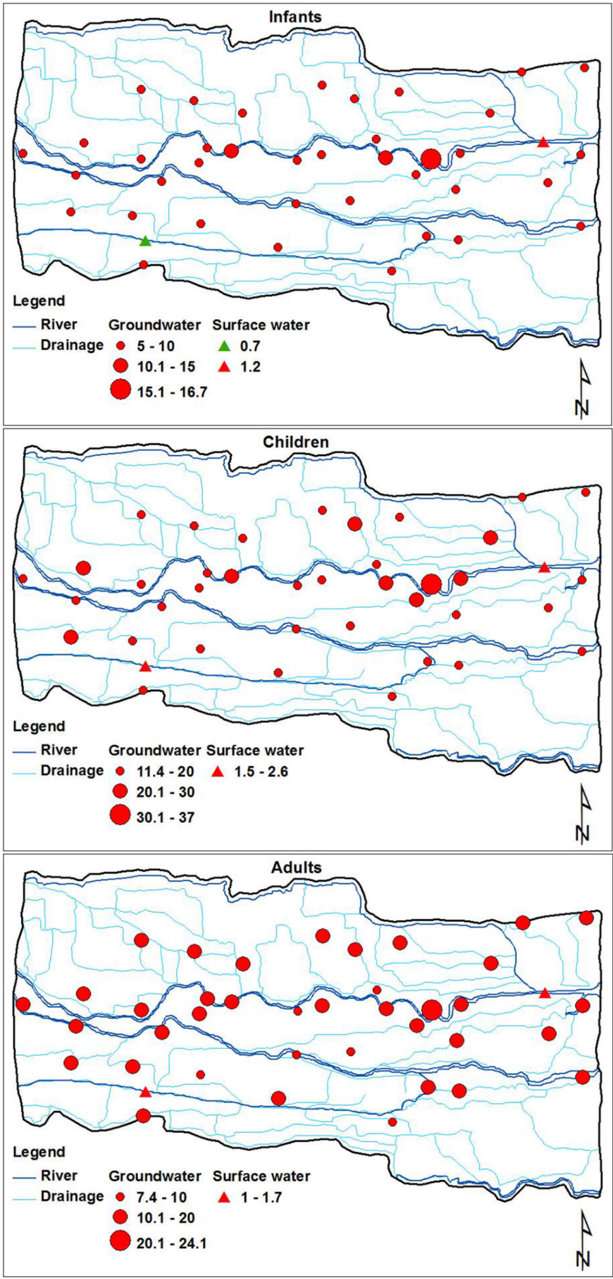
Drinking water containing heavy metals above the maximum permissible limits cause potential risk to human health. The aim of this study was to determine the groundwater suitability for drinking use based on heavy metal concentration and the associated human exposure risk in an intensively irrigated part of the Cauvery river basin, Tamil Nadu, India. Sixteen heavy metals analysed were in the order of dominance of chromium < zinc < copper < cadmium < cobalt < iron < aluminium < nickel < titanium < zirconium < boron < silver < manganese < lead < lithium < silicon in groundwater. Chromium and zinc were within permissible limits of the Bureau of Indian Standards for drinking water quality, and silver, lead and nickel were above limits in all the groundwater samples. In less than 50 % of the groundwater samples, aluminium, boron, cadmium, copper, iron and manganese exceeded their individual permissible limits. Heavy metal pollution index based on 11 heavy metals indicated that groundwater quality of this area is poor-to-unsuitable. Non-carcinogenic risk for humans due to ingestion of groundwater through drinking water pathway was very high for infants, children and adults. Silver, lead, nickel, cadmium and manganese largely contributed to the health hazard. Sources of heavy metals were identified to be geological and from human activities, i.e., application of fertilizers in agricultural fields, seawater intrusion due to intensive pumping for agriculture and wastewater from industries. Groundwater and surface water in this area pose large threat due to high levels of heavy metals, and it is necessary to avoid this water for drinking due to potential risk of health hazard. This study also demonstrated the application of HPI and human exposure hazard index to study the groundwater quality based on heavy metals’ concentration.
Overview
The claims and statistics of this paper haven’t been checked yet.
Free: it reads the open-access text and checks the first 5 claims that cite a source we can check. Create a free account to check every claim.
Integrity signals
Registry
Cites
Statistics
Figures
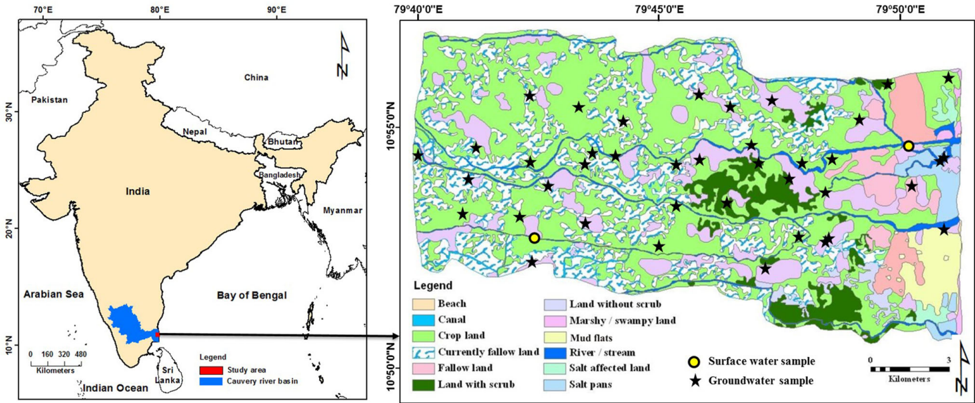
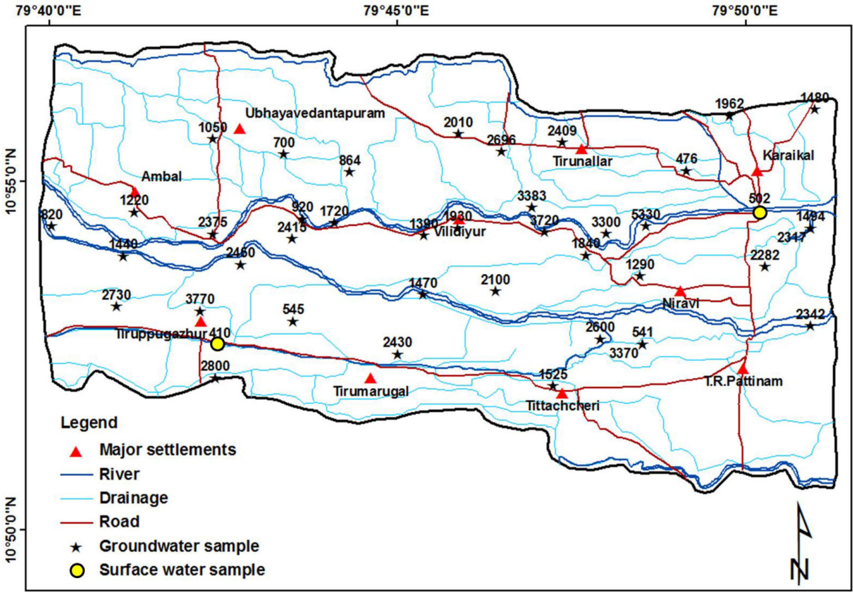
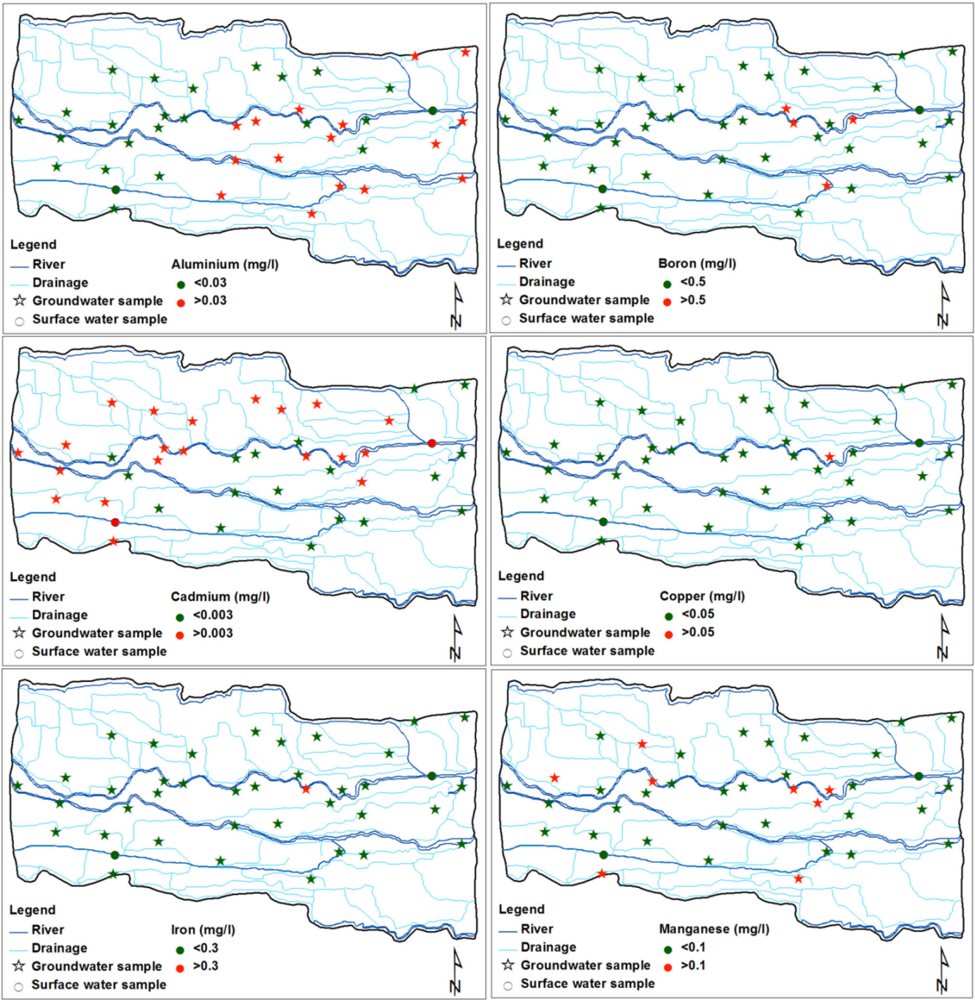
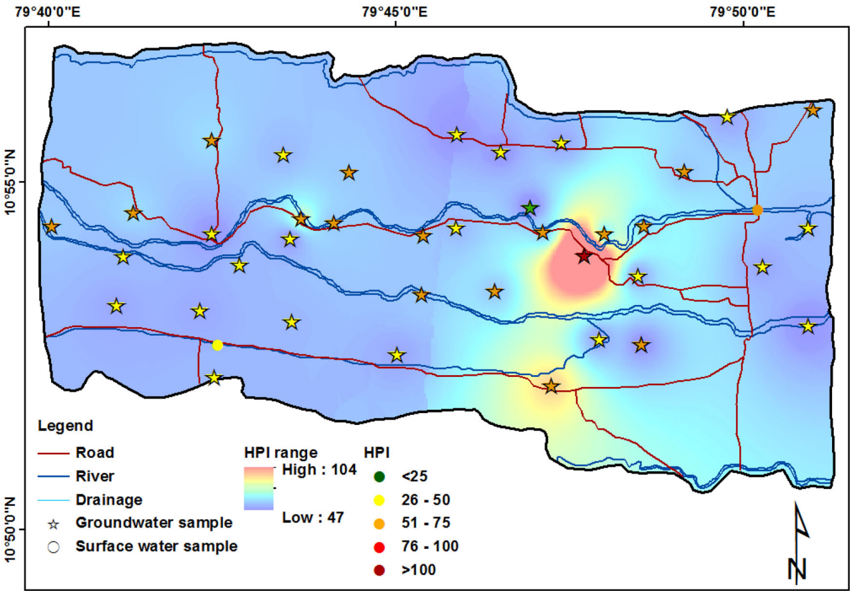
Verification
Claims the paper makes
The claims and statistics of this paper haven’t been checked yet.
Free: it reads the open-access text and checks the first 5 claims that cite a source we can check. Create a free account to check every claim.
Claims other papers make about this one
Each is checked against this paper’s own text: does it say what the citing paper says it does?
The source backs part of the claim, not all of it — or backs it for a different population, condition or comparison.
In the citing paper
“The uses of fertilizers and industrial wastewater in agricultural fields and seawater intrusion, because of intensive pumping to farmlands, have been recognized as sources of PTEs in agricultural areas (Vetrimurugan et al. 2016).”
From Sustainable management of post-phytoremediation biomass (2025) · cites this paper as Vetrimurugan et al. 2016
Experimental — accuracy not yet measured
Self-check
Percentages, sums and reported differences re-computed from the paper’s own numbers.
The self-check needs the paper’s full text.
Citations
Cites
Alloway, B. J. (1990) · Cited by 4,022
A review of soil heavy metal pollution from mines in China: Pollution and health risk assessment
Li, Z., Ma, Z., van der Kuijp, T. J., Yuan, Z., & Huang, L. (2014) · Science of The Total Environment · doi:10.1016/j.scitotenv.2013.08.090 · Cited by 2,852
(1995) · Springer eBooks · doi:10.1007/978-94-011-1344-1 · Cited by 1,346
Spatial and Temporal Variations of Groundwater Arsenic in South and Southeast Asia
Fendorf, S., Michael, H. A., & van Geen, A. (2010) · Science · doi:10.1126/science.1172974 · Cited by 1,193 · cited 4×
“Appl Geochem 14:735–745 McCarty KM, Hanh HT, Kim K-W (2011) Arsenic geochemistry and human health in South East Asia.”
BackgroundInfluentialVarol, M. (2011) · Journal of Hazardous Materials · doi:10.1016/j.jhazmat.2011.08.051 · Cited by 1,070
Heavy metal contamination of soil and vegetables in suburban areas of Varanasi, India
Kumar Sharma, R., Agrawal, M., & Marshall, F. (2007) · Ecotoxicology and Environmental Safety · doi:10.1016/j.ecoenv.2005.11.007 · Cited by 1,014
A water quality index-do we dare?
Brown, R. M., McClelland, N. I., Deininger, R., & Tozer, R. G. (1970) · Cited by 1,008
Natural Inorganic Hydrochemistry in Relation to Groundwater: An Introduction
Lloyd, J., & Heathcote, J. (1985) · OSTI OAI (U.S. Department of Energy Office of Scientific and Technical Information) · Cited by 711
Heavy metal contamination in soils and vegetables near an e-waste processing site, south China
Luo, C., Liu, C., Wang, Y., Liu, X., Li, F., Zhang, G., & Li, X. (2011) · Journal of Hazardous Materials · doi:10.1016/j.jhazmat.2010.11.024 · Cited by 711
Varol, M., & Şen, B. (2012) · CATENA · doi:10.1016/j.catena.2011.11.011 · Cited by 563
Wongsasuluk, P., Chotpantarat, S., Siriwong, W., & Robson, M. (2014) · Environmental Geochemistry and Health · doi:10.1007/s10653-013-9537-8 · Cited by 538
Natural Inorganic Hydrochemistry in Relation to Groundwater: An Introduction
Lloyd, J., & Heathcote, J. (1985) · Medical Entomology and Zoology · Cited by 466
Zhao, H., Xia, B., Fan, C., Zhao, P., & Shen, S. (2012) · Science of The Total Environment · doi:10.1016/j.scitotenv.2011.12.047 · Cited by 422
Chabukdhara, M., & Nema, A. K. (2012) · Chemosphere · doi:10.1016/j.chemosphere.2012.01.055 · Cited by 299
Heavy metal pollution from phosphate rock used for the production of fertilizer in Pakistan
Sabiha-Javied, Mehmood, T., Chaudhry, M. M., Tufail, M., & Irfan, N. (2009) · Microchemical Journal · doi:10.1016/j.microc.2008.08.009 · Cited by 255
Regional distribution pattern of groundwater heavy metals resulting from agricultural activities
Nouri, J., Mahvi, A. H., Jahed, G. R., & Babaei, A. A. (2008) · Environmental Geology · doi:10.1007/s00254-007-1081-3 · Cited by 222
Arsenic geochemistry and human health in South East Asia
McCarty, K. M., Hanh, H. T., & Kim, K.-W. (2011) · Reviews on Environmental Health · doi:10.1515/reveh.2011.010 · Cited by 194
Identification of sources of heavy metals in agricultural soils using multivariate analysis and GIS
Shan, Y., Tysklind, M., Hao, F., Ouyang, W., Chen, S., & Lin, C. (2013) · Journal of Soils and Sediments · doi:10.1007/s11368-012-0637-3 · Cited by 171
Heavy Metal Pollution and Chemical Profile of Cauvery River Water
Begum, A., Ramaiah, M., Harikrishna, Khan, I., & Veena, K. (2008) · Journal of Chemistry · doi:10.1155/2009/154610 · Cited by 168
Brindha, K., Vaman, K. V. N., Srinivasan, K., Babu, M. S., & Elango, L. (2013) · Applied Water Science · doi:10.1007/s13201-013-0138-6 · Cited by 149
Self-citationFluoride in weathered rock aquifers of southern India: Managed Aquifer Recharge for mitigation
Brindha, K., Jagadeshan, G., Kalpana, L., & Elango, L. (2016) · Environmental Science and Pollution Research · doi:10.1007/s11356-016-6069-7 · Cited by 143
Self-citationArsenic geochemistry of groundwater in Southeast Asia
Kim, K., Chanpiwat, P., Hanh, H. T., Phan, K., & Sthiannopkao, S. (2011) · Frontiers of Medicine · doi:10.1007/s11684-011-0158-2 · Cited by 134
Thuong, N. T., Yoneda, M., Ikegami, M., & Takakura, M. (2013) · Environmental Monitoring and Assessment · doi:10.1007/s10661-013-3155-x · Cited by 111
Yousaf, B., Amina, A., Liu, G., Wang, R., Imtiaz, M., Rizwan, M. S., Zia‐ur‐Rehman, M., Qadir, A., & Si, Y. (2016) · Chemosphere · doi:10.1016/j.chemosphere.2016.02.007 · Cited by 110
Krishna, A. K., Mohan, K. R., Murthy, N. N., Periasamy, V., Bipinkumar, G., Manohar, K., & Rao, S. (2013) · Environmental Earth Sciences · doi:10.1007/s12665-012-2153-6 · Cited by 98
Sources of contaminants and groundwater quality in the coastal part of a river delta
Vetrimurugan, E., Elango, L., & Rajmohan, N. (2013) · International Journal of Environmental Science and Technology · doi:10.1007/s13762-012-0138-3 · Cited by 93
Self-citationImpact of Tanning Industries on Groundwater Quality near a Metropolitan City in India
Brindha, K., & Elango, L. (2012) · Water Resources Management · doi:10.1007/s11269-012-9985-4 · Cited by 87
Self-citationSpurgeon, D. J., Rowland, P., Ainsworth, G. B., ROTHERY, P., Long, S. M., & Black, H. I. J. (2007) · Environmental Pollution · doi:10.1016/j.envpol.2007.08.027 · Cited by 85
Hydrogeochemical processes in an arid region of Europe (Almeria, SE Spain)
Martos, F. S., Bosch, A. P., & Calaforra, J. M. (1999) · Applied Geochemistry · doi:10.1016/s0883-2927(98)00094-8 · Cited by 83
Noll, W. (1956) · Angewandte Chemie · doi:10.1002/ange.19560680824 · Cited by 79
Fu, S., & Wei, C. (2012) · Journal of Soils and Sediments · doi:10.1007/s11368-012-0587-9 · Cited by 72
Dhanakumar, S., Murthy, K. R., Solaraj, G., & Mohanraj, R. (2013) · Archives of Environmental Contamination and Toxicology · doi:10.1007/s00244-013-9886-4 · Cited by 70
Assessment of heavy metals pollution in groundwater of Golgohar iron ore mine area, Iran
Jahanshahi, R., & Zare, M. A. (2015) · Environmental Earth Sciences · doi:10.1007/s12665-015-4057-8 · Cited by 69
Groundwater Pollution by Heavy Metals in Historical Mining Area of Lavrio, Attica, Greece
Stamatis, G., Voudouris, K. S., & Karefilakis, F. (2001) · Water Air & Soil Pollution · doi:10.1023/a:1010337718104 · Cited by 67
Brindha, K., & Elango, L. (2012) · Journal of Radioanalytical and Nuclear Chemistry · doi:10.1007/s10967-012-2090-6 · Cited by 57
Self-citationGiri, S., Singh, G., Gupta, S. K., Jha, V., & Tripathi, R. M. (2010) · Mine Water and the Environment · doi:10.1007/s10230-010-0107-3 · Cited by 45
Bakış, R., & Tuncan, A. (2010) · Environmental Monitoring and Assessment · doi:10.1007/s10661-010-1568-3 · Cited by 40
Isa, N. M., Aris, A. Z., Lim, W. Y., Sulaiman, W. N. A., & Praveena, S. M. (2013) · Arabian Journal of Geosciences · doi:10.1007/s12517-012-0818-9 · Cited by 40
Groundwater Chemistry and Quality in an Intensively Cultivated River Delta
Vetrimurugan, E., & Elango, L. (2014) · Water Quality Exposure and Health · doi:10.1007/s12403-014-0133-7 · Cited by 38
Self-citationLu, Y., Tang, C., Chen, J., & Yao, H. (2015) · Frontiers of Earth Science · doi:10.1007/s11707-015-0513-8 · Cited by 34
Heavy metals in potable groundwater of mining-affected river catchments, northwestern Romania
Bird, G., Macklin, M. G., Brewer, P., Zaharia, S., Bălteanu, D., Driga, B., & Șerban, M. (2009) · Environmental Geochemistry and Health · doi:10.1007/s10653-009-9259-0 · Cited by 31
Groundwater heavy metal levels and associated human health risk in the North China Plain
Wei, L., Wang, M., Liu, L., Wang, H.-F., & Yu, S. (2015) · Arabian Journal of Geosciences · doi:10.1007/s12517-015-1974-5 · Cited by 29
Xu, B., Xu, Q., Liang, C., Li, L., & Jiang, L. (2014) · Frontiers of Environmental Science & Engineering · doi:10.1007/s11783-014-0675-8 · Cited by 26
Controls of DSi in streams and reservoirs along the Kaveri River, South India
Meunier, J., Riotte, J., Braun, J., Sekhar, M., Chalié, F., Barboni, D., & Saccone, L. (2014) · The Science of The Total Environment · doi:10.1016/j.scitotenv.2014.07.107 · Cited by 25
Heavy metals concentrations and usability of groundwater at Mahd Adh Dhahab gold mine, Saudi Arabia
Al-Hobaib, A. S., Al-Jaseem, Q. K., Baioumy, H. M., & Ahmed, A. H. (2011) · Arabian Journal of Geosciences · doi:10.1007/s12517-011-0344-1 · Cited by 25
Ashraf, S., Abbas, F., Ibrahim, M., Rashid, U., Khalid, S., Ahmad, H. R., Hakeem, K. R., & Majeed, T. (2015) · Journal of Geographical Sciences · doi:10.1007/s11442-015-1164-0 · Cited by 17
Assessment of Heavy Metals in Top Soil around a Proposed Uranium Tailings Pond in Southern India
Brindha, K., & Elango, L. (2014) · Asian Journal of Water Environment and Pollution · doi:10.3233/ajw-2014-11_2_03 · Cited by 2
Self-citation
Research works printed but not linked: 11
- BIS (Bureau of Indian Standards) (2012) Indian standard for drinking water-specification, second edition, IS 10500: 2012, Drinking Water Sectional Committee, FAD 25. New Delhi, India
- Davis SN, DeWiest RJM (1966) Hydrogeology. Wiley, New York
- Freeze RA, Cherry JA (1979) Groundwater. Prentice Hall Inc, New Jersey
- Horton RK (1965) An index number system for rating water quality. J Water Pollut Control Fed 37(3):300-306
- Iler RK (1955) The colloidal chemistry of silica and silicates. Cornell University Press, Ithaca, New York, p 324
- Krishnamoorthy PS, Nagarajan K (2013) Levels of heavy metals in two rivers of Tamilnadu for predicting pollution loads. J Chem Biol Phys Sci 4(1):834-840
- Lloyd JW, Heathcote JA (1985) Natural inorganic hydrochemistry in relation to groundwater. Clarendon Press, Oxford
- Nebergall WH, Schmidt FC, Holtzclaw HF (1963) College chemistry. DC Health and company, Boston, p 861
- Turekian KK (1968) Oceans. Prentice-Hall, Englewood Cliffs
- US EPA (1989) Risk assessment guidance for superfund, volume 1: human health evaluation manual (part A) ((EPA/540/1-89/002: interim final). Washington DC: Office of Emergency and Remedial Response US EPA (1994) Water quality standards handbook: 2nd ed. EPA-823- B-94-005a,b. National Technical Information Service, Spring- field, VA US EPA (2014) Drinking Water Contaminants. Available from: https://www.epa.gov/ground-water-and-drinking-water/table- regulated-drinking-water-contaminants. Accessed on 1 July 2016 US EPA (2016) Lithium, Virginia Department of Health, USA. Available from: http://www.vdh.virginia.gov/content/uploads/ sites/12/2016/02/Lithium2014.pdf. Accessed on 24 July 2016 US EPA from CHMP (Committee for Human Medicinal Products) (2007) Guidelines on the specification limits for residues of metal catalysts. Doc. Ref. CPMP/SWP/QWP/4446/00 corr. Available from: http://www.ema.europa.eu/docs/en_GB/document_library/ Scientific_guideline/2009/09/WC500003587.pdf. Assessed on 27 June 2016
- WHO (1993) Guidelines for drinking water quality, vol. 1, 2nd edn, Recommendations, WHO, Geneva, p 130
Cited by
Cadmium in soils and groundwater: A review
Kubier, A., Wilkin, R. T., & Pichler, T. (2019) · Applied Geochemistry · doi:10.1016/j.apgeochem.2019.104388 · Cited by 1,468
Various Natural and Anthropogenic Factors Responsible for Water Quality Degradation: A Review
Akhtar, N., Syakir Ishak, M. I., Bhawani, S. A., & Umar, K. (2021) · Water · doi:10.3390/w13192660 · Cited by 1,336
Mohammadi, A. A., Zarei, A., Majidi, S., Ghaderpoury, A., Hashempour, Y., Saghi, M. H., Alinejad, A., Yousefi, M., Hosseingholizadeh, N., & Ghaderpoori, M. (2019) · MethodsX · doi:10.1016/j.mex.2019.07.017 · Cited by 622
Wagh, V. M., Panaskar, D. B., Mukate, S. V., Gaikwad, S. P., Muley, A. A., & Varade, A. M. (2018) · Modeling Earth Systems and Environment · doi:10.1007/s40808-018-0496-z · Cited by 239
Environmental and occupational exposure of metals and female reproductive health
Dutta, S., Gorain, B., Choudhury, H., Roychoudhury, S., & Sengupta, P. (2022) · Environmental Science and Pollution Research · doi:10.1007/s11356-021-16581-9 · Cited by 212
Metadata
- Authors
- Vetrimurugan, E., Brindha, K., Elango, L., & Ndwandwe, O. M.
- Affiliations
- University of Zululand (ZA)
- International Water Management Institute (IWMI) (LK)
- Anna University, Chennai (IN)
- Corresponding author
- Elango, L.
- Venue
- Applied Water Science
- Published
- 2016-09-12
- Volume
- 7
- Issue
- 6
- Pages
- 3267-3280
- ISSN
- 2190-5487 (ISSN-L)
- 2190-5495
- OpenAlex
- W2519412255
- Cited by
- 259
- References
- 47
- Citations by year
- 2026: 16 · 2025: 39 · 2024: 30 · 2023: 38 · 2022: 39 · 2021: 48 · 2020: 28 · 2019: 12 · 2018: 5 · 2017: 4
- FWCI
- 3.82
- Type
- journal article
- Language
- en
- Open access
- gold
- doi.org
- Locations
- Applied Water Science (publishedVersion, cc-by)
- Funders
- Department of Science and Technology, Ministry of Science and Technology, India
- Topics
- Physical Sciences › Environmental Science › Pollution › Heavy metals in environment
- Physical Sciences › Environmental Science › Water Science and Technology › Water Quality and Pollution Assessment
- Physical Sciences › Environmental Science › Health, Toxicology and Mutagenesis › Heavy Metal Exposure and Toxicity
- Keywords
- heavy metals, groundwater quality, drinking water suitability, human exposure risk, non-carcinogenic risk, cancer risk, heavy metal pollution index, irrigation, Cauvery Basin, agricultural fertilizers, saltwater intrusion, industrial wastewater, lead, cadmium, manganese, silver, nickel
About these checks
Registry, retraction, Cites and statistics results are computed, not judged, with one exception: a printed reference that no index lists is read once by a model before it counts as a citation error. Claims are extracted by a model and kept only when their quote appears verbatim in the text; each cited source is then checked, with a model’s help, for whether it says what the claim relies on. Those verdicts can be wrong — read the claim’s quote and the cited source before relying on one.
Statistics and arithmetic are recomputed, not judged.
Confidence bands are shown only for fields calibrated on our annotated test set. None is calibrated yet, so no band is shown.
What counts as a claim ›How we measure confidence ›How we check this ›
Are you an author, or do you see a problem with this page? Request a review
Data sources
Bibliographic data: Semantic Scholar, OpenAlex, Crossref.
Contains information from the Semantic Scholar Academic Graph Datasets, made available under the ODC Attribution License (ODC-BY 1.0).
Semantic Scholar’s data is described in: Kinney, R., et al. (2023). The Semantic Scholar Open Data Platform. arXiv:2301.10140.
