

The DOI matches its Crossref record; 1 of the 1 references it cites were found in a registry or an index.
Potentiality of banana peel for removal of Congo red dye from aqueous solution: isotherm, kinetics and thermodynamics studies
Open accessAbstract
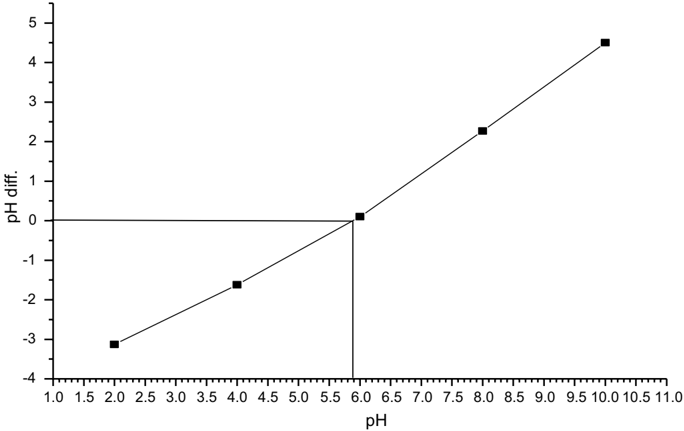
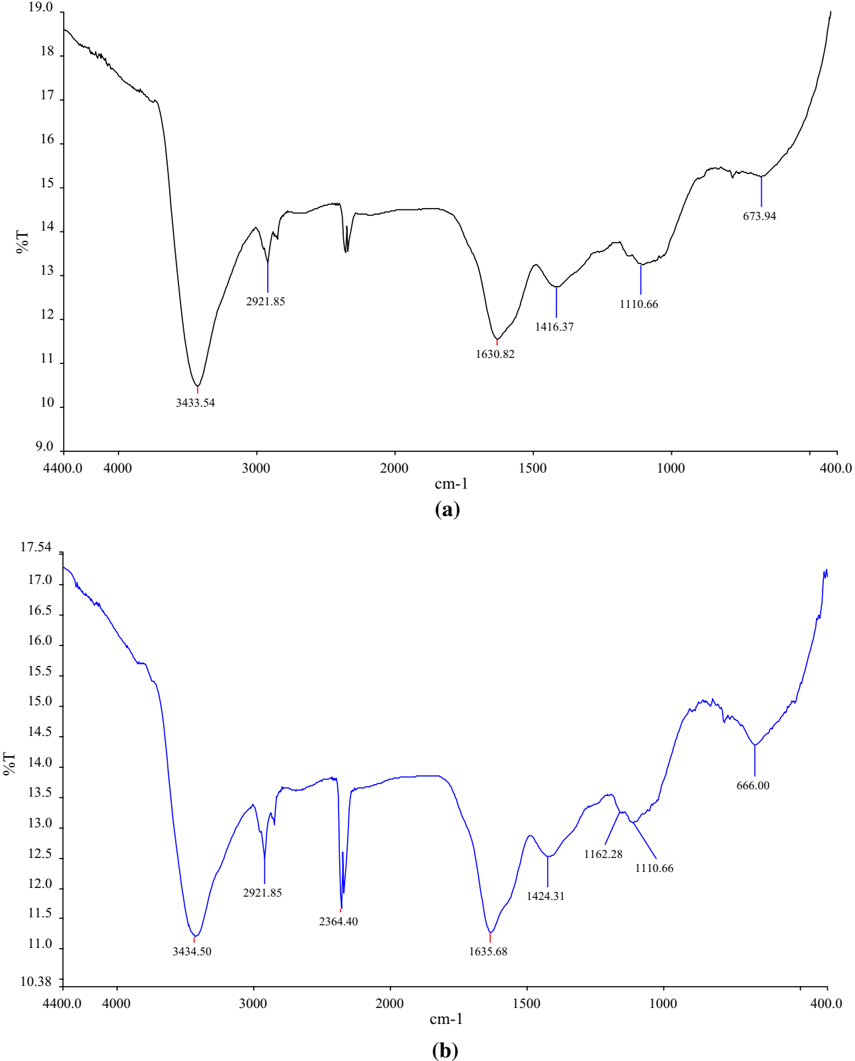
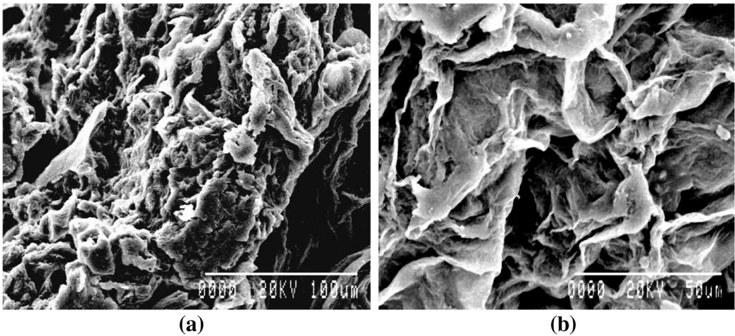
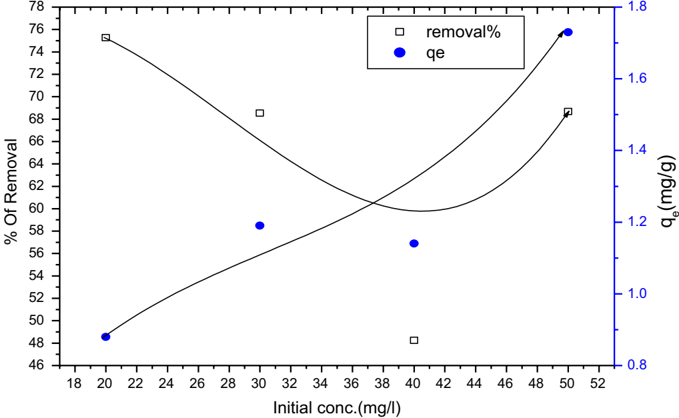
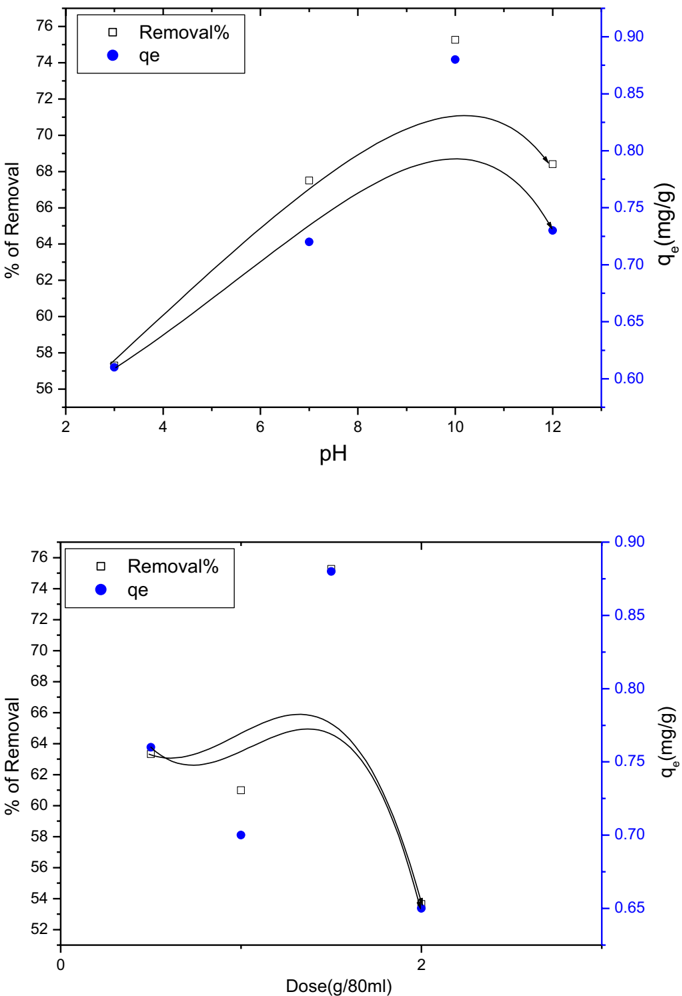
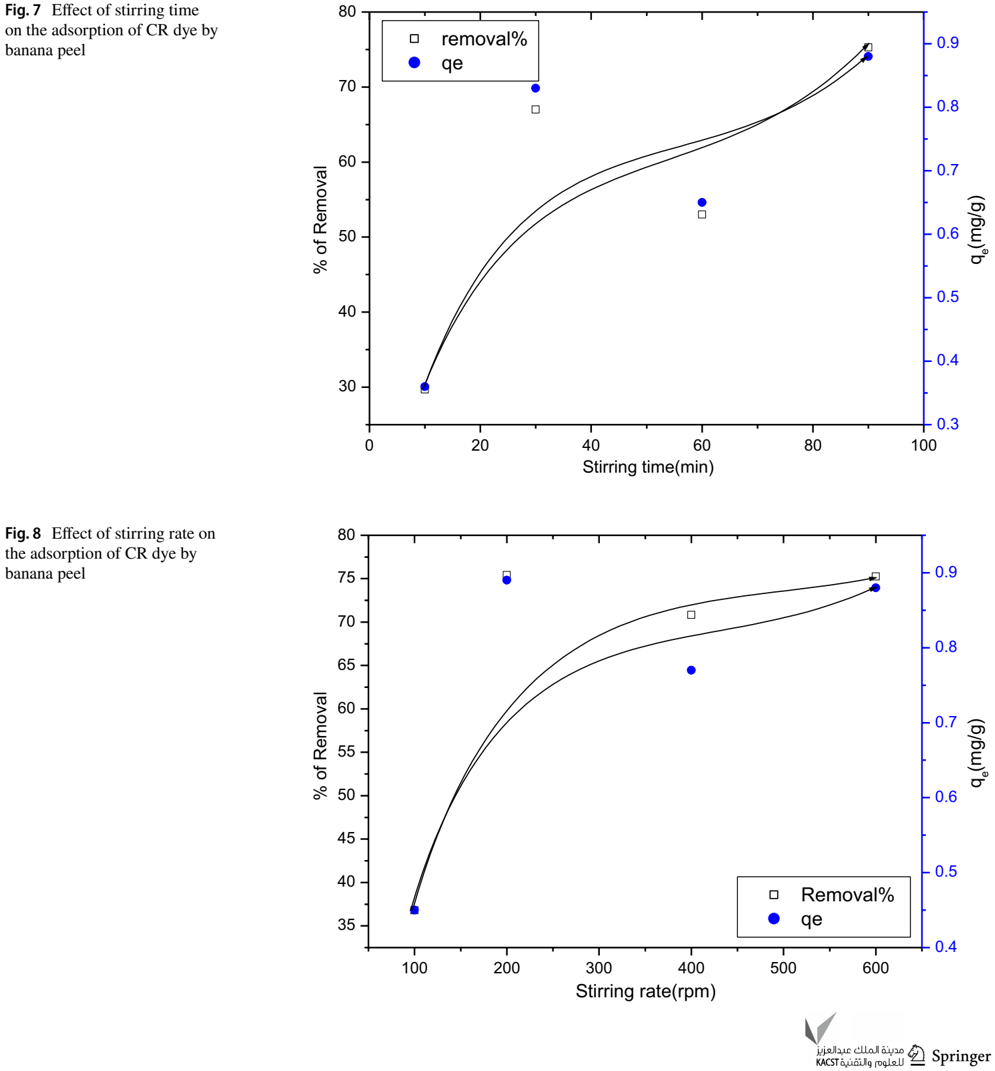
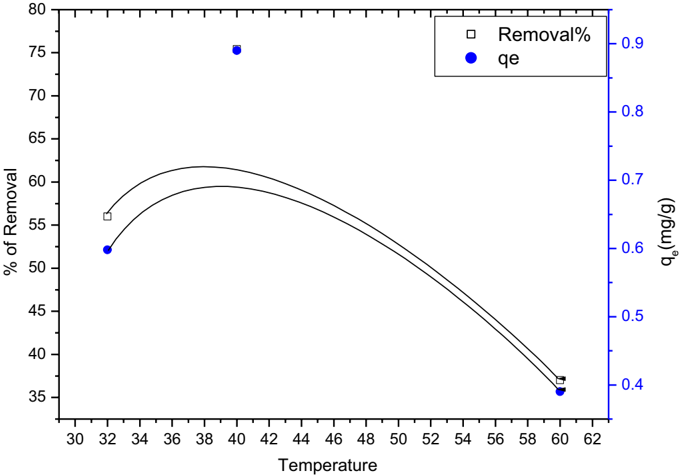
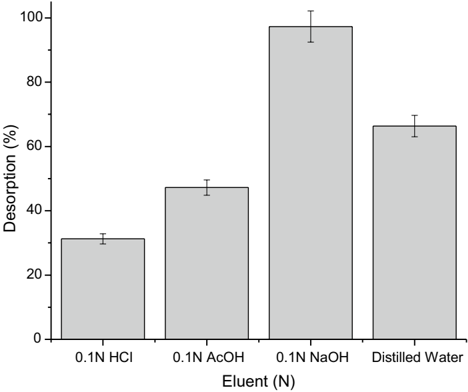
Potentiality of fruit peel (banana peel) was evaluated by adsorption of Congo red (CR) dye from aqueous solution. The adsorption study was performed by varying operating variables such as pH, initial concentration of CR, adsorbent dose, contact time and temperature. The dust of banana peel was characterized by different instrumental techniques such as point of zero charge, scanning electron microscopy and Fourier transformed infrared spectroscopy. The results revealed that the dye adsorption is favorable at higher pH (10). The equilibrium of dye adsorption was assessed by Freundlich and Langmuir isotherm models. Similarly, kinetics of CR adsorptions was assessed by pseudo-first-order and pseudo-second-order kinetics. Results revealed that isotherm and kinetics of dye adsorption fit well with Langmuir isotherm and pseudo-second-order kinetics, respectively. The dye adsorption capacity was recorded as 1.727 mg/g. The thermodynamics of the dye adsorption revealed that the adsorption is thermodynamically favorable, spontaneous and exothermic in nature. The regeneration study suggested that 97.3% dye removal can be achieved by regenerating the spent adsorbent with 0.1 N NaOH solution. Finally, it can be concluded that banana peel could be an efficient adsorbent for removal of Congo red from aqueous medium.
Overview
The claims and statistics of this paper haven’t been checked yet.
Run the check — free, no account needed. It reads the open-access text and checks the sources it cites.
Integrity signals
Registry
Cites
Statistics
Figures
Verification
Claims the paper makes
The claims and statistics of this paper haven’t been checked yet.
Run the check — free, no account needed. It reads the open-access text and checks the sources it cites.
Claims other papers make about this one
Each is checked against this paper’s own text: does it say what the citing paper says it does?
The check wasn’t confident either way, so it gives no verdict — never disputed.
In the citing paper
“Eco-friendly, minimize the environmental impact of Na/K-silicate hardener manufacture.”
From Bioactive, antioxidant, industrial, and nutraceutical applications of banana peel (2023) · cites this paper as [55]
Experimental — accuracy not yet measured
Self-check
Percentages, sums and reported differences re-computed from the paper’s own numbers.
The self-check needs the paper’s full text.
Citations
Cites
Banerjee, S., & Chattopadhyaya, M. C. (2017) · Arabian Journal of Chemistry · doi:10.1016/j.arabjc.2013.06.005 · Cited by 791
Research works printed but not linked: 44
- Achak M, Hafidi A, Ouazzani N, Sayadi S, Mandi L (2009) Low cost biosorbent “banana peel” for the removal of phenolic compounds from olive mill wastewater: kinetic and equilibrium studies. J Hazard Mater 166:117–125 · DOI
- Alkan M, Demirbas O, Celikcapa S, Dogan M (2004) Sorption of Acid Red 57 from aqueous solution onto sepiolite. J Hazard Mater 116:135–145 · DOI
- Almeida CAP, Debacher NA, Downs AJ, Cottet L, Mello CAD (2009) Removal of methylene blue from colored effluents by adsorption on montmorillonite clay. J Colloid Interface Sci 332:46–53 · DOI
- Amel K, Hassen AM, Kerroum D (2012) Isotherm and kinetics study of biosorption of cationic dye onto banana peel. Energy Proc 19:286–295 · DOI
- Anhwange BA, Ugye TJ, Nyiaatagher TD (2009) Chemical composition of Musa sapientum (Banana) peel. E J Environ Agric Food Chem 8(6):437–442
- Barka N, Qouzal S, Assabbane A, Nounhan AYA (2011) Ichou Removal of reactive yellow 84 from aqueous solutions by adsorption onto hydroxyapaite. J Saudi Chem Soc 15:263–267 · DOI
- Bhaumik R, Mondal NK, Chattoraj S (2017) An optimization study for defluoridation from synthetic fluoride solution using scale of Indian major carp Catla (Catla catla): an unconventional biosorbent. J Fluor Chem 195:57–69 · DOI
- Chan SL, Ong S-T (2016) Equilibrium, kinetic and thermodynamic studies of a few potential biosorbent for the removal of Basic Blue 3 and Congo red dyes: pineapple (Anaras comosus) plant stem. J Taiwan Inst Chem Eng 61:306–315 · DOI
- Chawla S, Singh N (2017) Zinc peroxide nanomaterial as an absorbent for removal of congo red dye from waste water. Ecotoxicol Environ Safety 135:68–74 · DOI
- Crini G (2006) Non-conventional low-cost adsorbents for dye removal: a review. Bioresour Technol 60:67–75
- Dawood S, Sen TK (2012) Removal of anion dye congo red from aqueous solution by raw pine and acid-treated pine cone powder as adsorbent: equilibrium, thermodynamic, kinetics, mechanism and process design. Water Res 46:1933–1946 · DOI
- Din MI, Hussain Z, Mirza ML, Athar MM, Madri A, Ahmed S (2013) Biosorption of toxic congo red dye from aqueous solution by ecofriendly biosorbent Saccharum bengalense: kinetics and Thermodynamics. Desalin Water Treat 51:28–30 · DOI
- Dogan M, Alkan M, Turkyilmaz A, Ozdemir Y (2004) Kinetics and mechanism of removal of methylene blue by adsorption onto perlite. J Hazard Mater 109:141–148 · DOI
- Fathi MR, Astaram A, Farhangi A (2015) Removal of direct red 23 from aqueous solution using corn stalks: isotherms, kinetics and thermodynamic studies. Spectrochim Acta Part A 135:364–372 · DOI
- Garg VK, Kumar R, Gupta R (2004) Removal of malachite green dye from aqueous solution by adsorption using agro-industry waste: a case study of Prosopis cineraria. Dyes Pigm 62:1 · DOI
- Ghorai S, Pal S (2013) Effective removal of Congo red dye from aqueous solution using modified xanthan gum silica hybrid nanoparticle as adsorbent. Bioresour Technol 144:485–491 · DOI
- Gundogan R, Acemioglu B, Alma MH (2004) Copper(II) adsorption from aqueous solution by herbaceous peat. J Colloid Interface Sci 269:393–399 · DOI
- Han R, Ding D, Xu Y, Zou W, Wang Y, Li Y, Zou L (2008) Use of rice husk for the adsorption of congo red from aqueous solution in column mode. Bioresour Technol 99:2938–2946 · DOI
- Hu Z, Chen H, Ji F, Yuan S (2010) Removal of Congo Red from aqueous solution by cattail root. J Hazard Mater 173:292–297 · DOI
- Li C, Cui J, Wang F, Peng W, He Y (2015) Adsorption removal of Congo red by epichlorohydrin-modified cross-linked chitosan adsorbent. Desalin Water Treat 57(30):14060–14066 · DOI
- Mondal NK, Das K, Das B, Sadhukhan B (2015) Effective utilization of calcareous soil towards the removal of methylene blue from aqueous solution. Clean Techn Environ Policy. https://doi.org/10.1007/s10098-015-1065-z · DOI
- Mondal NK, Roy S (2015) Optimization study of adsorption parameters for removal of phenol on gastropod shell dust using response surface methodology. Clean Technol Environ Policy 18(2):429–447 · DOI
- Mondal NK, Roy A (2018) Potentiality of a fruit peel (banana peel) toward abatement of fuoride from synthetic and underground water samples collected from fuoride afected villages of Birbhum district. Appl Water Sci 8:90. https://doi.org/10.1007/s13201-018-0729-3 · DOI
- Munagapati VS, Kim D-S (2016) Adsorption of anionic azo dye congo red from aqueous solution by cationic modified orange peel powder. J Mol Liq 220:540–548 · DOI
- Nandi BK, Goswami A, Purkait MK (2009a) Adsorption characteristics of brilliant green dye on kaolin. J Hazard Mater 161:387–395 · DOI
- Nandi BK, Goswami A, Purkait MK (2009b) Removal of cationic dyes from aqueous solutions by kaolin: kinetic and equilibrium studies. Appl Clay Sci 42:583–590 · DOI
- Ozcan A, Oncu EM, Ozcan AS (2006) Kinetics, isotherm and thermodynamic studies of adsorption of Acid Blue 193 from aqueous solutions onto natural sepiolite. Colloids Surf 277:90–97 · DOI
- Pal J, Deb MK (2014) Efficient adsorption of congo red dye from aqueous solution using green synthesized coinage nanoparticles coated activated carbon beads. Appl Nano Sci 4(8):967–978 · DOI
- Priyantha N, Lim LBL, Tennakoon DTB, Laiw ETZ, Ing CH, Liyandeniya AB (2018) Biosorption of cationic dyes on breadfruit (Artocarpus altilis) peel core. Appl Watersci 8:37. https://doi.org/10.1007/s13201-018-0648-3 · DOI
- Roy TK, Mondal NK (2017) Biosorption of Congo Red from aqueous solution onto burned root of Eichhornia crassipes biomass. Appl Water Sci 7(4):1841–1854 · DOI
- Roy P, Mondal NK, Das K (2014) Modeling of the adsorptive removal of arsenic: a statistical approach. J Environ Chem Eng 2:585–597 · DOI
- Saha PS, Bhattachrya P, Sinha K, Chowdhury S (2013) Biosorption of Congo red and Indigo carmine by nonviable biomass of a new Diezta strain isolated from the effluent of a textile industry. Desalin Water Treat 51:5840–5847 · DOI
- Sartape AS, Mandhare AM, Jadhav VV, Raut PD, Anuse MA, Kolekar SS (2017) Removal of malachite green dye from aqueous solution with adsorption technique using Limonia acidissima (wood apple) shell as low-cost adsorbent. Arab J Chem 10:S3229–S3238 · DOI
- Shu J, Wang Z, Huany Y, Ren C, Zheng W (2015) Adsorption removal of congo red from aqueous solution by polyhedral Cu2O nanoparticles: kinetics, isotherms, thermodynamics and mechanism analysis. J Alloys Compd 633:338–346 · DOI
- Srivastava VC, Swamy MM, Mall ID, Prasad B, Mishra IM (2006) Adsorptive removal of phenol by bagasse fly ash and activated carbon: equilibrium, kinetics and thermodynamics. Colloids Surf A 272(1–2):89 · DOI
- Sumanjit RS, Mahajan RK (2012) Kinetic and equilibrium studies of adsorption of dye congo red from aqueous solution on bagasse charcoal and banana peels. J Technol Surf Sol 28(3–4):133–147
- Tor A, Cengeloglu Y (2006) Removal of congo red from aqueous solution by adsorption onto acid activated red mud. J Hazard Mater 138(2):409–415 · DOI
- Torkian I, Asthiani BG, Amereh E, Mohammadi N (2012) Adsorption of congo red onto mesoporous carbon material: equilibrium and kinetic studies. Desalin Water Treat 44:118–127 · DOI
- Turabik M (2008) Adsorption of basic dyes from single and binary component systems onto bentonite: simultaneous analysis of Basic Red 46 and Basic Yellow 28 by first order derivative spectrophotometric analysis method. J Hazard Mater 158:52–64 · DOI
- Vimonses V, Lei S, Jin B, Chow CWK, Saint C (2009) Adsorption of Congo red by three Australian kaolins. Appl Clay Sci 43(3–4):465–472 · DOI
- Wang YC, Ranjini KN, Wan-Nurdiyana WA (2014) Removal of congo red and acid yellow 36 dye using orange peel and rice husk as adsorbent. Orient J Chem. https://doi.org/10.13005/ojc/300217 · DOI
- Wanyonyi WC, Onyari JM, Shiundu PM (2014) Adsorption of congo red dye from aqueous solutions using roots of Eichhornia crassipes: kinetic and equilibrium studies. Energy Proc 50:862–869 · DOI
- Yokwana K, Kuvarega AT, Mhlanga SD, Nxumalo EN (2018) Mechanistic aspects for the removal of Congo red dye from aqueous media through adsorption over N-doped graphene oxide nanoadsorbents prepared from graphite flakes and powders. Phys Chem Earth. https://doi.org/10.1016/j.pce.2018.08.001 · DOI
- Zhang Z, Moghaddam L, Hara IM, Doherty WOS (2011) Congo Red adsorption by ball-milled sugarcane bagasse. Chem Eng J 178:122–128 · DOI
Cited by
Sorted by citations
Banana peel as a biosorbent for the decontamination of water pollutants. A review
Akpomie, K. G., & Conradie, J. (2020) · Environmental Chemistry Letters · doi:10.1007/s10311-020-00995-x · Cited by 239
Nicola, R., Muntean, S.-G., Nistor, M.-A., Putz, A.-M., Almásy, L., & Săcărescu, L. (2020) · Chemosphere · doi:10.1016/j.chemosphere.2020.127737 · Cited by 60
Bioactive, antioxidant, industrial, and nutraceutical applications of banana peel
Bhavani, M., Morya, S., Saxena, D., & Awuchi, C. G. (2023) · International Journal of Food Properties · doi:10.1080/10942912.2023.2209701 · Cited by 57
“[54] Powdered banana peel in calcined halloysite replacement on the setting times and engineering properties on the geopolymer binders Geo-polymer binding Eco-friendly, minimize the environmental impact of Na/K-silicate hardener manufacture.”
BackgroundNemaleu, J. G. D., Kaze, R. C., Tome, S., Alomayri, T., Assaedi, H., Kamseu, E., Melo, U. C., & Sglavo, V. M. (2021) · Construction and Building Materials · doi:10.1016/j.conbuildmat.2021.122480 · Cited by 46
Metadata
- Authors
- Mondal, N. K., & Kar, S.
- Affiliations
- University of Burdwan (IN)
- Corresponding author
- Mondal, Naba Kumar
- ORCID
- Mondal, Naba Kumar
- Venue
- Applied Water Science
- Published
- 2018-09-18
- Volume
- 8
- Issue
- 6
- ISSN
- 2190-5487 (ISSN-L)
- 2190-5495
- OpenAlex
- W2891066154
- Cited by
- 180
- References
- 1
- Citations by year
- 2026: 24 · 2025: 22 · 2024: 28 · 2023: 29 · 2022: 32 · 2021: 25 · 2020: 12 · 2019: 7
- FWCI
- 4.82
- Type
- journal article
- Language
- en
- Open access
- gold
- doi.org
- Licence
- Locations
- Applied Water Science (publishedVersion, cc-by)
- DOAJ (DOAJ: Directory of Open Access Journals) (submittedVersion, cc-by-sa)
- Topics
- Physical Sciences › Environmental Science › Water Science and Technology › Adsorption and biosorption for pollutant removal
- Physical Sciences › Environmental Science › Water Science and Technology › Coagulation and Flocculation Studies
- Physical Sciences › Environmental Science › Environmental Engineering › Environmental remediation with nanomaterials
- Keywords
- banana peel, Congo red, dye adsorption, low-cost biosorbent, Langmuir isotherm, pseudo-second-order kinetics, adsorption thermodynamics, adsorbent regeneration, pH effect on adsorption, textile wastewater treatment
About these checks
Registry, retraction, Cites and statistics results are computed, not judged, with one exception: a printed reference that no index lists is read once by a model before it counts as a citation error. Claims are extracted by a model and kept only when their quote appears verbatim in the text; each cited source is then checked, with a model’s help, for whether it says what the claim relies on. Those verdicts can be wrong — read the claim’s quote and the cited source before relying on one.
Statistics and arithmetic are recomputed, not judged.
Confidence bands are shown only for fields calibrated on our annotated test set. None is calibrated yet, so no band is shown.
What counts as a claim ›How we measure confidence ›How we check this ›
Are you an author, or do you see a problem with this page? Request a review
How to cite
Cite CoChat for the checks on this page, and the paper for its own findings.
- This page
- CoChat. (2026). Citation check: Potentiality of banana peel for removal of Congo red dye from aqueous solution: isotherm, kinetics and thermodynamics studies. https://app.cochat.ai/papers/10.1007/s13201-018-0811-x
- The paper
- Mondal, N. K., & Kar, S. (2018). Potentiality of banana peel for removal of Congo red dye from aqueous solution: isotherm, kinetics and thermodynamics studies. Applied Water Science. https://doi.org/10.1007/s13201-018-0811-x
