

The DOI matches its Crossref record; 94 of the 95 references it cites were found in a registry or an index.
IgG Fc engineering to modulate antibody effector functions
Open accessAbstract
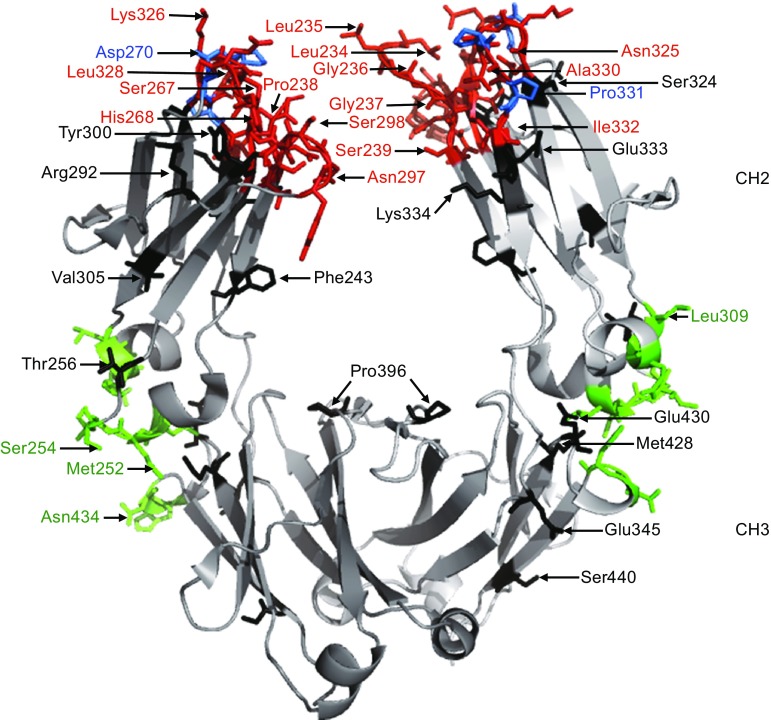
Therapeutic monoclonal antibodies are among the most effective biotherapeutics to date. An important aspect of antibodies is their ability to bind antigen while at the same time recruit immune effector functions. The majority of approved recombinant monoclonal antibody therapies are of the human IgG1 subclass, which can engage both humoral and cellular components of the immune system. The wealth of information generated about antibodies has afforded investigators the ability to molecularly engineer antibodies to modulate effector functions. Here, we review various antibody engineering efforts intended to improve efficacy and safety relative to the human IgG isotype. Further, we will discuss proposed mechanisms by which engineering approaches led to modified interactions with immune components and provide examples of clinical studies using next generation antibodies.
Overview
The claims and statistics of this paper haven’t been checked yet.
Run the check — free, no account needed. It reads the open-access text and checks the sources it cites.
Integrity signals
Registry
Cites
Statistics
Figures
Verification
Claims the paper makes
The claims and statistics of this paper haven’t been checked yet.
Run the check — free, no account needed. It reads the open-access text and checks the sources it cites.
Claims other papers make about this one
Each is checked against this paper’s own text: does it say what the citing paper says it does?
The cited source says what the claim attributes to it.
In the citing paper
“In fact, IgG Fc glycosylation is critical to many functions of antibody effectors through modulating Fc-FcγR interactions [220].”
From GANAB and N-Glycans Substrates Are Relevant in Human Physiology, Polycystic Pathology and Multiple Sclerosis: A Review (2022) · cites this paper as [220]
Self-check
Percentages, sums and reported differences re-computed from the paper’s own numbers.
The self-check needs the paper’s full text.
Citations
Cites
Fcγ receptors as regulators of immune responses
Nimmerjahn, F., & Ravetch, J. V. (2008) · Nature Reviews Immunology · doi:10.1038/nri2206 · Cited by 2,947
FcRn: the neonatal Fc receptor comes of age
Roopenian, D. C., & Akilesh, S. (2007) · Nature Reviews Immunology · doi:10.1038/nri2155 · Cited by 2,346
Cartron, G., Dacheux, L., Salles, G. A., Solal‐Céligny, P., BARDOS, P., Colombat, P., & Watier, H. (2002) · Blood · doi:10.1182/blood.v99.3.754 · Cited by 1,954
Shields, R. L., Lai, J., Keck, R., O'Connell, L. Y., Hong, K., Meng, Y. G., Weikert, S. H. A., & Presta, L. G. (2002) · Journal of Biological Chemistry · doi:10.1074/jbc.m202069200 · Cited by 1,835
Shinkawa, T., Nakamura, K., Yamane, N., Shoji-Hosaka, E., Kanda, Y., Sakurada, M., Uchida, K., Anazawa, H., Satoh, M., Yamasaki, M., et al. (2003) · Journal of Biological Chemistry · doi:10.1074/jbc.m210665200 · Cited by 1,413
The therapeutic monoclonal antibody market
Ecker, D. M., Jones, S. D., & Levine, H. L. (2014) · mAbs · doi:10.4161/19420862.2015.989042 · Cited by 1,369
Shields, R. L., Namenuk, A. K., Hong, K., Meng, Y. G., Rae, J., Briggs, J. B., Xie, D., Lai, J., Stadlen, A., Li, B., et al. (2001) · Journal of Biological Chemistry · doi:10.1074/jbc.m009483200 · Cited by 1,172
Potent antibody therapeutics by design
Carter, P. J. (2006) · Nature reviews. Immunology · doi:10.1038/nri1837 · Cited by 1,124
THE COVALENT STRUCTURE OF AN ENTIRE γG IMMUNOGLOBULIN MOLECULE
Edelman, G. M., Cunningham, B. A., Gall, W. E., Gottlieb, P. D., Rutishauser, U. S., & Waxdal, M. J. (1969) · Proceedings of the National Academy of Sciences · doi:10.1073/pnas.63.1.78 · Cited by 903
Engineered antibody Fc variants with enhanced effector function
Lazar, G. A., Dang, W., Karki, S., Vafa, O., Peng, J. S., Hyun, L., Chan, C. S. C., Chung, H. S., Eivazi, A., Yoder, S. C., et al. (2006) · Proceedings of the National Academy of Sciences · doi:10.1073/pnas.0508123103 · Cited by 824
Cited by
Sorted by citations
Items 201–300 of 357
Xiang, Z., Li, Z., Chen, X., & Fu, Y. (2025) · Frontiers in Immunology · doi:10.3389/fimmu.2025.1562875 · Cited by 8
Liu, C., Yu, C., Yang, Y., Huang, J., Yu, X., Duan, M., Wang, L., & Wang, J. (2021) · International Immunopharmacology · doi:10.1016/j.intimp.2021.108112 · Cited by 8
Nawab, D. H. (2021) · Human Vaccines & Immunotherapeutics · doi:10.1080/21645515.2021.1985891 · Cited by 9
Research Progress of Antibody–Drug Conjugate Therapy for Advanced Gastric Cancer
Wang, N., Mei, Q., Wang, Z., Zhao, L., Zhang, D., Liao, D., Zuo, J., Xie, H., Jia, Y., & Kong, F. (2022) · Frontiers in Oncology · doi:10.3389/fonc.2022.889017 · Cited by 9
Sampei, Z., Koo, C. X., Teo, F. J., Toh, Y. X., Fukuzawa, T., Gan, S. W., Nambu, T., Ho, A. W. S., Honda, K., Igawa, T., et al. (2023) · Antibodies · doi:10.3390/antib12020036 · Cited by 7
Tabrizi, S., Martin-Alonso, C., Xiong, K., Blewett, T., Sridhar, S., An, Z., Patel, S., Rodriguez‐Aponte, S. A., Naranjo, C. A., Wang, S., et al. (2023) · bioRxiv (Cold Spring Harbor Laboratory) · doi:10.1101/2023.01.13.523947 · Cited by 6
Precision engineering of antibodies: A review of modification and design in the Fab region
Wang, S. A., Li, Y., Mei, J., Wu, S., Ying, G., & Yi, Y. (2024) · International Journal of Biological Macromolecules · doi:10.1016/j.ijbiomac.2024.133730 · Cited by 7
CD22 modulation alleviates amyloid β-induced neuroinflammation
Mai, Y. D., Zhang, Q., Fung, C. L., Leung, S. O., & Chong, C. H. (2025) · Journal of Neuroinflammation · doi:10.1186/s12974-025-03361-2 · Cited by 7
High, P. C., Liang, Z., Guernsey-Biddle, C., Subramanian, S., Shyu, Y.-M., Aldana, A. M., Toh, Y., & Carmon, K. S. (2025) · Cell Reports Medicine · doi:10.1016/j.xcrm.2025.102363 · Cited by 10
Qerqez, A. N., Hoffmann, K., Lee, A. G., Pareek, S., Hager, K., Mishra, A. K., Delidakis, G., Bentley, K., Kerr-Jones, L. E., Cabrera, M., et al. (2025) · Cell Reports · doi:10.1016/j.celrep.2025.116593 · Cited by 7
Kwon, N. H., Lee, J. H., & Kwon, I. (2022) · Pharmaceutics · doi:10.3390/pharmaceutics14091769 · Cited by 7
Chen, C., Wang, Z., Kang, M., Lee, K. B., & Ge, X. (2023) · Nucleic Acids Research · doi:10.1093/nar/gkad1001 · Cited by 7
Lefranc, M., & Lefranc, G. (2024) · Immunological Reviews · doi:10.1111/imr.13399 · Cited by 7
Screening Strategies for the Discovery of Ion Channel Monoclonal Antibodies
Colley, C. S., England, E., Linley, J. E., & Wilkinson, T. C. I. (2018) · Current Protocols in Pharmacology · doi:10.1002/cpph.44 · Cited by 8
Bhatti, M. M., Cai, A. G., & Theunissen, J.-W. F. (2019) · PLoS ONE · doi:10.1371/journal.pone.0219999 · Cited by 7
Communication pathways bridge local and global conformations in an IgG4 antibody
Tarenzi, T., Rigoli, M., & Potestio, R. (2021) · Scientific Reports · doi:10.1038/s41598-021-02323-x · Cited by 6
Szabo, M., Sárközy, D., Szigeti, M., Farsang, R., Kardos, Z., Kozma, Á., Csánky, E., Chung, D. S., Szekanecz, Z., & Guttman, A. (2022) · Frontiers in Bioengineering and Biotechnology · doi:10.3389/fbioe.2022.839374 · Cited by 7
Rhamnose modified antibodies show improved immune killing towards EGFR-positive solid tumor cells
Hong, H., Zhao, J. J., Zhou, K., Li, Y., Li, D., & Wu, Z. (2024) · Carbohydrate Research · doi:10.1016/j.carres.2024.109038 · Cited by 7
Removal of Fc Glycans from [89Zr]Zr-DFO-Anti-CD8 Prevents Peripheral Depletion of CD8+ T Cells
White, J. M., Keinänen, O. M., Cook, B. E., Zeglis, B. M., Gibson, H. M., & Viola, N. T. (2020) · Molecular Pharmaceutics · doi:10.1021/acs.molpharmaceut.0c00270 · Cited by 7
Taking the Hinge off: An Approach to Effector-Less Monoclonal Antibodies
Valeich, J. E., Boyd, D., Kanwar, M., Stenzel, D., Ghosh, D. D., Ebrahimi, A., Woo, J., Wang, J., & Ambrogelly, A. (2020) · Antibodies · doi:10.3390/antib9040050 · Cited by 7
Haskell, A. K., Kulas, J. A., Carter, W., Javens‐Wolfe, J., Hinkel, R. D., Moussaif, M., Smiley, J. S., Lazaro, O., Robertson, S., Palkowitz, A. D., et al. (2026) · Alzheimer s & Dementia · doi:10.1002/alz.71117 · Cited by 6
Albanese, M., Chen, H., Gapp, M., Muenchhoff, M., Yang, H.-H., Peterhoff, D., Hoffmann, K., Xiao, Q., Ruhle, A., Ambiel, I., et al. (2024) · Cell Reports Medicine · doi:10.1016/j.xcrm.2024.101483 · Cited by 7
Shi, P., Wang, Z., Sheng, W., Wang, Z., Wang, S., Zhang, C., Zhao, L., Zou, J., & Zhou, H. (2025) · Veterinary Microbiology · doi:10.1016/j.vetmic.2025.110412 · Cited by 6
The Epitope-Specific Anti-human CD4 Antibody MAX.16H5 and Its Role in Immune Tolerance
Stahl, L., Dünkel, A., Hilger, N., Tretbar, S., & Fricke, S. (2019) · Frontiers in Immunology · doi:10.3389/fimmu.2019.01035 · Cited by 6
Yadav, R., Sukumaran, S., Lutman, J., Mitra, M. S., Halpern, W., Sun, T., Setiadi, A., Neighbors, M., Sheng, X. R., Yip, V., et al. (2023) · Journal of Pharmaceutical Sciences · doi:10.1016/j.xphs.2023.07.005 · Cited by 6
Foerster, J., & Molęda, A. (2020) · Viruses · doi:10.3390/v12040438 · Cited by 6
Katoh, T., & Yamamoto, K. (2021) · Journal of Applied Glycoscience · doi:10.5458/jag.jag.jag-2020_0013 · Cited by 6
Structural Study on the Impact of S239D/I332E Mutations in the Binding of Fc and FcγRIIIa
Jebamani, P., Sriramulu, D. K., Jung, S. T., & Lee, S. (2021) · Biotechnology and Bioprocess Engineering · doi:10.1007/s12257-021-0024-2 · Cited by 6
Perspectives of the Danger/Injury Model of Immunology as Applied to Antigen-Related Human Disorders
Land, W. G. (2023) · Springer eBooks · doi:10.1007/978-3-031-21776-0_1 · Cited by 7
A structural perspective on the design of decoy immune modulators
Lankipalli, S., & Ramagopal, U. A. (2021) · Pharmacological Research · doi:10.1016/j.phrs.2021.105735 · Cited by 6
A Perspective on the CD47-SIRPA Axis in High-Risk Neuroblastoma
Tang, X. X., Shimada, H., & Ikegaki, N. (2024) · Current Oncology · doi:10.3390/curroncol31060243 · Cited by 5
Mohammadi, A., Heydari, M. A., & Jamalpoor, Z. (2025) · Regenerative Engineering and Translational Medicine · doi:10.1007/s40883-025-00458-1 · Cited by 5
Nie, W., Yao, Y., Luo, B., Zhu, J., Li, S., Yang, X., Luo, T., Liu, W., & Shibing, Y. (2022) · Frontiers in Oncology · doi:10.3389/fonc.2022.755936 · Cited by 5
Hong, H., Han, L., Li, D., Gong, L., Zhou, K., Li, Y., Yu, H., Zhao, K., Shi, J., Zhou, Z., et al. (2022) · Angewandte Chemie · doi:10.1002/ange.202208773 · Cited by 5
Matrixed CDR grafting: A neoclassical framework for antibody humanization and developability
Gupta, P., Horspool, A. M., Trivedi, G., Moretti, G., Datar, A., Huang, Z.-F., Chiecko, J., Kenny, C. H., & Marlow, M. S. (2023) · Journal of Biological Chemistry · doi:10.1016/j.jbc.2023.105555 · Cited by 6
FcγRIIB (CD32B) antibodies enhance immune responses through activating FcγRs
Simpson, A. P., Oldham, R. J., Cox, K. L., Taylor, M. C., James, S., White, A. L., Bogdanov, Y. D., Glennie, M. J., Frendéus, B., Cragg, M. S., et al. (2025) · Clinical & Experimental Immunology · doi:10.1093/cei/uxaf015 · Cited by 5
Human IgG1 Fc pH-dependent optimization from a constant pH molecular dynamics simulation analysis
Lim, Y. Y., Lim, T. S., & Choong, Y. S. (2020) · RSC Advances · doi:10.1039/c9ra10712f · Cited by 5
Liu, T., Xu, J., Guo, Q., Zhang, D., Li, J., Qian, W., Guo, H., Zhou, X., & Hou, S. (2022) · Frontiers in Chemistry · doi:10.3389/fchem.2022.826923 · Cited by 7
The application of antibody-based agents in cancer therapy based on their mechanisms of action
Qian, K., Li, G., Zhang, S., Zou, Y., Ai, H., Zheng, X., Fu, W., Lei, C., & Hu, S. (2024) · Fundamental Research · doi:10.1016/j.fmre.2024.02.021 · Cited by 6
Mapping affinity and allostery in human IgG antibody Fc region-Fc γ receptor interactionsPreprint
Keith, A. D., Xu, T., Chernova, T. A., Keen, M. M., Bogacz, M., Nedeljković, M., Flowers, M. W., Brown, T. J., Frank, F., Ortlund, E. A., et al. (2025) · bioRxiv (Cold Spring Harbor Laboratory) · doi:10.1101/2025.03.28.645945 · Cited by 5
Genetically engineered IgG1 and nanobody oligomers acquire strong intrinsic CD40 agonism
Hesen, N. A., Anany, M. A., Freidel, A., Baker, M., Siegmund, D., Zaitseva, O., Wajant, H., & Lang, I. (2024) · Bioengineered · doi:10.1080/21655979.2024.2302246 · Cited by 4
Yang, H., Yang, L., Liu, Y., & Wang, L. (2025) · Biologics · doi:10.2147/btt.s500470 · Cited by 4
Cytokine Engineering Approaches for Regenerative Medicine
Li, S., You, W., & Martino, M. M. (2025) · Advanced Therapeutics · doi:10.1002/adtp.202500103 · Cited by 5
Engineering strategies of Anti-HIV antibody therapeutics in clinical development
Pihlstrom, N. L., & Bournazos, S. (2023) · Current Opinion in HIV and AIDS · doi:10.1097/coh.0000000000000796 · Cited by 4
Wang, Z., Kang, M., Ebrahimpour, A., Chen, C., & Ge, X. (2024) · Antibody Therapeutics · doi:10.1093/abt/tbae017 · Cited by 4
Hong, H., Zhou, K., Han, L. G., Li, Y., & Wu, Z. (2024) · Chemistry - A European Journal · doi:10.1002/chem.202403539 · Cited by 4
Chapter 1: Monoclonal Antibodies: Structure, Physicochemical Stability, and Protein Engineering
Mills, B. J., Moussa, E. M., & Jameel, F. (2020) · AAPS advances in the pharmaceutical sciences series · doi:10.1007/978-3-030-31415-6_1 · Cited by 4
Introduction to Antibody–Drug Conjugates
Lambert, J. M., & van Delft, F. L. (2021) · Royal Society of Chemistry eBooks · doi:10.1039/9781839165153-00001 · Cited by 4
A Novel Fc-Engineered Anti-HER2 Bispecific Antibody With Enhanced Antitumor Activity
Mohammadi, M., Jeddi‐Tehrani, M., Golsaz‐Shirazi, F., Arjmand, M., Torkashvand, F., Bahadori, T., Judaki, M. A., Shiravi, F., Zare, H. A., Haghighat, F. N., et al. (2023) · Journal of Immunotherapy · doi:10.1097/cji.0000000000000464 · Cited by 4
Stellabody: A novel hexamer‐promoting mutation for improved IgG potency
Whitehead, C. A., Wines, B. D., Davies, A. M., McDonnell, J. M., Trist, H. M., Esparon, S. E., & Hogarth, P. M. (2024) · Immunological Reviews · doi:10.1111/imr.13400 · Cited by 4
Factor VIII-Fc Activates Natural Killer Cells via Fc-Mediated Interactions With CD16
Lagassé, H. A. D., Hopkins, L., Jankowski, W., Jacquemin, M. G., Sauna, Z. E., & Golding, B. (2021) · Frontiers in Immunology · doi:10.3389/fimmu.2021.692157 · Cited by 4
Tuning antibody stability and function by rational designs of framework mutations
Ng, J. C.-F., Chenoweth, A. M., Sciscio, M. L. D., Grandits, M., Cheung, A., Chu, T., McCraw, A. J., Chauhan, J., Liu, Y., Guo, D., et al. (2025) · mAbs · doi:10.1080/19420862.2025.2532117 · Cited by 5
Enhancement of Protein–Protein Interactions by Destabilizing Mutations Revealed by HDX-MS
Hamuro, Y., Armstrong, A., Branson, J. D., Wu, S., Huang, R. Y. ‐., & Jacobs, S. (2025) · Biomolecules · doi:10.3390/biom15081201 · Cited by 3
Zhong, J., Huang, M., Qiu, H., Seol, H., Yan, Y., Wang, S., & Li, N. (2024) · Journal of Pharmaceutical Sciences · doi:10.1016/j.xphs.2024.11.024 · Cited by 3
Resistance to Antibody-Drug Conjugate
Hochberg, J. C., & Alexander, S. W. (2019) · Resistance to targeted anti-cancer therapeutics · doi:10.1007/978-3-030-24424-8_3 · Cited by 3
Wei, Y.-L., Wegesser, T. C., Kuhns, S. T., Werner, J. A., Lebrec, H. N., & Wang, X. (2022) · Journal of Immunotoxicology · doi:10.1080/1547691x.2022.2113841 · Cited by 3
Self-citationZhao, Y., Raidas, S., Mao, Y., & Li, N. (2024) · Journal of Proteome Research · doi:10.1021/acs.jproteome.3c00311 · Cited by 3
Development and characterization of DIA 12.3, a fully human intact anti-CEACAM1 monoclonal antibody
Centonze, M., Fiori, V., Kujawski, M., Li, L., Wong, P. W., Williams, L., Mambro, T. D., Dominici, S., Sparti, A., Shively, J. E., et al. (2024) · PLoS ONE · doi:10.1371/journal.pone.0295345 · Cited by 3
Striking the Balance with a PD-L1×4–1BB Bispecific Antibody
Ha, J., Grippin, A., Kim, B. Y. S., & Jiang, W. (2024) · Cancer Research · doi:10.1158/0008-5472.can-24-0566 · Cited by 3
Viral Vectors for Treatment of Human Disease: Therapeutic and Manufacturing Challenges
Diallo, J. (2019) · Elsevier eBooks · doi:10.1016/b978-0-12-814470-1.00007-1 · Cited by 3
Synthetically Useful Glycosyltransferases for the Access of Mammalian Glycomes
Guan, W., Edmunds, G. A., Wu, Z., & Li, L. (2019) · Royal Society of Chemistry eBooks · doi:10.1039/9781788016575-00046 · Cited by 3
Coronavirus Pandemic: Treatment and Future Prevention
Lundstrom, K. H. (2020) · Future Microbiology · doi:10.2217/fmb-2020-0174 · Cited by 4
Gamain, B., Brousse, C., Rainey, N. E., Diallo, B., Paquereau, C.-E., Desrames, A., Ceputyte, J., Semblat, J., Bertrand, O., Gangnard, S., et al. (2022) · Science Advances · doi:10.1126/sciadv.abl4363 · Cited by 3
NHDL, a recombinant V L /V H hybrid antibody control for IgG2/4 antibodies
Lau, C., McAdam, M. B., Bergseth, G., Grevys, A., Bruun, J., Ludviksen, J. K., Fure, H., Espevik, T., Moen, A. R., Andersen, J. T., et al. (2019) · mAbs · doi:10.1080/19420862.2019.1686319 · Cited by 3
Engineering Antibody‐Based Therapeutics: Progress and Opportunities
Nguyen, A. W., & Maynard, J. A. (2021) · Wiley eBooks · doi:10.1002/9783527815128.ch13 · Cited by 4
Human anti-ACE2 monoclonal antibodies as pan-sarbecovirus prophylactic agentsPreprint
Zhang, F., Jenkins, J., de Carvalho, R. A., Nakandakari-Higa, S., Chen, T., Abernathy, M. E., Nyakatura, E. K., Andrew, D. P., Lebedeva, I., Lorenz, I. C., et al. (2022) · bioRxiv (Cold Spring Harbor Laboratory) · doi:10.1101/2022.08.24.505169 · Cited by 3
Nishibori, S., Takeda, Y., Igase, M., & Mizuno, T. (2025) · Veterinary Immunology and Immunopathology · doi:10.1016/j.vetimm.2025.111000 · Cited by 2
Sakatis, M. Z., Norona, L. M., Karmel, J., Proctor, W. R., Sarr, F. H., Rana, P., Zane, D., Rae, J. M. C., Faber, S. C., Ravindra, K. C., et al. (2025) · Chemical Research in Toxicology · doi:10.1021/acs.chemrestox.5c00235 · Cited by 2
Fucosylation limits ADCC in clinically used anti‐ RhD monoclonal antibodies
Koike, G., Bondt, A., Schulte, D., Leuvenink, R. W., Mons, D. J., Ligthart, P. C., Verweij, E. J. T., Heck, A. J. R., van der Schoot, C. E., & Vidarsson, G. (2025) · Transfusion · doi:10.1111/trf.18449 · Cited by 2
Meng, Y., Wang, L., Yang, Y., Su, L., Ge, Y., Xi, H., Lin, S., Chen, Y., Liu, W., Wang, W., et al. (2025) · mAbs · doi:10.1080/19420862.2025.2597610 · Cited by 2
Biel, T. G., Faison, T., Matthews, A. M., Ortega‐Rodriguez, U., Falkowski, V. M., Meek, E. C., Bush, X., Flores, M. J., Johnson, S., Wu, W. W., et al. (2024) · Bioengineering & Translational Medicine · doi:10.1002/btm2.10666 · Cited by 2
A Novel Tetravalent CD95 /Fas Fusion Protein With Superior CD95L / FasL Antagonism
Lang, I., Paulus, O., Zaitseva, O., & Wajant, H. (2024) · Proteins Structure Function and Bioinformatics · doi:10.1002/prot.26741 · Cited by 2
Bednova, O., Ketchemen, J. P., Mslati, H., Barok, M., Joensuu, H., Zeytuni, N., Gentile, F., Sanche, L., Fonge, H., & Leyton, J. V. (2025) · Biomolecules · doi:10.3390/biom15050606 · Cited by 2
Herrán, M., & Anaya, J. (2025) · Current Opinion in Immunology · doi:10.1016/j.coi.2025.102606 · Cited by 2
Improvement of Key Characteristics of Antibodies
Brewis, N. (2020) · Learning materials in biosciences · doi:10.1007/978-3-030-54630-4_11 · Cited by 2
Novel immunotherapy strategies involving matrix metalloproteinase (MMP) family
Garay-Canales, C. A., Díaz-Alvarez, L., & López-Cortés, G. I. (2021) · Elsevier eBooks · doi:10.1016/b978-0-12-822028-3.00015-7 · Cited by 2
Graham, W. V., Bonito-Oliva, A., Agostinelli, R., Karim, R., Deguzman, J., Kelleher, K. S., Petro, M., Lindström, A.-K., Graff, C., Wood, K. M., et al. (2019) · bioRxiv (Cold Spring Harbor Laboratory) · doi:10.1101/558809 · Cited by 2
Jebamani, P., Jo, M., Park, S., Kim, S., Jung, S. T., Lee, S., & Wu, S. (2025) · ACS Synthetic Biology · doi:10.1021/acssynbio.5c00035 · Cited by 1
Mueller, A. L., Lamcaj, S., Garforth, S., Hiner, C. R., Woodley, D., Paraiso, K. D., Tian, M., Low, S., Youngblood, B., Almo, S. C., et al. (2025) · Journal of Virology · doi:10.1128/jvi.00188-25 · Cited by 1
Liu, Y., Tan, M., Chua, M., & So, S. K. (2025) · Cancers · doi:10.3390/cancers17203357 · Cited by 1
Stockmann, A. P., Vincent, S., Herschelman, L., Huang, C.-S., Ma, J., Fallon, D., Kirby, P. J., Gutierrez, E., Talbot, D., Hicks, S. W., et al. (2025) · Cell Reports Medicine · doi:10.1016/j.xcrm.2025.102518 · Cited by 1
Fc gamma receptor binding modulates IgG clearance in cancer cachexia
Remaily, B., Kim, K., Thomas, J. W., Adeluola, A. A., Young, G., Hai, M., Fukuda, M., Mulcahy, G., Stanton, C., Granchie, L., et al. (2026) · Frontiers in Immunology · doi:10.3389/fimmu.2026.1676732 · Cited by 1
Wu, H. H., Crames, M., Wei, Y., Liu, D., Gueneva-Boucheva, K., Son, I., Frego, L., Han, F., Kroe‐Barrett, R., Nixon, A. E., et al. (2022) · Journal of Pharmaceutical Sciences · doi:10.1016/j.xphs.2022.06.014 · Cited by 1
Harnessing Natural Killer Cells for Cancer Therapy
Rajalingam, R. (2025) · Springer eBooks · doi:10.1007/978-3-032-00767-4_194 · Cited by 1
In Vitro Assays for Assessing Potential Adverse Effects of Cancer Immunotherapeutics
Li, J., Mitra, M. S., & Rao, G. K. (2020) · Methods in pharmacology and toxicology · doi:10.1007/978-1-0716-0171-6_12 · Cited by 1
Therapeutic antibody development—Remington chapter
Geist, B. J., Zheng, S., & Xu, Y. (2020) · Elsevier eBooks · doi:10.1016/b978-0-12-820007-0.00024-6 · Cited by 1
Mitochondrial Regulation of Inflammation in Cancer
Inigo, J. R., Woytash, J., Kumar, R., & Chandra, D. (2021) · Physiology in health and disease · doi:10.1007/978-3-030-67951-4_13 · Cited by 1
Monoclonal Antibody-Directed Therapy
Kayser, V., & Datta‐Mannan, A. (2022) · MDPI eBooks · doi:10.3390/books978-3-0365-2872-4 · Cited by 1
Robinson, J. I., Yusof, M. Y. M., Davies, V., Wild, D., Morgan, M. D., Taylor, J., El-Sherbiny, Y. M., Morris, D. L., Liu, L., Rawstron, A. C., et al. (2021) · medRxiv · doi:10.1101/2021.08.25.21262612 · Cited by 1
New, Old, and Shared Antibody Specificities in Autoimmune Diseases
Frasca, L., Mennella, A., & Palazzo, R. (2024) · Antibodies · doi:10.3390/antib13010023 · Cited by 1
Alonso, S. G. (2018) · Gredos (University of Salamanca) · doi:10.14201/gredos.137341
Analytical comparison of Soliris® and its biosimilar, PRK-001
Жученко, М. А., Orlova, N. V., Zybin, D., Nikolaeva, V. V., Klishin, A. A., Lobanova, N. V., Soldatov, V. O., Romanova, N. A., & Seregin, Y. A. (2020) · Biotekhnologiya · doi:10.21519/0234-2758-2020-36-1-73-86
McNamara, A. (2019) · ERA: Education and Research Archive (University of Alberta) · doi:10.7939/r3-5838-dr52
The therapeutical approaches for rare diseases through the immune processes of IgG Fc Receptors
Wu, Z. H. (2020) · Global Journal of Medical and Clinical Case Reports · doi:10.17352/2455-5282.000104
Covid-19: features of the pathogenesis of the disease and targets for immunotherapeutic effects
Klimov, N. A., & Simbirtsev, A. S. (2020) · Medical academic journal · doi:10.17816/maj48959
Gamain, B., Brousse, C., Rainey, N. E., Diallo, B., Paquereau, C.-E., Desrames, A., Ceputyte, J., Semblat, J., Bertrand, O., Gangnard, S., et al. (2021) · Research Square · doi:10.21203/rs.3.rs-668626/v1
Ban, D., Rice, C., & McCoy, M. A. (2021) · mAbs · doi:10.1080/19420862.2021.1978132
Sp, H., Krasnobryzha, I. M., Havryliuk, O. S., & Volkov, H. L. (2022) · Journal of Biomedical Research & Environmental Sciences · doi:10.37871/jbres1399
Expression of monoclonal antibodies for functional and structural studies
Irani, V., Soliman, C., Raftis, M. A., Guy, A. J., Elbourne, A. J., & Ramsland, P. A. (2022) · Methods in microbiology · doi:10.1016/bs.mim.2022.02.002
Metadata
- Authors
- Wang, X., Mathieu, M., & Brezski, R. J.
- Affiliations
- Genentech (US)
- Corresponding author
- Brezski, Randall J.
- Venue
- Protein & Cell
- Publisher
- Oxford University Press (OUP)
- Published
- 2017-10-06
- Volume
- 9
- Issue
- 1
- Pages
- 63-73
- ISSN
- 1674-800X (ISSN-L)
- 1674-8018
- PMC
- PMC5777978
- OpenAlex
- W2763907629
- Cited by
- 356
- References
- 95
- Citations by year
- 2026: 28 · 2025: 41 · 2024: 57 · 2023: 35 · 2022: 50 · 2021: 44 · 2020: 44 · 2019: 43 · 2018: 13 · 2017: 1
- FWCI
- 4.22
- Type
- journal article
- Language
- en
- Open access
- gold
- doi.org
- Locations
- Protein & Cell (publishedVersion, cc-by)
- Europe PMC (PubMed Central) (publishedVersion, cc-by)
- PubMed Central (publishedVersion, cc-by)
- PubMed (publishedVersion)
- DOAJ (DOAJ: Directory of Open Access Journals) (submittedVersion)
- Topics
- Life Sciences › Immunology and Microbiology › Immunology › Monoclonal and Polyclonal Antibodies Research
- Life Sciences › Biochemistry, Genetics and Molecular Biology › Molecular Biology › Protein purification and stability
- Life Sciences › Immunology and Microbiology › Immunology › Immune Cell Function and Interaction
- Keywords
- antibody effector functions, human IgG1, therapeutic monoclonal antibodies, antibody engineering, immune effector mechanisms, antibody safety, antibody efficacy
- MeSH terms
- Animals, Antibodies, Monoclonal, Antigens, Complement System Proteins, Humans, Immunoglobulin G, Receptors, Fc, Protein Engineering
About these checks
Registry, retraction, Cites and statistics results are computed, not judged, with one exception: a printed reference that no index lists is read once by a model before it counts as a citation error. Claims are extracted by a model and kept only when their quote appears verbatim in the text; each cited source is then checked, with a model’s help, for whether it says what the claim relies on. Those verdicts can be wrong — read the claim’s quote and the cited source before relying on one.
Statistics and arithmetic are recomputed, not judged.
Confidence bands are shown only for fields calibrated on our annotated test set. None is calibrated yet, so no band is shown.
What counts as a claim ›How we measure confidence ›How we check this ›
Are you an author, or do you see a problem with this page? Request a review
