

Glutamatergic Modulators for Major Depression from Theory to Clinical Use
Open accessThe DOI matches its Crossref record; 133 of the 133 references it cites were found in a registry or an index.
Abstract
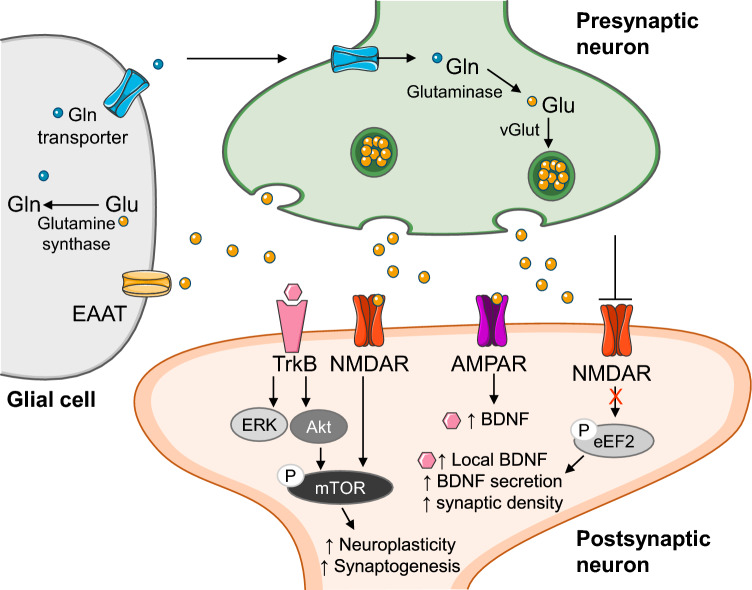
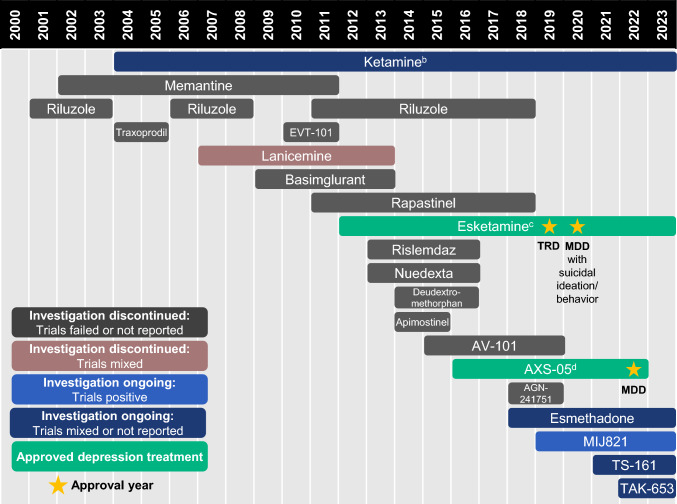
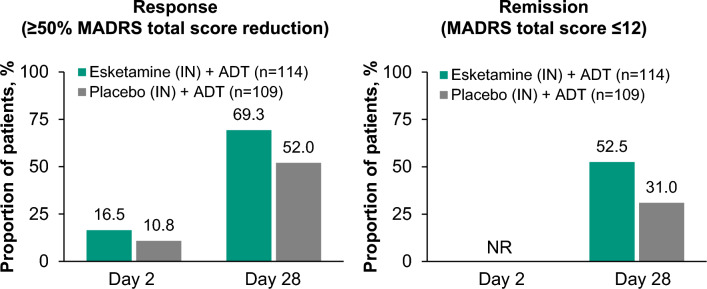
Major depressive disorder (MDD) is a chronic, burdensome, highly prevalent disease that is characterized by depressed mood and anhedonia. MDD is especially burdensome as approved monoamine antidepressant treatments have weeks-long delays before clinical benefit and low remission rates. In the past 2 decades, a promising target emerged to improve patient outcomes in depression treatment: glutamatergic signaling. This narrative review provides a high-level overview of glutamate signaling in synaptogenesis and neural plasticity and the implications of glutamate dysregulation in depression. Based on this preclinical evidence implicating glutamate in depression and the rapid improvement of depression with ketamine treatment in a proof-of-concept trial, a range of N-methyl-d-aspartate (NMDA)-targeted therapies have been investigated. While an array of treatments has been investigated in registered phase 2 or 3 clinical trials, the development of most of these agents has been discontinued. Multiple glutamate-targeted antidepressants are actively in development, and two are approved. Nasal administration of esketamine (Spravato®) was approved by the US Food and Drug Administration (FDA) in 2019 to treat adults with treatment-resistant depression and in 2020 for adults with MDD with acute suicidal ideation or behavior. Oral combination dextromethorphan–bupropion (AXS-05, Auvelity® extended-release tablet) was FDA approved in 2022 for the treatment of MDD in adults. These approvals bolster the importance of glutamate in depression and represent an exciting breakthrough in contemporary psychiatry, providing new avenues of treatment for patients as first-line therapy or with either poor response or unacceptable side effects to monoaminergic antidepressants. Major depressive disorder (MDD) is a common disease defined by sadness and a loss of interest or pleasure in activities. Depression treatments include therapy and antidepressant medication. Most available antidepressants affect the same types of chemicals that communicate in the brain (neurotransmitters) called monoamines. Unfortunately, these medicines can take weeks to work for some people and many still have depression symptoms with treatment. To provide more treatment options, new medicines have been studied that impact a different neurotransmitter in the brain, that is, glutamate. Glutamate, the most abundant neurotransmitter, is important for the growth of new brain cell connections, and there are changes in glutamate in people with depression versus people without depression. In 2000, the first small study in people showed that ketamine, a medicine targeting glutamate, quickly improved depression symptoms. Safety risks, including dissociation and sedation, require supervised administration and management guidance. Since 2000, about 20 glutamate-targeted medicines have been tested in human clinical trials. Two of these are approved as antidepressants. The medicine esketamine, which is inhaled up the nose at a clinic under medical supervision, is approved for the adjunctive treatment of people with MDD whose symptoms do not improve with other treatments or who have suicidal thoughts or actions (brand name Spravato®). The combination medicine dextromethorphan–bupropion is a swallowed tablet taken twice daily that is an approved monotherapy to treat adults with MDD (brand name Auvelity®). The approval of these drugs helps show the importance of glutamate in depression and provides more options for people with depression.
Overview
The claims and statistics of this paper haven’t been checked yet.
Free: it reads the open-access text and checks the first 5 claims that cite a source we can check. Create a free account to check every claim.
Integrity signals
Registry
Cites
Statistics
Figures
Verification
Claims the paper makes
The claims and statistics of this paper haven’t been checked yet.
Free: it reads the open-access text and checks the first 5 claims that cite a source we can check. Create a free account to check every claim.
Claims other papers make about this one
Each is checked against this paper’s own text: does it say what the citing paper says it does?
The source backs part of the claim, not all of it — or backs it for a different population, condition or comparison.
In the citing paper
“Esketamine provides a more NMDAR-centered entry into the induction pathway described above, producing rapid clinical effects but also transient dissociation and sympathomimetic effects [45,46,47,49,52,55,56].”
From Synaptic Plasticity—Intrinsic Excitability and Antidepressant Discovery (2026) · cites this paper as [52]
Experimental — accuracy not yet measuredThe source backs part of the claim, not all of it — or backs it for a different population, condition or comparison.
In the citing paper
“Common adverse effects include dissociation, dizziness, and blood pressure (BP) elevation [52,53,55].”
From Synaptic Plasticity—Intrinsic Excitability and Antidepressant Discovery (2026) · cites this paper as [52]
Experimental — accuracy not yet measured
Self-check
Percentages, sums and reported differences re-computed from the paper’s own numbers.
The self-check needs the paper’s full text.
Citations
Cites
Diagnostic and Statistical Manual of Mental Disorders
American Psychiatric Association (2013) · doi:10.1176/appi.books.9780890425596 · Cited by 116,369
James, S. L., Abate, D., Abate, K. H., Abay, S. M., Abbafati, C., Abbasi, N., Abbastabar, H., Abd-Allah, F., Abdela, J., Abdelalim, A., et al. (2018) · The Lancet · doi:10.1016/s0140-6736(18)32279-7 · Cited by 13,867
Molecular Mechanisms of Depression: Perspectives on New Treatment Strategies
Lang, U. E., & Borgwardt, S. (2013) · Cellular Physiology and Biochemistry · doi:10.1159/000350094 · Cited by 8,475
The American Psychological Association
Langfeld, H. S. (1919) · Science · doi:10.1126/science.49.1254.51 · Cited by 7,475
Trivedi, M. H., Rush, A. J., Wisniewski, S. R., Nierenberg, A. A., Warden, D., Ritz, L., Norquist, G., Howland, R. H., Lebowitz, B., McGrath, P. J., et al. (2006) · American Journal of Psychiatry · doi:10.1176/appi.ajp.163.1.28 · Cited by 3,879 · cited 2×
“Depression is especially burdensome due to the low rates of remission associated with current monoamine antidepressant treatments [15, 16].”
BackgroundAntidepressant effects of ketamine in depressed patients
Berman, R. M., Cappiello, A., Anand, A., Oren, D. A., Heninger, G. R., Charney, D. S., & Krystal, J. H. (2000) · Biological Psychiatry · doi:10.1016/s0006-3223(99)00230-9 · Cited by 3,856 · cited 2×
“…of glutamatergic signaling in depression in humans was clinically supported in 2000 in the first small ( N = 7), placebo-controlled, double-blind clinical trial of ketamine that demonstrated significant ( P ≤ 0.001 at 72 h), rapid improvement in major depression symptoms compared with placebo [64].”
BackgroundInfluentialmTOR-Dependent Synapse Formation Underlies the Rapid Antidepressant Effects of NMDA Antagonists
Li, N., Lee, B., Liu, R.-J., Banasr, M., Dwyer, J. M., Iwata, M., Li, X.-Y., Aghajanian, G., & Duman, R. S. (2010) · Science · doi:10.1126/science.1190287 · Cited by 2,881 · cited 1×
“…of eukaryotic elongation factor 2 (eEF2), allowing for protein translation [45]. mTOR activation thus increases the expression of synaptic proteins vital for the formation, maturation, and function of synaptic spines and can lead to increases in the density of dendritic spines [44–47].”
BackgroundRisks of all-cause and suicide mortality in mental disorders: a meta-review
Chesney, E., Goodwin, G. M., & Fazel, S. (2014) · World Psychiatry · doi:10.1002/wps.20128 · Cited by 2,115 · cited 2×
“These efficacy limitations with monoamine antidepressants may also demoralize patients and contribute to the increased risk of suicide in people with depression [8].”
BackgroundGlutamate: A Neurotransmitter in Mammalian Brain
Fonnum, F. (1984) · Journal of Neurochemistry · doi:10.1111/j.1471-4159.1984.tb09689.x · Cited by 1,992 · cited 2×
“While glutamate was known to be present in the central nervous system, it was not acknowledged as a true neurotransmitter until 1984 [38, 39].”
BackgroundEpidemiology of Adult DSM-5 Major Depressive Disorder and Its Specifiers in the United States
Hasin, D. S., Sarvet, A. L., Meyers, J. L., Saha, T. D., Ruan, W. J., Stohl, M., & Grant, B. F. (2018) · JAMA Psychiatry · doi:10.1001/jamapsychiatry.2017.4602 · Cited by 1,737 · cited 1×
“Major depressive disorder (MDD) is a highly prevalent disease, and depressive disorders have been a leading cause of chronic disease burden worldwide for the past 3 decades [1, 2].”
Background
Research works printed but not linked: 2
- Réus GZ, Quevedo J, Lúcia S, Rodrigues A. Mtor signaling in the neuropathophysiology of depression: current evidence. J Recept Ligand Channel Res. 2015;65:78.
- Paterson B, Fraser H, Wang C, et al. A randomized, double-blind, placebo-controlled, sequential parallel study of cerc-301 in the adjunctive treatment of subjects with severe depression and recent active suicidal ideation despite antidepressant treatment. National Network of Depression Centers Annual Conference; Ann Arbor, MI. 2015.
Cited by
Antos, Z., Żukow, X., Bursztynowicz, L., & Jakubów, P. (2024) · International Journal of Molecular Sciences · doi:10.3390/ijms252413658 · Cited by 21
“This demoraliza-tion is likely related to dysfunction of the hypothalamic-pituitary-adrenal axis during stress, resulting in neurogenic inflammation, glutamatergic excitotoxicity, and disruption of neuronal processes [19].”
d’Andrea, G., Cavallotto, C., Pettorruso, M., Lorenzo, G. D., Carullo, R., Berardis, D. D., Rosso, G., Barlati, S., Martiadis, V., Tamagnini, G., et al. (2025) · Psychiatry Research · doi:10.1016/j.psychres.2025.116655 · Cited by 27
Self-citationCheng, M. C. H., Dri, C. E., Ballum, H., Valentino, K., Cheung, W., Teopiz, K. M., Wong, S., & McIntyre, R. S. (2025) · Journal of Affective Disorders · doi:10.1016/j.jad.2025.04.119 · Cited by 18
Self-citationPharmacological Monotherapy for Depressive Disorders: Current and Future—A Narrative Review
Gao, K., Oruc, E. B., & Koparal, B. (2025) · Medicina · doi:10.3390/medicina61040558 · Cited by 14
“…in the synaptic cleft acts on post-synaptic neurons, leading to an increase in the production of brain-derived neurotrophic factor (BDNF), neuroplasticity, and synaptogenesis through activating NMDA receptors and α -amino-3- hydroxy-5-methyl-4-isoxazolepropionic acid (AMPA) receptors [60].”
Nagpurkar, K., Ghive, P., Kale, M. B., Nistane, N. T., Taksande, B. G., Umekar, M. J., & Trivedi, R. (2025) · Neuroscience · doi:10.1016/j.neuroscience.2025.05.022 · Cited by 12
Rosell‐Cardona, C., Cryan, J. F., Clarke, G. A., & Kittel‐Schneider, S. (2025) · npj Biofilms and Microbiomes · doi:10.1038/s41522-025-00749-z · Cited by 12
Treatment-resistant depression and intranasal esketamine: Spanish consensus on theoretical aspects
Mora, F., Ramos‐Quiroga, J. A., Baca‐García, E., Crespo, J. M., Gutiérrez-Rojas, L., Madrazo, A., Pérez-Costillas, L., Sáiz, P. A., Tordera, V., & Vieta, E. (2025) · Frontiers in Psychiatry · doi:10.3389/fpsyt.2025.1623659 · Cited by 11
“The therapeutic potential of glutamate-based treatments lies not only in their distinct mechanism of action, but also in their capacity to exert faster and potentially more robust AD effects (18).”
InfluentialExploring Biological Risk Factors in Treatment-Resistant Depression
Lievanos-Ruiz, F. J., & Navarro, B. F. (2025) · Psychiatry International · doi:10.3390/psychiatryint6040134 · Cited by 9
“Neurotransmitter dysregulation in TRD highlights several therapeutic targets, ranging from serotonergic autoreceptors [13] and dopaminergic receptors [37] to glutamatergic and GABAergic modulators [38].”
Shim, S. R., Jeong, H. S., Bommersbach, T. J., Nierenberg, A. A., Zarate, C. A., Kaster, T. S., Correll, C. U., McIntyre, R. S., Krystal, J. H., & Rhee, T. G. (2026) · JAMA Psychiatry · doi:10.1001/jamapsychiatry.2026.0612 · Cited by 11
Self-citationBozzatello, P., Novelli, R., Schisano, R., Brasso, C., Rocca, P., & Bellino, S. (2025) · Pharmaceuticals · doi:10.3390/ph18050665 · Cited by 8
“Glutamatergic-based antidepressants have shown promising benefits compared with conventional SSRIs and SNRIs, including enhanced functional outcomes, more rapid alleviation of symptoms, and accelerated achievement of remission [86].”
Amawi, H. A., Alsheyab, S., Hammad, A. M., Alhazaimeh, R., Maklouf, T., Al‐Trad, B., Almarghalani, D. A., Alzahrani, M. S., Ashby, C. R., & Tiwari, A. K. (2025) · Genes Brain & Behavior · doi:10.1111/gbb.70037 · Cited by 6
Le, G. H., Wong, S., Johnson, D. E., Lu, A., Orsini, D. K., Chisamore, N., Luch, S. D. D., Rosenblat, J. D., & McIntyre, R. S. (2025) · Journal of Affective Disorders · doi:10.1016/j.jad.2025.121081 · Cited by 7
Self-citationLin, C., Lin, E., & Lane, H. (2025) · Schizophrenia · doi:10.1038/s41537-024-00548-z · Cited by 6
“…observed between HAMD17 and DAO highlights the potential involvement of NMDAR in depression; subsequently, numerous treatments, including ketamine, esketamine, arketamine, D -serine, sarcosine, and sodium benzoate, that target NMDAR have been studied or used in clinical settings 84 – 88 .”
Ji, I. S., Cheng, M. C. H., Teopiz, K. M., Dri, C. E., Wong, S., Le, G. H., Rhee, T. G., Guillen-Burgos, H. F., Lo, H. K. Y., Zheng, Y. J., et al. (2025) · Journal of Psychiatric Research · doi:10.1016/j.jpsychires.2025.10.056 · Cited by 8
Self-citationGlucagon-Like Peptide-1 Receptor Agonists for Mood Disorders and Suicide Risk
McIntyre, R. S. (2026) · Biological Psychiatry · doi:10.1016/j.biopsych.2026.04.019 · Cited by 7
Self-citationWong, S., Le, G. H., Mansur, R. B., Rosenblat, J. D., & McIntyre, R. S. (2024) · Biological Psychiatry Cognitive Neuroscience and Neuroimaging · doi:10.1016/j.bpsc.2024.10.004 · Cited by 9
Self-citationForouzanfar, F., Ahmadzadeh, A. M., Pourbagher‐Shahri, A. M., & Gorji, A. (2025) · European Journal of Pharmacology · doi:10.1016/j.ejphar.2025.177690 · Cited by 4
Restoring Vision with Noninvasive Brain Stimulation: A Narrative Review
Duan, X., Zhou, Y., Zhang, P., Wen, W., & Zhao, C. (2025) · Ophthalmology and Therapy · doi:10.1007/s40123-025-01249-1 · Cited by 3
“It also contributes to synap-togenesis and neuroplasticity by activating signaling pathways mediated by tropomyosin-related kinase B (TrkB) [44].”
Effects of Intravenous Ketamine on Posttraumatic Stress Disorder ( PTSD ): A Systematic Review
Yin, L., Lu, A., Le, G. H., Dri, C. E., Wong, S., Teopiz, K. M., Xu, H., Ho, R., Rhee, T. G., Lo, H. K. Y., et al. (2025) · Acta Psychiatrica Scandinavica · doi:10.1111/acps.70053 · Cited by 4
“Moreover, in addition to alleviating overall distress, ketamine has also been shown to be successful in treating symptoms of irritability, agitation, dysphoria and an-hedonia, all of which are highly prevalent in persons with PTSD [33–36].”
Self-citationBertholomey, M. L., Forbes, C., McElroy, B. D., & Torregrossa, M. M. (2025) · Psychopharmacology · doi:10.1007/s00213-025-06782-2 · Cited by 3
Johnson, D. E., Rodrigues, N. B., Mansur, R. B., McIntyre, R. S., & Rosenblat, J. D. (2025) · Acta Psychiatrica Scandinavica · doi:10.1111/acps.13812 · Cited by 5
Self-citationGill, H., McIntyre, R. S., & Christensen, M. C. (2025) · Journal of Affective Disorders · doi:10.1016/j.jad.2025.119563 · Cited by 3
Self-citationBetaine: A Promising Natural Product for Neurological and Psychiatric Diseases
Zhang, Y., Ke, Z., Luo, J., Chen, Q., Jiang, X., Xiong, J., & Deng, L. (2025) · Current Neuropharmacology · doi:10.2174/011570159x375540250718094903 · Cited by 2
“Depression brings heavy global burdens, but approximately one-third of patients fail to respond to conventional antide-pressants, and refractory depression presents great challenges in exploring superior treatment options [108, 109].”
Teopiz, K. M., Wong, S., Le, G. H., Badulescu, S., Lo, H. K. Y., Guillen-Burgos, H. F., Ho, R., Rhee, T. G., Dri, C. E., Cao, B., et al. (2025) · Journal of Affective Disorders · doi:10.1016/j.jad.2025.120476 · Cited by 2
Self-citationChen, Y., Guo, L., Zan, G., Xu, C., Yao, S.-Y., Wu, S., Jiang, X., Liu, Z., Long, J.-D., Liu, B., et al. (2025) · Molecular Psychiatry · doi:10.1038/s41380-025-03441-y · Cited by 2
“This aligns with the recognized importance of glutamatergic signaling in MDD [83].”
Le, G. H., & McIntyre, R. S. (2026) · Expert Opinion on Therapeutic Targets · doi:10.1080/14728222.2026.2619757 · Cited by 4
“Low dose racemic intravenous (IV) ketamine and intranasal (IN) esketamine are the first glutamatergic agents proven effective in MDD/TRD [2–4].”
Self-citationValentino, K., Ballum, H., Cheung, W., Dri, C. E., Teopiz, K. M., Kwan, A. T. H., Wong, S., Shen, B., Cheng, M. C. H., Le, G. H., et al. (2026) · Journal of Psychiatric Research · doi:10.1016/j.jpsychires.2026.02.011 · Cited by 2
Self-citationXu, M., Tsai, C.-Y., & Wang, S.-Y. (2026) · Journal of Functional Foods · doi:10.1016/j.jff.2026.107326 · Cited by 3
Zheng, F., Hu, Z., Chen, H., Cheng, J., Hou, Q., Zheng, J., Gong, X., Ji, J., Zayniddin, N., Abduahadi, S., et al. (2025) · European Journal of Medicinal Chemistry · doi:10.1016/j.ejmech.2025.117538 · Cited by 2
Szawarnoga, D., Fojcik, J., Górski, M. K., Pałasz, A., & Krzystanek, M. (2025) · Pharmaceuticals · doi:10.3390/ph18071066 · Cited by 4
Yakovleva, O. B., Сафарова, Т. П., Savushkina, O. K., & Prokhorova, T. A. (2025) · Psikhiatriya · doi:10.30629/2618-6667-2025-23-3-6-15 · Cited by 1
A Systematic Review of the Effects of N-Methyl-D-Aspartate Receptor Antagonists on Pancreatic Islets
Wong, S., Le, G. H., Uhlig, J., Yang, E., Dri, C. E., Rosenblat, J. D., Mansur, R. B., & McIntyre, R. S. (2025) · Neuroendocrinology · doi:10.1159/000549276 · Cited by 3
“In addition, there is substantial pharmacodynamic heterogeneity between glutamate signaling modulators, consequently, it cannot be assumed that other agents with direct and/or indirect effects on NMDA signaling (e.g., D-cycloserine) will be comparable to other glutamate modulators [43].”
Self-citationZhu, Z., Yin, X., Huang, J., Wang, Y., Qi, Q., Wang, P., Lui, S. S. Y., Hui, L., & Chan, R. C. K. (2026) · Asian Journal of Psychiatry · doi:10.1016/j.ajp.2026.104973 · Cited by 1
Go With the Flow: MOR(E) to Ketamine Than NMDA Receptor Antagonism
Michaelides, M. (2026) · American Journal of Psychiatry · doi:10.1176/appi.ajp.20260275 · Cited by 1
Synaptic Plasticity—Intrinsic Excitability and Antidepressant Discovery
Tanaka, M. (2026) · Biomedicines · doi:10.3390/biomedicines14061265
Are NMDA Antagonists or Venlafaxine More Effective in the Forced Swimming Test?
İnal, A., & Erenmemişoğlu, A. (2025) · Harran Üniversitesi Tıp Fakültesi Dergisi · doi:10.35440/hutfd.1617126
“D - aspartate (NMDA) receptor might play a role in the mechanism of action of antidepressant medications (5,6).”
Himmelseher, S., Nnaji, C. T., & Millen, A. M. E. (2025) · Neuromethods · doi:10.1007/978-1-0716-4599-4_11
Ivanov, S. M., Sukhachev, V. S., Tarasova, O. A., Lagunin, A. A., & Poroikov, V. (2025) · International Journal of Molecular Sciences · doi:10.3390/ijms26199557 · Cited by 1
“Most studies showed that the decreased level of glutamate was associated with MDD, whereas a few studies showed that an increased glutamate level can also be associated with MDD [79–81].”
Effects of different intake levels of brown rice and whole wheat on the mental state of mice
Zhi, L., Wu, T., Zhu, Y., Zhao, Q., Xue, Y., & Shen, Q. (2025) · Food Chemistry · doi:10.1016/j.foodchem.2025.146664 · Cited by 1
Resurgence of N-Methyl-d-Aspartate Receptor (NMDAR) Antagonists in Perioperative Medicine
Farag, E. S., Soliman, N., & Seif, J. (2025) · Topics in Pain Management · doi:10.1097/01.tpm.0001169656.75858.7a
Emerging trends in pharmacological strategies for targeting neuroinflammation in depression
Kumari, A., Sharma, R. K., Chopra, S., & Chopra, H. (2025) · Scripta Medica · doi:10.5937/scriptamed56-56640
Zhao, T., Guo, X., Shi, Z., Xu, H., Deng, S., Tang, H., Cai, H., & Song, X. (2025) · Current Neuropharmacology · doi:10.2174/011570159x388095251029043707 · Cited by 1
“[179].”
Zheng, Y. J., Dri, C. E., Wong, S., Le, G. H., Teopiz, K. M., Kwan, A. T. H., & McIntyre, R. S. (2025) · Expert Opinion on Drug Metabolism & Toxicology · doi:10.1080/17425255.2025.2607017
“…inadequate response to monoaminergic antidepressants, particularly to determine whether switching to DXM/BUP or other mechanistically distinct agents yields heightened efficacy, would be highly informative to the clinical population in the development of personalized treatment strategies [1,47].”
Self-citationBipolar major depression: A comprehensive review of pharmacotherapy
Garcia, G., & Cotner, C. (2026) · The Nurse Practitioner · doi:10.1097/01.npr.0000000000000389
Eckert, D., & Kasper, S. F. (2026) · The World Journal of Biological Psychiatry · doi:10.1080/15622975.2026.2617195 · Cited by 3
“Its antidepressant effects come into play very rapidly, with measurable changes in rating scales within hours (Daly et al. 2019; Popova et al. 2019; Wajs et al. 2020; McIntyre and Jain 2024).”
Pharmacological treatment of adolescent depression: Current advances and future perspectives
Li, Y., Wang, F., Chen, G., & Zhai, S. (2025) · Letters in Drug Design & Discovery · doi:10.1016/j.lddd.2026.100278 · Cited by 3
Nadei, O. V., & Prokopenko, E. S. (2026) · Journal of Molecular Neuroscience · doi:10.1007/s12031-026-02491-3
“Given the central role of the mPFC in MDD pathophysiology (McIntyre and Jain 2024; Henter et al. 2021; Duman et al. 2019), it is plausible that the wide-spread transcriptional dysregulation characteristic of the disorder contributes to the observed instability of reference genes in this region.”
Zheng, J., Lin, Z., Lin, Y., Lin, P., Zheng, B., Zheng, Z., & Hong, P. (2026) · Journal of Affective Disorders · doi:10.1016/j.jad.2026.121641
Boskovic, D. H., Kapadia, S., Ardic, F. C., Eisenberg, D. F., Hickey, J., Rogerson, O., & Glen, F. (2026) · Journal of Clinical Psychopharmacology · doi:10.1097/jcp.0000000000002140
“Modulating various receptors including serotonin, norepinephrine, dopamine, histamine, and glutamate receptors can help address unresolved symptoms of MDD. 20,21 A growing body of evidence indicates that hyperactivity of norepinephrine signaling is a key factor in psychiatric disorders.”
Dudek, D., Chrobak, A. A., Podkowa, K., Krupa, A. J., Gorostowicz, A., Jaeschke, R. R., Juryk, A., & Siwek, M. (2026) · Frontiers in Pharmacology · doi:10.3389/fphar.2026.1739359
Research Progress on the Mechanisms of Antidepressant Drug Poisoning
何, 莹. (2026) · Advances in Clinical Medicine · doi:10.12677/acm.2026.1641436
Carmellini, P., Cuomo, A., Rescalli, M. B., Pinzi, M., Dourmas, A., & Fagiolini, A. M. (2026) · Pharmaceuticals · doi:10.3390/ph19050662 · Cited by 1
“…interventions that potentiate synaptic plasticity, such as ketamine, electroconvulsive therapy, and neurosteroid treatments, often produce secondary normalization of monoaminergic tone, underscoring the reciprocal coupling between neurochemical transmission and structural remodeling [2,23].”
InfluentialIntranasal Ketamine for Existential Distress in Advanced Cancer
Aguiar, S., Makarious, M., Lipsitz, O., deVries, F. E., Doyle, Z., McIntyre, R. S., Rodin, G., Zimmermann, C., Mak, E., Hannon, B. L., et al. (2026) · Journal of Pain and Symptom Management · doi:10.1016/j.jpainsymman.2026.04.611 · Cited by 1
Self-citationEckert, D., & Kasper, S. F. (2026) · International Journal of Psychiatry in Clinical Practice · doi:10.1080/13651501.2026.2663307
“More recently, esketamine has emerged as an evidence-based option for patients with TRD, demonstrating rapid and sustained clinical effects (Daly et al., 2019; Kasper et al., 2021; McIntyre & Jain, 2024; Popova et al., 2019; Wajs et al., 2020).”
Zhong, J., Chen, W., Li, S., Zheng, D.-L., Wang, Y.-D., Huang, J., Liang, X.-Q., & Ming-kun, L. (2026) · World Journal of Psychiatry · doi:10.5498/wjp.v16.i6.114553
Yakovleva, O. B., Сафарова, Т. П., & Savushkina, O. K. (2026) · Psikhiatriya · doi:10.30629/2618-6667-2026-24-2-15-27
Liu, R., Liu, C., Li, C., Hu, D., Wang, L., Li, Z. J., Feng, D., & Guo, T. (2026) · Medicine · doi:10.1097/md.0000000000049464
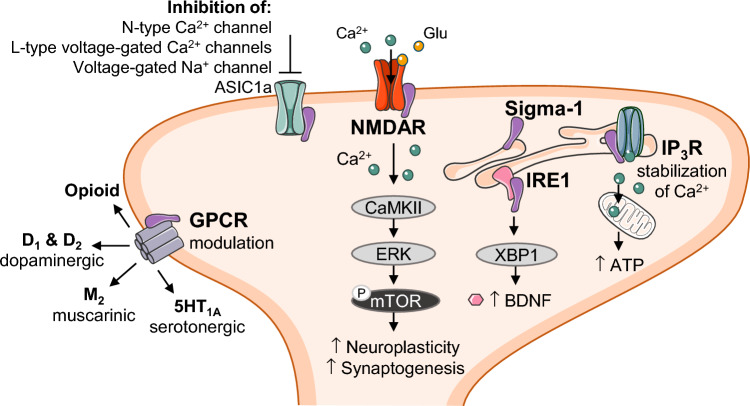
“[10] Dextromethorphan-bupropion, a combination of dextro-methorphan hydrobromide (45 mg), an uncompetitive NMDA receptor antagonist, sigma-1 receptor agonist, bupropion hydrochloride (105 mg), and a CYP450 2D6 inhibitor, was approved by the Food and Drug Administration (FDA) in August 2022 and…”
Wei, G., Zhou, R., Chu, Z., He, J., Li, D., Xie, J., Xie, M., Lai, K., Yuan, J., Yang, L., et al. (2026) · Fitoterapia · doi:10.1016/j.fitote.2026.107360
Yang, X., Chen, C.-Y., Wang, Y.-F., & Zhang, Y. (2026) · Progress in Neuro-Psychopharmacology and Biological Psychiatry · doi:10.1016/j.pnpbp.2026.111826
Thakur, A., Jain, P., Sharma, M. K., Chauhan, N. S., Khatoon, N., Sahu, D., Ajazuddin, & Tamrakar, S. (2026) · Current Behavioral Neuroscience Reports · doi:10.1007/s40473-026-00331-7
“Thus, glu - tamatergic modulators have attracted growing interest in being potential cognition-targeted therapeutics for depression [ 63 ].”
Dong, Z., Zheng, W., Lv, S., Peng, L., Wang, Y., & Wang, Q. (2026) · Biomolecules · doi:10.3390/biom16091225
“This impairs the glutamate reuptake function of glial cells and further promotes the conversion of glutamate to glutamine to limit excitotoxicity and provide necessary precursor substances for GABA synthesis [48,92–94].”
Towards precision psychiatry: initial foundations and future directions
Etkin, A., O’Donnell, P., Ressler, K. J., & Manji, H. K. (2026) · Nature Reviews Drug Discovery · doi:10.1038/s41573-026-01509-0 · Cited by 3
“Whether the success of ketamine/esketamine (esketamine is the S (+) enantiomer of ketamine) can be translated to the development of other NMDA receptor antagonists is unknown, however, as many of them have failed in late-stage clinical trials 125 .”
Comparative efficacy of interventions for transdiagnostic anhedonia: a network meta-analysis
Wang, Y.-M., Chen, F., Hou, Y.-W., & Zhang, M. (2026) · Psychiatry Research · doi:10.1016/j.psychres.2026.117435
Xiao, K., Woo, Y., Dri, C. E., Le, G. H., Wong, S., Teopiz, K. M., Zheng, Y. J., Lo, H. K. Y., van Bruggen, F. H., Rhee, T. G., et al. (2026) · Psychiatry Research · doi:10.1016/j.psychres.2026.117456
Self-citationCurrent drug treatment of mental disorders
Bidan, N., Datkhayev, U., Serikbayeva, E., ZHAKIPBEKOV, K., Umurzakhova, G., Omirbayeva, A., & Shimirova, Z. (2026) · Pharmacia · doi:10.3897/pharmacia.73.e194894
“Novel antidepressants based on these mechanisms, such as esketamine, dextromethorphan/bupropion, brex-anolone, and zuranolone (Table 3), have shown improved efficacy over traditional methods (Zanos et al. 2018; McIntyre and Jain 2024).”
Sleep, Circadian Rhythms, and Major Depressive Disorder
Pedramfard, P. (2026) · IGI Global eBooks · doi:10.4018/979-8-2600-4270-0.ch008
Nepton, A., Faber, S. C., Kaminsky, Z. A., Nucci, M., Farahani, H., Williams, M. T., & Rosal, S. P. (2026) · Epigenetics · doi:10.1080/15592294.2026.2731659
“This primary action is driven by N-methyl-D-aspartate (NMDA) receptor antagonism, which triggers a glutamate burst and subsequent activation of alpha-amino-3-hydroxy-5-methyl-4-isoxazolepropionic acid (AMPA) receptors [1,2].”
Sulej, Z., & Zielińska, M. (2026) · Frontiers in Molecular Neuroscience · doi:10.3389/fnmol.2026.1950244
Lapa, C. D. O., Juruena, M. F., Pereira, D. C., Furlanetto, K., Castiglioni, M. C. M., Arturi, V., Viola, T. W., & Spanemberg, L. (2026) · Research Square · doi:10.21203/rs.3.rs-11132874/v1
Metadata
- Authors
- McIntyre, R. S., & Jain, R.
- Affiliations
- University of Toronto (CA)
- Texas Tech University (US)
- Corresponding author
- Jain, Rakesh
- Venue
- CNS Drugs
- Published
- 2024-08-16
- Volume
- 38
- Issue
- 11
- Pages
- 869-890
- ISSN
- 1172-7047 (ISSN-L)
- 1179-1934
- PMC
- PMC11486832
- OpenAlex
- W4401654837
- Cited by
- 69
- References
- 133
- Citations by year
- 2026: 33 · 2025: 34 · 2024: 2
- FWCI
- 4.32
- Type
- journal article
- Language
- en
- Open access
- hybrid
- doi.org
- Licence
- cc-by-nc
- creativecommons.org/licenses/by-nc/4.0 (tdm)
- creativecommons.org/licenses/by-nc/4.0 (vor)
- Locations
- CNS Drugs (publishedVersion, cc-by-nc)
- PubMed Central (publishedVersion, cc-by-nc)
- PubMed (publishedVersion)
- Funders
- Axsome Therapeutics., Inc.
- Topics
- Health Sciences › Medicine › Pharmacology (medical) › Treatment of Major Depression
- Life Sciences › Neuroscience › Cellular and Molecular Neuroscience › Neuroscience and Neuropharmacology Research
- Life Sciences › Neuroscience › Biological Psychiatry › Tryptophan and brain disorders
- Keywords
- major depressive disorder, glutamate signaling, NMDA receptor, ketamine, esketamine, treatment-resistant depression, synaptogenesis, neuroplasticity, antidepressant drug development, anhedonia, suicidal ideation, intranasal administration, drug safety and tolerability
- MeSH terms
- Animals, Antidepressive Agents, Major Depressive Disorder, Humans, Ketamine, Excitatory Amino Acid Agents, Glutamic Acid
About these checks
Registry, retraction, Cites and statistics results are computed, not judged, with one exception: a printed reference that no index lists is read once by a model before it counts as a citation error. Claims are extracted by a model and kept only when their quote appears verbatim in the text; each cited source is then checked, with a model’s help, for whether it says what the claim relies on. Those verdicts can be wrong — read the claim’s quote and the cited source before relying on one.
Statistics and arithmetic are recomputed, not judged.
Confidence bands are shown only for fields calibrated on our annotated test set. None is calibrated yet, so no band is shown.
What counts as a claim ›How we measure confidence ›How we check this ›
Are you an author, or do you see a problem with this page? Request a review
Data sources
Bibliographic data: Semantic Scholar, OpenAlex, Crossref.
Contains information from the Semantic Scholar Academic Graph Datasets, made available under the ODC Attribution License (ODC-BY 1.0).
Semantic Scholar’s data is described in: Kinney, R., et al. (2023). The Semantic Scholar Open Data Platform. arXiv:2301.10140.
