

The DOI matches its Crossref record; 53 of the 53 references it cites were found in a registry or an index.
The Future of Precision Medicine: Potential Impacts for Health Technology Assessment
Open accessAbstract
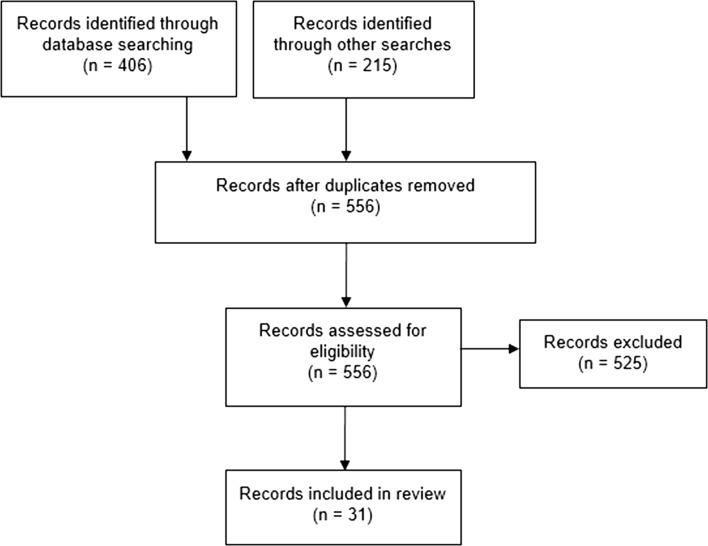
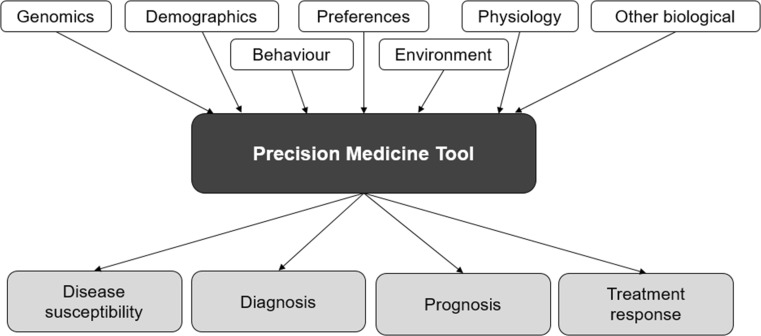
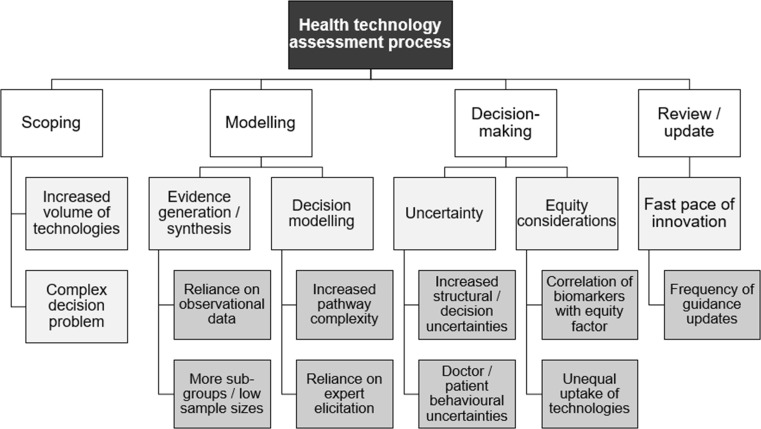
OBJECTIVE: Precision medicine allows healthcare interventions to be tailored to groups of patients based on their disease susceptibility, diagnostic or prognostic information, or treatment response. We analysed what developments are expected in precision medicine over the next decade and considered the implications for health technology assessment (HTA) agencies. METHODS: We performed a pragmatic literature search to account for the large size and wide scope of the precision medicine literature. We refined and enriched these results with a series of expert interviews up to 1 h in length, including representatives from HTA agencies, research councils and researchers designed to cover a wide spectrum of precision medicine applications and research. RESULTS: We identified 31 relevant papers and interviewed 13 experts. We found that three types of precision medicine are expected to emerge in clinical practice: complex algorithms, digital health applications and 'omics'-based tests. These are expected to impact upon each stage of the HTA process, from scoping and modelling through to decision-making and review. The complex and uncertain treatment pathways associated with patient stratification and fast-paced technological innovation are central to these effects. DISCUSSION: Innovation in precision medicine promises substantial benefits but will change the way in which some health services are delivered and evaluated. The shelf life of guidance may decrease, structural uncertainty may increase and new equity considerations will emerge. As biomarker discovery accelerates and artificial intelligence-based technologies emerge, refinements to the methods and processes of evidence assessments will help to adapt and maintain the objective of investing in healthcare that is value for money.
Overview
The claims and statistics of this paper haven’t been checked yet.
Run the check — free, no account needed. It reads the open-access text and checks the sources it cites.
Integrity signals
Registry
Cites
Statistics
Figures
Verification
Claims the paper makes
The claims and statistics of this paper haven’t been checked yet.
Run the check — free, no account needed. It reads the open-access text and checks the sources it cites.
Claims other papers make about this one
Each is checked against this paper’s own text: does it say what the citing paper says it does?
The source backs part of the claim, not all of it — or backs it for a different population, condition or comparison.
In the citing paper
“In addition to genetic information, other biomarkers such as protein expression, gut microbiome, and metabolic profile are also employed with machine learning to enable personalized treatments [12].”
From The rise of artificial intelligence in healthcare applications (2020) · cites this paper as [12]
Experimental — accuracy not yet measuredThe source backs part of the claim, not all of it — or backs it for a different population, condition or comparison.
In the citing paper
“Omics-based tests: Genetic information from a population pool is used with machine learning algorithms to find correlations and predict treatment responses for the individual patient.”
From The rise of artificial intelligence in healthcare applications (2020) · cites this paper as [12]
Experimental — accuracy not yet measured
Self-check
Percentages, sums and reported differences re-computed from the paper’s own numbers.
The self-check needs the paper’s full text.
Citations
Cites
Methods of data collection in qualitative research: interviews and focus groups
Gill, P., Stewart, K., Treasure, E. T., & Chadwick, B. L. (2008) · BDJ · doi:10.1038/bdj.2008.192 · Cited by 2,779
The Framingham Heart Study and the epidemiology of cardiovascular disease: a historical perspective
Mahmood, S. S., Levy, D., Vasan, R. S., & Wang, T. J. (2014) · The Lancet · doi:10.1016/s0140-6736(13)61752-3 · Cited by 1,622
Adapting to Artificial Intelligence: Radiologists and Pathologists as Information Specialists
Jha, S., & Topol, E. J. (2016) · JAMA · doi:10.1001/jama.2016.17438 · Cited by 622
The Precision Medicine Initiative
Ashley, E. A. (2015) · JAMA · doi:10.1001/jama.2015.3595 · Cited by 573
Risk models and scores for type 2 diabetes: systematic review
Noble, D., Mathur, R., Dent, T., Meads, C., & Greenhalgh, T. (2011) · BMJ · doi:10.1136/bmj.d7163 · Cited by 551
Clinical Interpretation and Implications of Whole-Genome Sequencing
Dewey, F., Grove, M. E., Pan, C., Goldstein, B., Bernstein, J., Chaib, H., Merker, J., Goldfeder, R., Enns, G., David, S., et al. (2014) · Journal of the American Medical Association (JAMA) · doi:10.1001/jama.2014.1717 · Cited by 456
Brouwer, W. B. F., Culyer, A. J., van Exel, J. N. A., & Rutten, F. (2007) · Journal of Health Economics · doi:10.1016/j.jhealeco.2007.07.003 · Cited by 335
Updated UK Recommendations for HER2 assessment in breast cancer
Rakha, E. A., Pinder, S. E., Bartlett, J. M. S., Ibrahim, M., Starczynski, J., Carder, P. J., Provenzano, E., Hanby, A. M., Hales, S., Lee, A. H. S., et al. (2014) · Journal of Clinical Pathology · doi:10.1136/jclinpath-2014-202571 · Cited by 253
“Omics”-Informed Drug and Biomarker Discovery: Opportunities, Challenges and Future Perspectives
Matthews, H., Hanison, J., & Nirmalan, N. J. (2016) · Proteomes · doi:10.3390/proteomes4030028 · Cited by 202
Bojke, L., Claxton, K., Sculpher, M. J., & Palmer, S. (2009) · Value in Health · doi:10.1111/j.1524-4733.2008.00502.x · Cited by 186
Evaluating the utility of personal genomic information
Foster, M. W., Mulvihill, J. J., & Sharp, R. R. (2009) · Genetics in Medicine · doi:10.1097/gim.0b013e3181a2743e · Cited by 184
On the Estimation of the Cost-Effectiveness Threshold: Why, What, How?
Vallejo‐Torres, L., García‐Lorenzo, B., Castilla‐Rodríguez, I., Valcárcel‐Nazco, C., García‐Pérez, L., Linertová, R., Polentinos-Castro, E., & Serrano-Aguilar, P. G. (2016) · Value in Health · doi:10.1016/j.jval.2016.02.020 · Cited by 179
the members of Eurogentest Unit 6 and ESHG Education Committee, Skirton, H., Lewis, C., Kent, A., & Coviello, D. A. (2010) · European Journal of Human Genetics · doi:10.1038/ejhg.2010.64 · Cited by 176
Faulkner, E. C., Annemans, L., Garrison, L., Helfand, M., Holtorf, A., Hornberger, J. C., Hughes, D. A., Li, T. M. W. Y., Malone, D. C., Payne, K., et al. (2012) · Value in Health · doi:10.1016/j.jval.2012.05.006 · Cited by 161
Realizing the Full Potential of Precision Medicine in Health and Health Care
Dzau, V. J., & Ginsburg, G. S. (2016) · JAMA · doi:10.1001/jama.2016.14117 · Cited by 127
Desai, S., & Jena, A. B. (2016) · BMJ · doi:10.1136/bmj.i6357 · Cited by 114
Garrison, L. P., Kamal‐Bahl, S. J., & Towse, A. (2017) · Value in Health · doi:10.1016/j.jval.2016.12.005 · Cited by 111
An efficient basket trial design
Cunanan, K. M., Iasonos, A. E., Shen, R., Begg, C. B., & Gönen, M. (2017) · Statistics in Medicine · doi:10.1002/sim.7227 · Cited by 110
Issues Surrounding the Health Economic Evaluation of Genomic Technologies
Buchanan, J., Wordsworth, S., & Schuh, A. (2013) · Pharmacogenomics · doi:10.2217/pgs.13.183 · Cited by 108
The Value of Heterogeneity for Cost-Effectiveness Subgroup Analysis
Espinoza, M., Manca, A., Claxton, K., & Sculpher, M. (2014) · Medical Decision Making · doi:10.1177/0272989x14538705 · Cited by 103
Hawkley, L. C., Lavelle, L., Berntson, G. G., & Cacioppo, J. T. (2011) · Psychophysiology · doi:10.1111/j.1469-8986.2011.01185.x · Cited by 100
Current Methodological Issues in the Economic Assessment of Personalized Medicine
Annemans, L., Redekop, K., & Payne, K. (2013) · Value in Health · doi:10.1016/j.jval.2013.06.008 · Cited by 100
Personalized medicine in diabetes: the role of ‘omics’ and biomarkers
Pearson, E. R. (2016) · Diabetic Medicine · doi:10.1111/dme.13075 · Cited by 100
Concepts of ‘Personalization’ in Personalized Medicine: Implications for Economic Evaluation
Rogowski, W. H., Payne, K., Schnell‐Inderst, P., Manca, A., Rochau, U., Jahn, B., Alagöz, O., Leidl, R., & Siebert, U. (2014) · PharmacoEconomics · doi:10.1007/s40273-014-0211-5 · Cited by 98
Crocker-Buqué, T., Edelstein, M. L., & Mounier‐Jack, S. (2016) · Journal of Epidemiology & Community Health · doi:10.1136/jech-2016-207572 · Cited by 96
The economic case for precision medicine
Gavan, S. P., Thompson, A., & Payne, K. (2018) · Expert Review of Precision Medicine and Drug Development · doi:10.1080/23808993.2018.1421858 · Cited by 93
Economic evaluations of personalized medicine: existing challenges and current developments
Shabaruddin, F. H., Payne, K., & Fleeman, N. (2015) · Pharmacogenomics and Personalized Medicine · doi:10.2147/pgpm.s35063 · Cited by 56
Economic Incentives for Evidence Generation: Promoting an Efficient Path to Personalized Medicine
Towse, A., & Garrison, L. P. (2013) · Value in Health · doi:10.1016/j.jval.2013.06.003 · Cited by 52
Development of cancer genetic services in the UK: A national consultation
Slade, I., Riddell, D., Turnbull, C., Hanson, H., Rahman, N., & for the MCG programme (2015) · Genome Medicine · doi:10.1186/s13073-015-0128-4 · Cited by 43
Degeling, K., Koffijberg, H., & IJzerman, M. J. (2016) · Expert Review of Pharmacoeconomics & Outcomes Research · doi:10.1080/14737167.2017.1273110 · Cited by 39
Chen, Y., Guzauskas, G. F., Gu, C., Wang, B., Furnback, W. E., Xie, G., Dong, P., & Garrison, L. P. (2016) · Journal of Personalized Medicine · doi:10.3390/jpm6040020 · Cited by 38
Goddard, K. A. B., Knaus, W. A., Whitlock, E. P., Lyman, G. H., Feigelson, H. S., Schully, S. D., Ramsey, S. D., Tunis, S., Freedman, A. N., Khoury, M. J., et al. (2012) · Genetics in Medicine · doi:10.1038/gim.2012.16 · Cited by 37
Husereau, D., Marshall, D. A., Levy, A. R., Peacock, S. J., & Hoch, J. S. (2014) · International Journal of Technology Assessment in Health Care · doi:10.1017/s0266462314000142 · Cited by 35
Health technology assessment in the era of personalized health care
Becla, L., Lunshof, J. E., Gurwitz, D., den Bäumen, T. S. I., Westerhoff, H. V., Lange, B. M. H., & Brand, A. M. (2011) · International Journal of Technology Assessment in Health Care · doi:10.1017/s026646231100002x · Cited by 35
The Health Technology Assessment of Companion Diagnostics: Experience of NICE
Byron, S., Crabb, N., GEORGE, E. L., Marlow, M., & Newland, A. C. (2014) · Clinical Cancer Research · doi:10.1158/1078-0432.ccr-13-1955 · Cited by 32
From here to 2025: Personalised medicine and healthcare for an immediate future
Horgan, D. (2018) · Journal of Cancer Policy · doi:10.1016/j.jcpo.2017.12.008 · Cited by 30
Cowles, E., Marsden, G., Cole, A., & Devlin, N. J. (2017) · Applied Health Economics and Health Policy · doi:10.1007/s40258-017-0309-y · Cited by 24
Payne, K., Eden, M., Davison, N., & Bakker, E. (2017) · Personalized Medicine · doi:10.2217/pme-2016-0089 · Cited by 24
Phillips, K. A., Douglas, M. P., Trosman, J. R., & Marshall, D. A. (2017) · Value in Health · doi:10.1016/j.jval.2016.08.736 · Cited by 23
Big Data: transforming drug development and health policy decision making
Alemayehu, D., & Berger, M. L. (2016) · Health Services and Outcomes Research Methodology · doi:10.1007/s10742-016-0144-x · Cited by 21
The FOCUS4 design for biomarker stratified trials.
Kaplan, R. S. (2015) · PubMed · doi:10.3978/j.issn.2304-3865.2015.02.03 · Cited by 20
The economic evaluation of personalised oncology medicines: ethical challenges
Lewis, J., Lipworth, W. L., Kerridge, I., & Day, R. O. (2013) · The Medical Journal of Australia · doi:10.5694/mja13.10046 · Cited by 19
Budget impact and cost-effectiveness: can we afford precision medicine in oncology?
Doble, B. (2016) · Scandinavian Journal of Clinical and Laboratory Investigation · doi:10.1080/00365513.2016.1206437 · Cited by 19
Personalized medicine and economic evaluation in oncology: all theory and no practice?
Garattini, L., Curto, A., & Freemantle, N. (2015) · Expert Review of Pharmacoeconomics & Outcomes Research · doi:10.1586/14737167.2015.1078239 · Cited by 16
Economic Evaluation in Stratified Medicine: Methodological Issues and Challenges
Fugel, H.-J., Nuijten, M. J. C., Postma, M. J., & Redekop, K. (2016) · Frontiers in Pharmacology · doi:10.3389/fphar.2016.00113 · Cited by 14
IJzerman, M. J., Manca, A., Keizer, J., & Ramsey, S. D. (2015) · Comparative Effectiveness Research · doi:10.2147/cer.s92212 · Cited by 13
CRISPR genome editing and its medical applications
Mahmoudian‐Sani, M., Farnoosh, G., Mahdavinezhad, A., & Saidijam, M. (2017) · Biotechnology & Biotechnological Equipment · doi:10.1080/13102818.2017.1406823 · Cited by 13
Hoogendoorn, M., Feenstra, T., Asukai, Y., Briggs, A. H., Borg, S., Negro, R. W. D., Hansen, R. N., Jansson, S., Leidl, R., Risebrough, N. A., et al. (2016) · Value in Health · doi:10.1016/j.jval.2016.04.002 · Cited by 12
Genomics and Society : Ethical, Legal, Cultural and Socioeconomic Implications
Kumar, D. (2015) · Cited by 8
Espinoza, M., Manca, A., Claxton, K., & Sculpher, M. (2017) · Health Economics · doi:10.1002/hec.3559 · Cited by 7
The International Consortium for Personalised Medicine
Vicente, A. M. (2019) · Portuguese National Funding Agency for Science, Research and Technology (RCAAP Project by FCT) · Cited by 4
Epstein, D. M., García‐Mochón, L., Espín, J., & Soares, M. O. (2013) · Medical Decision Making · doi:10.1177/0272989x13480130 · Cited by 3
Health Economic Perspectives of Genomics
Wordsworth, S., Buchanan, J. P., & Towse, A. (2015) · Elsevier eBooks · doi:10.1016/b978-0-12-420195-8.00005-7 · Cited by 2
Research works printed but not linked: 9
- England NHS. 100,000 Genomes Project: paving the way to personalised medicine. London: NHS England; 2016.
- National Institute for Health and Care Excellence. Gene expression profiling and expanded immunohistochemistry tests for guiding adjuvant chemotherapy decisions in early breast cancer management: MammaPrint, Oncotype DX, IHC4 and Mammostrat. London: NICE; 2013.
- Garrison L, Mestre-Ferrandiz J, Zamora B. The value of knowing and knowing the value: improving the health technology assessment of complementary diagnostics. White paper. London: Office of Health Economics, EPEMED; 2016.
- Academy of Medical Sciences. Health economics for stratified medicine. Summary of a workshop held on 5 October 2016 by the Academy of Medical Sciences and the UK Pharmacogenetics and Stratified Medicine Network. London: Academy of Medical Sciences; 2016. p. 2016.
- National Institute for Health and Care Excellence. NICE’s equality objectives and equality programme 2016–2020. London: NICE; 2016.
- National Institute for Health and Care Excellence. Evaluation consultation document—Eliglustat for treating type 1 Gaucher disease. London: NICE; 2017.
- National Institute for Health and Care Excellence. Fast track appraisal: addendum to the guide to the processes of technology appraisal. London: NICE; 2017.
- National Institute for Health and Care Excellence. Proposals for increasing capacity within NICE’s technology appraisal programme. London: NICE; 2017.
- Hutt P, Gilmour S. Tackling inequalities in general practice: an inquiry into the quality of general practice in England. London: The King’s Fund; 2010.
Cited by
Sorted by citations
The rise of artificial intelligence in healthcare applications
Bohr, A., & Memarzadeh, K. (2020) · Artificial Intelligence in Healthcare · doi:10.1016/b978-0-12-818438-7.00002-2 · Cited by 1,636
Husereau, D., Drummond, M., Augustovski, F., de Bekker-Grob, E., Briggs, A. H., Carswell, C., Caulley, L., Chaiyakunapruk, N., Greenberg, D., Loder, E., et al. (2022) · Value in Health · doi:10.1016/j.jval.2021.10.008 · Cited by 847
Luo, X., Wu, K., & He, X. (2021) · Journal of Experimental & Clinical Cancer Research · doi:10.1186/s13046-021-01968-w · Cited by 210
Bickman, L. (2020) · Administration and Policy in Mental Health and Mental Health Services Research · doi:10.1007/s10488-020-01065-8 · Cited by 184
Translational precision medicine: an industry perspective
Hartl, D., Luca, V. D., Kostikova, A., Laramie, J. M., Kennedy, S., Ferrero, E., Siegel, R. W., Fink, M., Ahmed, S., Millholland, J. M., et al. (2021) · Journal of Translational Medicine · doi:10.1186/s12967-021-02910-6 · Cited by 161
Metadata
- Authors
- Love-Koh, J., Peel, A., Rejon-Parrilla, J. C., Ennis, K., Lovett, R., Manca, A., Chalkidou, A., Wood, H., & Taylor, M.
- Affiliations
- University of York (GB)
- University of Liverpool (GB)
- National Institute for Health and Care Excellence (GB)
- Luxembourg Institute of Health (LU)
- Corresponding author
- Love-Koh, James
- Venue
- PharmacoEconomics
- Published
- 2018-07-13
- Volume
- 36
- Issue
- 12
- Pages
- 1439-1451
- ISSN
- 1170-7690 (ISSN-L)
- 1179-2027
- PMC
- PMC6244622
- OpenAlex
- W2884983901
- Cited by
- 131
- References
- 53
- Citations by year
- 2026: 8 · 2025: 11 · 2024: 17 · 2023: 25 · 2022: 16 · 2021: 28 · 2020: 15 · 2019: 11
- FWCI
- 20.46
- Type
- journal article
- Language
- en
- Update notices
- correction (2018-10-26)
- Open access
- hybrid
- doi.org
- Licence
- Locations
- PharmacoEconomics (publishedVersion, cc-by-nc)
- Europe PMC (PubMed Central) (publishedVersion, other-oa)
- PubMed Central (publishedVersion, cc-by-nc)
- PubMed (publishedVersion)
- White Rose Research Online (University of Leeds, The University of Sheffield, University of York) (acceptedVersion)
- RePEc: Research Papers in Economics (submittedVersion)
- Research Portal (King's College London) (submittedVersion, cc-by-nc)
- Funders
- National Institute for Health and Care Excellence
- Topics
- Social Sciences › Economics, Econometrics and Finance › Economics and Econometrics › Health Systems, Economic Evaluations, Quality of Life
- Health Sciences › Medicine › Public Health, Environmental and Occupational Health › Technology and Human Factors in Education and Health
- Social Sciences › Economics, Econometrics and Finance › Economics and Econometrics › Pharmaceutical Economics and Policy
- Keywords
- precision medicine, health technology assessment, patient stratification, digital health applications, artificial intelligence in healthcare, structural uncertainty, health care equity, value for money, decision-making
- MeSH terms
- Artificial Intelligence, Decision Making, Humans, Technology Assessment, Biomedical, Biomarkers, Biomedical Technology, Uncertainty, Precision Medicine
About these checks
Registry, retraction, Cites and statistics results are computed, not judged, with one exception: a printed reference that no index lists is read once by a model before it counts as a citation error. Claims are extracted by a model and kept only when their quote appears verbatim in the text; each cited source is then checked, with a model’s help, for whether it says what the claim relies on. Those verdicts can be wrong — read the claim’s quote and the cited source before relying on one.
Statistics and arithmetic are recomputed, not judged.
Confidence bands are shown only for fields calibrated on our annotated test set. None is calibrated yet, so no band is shown.
What counts as a claim ›How we measure confidence ›How we check this ›
Are you an author, or do you see a problem with this page? Request a review
