

The DOI matches its Crossref record; 59 of the 60 references it cites were found in a registry or an index.
Socioeconomic Correlates of Sedentary Behavior in Adolescents: Systematic Review and Meta-Analysis
Open accessAbstract
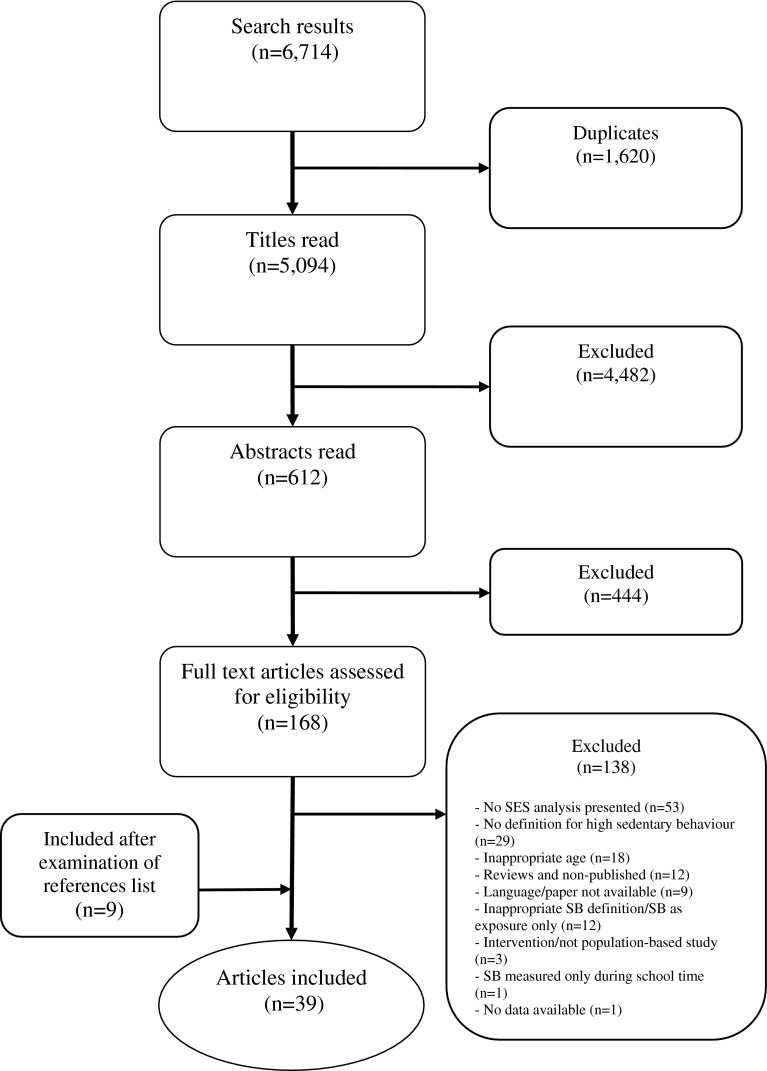
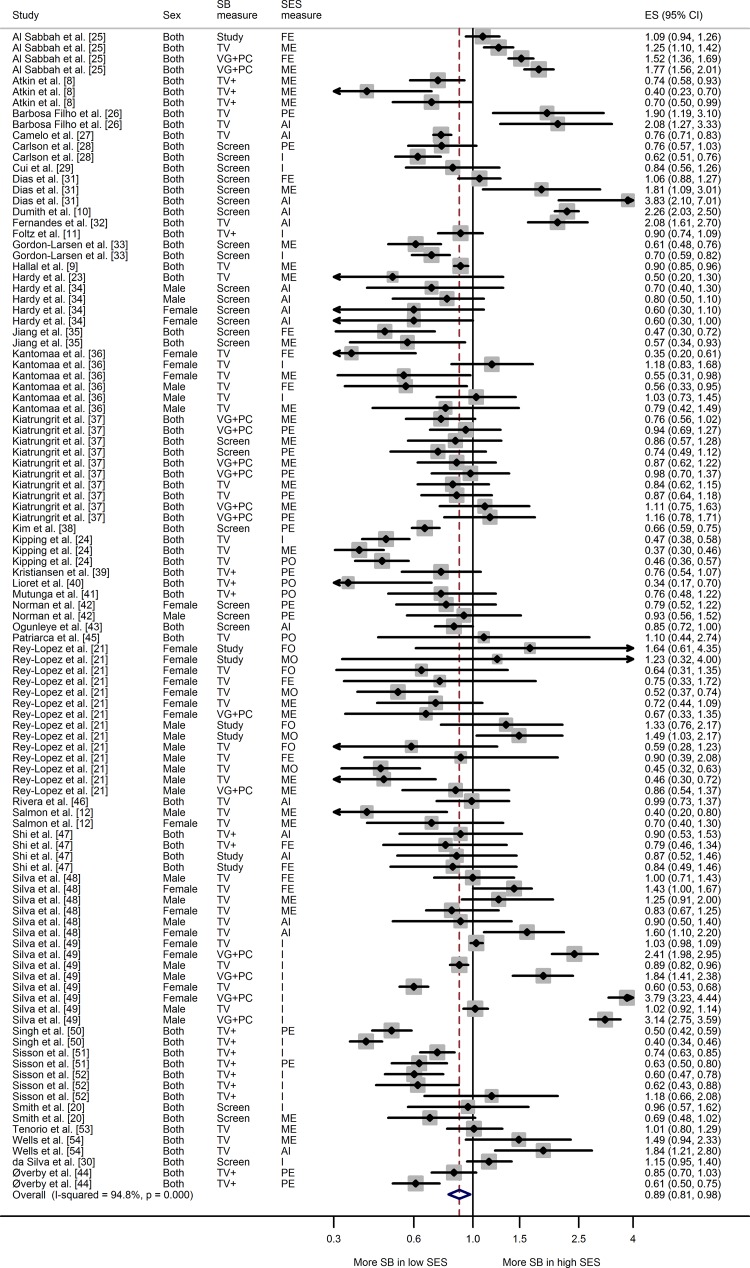
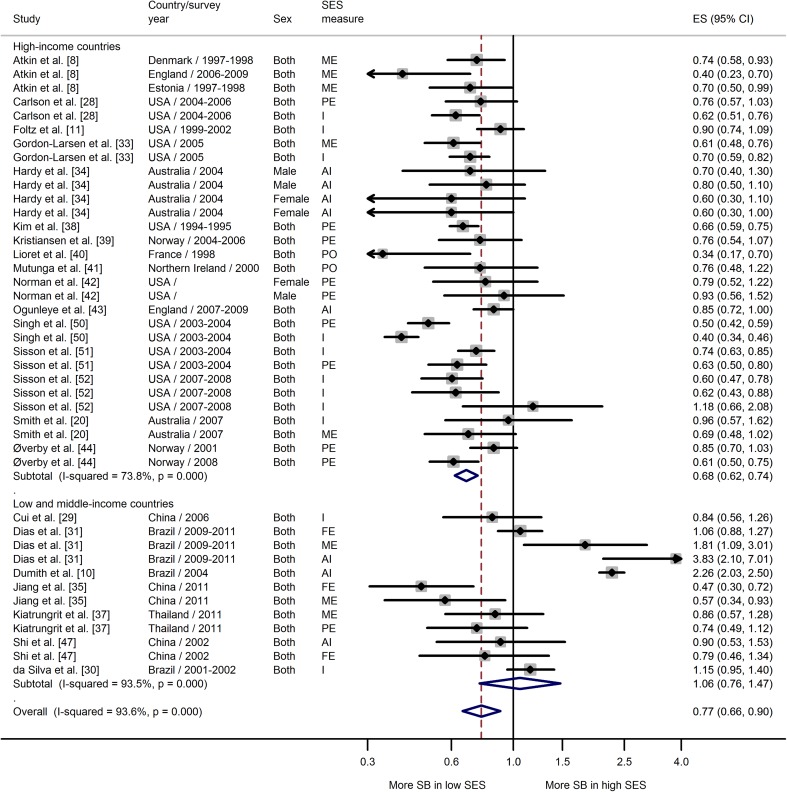
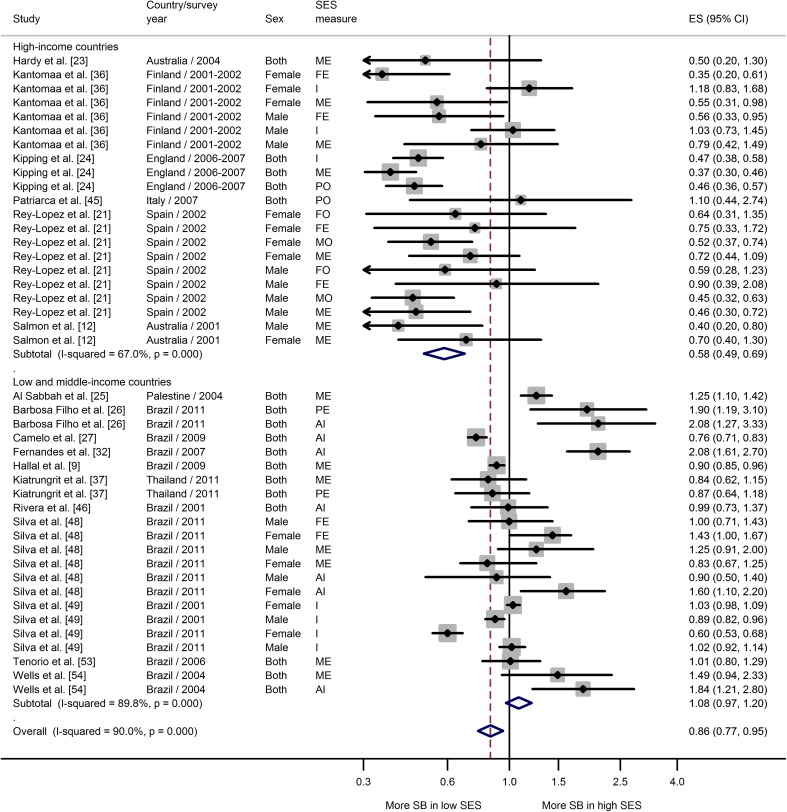
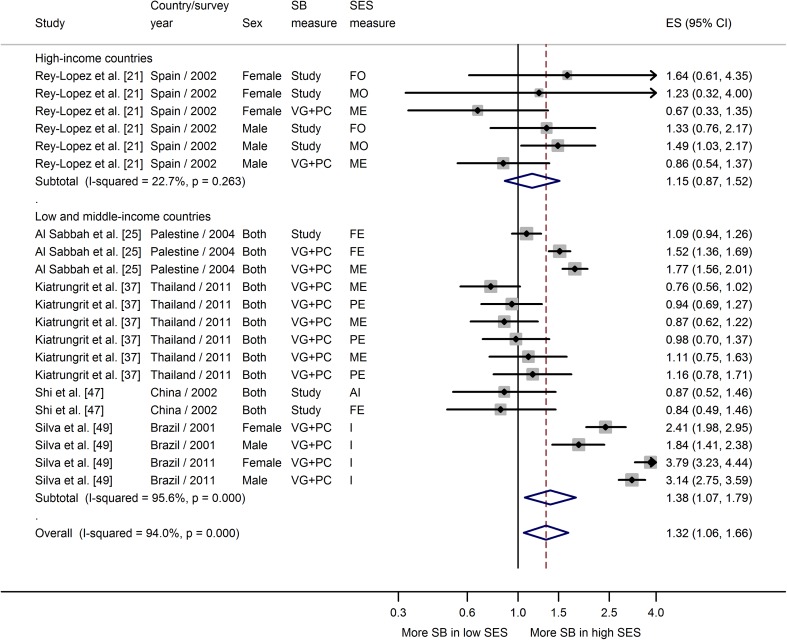
BACKGROUND: The body of evidence on associations between socioeconomic status (SES) and sedentary behaviors in adolescents is growing. OBJECTIVES: The overall aims of our study were to conduct a systematic review and meta-analysis of this evidence and to assess whether (1) the associations between SES and sedentary behavior are consistent in adolescents from low-middle-income and from high-income countries, (2) the associations vary by domain of sedentary behavior, and (3) the associations vary by SES measure. METHODS: We performed a systematic literature search to identify population-based studies that investigated the association between SES and sedentary behavior in adolescents (aged 10-19 years). Only studies that presented risk estimates were included. We conducted meta-analyses using random effects and univariate meta-regression and calculated pooled effect sizes (ES). RESULTS: Data from 39 studies were included; this provided 106 independent estimates for meta-analyses. Overall, there was an inverse association between SES and sedentary behavior (ES 0.89; 95 % confidence interval [CI] 0.81-0.98). However, the direction of the association varied: in high-income countries, SES was inversely associated with sedentary behavior (ES 0.67; 95 % CI 0.62-0.73), whereas in low-middle-income countries, there was a positive association between SES and sedentary behavior (ES 1.18; 95 % CI 1.04-1.34). In high-income countries, the associations were strongest for screen time (ES 0.68; 95 % CI 0.62-0.74) and television (TV) time (ES 0.58; 95 % CI 0.49-0.69), whereas in low-middle-income countries, the associations were strongest for 'other' screen time (i.e., computer, video, study time, but not including TV time) (ES 1.38; 95 % CI 1.07-1.79). All indicators of SES were negatively associated with sedentary behavior in high-income countries, but only resources (income and assets indexes) showed a significant positive association in low-middle-income countries. CONCLUSION: The associations between SES and sedentary behavior are different in high- and low-middle-income countries, and vary by domain of sedentary behavior. These findings suggest that different approaches may be required when developing intervention strategies for reducing sedentary behavior in adolescents in different parts of the world.
Overview
The claims and statistics of this paper haven’t been checked yet.
Run the check — free, no account needed. It reads the open-access text and checks the sources it cites.
Integrity signals
Registry
Cites
Statistics
Figures
Verification
Claims the paper makes
The claims and statistics of this paper haven’t been checked yet.
Run the check — free, no account needed. It reads the open-access text and checks the sources it cites.
Claims other papers make about this one
Each is checked against this paper’s own text: does it say what the citing paper says it does?
The source backs part of the claim, not all of it — or backs it for a different population, condition or comparison.
In the citing paper
“This may be particularly important for children and adolescents from low socioeconomic backgrounds, who typically engage in greater amounts of ST [48–51] and are also less likely to live in green neighbourhoods [52].”
From Psychological impacts of “screen time” and “green time” for children and adolescents: A systematic scoping review (2020) · cites this paper as [51]
Experimental — accuracy not yet measured
Self-check
Percentages, sums and reported differences re-computed from the paper’s own numbers.
The self-check needs the paper’s full text.
Citations
Cites
Preferred Reporting Items for Systematic Reviews and Meta-Analyses: the PRISMA statement
Moher, D., Liberati, A., Tetzlaff, J., Altman, D. G., & for the PRISMA Group (2009) · BMJ · doi:10.1136/bmj.b2535 · Cited by 83,823
Preferred reporting items for systematic reviews and meta-analyses: the PRISMA Statement.
(2009) · PubMed Central · Cited by 44,859
Indicators of socioeconomic position (part 1): Figure 1
Galobardes, B., Shaw, M., Lawlor, D. A., Lynch, J. W., & Smith, G. D. (2005) · Journal of Epidemiology & Community Health · doi:10.1136/jech.2004.023531 · Cited by 2,979
Socioeconomic Status in Health Research
Braveman, P., Cubbin, C., Egerter, S. A., Chideya, S., Marchi, K. S., Metzler, M. M., & Posner, S. F. (2005) · JAMA · doi:10.1001/jama.294.22.2879 · Cited by 2,360
Letter to the Editor: Standardized use of the terms “sedentary” and “sedentary behaviours”
Networ, S. B. R. (2012) · Applied Physiology, Nutrition, and Metabolism · doi:10.1139/h2012-024 · Cited by 1,873
Children, adolescents, and television.
Strasburger, V. (1990) · Pediatrics in review · doi:10.1542/peds.107.2.423 · Cited by 1,432
A Brief Review on Correlates of Physical Activity and Sedentariness in Youth
van der Horst, K., Chinapaw, M. J. M., Twisk, J. W. R., & van Mechelen, W. (2007) · Medicine & Science in Sports & Exercise · doi:10.1249/mss.0b013e318059bf35 · Cited by 1,259
Hilpert, M., Brockmeier, K., Dordel, S., Koch, B., Weiß, V., Ferrari, N., Tokarski, W., & Gräf, C. (2017) · Obesity Facts · doi:10.1159/000464105 · Cited by 1,185
Determinants of Adolescent Physical Activity and Inactivity Patterns
Gordon‐Larsen, P., McMurray, R. G., & Popkin, B. M. (2000) · PEDIATRICS · doi:10.1542/peds.105.6.e83 · Cited by 963
Indicators of socioeconomic position (part 2)
Galobardes, B., Shaw, M., Lawlor, D. A., Lynch, J. W., & Smith, G. D. (2006) · Journal of Epidemiology & Community Health · doi:10.1136/jech.2004.028092 · Cited by 649
Environmental determinants of physical activity and sedentary behavior.
Owen, N. G., Leslie, E. R., Salmon, J., & Fotheringham, M. J. (2000) · PubMed · Cited by 515
Pate, R. R., Mitchell, J. A., Byun, W., & Dowda, M. (2011) · British Journal of Sports Medicine · doi:10.1136/bjsports-2011-090192 · Cited by 375
Salmon, J., Timperio, A. F., Telford, A., Carver, A., & Crawford, D. A. (2005) · Obesity Research · doi:10.1038/oby.2005.239 · Cited by 339
Relationship between body image disturbance and incidence of depression: the SUN prospective cohort
Pimenta, A. M., Sánchez‐Villegas, A., Bes‐Rastrollo, M., López, C. N., & Martínez‐González, M. Á. (2009) · BMC Public Health · doi:10.1186/1471-2458-9-1 · Cited by 307
Couch kids: correlates of television viewing among youth
Gorely, T., Marshall, S. J., & Biddle, S. J. H. (2004) · International Journal of Behavioral Medicine · doi:10.1207/s15327558ijbm1103_4 · Cited by 280
Psychosocial and Environmental Correlates of Adolescent Sedentary Behaviors
Norman, G. J., Schmid, B. A., Sallis, J. F., Calfas, K. J., & Patrick, K. (2005) · PEDIATRICS · doi:10.1542/peds.2004-1814 · Cited by 213
Singh, G. K., Yu, S. M., Siahpush, M., & Kogan, M. D. (2008) · Archives of Pediatrics and Adolescent Medicine · doi:10.1001/archpedi.162.8.756 · Cited by 191
Muthuri, S. K., Wachira, L.-J. M., LeBlanc, A. G., Francis, C. E., Sampson, M., Onywera, V. O., & Tremblay, M. S. (2014) · International Journal of Environmental Research and Public Health · doi:10.3390/ijerph110303327 · Cited by 184
Wells, J. C. K., Hallal, P. C., Reichert, F. F., Menezes, A. M. B., Araújo, C. L., & Victora, C. G. (2008) · International Journal of Obesity · doi:10.1038/ijo.2008.37 · Cited by 178
Self-citationLioret, S., Maire, B., Volatier, J., & Charles, M.-A. A. (2006) · European Journal of Clinical Nutrition · doi:10.1038/sj.ejcn.1602538 · Cited by 174
Adolescents' physical activity in relation to family income and parents' education
KANTOMAA, M. T., Tammelin, T., Näyhä, S., & Taanila, A. M. (2007) · Preventive Medicine · doi:10.1016/j.ypmed.2007.01.008 · Cited by 165
Behaviour change for better health: nutrition, hygiene and sustainability
Newson, R. S., Lion, R., Crawford, R. J., Curtis, V. A., Elmadfa, I., Feunekes, G. I. J., Hicks, C., van Liere, M. J., Lowe, C. F., Meijer, G. W., et al. (2013) · BMC Public Health · doi:10.1186/1471-2458-13-s1-s1 · Cited by 164
Parental influences on child physical activity and screen viewing time: a population based study
Smith, B. J., Grunseit, A., Hardy, L., King, L., Wolfenden, L., & Milat, A. (2010) · BMC Public Health · doi:10.1186/1471-2458-10-593 · Cited by 146
Influence of Limit-Setting and Participation in Physical Activity on Youth Screen Time
Carlson, S. A., Fulton, J. E., Lee, S. M., Foley, J. T., Heitzler, C. D., & Huhman, M. E. (2010) · PEDIATRICS · doi:10.1542/peds.2009-3374 · Cited by 144
Prevalence and Correlates of Screen Time in Youth
Atkin, A. J., Sharp, S. J., Corder, K. L., & van Sluijs, E. M. F. (2014) · American Journal of Preventive Medicine · doi:10.1016/j.amepre.2014.07.043 · Cited by 142
Temporal trends and recent correlates in sedentary behaviours in Chinese children
Cui, Z., Hardy, L. L., Dibley, M. J., & Bauman, A. E. (2011) · International Journal of Behavioral Nutrition and Physical Activity · doi:10.1186/1479-5868-8-93 · Cited by 142
Multiple risk behaviour in adolescence and socio-economic status: findings from a UK birth cohort
Kipping, R., Smith, M. C., Heron, J., Hickman, M., & Campbell, R. M. (2014) · European Journal of Public Health · doi:10.1093/eurpub/cku078 · Cited by 123
Prática de atividade física em adolescentes brasileiros
Hallal, P. C., Knuth, A. G., Cruz, D. K. A., Mendes, M. I., & Malta, D. C. (2010) · Ciência & Saúde Coletiva · doi:10.1590/s1413-81232010000800008 · Cited by 113
Self-citationShi, Z., Lien, N., Kumar, B. N., & Holmboe‐Ottesen, G. (2006) · Preventive Medicine · doi:10.1016/j.ypmed.2006.04.017 · Cited by 110
Family and home correlates of television viewing in 12-13 year old adolescents: the Nepean Study.
Hardy, L. L., Baur, L. A., Garnett, S. P., Crawford, D. A., Campbell, K. J., Shrewsbury, V. A., Cowell, C. T. C. T., & Salmon, J. (2006) · International Journal of Behavioral Nutrition and Physical Activity · doi:10.1186/1479-5868-3-24 · Cited by 103
Morgan, E. H., Schoonees, A., Sriram, U., Faure, M. C., & Seguin‐Fowler, R. A. (2020) · Cochrane Database of Systematic Reviews · doi:10.1002/14651858.cd012547.pub2 · Cited by 94
Atividade física e comportamento sedentário em adolescentes estudantes do ensino médio
Tenório, M. C. M., de Barros, M. V. G., Tassitano, R. M., Bezerra, J., Tenório, J. M., & Hallal, P. C. (2010) · Revista Brasileira de Epidemiologia · doi:10.1590/s1415-790x2010000100010 · Cited by 90
Self-citationSabbah, H. A., Vereecken, C. A., Kolsteren, P. W., Abdeen, Z., & Maes, L. (2007) · Public Health Nutrition · doi:10.1017/s1368980007665501 · Cited by 87
Mediators of the Relationship Between Maternal Education and Children’s TV Viewing
Hesketh, K. D., Ball, K., Crawford, D. A., Campbell, K. J., & Salmon, J. (2007) · American Journal of Preventive Medicine · doi:10.1016/j.amepre.2007.02.039 · Cited by 85
Atividade física, horas de assistência à TV e composição corporal em crianças e adolescentes
Rivera, I. R., da Silva, M. A. M., Silva, R. D. T. A., de Oliveira, B. A. V., & Carvalho, A. C. (2010) · Arquivos Brasileiros de Cardiologia · doi:10.1590/s0066-782x2010005000065 · Cited by 85
Stand up, sit down, keep moving: turning circles in physical activity research?
Brown, W. J., Bauman, A. E., & Owen, N. G. (2008) · British Journal of Sports Medicine · doi:10.1136/bjsm.2008.055285 · Cited by 80
Self-citationSisson, S. B., Broyles, S. T., Baker, B. L., & Katzmarzyk, P. T. (2011) · Journal of Physical Activity and Health · doi:10.1123/jpah.8.s2.s188 · Cited by 70
Sedentary behaviours and socio-economic status in Spanish adolescents: the AVENA study
Rey-López, J. P., Aznar, C. T., Vicente‐Rodríguez, G., Gracia‐Marco, L., Jiménez‐Pavón, D., Pérez‐Llamas, F., Redondo, C., Bourdeaudhuij, I. D., Sjöstróm, M., Marcos, A., et al. (2010) · European Journal of Public Health · doi:10.1093/eurpub/ckq035 · Cited by 69
Prevalência e fatores associados aos comportamentos sedentários em adolescentes
Dias, P. J. P., Domingos, I. P., Ferreira, M. G., Muraro, A. P., Sichieri, R., & Gonçalves‐Silva, R. M. V. (2014) · Revista de Saúde Pública · doi:10.1590/s0034-8910.2014048004635 · Cited by 66
Use of television, videogames, and computer among children and adolescents in Italy
Patriarca, A., Giuseppe, G. D., Albano, L., Marinelli, P., & Angelillo, I. F. (2009) · BMC Public Health · doi:10.1186/1471-2458-9-139 · Cited by 64
TV viewing and obesity among Norwegian children: the importance of parental education
Kristiansen, H., Júlíusson, P. B., Eide, G. E., Roelants, M., & Bjerknes, R. (2012) · Acta Paediatrica · doi:10.1111/apa.12066 · Cited by 56
Recreational Screen-Time Among Chinese Adolescents: A Cross-Sectional Study
Jiang, X.-X., Hardy, L. L., Ding, D., Baur, L. A., & Shi, H. (2014) · Journal of Epidemiology · doi:10.2188/jea.je20140006 · Cited by 51
da Silva, K. S., Nahas, M. V., Peres, K. G., & Lopes, A. D. S. (2009) · Cadernos de Saúde Pública · doi:10.1590/s0102-311x2009001000010 · Cited by 48
Filho, V. C. B., de Campos, W., Bozza, R., & Lopes, A. D. S. (2012) · BMC Pediatrics · doi:10.1186/1471-2431-12-130 · Cited by 47
Socioeconomic differences in risk factors for obesity in adolescents in Northern Ireland
Mutunga, M., Gallagher, A. M., Boreham, C. A., Watkins, D. C., Murray, L. J., Cran, G., & Reilly, J. J. (2006) · International Journal of Pediatric Obesity · doi:10.1080/17477160600569560 · Cited by 47
Dumith, S. C., Hallal, P. C., Menezes, A. M. B., & Araújo, C. L. (2010) · Cadernos de Saúde Pública · doi:10.1590/s0102-311x2010001000009 · Cited by 47
Self-citationSilva, K. S., da Silva Lopes, A., Dumith, S. C., Garcia, L. M. T., Bezerra, J., & Nahas, M. V. (2014) · International Journal of Public Health · doi:10.1007/s00038-013-0464-3 · Cited by 46
Fernandes, R. A., Júnior, I. F. F., Cardoso, J. R., Ronque, Ê. R. V., Loch, M. R., & de Oliveira, A. R. (2008) · BMC Public Health · doi:10.1186/1471-2458-8-329 · Cited by 45
Camelo, L. D. V., Rodrigues, J. F. D. C., Giatti, L., & Barreto, S. M. (2012) · Cadernos de Saúde Pública · doi:10.1590/s0102-311x2012001100015 · Cited by 44
US Adolescent Nutrition, Exercise, and Screen Time Baseline Levels Prior to National Recommendations
Foltz, J. L., Cook, S. R., Szilagyi, P. G., Auinger, P., Stewart, P. A., Torre, S. B. D., Dipl, D., & Baldwin, C. D. (2011) · Clinical Pediatrics · doi:10.1177/0009922810393499 · Cited by 43
Descriptive epidemiology of small screen recreation among Australian adolescents
Hardy, L. L., Dobbins, T., Denney‐Wilson, E., Okely, A. D., & Booth, M. L. (2006) · Journal of Paediatrics and Child Health · doi:10.1111/j.1440-1754.2006.00956.x · Cited by 38
Kim, J., Liu, J., Colabianchi, N., & Pate, R. R. (2010) · Archives of Pediatrics and Adolescent Medicine · doi:10.1001/archpediatrics.2010.167 · Cited by 35
Prevalence of high screen time in English youth: association with deprivation and physical activity
Ogunleye, A. A., Voss, C., & SANDERCOCK, G. R. H. (2011) · Journal of Public Health · doi:10.1093/pubmed/fdr074 · Cited by 33
Social-Ecological Correlates of Excessive TV Viewing: Difference by Race and Sex
Sisson, S. B., & Broyles, S. T. (2012) · Journal of Physical Activity and Health · doi:10.1123/jpah.9.3.449 · Cited by 29
Television Time among Brazilian Adolescents: Correlated Factors are Different between Boys and Girls
Silva, D. A. S., Tremblay, M. S., Gonçalves, E. C. D. A., & Silva, R. J. D. S. (2014) · The Scientific World JOURNAL · doi:10.1155/2014/794539 · Cited by 25
Changes in screen time activity in Norwegian children from 2001 to 2008: two cross sectional studies
Øverby, N. C., Klepp, K., & Bere, E. T. (2013) · BMC Public Health · doi:10.1186/1471-2458-13-80 · Cited by 19
Parental modeling, education and children's sports and TV time: The ENERGY-project
Fernández-Alvira, J. M., Velde, S. J. T., Singh, A. S., Jiménez‐Pavón, D., Bourdeaudhuij, I. D., Bere, E. T., Μanios, Y., Kovacs, E., Jan, N., Moreno, L. A., et al. (2014) · Preventive Medicine · doi:10.1016/j.ypmed.2014.11.021 · Cited by 15
Cross-sectional study of use of electronic media by secondary school students in Bangkok, Thailand.
(2014) · PubMed Central · doi:10.3969/j.issn.1002-0829.2014.04.005 · Cited by 10
Research works printed but not linked: 1
- Brazilian Institute of Geography and Statistics. Resultados gerais da amostra do Censo Demografico 2010. Rio de Janeiro: Brazilian Institute of Geography and Statistics; 2012.
Cited by
Sorted by citations
Physical activity behaviours in adolescence: Current evidence and opportunities for intervention
van Sluijs, E. M. F., Ekelund, U., Crochemore-Silva, I., Guthold, R., Ha, A., Lubans, D., Oyeyemi, A. L., Ding, D., & Katzmarzyk, P. T. (2021) · The Lancet · doi:10.1016/s0140-6736(21)01259-9 · Cited by 919
Oswald, T. K., Rumbold, A. R., Kedzior, S. G. E., & Moore, V. M. (2020) · PLoS ONE · doi:10.1371/journal.pone.0237725 · Cited by 367
Socioeconomic Status and Cardiovascular Disease: an Update
de Mestral, C., & Stringhini, S. (2017) · Current Cardiology Reports · doi:10.1007/s11886-017-0917-z · Cited by 228
Margaritis, I., Houdart, S., Ouadrhiri, Y. E., Bigard, X. A., Vuillemin, A., & Duché, P. (2020) · Archives of Public Health · doi:10.1186/s13690-020-00432-z · Cited by 154
Chen, S., Liu, Y., Tremblay, M. S., Hong, J., Tang, Y., Cao, Z., Zhuang, J., Zhu, Z., Wu, X., Wang, L., et al. (2020) · Journal of sport and health science/Journal of Sport and Health Science · doi:10.1016/j.jshs.2020.07.002 · Cited by 144
Metadata
- Authors
- Mielke, G. I., Brown, W. J., Nunes, B. P., Silva, I. C. M., & Hallal, P. C.
- Affiliations
- The University of Queensland (AU)
- Universidade Federal de Pelotas (BR)
- Venue
- Sports Medicine
- Published
- 2016-06-03
- Volume
- 47
- Issue
- 1
- Pages
- 61-75
- ISSN
- 0112-1642 (ISSN-L)
- 1179-2035
- PMC
- PMC5215067
- OpenAlex
- W2412267073
- Cited by
- 158
- References
- 60
- Citations by year
- 2026: 11 · 2025: 19 · 2024: 17 · 2023: 14 · 2022: 23 · 2021: 23 · 2020: 19 · 2019: 9 · 2018: 7 · 2017: 15
- FWCI
- 1.21
- Type
- journal article
- Language
- en
- Open access
- hybrid
- doi.org
- Locations
- Sports Medicine (publishedVersion, cc-by)
- PubMed Central (publishedVersion, cc-by)
- PubMed (publishedVersion)
- Funders
- Universidade Federal de Pelotas
- Coordenação de Aperfeiçoamento de Pessoal de Nível Superior
- Topics
- Health Sciences › Medicine › Public Health, Environmental and Occupational Health › Physical Activity and Health
- Health Sciences › Medicine › Public Health, Environmental and Occupational Health › Obesity, Physical Activity, Diet
- Social Sciences › Health › Health disparities and outcomes
- Keywords
- sedentary behavior, socioeconomic status, adolescents, screen time, television viewing, low-middle income countries, high-income countries, socioeconomic inequalities in health, physical activity, intervention strategies, educational attainment, parental education, parental income, household income, household assets, urban-rural residence, sex differences, age differences
- MeSH terms
- Adolescent, Computers, Humans, Income, Social Class, Socioeconomic Factors, Television, Sedentary Behavior
About these checks
Registry, retraction, Cites and statistics results are computed, not judged, with one exception: a printed reference that no index lists is read once by a model before it counts as a citation error. Claims are extracted by a model and kept only when their quote appears verbatim in the text; each cited source is then checked, with a model’s help, for whether it says what the claim relies on. Those verdicts can be wrong — read the claim’s quote and the cited source before relying on one.
Statistics and arithmetic are recomputed, not judged.
Confidence bands are shown only for fields calibrated on our annotated test set. None is calibrated yet, so no band is shown.
What counts as a claim ›How we measure confidence ›How we check this ›
Are you an author, or do you see a problem with this page? Request a review
