

Effects of concurrent strength and endurance training on measures of physical fitness in healthy middle-aged and older adults: A systematic review with meta-analysis.
Open accessThe DOI matches its Crossref record; 123 of the 123 references it cites were found in a registry or an index.
Abstract
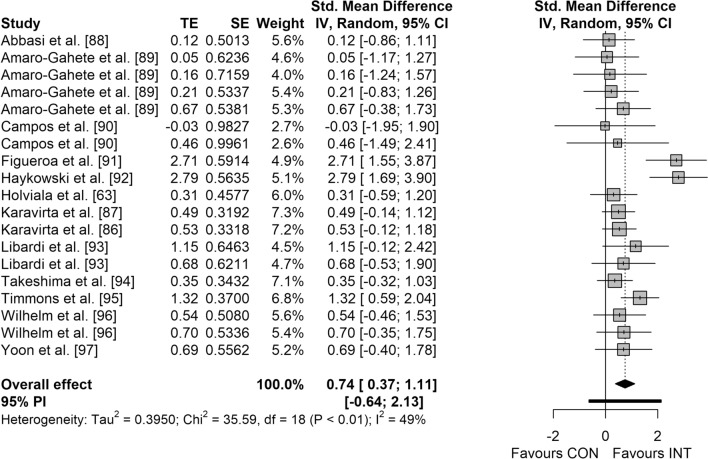
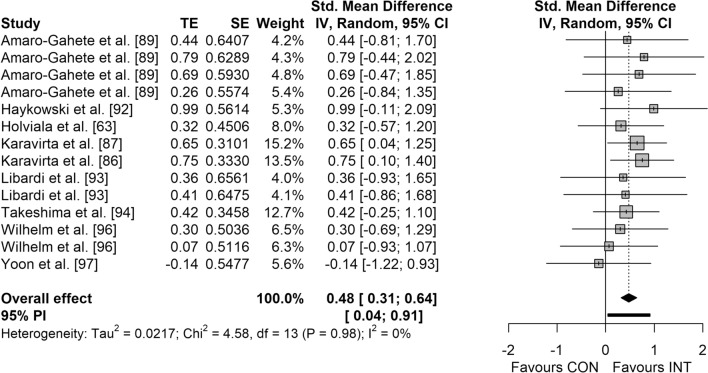
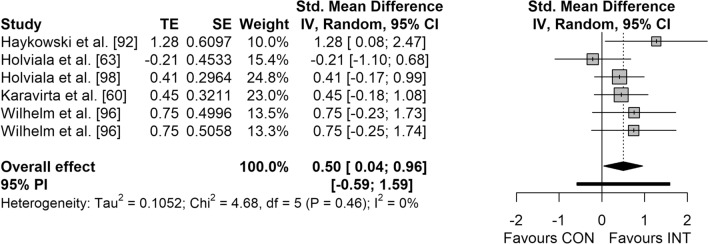
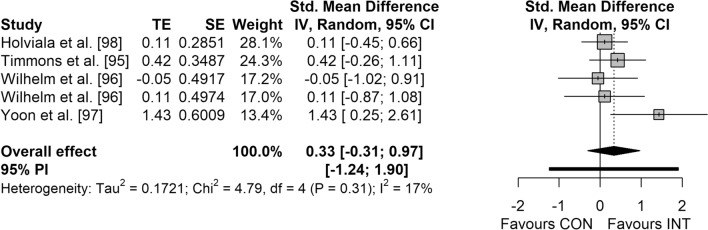
Background: There is evidence that in older adults the combination of strength training (ST) and endurance training (ET) (i.e., concurrent training [CT]) has similar effects on measures of muscle strength and cardiorespiratory endurance (CRE) compared with single-mode ST or ET, respectively. Therefore, CT seems to be an effective method to target broad aspects of physical fitness in older adults. Objectives: The aim was to examine the effects of CT on measures of physical fitness (i.e., muscle strength, power, balance and CRE) in healthy middle-aged and older adults aged between 50 and 73 years. We also aimed to identify key moderating variables to guide training prescription. Study Design: We conducted a systematic review with meta-analysis of randomized controlled trials. Data Sources: The electronic databases PubMed, Web of Science Core Collection, MEDLINE and Google Scholar were systematically searched until February 2022. Eligibility Criteria for Selecting Studies: We included randomized controlled trials that examined the effects of CT versus passive controls on measures of physical fitness in healthy middle-aged and older adults aged between 50 and 73 years. Results: Fifteen studies were eligible, including a total of 566 participants. CT induced moderate positive effects on muscle strength (standardized mean difference [SMD] = 0.74) and power (SMD = 0.50), with a small effect on CRE (SMD = 0.48). However, no significant effects were detected for balance (p > 0.05). Older adults > 65 years (SMD = 1.04) and females (SMD = 1.05) displayed larger improvements in muscle strength compared with adults ≤ 65 years old (SMD = 0.60) and males (SMD = 0.38), respectively. For CRE, moderate positive effects (SMD = 0.52) were reported in those ≤ 65 years old only, with relatively larger gains in females (SMD = 0.55) compared with males (SMD = 0.45). However, no significant differences between all subgroups were detected. Independent single training factor analysis indicated larger positive effects of 12 weeks (SMD = 0.87 and 0.88) compared with 21 weeks (SMD = 0.47 and 0.29) of CT on muscle strength and power, respectively, while for CRE, 21 weeks of CT resulted in larger gains (SMD = 0.62) than 12 weeks (SMD = 0.40). For CT frequency, three sessions per week produced larger beneficial effects (SMD = 0.91) on muscle strength compared with four sessions (SMD = 0.55), whereas for CRE, moderate positive effects were only noted after four sessions per week (SMD = 0.58). A session duration of > 30–60 min generated larger improvements in muscle strength (SMD = 0.99) and power (SMD = 0.88) compared with > 60–90 min (SMD = 0.40 and 0.29, respectively). However, for CRE, longer session durations (i.e., > 60–90 min) seem to be more effective (SMD = 0.61) than shorter ones (i.e., > 30–60 min) (SMD = 0.34). ET at moderate-to-near maximal intensities produced moderate (SMD = 0.64) and small positive effects (SMD = 0.49) on muscle strength and CRE, respectively, with no effects at low intensity ET (p > 0.05). Finally, intra-session ST before ET produced larger gains in muscle strength (SMD = 1.00) compared with separate sessions (SMD = 0.55), whereas ET and ST carried out separately induced larger improvements in CRE (SMD = 0.58) compared with intra-session ET before ST (SMD = 0.49). Conclusions: CT is an effective method to improve measures of physical fitness (i.e., muscle strength, power, and CRE) in healthy middle-aged and older adults aged between 50 and 73 years, regardless of sex. Results of independent single training factor analysis indicated that the largest effects on muscle strength were observed after 12 weeks of training, > 30–60 min per session, three sessions per week, higher ET intensities and when ST preceded ET within the same session. For CRE, the largest effects were noted after 21 weeks of training, four sessions per week, > 60–90 min per session, higher ET intensities and when ET and ST sessions were performed separately. Regarding muscle power, the largest effects were observed after 12 weeks of training and > 30–60 min per session.
Overview
The claims and statistics of this paper haven’t been checked yet.
Free: it reads the open-access text and checks the first 5 claims that cite a source we can check. Create a free account to check every claim.
Integrity signals
Registry
Cites
Statistics
Figures
Verification
Claims the paper makes
The claims and statistics of this paper haven’t been checked yet.
Free: it reads the open-access text and checks the first 5 claims that cite a source we can check. Create a free account to check every claim.
Claims other papers make about this one
Each is checked against this paper’s own text: does it say what the citing paper says it does?
The source backs part of the claim, not all of it — or backs it for a different population, condition or comparison.
In the citing paper
“In addition, blunted adaptation to PRT may be due to the onset of neuromuscular fatigue [218,231].”
From Global consensus on optimal exercise recommendations for enhancing healthy longevity in older adults (ICFSR) (2025) · cites this paper as [231]
Experimental — accuracy not yet measuredThe source backs part of the claim, not all of it — or backs it for a different population, condition or comparison.
In the citing paper
“This residual error and the ~ 19% of variance left unexplained in the cross-validation may be attributable to variety of factors, including different fitness levels in the three groups of study participants30, different weather conditions experienced during the three experiments (i.e., August vs. September vs. January)31, and different altitudes of the study transects32.”
From A singular, broadly-applicable model for estimating on- and off-path walking travel rates using airborne lidar data (2024) · cites this paper as [30]
Experimental — accuracy not yet measuredIn the citing paper
“In addition, blunted adaptation to PRT may be due to the onset of neuromuscular fatigue [218,231].”
From Global consensus on optimal exercise recommendations for enhancing healthy longevity in older adults (ICFSR) (2025) · cites this paper as [231]
Self-check
Percentages, sums and reported differences re-computed from the paper’s own numbers.
The self-check needs the paper’s full text.
Citations
Cites
R: A Language and Environment for Statistical Computing
R Core Team (2025) · doi:10.32614/r.manuals · Cited by 352,181
Measuring inconsistency in meta-analyses
Higgins, J. P. T., Thompson, S. G., Deeks, J. J., & Altman, D. G. (2003) · BMJ · doi:10.1136/bmj.327.7414.557 · Cited by 63,139
Bias in meta-analysis detected by a simple, graphical test
Egger, M., Smith, G. D., Schneider, M., & Minder, C. (1997) · BMJ · doi:10.1136/bmj.315.7109.629 · Cited by 56,722 · cited 1×
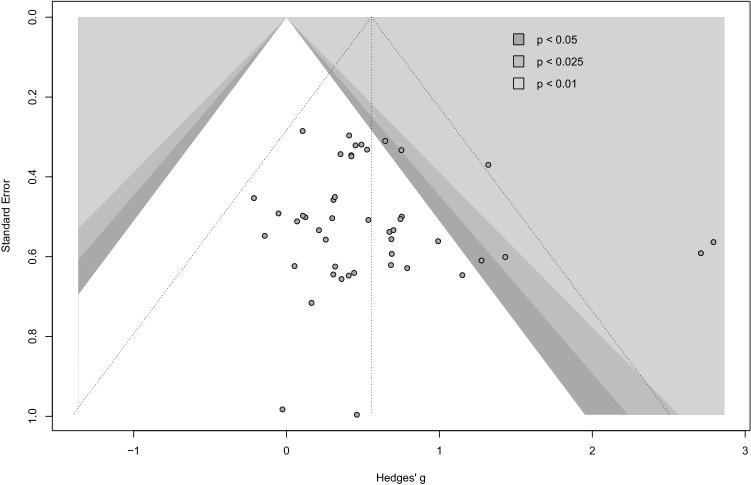
“To quantify the funnel plot asymmetry and to estimate the risk of publication bias, Egger’s test of the intercept was used [70].”
MethodMeta-analysis in clinical trials
DerSimonian, R., & Laird, N. (1986) · Controlled Clinical Trials · doi:10.1016/0197-2456(86)90046-2 · Cited by 39,552 · cited 1×
“This method has been shown to produce more robust estimates and outperforms the often-used DerSimonian-Laird estimator [75], especially when the number of studies is small and there is substantial heterogeneity [74, 76].”
MethodQuantifying heterogeneity in a meta‐analysis
Higgins, J. P. T., & Thompson, S. G. (2002) · Statistics in Medicine · doi:10.1002/sim.1186 · Cited by 36,763
Liberati, A., Altman, D. G., Tetzlaff, J., Mulrow, C., Gøtzsche, P. C., Ioannidis, J. P. A., Clarke, M., Devereaux, P. J., Kleijnen, J., & Moher, D. (2009) · PLoS Medicine · doi:10.1371/journal.pmed.1000100 · Cited by 28,164 · cited 2×
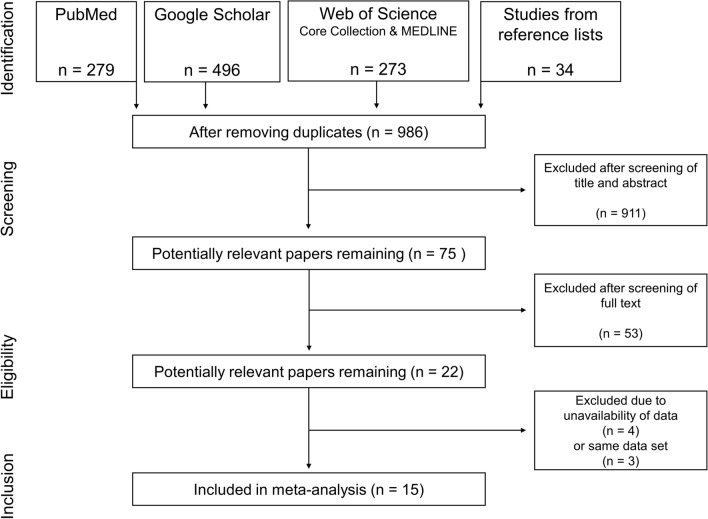
“This systematic review and meta-analysis was conducted according to the Preferred Reporting Items for Systematic Reviews and Meta-Analyses (PRISMA) statement [65, 66] and was registered in the International Prospective Register of Systematic Reviews (PROSPERO) database on 5 July 2020 under the registration number “CRD…”
MethodConducting Meta-Analyses in R with the metafor Package
Viechtbauer, W. (2010) · Journal of Statistical Software · doi:10.18637/jss.v036.i03 · Cited by 20,464 · cited 1×
“tions following higher compared with lower ET intensities were reported [81].”
BackgroundBorenstein, M., Hedges, L. V., Higgins, J. P. T., & Rothstein, H. R. (2009) · doi:10.1002/9780470743386 · Cited by 14,225
Bundesgesundheitsblatt - Gesundheitsforschung - Gesundheitsschutz
(2013) · Bundesgesundheitsblatt - Gesundheitsforschung - Gesundheitsschutz · doi:10.1007/103.1437-1588 · Cited by 11,796
World Health Organization 2020 guidelines on physical activity and sedentary behaviour
Bull, F. C., Al-Ansari, S. S., Biddle, S., Borodulin, K., Buman, M. P., Cardon, G., Carty, C., Chaput, J.-P., Chastin, S., Chou, R., et al. (2020) · British Journal of Sports Medicine · doi:10.1136/bjsports-2020-102955 · Cited by 11,657 · cited 2×
“The available recommendations for exercise training and physical activity for older adults comprise endurance training (ET) and strength training (ST) [10, 22, 23].”
Background
Research works printed but not linked: 4
- World Health Organization (WHO) Global recommendations on physical activity for health 2010 Geneva World Health Organization 26180873
- Cohen J Statistical power analysis for the behaviors science 1988 2 Hillsdale Laurence Erlbaum Associates, Publishers
- Schwarzer G meta: An R Package for Meta-Analysis R News 2007 7 40 45
- Abbasi S Avandi SM Haghashenas R The Effect of Eight Weeks of Concurrent Training on Total Plasma Protein Levels and Muscle Strength of Elderly Men Report of Health Care 2019 5 2 17 26
Cited by
Izquierdo, M., de Souto Barreto, P., Arai, H., Bischoff-Ferrari, H. A., Cadore, E. L., Cesari, M., Chen, L.-K., Coen, P. M., Courneya, K. S., Duque, G., et al. (2025) · The Journal of nutrition, health and aging · doi:10.1016/j.jnha.2024.100401 · Cited by 273
Dhahbi, W., Briki, W., Heißel, A., Schega, L., Dergaa, I., Guelmami, N., Omri, A. E., & Chaabène, H. (2025) · Sports Medicine - Open · doi:10.1186/s40798-025-00857-2 · Cited by 121
“Exercise selection should prioritize compound movements that challenge both muscle strength and balance [24].”
InfluentialWang, A., Zhou, Y. J., Ma, H., Tang, X., Li, S., Pei, R., & Piao, M. (2024) · Digital Health · doi:10.1177/20552076241284903 · Cited by 45
Nuñez-Lisboa, M., Valero‐Breton, M., & Dewolf, A. H. (2023) · Frontiers in Physiology · doi:10.3389/fphys.2023.1194889 · Cited by 26
“Physical training is reported as an effective treatment for maintaining muscular function (Kraemer et al., 2002; Chen et al., 2021; el Hadouchi et al., 2022; Markov et al., 2022).”
BackgroundHan, H., Zhang, J., Zhang, F., Li, F., & Wu, Z. (2025) · Frontiers in Aging Neuroscience · doi:10.3389/fnagi.2025.1510773 · Cited by 21
Bischof, K., Stafilidis, S., Bundschuh, L., Oesser, S., Baca, A., & König, D. (2024) · Frontiers in Nutrition · doi:10.3389/fnut.2024.1384112 · Cited by 23
The role of physical activity in mitigating age-related changes in the neuromuscular control of gait
Nuñez-Lisboa, M., & Dewolf, A. H. (2025) · npj Aging · doi:10.1038/s41514-025-00239-8 · Cited by 19
“…coordination and distal-to-proximal redistribution 49 , referring to the shift in mechanical work and power generation from distal joints (such as the ankle) to more proximal joints (such as the hip) during walking 25 , suggesting that there remains a gap in understanding the biomechanical…”
Acute effect of combined exercise with aerobic and resistance exercises on executive function
Chen, Y.-C., Li, R., Chen, F., Wu, C., Chen, C., Chang, C.-C., & Chang, Y. (2023) · PeerJ · doi:10.7717/peerj.15768 · Cited by 15
Chen, Y., Feng, X., Huang, L., Wang, K., & Mi, J. (2023) · Journal of Exercise Science & Fitness · doi:10.1016/j.jesf.2023.12.005 · Cited by 13
Fausto, D. Y., Martins, J. B. B., Dominski, F. H., & Guimarães, A. C. D. A. (2024) · Archives of Women s Mental Health · doi:10.1007/s00737-024-01509-2 · Cited by 11
Dalamitros, A. A., Toupektsi, E., Alexiou, P., Nousiou, S., Clemente‐Suárez, V. J., Tornero-Aguilera, J. F., & Tsalis, G. A. (2024) · Healthcare · doi:10.3390/healthcare12020221 · Cited by 13
“Importantly, considering the individual’s preferences, needs, and enjoyment, while, in parallel, consulting healthcare professionals is important before participating in any new exercise routine.”
BackgroundCheng, M., Ni, J., Liu, F., & Wang, S. (2025) · Ageing Research Reviews · doi:10.1016/j.arr.2025.102924 · Cited by 13
Canlı, U., & Aldhahi, M. I. (2024) · BMC Sports Science Medicine and Rehabilitation · doi:10.1186/s13102-023-00798-x · Cited by 13
“As a consequence, the aging process has emerged as a noteworthy interest for both national and international health institutions [2].”
BackgroundLi, Z., Qi, Y., Chen, X., Li, J., Zhang, J., Li, P., & Zhou, Z. (2024) · Scandinavian Journal of Medicine and Science in Sports · doi:10.1111/sms.14764 · Cited by 14
Guo, X., Zhou, Y., Li, X., & Mu, J. (2025) · BMC Musculoskeletal Disorders · doi:10.1186/s12891-025-08384-7 · Cited by 9
“Specifically, RET improves concentric, eccentric and isometric peak forces in the quadriceps and calf muscles, with the most pronounced effects observed in the quadriceps muscles [41].”
Zhang, J., Wei, Y., Wang, L., Zhang, F., & Wu, Z. (2025) · Experimental Gerontology · doi:10.1016/j.exger.2025.112768 · Cited by 15
Bischof, K., Stafilidis, S., Bundschuh, L., Oesser, S., Baca, A., & König, D. (2023) · Frontiers in Nutrition · doi:10.3389/fnut.2023.1266056 · Cited by 13
Campbell, M. J., Cutler, S. L., & Dennison, P. E. (2024) · Scientific Reports · doi:10.1038/s41598-024-71359-6 · Cited by 7
“…in the cross-validation may be attributable to variety of factors, including different fitness levels in the three groups of study participants 30 , different weather conditions experienced during the three experiments (i.e., August vs. September vs. January) 31 , and different altitudes of…”
BackgroundHernández-Martínez, J., Vásquez-Carrasco, E., Cid-Calfucura, I., Sandoval, C., Herrera-Valenzuela, T., Núñez-Espinosa, C. A., Branco, B. H. M., & Valdés-Badilla, P. A. (2025) · Medicina · doi:10.3390/medicina61091697 · Cited by 6
“Similarly, Markov et al. [63] reported significant gains in maximal isokinetic torque, isometric strength, and 1RM of knee extensors following CT ( p < 0.01) compared with control groups in adults of similar age ranges.”
InfluentialIbeas, K., Griñán‐Ferré, C., Romero, M. D. M., Sebastián, D., Bastías-Pérez, M., Gómez, R., Soler‐Vázquez, M. C., Zagmutt, S., Pallàs, M., Castell, M., et al. (2023) · Aging Cell · doi:10.1111/acel.14047 · Cited by 6
“Exercise delays the development of dementia and contributes positively to memory in middle-aged and older people, increasing quality of life (Chekroud et al., 2018; Colcombe et al., 2003; Hart & Buck, 2019; Markov et al., 2022).”
BackgroundGodhe, M., Rönquist, G., Nilsson, J. E., Ekblom, Ö. B., Nyberg, L. A., Edman, G., & Andersson, E. A. (2024) · Gerontology · doi:10.1159/000538446 · Cited by 6
“…fi tness tests were primarily performed with specialized laboratory equipment, showed that women generally achieve larger effects in knee extensor isokinetic strength than men do, but no intervention effects were seen for aerobic fi tness and balance among older adults up to 73 years of age [48].”
MethodChaves, L. F. C., Gambassi, B. B., Cadore, E. L., Sotão, S. S., Sousa, T. M. D. S., Dias, D. D. S., Schwingel, P. A., & Mostarda, C. T. (2024) · Blood Pressure Monitoring · doi:10.1097/mbp.0000000000000733 · Cited by 6
Zhou, J., Chang, Y., Shen, H., Zhang, M., Wang, Y., Liang, X., & Gao, W. (2025) · Frontiers in Public Health · doi:10.3389/fpubh.2025.1580340 · Cited by 5
Liu, C., Zhang, Z., Zhang, Y., Kong, H., Zhao, E., & Xie, Y. (2026) · BMC Women s Health · doi:10.1186/s12905-026-04359-5 · Cited by 4
Zhao, F., Chen, Y., Sun, S.-M., Zhang, Y., Wen, H., Dou, Z., Wei, X., & Xie, C. (2024) · BMC Oral Health · doi:10.1186/s12903-024-05216-3 · Cited by 4
Schumacher, A., Rahil, D., Krumpolt, M., Prinz, A., Sannemann, L., & Witte, K. (2025) · Frontiers in Sports and Active Living · doi:10.3389/fspor.2025.1641115 · Cited by 3
Fachrezzy, F., Maslikah, U., Hermawan, I., Jariono, G., Nugroho, H., & Syahruddin, S. (2024) · Physical Education Theory and Methodology · doi:10.17309/tmfv.2024.5.19 · Cited by 7
“The capacity of muscles to sustain high-intensity activities or static positions is known as muscle endurance (Markov et al., 2023).”
BackgroundEffects of jazz dance and concurrent training on physical variables in postmenopausal women
Fausto, D. Y., Martins, J. B. B., da Rocha, A. R. A., Gil, P. R., Freitas, C. D. L. R., Pelegrini, A., & Guimarães, A. C. D. A. (2025) · Climacteric · doi:10.1080/13697137.2025.2486052 · Cited by 3
Kim, N. Y., & Lee, H. (2025) · Journal of Engineered Fibers and Fabrics · doi:10.1177/15589250251352022 · Cited by 3
“Each participant was asked to try on each type of experimental wear and select the one they felt was most suitable for daily exercise of 30–60 min to maintain physical health, 48 such as walking, running, and cycling.”
Blanco‐Rambo, E., Rubin, N., Bandeira‐Guimarães, M., Löbell, R., de Azevedo, A. B. C., Fergutz, A., Dornelles, G., Vieira, A., de Asteasu, M. L. S., Izquierdo, M., et al. (2026) · Journal of Aging and Physical Activity · doi:10.1123/japa.2025-0112 · Cited by 2
Exercise capacity and the psychosocial effect in preterm born infants – Should we do more?
Fitzgerald, H. T., Halvorsen, T., Engan, M., Li, S., & Selvadurai, H. C. (2025) · Paediatric Respiratory Reviews · doi:10.1016/j.prrv.2025.01.001 · Cited by 5
Research on the application of sports biomechanics in optimizing the effect of physical training
Gou, X., & Xiong, W. (2025) · Molecular & cellular biomechanics · doi:10.62617/mcb1133 · Cited by 2
Thompson, L. V. (2025) · Advances in experimental medicine and biology · doi:10.1007/978-3-031-88361-3_15 · Cited by 2
Vaithanomsat, P., Sukatta, U., Janchai, P., Tumnark, P., & Phoemsapthawee, J. (2025) · Food Science & Nutrition · doi:10.1002/fsn3.70984 · Cited by 5
Everard, E., Carroll, P., Doherty, S., Harrison, M., & Krustrup, P. (2025) · The Journal of Strength and Conditioning Research · doi:10.1519/jsc.0000000000005349 · Cited by 2
Asadi, H., Darvishpour, A., Ezzati, K., & Chaboki, B. G. (2023) · BMC Musculoskeletal Disorders · doi:10.1186/s12891-023-06915-8 · Cited by 1
Canlı, U., & Prieto-González, P. (2023) · Human Movement · doi:10.5114/hm.2023.133923 · Cited by 1
Babu, B., Bawa, F. M., Parvathy, G., Gupta, A. R., Gill, G. S., Paredes, A. A., Seitaj, A., Herbert, D., & Gupta, M. (2025) · Cureus · doi:10.7759/cureus.98446 · Cited by 1
Schumacher, A., Krumpolt, M., Prinz, A., Rahil, D., Sannemann, L., & Witte, K. (2026) · Zeitschrift für Gerontologie und Geriatrie · doi:10.1007/s00391-025-02546-x · Cited by 1
Responsiveness of Health-Related Field-Based Physical Fitness Tests in Adults: The ADULT-FIT Project
Cuenca‐García, M., Cruz-León, C., Jiménez-Iglesias, J., Sánchez‐Parente, S., Segura‐Jiménez, V., Ortega, F. B., & Castro‐Piñero, J. (2026) · International Journal of Sports Medicine · doi:10.1055/a-2795-9380 · Cited by 1
“In the 6-m gait speed test, one attempt was performed, and the time 25 4 × 10-m shuttle run test, two non-consecutive attempts were performed and the best attempt, defined as the shortest time taken to cover 4 × 10-m (a total of 40 m), was recorded.”
Physical function, daily activities, and spinal pain in the elderly: A cross-sectional study
Kowalewska, P., Wójcik, M., Banaszak, A., Bernatowicz, K., Motyl, M., Wołodźko, P., Sauermann, M., Wołczek, M., Pietruszak, E., & Aniśko, B. (2026) · PLoS ONE · doi:10.1371/journal.pone.0344292 · Cited by 3
Schumacher, A., Krumpolt, M., Sannemann, L., & Witte, K. (2026) · Frontiers in Sports and Active Living · doi:10.3389/fspor.2026.1702331 · Cited by 2
Pereira, D., & Rodrigues, F. (2026) · Healthcare · doi:10.3390/healthcare14080981 · Cited by 1
“Furthermore, approaches that combine different energy pathways, such as concurrent training that links strength to aerobic endurance, have been shown to be compatible and beneficial for hypertrophy and functionality in older adults [17,18].”
Advances in Geriatrics and Gerontology - Challenges of the New Millennium
Palermo, S. (2023) · IntechOpen eBooks · doi:10.5772/intechopen.111024 · Cited by 1
Grecco, M. V., dos Santos, A. M., Greve, J. M. D., Alonso, A. C., Afonso, M. S., de Sousa, J. C., Quintana, M. S. L., Soares, J. M., Baracat, E. C., Brech, G. C., et al. (2025) · Clinics · doi:10.1016/j.clinsp.2025.100614 · Cited by 1
“22 22-24 However, when dealing with frail individuals, other studies 24-26 report that a minimum of physical activity per week (2 × ) can clinically change the patient by increasing strength, and aerobic capacity and improving body composition.”
Mobile Gamers versus Non-gamer students’ endurance levels via Beep and 3-minute step test
Lobo, J., & Bernardo, B. D. M. (2023) · Pedagogy of Physical Culture and Sports · doi:10.15561/26649837.2023.0107 · Cited by 1
Zarco, E. P., Gibbone, A., & Matatyaho, H. (2024) · IntechOpen eBooks · doi:10.5772/intechopen.113974
Recham, D. E., & Khaled, B. (2024) · International Journal of Health Sciences · doi:10.53730/ijhs.v8ns1.14781
“Indeed, according to a research by Azocar-Gallardo et al (Markov et al., 2022), exercise programme saw a notable increase in maximal fat oxidation compared to those who received metformin, Additionally, Strength and endurance training decreased total body fat in distance runners with a modest level of training (Parast…”
INTERVENTION OF CONCURRENT WITH SKILL TRAINING ON SKILL VARIABLES OF MEN HANDBALL PLAYERS
(2024) · International Research Journal of Modernization in Engineering Technology and Science · doi:10.56726/irjmets52644
Effect of Concurrent Training on Selected Physical Fitness of Middle Distance Runners
Beyene, E., & Baye, M. (2024) · International Journal of Sports Science and Physical Education · doi:10.11648/j.ijsspe.20240903.12
Daly, L. S. (2025) · Medicine & Science in Sports & Exercise · doi:10.1249/mss.0000000000003657 · Cited by 2
“…during aging, adopting a concurrent exercise regimen, which encompasses both resistive-and endurance-based components to challenge the neuromuscular, metabolic, and cardiovascular systems collectively, as exemplified by rowing, may present a viable solution to mitigate functional decrements (7,8).”
The Sustained Athlete Fitness Exam—Outcomes of U.S. National Senior Games Athletes
Jordre, B. D., Viviers, W. K., & Schweinle, W. E. (2025) · Journal of Aging and Physical Activity · doi:10.1123/japa.2024-0416 · Cited by 1
Cheng, Y., Ma, J., Rong Ju, Y. E., Bo, S., & Li, Q. (2025) · BMC Sports Science Medicine and Rehabilitation · doi:10.1186/s13102-025-01464-0 · Cited by 1
“Given that previous studies have suggested that prioritizing RT in CT may help minimize the interference effect from AT, the present study adopted an RT-priority CT protocol [43].”
InfluentialAsano, Y., Miyachi, M., Nanri, H., Murakami, H., Gando, Y., Nakagata, T., Yoshida, T., Okura, T., & Yamada, Y. (2025) · Scientific Reports · doi:10.1038/s41598-025-27953-3
“Previous studies have demonstrated that resistance, aerobic, and combined training improve muscular and physical parameters 36 .”
Asadi, H., Darvishpour, A., Ezzati, K., & Chaboki, B. G. (2024) · Figshare · doi:10.6084/m9.figshare.26628010
The effect of moderate-intensity combined exercise in decreasing inflammation in young obese women
Rejeki, P. S., Prabowo, K. S., Ihsan, M. A., Hakim, F. A., Sari, D. R., Kartiko, D. C., Indarto, D., Dewi, N. T., Zamri, E. N., & Pranoto, A. (2025) · Pedagogy of Physical Culture and Sports · doi:10.15561/26649837.2025.0604 · Cited by 1
“Combined exercise, which integrates endurance and resistance training in a single session, induces both anti-inflammatory mechanisms and is believed to produce better results in a shorter period [13].”
Hyrox is booming worldwide – here’s how to train for this race safely and effectively
Redwood‐Brown, A., & Wilson, J. (2026) · doi:10.64628/ab.ajdpxss4u
Lin, X., Li, G., Xie, J., & Wang, S. (2026) · BMC Public Health · doi:10.1186/s12889-026-26869-5
“However, for non-professional populations, the cardio-respiratory and muscle effects of CT do not appear to inhibit each other, due to the lower total training load [28–30].”
Leonel, L. D. S., Reichert, T. L., & Delevatti, R. S. (2026) · American Journal of Lifestyle Medicine · doi:10.1177/15598276261441569
Pigłowska, M., Kwaśniewska, M., Kostka, J., Jegier, A., Drygas, W., Dzięcioł, K., Szmigielska, K., & Kostka, T. (2026) · Clinical Interventions in Aging · doi:10.2147/cia.s584734
“39,40 Positive long-term effects of this type of training on muscle strength and power were observed after 12 weeks in healthy middle-aged and older participants aged between 50 and 73 years.”
Schumacher, A., Krumpolt, M., Sannemann, L., & Witte, K. (2026) · Frontiers in Aging · doi:10.3389/fragi.2026.1819415
“…gait speed, fine motor control, balance, and muscle strength show accelerated decline from later adulthood onwards when individuals do not engage in regular, targeted physical activity (van der Willik et al., 2021; Wu et al., 2020; Markov et al., 2023; Illig and Pfeffer, 2010; Teraz et al., 2022).”
Liu, T., Song, Y., Ye, Z., Jiang, C., Cheng, Y., Dai, Y., Zhong, H., Huang, F., Li, Q., & Wang, F. (2026) · Scandinavian Journal of Medicine and Science in Sports · doi:10.1111/sms.70368
Community-Based Interventions for Active and Healthy Ageing
Schneider, A., Barbosa, T. M., & Monteiro, A. M. (2026) · IGI Global eBooks · doi:10.4018/979-8-2600-4185-7.ch001
Bagheri, R., Ghobadi, H., Mansordehghan, M., CAMERA, D. M., & Kargarfard, M. (2026) · Journal of the International Society of Sports Nutrition · doi:10.1080/15502783.2026.2720742 · Cited by 1
Jiang, T., Wang, X., 姚旭通, Xia, J., & Liang, J. (2026) · Metabolism · doi:10.1016/j.metabol.2026.156787 · Cited by 1
Said, G., da Silva, A. S. R., & Rodrigues, G. D. S. (2026) · Ageing Research Reviews · doi:10.1016/j.arr.2026.103415
Metadata
- Authors
- Markov, A., Hauser, L., & Chaabene, H.
- Affiliations
- University of Potsdam (DE)
- Corresponding author
- Markov, Adrian
- Venue
- Sports Medicine
- Published
- 2022-10-12
- Volume
- 53
- Issue
- 2
- Pages
- 437-455
- ISSN
- 0112-1642 (ISSN-L)
- 1179-2035
- PMC
- PMC9876872
- OpenAlex
- W4304688794
- Cited by
- 66
- References
- 122
- Citations by year
- 2026: 17 · 2025: 23 · 2024: 17 · 2023: 9
- FWCI
- 2.83
- Type
- journal article
- Language
- en
- Open access
- hybrid
- doi.org
- Licence
- cc-by
- creativecommons.org/licenses/by/4.0 (tdm)
- creativecommons.org/licenses/by/4.0 (vor)
- Locations
- Sports Medicine (publishedVersion, cc-by)
- PubMed Central (publishedVersion, cc-by)
- PubMed (publishedVersion)
- publish.UP (University of Potsdam) (submittedVersion, cc-by)
- Funders
- Universität Potsdam
- Topics
- Health Sciences › Medicine › Physiology (medical) › Cardiovascular and exercise physiology
- Health Sciences › Medicine › Orthopedics and Sports Medicine › Sports Performance and Training
- Health Sciences › Medicine › Public Health, Environmental and Occupational Health › Physical Activity and Health
- Keywords
- concurrent training, resistance training, endurance training, physical fitness, muscle strength, muscle power, cardiorespiratory fitness, balance, older adults, middle-aged adults, training duration, sex differences, age differences, training prescription, moderators, healthy aging, sarcopenia prevention, fall prevention, chronic disease prevention, quality of life, mental health, cognitive function
- MeSH terms
- Endurance Training, Aged, Female, Health Status, Humans, Male, Middle Aged, Physical Fitness, Muscle Strength, Resistance Training
About these checks
Registry, retraction, Cites and statistics results are computed, not judged, with one exception: a printed reference that no index lists is read once by a model before it counts as a citation error. Claims are extracted by a model and kept only when their quote appears verbatim in the text; each cited source is then checked, with a model’s help, for whether it says what the claim relies on. Those verdicts can be wrong — read the claim’s quote and the cited source before relying on one.
Statistics and arithmetic are recomputed, not judged.
Confidence bands are shown only for fields calibrated on our annotated test set. None is calibrated yet, so no band is shown.
What counts as a claim ›How we measure confidence ›How we check this ›
Are you an author, or do you see a problem with this page? Request a review
Data sources
Bibliographic data: Semantic Scholar, OpenAlex, Crossref.
Contains information from the Semantic Scholar Academic Graph Datasets, made available under the ODC Attribution License (ODC-BY 1.0).
Semantic Scholar’s data is described in: Kinney, R., et al. (2023). The Semantic Scholar Open Data Platform. arXiv:2301.10140.
