

Interactive machine learning for health informatics: when do we need the human-in-the-loop?
Open accessThe DOI matches its Crossref record; 105 of the 109 references it cites were found in a registry or an index.
Abstract
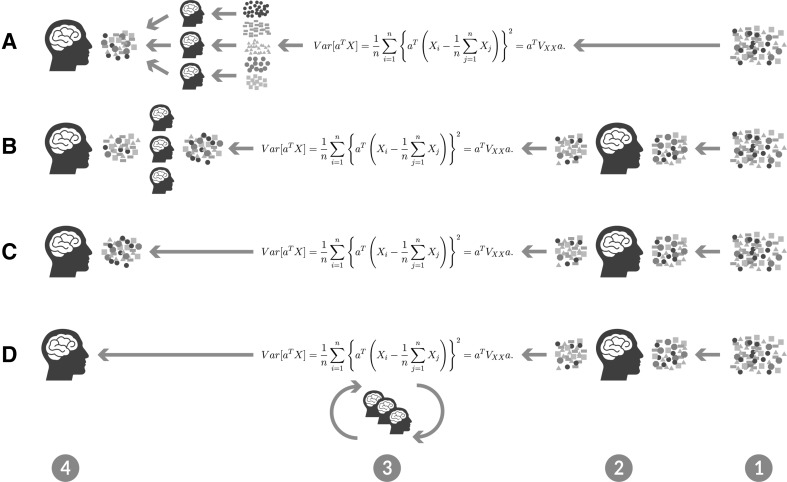
Machine learning (ML) is the fastest growing field in computer science, and health informatics is among the greatest challenges. The goal of ML is to develop algorithms which can learn and improve over time and can be used for predictions. Most ML researchers concentrate on automatic machine learning (aML), where great advances have been made, for example, in speech recognition, recommender systems, or autonomous vehicles. Automatic approaches greatly benefit from big data with many training sets. However, in the health domain, sometimes we are confronted with a small number of data sets or rare events, where aML-approaches suffer of insufficient training samples. Here interactive machine learning (iML) may be of help, having its roots in reinforcement learning, preference learning, and active learning. The term iML is not yet well used, so we define it as "algorithms that can interact with agents and can optimize their learning behavior through these interactions, where the agents can also be human." This "human-in-the-loop" can be beneficial in solving computationally hard problems, e.g., subspace clustering, protein folding, or k-anonymization of health data, where human expertise can help to reduce an exponential search space through heuristic selection of samples. Therefore, what would otherwise be an NP-hard problem, reduces greatly in complexity through the input and the assistance of a human agent involved in the learning phase.
Overview
The claims and statistics of this paper haven’t been checked yet.
Free: it reads the open-access text and checks the first 5 claims that cite a source we can check. Create a free account to check every claim.
Integrity signals
Registry
Cites
Statistics
Figures
Verification
Claims the paper makes
The claims and statistics of this paper haven’t been checked yet.
Free: it reads the open-access text and checks the first 5 claims that cite a source we can check. Create a free account to check every claim.
Claims other papers make about this one
Each is checked against this paper’s own text: does it say what the citing paper says it does?
The source backs part of the claim, not all of it — or backs it for a different population, condition or comparison.
In the citing paper
“In such cases, rule-based automation is impossible, but managers could use an augmentation approach to explore the problem further (Holzinger, 2016).”
From Artificial Intelligence and Management: The Automation–Augmentation Paradox (2021) · cites this paper as Holzinger, 2016
Experimental — accuracy not yet measuredThe source backs part of the claim, not all of it — or backs it for a different population, condition or comparison.
In the citing paper
“Since emotions and other subjective factors affect humans, augmentation is difficult or even impossible to replicate, which means every augmentation initiative is a new learning effort (Holzinger, 2016).”
From Artificial Intelligence and Management: The Automation–Augmentation Paradox (2021) · cites this paper as Holzinger, 2016
Experimental — accuracy not yet measured
Self-check
Percentages, sums and reported differences re-computed from the paper’s own numbers.
The self-check needs the paper’s full text.
Citations
Cites
LeCun, Y., Bengio, Y., & Hinton, G. (2015) · Nature · doi:10.1038/nature14539 · Cited by 84,126
Human-level control through deep reinforcement learning
Mnih, V., Kavukcuoglu, K., Silver, D., Rusu, A. A., Veness, J., Bellemare, M. G., Graves, A., Riedmiller, M., Fidjeland, A. K., Ostrovski, G., et al. (2015) · Nature · doi:10.1038/nature14236 · Cited by 30,357
Reinforcement Learning: An Introduction
Sutton, R. S., & Barto, A. G. (1998) · IEEE Transactions on Neural Networks · doi:10.1109/tnn.1998.712192 · Cited by 27,225
The Elements of Statistical Learning
Hastie, T., Tibshirani, R., & Friedman, J. (2009) · Springer Series in Statistics · doi:10.1007/978-0-387-84858-7 · Cited by 25,970
Reinforcement Learning: An Introduction
(2005) · IEEE Transactions on Neural Networks · doi:10.1109/tnn.2004.842673 · Cited by 24,496
Pan, S. J., & Yang, Q. (2010) · IEEE Transactions on Knowledge and Data Engineering · doi:10.1109/tkde.2009.191 · Cited by 23,387
Mastering the game of Go with deep neural networks and tree search
Silver, D., Huang, A., Maddison, C. J., Guez, A., Sifre, L., van den Driessche, G., Schrittwieser, J., Antonoglou, I., Panneershelvam, V., Lanctot, M., et al. (2016) · Nature · doi:10.1038/nature16961 · Cited by 15,612
Consensus and Cooperation in Networked Multi-Agent Systems
Olfati-Saber, R., Fax, J. A., & Murray, R. M. (2007) · Proceedings of the IEEE · doi:10.1109/jproc.2006.887293 · Cited by 10,522 · cited 1×
“On this basis, Olfati-Saber et al. [94] presented a theoretical framework for analysis of consensus algorithms for networked multi-agent systems with fixed or dynamic topology and directed information flow.”
BackgroundI.—COMPUTING MACHINERY AND INTELLIGENCE
TURING, A. M. (1950) · Mind · doi:10.1093/mind/lix.236.433 · Cited by 10,290
Machine learning: Trends, perspectives, and prospects
Jordan, M. I., & Mitchell, T. M. (2015) · Science · doi:10.1126/science.aaa8415 · Cited by 9,955 · cited 2×
“Today, machine learning (ML) is the fastest growing technical field, at the intersection of informatics and statistics, tightly connected with data science and knowledge discovery, and health is among the greatest challenges [2, 3].”
Background
Research works printed but not linked: 5
- Mitchell TM (1997) Machine learning. McGraw Hill, New York
- Fahlman SE, Hinton GE, Sejnowski TJ (1983) Massively parallel architectures for Al: NETL, Thistle, and Boltzmann machines. In: Genesereth MR (ed) AAAI-83. AAAI, Washington, DC, pp 109–113
- Wilson AG, Dann C, Lucas, Xing EP (2015) The human kernel. arXiv preprint arXiv:1510.07389 · arXiv
- Agarwal S, Cortes C, Herbrich R (2005) Learning to rank. In: Weiss Y, Schlkopf B, Platt JC (eds) NIPS Workshop
- Lynch NA (1996) Distributed algorithms. Morgan Kaufmann, San Francisco
Cited by
Items 301–400 of 1,003
User Modelling for Avoiding Overfitting in Interactive Knowledge Elicitation for Prediction
Daee, P., Peltola, T., Vehtari, A., & Kaski, S. (2018) · ACM International Conference on Intelligent User Interfaces (IUI) · doi:10.1145/3172944.3172989 · Cited by 26
Centaur VGI: A Hybrid Human–Machine Approach to Address Global Inequalities in Map Coverage
Huck, J., Perkins, C., Haworth, B. T., Moro, E. B., & Nirmalan, M. (2020) · Annals of the American Association of Geographers · doi:10.1080/24694452.2020.1768822 · Cited by 27
Multi-source brain computing with systematic fusion for smart health
Kuai, H., Zhong, N., Chen, J., Yang, Y., Zhang, X., Liang, P., Imamura, K., Ma, L., & Wang, H. (2021) · Information Fusion · doi:10.1016/j.inffus.2021.03.009 · Cited by 26
Autonomous magnetic resonance imaging
Ravi, K. S., & Geethanath, S. (2020) · Magnetic Resonance Imaging · doi:10.1016/j.mri.2020.08.010 · Cited by 25
Time to forge ahead: The Internet of Things for healthcare
Furtado, D. L., Gygax, A. F., Chan, C. A., & Bush, A. I. (2022) · Digital Communications and Networks · doi:10.1016/j.dcan.2022.06.007 · Cited by 25
An adaptive annotation approach for biomedical entity and relation recognition
Yimam, S. M., Biemann, C., Majnarić, L. T., Šabanović, Š., & Holzinger, A. (2016) · Brain Informatics · doi:10.1007/s40708-016-0036-4 · Cited by 25
Self-citationNayak, D. R., Dash, R., & Majhi, B. (2017) · Multimedia Tools and Applications · doi:10.1007/s11042-017-5281-x · Cited by 25
Applying Radical Constructivism to Machine Learning: A Pilot Study in Assistive Robotics
Nowak, M., Castellini, C., & Massironi, C. (2018) · elib (German Aerospace Center) · Cited by 25
Expert-enhanced machine learning for cardiac arrhythmia classification
Säger, S., Bernhardt, F., Kehrle, F., Merkert, M., Potschka, A., Meder, B., Katus, H. A., & Scholz, E. (2021) · PLoS ONE · doi:10.1371/journal.pone.0261571 · Cited by 25
Dhanya, V. G., Subeesh, A., Susmita, C., Amaresh, Saji, S. J., Dilsha, C., Keerthi, C., Nunavath, A., Singh, A., & Kumar, S. (2024) · Plant Physiology Reports · doi:10.1007/s40502-024-00839-8 · Cited by 25
Jeon, Y., Chung, Y. G., Joo, T., Kim, H., Hwang, H. Y., & Kim, K. J. (2022) · IEEE Transactions on Neural Systems and Rehabilitation Engineering · doi:10.1109/tnsre.2022.3215526 · Cited by 24
Jin, L., Zeng, Q., He, J., Feng, Y., Zhou, S., & Wu, Y. (2018) · Behavioural Brain Research · doi:10.1016/j.bbr.2018.09.003 · Cited by 24
A Federated Interactive Learning IoT-Based Health Monitoring Platform
Alawadi, S., Kebande, V. R., Dong, Y., Bugeja, J., Persson, J., & Olsson, C. M. (2021) · Communications in computer and information science · doi:10.1007/978-3-030-85082-1_21 · Cited by 24
Samaras, A.-D., Moustakidis, S., Apostolopoulos, I. D., Papandrianos, N. I., & Papageorgiou, E. I. (2023) · Scientific Reports · doi:10.1038/s41598-023-33500-9 · Cited by 24
Jung, J., Kang, S., Choi, J., El-Kareh, R. E., Lee, H., & Kim, H. (2025) · International Journal of Medical Informatics · doi:10.1016/j.ijmedinf.2025.105943 · Cited by 23
Gangwal, A., & Lavecchia, A. (2026) · Computer Science Review · doi:10.1016/j.cosrev.2026.100943 · Cited by 23
Kim, M., Lee, D., Kim, T., Oh, S., & Cho, H. (2022) · Automation in Construction · doi:10.1016/j.autcon.2022.104642 · Cited by 23
Fang, F., Zhang, H., Zhan, L., Guo, S., Zhang, M., Lin, J., Qin, Y., & Fu, H. (2022) · Proceedings of the ACM on Interactive Mobile Wearable and Ubiquitous Technologies · doi:10.1145/3569461 · Cited by 23
Wang, Z., Lim, G., Ng, W. Y., Tan, T., Lim, J., Lim, S. H., Foo, V. H. X., Lim, J., Sinisterra, L. G., Zheng, F., et al. (2023) · Frontiers in Medicine · doi:10.3389/fmed.2023.1184892 · Cited by 23
A Hybrid Feature Selection Method to Classification and Its Application in Hypertension Diagnosis
Park, H. W., Li, D., Piao, Y., & Ryu, K. H. (2017) · Lecture notes in computer science · doi:10.1007/978-3-319-64265-9_2 · Cited by 23
Modaresnezhad, M., Vahdati, A., Nemati, H., Ardestani, A., & Sadri, F. (2019) · Computers in Biology and Medicine · doi:10.1016/j.compbiomed.2019.01.019 · Cited by 23
Multi-class twitter data categorization and geocoding with a novel computing framework
Khan, S. M., Chowdhury, M. A., Ngo, L. B., & Apon, A. (2019) · Cities · doi:10.1016/j.cities.2019.102410 · Cited by 23
Martín‐Perea, D., Courtenay, L. A., Domingo, M. S., & Morales, J. (2020) · PeerJ · doi:10.7717/peerj.8767 · Cited by 23
Pierrard, R., Poli, J.-P., & Hudelot, C. (2020) · Artificial Intelligence · doi:10.1016/j.artint.2020.103434 · Cited by 26
Karanasiou, A., & Pinotsis, D. A. (2017) · International Review of Law Computers & Technology · doi:10.1080/13600869.2017.1298499 · Cited by 23
A Survey on Interactive Reinforcement Learning: Design Principles and Open ChallengesPreprint
Cruz, C. A., & Igarashi, T. (2021) · arXiv (Cornell University) · doi:10.48550/arxiv.2105.12949 · Cited by 23
Peña‐Solórzano, C. A., Albrecht, D. W., Bassed, R., Burke, M. D., & Dimmock, M. (2020) · Forensic Science International · doi:10.1016/j.forsciint.2020.110538 · Cited by 22
RootPainter3D: Interactive‐machine‐learning enables rapid and accurate contouring for radiotherapy
Smith, A. G., Petersen, J., Terrones‐Campos, C., Berthelsen, A. K., Forbes, N., Darkner, S., Specht, L., & Vogelius, I. R. (2021) · Medical Physics · doi:10.1002/mp.15353 · Cited by 22
CAIPI in Practice: Towards Explainable Interactive Medical Image Classification
Slany, E., Ott, Y., Scheele, S., Paulus, J., & Schmid, U. (2022) · IFIP advances in information and communication technology · doi:10.1007/978-3-031-08341-9_31 · Cited by 22
Exploring neural models for predicting dementia from language
Kong, W., Jang, H., Carenini, G., & Field, T. S. (2020) · Computer Speech & Language · doi:10.1016/j.csl.2020.101181 · Cited by 22
Zeng, X., Gao, Y., Liu, A., & Song, F. (2024) · International Journal on Cybernetics & Informatics · doi:10.5121/ijci.2024.130511 · Cited by 21
Finzel, B. (2025) · Pflügers Archiv - European Journal of Physiology · doi:10.1007/s00424-025-03067-7 · Cited by 21
Personalized privacy in open data sharing scenarios
Sánchez, D., & Viejo, A. (2017) · Online Information Review · doi:10.1108/oir-01-2016-0011 · Cited by 21
Applying AI in Practice: Key Challenges and Lessons Learned
Fischer, L., Ehrlinger, L., Geist, V., Ramler, R., Sobieczky, F., Zellinger, W., & Moser, B. (2020) · Lecture notes in computer science · doi:10.1007/978-3-030-57321-8_25 · Cited by 21
Tsiakas, K., Papakostas, M., Theofanidis, M., Bell, M. D., Mihalcea, R. F., Wang, S., Burzo, M. G., & Makedon, F. S. (2017) · International Conference on PErvasive Technologies Related to Assistive Environments (PETRA) · doi:10.1145/3056540.3076191 · Cited by 21
Advantages, Challenges, and Risks of Artificial Intelligence for Radiologists
Ranschaert, E. R., Duerinckx, A. J., Algra, P. R., Kotter, E., Kortman, H. G. J., & Morozov, S. (2019) · Springer eBooks · doi:10.1007/978-3-319-94878-2_20 · Cited by 21
ASReview: Open Source Software for Efficient and Transparent Active Learning for Systematic Reviews.Preprint
van de Schoot, R., Bruin, J. D., Schram, R. D., Zahedi, P., de Boer, J., Weijdema, F., Kramer, B. M. R., Huijts, M., Hoogerwerf, M., Ferdinands, G., et al. (2020) · arXiv (Cornell University) · Cited by 21
Sibbald, M., Zwaan, L., Yılmaz, Y., & Lal, S. (2022) · Journal of Evaluation in Clinical Practice · doi:10.1111/jep.13730 · Cited by 20
ASReview LAB Software Documentation
Bruin, J. D., Ferdinands, G., Harkema, A., de Boer, J., van den Brand, S. A. G. E., Ma, Y., & van de Schoot, R. (2020) · Zenodo (CERN European Organization for Nuclear Research) · doi:10.5281/zenodo.4287119 · Cited by 20
Jarrahi, M. H., Davoudi, V., & Haeri, M. (2022) · Journal of Pathology Informatics · doi:10.1016/j.jpi.2022.100156 · Cited by 20
Perspectives on incorporating expert feedback into model updates
Chen, V., Bhatt, U., Heidari, H., Weller, A., & Talwalkar, A. (2023) · Patterns · doi:10.1016/j.patter.2023.100780 · Cited by 20
Horton, M., Dyer, W., Tennant, A., & Wright, N. M. J. (2018) · Health & Justice · doi:10.1186/s40352-018-0076-3 · Cited by 20
Explainable AI applications in the Medical Domain: a systematic review
Prentzas, N., Kakas, A., & Pattichis, C. S. (2023) · arXiv · doi:10.48550/arxiv.2308.05411 · Cited by 19
“the coalitional game theory [77] and introduced to machine learning interpretation by Lundberg and Lee [71], builds on the assessment of combinations of features.”
MethodHuman-in-the-Loop: Wie Mensch und KI Aufgaben besser lösen
Rueckert, M., & Riedl, M. J. (2022) · Digitale Welt · doi:10.1007/s42354-022-0542-x · Cited by 19
Li, T., Krajcik, J. S., & Spiro, R. J. (2025) · Journal of Science Education and Technology · doi:10.1007/s10956-025-10275-4 · Cited by 19
Yan, D., Zheng, Q., Chang, K., Hua, R., Liu, Y., Xue, J., Shu, Z., Hu, Y., Yang, P., Wei, Y., et al. (2025) · Chinese Journal of Natural Medicines · doi:10.1016/s1875-5364(25)60983-6 · Cited by 20
Muijlwijk, H., Willemsen, M. C., Smyth, B., & IJsselsteijn, W. A. (2024) · ACM International Conference on Intelligent User Interfaces (IUI) · doi:10.1145/3640543.3645205 · Cited by 20
Towards Directive Explanations: Crafting Explainable AI Systems for Actionable Human-AI Interactions
Bhattacharya, A. (2024) · CHI Conference Extended Abstracts on Human Factors in Computing Systems (CHI EA) · doi:10.1145/3613905.3638177 · Cited by 19
Tran, T.-A., Ruppert, T., & Abonyi, J. (2024) · Computers · doi:10.3390/computers13100252 · Cited by 20
Isaza, L., & Cepa, K. (2024) · European Management Journal · doi:10.1016/j.emj.2024.11.010 · Cited by 21
Kornowicz, J., & Thommes, K. (2025) · PLoS ONE · doi:10.1371/journal.pone.0318874 · Cited by 20
Evolving multi-user fuzzy classifier systems integrating human uncertainty and expert knowledge
Lughofer, E. D. (2022) · Information Sciences · doi:10.1016/j.ins.2022.03.014 · Cited by 19
Systematic review of co-design in digital health for COVID-19 research
Nusir, M., & Rekik, M. (2022) · Universal Access in the Information Society · doi:10.1007/s10209-022-00964-x · Cited by 19
Evaluation of Induced Expert Knowledge in Causal Structure Learning by NOTEARS
Chowdhury, J., Rashid, R., & Terejanu, G. (2023) · International Conference on Pattern Recognition Applications and Methods · doi:10.5220/0011716000003411 · Cited by 19
The More the Merrier - Federated Learning from Local Sphere Recommendations
Malle, B., Giuliani, N., Kieseberg, P., & Holzinger, A. (2017) · Lecture notes in computer science · doi:10.1007/978-3-319-66808-6_24 · Cited by 19
Self-citationAccented visualization by augmented reality for smart manufacturing aplications
Ivaschenko, A. V., Khorina, A., & Sitnikov, P. (2018) · IEEE International Conference on Industrial Cyber-Physical Systems (ICPS) · doi:10.1109/icphys.2018.8390759 · Cited by 19
Reani, M., Peek, N. B., & Jay, C. (2018) · Computers in Human Behavior · doi:10.1016/j.chb.2018.10.033 · Cited by 19
Revisiting Citizen Science Through the Lens of Hybrid IntelligencePreprint
Rafner, J. F., Gajdacz, M., Kragh, G., Hjorth, A., Gander, A. J., Palfi, B., Berditchevskaia, A., Grey, F., Gal, K., Segal, A., et al. (2021) · arXiv (Cornell University) · doi:10.48550/arxiv.2104.14961 · Cited by 20
Bühler, B., Fütterer, T., von Keyserlingk, L., Bozkir, E., Kasneci, E., Gerjets, P. H., & Trautwein, U. (2025) · Educational Psychology Review · doi:10.1007/s10648-025-10041-3 · Cited by 18
Modeling Operator Performance in Human-in-the-Loop Autonomous Systems
Muhammad, S. (2021) · IEEE Access · doi:10.1109/access.2021.3098060 · Cited by 18
Human-in-the-Loop Large-Scale Predictive Maintenance of Workstations
Nikitin, A., & Kaski, S. (2022) · ACM SIGKDD Conference on Knowledge Discovery and Data Mining (KDD) · doi:10.1145/3534678.3539196 · Cited by 18
Applications of Artificial Intelligence for Health Informatics: A Systematic Review
Hasan, M. E., Islam, M. J., Islam, R., Chen, D., Sanín, C., & Xu, G. (2023) · Journal of Artificial Intelligence for Medical Sciences · doi:10.55578/joaims.230920.001 · Cited by 18
Zhang, K., Xie, Y., He, Y., & Wang, J. (2025) · Acta Psychologica · doi:10.1016/j.actpsy.2025.105002 · Cited by 19
Hasan, N., & Bao, Y. (2021) · Health and Technology · doi:10.1007/s12553-021-00538-6 · Cited by 18
Angelini, M., Aniello, L., Lenti, S., Santucci, G., & Ucci, D. (2017) · IEEE Symposium on Visualization for Cyber Security (VIZSEC) · doi:10.1109/vizsec.2017.8062199 · Cited by 18
Gatto, B. B., de Souza, L. S., Santos, E. M. D., Fukui, K., Júnior, W. S. S., & Santos, K. (2020) · EURASIP Journal on Image and Video Processing · doi:10.1186/s13640-020-00507-5 · Cited by 18
Yau, K. A., Saleem, Y., Chong, Y.-W., Fan, X., Eyu, J. M., & Chieng, D. H. T. (2024) · IEEE Transactions on Human-Machine Systems · doi:10.1109/thms.2024.3467370 · Cited by 17
Berberoğlugil, B. M. (2023) · Scientific Journal of Innovation and Social Sciences Research · Cited by 17
The extensible Data-Brain model: Architecture, applications and directions
Kuai, H., & Zhong, N. (2020) · Journal of Computational Science · doi:10.1016/j.jocs.2020.101103 · Cited by 17
Designing medical artificial intelligence for in- and out-groups
Li, W., Zhou, X., & Yang, Q. (2021) · Computers in Human Behavior · doi:10.1016/j.chb.2021.106929 · Cited by 17
Zhang, Z. T., Liu, Y., & Hußmann, H. (2021) · Biannual Conference of the Italian SIGCHI Chapter (CHItaly) · doi:10.1145/3464385.3464696 · Cited by 17
Mollenhauer, D., & Atzmueller, M. (2020) · Cited by 17
How Feature Changes of a Dominant Ad Platform Shape Advertisers’ Human Agency
Salminen, J. O., Jansen, B. J. J., & Mustak, M. (2022) · International Journal of Electronic Commerce · doi:10.1080/10864415.2022.2158594 · Cited by 16
Analyzing Quality Measurements for Dimensionality Reduction
Thrun, M. C., Märte, J., & Stier, Q. (2023) · Machine Learning and Knowledge Extraction · doi:10.3390/make5030056 · Cited by 16
Foley, K. M., McLean, C., Zylva, R. D., Asa, G. A., Maio, J., Batchelor, S., Dzando, G., & Dimassi, A. (2025) · International Journal of Qualitative Methods · doi:10.1177/16094069251316249 · Cited by 17
Integrating Open Data on Cancer in Support to Tumor Growth Analysis
Jeanquartier, F., Jean-Quartier, C., Schreck, T., Cemernek, D., & Holzinger, A. (2016) · Lecture notes in computer science · doi:10.1007/978-3-319-43949-5_4 · Cited by 16
Self-citationExplaining Queries Over Web Tables to Non-experts
Berant, J., Deutch, D., Globerson, A., Milo, T., & Wolfson, T. (2019) · IEEE International Conference on Data Engineering (ICDE) · doi:10.1109/icde.2019.00144 · Cited by 16
Augmented Reality Application for Hand Motor Skills Rehabilitation
Колсанов, А. В., Чаплыгин, С. С., Rovnov, S., & Ivaschenko, A. V. (2020) · International Journal of Advanced Computer Science and Applications · doi:10.14569/ijacsa.2020.0110408 · Cited by 16
Human Strategic Steering Improves Performance of Interactive Optimization
Colella, F., Daee, P., Jokinen, J., Oulasvirta, A., & Kaski, S. (2020) · ACM Conference on User Modeling, Adaptation and Personalization (UMAP) · doi:10.1145/3340631.3394883 · Cited by 16
Interpreting Deep Neural Networks through Prototype Factorization
Das, S., Xu, P., Dai, Z., Endert, A., & Ren, L. (2020) · IEEE ... International Conference on Data Mining workshops · doi:10.1109/icdmw51313.2020.00068 · Cited by 17
Digitale Phänotypisierung in der Psychologie – ein Quantensprung in der psychologischen Forschung?
Baumeister, H., Garatva, P., Pryss, R. C., Ropinski, T., & Montag, C. (2022) · Psychologische Rundschau · doi:10.1026/0033-3042/a000609 · Cited by 16
Downes, P. E., Harris, T. B., & Allen, D. G. (2023) · Human Resource Management · doi:10.1002/hrm.22179 · Cited by 16
FSA-IDS: A Flow-based Self-Active Intrusion Detection System
Hajizadeh, M., Barua, S., & Golchin, P. (2023) · IEEE/IFIP Network Operations and Management Symposium (NOMS) · doi:10.1109/noms56928.2023.10154343 · Cited by 16
Human-in-the-Loop Machine Learning for the Treatment of Pancreatic Cancer
Mosqueira-Rey, E., Pérez-Sánchez, A., Hernández-Pereira, E., Alonso-Ríos, D., Bobes-Bascarán, J., Fernández-Leal, Á., Moret‐Bonillo, V., Vidal-Ínsua, Y., & Vázquez-Rivera, F. (2023) · International Joint Conference on Neural Networks (IJCNN) · doi:10.1109/ijcnn54540.2023.10191456 · Cited by 16
(2025) · International Journal of Computer Applications Technology and Research · doi:10.7753/ijcatr0912.1015 · Cited by 16
AI GENERATIF DAN MUTU PENDIDIKAN
Andriyani, W. (. )., Natsir, F. (. )., Asri, Y. N. (. )., Hidayat, M. R. (. )., Yati, Y. (., Afandi, I. R. (., Mulyo, D. M. S. (. )., Rahmatulloh, A. (., Akbari, F. (., Wahyuningtyas, I. (., et al. (2024) · Neliti · Cited by 20
Health system measurement: Harnessing machine learning to advance global health
Leslie, H. H., Zhou, X., Spiegelman, D. L., & Kruk, M. E. (2018) · PLoS ONE · doi:10.1371/journal.pone.0204958 · Cited by 16
Karmani, P., Chandio, A. A., Korejo, I. A., & Chandio, M. S. (2019) · Communications in computer and information science · doi:10.1007/978-981-13-6052-7_5 · Cited by 16
Towards Interactive Recommender Systems with the Doctor-in-the-Loop
Holzinger, A., Valdez, A. S. C., & Ziefle, M. (2016) · RWTH Publications (RWTH Aachen) · doi:10.18420/muc2016-ws11-0001 · Cited by 16
Self-citationGroup Cognition and Collaborative AI
Koch, J., & Oulasvirta, A. (2018) · Human–Computer Interaction Series · doi:10.1007/978-3-319-90403-0_15 · Cited by 15
Never‐Ending Learning for Explainable Brain Computing
Kuai, H., Chen, J., Tao, X., Cai, L., Imamura, K., Matsumoto, H., Liang, P., & Zhong, N. (2024) · Advanced Science · doi:10.1002/advs.202307647 · Cited by 15
Gitzel, R., Hoffmann, M. W., Heiden, P. Z., Skolik, A., Kaltenpoth, S., Müller, O., Kanak, C., Kandiah, K., Stroh, M.-F., Boos, W., et al. (2024) · IEEE Access · doi:10.1109/access.2024.3437195 · Cited by 15
Parra, F., Scherer, S. J., Benezeth, Y., Tsvetanova, P., & Tereno, S. (2019) · IEEE Transactions on Affective Computing · doi:10.1109/taffc.2019.2921311 · Cited by 15
Clinical decision support systems to improve the diagnosis and management of respiratory diseases
Amaral, J. L. M., & de Melo, P. L. (2020) · Elsevier eBooks · doi:10.1016/b978-0-12-817133-2.00015-x · Cited by 15
The Seeing-Eye Robot Grand Challenge: Rethinking Automated Care
Mirsky, R., & Stone, P. (2021) · Adaptive Agents and Multi-Agents Systems · doi:10.65109/sqki6856 · Cited by 15
Kuai, H., Tao, X., & Zhong, N. (2022) · World Wide Web · doi:10.1007/s11280-022-01030-5 · Cited by 15
Designing a Human-in-the-Loop System for Object Detection in Floor Plans
Jakubik, J., Hemmer, P., Vössing, M., Blumenstiel, B., Bartos, A., & Mohr, K. (2022) · Proceedings of the AAAI Conference on Artificial Intelligence · doi:10.1609/aaai.v36i11.21522 · Cited by 15
Efficient, Uncertainty-based Moderation of Neural Networks Text Classifiers
Andersen, J. S., & Maalej, W. (2022) · Findings of the Association for Computational Linguistics: ACL (Findings of ACL) · doi:10.18653/v1/2022.findings-acl.121 · Cited by 15
Yiğit, T., Şengöz, N., Özmen, Ö., Hemanth, D. J., & IŞIK, A. H. (2022) · Traitement du signal · doi:10.18280/ts.390311 · Cited by 15
No more buying cats in a bag? Literary Translation in the age of language automation
Declercq, C., & van Egdom, G.-W. (2023) · Tradumàtica tecnologies de la traducció · doi:10.5565/rev/tradumatica.407 · Cited by 15
Metadata
- Authors
- Holzinger, A.
- Affiliations
- University of Graz (AT)
- Corresponding author
- Holzinger, Andreas
- ORCID
- Holzinger, Andreas
- Venue
- Brain Informatics
- Published
- 2016-03-02
- Volume
- 3
- Issue
- 2
- Pages
- 119-131
- ISSN
- 2198-4018 (ISSN-L)
- 2198-4026
- PMC
- PMC4883171
- OpenAlex
- W2300445845
- Cited by
- 906
- References
- 109
- Citations by year
- 2026: 93 · 2025: 85 · 2024: 87 · 2023: 74 · 2022: 111 · 2021: 132 · 2020: 110 · 2019: 77 · 2018: 53 · 2017: 46 · 2016: 38
- FWCI
- 58.63
- Type
- journal article
- Language
- en
- Open access
- gold
- doi.org
- Locations
- Brain Informatics (publishedVersion, cc-by)
- Europe PMC (PubMed Central) (publishedVersion, cc-by)
- PubMed Central (publishedVersion, cc-by)
- PubMed (publishedVersion)
- Topics
- Physical Sciences › Computer Science › Artificial Intelligence › Machine Learning and Algorithms
- Health Sciences › Medicine › Health Informatics › Artificial Intelligence in Healthcare and Education
- Physical Sciences › Computer Science › Artificial Intelligence › Machine Learning in Healthcare
- Keywords
- interactive machine learning, human-in-the-loop, health informatics, active learning (machine learning), preference learning, reinforcement learning, limited training data, rare events, human-agent interaction, NP-hard problems, k-anonymization, protein folding, subspace clustering
About these checks
Registry, retraction, Cites and statistics results are computed, not judged, with one exception: a printed reference that no index lists is read once by a model before it counts as a citation error. Claims are extracted by a model and kept only when their quote appears verbatim in the text; each cited source is then checked, with a model’s help, for whether it says what the claim relies on. Those verdicts can be wrong — read the claim’s quote and the cited source before relying on one.
Statistics and arithmetic are recomputed, not judged.
Confidence bands are shown only for fields calibrated on our annotated test set. None is calibrated yet, so no band is shown.
What counts as a claim ›How we measure confidence ›How we check this ›
Are you an author, or do you see a problem with this page? Request a review
Data sources
Bibliographic data: Semantic Scholar, OpenAlex, Crossref.
Contains information from the Semantic Scholar Academic Graph Datasets, made available under the ODC Attribution License (ODC-BY 1.0).
Semantic Scholar’s data is described in: Kinney, R., et al. (2023). The Semantic Scholar Open Data Platform. arXiv:2301.10140.
