

The DOI matches its Crossref record; 309 of the 309 references it cites were found in a registry or an index.
A systematic review on AI/ML approaches against COVID-19 outbreak
Open accessAbstract
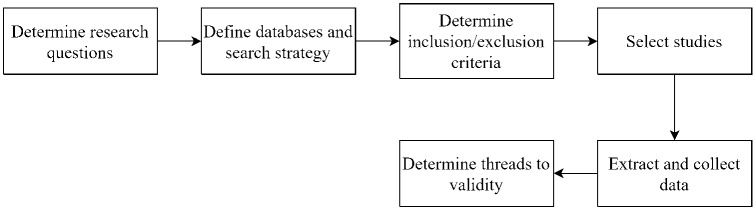
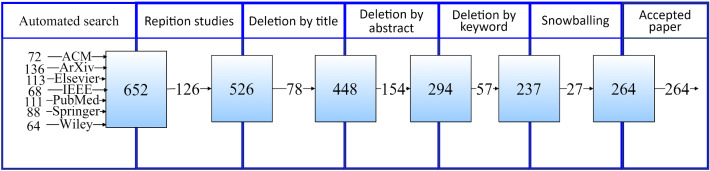
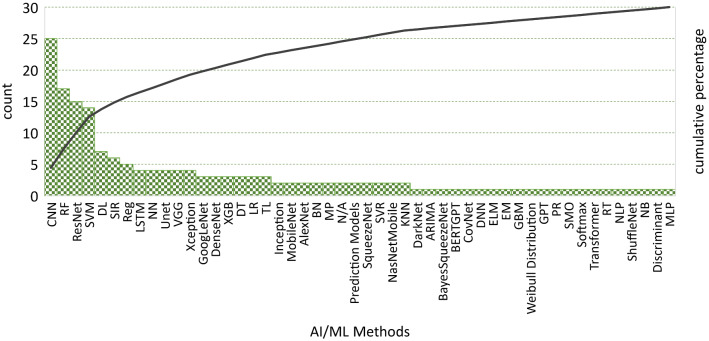
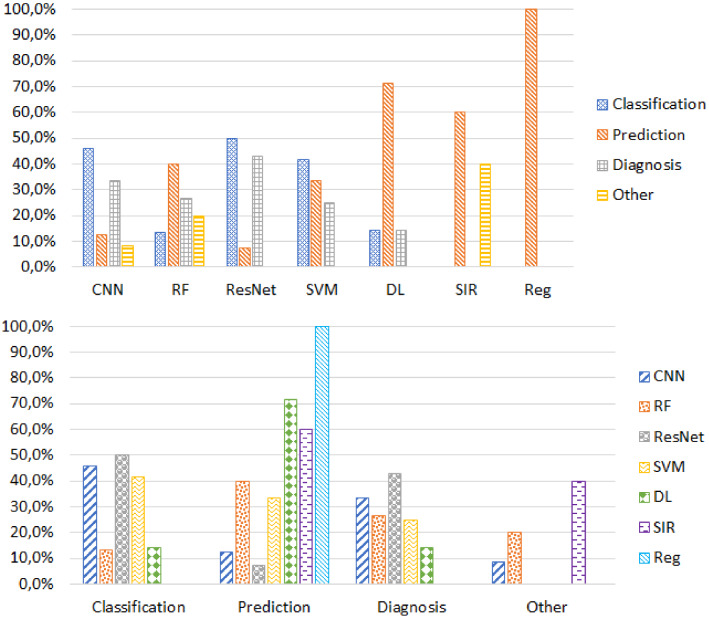
A pandemic disease, COVID-19, has caused trouble worldwide by infecting millions of people. The studies that apply artificial intelligence (AI) and machine learning (ML) methods for various purposes against the COVID-19 outbreak have increased because of their significant advantages. Although AI/ML applications provide satisfactory solutions to COVID-19 disease, these solutions can have a wide diversity. This increase in the number of AI/ML studies and diversity in solutions can confuse deciding which AI/ML technique is suitable for which COVID-19 purposes. Because there is no comprehensive review study, this study systematically analyzes and summarizes related studies. A research methodology has been proposed to conduct the systematic literature review for framing the research questions, searching criteria and relevant data extraction. Finally, 264 studies were taken into account after following inclusion and exclusion criteria. This research can be regarded as a key element for epidemic and transmission prediction, diagnosis and detection, and drug/vaccine development. Six research questions are explored with 50 AI/ML approaches in COVID-19, 8 AI/ML methods for patient outcome prediction, 14 AI/ML techniques in disease predictions, along with five AI/ML methods for risk assessment of COVID-19. It also covers AI/ML method in drug development, vaccines for COVID-19, models in COVID-19, datasets and their usage and dataset applications with AI/ML.
Overview
The claims and statistics of this paper haven’t been checked yet.
Run the check — free, no account needed. It reads the open-access text and checks the sources it cites.
Integrity signals
Registry
Cites
Statistics
Figures
Verification
Claims the paper makes
The claims and statistics of this paper haven’t been checked yet.
Run the check — free, no account needed. It reads the open-access text and checks the sources it cites.
Claims other papers make about this one
Each is checked against this paper’s own text: does it say what the citing paper says it does?
In the citing paper
“In the realm of infectious diseases, ML and AI have been applied to predict disease outbreaks and identify high-risk areas [19, 20].”
From Integrating machine learning and artificial intelligence in life-course epidemiology: pathways to innovative public health solutions (2024) · cites this paper as [19]
Self-check
Percentages, sums and reported differences re-computed from the paper’s own numbers.
The self-check needs the paper’s full text.
Citations
Cites
1 retracted
Al‐Waisy, A. S., Al-Fahdawi, S., Mohammed, M. A., Abdulkareem, K. H., Mostafa, S. A., Maashi, M. S., Arif, M., & García-Zapirain, B. (2020) · Soft Computing · doi:10.1007/s00500-020-05424-3 · Cited by 187
RetractedScoping studies: towards a methodological framework
Arksey, H., & O'Malley, L. (2005) · International Journal of Social Research Methodology · doi:10.1080/1364557032000119616 · Cited by 36,742
(2016) · Cited by 11,679
Mastering the game of Go without human knowledge
Silver, D., Schrittwieser, J., Simonyan, K., Antonoglou, I., Huang, A., Guez, A., Hubert, T., Baker, L., Lai, M., Bolton, A., et al. (2017) · Nature · doi:10.1038/nature24270 · Cited by 9,084
Re-epithelialization and immune cell behaviour in an ex vivo human skin model
Rakita, A., Nikolić, N., Mildner, M., Matiasek, J., & Elbe‐Bürger, A. (2020) · Scientific Reports · doi:10.1038/s41598-019-56847-4 · Cited by 8,234
Yang (2021) · doi:10.1038/s41598-020-79139-8 · Cited by 5,035
Identifying Medical Diagnoses and Treatable Diseases by Image-Based Deep Learning
Kermany, D. S., Goldbaum, M., Cai, W., Valentim, C. C. S., Liang, H., Baxter, S. L., McKeown, A., Yang, G., Wu, X., Yan, F., et al. (2018) · Cell · doi:10.1016/j.cell.2018.02.010 · Cited by 4,842
Systematic Literature Reviews in Software Engineering—A Systematic Literature Review
Kitchenham, B., Pearl Brereton, O., Budgen, D., Turner, M., Bailey, J., & Linkman, S. (2009) · Information and Software Technology · doi:10.1016/j.infsof.2008.09.009 · Cited by 4,537
Ferguson, N. M., Laydon, D. J., Nedjati-Gilani, G. L., Imai, N., Ainslie, K. E. C., Baguelin, M., Bhatia, S., Boonyasiri, A., Cucunubá, Z. M., Cuomo-Dannenburg, G., et al. (2020) · Spiral (Imperial College London) · doi:10.25561/77482 · Cited by 3,619
Systematic Mapping Studies in Software Engineering
Petersen, K., Feldt, R., Mujtaba, S., & Mattsson, M. (2008) · Electronic Workshops in Computing · doi:10.14236/ewic/ease2008.8 · Cited by 3,239 · cited 1×
“The keyword is a way of reducing the time needed to develop the classifi-cation scheme and to ensure that the plan considers current work [27].”
Background
Research works printed but not linked: 26
- Manapure P, Likhar K, Kosare H (2020) Detecting COVID-19 in X-ray images with keras, tensor flow, and deep learning. Artif Comput Intell 2(3):1–6
- Asif S, Wenhui Y (2020) Automatic detection of COVID-19 using X-ray images with deep convolutional neural networks and machine learning, preprint on webpage at https://doi.org/10.1101/2020.05.01.20088211v2 · DOI
- Zhu H, Guo Q, Li M, Wang C, Fang Z, Wang P, Tan J, Wu S, Xiao Y (2020) Host and infectivity prediction of Wuhan 2019 novel coronavirus using deep learning algorithm, preprint on webpage at https://doi.org/10.1101/2020.01.21.914044v4 · DOI
- Jamil M, Hussain I et al (2020) Automatic detection of COVID-19 infection from chest x-ray using deep learning, preprint on webpage at https://doi.org/10.1101/2020.05.10.20097063v1 · DOI
- Li L, Qin L, Xu Z, Yin Y, Wang X, Kong B, Bai J, Lu Y, Fang Z, Song Q et al (2020) Artificial intelligence distinguishes COVID-19 from community acquired pneumonia on chest CT, preprint on webpage at https://www.ncbi.nlm.nih.gov/pmc/articles/PMC7233473/
- Dang Q, Miao R, Yong L (2020) COVID-19 in shang hai: it is worth learning from the successful experience in preventing and controlling the overseas epidemic situation, preprint on webpage at https://doi.org/10.1101/2020.05.13.20100164v1 · DOI
- Rui M, Qi D, Yong L (2020) A sparse gaussian network model for prediction the growth trend of COVID-19 overseas import case: When can Hong Kong lift the international traffic blockad? Preprint on webpage at https://doi.org/10.1101/2020.05.13.20099978v1 · DOI
- Wu J, Zhang P, Zhang L, Meng W, Li J, Tong C, Li Y, Cai J, Yang Z, Zhu J et al (2020) Rapid and accurate identification of COVID-19 infection through machine learning based on clinical available blood test results, preprint on webpage at https://doi.org/10.1101/2020.04.02.20051136v1 · DOI
- Feng C, Huang Z, Wang L, Chen X, Zhai Y, Zhu F, Chen H, Wang Y, Su X, Huang S et al (2020) A novel triage tool of artificial intelligence assisted diagnosis aid system for suspected COVID-19 pneumonia in fever clinics, preprint on webpage at https://doi.org/10.1101/2020.03.19.20039099v1 · DOI
- Yan L, Zhang H-T, Xiao Y, Wang M, Guo Y, Sun C, Tang X, Jing L, Li S, Zhang M et al (2020) Prediction of criticality in patients with severe COVID-19 infection using three clinical features: a machine learning-based prognostic model with clinical data in Wuhan, preprint on webpage at https://doi.org/10.1101/2020.02.27.20028027v2 · DOI
- Linda W (2020) A tailored deep convolutional neural network design for detection of COVID-19 cases from chest radiography images. J Netw Comput Appl 20:1–12
- Bandyopadhyay SK, Dutta S (2020) Machine learning approach for confirmation of COVID-19 cases: positive, negative, death and release, preprint on webpage at https://doi.org/10.1101/2020.03.25.20043505v1 · DOI
- Hollister M (2020) AI can help with the COVID-19 crisis-but the right human input is key. World Econ Forum 30:1–4
- Bai X, Fang C, Zhou Y, Bai S, Liu Z, Xia L, Chen Q, Xu Y, Xia T, Gong S et al (2020) Predicting COVID-19 malignant progression with AI techniques, preprint on webpage at https://doi.org/10.1101/2020.03.20.20037325v2 · DOI
- Zheng C, Deng X, Fu Q, Zhou Q, Feng J, Ma H, Liu W, Wang X (2020) Deep learning-based detection for COVID-19 from chest CT using weak label, preprint on webpage at https://doi.org/10.1101/2020.03.12.20027185v2 · DOI
- Sarkar J, Chakrabarti P (2020) A machine learning model reveals older age and delayed hospitalization as predictors of mortality in patients with COVID-19, preprint on webpage at https://doi.org/10.1101/2020.03.25.20043331v1 · DOI
- Shin B, Park S, Kang K, Ho JC (2019) Self-attention based molecule representation for predicting drug-target interaction. In: Machine learning for healthcare conference. PMLR, pp 230–248
- Singh R, Singh R, Bhatia A (2018) Sentiment analysis using machine learning technique to predict outbreaks and epidemics. Int J Adv Sci Res 3(2):19–24
- Ranjan R (2020) Predictions for COVID-19 outbreak in India using epidemiological models, preprint on webpage at https://doi.org/10.1101/2020.04.02.20051466v1 · DOI
- DAS A, Mishra S, Gopalan SS (2020) Predicting community mortality risk due to COVID-19 using machine learning and development of a prediction tool, preprint on webpage at https://doi.org/10.1101/2020.04.27.20081794v2 · DOI
- Gupta R, Pal SK, Pandey G (2020) A comprehensive analysis of COVID-19 outbreak situation in India, preprint on webpage at https://doi.org/10.1101/2020.04.08.20058347v2 · DOI
- Rai B, Shukla A, Dwivedi LK (2020) COVID-19 in India: predictions, reproduction number and public health preparedness, preprint on webpage at https://doi.org/10.1101/2020.04.09.20059261v1 · DOI
- Zhao J, Zhang Y, He X, Xie P (2020) COVID-CT-dataset: a CT scan dataset about COVID-19, preprint on webpage at https://covid-19.conacyt.mx/jspui/handle/1000/4157
- Lin ZQ, Shafiee M, Bochkarev S, Jules MS, Wang X, Wong A (2019) Explaining with impact: a machine-centric strategy to quantify the performance of explain ability algorithms, preprint on webpage at https://doi.org/10.1101/2020.05.10.20097063v1 · DOI
- Lai C-C, Hsu C-Y, Jen H-H, Yen M-F, Chan C-C, Chen H-H (2020) Bayesian approach for modelling the dynamic of COVID-19 outbreak on the diamond princess cruise ship, preprint on webpage at https://doi.org/10.1101/2020.06.21.20136465v1 · DOI
- Tindale L, Coombe M, Stockdale JE, Garlock E, Lau WYV, Saraswat M, Lee Y-HB, Zhang L, Chen D, Wallinga J et al (2020) Transmission interval estimates suggest pre-symptomatic spread of COVID-19, preprint on webpage at https://doi.org/10.1101/2020.03.03.20029983v1 · DOI
Cited by
Sorted by citations
How to explain AI systems to end users: a systematic literature review and research agenda
Laato, S., Tiainen, M., Najmul Islam, A. K. M., & Mäntymäki, M. (2022) · Internet Research · doi:10.1108/intr-08-2021-0600 · Cited by 155
Zhang, L., Guo, W., & Lv, C. (2023) · Science in One Health · doi:10.1016/j.soh.2023.100061 · Cited by 118
Ijaz, A., Nabeel, M., Masood, U., Mahmood, T., Hashmi, M. S., Posokhova, I., Rizwan, A., & Imran, A. (2022) · Informatics in Medicine Unlocked · doi:10.1016/j.imu.2021.100832 · Cited by 102
Systematic reviews of machine learning in healthcare: a literature review
Kolasa, K., Admassu, B. Y., Hołownia-Voloskova, M. E., Kędzior, K. J., Poirrier, J., & Perni, S. (2023) · Expert Review of Pharmacoeconomics & Outcomes Research · doi:10.1080/14737167.2023.2279107 · Cited by 95
Chen, S., Yu, J., Chamouni, S., Wang, Y., & Li, Y. (2024) · BMC Medicine · doi:10.1186/s12916-024-03566-x · Cited by 73
“In the realm of infectious diseases, ML and AI have been applied to predict disease outbreaks and identify high-risk areas [19, 20].”
Background
Metadata
- Authors
- Dogan, O., Tiwari, S., Jabbar, M. A., & Guggari, S.
- Affiliations
- Autonomous University of Tamaulipas (MX)
- Vardhaman College of Engineering (IN)
- B.M.S. College of Engineering (IN)
- Venue
- Complex & Intelligent Systems
- Published
- 2021-07-05
- Volume
- 7
- Issue
- 5
- Pages
- 2655-2678
- ISSN
- 2198-6053 (ISSN-L)
- 2199-4536
- PMC
- PMC8256231
- OpenAlex
- W3180100733
- Cited by
- 87
- References
- 290
- Citations by year
- 2026: 4 · 2025: 11 · 2024: 15 · 2023: 25 · 2022: 26 · 2021: 6
- FWCI
- 2.94
- Type
- journal article
- Language
- en
- Open access
- gold
- doi.org
- Locations
- Complex & Intelligent Systems (publishedVersion, cc-by)
- PubMed Central (publishedVersion, cc-by)
- PubMed (publishedVersion)
- Padua Research Archive (University of Padova) (submittedVersion, cc-by)
- Topics
- Health Sciences › Medicine › Radiology, Nuclear Medicine and Imaging › COVID-19 diagnosis using AI
- Health Sciences › Medicine › Health Informatics › Artificial Intelligence in Healthcare and Education
- Physical Sciences › Computer Science › Information Systems › Healthcare during COVID-19 Pandemic
- Keywords
- COVID-19 pandemic, artificial intelligence, machine learning, epidemic forecasting, COVID-19 diagnosis, COVID-19 detection, drug development, vaccine development, clinical outcome prediction, risk assessment, COVID-19 datasets
About these checks
Registry, retraction, Cites and statistics results are computed, not judged, with one exception: a printed reference that no index lists is read once by a model before it counts as a citation error. Claims are extracted by a model and kept only when their quote appears verbatim in the text; each cited source is then checked, with a model’s help, for whether it says what the claim relies on. Those verdicts can be wrong — read the claim’s quote and the cited source before relying on one.
Statistics and arithmetic are recomputed, not judged.
Confidence bands are shown only for fields calibrated on our annotated test set. None is calibrated yet, so no band is shown.
What counts as a claim ›How we measure confidence ›How we check this ›
Are you an author, or do you see a problem with this page? Request a review
