

Prevalence of Undiagnosed Attention Deficit Hyperactivity Disorder (ADHD) Symptoms in the Young Adult Population of the United Arab Emirates: A National Cross-Sectional Study
Open accessThe DOI matches its Crossref record; 31 of the 31 references it cites were found in a registry or an index.
Abstract
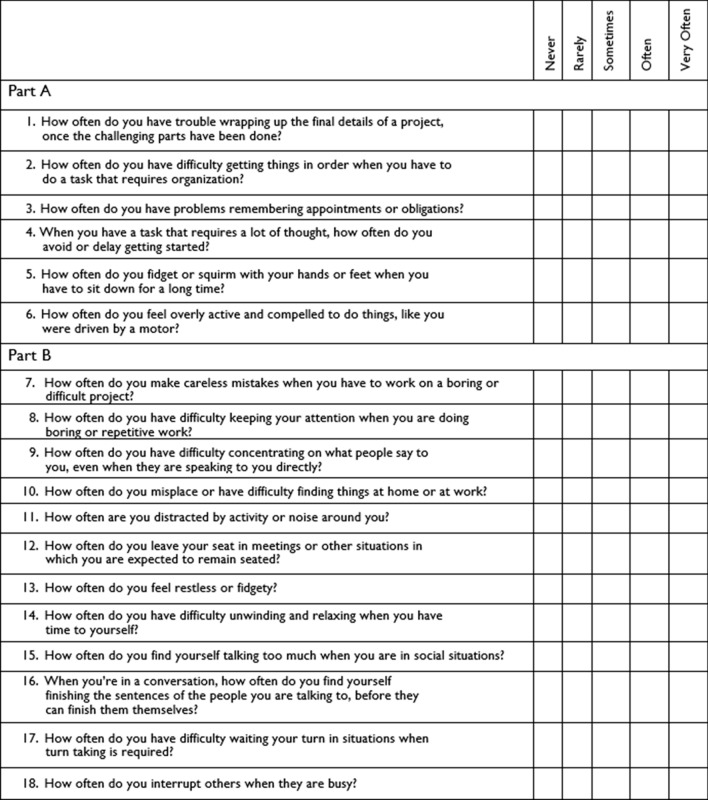
Background: Attention deficit hyperactivity disorder (ADHD), a globally prevalent behavioural disorder, remains underdiagnosed, particularly among adults. This issue is exacerbated in the Arab region due to stigma and insufficient healthcare facilities and professionals. Despite the United Arab Emirates (UAE) efforts to improve mental healthcare, shortcomings persist. No studies in the UAE currently assesses the appropriateness of the screening system for ADHD and other behavioural issues. Furthermore, prevalence rates of ADHD, particularly within the young adult population, are absent. Aim: To estimate the prevalence of ADHD amongst young adults attending university in UAE and examine its relationship with gender and academic outcomes. Methods: A cross-sectional, correlational design was used. Young adults in their first year at university were recruited from different academic institutions across the UAE. The study utilized the Adult ADHD Self-Report Scale (ASRS) for data collection. Results: A sample of 406 young adults, aged between 18 and 20 years of age were recruited. Approximately, 34.7% (n = 141) reported symptoms suggestive of probable ADHD. Significantly lower grade point average marks were observed in participants with ADHD symptoms (M = 3.15) compared to those without (M = 3.35). Females reported symptoms of probable ADHD at higher rates than males, indicating possibly a potential screening deficiency and a potential stigma consequence. Conclusions: The study demonstrates a high prevalence of probable ADHD in young adults, particularly among females attending university in the United Arab Emirates. Implications for early screening, service provision, and greater professional health training on this disorder are required.
Overview
The claims and statistics of this paper haven’t been checked yet.
Free: it reads the open-access text and checks the first 5 claims that cite a source we can check. Create a free account to check every claim.
Integrity signals
Registry
Cites
Statistics
Figures
Verification
Claims the paper makes
The claims and statistics of this paper haven’t been checked yet.
Free: it reads the open-access text and checks the first 5 claims that cite a source we can check. Create a free account to check every claim.
Claims other papers make about this one
Each is checked against this paper’s own text: does it say what the citing paper says it does?
The source backs part of the claim, not all of it — or backs it for a different population, condition or comparison.
In the citing paper
“Estimates suggest that adult ADHD affects between 3% and 6% of the population”
From ADHD in Adulthood: Clinical Presentation, Comorbidities, and Treatment Perspectives (2025) · cites this paper as [2]
Experimental — accuracy not yet measuredThe source backs part of the claim, not all of it — or backs it for a different population, condition or comparison.
In the citing paper
“Epidemiological data indicate that the global prevalence ranges between approximately 2.5% and 6.7%, with an average estimate of around 2.8%”
From ADHD in Adulthood: Clinical Presentation, Comorbidities, and Treatment Perspectives (2025) · cites this paper as [2]
Experimental — accuracy not yet measured
Self-check
Percentages, sums and reported differences re-computed from the paper’s own numbers.
The self-check needs the paper’s full text.
Citations
Cites
Diagnostic and Statistical Manual of Mental Disorders
(2012) · SpringerReference · doi:10.1007/springerreference_121117 · Cited by 20,570
KESSLER, R. C., ADLER, L., AMES, M., DEMLER, O., FARAONE, S., HIRIPI, E., HOWES, M. J., JIN, R., SECNIK, K., SPENCER, T., et al. (2005) · Psychological Medicine · doi:10.1017/s0033291704002892 · Cited by 3,452 · cited 4×
“Psychometric properties include the concurrent validity of the ASRS, which when compared to diagnostic interviews for ADHD had a sensitivity score of 68.7% and a specificity score of 99.5% (Kessler et al., 2005).”
BackgroundMethodInfluentialSubcommittee on Attention-Deficit/Hyperactivity Disorder, S. C. O. Q. I. A. M. (2011) · Pediatrics · doi:10.1542/peds.2011-2654 · Cited by 2,185
Wolraich, M. L., Hagan, J. F., Allan, C., Chan, E., Davison, D., Earls, M., Evans, S. W., Flinn, S. K., Froehlich, T., Frost, J., et al. (2019) · Pediatrics · doi:10.1542/peds.2019-2528 · Cited by 1,562
ADHD in Children and Young People: Prevalence, Care Pathways, and Service Provision
Sayal, K., Prasad, V., Daley, D., Ford, T., & Coghill, D. (2018) · The Lancet Psychiatry · doi:10.1016/s2215-0366(17)30167-0 · Cited by 1,223
Attention deficit hyperactivity disorder
Thapar, A., & Cooper, M. (2016) · The Lancet · doi:10.1016/s0140-6736(15)00238-x · Cited by 1,043
Song, P., Zha, M., Yang, Q., Zhang, Y., Li, X., & Rudan, I. (2021) · Journal of Global Health · doi:10.7189/jogh.11.04009 · Cited by 896 · cited 1×
“This translates to approximately 139.84 million and 366.33 million affected adults globally in 2020 [7].”
BackgroundInfluentialKessler, R. C., Adler, L. A., Gruber, M. J., Sarawate, C. A., Spencer, T., & Van Brunt, D. L. (2007) · International Journal of Methods in Psychiatric Research · doi:10.1002/mpr.208 · Cited by 834 · cited 1×
“The Cronbach's alpha coefficients of the scale were measured in different studies and ranged between 0.63 and 0.72 [27, 29, 30].”
MethodInfluentialUpdated European Consensus Statement on diagnosis and treatment of adult ADHD
Kooij, J. J. S., Bijlenga, D., Salerno, L., Jaeschke, R., Bitter, I., Balázs, J., Thome, J., Dom, G., Kasper, S., Nunes Filipe, C., et al. (2019) · European Psychiatry · doi:10.1016/j.eurpsy.2018.11.001 · Cited by 686 · cited 1×
“ADHD often persists into adulthood, potentially remaining undiagnosed in this population, leading to a high prevalence of undiagnosed ADHD among adults [6].”
BackgroundValidity of pilot Adult ADHD Self-Report Scale (ASRS) to rate adult ADHD symptoms
Adler, L. A., Spencer, T., Faraone, S. V., Kessler, R. C., Howes, M. J., Biederman, J., & Secnik, K. (2006) · Annals of Clinical Psychiatry · doi:10.1080/10401230600801077 · Cited by 677
Research works printed but not linked: 3
- 4. Khamis V. Attention-deficit and hyperactivity among school-age United Arab Emirates children. Int J Spec Educ. 2011;26(3):28-35.
- 12. Merhej R. Stigma on mental illness in the Arab world: beyond the socio-cultural barriers. Int J Human Rights in Healthc. 2019;12(4):285-98.
- 19. Javaid SF, Al Mugaddam F, Ahmed HM, Alkharoossi A, Amiri L. Motivations and Limitations of Pursuing a Career in Psychiatry: A Cross-Sectional Study from the United Arab Emirates. Ment Illn. 2023;2023:9626526.
Cited by
The changing prevalence of ADHD? A systematic review
Martin, A. F., Rubin, G. J., Rogers, M. B., Wessely, S. C., Greenberg, N. L., Hall, C. E., Pitt, A., Logan, P. E., Lucas, R., & Brooks, S. K. (2025) · Journal of Affective Disorders · doi:10.1016/j.jad.2025.119427 · Cited by 56
Jia, T., Kong, Y., Zhao, G., & Wang, Y. (2025) · Frontiers in Public Health · doi:10.3389/fpubh.2025.1609254 · Cited by 23
ADHD in Adulthood: Clinical Presentation, Comorbidities, and Treatment Perspectives
Bogdańska-Chomczyk, E., Majewski, M. K., & Kozłowska, A. (2025) · International Journal of Molecular Sciences · doi:10.3390/ijms262211020 · Cited by 15
“Estimates suggest that adult ADHD affects between 3% and 6% of the population, underscoring the need for better diagnostic awareness and tailored treatment approaches in clinical practice [2–5].”
InfluentialPinto, A., Quilter, E. E. V., Vasikaran, J., Koerner, S., Chimonas, T., Nielsen, E. E., Marshall, P., & O'Hara, K. P. (2025) · Australian Conference on Human-Computer Interaction (OzCHI) · doi:10.1145/3764687.3764713 · Cited by 9
Zhang, X., Xiao, X., Luo, Y., Xiao, W., Cao, Y., Chang, Y., Wu, D., Xu, H., Zhao, J., Deng, X., et al. (2025) · Neuropsychiatric Disease and Treatment · doi:10.2147/ndt.s519492 · Cited by 6
“6 Furthermore, early diagnosis and intervention can significantly improve a child’s academic performance, social relationships, and overall well-being.”
Alatawi, Z. (2025) · Healthcare · doi:10.3390/healthcare13131528 · Cited by 6
Salama, R. A. A., Tadross, T. M., Ammar, A. R., Manasrah, H. T., Razack, R. A., Koya, S. M., Wadid, N. A., Patni, M. A., & Khan, S. S. (2025) · Narra J · doi:10.52225/narra.v5i2.1950 · Cited by 4
“Furthermore, the intense cognitive and emotional demands experienced by students in these fields may obscure ADHD symptoms, which are often misinterpreted as typical responses to academic stress or burnout [11].”
InfluentialNowogrodzka, A., Andrusiewicz, M., & Mojs, E. H. (2025) · Brain Sciences · doi:10.3390/brainsci15020141 · Cited by 4
“In adulthood, the prevalence of ADHD is estimated to range between 3% and 6% [14,15], though symptoms persist into adulthood in 50% to 70% of cases [16–18].”
Ahmed, H. A. A., Naser, S. M., Basiony, R. M., & Shiba, H. A. A. (2024) · Clinical Epidemiology and Global Health · doi:10.1016/j.cegh.2024.101652 · Cited by 4
Systematic review of cultural influences on ADHD and social media addiction among adults
Tayeb, A., Romo, L., & Zerhouni, O. (2025) · Middle East Current Psychiatry · doi:10.1186/s43045-025-00565-3 · Cited by 4
“Al-Yateem et al. [3] found that female students in the UAE reported significantly higher ADHD symptoms than their male peers, possibly due to cultural norms that discourage open discussion of mental health among women.”
InfluentialAl‐Yateem, N., Jaber, B. A. S., Alqdimat, S. S., Khalil, S. J., AlKhatib, S. M., Ahmed, F. R., Subu, M. A., Hijazi, H. H. A., Khalil, H., Saifan, A. R., et al. (2026) · Mental Health & Prevention · doi:10.1016/j.mhp.2026.200475 · Cited by 3
Self-citationKandasamy, G., Orayj, K. M., Rani, V. I., Alshahrani, A. M., Alanazi, T. S., & Hmlan, A. (2025) · Frontiers in Public Health · doi:10.3389/fpubh.2025.1679269 · Cited by 2
Sallam, M., Albadri, R., & Khan, N. N. (2026) · Neuropsychiatric Disease and Treatment · doi:10.2147/ndt.s600491 · Cited by 2
Beyond Behavior: Understanding ADHD Burnout and the Need for Belonging in UAE Schools
Hossain, M. Z., & Bain, J. (2025) · Psychology in the Schools · doi:10.1002/pits.70000 · Cited by 2
Nutrition for Youth Athletes with ADHD: What We Know and Practical Applications
Becker, T. B., & Gibbs, R. L. (2026) · Nutrients · doi:10.3390/nu18020282 · Cited by 1
“However, the prevalence of ADHD in the population may be greater, as a study examining ADHD symptoms in young adults from the United Arab Emirates reported symptoms suggestive of probable ADHD of 34.7% [4].”
InfluentialAlkathiry, A., Alrashed, R., Alfadhly, R., & Al-Tannir, M. A. (2026) · Journal of Family Medicine and Primary Care · doi:10.4103/jfmpc.jfmpc_1754_25 · Cited by 1
“[41] These findings underscore primary care physicians’ essential role in ADHD management while highlighting barriers related to limited training and confidence.”
Maulida, A. R., Setiawati, Y., Avidar, Y. P., Amanda, B., & Ashari, F. Y. (2025) · International Journal Of Scientific Advances · doi:10.51542/ijscia.v6i3.35
The changing prevalence of ADHD: A systematic reviewPreprint
Lucas, R., Hall, C., Brooks, S. K., Rogers, B., Greenberg, N., Rubin, J., Pitt, A., Wessely, S. C., & Martin, A. F. (2024) · OSF Preprints (OSF Preprints)
Deepika, Arora, S., & Sharma, M. (2026) · Elsevier eBooks · doi:10.1016/b978-0-443-44025-0.00016-4
Sabiri, K. A., Sabiri, M. S., Bataineh, A. M., Balushi, S. M. A., Bhatti, S., & Vahidi, N. (2026) · International Journal of Research and Innovation in Social Science · doi:10.47772/ijriss.2026.100500083
The Prevalence of Self-reported ADHD among University Students in JordanPreprint
Al‐omoush, O., Farah, S. M., Ihsan, M., Al-Safadi, R., Aldaoud, Y., Alali, L., Ahmed, L. M., Al-Hijazin, A., Shahatit, S., Al-Shenag, H., et al. (2026) · medRxiv · doi:10.64898/2026.05.29.26354419
Prevalence of Physical Activity and its Association with Medication Use Among Children With ADHD
Alotaibi, M. M., Alrashdi, N. Z., Alanazi, S. A., Alkhalidi, M. M., ALMUTAIRI, M. K., Alzubaidi, B. Y., & Alqahtani, M. Μ. (2026) · Current Psychology · doi:10.1007/s12144-026-09712-3
Jassem, O. A., Darwish, M., Rifi, R., Chawiche, C., Khalil, H., Ayoub, S., Bassar, M. A., Moubayed, A. E., Malli, L., Kamal, M., et al. (2026) · PLOS Global Public Health · doi:10.1371/journal.pgph.0006528
“In the United Arab Emirates, a cross-sectional study reported a prevalence of 34.7% among university students [23], while another study reported 13.6% [23,24].”
InfluentialIsmail, S., Al-Etoom, S., Ahmed, V., Bahroun, Z., & Al-Assaf, K. (2026) · Computers in Human Behavior Reports · doi:10.1016/j.chbr.2026.101305 · Cited by 1
El‐Setouhy, M., Ali, S. A., Zaino, M. R., Alahmar, A. S., Alsanosi, Z. Y., Jaddoh, S., Areshy, N. I., Basheer, A. H., Dagreri, A. A., Moafa, M. Y., et al. (2026) · PeerJ · doi:10.7717/peerj.21688
Vieider, A., Bontempelli, M., Serena, M. G., Marceddu, G., & Obbili, I. (2026) · Clinical Child Psychology and Psychiatry · doi:10.1177/13591045261496116
Metadata
- Authors
- Al-Yateem, N., Slewa-Younan, S., Halimi, A., Saeed, S. A., Tliti, D., Mohammad, M., Ridwan, M., Zeidan, R., Hammash, M. H., Ahmed, F. R., Dias, J. M., Rahman, S. A., Subu, M. A., Hijazi, H., Yeganeh, F., Momani, A., Zandi, M., & Mottershead, R.
- Affiliations
- Research Institute for Endocrine Sciences (IR)
- University of Sharjah (AE)
- Jordan University of Science and Technology (JO)
- Toronto Metropolitan University (CA)
- Applied Science Private University (JO)
- Shahid Beheshti University (IR)
- ORCID
- Venue
- Journal of Epidemiology and Global Health
- Published
- 2023-12-11
- Volume
- 14
- Issue
- 1
- Pages
- 45-53
- ISSN
- 2210-6006 (ISSN-L)
- 2210-6014
- PMC
- PMC11043292
- OpenAlex
- W4389572230
- Semantic Scholar
- 8694ae7a0ef274dc981ec5834841f58de3363480
- Cited by
- 22
- References
- 31
- Citations by year
- 2026: 10 · 2025: 10 · 2024: 2
- FWCI
- 4.48
- Type
- journal article
- Language
- en
- Open access
- gold
- doi.org
- Licence
- cc-by
- creativecommons.org/licenses/by/4.0 (tdm)
- creativecommons.org/licenses/by/4.0 (vor)
- Locations
- Journal of Epidemiology and Global Health (publishedVersion, cc-by)
- PubMed Central (publishedVersion, cc-by)
- PubMed (publishedVersion)
- Charles Sturt University Research Output (CRO) (submittedVersion, cc-by)
- DOAJ (DOAJ: Directory of Open Access Journals) (submittedVersion, cc-by-sa)
- Greater South Information System
- Topics
- Health Sciences › Medicine › Psychiatry and Mental health › Attention Deficit Hyperactivity Disorder
- Life Sciences › Neuroscience › Cognitive Neuroscience › Autism Spectrum Disorder Research
- Social Sciences › Psychology › Neuropsychology and Physiological Psychology › Developmental and Educational Neuropsychology
- Keywords
- attention deficit hyperactivity disorder, ADHD prevalence, young adults, university students, underdiagnosis, gender differences, academic performance, grade point average, ADHD screening, Adult ADHD Self-Report Scale, stigma, United Arab Emirates
- MeSH terms
- Adolescent, Adult, Attention Deficit Disorder with Hyperactivity, Cross-Sectional Studies, Female, Humans, Male, United Arab Emirates, Universities, Prevalence, Young Adult, Self Report
About these checks
Registry, retraction, Cites and statistics results are computed, not judged, with one exception: a printed reference that no index lists is read once by a model before it counts as a citation error. Claims are extracted by a model and kept only when their quote appears verbatim in the text; each cited source is then checked, with a model’s help, for whether it says what the claim relies on. Those verdicts can be wrong — read the claim’s quote and the cited source before relying on one.
Statistics and arithmetic are recomputed, not judged.
Confidence bands are shown only for fields calibrated on our annotated test set. None is calibrated yet, so no band is shown.
What counts as a claim ›How we measure confidence ›How we check this ›
Are you an author, or do you see a problem with this page? Request a review
Data sources
Bibliographic data: Semantic Scholar, OpenAlex, Crossref.
Contains information from the Semantic Scholar Academic Graph Datasets, made available under the ODC Attribution License (ODC-BY 1.0).
Semantic Scholar’s data is described in: Kinney, R., et al. (2023). The Semantic Scholar Open Data Platform. arXiv:2301.10140.
